What we do and don’t know about the US-Iran peace deal

The Israeli government is not a party to the new peace agreement, and top officials have already spoken out against it

Al Majalla

What we do and don’t know about the US-Iran peace deal

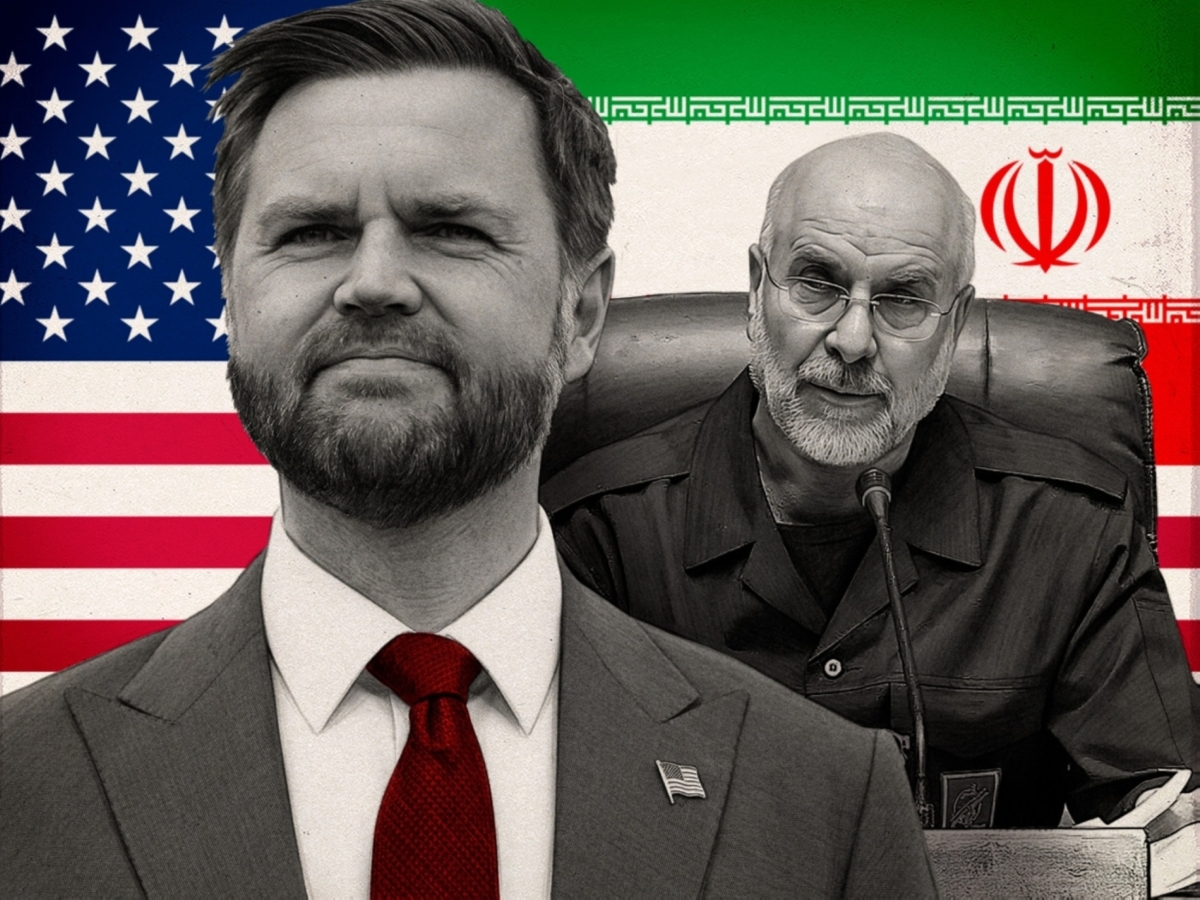
The United States and Iran on Sunday announced that they’ve agreed to a preliminary deal to end the monthslong war that has killed thousands and wreaked havoc on the global economy. It marks a positive step forward in a peace process that’s been stalled for weeks, but many details remain unknown, as the text of the agreement has not been released. The two sides are expected to hold a signing ceremony for the deal on Friday.

Here’s more on what we know and don’t know about the interim deal, which has been described by Iran as a memorandum of understanding, and what could happen next.


A path to more talks. The agreement provides a framework for ending the war and is primarily designed to halt military operations, prolong the existing truce, and end the stalemate over the Strait of Hormuz. Reopening the strategic waterway in particular is a key goal for US President Donald Trump, who has faced growing domestic criticism over high gas prices and other economic impacts caused by the war.

The agreement is believed to extend the ceasefire between Washington and Tehran by 60 days, during which nuclear talks are expected. In the meantime, the Strait of Hormuz is supposed to be opened, and the US blockade on Iranian ports is supposed to end—providing major relief to energy markets and Iran’s economy. Fighting between Hezbollah and Israel in Lebanon is also supposed to end as part of the deal (more on that below).

The deal, which was mostly mediated by Pakistan and Qatar, is set to be formally signed by the United States and Iran in Geneva, Switzerland, on Friday, and the 60-day clock will start ticking at that time. The Trump administration on Monday said that both sides had signed the deal electronically on Sunday, but that an official signing ceremony would still take place on 19 June.

“With the agreement now in place, mediators will facilitate a series of meetings this week. These pre-implementation discussions will lay the foundation for the technical talks and the official signing ceremony,” Pakistani Prime Minister Shehbaz Sharif said on Sunday in a post on X.

What the United States has said. In a post on Truth Social, Trump wrote: “The Deal with the Islamic Republic of Iran is now complete. Congratulations to all! I hereby fully authorise the toll-free opening of the Strait of Hormuz, and, simultaneously herewith, authorise the immediate removal of the United States Naval blockade. Ships of the World, start your engines. Let the oil flow!”

In a subsequent post, Trump said the strait would not be opened until after the deal is signed, and he indicated that time would be needed for “purposes of mine removal.” But it’s not entirely clear how and when the US blockade will be lifted, despite Trump’s announcement. There are also open questions over Trump’s assertion that the strait will be opened “toll free.” Iranian state media has suggested that Tehran will seek to benefit financially from commercial shipping through the strait after the 60-day negotiation period.
The Trump administration has sought to portray the Israel-Hezbollah conflict as separate from the war with Iran, but the two are fundamentally linked.

When asked about this on Monday, US Vice President JD Vance told CNBC that the administration's  "expectation is that the strait is going to be opened in a toll-free way for the long term. And that's the sort of thing that we're going to figure out in these technical negotiations."

In a separate interview with CBS Mornings, Vance also indicated that Iran could gain access to a $300bn reconstruction fund, funded by countries in the Gulf, "so long as they (the Iranians) honour their end of the obligation."

The lack of clarity on such details is indicative of the myriad potential hurdles that the process faces moving forward. Talks on Iran's nuclear programme in particular, which will cover issues such as its stockpile of highly enriched uranium and future enrichment, are poised to be extremely contentious and will likely stand as among the biggest challenges to a broader agreement.

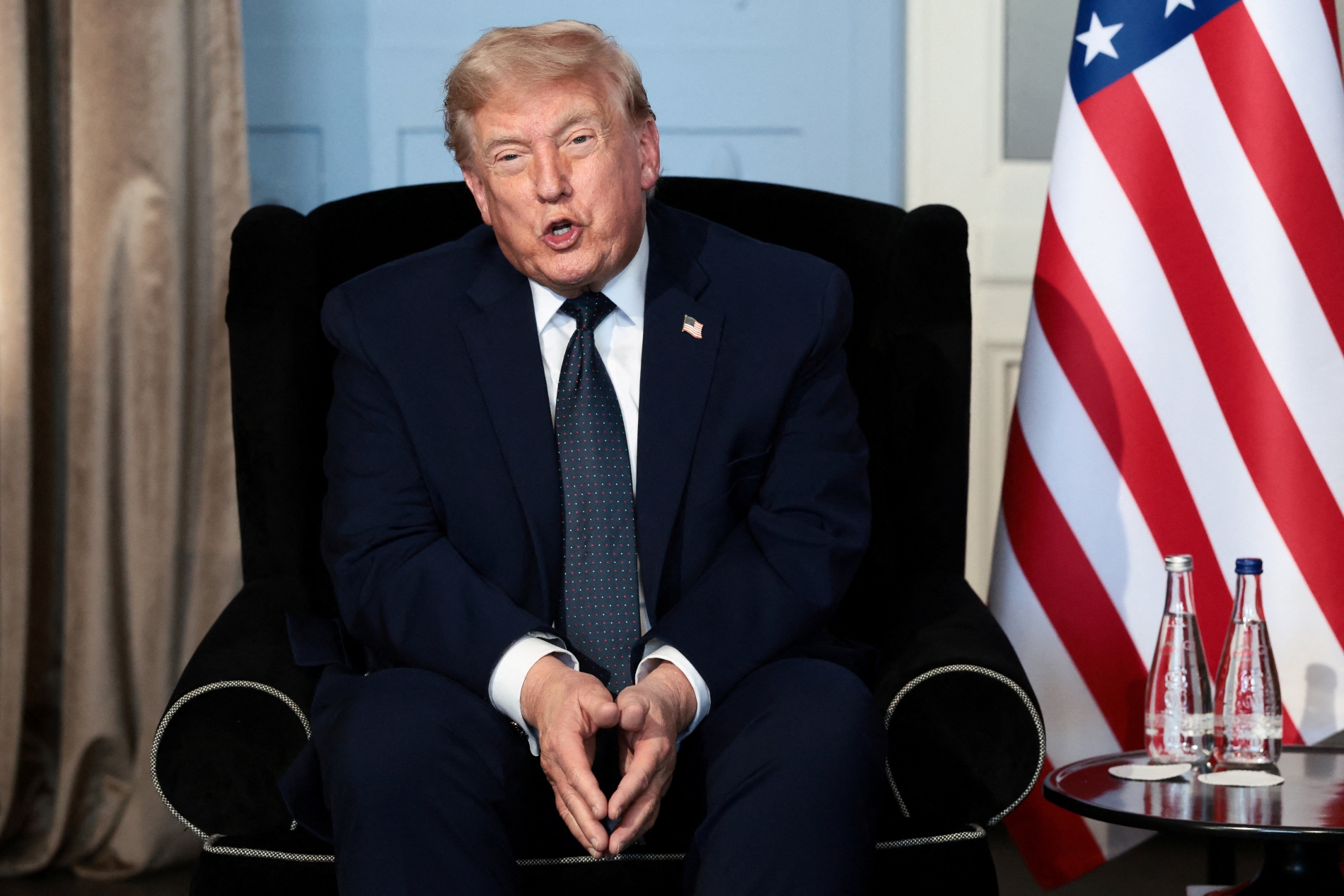
REUTERS/Evelyn Hockstein
US President Donald Trump speaks as he attends a bilateral meeting with French President Emmanuel Macron (not pictured) during the G7 Summit in Evian-les-Bains, France, on 15 June 2026.

Though Trump has celebrated the interim deal, he also told the New York Times in an interview on Sunday that the United States could resume military attacks on Iran, among other possible steps, if there's not ultimately a final nuclear agreement.

What Iran has said. Kazem Gharibabadi, Iran's deputy foreign minister, also confirmed the deal on Sunday and framed it as a victory for Tehran.

Iran's Supreme National Security Council in a statement said that "final negotiations will be postponed until after the implementation of the other party's commitments under the memorandum." But the United States and Iran appear to disagree over the nature of those commitments.

While Iranian officials have suggested that the next stage of negotiations will only begin after the US releases frozen assets, the Trump administration has maintained it will only take such steps in response to progress on the nuclear front.

Republican Sen. Lindsey Graham, an Iran hawk who is one of Trump's top allies in Congress, took to X on Sunday to express concerns about the daylight between Washington and Tehran over aspects of the agreement. "I will be watching the ensuing negotiations regarding Iran's nuclear programme and other matters closely," Graham said. "I am somewhat concerned that Iran's view of the agreement seems different than what the American negotiating team is claiming." Graham also suggested that, under US law, any nuclear deal with Iran will be sent to Congress "for review and a vote."

The Israel factor. Israel could also throw a wrench in the proceedings. The Israeli government is not a party to the new peace agreement, and top officials have already spoken out against it. "Trump's agreement does not bind us. Israel is not subject to the United States, and we are an independent and sovereign nation," Israeli National Security Minister Itamar Ben-Gvir said in a statement. "My position is clear: We are not partners to this agreement that does not safeguard our security."

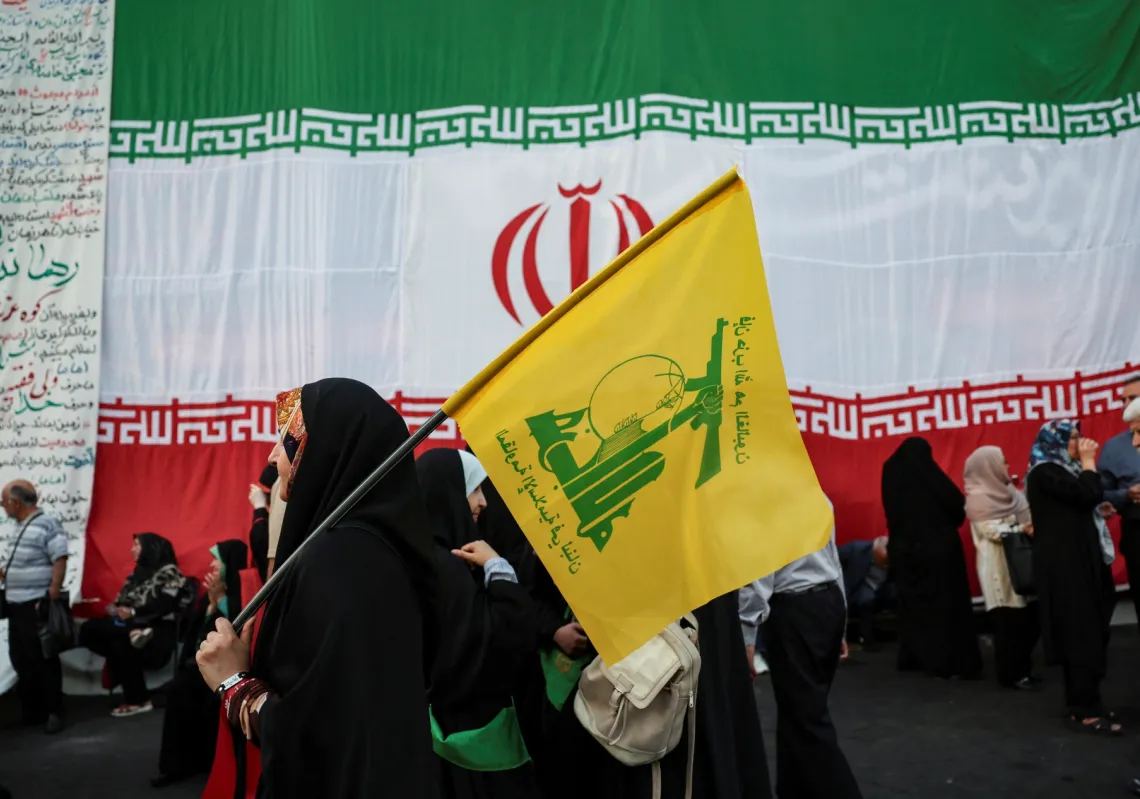
Israel's war against Hezbollah, the Iran-backed militant group in Lebanon, appears likely to cause serious problems for negotiators moving forward. The Trump administration has sought to portray that conflict as separate from the war with Iran, but the two are fundamentally linked.

Pakistan and Iran have stated that Lebanon is part of the agreement—and Tehran has continuously insisted that a deal is contingent on a cessation of hostilities between Israel and Hezbollah. But Israeli Prime Minister Benjamin Netanyahu, who faces an uncertain political future with a national election on the horizon, is under domestic pressure to continue taking the fight to Hezbollah.

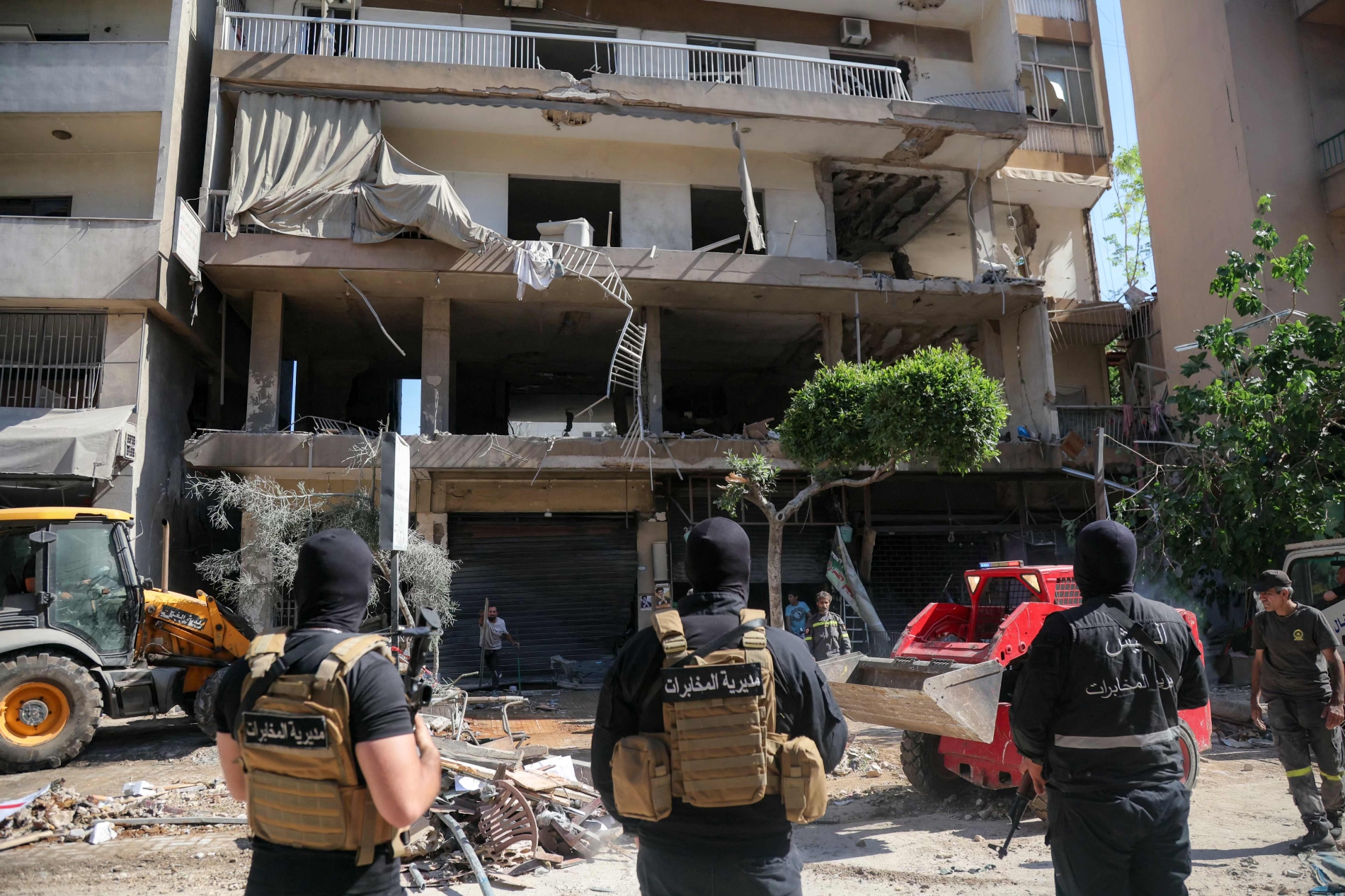
Ibrahim AMRO / AFP)
Lebanese army soldiers stand guard as people clear the rubble at the site of an Israeli airstrike that targeted a building in Beirut's southern suburbs on 14 June 2026.

The Israeli military conducted strikes in Beirut on Sunday that the Trump administration feared could upend peace talks. Trump in a Truth Social post said the Israeli attack "should not have happened, particularly on a special day when we are so close to a Peace Deal with Iran."

"After the Israelis struck Beirut, we were very worried," Vance told Fox News on Sunday. "We saw a lot of evidence that the Iranians were going to launch a large number of missiles at the Israelis." While Iran ultimately held off—reportedly doing so at Trump's urging—Israel has signalled that it's not backing down in Lebanon. Israeli Defence Minister Israel Katz on Monday said that the Israeli military will remain in southern Lebanon, and he warned that Israel would retaliate to any Iranian attacks.

In a sign of the White House's rising consternation over Israel's operations in Lebanon, Trump on Sunday told the Times that Netanyahu is a "difficult guy" who should be "very thankful to us for doing this," because if Iran had a nuclear weapon, then "Israel wouldn't be around for two hours."

font change