Why Bahrain has long been in Iran's crosshairs

From its hosting of US naval forces to its accession to the Abraham Accords, there are many reasons why Iran sees Manama as a justifiable target, but the shared animosity dates back decades

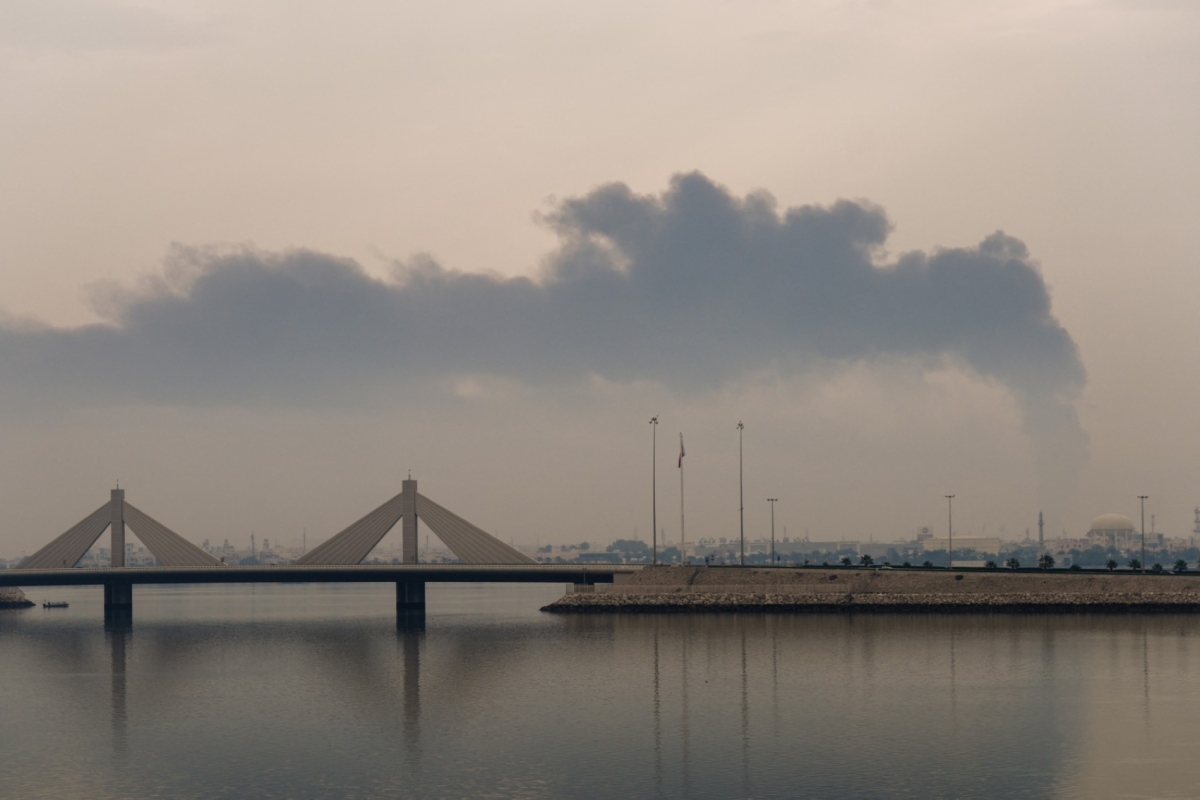
A plume of smoke rises after a reported Iranian strike on fuel tanks in Muharraq, Bahrain, on 12 March 2026.
FADHEL MADHAN / AFP
A plume of smoke rises after a reported Iranian strike on fuel tanks in Muharraq, Bahrain, on 12 March 2026.

Why Bahrain has long been in Iran's crosshairs

The latest Iranian attacks on Kuwait and Bahrain are part of a wave of cautious escalation between the United States and Israel on one side and Iran on the other, even as Washington and Tehran appear close to agreeing on a final formula to halt the war, at least according to US President Donald Trump.

The Iranian attacks on Kuwait and Bahrain followed limited strikes by the US Navy on Iranian military sites on Qeshm Island, and can be read as a message to Washington that any escalation in Gulf waters will not remain confined to the maritime arena, but will widen to include other fronts, in line with Iran’s approach since the outbreak of the war.

The latest attacks also point to a gradual shift in Tehran’s approach, from a policy of collective punishment of the Gulf states to a more selective strategy that entrenches the divide-and-conquer logic. Iran is exploiting differences in Gulf positions to prevent the emergence of a unified front against it.

Bahrain, and indeed the rest of the Gulf states, have no good or obvious options for confronting Iran. Tehran’s systematic attacks on all Gulf states have demonstrated the futility of earlier efforts to rely on good neighbourliness to ward off the Iranian threat. Neither neutrality, nor the Beijing agreement between Saudi Arabia and Iran, nor Omani or Qatari mediation, nor the commercial ties that once linked the UAE to Iran were enough to spare these states Iranian missiles and drones.

Unless the Gulf states politically and militarily unite and seriously invest in both their offensive and defensive capabilities in a manner proportionate to the nature of the Iranian threat, deterrence will increasingly tilt in Iran’s favour. This unity, however, appears unlikely, at least in the near term, given the divergence of Gulf positions.

Iranian gripes

From Iran’s perspective, there are several reasons why it has trained its guns on Bahrain. First, its strategic partnership with the United States, embodied by the presence of the US Naval Forces Central Command on its territory. Second, its accession to the Abraham Accords, which brings it into an alliance with Israel, makes it an ideal target for signalling to its adversaries.
2026 Planet Labs PBC/REUTERS
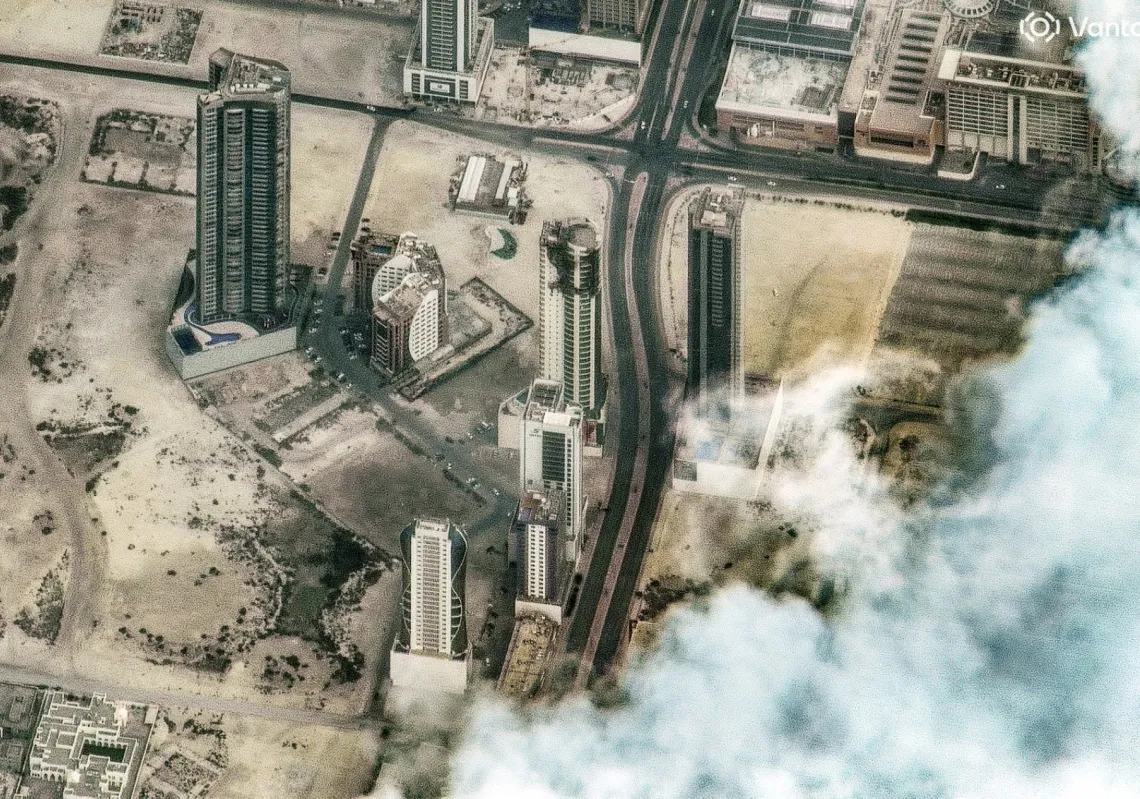
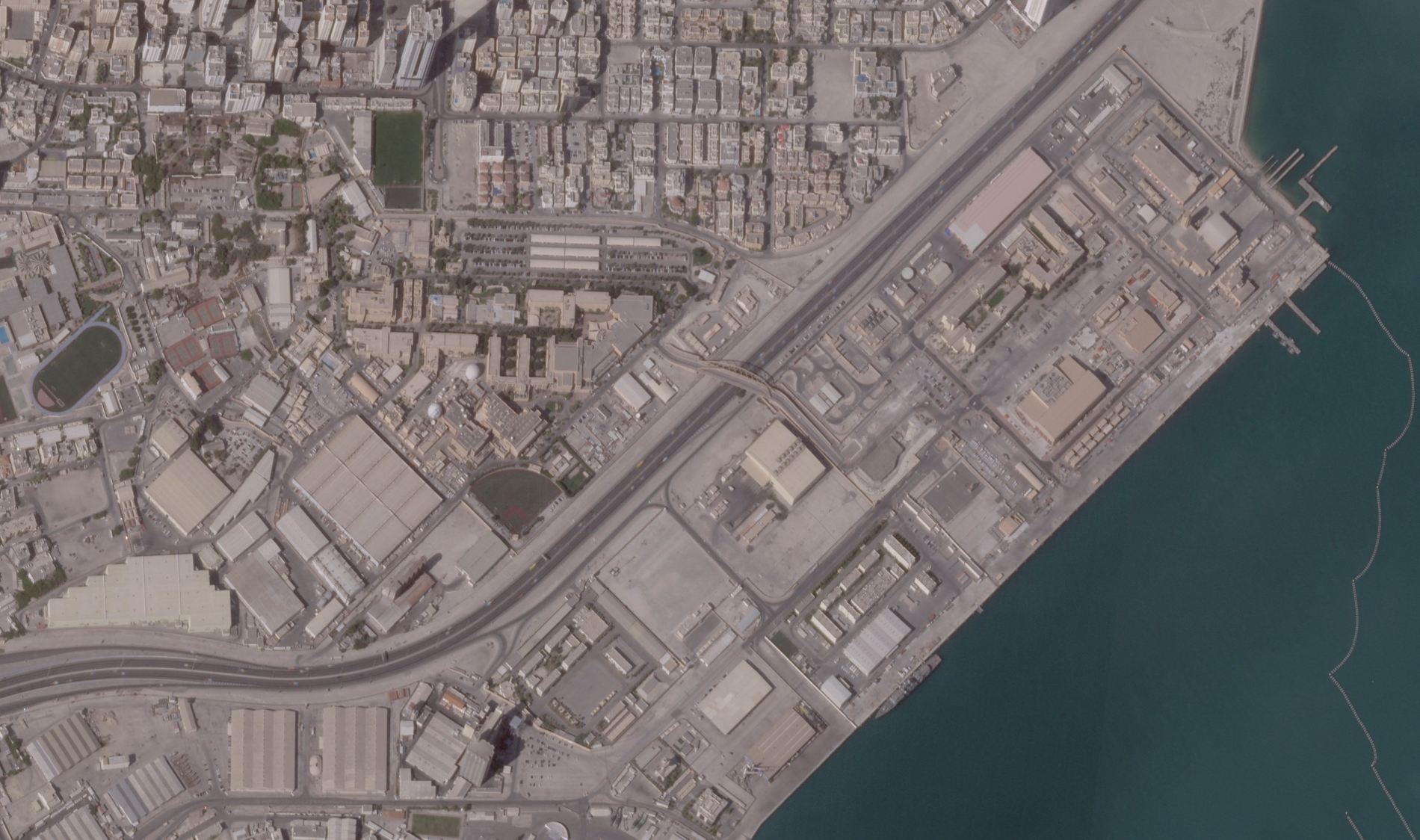
A satellite image shows the US Fifth Fleet naval base in Manama, Bahrain, before Iranian strikes, on 25 February 2026.

Iran is also unhappy with Bahrain's banning of its citizens from travelling to Iran and Iraq, its arresting of a cell linked to Iran's Revolutionary Guards Corps, and its stripping of citizenship of 69 Bahraini nationals for alleged espionage or sympathy with Iran.

But the latest attacks are far from the first time Bahrain has found itself in Iran's crosshairs. It has long been on the Arab and Gulf front line amid regional tensions with Iran. Since the 1979 revolution, the emerging Islamic Republic of Iran has harboured hostility to Bahrain's monarchy. This sentiment is partly rooted in the regime's extremist ideology that believes Bahrain should be controlled by sectarian, pro-Iranian militias akin to those in Iraq and Lebanon.

There is also a nationalist view in Iran that views the Shah's abandonment of the claim to annex Bahrain in 1971, after the country gained independence from Britain, as a historic mistake. This is despite the fact that Ahmed Al Fateh, founder of Al Khalifa rule in Bahrain, liberated the island from the grip of agents of the Zand state, which ruled Iran nearly 250 years ago.
Over the decades, Iran has sought to recruit, train, and arm militias and sleeper cells in Bahrain and use media outlets to incite citizens against their leadership

In 1982, Iran attempted a failed coup in Bahrain in a bid to overthrow its rulers. Over subsequent decades, it also sought, through proxies in Iraq, Lebanon, and Syria, to recruit, train, and arm militias and sleeper cells, cultivate support among some clerics, and use media outlets to incite Bahraini citizens against their leadership. This prompted several Western and Arab states to designate Iran-backed groups in Bahrain, like the Al Ashtar Brigades and Al Mukhtar Brigades, as terror groups. Bahrain was also the first Gulf state to designate Hezbollah as a terrorist organisation in 2013.

Apart from a brief thaw during Mohammad Khatami's tenure as Iran's president, Manama and Tehran have had frigid relations, driven by mutual suspicion, for decades. Bahrain was at the forefront of the Gulf states operating within the Saudi-led coalition during the Yemen war.

Later, it became the only Arab and Muslim state to join the US-led Operation Prosperity Guardian in the Red Sea against the Houthis in 2023. Bahrain has also remained the only Gulf country without official diplomatic relations with Tehran since the attacks on Saudi diplomatic facilities in Iran in 2015, despite Riyadh's formal resumption of ties with Tehran under the Beijing Agreement of 2023.

TIMOTHY A. CLARY / AFP
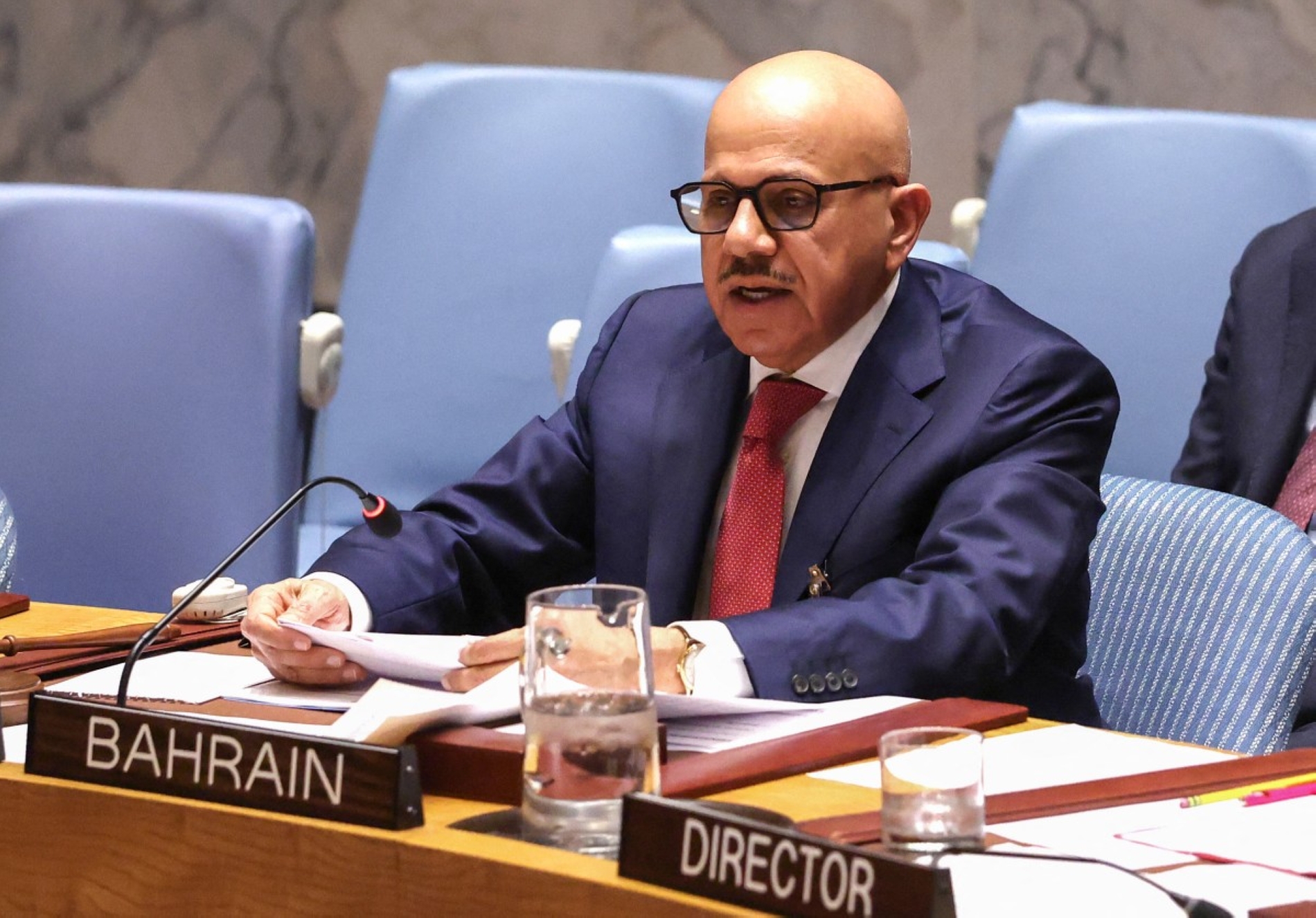
Bahrain's Foreign Minister Abdullatif bin Rashid Al Zayani speaks after the United Nations Security Council voted on a resolution calling for the unblocking of the Strait of Hormuz on 7 April 2026.

Bahrain's opposition to Iran's regional hegemony project was clearly manifested during the current US-Iran war. As the Arab bloc's representative on the Security Council for the current term, Bahrain put forward draft Resolution 2817 earlier this year, condemning Iranian attacks on Gulf states, which secured the backing of 136 UN member states, the highest level of support in the history of the council. And in conjunction with Washington, Manama has also worked to pass a draft resolution authorising the use of ALL necessary means, including military force, to secure the Strait of Hormuz, despite continued opposition from China and Russia.

Challenge ahead

While in the past, Bahrain relied on robust domestic security to neutralise Iranian influence at home, and on its strategic partnership with the United States and a unified Gulf position as a shield against Iran's external threat, an anticipated decline in the US role puts Bahrain and other Gulf states in a major strategic dilemma.

Against this long-standing, tenuous relationship and the continuing deterioration in Bahraini-Iranian relations, it is clear that Manama cannot play the role of Tehran's friend, as Oman does, or that of a mediator, as Qatar does, to insulate itself from Iranian attacks.

Iran's selective targeting has left some Gulf states more impacted than others. This uneven distribution of pain has become another obstacle to unified Gulf action.

Iran's selective targeting in the Gulf has left some states far more impacted than others. This uneven distribution of military and economic pain has become a further obstacle to unified Gulf action. For example, Saudi Arabia, the UAE, and Oman have been able to continue exporting energy and keeping their ports and airports operating, whereas smaller Gulf states, such as Bahrain, Kuwait, and Qatar, are constrained by geography and military power. This has led to a sharp divergence in views on how to address Iranian threats and on the roles of the United States and Israel in the region.

The next phase of confrontation with Iran will require serious reviews that lead to a reworking of concepts of collective Gulf action and of military and civil readiness. The challenge posed by the fading of the US security umbrella also offers Gulf states an opportunity to invest seriously in their own capabilities, forge practical military and technological partnerships, and move beyond external dependence towards integrated, self-sustaining systems capable of addressing Iranian overreach and the security challenges facing the region.

font change