Cannes pick 'The Station': Yemeni sorority at its best

In an interview with Al Majalla, Oscar-nominated director Sara Ishaq dives into gripping human stories where women hold the line in war-torn Yemen

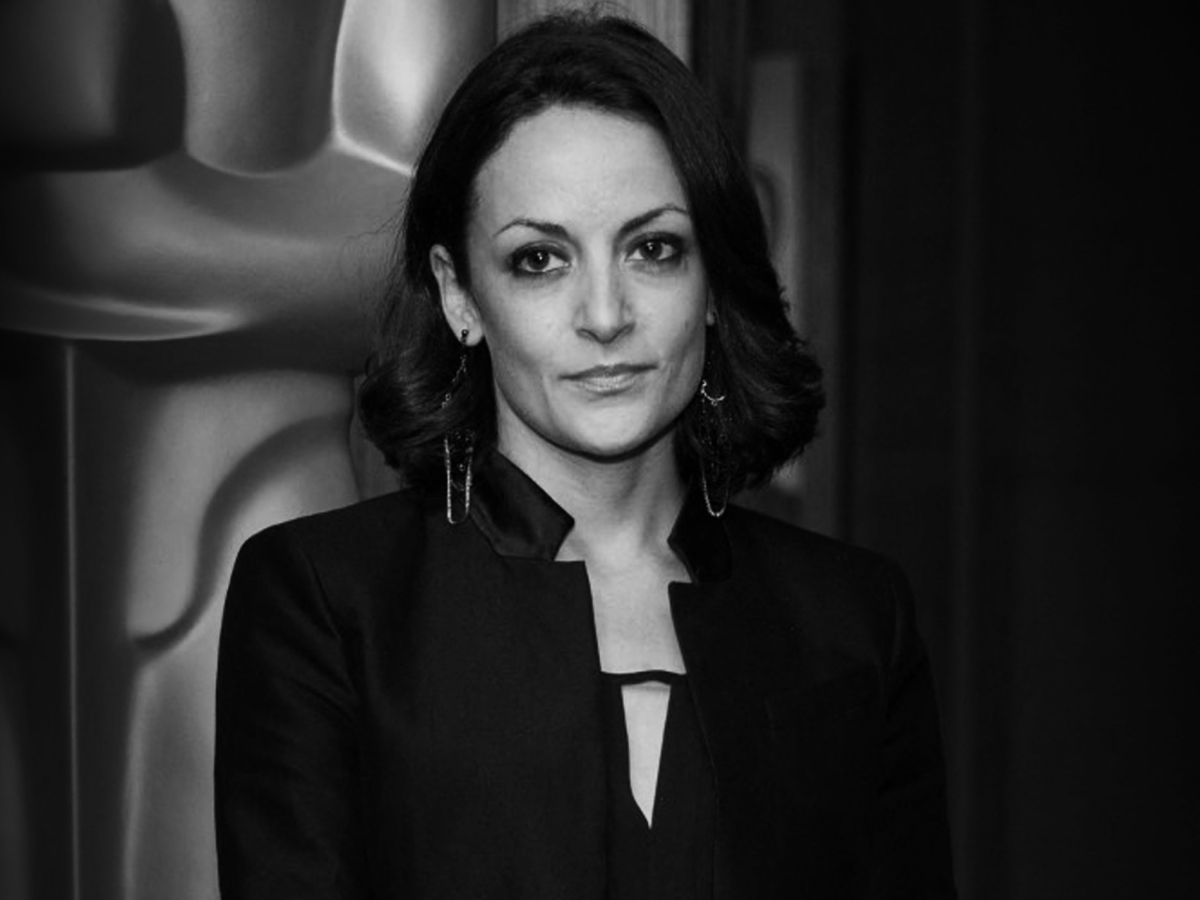
Sara Ishaq arrives T THE 86th Annual Academy Awards Oscar Week Celebrates Documentaries at AMPAS Samuel Goldwyn Theater on 26 February 2014 in Beverly Hills, California.
VALERIE MACON /AFP
Sara Ishaq arrives T THE 86th Annual Academy Awards Oscar Week Celebrates Documentaries at AMPAS Samuel Goldwyn Theater on 26 February 2014 in Beverly Hills, California.

Cannes pick 'The Station': Yemeni sorority at its best

In Al Mahattah, Layal, played by actress Manal Al Mulaiki, runs a women-only petrol station in Yemen, a safe haven in a war-torn country. There, the rules are simple: no men, no weapons, no politics. When Layal’s younger brother (Rashad Khaled) faces enlistment, she reunites with her estranged sister (Abeer Mohamed) to save the one life they still can.

Selected in Critics’ Week at the Cannes Film Festival, The Station by Yemeni-Scottish Sara Ishaq unfolds as a work of quiet urgency, rooted in the fractured geography of contemporary Yemen and anchored in an intimate story of separation, survival, and sorority.

Rather than approaching war through its front lines, Ishaq, in her first fiction feature, portrays its domestic effects: families split across territories, gender roles reshaped amid economic collapse, and the emotional cost of holding a family together when the country itself is divided. The film resists explanation; instead, it observes how people continue to live, love, work, and protect one another in conditions that should make all three nearly impossible.

At the film's heart lies a deeply human and tightly interwoven story: two sisters living on opposite sides of a fractured Yemen, in territories controlled by opposing forces. Between them stretches not only a military and political divide, but also a daily logistical impossibility: checkpoints, danger, and the constant uncertainty of movement.

Yet the story is not built around separation alone. It is structured around resistance to separation. Despite their distance, the two sisters remain bound by a shared responsibility: their younger brother. In a country where young men are routinely pulled into armed conflict, conscription, or survival-based recruitment, the sisters insist he will not be sent to war—each for their own reasons.

This refusal forms the emotional backbone of the film. It is not framed as ideology, but as protection. As Ishaq situates it, the story is less about political positioning than about the intimate negotiations of survival inside families stretched by violence. What emerges is a portrait of women who do not share the same physical space but who operate as a single moral unit. The distance between them becomes the condition of their collaboration.
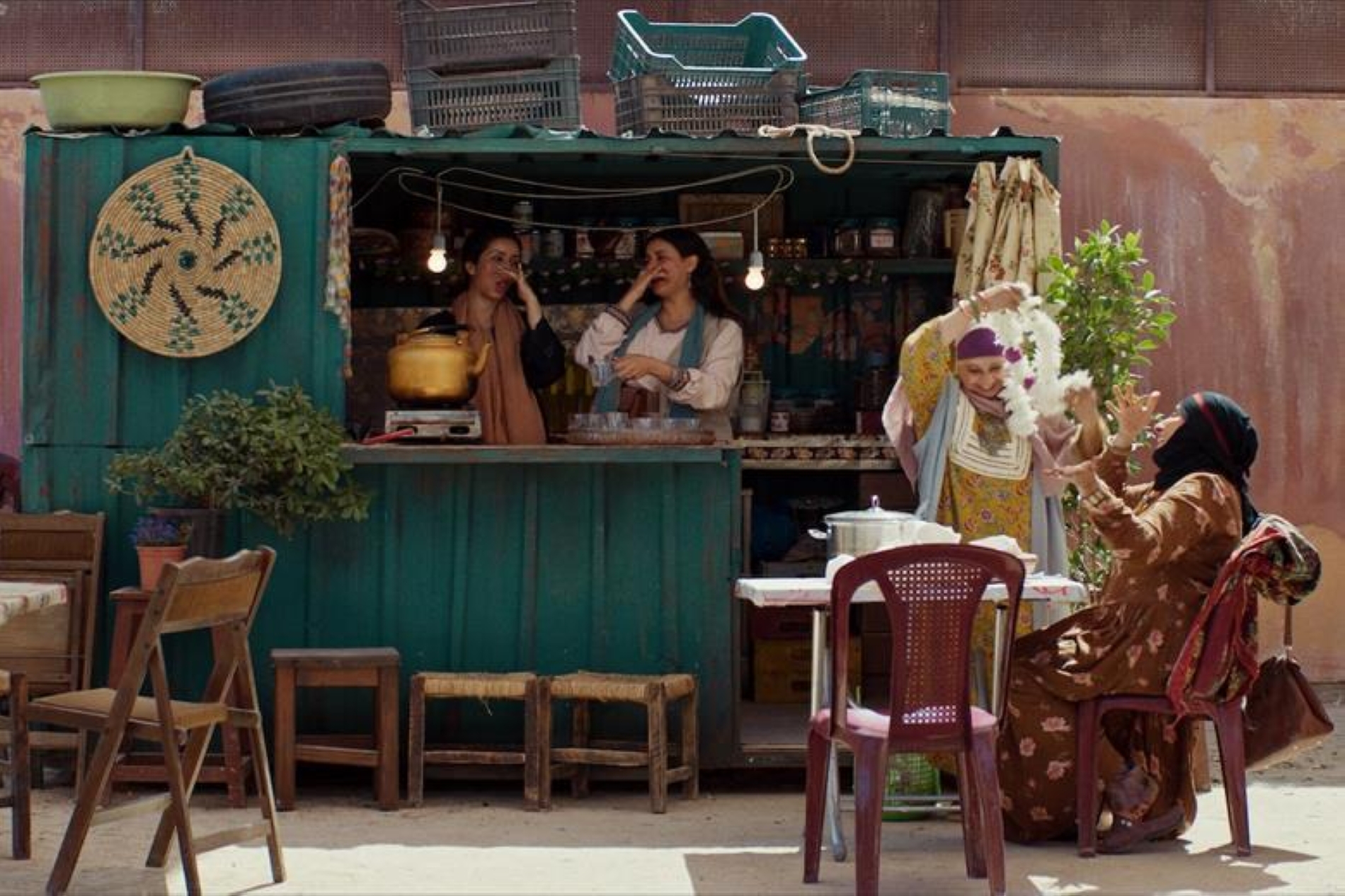
Cannes Film Festival
‘The Station’.

Capturing complexities

Ishaq never wanted to make the film to map Yemen for an international audience. On the contrary, she is adamant about resisting that route. When asked about why she thought Yemen was so opaque to global audiences, often told the situation was ‘too complex’, she immediately explains “Obviously Yemen has a complex history, the geopolitics and the yemeni social structure are are very complicated as well but I think it’s also a way to disguise what’s happening in Yemen to say—well it’s too complicated, you don’t understand what’s happening—but actually it’s very simple and I wanted to keep that focus," she tells Al Majalla.

"Trying to explain everything is also risking oversimplifying; I would have to make a series with many episodes to go into the various aspects of it all, and I don’t want to do that! I don’t want to be a scholar,” she explains. “I don’t want to teach the audience the geopolitics of my country.”

Instead, she insists on the importance of emotional truth over informational clarity. The film deliberately avoids becoming a guide to the Yemeni conflict. Its focus is not explanation but lived experience.

“I wanted to focus on the authenticity of human stories with a Yemeni flavour,” she explains.

In this sense, the film avoids the temptation of exposition. It does not attempt to summarise Yemen for external audiences. It does not translate its reality into geopolitical diagrams. It stays with the texture of life as it is lived: fragmented, adaptive, emotionally dense.

This is also where her artistic position becomes clear. She is not interested in positioning herself as an interpreter of conflict, but as an observer of how people inhabit it. This decision shapes the entire structure of the film. Political reality is present, but never foregrounded as discourse. Instead, it appears indirectly—through the absence of jobs, the fragmentation of families, the shifts in gender roles, and the way daily life reorganises itself under pressure.
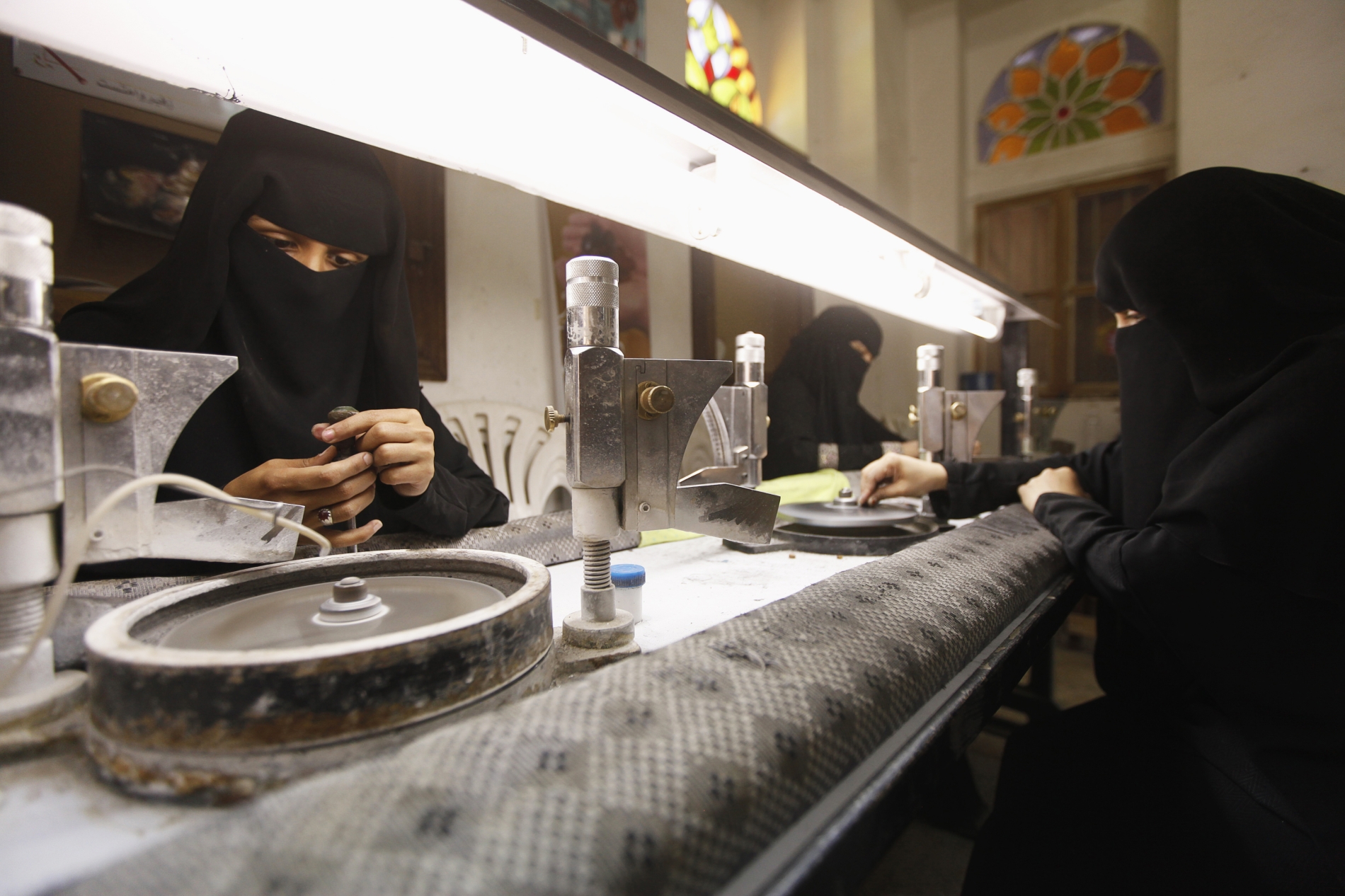
REUTERS/ Mohamed al-Sayaghi
Women refine pieces of garnet stones to be used to make handicrafts at Dar Al-Hamd National Centre in Sanaa on16 April 2014.

Suspended lives

The backdrop to the film is Yemen, a country where war has extended over more than a decade, reshaping every layer of society. Economic collapse, institutional fragmentation, and displacement have become structural conditions rather than temporary disruptions.

But Ishaq resists turning this reality into abstract catastrophe. Instead, she focuses on how it alters the most basic unit of society: the household. One of her most striking observations concerns the collapse of male employment and its emotional consequences. “The men that I saw were very shaken at the beginning of the war,” she explains, describing how the loss of jobs destabilised not only income but identity itself.

“In a society where your value as a man is determined by how much money you can bring in, being a breadwinner,” she says, “when men weren’t able to do that because they had lost their jobs... things became very challenging for society at large.”

Her observation is grounded in concrete economic collapse: teachers, doctors, NGO workers, and civil servants losing salaries, sometimes for years at a time. “People were going through their savings, and the ones who were already poor were falling into devastating living conditions," she says.
Each sister inhabits a different reality, shaped by geography and political division, but also by adaptation.

But Ishaq's testimony does not focus solely on loss. One of the most striking elements she describes is the rapid transformation of women's roles in response to economic breakdown.

"What I then saw happen was the women stepped up." Ishaq does not frame this "stepping up" as symbolic empowerment but as material necessity. Women begin to generate income in ways that are improvised, flexible, and deeply rooted in local economies.

"They started setting up businesses and improvising all kinds of ways to earn a living," Ishaq explains. "From selling baked goods to becoming makeup artists... some were becoming photographers." Even within collapse, new economies emerge. Weddings, for instance, do not disappear—instead, they multiply in some urban areas, becoming unexpected sites of commerce. Beauty services, catering, and informal production expand in parallel.

"I was surprised at how things were changing in society," she recalls. "The wedding shops, the cake shops, the makeup, the hair extensions, the fake eyelashes... all of these things were so bizarre for me to see. Here, "bizarre" is not judgmental, but observational, capturing the dissonance between war as destruction and war as catalyst for transformation, proving life does not stop but mutates instead. Despite her surprise, Ishaq still points out the ancient matriarchy that shaped Yemen thousands of years ago, mentioning Queen Shiva among the many queens the country had in times past.

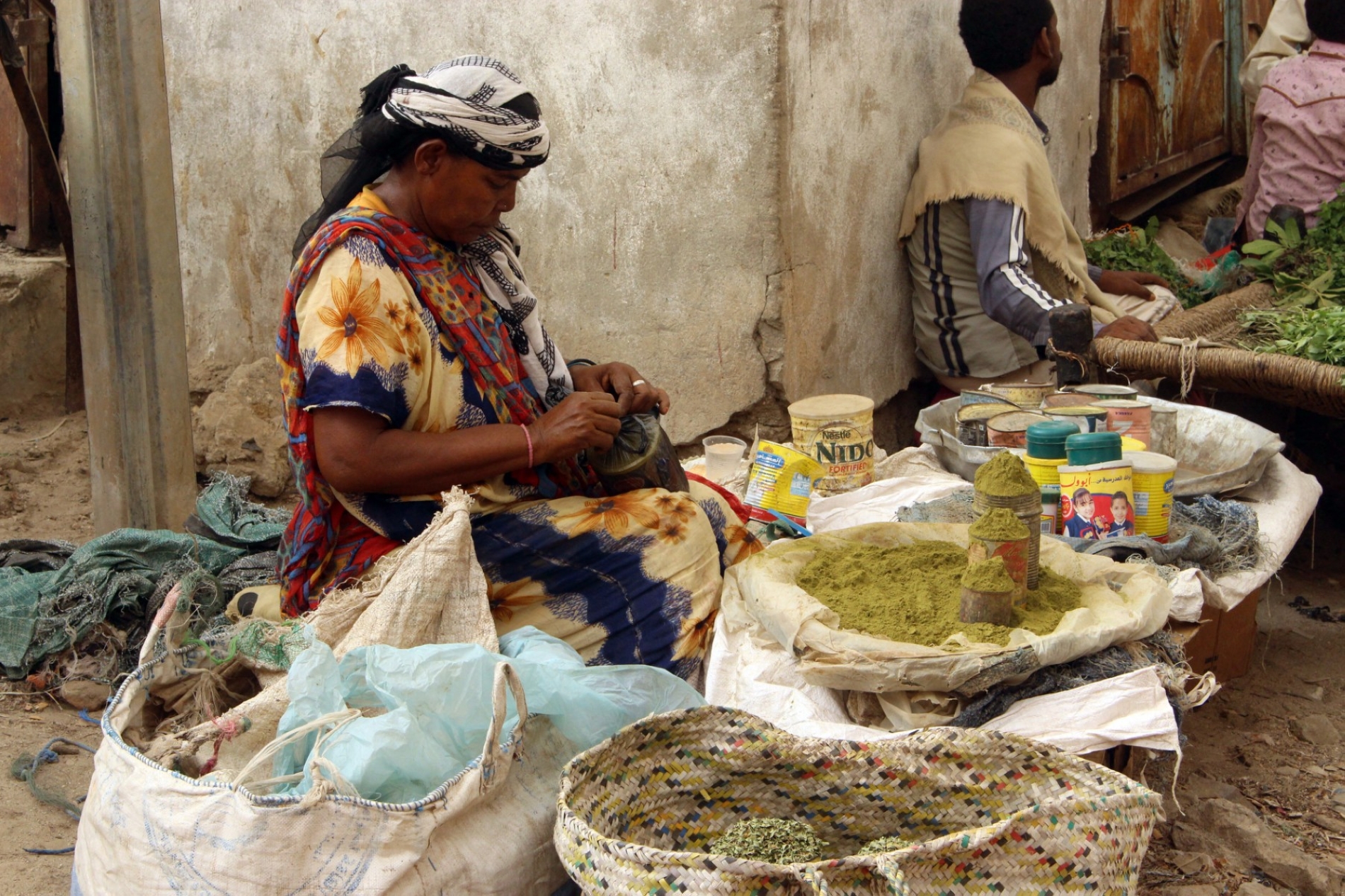
ESSA AHMED / AFP
A Yemeni woman sells Henneh and other products at a market in Hajjah province's northern district of Abs on 15 July 2018.

Parallel survival

Within the film's narrative, this broader social shift is reflected in the sisters themselves. Each woman inhabits a different reality, shaped by geography and political division, but also by adaptation. Living in different zones of control, both are forced into roles that extend beyond traditional family expectations.

Their relationship becomes a form of parallel survival. They do not share a home, but they share a mission: to protect their younger brother Laith from becoming another casualty of the war machine.

In the film, sorority is not a decorative theme but a structure of survival. It exists in the sisters' refusal to abandon each other emotionally, even when physically separated. It also exists in the broader ecosystem of women Ishaq describes in Yemen—women who are not only adapting individually but often operating within networks of mutual support. It is what allows the film's central family to function in conditions that are otherwise disintegrating, but also neighbours to help each other when husbands and brothers are away, keeping each other's secrets, which could, at times, cost their lives.

Moments of sorority in the film also bring about a sense of normality in a situation that is anything but. "Women don't even realise how they do when I talk to them there. It's like integrated in their minds, but you shouldn't be in this constant state of fight or flight; it became part of their fibre, sort of a survival mechanism," she adds.

The film's title, The Station, becomes increasingly resonant in this context. A station is a place of passage, but in Ishaq's Yemen, passage is often interrupted. People are neither fully leaving nor fully arriving; they are suspended between states. This applies not only to geography, but to identity. Men are suspended between past and present roles. Women are suspended between traditional expectations and economic necessity. Families are suspended between separation and attempted unity. The station becomes a metaphor for a society where movement exists, but stability does not.

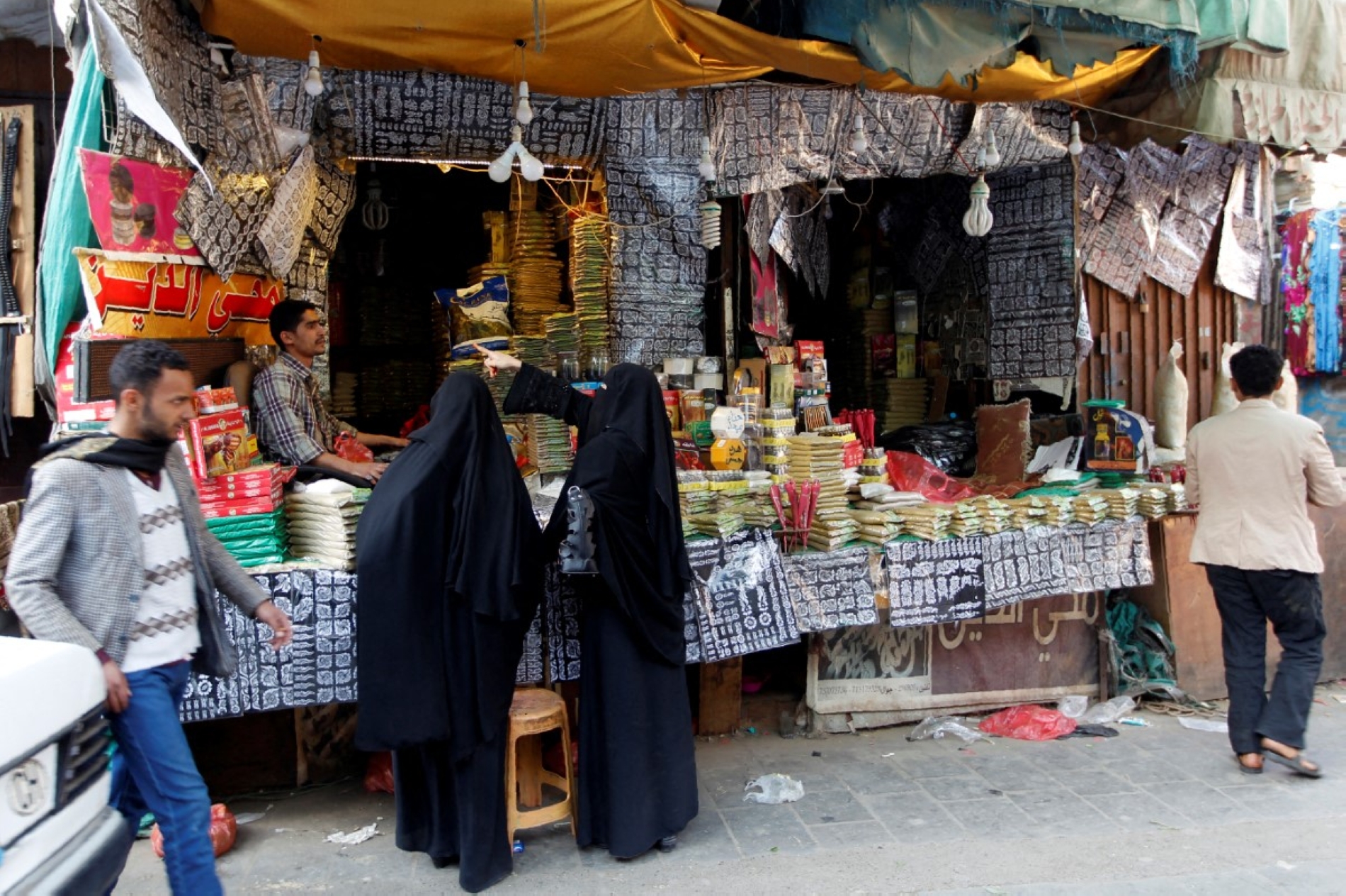
MOHAMMED HUWAIS / AFP
Yemeni women shop at a market in the old city of the capital Sanaa on 21 October 2016.

Persistance and resistance

What ultimately defines the film is not only what it shows, but what it insists on preserving: the idea that care persists even when systems fail. The sisters' refusal to send their brother into war becomes a symbolic act of resistance, but also a deeply personal one, protection for their loved ones.

Around them, loss is everywhere—lost salaries, lost stability, lost men. "People were going through their savings," Ishaq notes, and entire social structures quietly erode under economic pressure.

Yet within this erosion, new forms of relation emerge. Women take on roles they did not previously occupy. Families reorganise themselves around absence. And through it all, the bonds between sisters and women neighbours become one of the few stable architectures left standing.

The film stands out not for its explanation of Yemen, but for its refusal to reduce it to a one-dimensional place. Twenty-one years after the first Yemeni film screened on the Croisette (A New Day in Old Sanaa by Badr Ben Hirso in 2005), Sara Ishaq's film is less a statement than a listening exercise. It listens to how people speak when systems fail them. It shows how women adapt when economic roles collapse abd how families remain families even when geography and war try to dismantle them.

And above all, it listens to a simple but radical persistence: the refusal to let care disappear. In a country where everything is in motion, and nothing is stable, the film finds its centre not in politics, but in the fragile, continuous work of holding each other together.

font change