Roman Gofman: Israel's new Netanyahu-friendly Mossad chief

One by one, critics of the Israeli prime minister's security approach in the region are being replaced by yes men

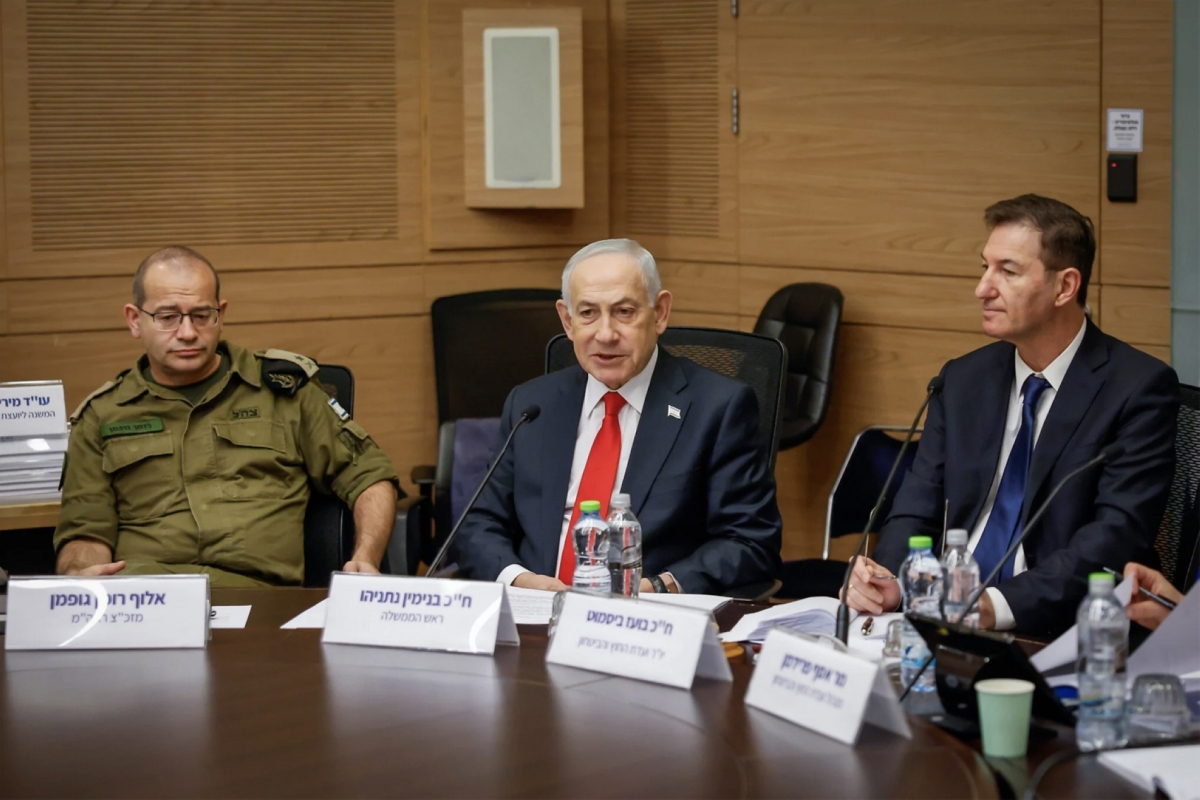
Prime Minister Benjamin Netanyahu (centre), his military secretary Roman Gofman (left) and Likud MK Boaz Bismuth attend a meeting in Jerusalem on 5 February 2026.
Knesset Office
Prime Minister Benjamin Netanyahu (centre), his military secretary Roman Gofman (left) and Likud MK Boaz Bismuth attend a meeting in Jerusalem on 5 February 2026.

Roman Gofman: Israel's new Netanyahu-friendly Mossad chief

Israel likes to project to the world an image of military and intelligence prowess. It points to its decapitation of Iran’s leadership, its weakening of Hezbollah in Lebanon, and sees itself as the regional hegemon of a 'new Middle East'.

But upon closer look, this image of an all-powerful security state seems less certain. Israel, and its Mossad intelligence service in particular, has long enjoyed an almost mythical status globally, yet behind the image of precision and omnipotence lies a security establishment increasingly marked by internal tensions and political disputes over leadership and strategy.

One of these friction points has been the appointment of Roman Gofman as the new head of Mossad by Israeli Prime Minister Benjamin Netanyahu with an explicit mission to "complete the fight against the threat of the Iranian regime." He was sworn in on 2 June, becoming the 14th director of Mossad and replacing outgoing chief David Barnea. Prior to his appointment, he was Netanyahu’s military secretary.

With tensions between Netanyahu, Israeli army chief Gen. Eyal Zamir, and a controversial new Shin Bet chief, David Zini, Netanyahu’s choice of Gofman could prove a further step in the politicisation of Israel’s security establishment, critics argue. With polls suggesting that a majority of Israelis hold the prime minister at least partially responsible for the failures of October 7, and as senior military and intel figures increasingly butt heads with Netanyahu, Israel's security establishment could be heading for a dangerous rupture.

Netanyahu has been a central architect in Israel’s hard swing to the right since the assassination of the former prime minister Yitzhak Rabin in 1995. Rabin’s murder at the hands of Yigal Amir foreshadowed, for many critics, the nationalist and hardline currents that Netanyahu has since helped bring closer to the very heart of the security establishment. What was once considered a fringe ideology, embraced by extremists such as Amir, is now represented at the highest levels of government through figures such as Itamar Ben-Gvir and Bezalel Smotrich.

In Murder in the Name of God, Michael Karpin and Ina Friedman argue that Netanyahu helped intensify the political climate surrounding Rabin’s assassination, while appeasing or failing to challenge parts of the nationalist right whose ideas would later move closer to the political mainstream.

It has taken Netanyahu almost 30 years to complete this political evolution. While it can be argued that Ben-Gvir is not, in practical terms, a security official, given that he does not exercise operational command over the military or intelligence services, critics argue that Netanyahu’s appointments of Gofman and Zini represent an effort to cement a more nationalist and settler-aligned ideology within Israel’s security establishment. A direction that many former Mossad and Shin Bet officers have publicly opposed.
Abir SULTAN / AFP
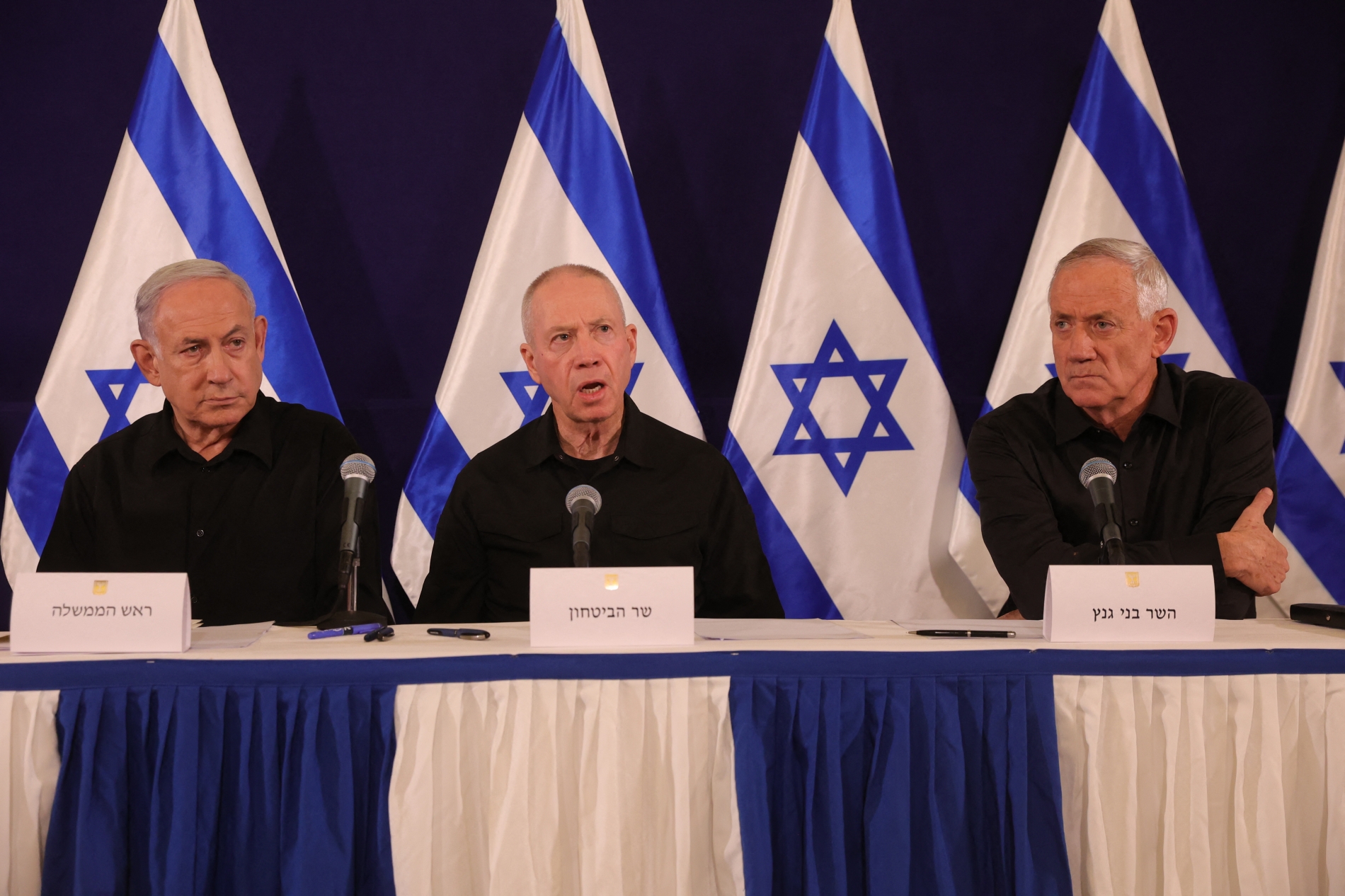
Israeli Prime Minister Benjamin Netanyahu (L), Defence Minister Yoav Gallant (C) and Cabinet Minister Benny Gantz hold a press conference in the Kirya military base in Tel Aviv on 28 October 2023.

Mounting criticism

It is no surprise, therefore, that former Israeli army chiefs such as Gadi Eisenkot and Ehud Barak, alongside former defence minister Yoav Gallant, have repeatedly accused Netanyahu of ignoring warnings before and after October 7, sidelining intelligence concerns, and elevating more ideologically aligned security figures, including officers who critics say had previously been marginalised within the military or intelligence establishment.

Eyal Zamir, the current Israeli army chief, has had public rifts with Netanyahu’s government and has also become a target of criticism from Yair Netanyahu and other figures on the Israeli right. His strategic view and warnings on Gaza, Lebanon, and Syria have, critics argue, frequently been sidelined in favour of Netanyahu’s political and military priorities.
As senior military and intel figures increasingly butt heads with Netanyahu, Israel's security establishment could be heading for a dangerous rupture

Similarly, parts of Israel's security establishment, including former Mossad figures, have reportedly favoured a more pragmatic approach to Syria, with the new leadership in Damascus signalling openness to security arrangements with Israel. Netanyahu, by contrast, has taken a harder line, insisting on continued control over Syrian territory while backing the expansion of settlements in the West Bank. Former security officials have increasingly warned that the current trajectory is untenable in both the occupied Palestinian territories and in the risk of prolonged regional conflict involving Iran and Lebanon.  

A recent investigation by The New York Times suggested that Netanyahu misled US officials and that Israeli assessments of 'the day after' in Iran, the regime's resilience, and Tehran's capabilities diverged from those of Washington. If so, attention will increasingly turn to Gofman, who reportedly played a central role in internal deliberations and is seen by critics as politically and strategically aligned with the prime minister.

AFP
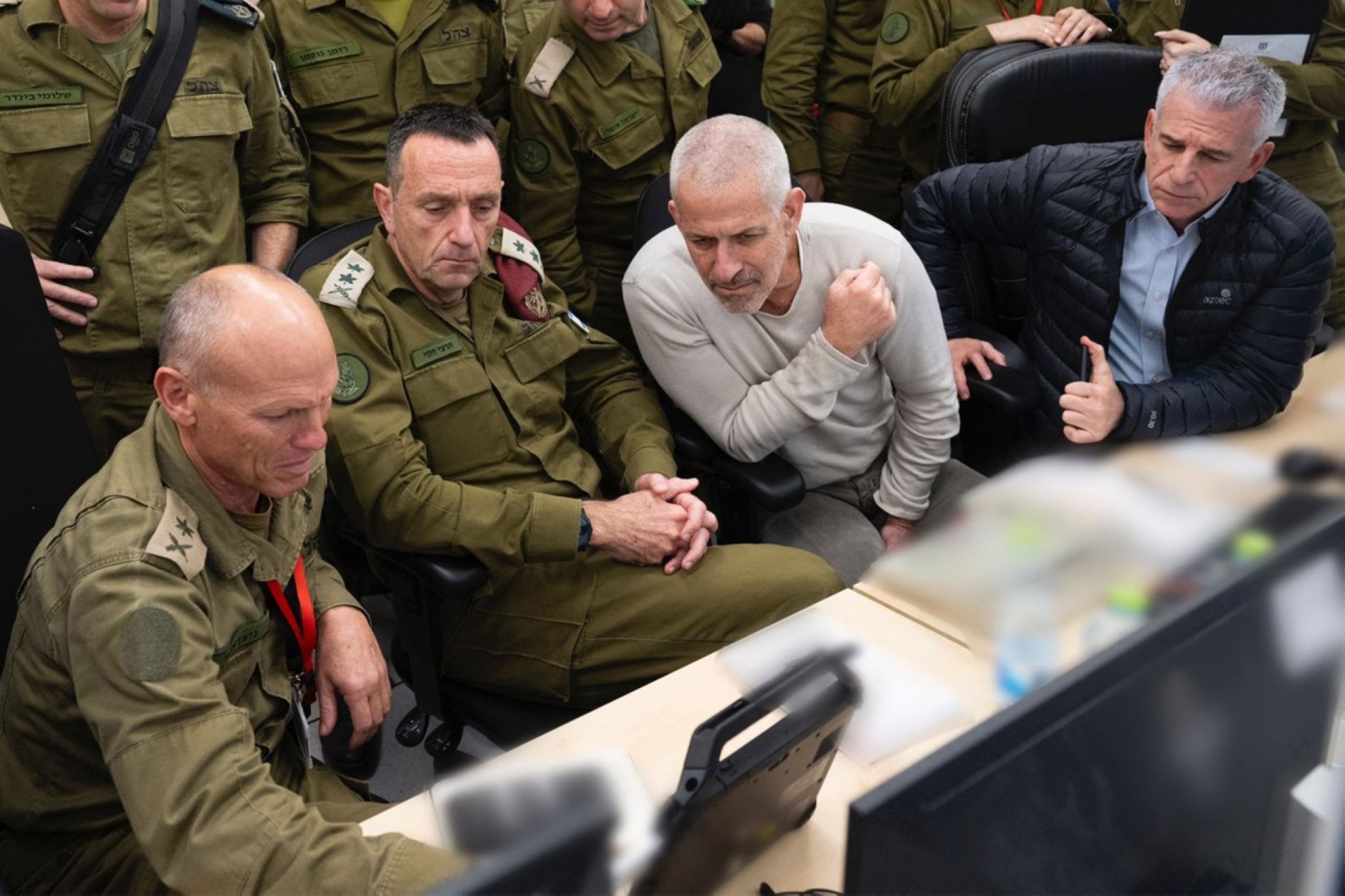
Mossad director David Barnea (far right) and Shin Bet director Ronen Bar (2R) in the situation room during the return of four hostages from Gaza on 25 January 2025.

The appointment has faced resistance not only from the attorney general but also, reportedly, from outgoing Mossad chief David Barnea. This is eerily similar to Netanyahu's earlier appointment of Zini as head of the Shin Bet, raising wider concerns within parts of Israel's security establishment about politicisation, institutional independence, and strategic judgement. Gofman's proximity to religious-nationalist and settler movements, as well as his support for more hardline security positions on Gaza and Syria, has especially been criticised.

Growing strain

All of this has unfolded at a time when the Israeli army has publicly warned of mounting manpower pressures, with reservists serving repeated tours of duty and senior commanders voicing concern over fatigue and recruitment. Netanyahu's 'forever wars', combined with growing tensions between the prime minister and parts of the military and intelligence establishment, are placing unprecedented strain on Israel's security system. 

Some have linked the failures surrounding October 7 to what they describe as the politicisation of intelligence and decision-making under Netanyahu

Some former officials and commentators have linked the failures surrounding October 7 to what they describe as the politicisation of intelligence and decision-making under Netanyahu. Meanwhile, critics of Gofman argue that his appointment reflects a broader ideological shift within parts of the security establishment, one they see as moving closer to the religious-nationalist and settler currents that have become increasingly influential in Israeli politics. For some observers, this marks a sharp departure from an older security ethos that prioritised institutional independence, military professionalism and a degree of distance from overt ideological movements.

By appointing Gofman, Netanyahu could further strain Israel's security establishment at a moment of acute vulnerability—a move that, critics warn, may have consequences not only for Israel, but for the wider Middle East. 

font change