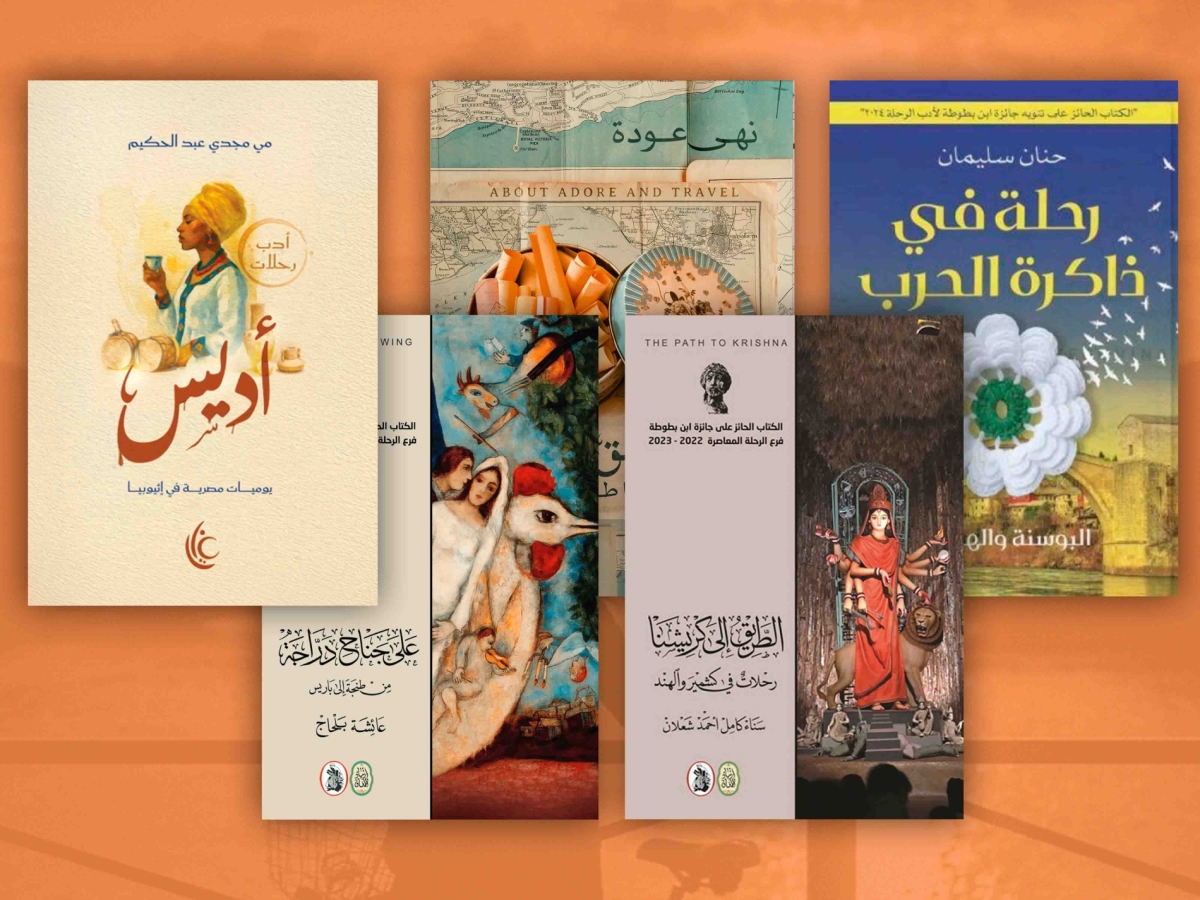

Arabic literature embraced travel writing at an early stage, and the genre soon became a rich space, geographical knowledge converging with cultural reflection and personal narrative to describe the world. Travellers’ journeys were immortalised in works that became pillars of the literary heritage, among them Ibn Battuta’s A Gift to Those Who Contemplate the Wonders of Cities and the Marvels of Travelling, and Al-Masudi’s The Meadows of Gold, in which place, history, and people were described.
Rifa’a al-Tahtawi’s An Extraction of Gold in Summarising Paris inaugurated a new phase, one grounded in comparison between East and West and in the re-examination of the self through encounters with the other. As transport developed and travel became easier, more people took to the road and wrote about their journeys. The art of travel writing seemed to be losing some of its distinctiveness and, in many cases, slipping into mere recording of fleeting impressions.
In recent years, however, the genre has witnessed a remarkable return to form, in no small part because it has been infused by Arab women’s voices. These have given travel writing a new face, venturing far beyond descriptions of place, offering layered experiences that combine autobiography, cultural reflection, memory, and geography. No longer just movement through space, travel writing has become a journey to the self, to identity, and to one’s relationship with the world.
From this standpoint, Arab female travel writers are excelling. Their works interrogate experience and understand oneself in the face of the other. They do not approach place as a subject but as a mirror to reflect on questions of identity, belonging, and cultural differences. Despite the variety of their contexts, these works are united by the transformation of travel writing from description to ‘testing consciousness’. The place is now less important than the trace it leaves. Here, Al Majalla looks at some of the women leading the charge.
Hanan Suleiman
In her book A Journey into the Memory of War: Bosnia and Herzegovina, published by Dar Kotobia in early 2026 and commended by the Ibn Battuta Prize for Travel Literature in 2024, Egyptian writer Hanan Suleiman offers a distinctive literary experience rooted in a deeply personal impulse tied to childhood memory, when she followed news of the Bosnian war, especially the Srebrenica massacre.
Suleiman travels to Sarajevo, a place heavy with memory, and seeks to reconstruct that memory in the light of what she sees and comes to understand. She describes the city as the “Jerusalem of Europe”, where Muslims, Orthodox Serbs, and Catholic Croats meet in a dense, intricate civilisational interweaving, though this coexistence conceals beneath it a history burdened by conflict and upheaval.
The book is divided into more than 30 short chapters. In each, the writer offers a rich body of important information and finely textured reflections on the region, its places, and its cities. Readers visit museums and historic landmarks, learning how Bosnians documented the war through every means available.
Some of it impacts with a startling force, such as the secret Sarajevo Tunnel, built by the Bosnian army during the siege in 1993, through which nearly 100,000 tonnes of food were smuggled. The War Childhood Museum, Mount Igman, and other sites are witnesses to a collective memory.
Her experience is significant because her journey is an act of recovery, not discovery. She does not go to Bosnia to see it for the first time, but to confront an older image of it—one long formed in her mind—and to dismantle and reassemble it. In this way, the ethical dimension of writing is visible, as documentation ceases to be an end in itself and becomes a responsibility, especially when the subject is the memory of a war whose wounds have not yet healed.
The writer also lends her book a visual and technical dimension through photographs and QR codes, allowing the reader to move from text to lived reality. This renders the experience more immediate and interactive.
Sanaa Shalaan
In her book The Road to Krishna, published by the Arab Institute for Studies and Publishing in 2023 and winner of the Ibn Battuta Prize for Contemporary Travel Writing in 2022, Jordanian writer Sanaa Shalaan departs from the traditional mode of travel writing in her somewhat analytical and critical prose.
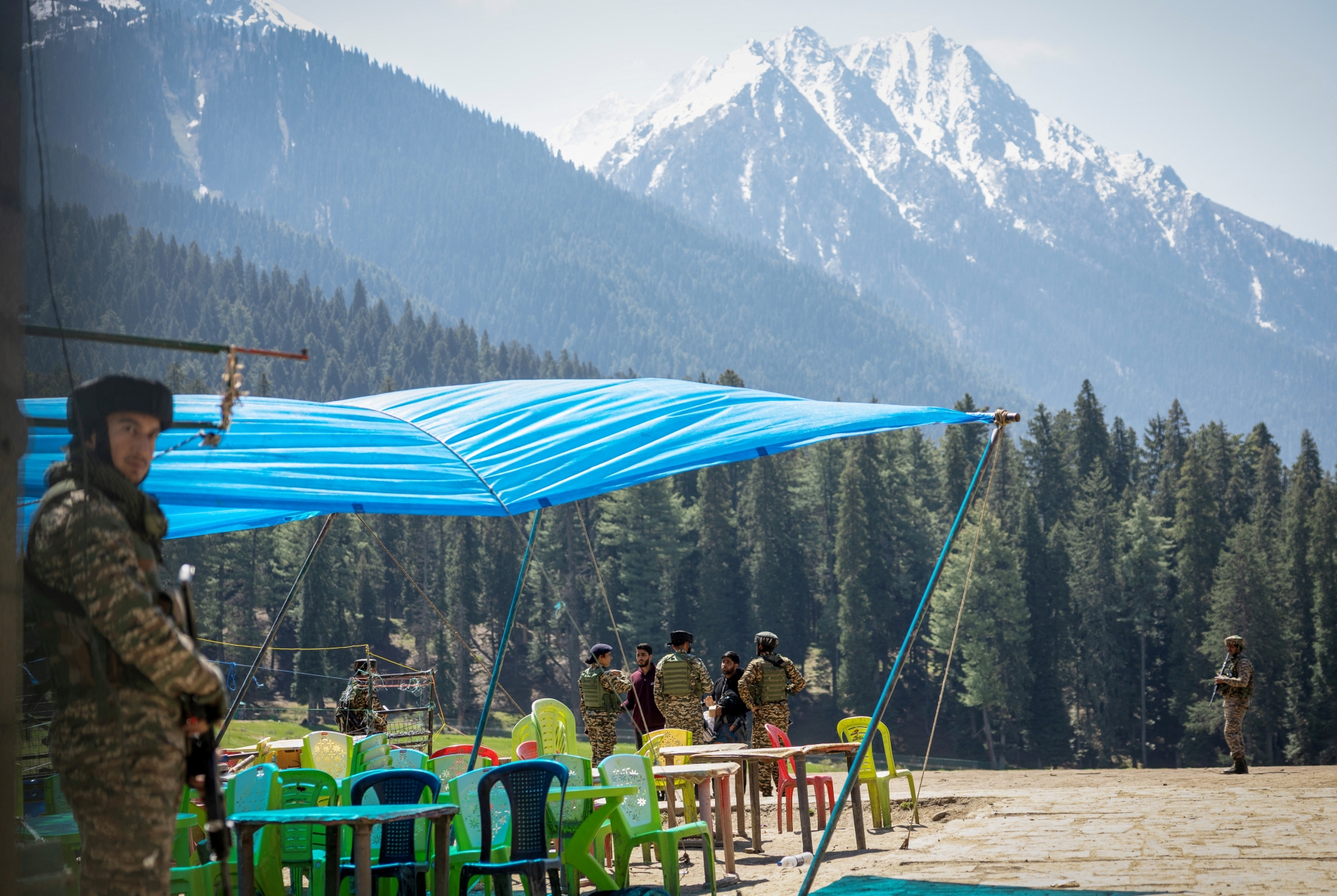
The journey unfolds in India in the company of her mother, but the text soon changes course in Kashmir, where she portrays a paradise set ablaze by political conflict. Shalaan traces the sharp contradictions of Indian society, where grandeur sits alongside poverty. Homelessness and misery in major cities reveal a deep gulf between the image promoted by Indian cinema and Indians’ daily reality.
She addresses religious tensions, particularly the suffering endured by Muslims, showing how the media inflames such conflicts, turning individual disputes into collective confrontations. In this context, she expresses concern over the rise of hate speech and its corrosive effect on the social fabric. Against this sombre backdrop, the writer does not overlook the spiritual dimension, considering Sufism, shrines, and the rituals of veneration surrounding religious figures, hence the ‘Krishna’ of the title: a symbol of love and spirituality in Hindu culture.
What distinguishes this experience is its courage in facing reality. The writer’s search is directed towards truth, even when truth arrives in shocking form. In this way, the journey becomes an instrument of revelation, restoring travel writing to its cognitive vocation as a means of understanding the world rather than merely adorning it.