New book tackles the fading art of Koranic recitation

Egyptian heritage researcher Haytham Abu Zayd sheds light on how the art form grew, excelled, and then declined over the years and ends by offering a path to revival

New book tackles the fading art of Koranic recitation

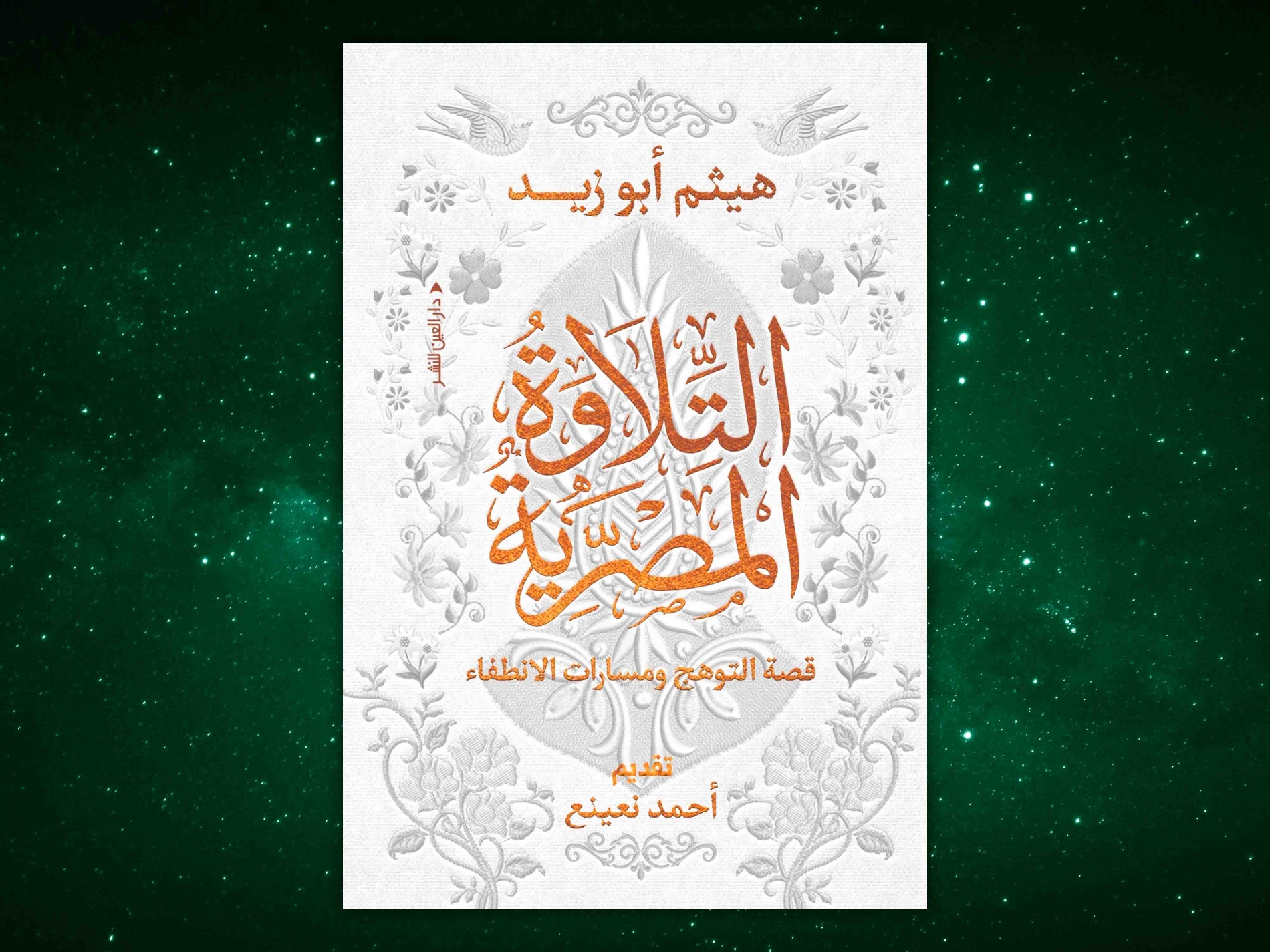
A new book sheds light on the importance of the art of Koranic recitation in Egypt, showing how the art form grew, excelled, and then declined over the years, before suggesting a route back to prominence.

Egyptian Recitation has been written by Haytham Abu Zayd, an Egyptian heritage researcher who focuses on recitation and religious chanting, and who believes that Koranic recitation in the country has been all but neglected in serious scholarly criticism. He sheds light on the importance of the art and its proliferation across the Arab and wider Islamic worlds, to the point that the Egyptian style of recitation came to overshadow older local traditions.

With a host of qualifications to back up his opinions, he does not approach his subject by considering the rules of tajwid (the science of correct recitation), and considers it apart from the social settings of recitation and its occasions. From its heyday to a gradual waning over recent years, Abu Zayd writes about this field with the utmost care and does not confine himself to description and historical recollection, ending with a call to restore Egyptian recitation to its former brilliance.

The book is no dry and forbidding academic prose. It includes opinion which lends vitality to the chapters, but any judgments of personal taste are based on objective grounds. For example, he says Sheikh al-Shashai “was Egypt’s foremost reciter in preparing the close of a recitation,” adding: “He would gather all his artistic and emotional powers into the final words before the tasdiq (confirmation, verification, attestation, or ratification)... He leaves you with the feeling that he is bidding you farewell, and that the beautiful time you have spent with him has come to an end.”

The author distinguishes between the rules governing the various readings, such as variations in the length of certain madds (extensions or elongations), occasional differences in pronunciation, and certain rules of idgham (merging, blending, or inserting) and vowelisation. This is particularly evident in his chapter titled Gardens of Tartil, which examines the murottal (a slow, measured, and clear recitation) completions of the Koran and the different methods they followed.

Charting the arc

Haytham Abu Zayd focuses on reciters whose performances have reached us in recorded form, especially from the early decades of Egyptian radio. His book is not a general historical study of the evolution of recitation as an art, nor is it a specialist volume on the canonical readings and their various forms. He charts recitation’s ascent and decline in Egypt, before proposing ways to restore its vitality.

He identifies some characteristics of Egyptian recitation, including an avoidance of pedantry in the application of rules, alongside a general fidelity to sound tajwid. Attentive to the distance between theoretical rulings and their practical enactment, he allows for the latitude that tradition permits.
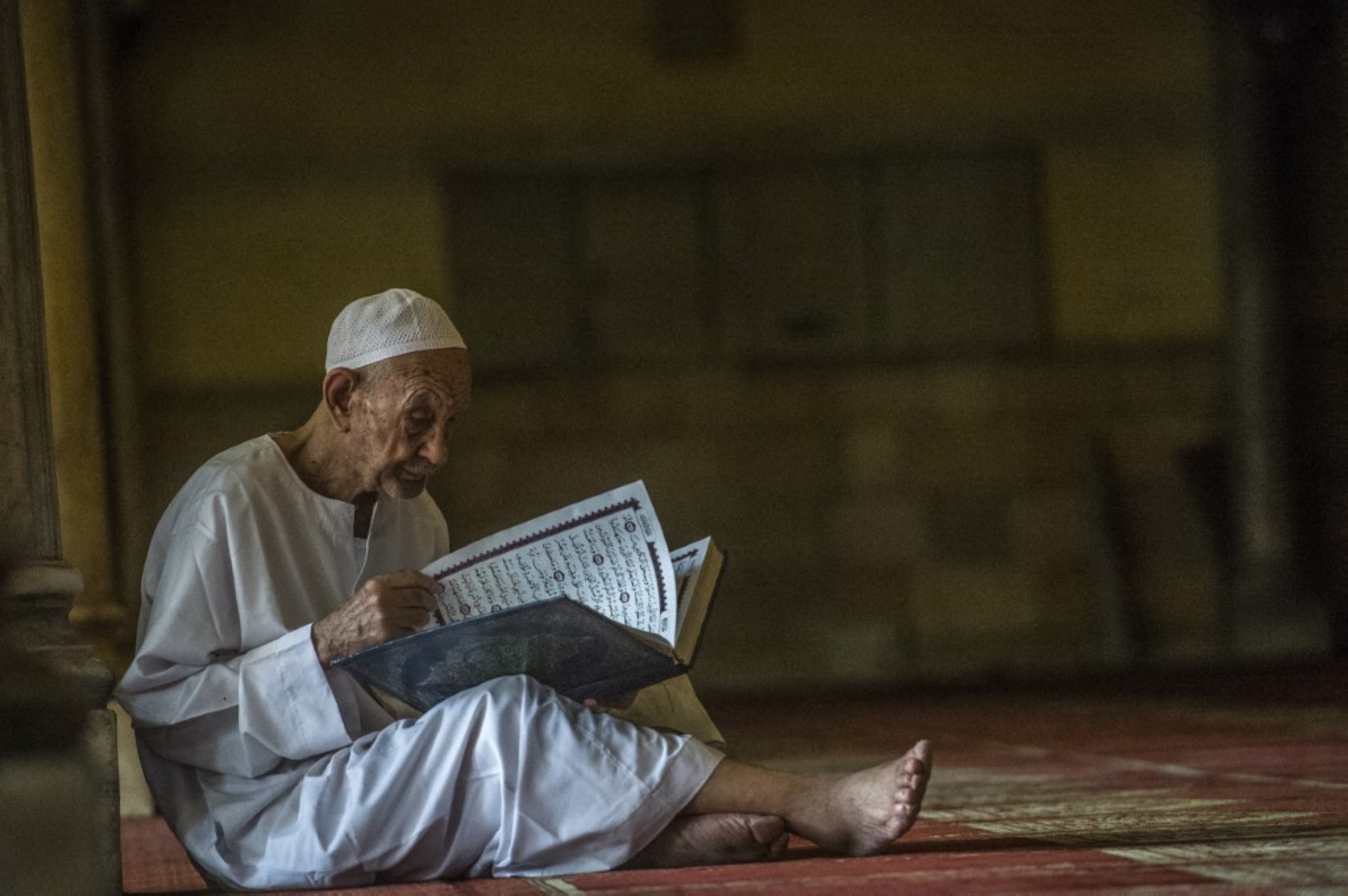
AFP / KHALED DESOUKI
An elderly Egyptian man reads a copy of the Koran, Islam's holy book, after the Friday weekly prayer at al-Azhar mosque in the capital Cairo's Islamic quarter, on 2 October 2015.

He also notes the use of various readings and their different modes, along with melodic chanting in the maqamat (the system of melodic modes in traditional Arabic music and Koranic recitation). Here, he rejects the fanciful notion that each verse must be assigned a particular maqam supposedly suited to its meaning, an idea that in practice turns the reciter into little more than a vocal showman.

In shaping this melodic expression, reciters employ musical phrases that accumulate, unfold, and give way to one another within a tonal framework whose first purpose is to ward off monotony. Thus, the science of Koranic reading is transformed into a living, audible art in which pleasure and sanctity meet.

Egyptian reciters are distinguished by vocal ornamentation, ardent cadences, deliberation in melodic progression, and an assured command of the voice that enables performances of remarkable length.
Reciters employ musical phrases that give way to one another within a tonal framework whose first purpose is to ward off monotony

Accumulated practices

They also draw upon what Abu Zayd calls "disciplined improvisation," but within a system shaped by centuries of accumulated practice and by no means severed from Egyptian music more broadly. The Egyptian reciter's improvisation is part of an artistic identity borne of repetition yet touched by renewal. It springs from their deep immersion in a heritage of recitation, lyrical singing, Sufi chanting, and popular devotional praise. 

The rise of this art unfolded alongside the rise of solo singing in Egypt, in the age of Abdu al-Hamuli, then Sheikh Yusuf al-Manyalawi, Abd al-Hayy Hilmi, Salama Higazi, and others. The beginnings of the new style of recitation, at the hands of Sheikh Hanafi Bar'i and then Ahmad Nada (neither of whom left recordings) belonged to the same period and perhaps even involved a measure of rivalry, especially between Abdu al-Hamuli and Sheikh Ahmad Nada. We know too that Sheikh Ali Mahmoud, in his youth, loved listening to al-Hamuli.

Some feel that Koranic recitation, religious chanting, and worldly lyrical singing do not belong to separate domains, but rather nourish one another and sometimes converge in a single person, as with Sheikh Yusuf al-Manyalawi. This means that the melodic capacity of the great reciters cannot be separated from the broader development of singing and music in Egypt. The reciters' welcome cannot be separated from the enthusiasm many of those same audiences showed for Egyptian lyrical singing, of which Umm Kulthum was the most illustrious emblem.

MARWAN NAAMANI / AFP
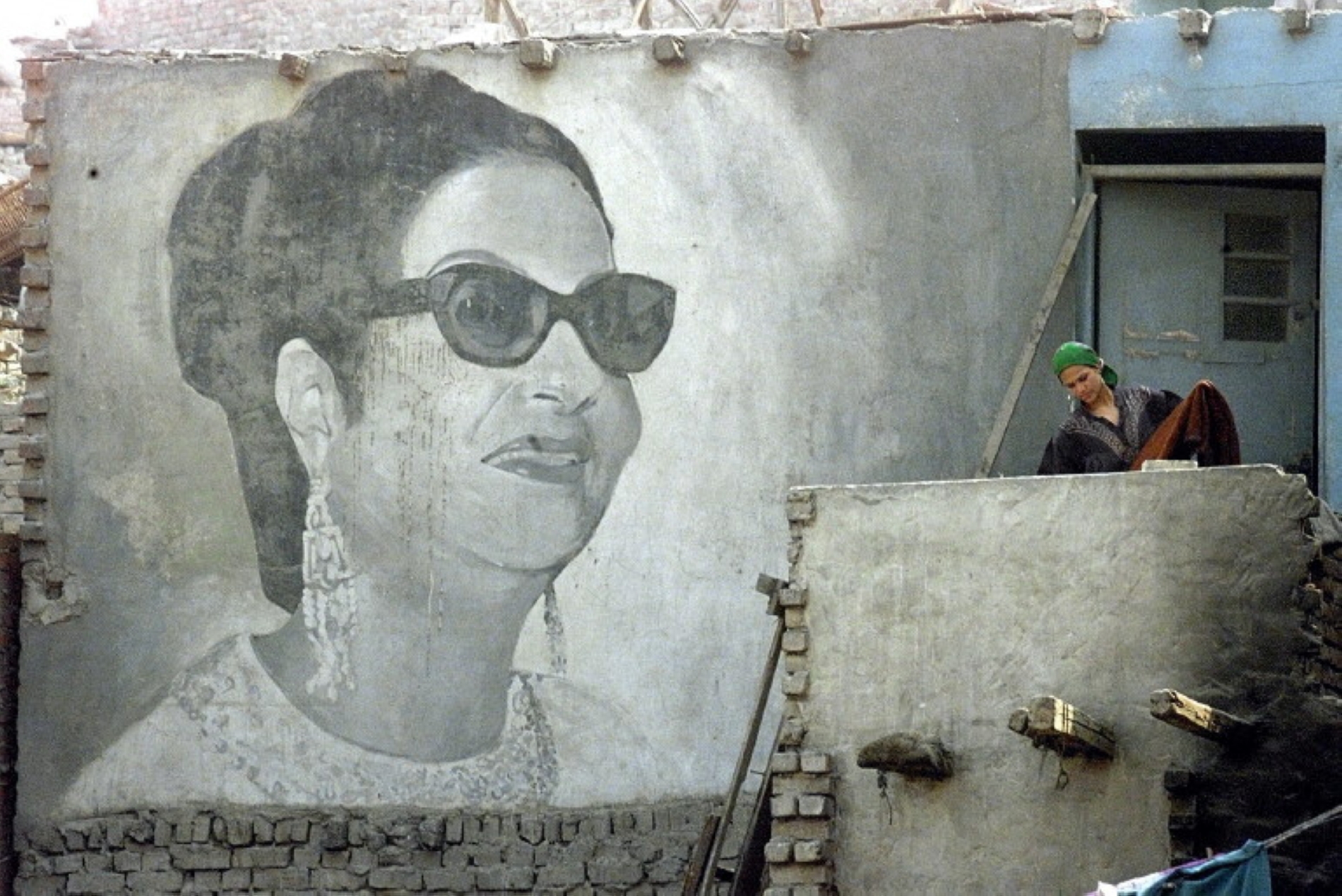
An Egyptian woman collects clothes in front of a giant mural of Egyptian diva Umm Kulthum painted on her shack in the impoverished Kom al-Ghurab suburb of Cairo, on 2 February 2000.

Giants of recitation

Haytham Abu Zayd traces the big names of this art and divides them into generations, starting with the founders in what he calls the "age of authority," from which the rules of this art are derived. These founders, including the sheikhs Muhammad Rifat, Ali Mahmoud, Abdel Fattah al-Shashai, Taha al-Fashni, and Abu al-Aynayn Shuayshi, set the standard against which all others have since been measured.

Building on the edifice were sheikhs Kamel al-Bahtimi, Mahmoud Khalil al-Husary, Mahmoud Ali al-Banna, Abdel Basit Abdel Samad, and Muhammad Siddiq al-Minshawi. Abu Zayd then considers Sheikh Mustafa Ismail, whose voice and style have themselves become a vast school encompassing distinguished reciters such as the physician-reciter Ahmad Nuayna. The glorious age of recitation draws to its close with reciters of genuine quality.

In the sketches he offers of these men, the author does not seek to recount their lives. Rather, he illuminates their defining qualities, offering moments of genuine aesthetic insight. He draws attention, for instance, to the fact that movement between maqamat is not in itself the essential matter. Sheikh Mustafa Ismail may spend 40 minutes within a single maqam, creating unique melodic phrases and rapturous cadences, reminding us of the need to listen to what precedes a modulation to savour what follows.

For Abu Zayd, listening is its own art form, hearing the function of silence in the recitation of Sheikh Muhammad Rif'at, for instance, or the patterns of ascent, gradation, and deliberation, the architecture of performance, and the richness and density of melodic construction in Sheikh Mustafa Ismail.

The author is happy to pause over the reverence and devotional gravity that mark out certain reciters, but insists that these are men with extraordinary voices practising a distinctive art, not specialist scholars. Likewise, he says a scholar of qira'at (the different, authentic, and authorised methods of reciting the Koran) is not necessarily a reciter whose performance can fully captivate audiences.

Qassem al-KAABI / AFP
A worshiper recites from the Koran at the Kufa Mosque south of Baghdad, on 12 March 2026.

Causes of decline

Having charted the ascent, Abu Zayd then turns to the disappearance of well-trained voices, steeped in prolonged listening to the general phrases of the Egyptian school, which enabled them to recite without becoming mere imitators. He looks at the so-called 'recitation trainers' and purveyors of 'maqam courses' whose expertise is often confined either to memorising and reproducing certain phrases from the older reciters or to a handful of theoretical rules for distinguishing between maqamat. He describes this as "misleading instruction".

He also pauses over the laxity of the audition committees and the collapse of the role once played by Egyptian radio, which had served as a guardian of taste, much as Muhammad Hassan al-Shujai did as head of the radio's listening committee. For years, he withheld approval from many men with magnificent voices, among them Sheikh Sayed al-Naqshabandi, who was admitted to the radio only as a chanter, and only after al-Shujai's death in 1963.

Abu Zayd details the disintegration of standards that once governed recitation, and the harmful role of profit-driven promotion. He also lists the tent owners, concert videographers, online publicity brokers, and the crowds of listeners who lavish online praise and prominence on certain reciters and burnishing voices that do not deserve it.

The failings range from vocal discordance to eccentric excess in performance and a deeper discordance of taste with the Egyptian school itself, together with recourse to trite phrases borrowed from popular tunes. Abu Zayd may also hint at a disapproval of the introduction of non-Egyptian influences into recitation.

At its heart, though, the descent seems to stem from an inability of recitation to integrate, cross-fertilise, and transform an incoming influence into a form of beauty. The history of Egyptian music, which forms the melodic reservoir from which recitation springs, has been shaped by precisely such interactions across the centuries. Another factor is the ascent of other schools that have left their mark in a similar way.

REUTERS/Mohamed Abd El Ghany
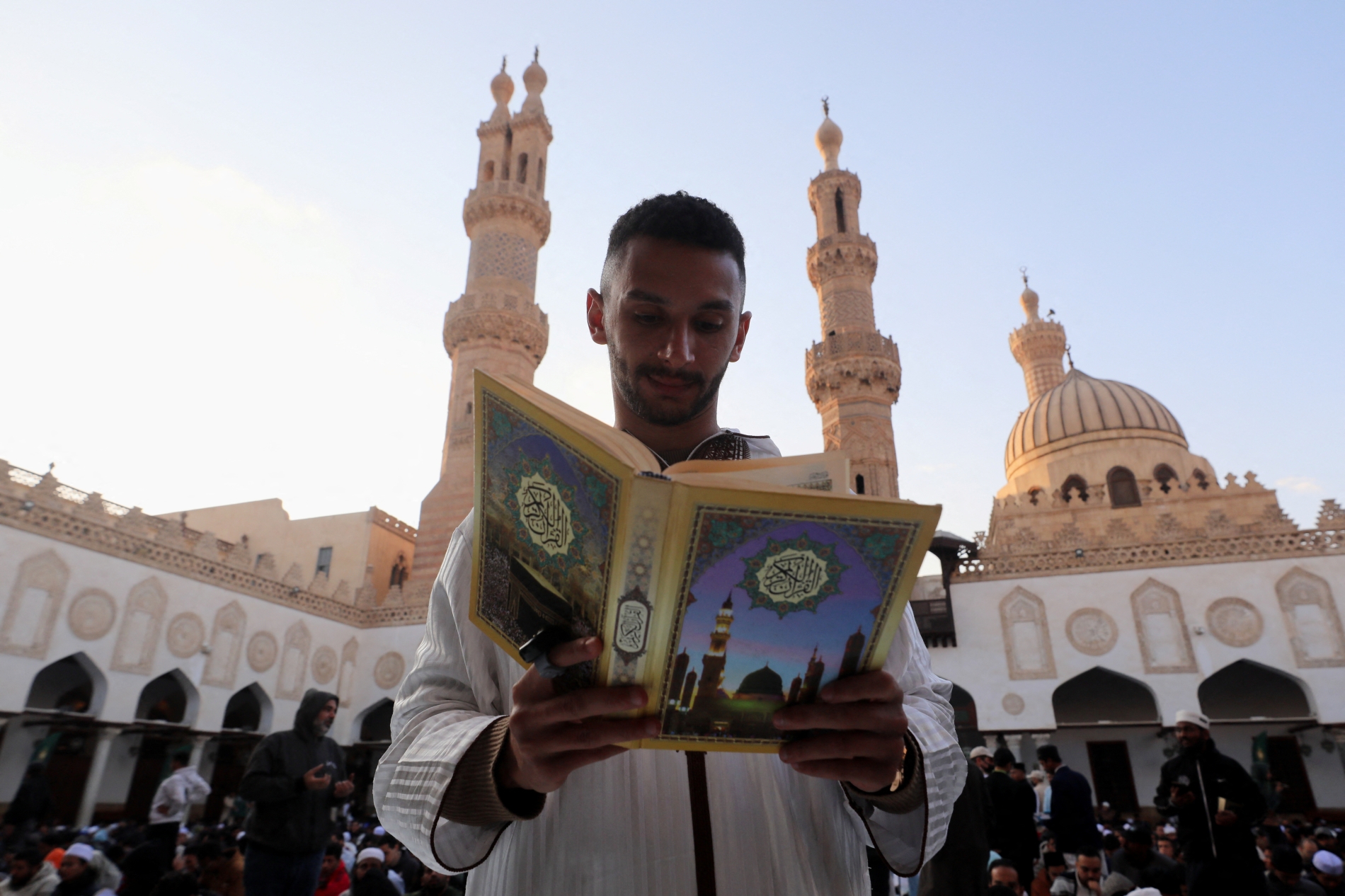
A man reads the Koran after the prayer, at Al-Azhar mosque in the old Islamic area of Cairo, Egypt, on 23 February 2026.

Paths to renewal

Abu Zayd prescribes several remedies to address the causes of this decline. For example, he hopes that recordings of the great reciters may serve as a substitute for the immersion once offered by living alongside those exceptional voices and attending their gatherings in person.

By listening to these recordings, young reciters can learn and absorb the dignity, decorum, and taste of the Egyptian school, together with its distinctive way of shaping melodic phrases, managing transitions and cadences, and proceeding with deliberation (albeit with the precondition that the reciter has a beautiful voice). In this way, the young reciter acquires the common ground shared by the great masters. This lets them avoid imitation and mimicry, allowing for an independent artistic personality to emerge while remaining faithful to the essential spirit of the inherited tradition.

The science of Koranic reading is an audible art in which pleasure and sanctity meet.

He also proposes a genuine audition system within Egyptian radio, which still has a symbolic authority in the eyes of the public which lets it bring truly distinguished and accomplished voices into prominence. In a related way, Abu Zayd highlights the importance of criticism. The restoration of recitation "requires the emergence of a parallel critical intelligence... capable of rebuilding collective taste," he says.

Today, the environment surrounding recitation has changed. There are fewer reciters with great voices, from whom younger generations might once have learned. Listening, understanding, reflecting, and analysing will need to compensate for this, Abu Zayd says.

The situation calls for the defence of the values and for the dismantling of false promises, such as the empty glorification of modulation between maqamat as an end in itself, or the assumption that a particular maqam necessarily corresponds to a particular meaning. If genuine talent is to be given a true compass, two tasks must be undertaken at once, he argues.

REUTERS/Amr Abdallah Dalsh
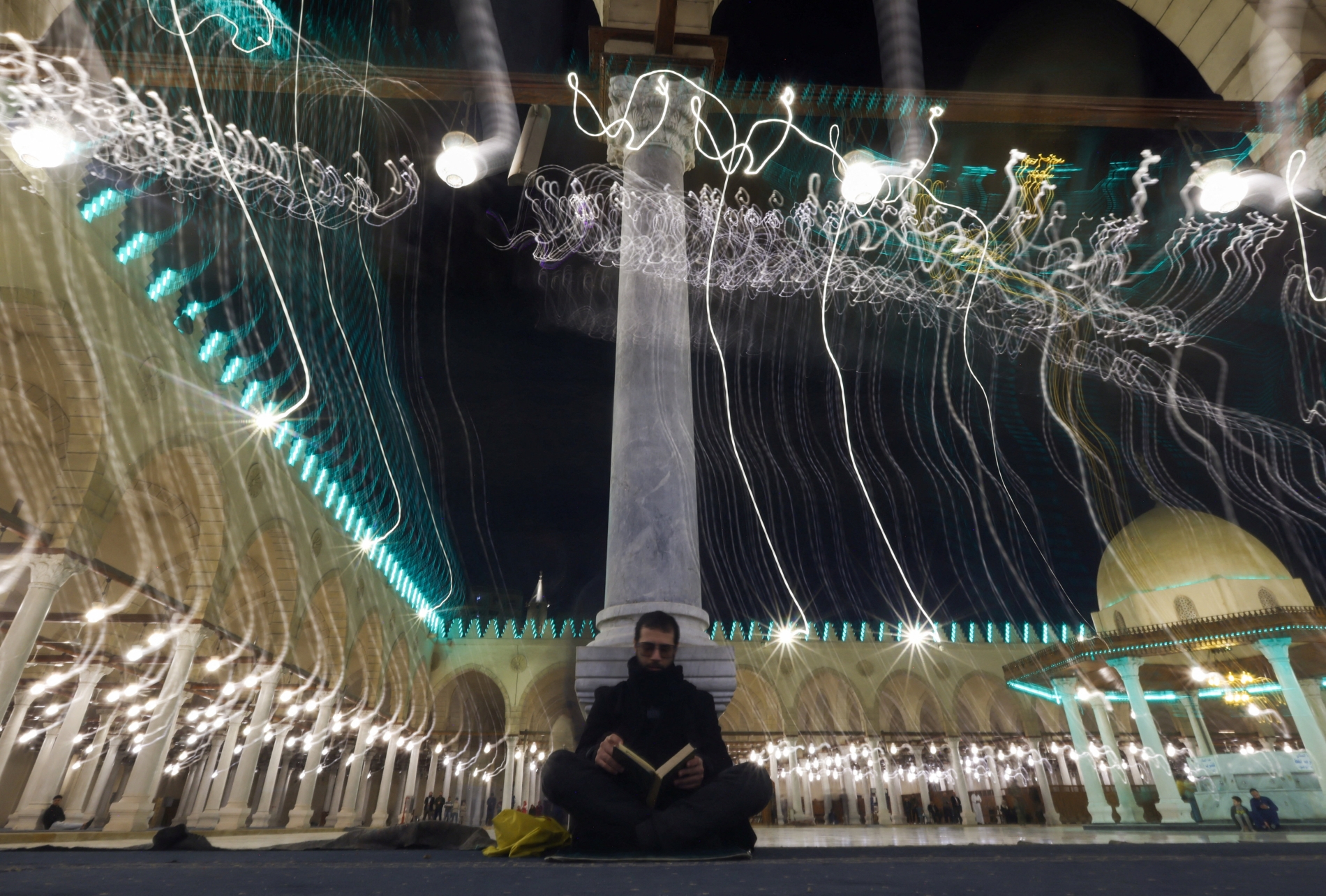
An Egyptian Muslim man reads the holy book of the Koran at Amr Ibn El-Aas mosque, the first and oldest mosque ever built on the land of Egypt, in old Cairo, Egypt, on 10 March 2024.

First, there must be serious, documented, and authentic criticism that offers a profound vision of the art, defines its sources and foundations, diagnoses its ailments, and proposes ways of confronting them. Especially online, he finds misplaced criticism, hearing expressions such as 'people of the Koran', 'a masterful reciter', 'the Koran prevails', 'master of pause and commencement', 'Koran as it was revealed', and "student of music". These claims are often devoid of substance and contradictory, he explains, such as when a reciter is described as the 'king of khushu'.

Haytham Abu Zayd is no advocate of embalming the art, nor is he blindly enthralled by the past. He has faith in the possibility of rescuing Egyptian recitation from its present state and proposes that young reciters take as their models contemporary figures such as Ahmad Nu'ayna' and Mahmoud Abdel Hakam. He does not think shifting public tastes account for the whole story, noting how many young people continue to show an interest in older music and in the great reciters and singers of the past.

The aim of this book, at its broadest level, is to raise awareness, but it also warns about criticism and judgment. "The gravest danger confronting any reform movement in the field of recitation lies not only in the existence of mediocrity, but in the possibility that those who take it upon themselves to combat it may themselves lack the tools that would enable them to distinguish between sound and defective performance."

In this way, the book emerges as a serious attempt to open a path towards genuine criticism and towards the formation of sound critics—men and women who understand what is required of them in the face of the flood of triviality and easy shortcuts: grounding, knowledge, precision, sobriety, and eloquence. Abu Zayd sees all these qualities embodied in Egyptian recitation.

font change