Sisi hopes Trump will save Egypt from Iran war fallout

Cairo is feeling the impact of the war and fears that some longer-term consequences may be existential. Meanwhile, saviours are few and far between.

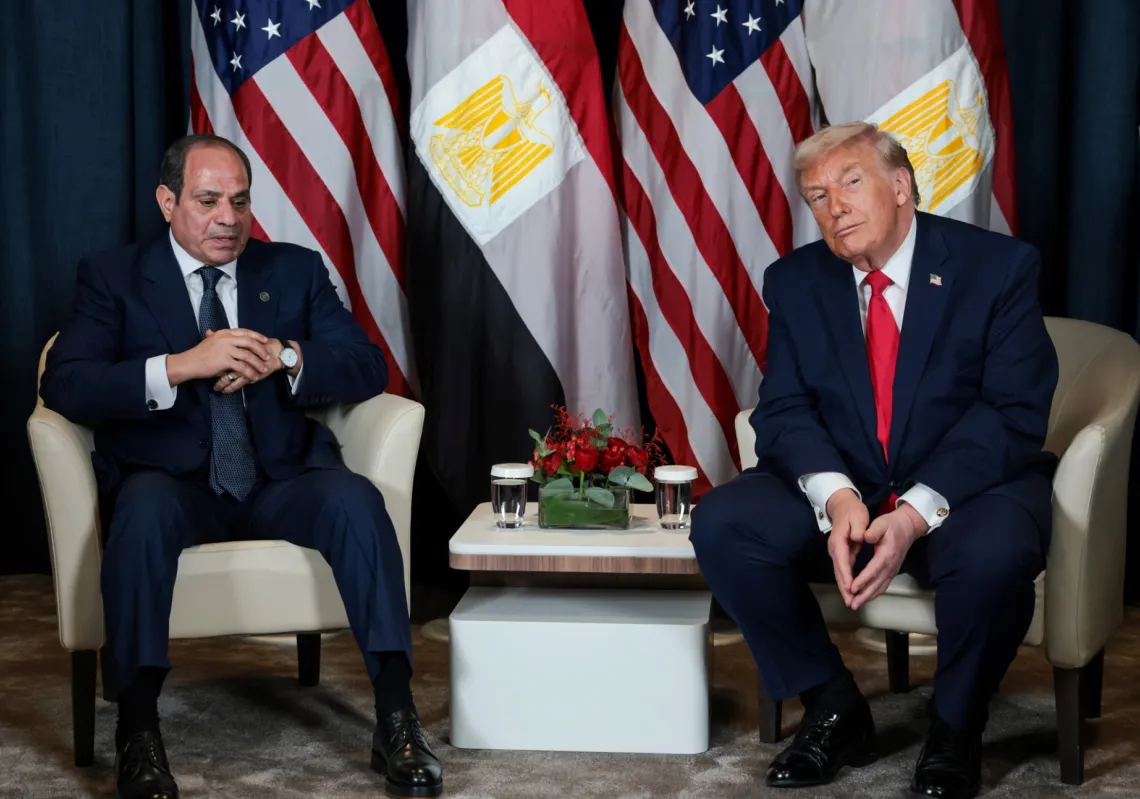
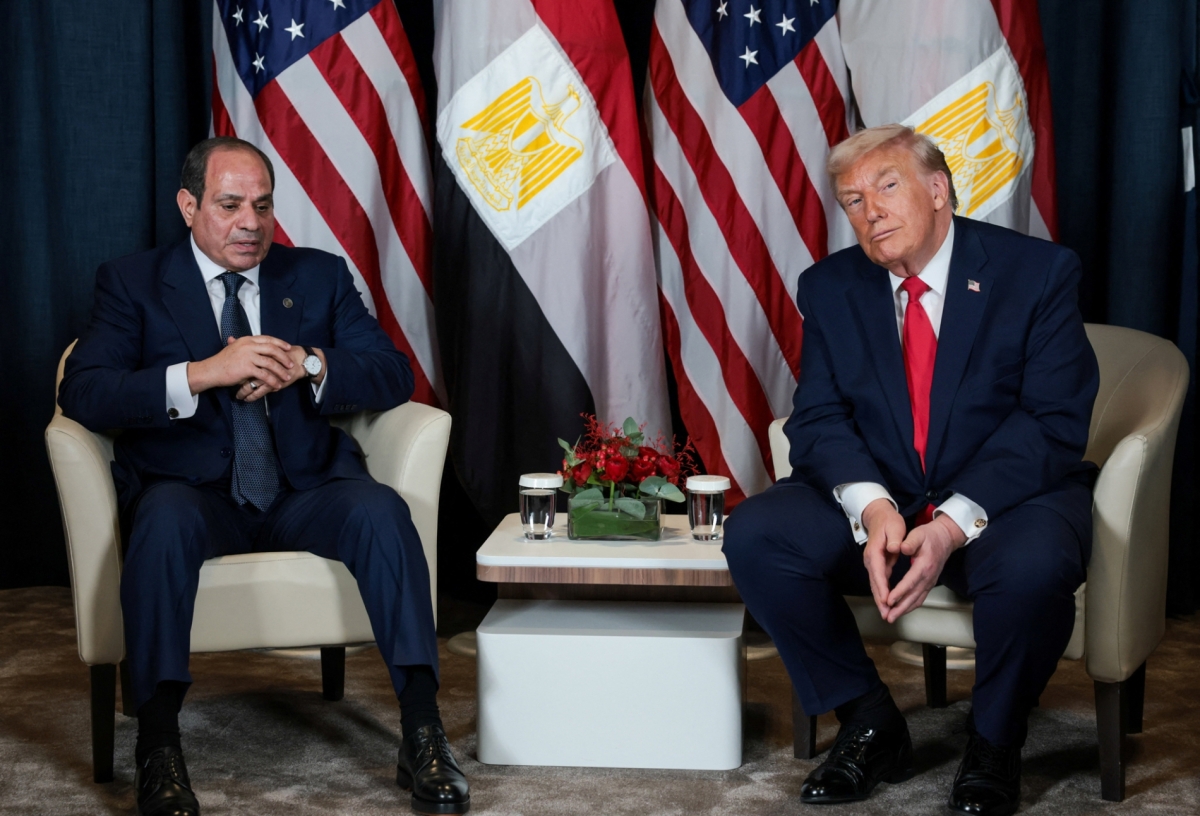
US President Donald Trump holds a meeting with Egyptian President Abdel Fattah el-Sisi during the World Economic Forum in Davos on 21 January 2026.
Reuters
US President Donald Trump holds a meeting with Egyptian President Abdel Fattah el-Sisi during the World Economic Forum in Davos on 21 January 2026.

Sisi hopes Trump will save Egypt from Iran war fallout

Egyptian President Abdel Fattah el-Sisi had good reason to issue his latest appeal to US President Donald Trump to end the US-Israeli war against Iran. Nevertheless, his doing so raised eyebrows.

El-Sisi banked on Trump last year as Israel finally brought its ferocious war on Gaza to an end after two years of destruction. Although the US president saw eye-to-eye with Israeli Prime Minister Benjamin Netanyahu on the Palestinian territory, he also wanted to be seen as a peacemaker.

On Iran, Trump is again in accord with Netanyahu on most of the war goals, including to enact regime change, to decapitate Iran’s military capabilities (including its ballistic missile programme), to end its support for regional proxies, and to bury its nuclear ambitions once and for all. Where they differ is on the economic future of Iran. Trump appears to want to appropriate Iran’s oil, but Netanyahu is on a mission to totally eradicate Israel’s regional adversaries, so he wants to leave Iran thoroughly decimated, oil included.

Seeking a solution

Trump’s answer at the Future Investment Initiative in Miami on 27 March to a question about the legacy he wants to leave behind suggests he is still interested in being seen as a peacemaker, and his recent rhetoric on Iran suggests he is looking for an exit, albeit one cloaked in victory.

Whether el-Sisi’s plea can offer him this kind of transactional exit depends on whether the Iranians still have anything to fear from losing in the event that the war drags on. This is being discussed by regional actors, including Egypt, which has spent the past five weeks trying to stop the bombs and drones.
AFP
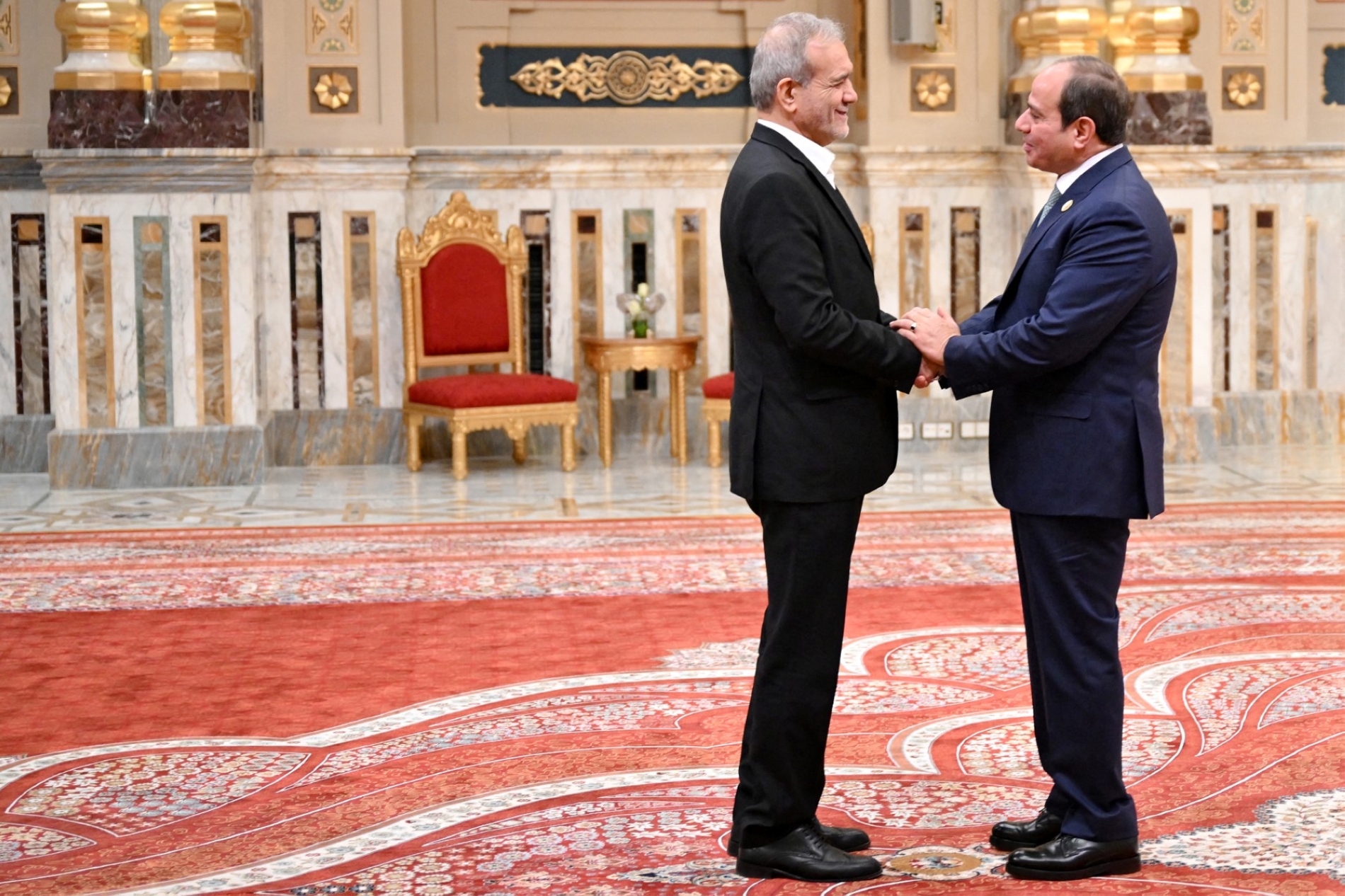
Iran's President Masoud Pezeshkian is greeted by Egypt's President Abdel Fattah el-Sisi during the D-8 summit in Cairo, Egypt, on 19 December 2024.

El-Sisi talks to Iran’s President Masoud Pezeshkian, Russia’s President Vladimir Putin, Pakistan’s Prime Minister Shehbaz Sharif, and Gulf leaders such as Saudi Crown Prince Mohammed bin Salman and Qatari Emir Tamim bin Hamad Al Thani. His foreign minister talks to counterparts from Iran, the US, Pakistan, Saudi Arabia, Türkiye, and Qatar.

Egyptian intelligence officials have even opened communication channels with Iran’s Islamic Revolutionary Guard Corps (IRGC), thought to have ultimate authority over decisions of war, and Lebanon’s Hezbollah militia. All these contacts can help build consensus on a formula for ending the war—one that seeks to save face, and which benefits the Gulf states that have paid such a heavy price for a war they were not party to.

Cairo's belief is that an extended war only benefits Israel, but is economically devastating to everyone else

Effects of war

Cairo's belief is that an extended war only benefits Israel, but is economically devastating to everyone else, including the Iranian people, GCC countries, and those standing on the periphery who source their energy supplies from the region, including Europe and Asia.

Economic fallout from the war is also slowly hitting Egypt, which has a large population and a struggling economy. Owing to surging energy prices, the Egyptian government has already had to raise fuel prices by almost 30%—a move that has not been popular. This has caused a sharp rise in commodity prices and exacerbated the economic woes millions of Egyptians were already suffering before the war.

Khaled DESOUKI / AFP
People walk past a closed cinema as shops close early under a government-ordered curfew aimed at reducing energy costs in downtown Cairo on 2 April 2026.

Known as 'the city that never sleeps,' Cairo now turns its lights off at 9pm as part of the government's energy-saving measures. Tens of thousands of businesses also now close early, including shops and cafés. This is a judgment call. Some argue that early business closures harm economic activity, frighten investors, and slow growth.

The recent flights of foreign capital (estimated at billions of dollars) led the Egyptian pound to fall, which is bad news for both the government and consumers. Policymakers now fear public discontent and destabilisation. Meanwhile, Egypt's Islamists are said to be biding their time to exploit the country's  current vulnerabilities to make a political comeback.

In fact, Egypt's interior ministry announced several days ago that it had arrested Ali Mahmoud Mohamed Abdel Wanis, a leader of the outlawed Hasm group, which is affiliated with the Muslim Brotherhood, after tracking his movements and extraditing him from an African country. He is alleged to have plotted to down el-Sisi's plane with missiles.

Only one winner

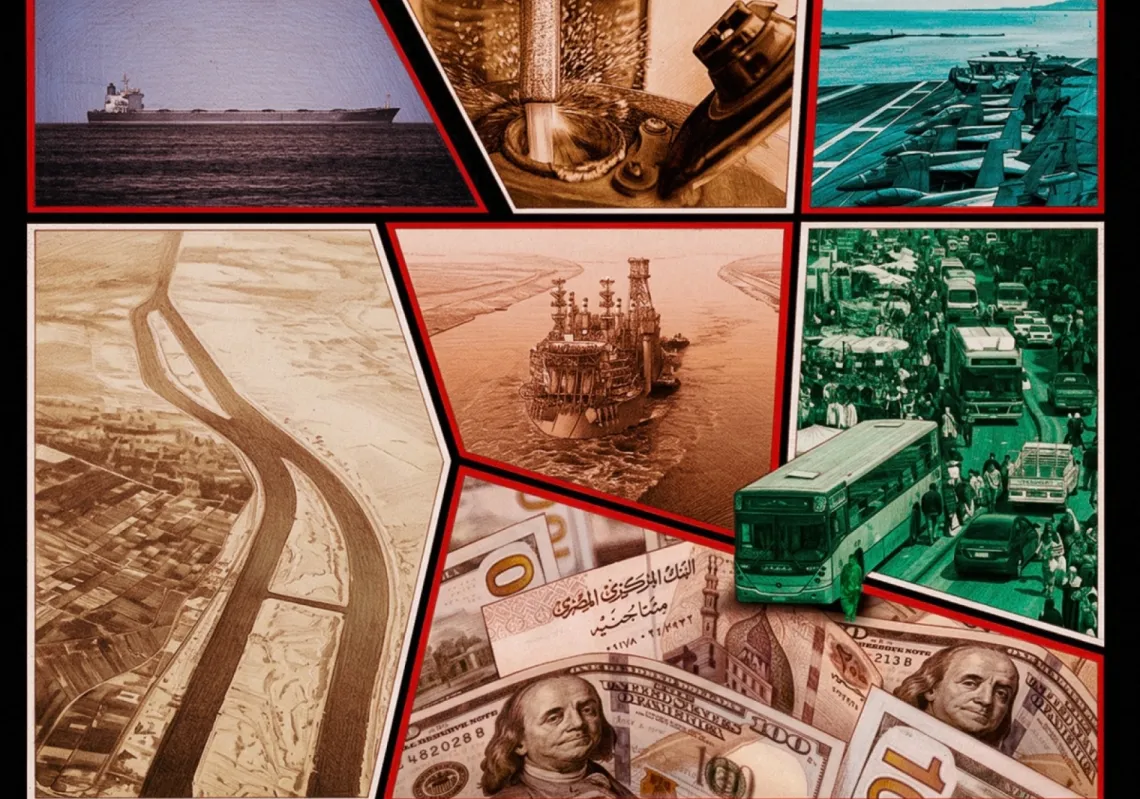
For Egypt, there is no good news from the US-Israeli war on Iran, not least because Tehran has retaliated against the Gulf countries that have been Cairo's staunchest backers in recent years, including at times of dire economic need. Houthi attacks on commercial shipping in the Red Sea from Yemen complicate the equation. They chase away global trade vessels from the Suez Canal, where the transit fees are a vital source of revenue for Egypt.

Reuters
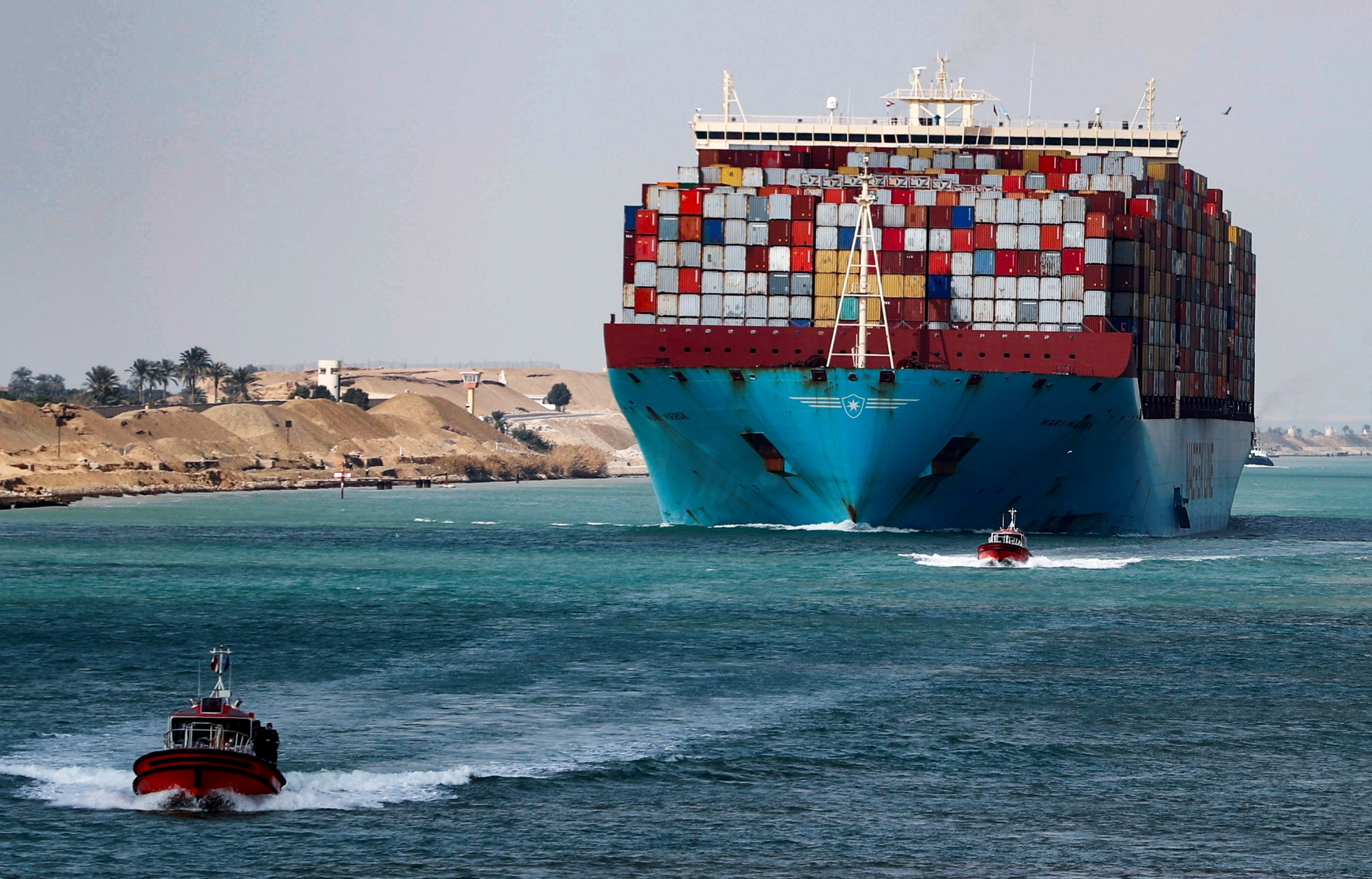
A container ship transits the Suez Canal on 15 February 2022.

With both the Strait of Hormuz and the Bab el-Mandeb Strait effectively closed, Egypt suspects that Israel will argue for Gulf oil and gas to instead be routed through its territory to European customers. This would strip Egypt of the customs fees it collects through the Suez Canal and erode its strategic importance.

Meanwhile, Israel's bid to establish a permanent presence in southern Lebanon, up to the Litani River, shows how it wants to expand its borders. Israel's annexation of the Gaza Strip, the occupied West Bank, and most of southern Syria could soon follow, as the far-right government of Benjamin Netanyahu seeks to fulfil its biblical 'Greater Israel' vision, from the Nile River in Egypt to the Euphrates in Iraq, including Lebanon, Palestine, Jordan, Syria, and Iraq.

Geostrategically, Iran's defeat will shatter the delicate regional balance of power that Egypt had long relied upon to keep Israel at bay. Emboldened, Israel may now consider that Egypt (with whom it has had a US-brokered Peace Treaty since 1979) is the last remaining obstacle to regional hegemony. Appealing to Trump when Egypt's economy and national security are at stake, in a way, seems like a risky strategy for el-Sisi to pursue. But pursuing it, he nonetheless is.

font change