Gulf states should steer clear of attritional war trapshttps://en.majalla.com/node/330381/politics/gulf-states-should-steer-clear-attritional-war-traps
Gulf states should steer clear of attritional war traps
The US-Israeli war against Iran aims to draw in Gulf states, but history has shown that entering wars is far easier than exiting them. Prudence is needed now more than ever.
Grace Russell
Gulf states should steer clear of attritional war traps
Israel may have begun by waging war on Gaza, but it didn't end there. In the years that followed October 7 2023, Israel has unleashed its war machine on Lebanon, Syria, Yemen, and now Iran, in a systematic attempt to redraw the region’s map by force.
Once hypothetical scenarios have become a fast-moving reality, testing the Gulf states politically and strategically. Analysts wonder whether they will avoid being pulled into an open conflict between Iran, the US and Israel, since such a confrontation clearly doesn't serve their interests.
Since Israel waged war on Iran on 28 February, both the nature and true aims of its campaign remain murky. Is this a conventional fight between rival parties, or a deeper strategic design intended to draw major regional forces into a long and costly struggle?
Already, there are growing signs that the war could slide into a wider confrontation involving the Gulf states. Kuwaiti observer Abdullah Al Nafisi recently warned of “an Israeli attempt to draw us in, so that we become a minor partner in the war”. This would involve pulling the Gulf states into a war they neither started nor wanted.
For his part, Qatar’s Prime Minister and Minister of Foreign Affairs, Sheikh Mohammed bin Abdulrahman bin Jassim Al Thani, alluded to this when he said: “We all know who benefits from this conflict.” It captures the essence of the problem: wars in the Middle East are never usually managed solely between their direct participants, but within wider calculations aimed at reshaping the balance of power.
Strength lies not only in one's capacity to respond, but in the wisdom not to fall into well-laid traps
Identifying patterns
By identifying the patterns of conflicts in the region, it becomes clear that some wars are not fought for decisive victory but for prolongation and attrition. Drawing the Gulf states into a direct confrontation with Iran, therefore, becomes a development that serves a complex strategic equation: two regional powers exhausting themselves.
Here, the mechanisms of 'luring' become important, hence the focus on the Strait of Hormuz, which is so crucial to so many states. Those exploiting 'grey zones' also target a country's vital infrastructure and cyberspace. Step-by-step escalation is designed to draw reluctant regional parties into the war and towards the point of no return.
In 1930, British wartime leader Winston Churchill seemed to capture how leaders who opt for war quickly lose control of their destiny. "The statesman who yields to war fever must realise that once the signal is given, he is no longer the master of policy, but captive to unforeseeable and uncontrollable events."
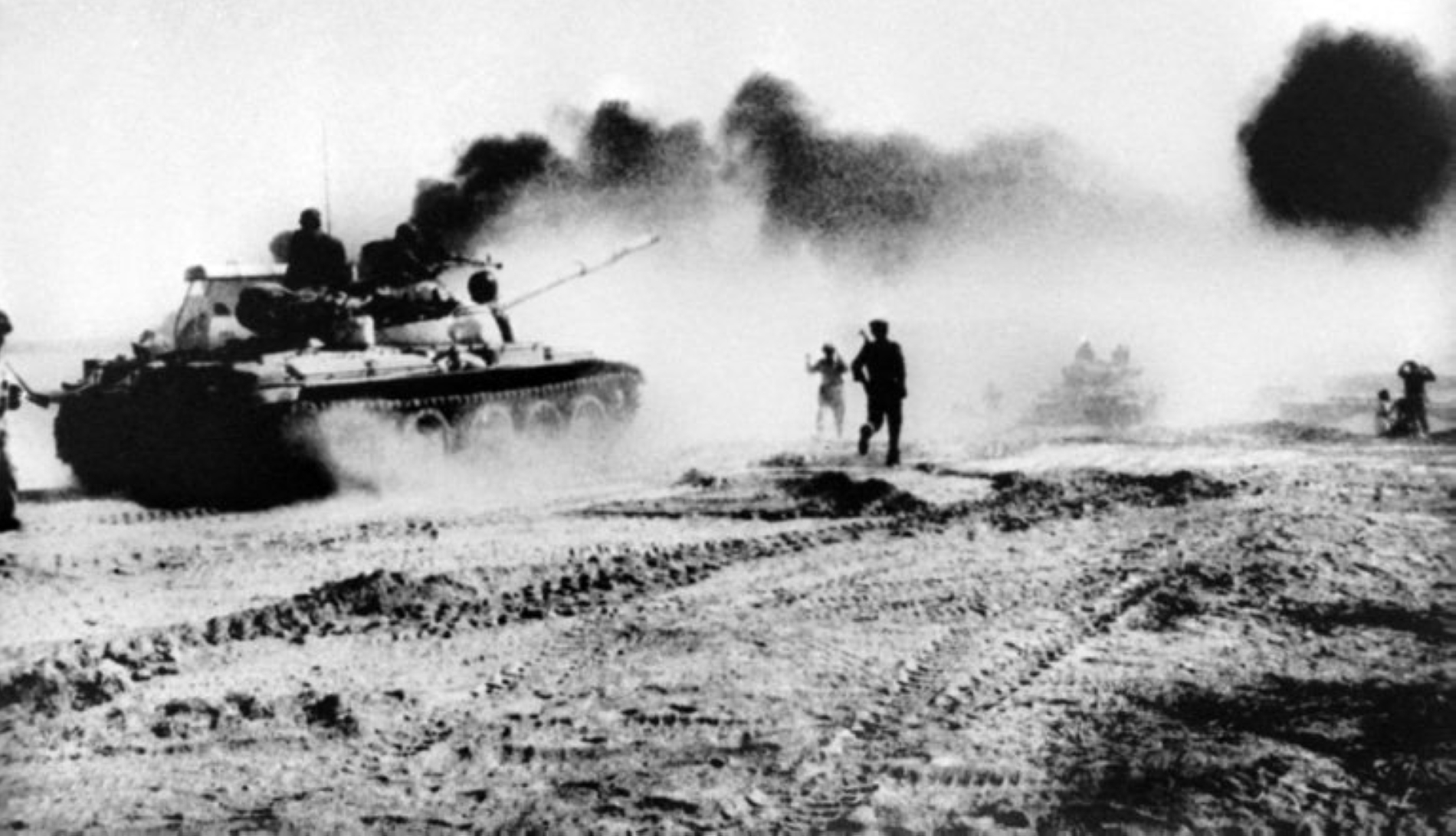
Iraqi soldiers on Soviet tanks attempting to cross the Karun River near Khorramshahr during the Iran-Iraq War, with smoke rising from the Abadan pipeline fire, in 1980.
The Iran-Iraq War (1980-88), which produced no victor but killed hundreds of thousands, shows how regional conflicts can become long wars of attrition, ultimately leaving both sides weakened, opening the path for a regional rebalance. The current US-Iran war is being seen by some as the outlines of a second war of attrition aimed at drawing in the Gulf states. While it may differ in its tools, it echoes earlier models in its aims and would be waged on various fronts, including economic ones.
But perhaps the most dangerous variable is the changing nature of external security guarantees. Since the Cold War, the American commitment to Gulf security has been framed in near-absolute terms. President Jimmy Carter, in his State of the Union address on 23 January 1980, said: "Any attempt by an outside force to gain control of the Gulf region would be treated as an assault on vital US interests and would be repelled by any means necessary, including military force". So it proved in Kuwait in 1991.
Multiplied costs
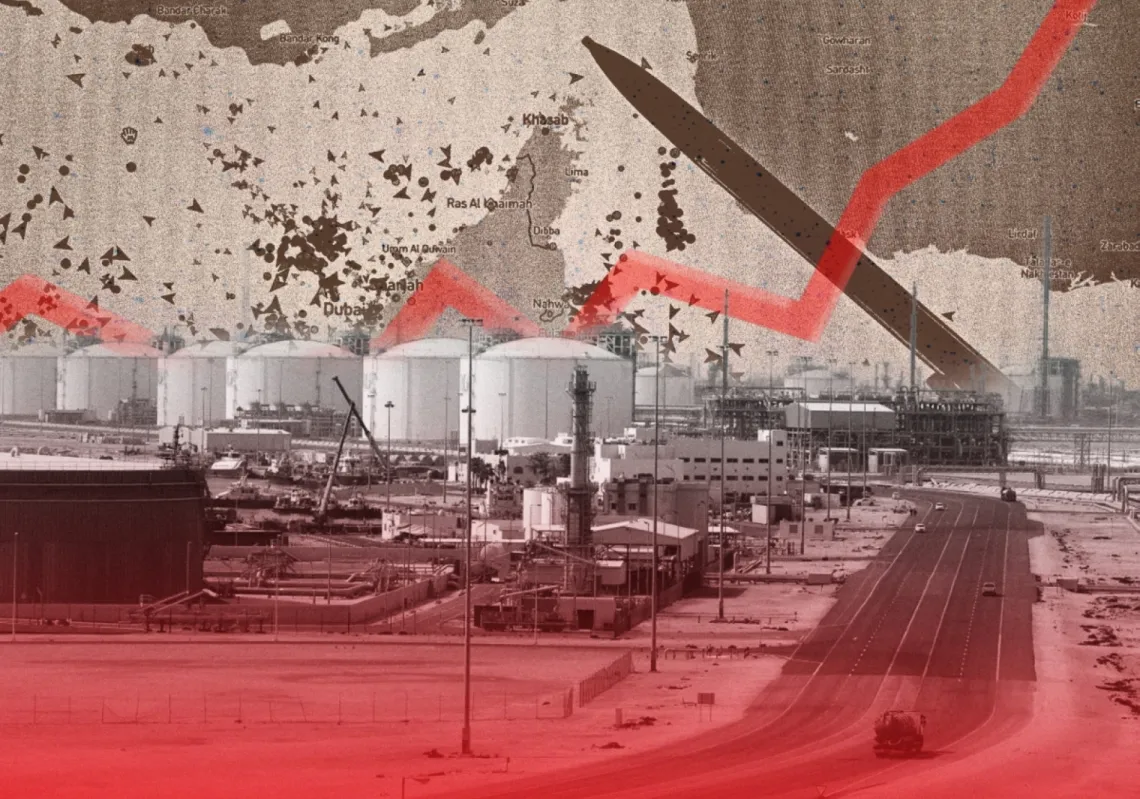
Today, commitment has become conditional, and its credibility is openly questioned. The complexity of the model has increased, as have the costs—as recent weeks have shown, the Gulf states are a central pillar of global energy markets, and any major disruption to their stability is felt instantly and globally through higher energy prices, disrupted supply chains, and anxious markets.
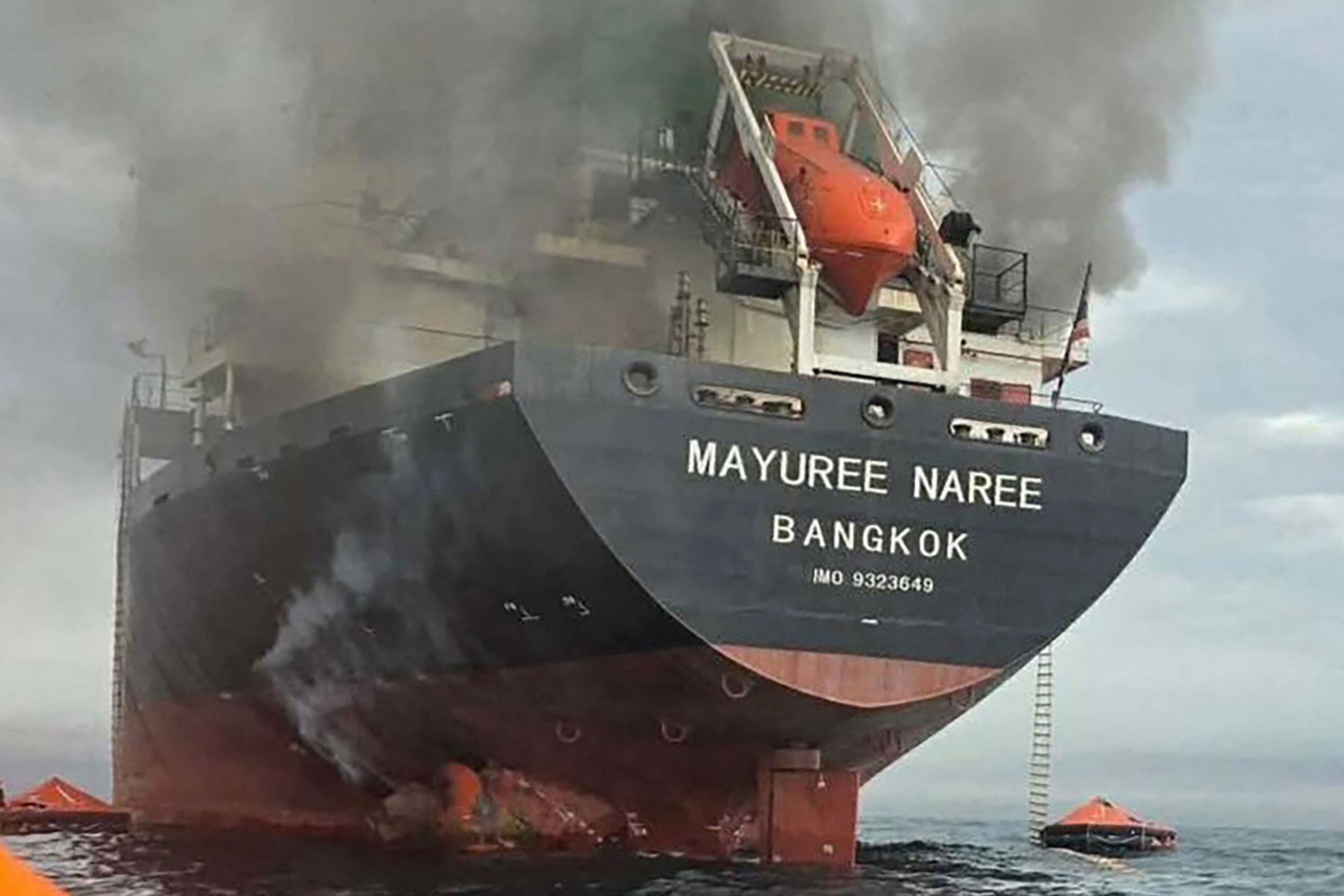
This handout photo taken on 11 March 2026 and released by the Royal Thai Navy shows smoke rising from the Thai bulk carrier 'Mayuree Naree' near the Strait of Hormuz after an attack.
External security guarantees promised to Gulf states today resemble those given to Ukraine in 2024 more than those afforded to Kuwait 35 years ago. Support is largely limited to the provision of weapons, without a commitment to absorb direct retaliation. Any Gulf involvement in the war with Iran would therefore amount to a one-sided war of attrition. In this way, costs and risks multiply rapidly.
The nature of modern wars makes them far harder to control. They are no longer just military; they also include cyberattacks, economic warfare, and strikes on vital infrastructure, with costs soon spiralling. Today's battlefield drags in financial markets, sovereign wealth funds, and major economic transformation projects. War aims become the exhaustion of the other, rather than outright victory.
In this way, parties are lured in, pushed step-by-step towards escalation through a chain of provocations and reciprocal responses, until they reach a point where they feel that, politically, they have to enter the fray. At this point, war is portrayed as less costly than abstention, even though it may be more costly in the long term. Those at risk of being lured need the highest levels of strategic awareness.
External security guarantees promised to Gulf states resemble those given to Ukraine in 2024 more than those afforded to Kuwait 35 years ago
Wisdom to refrain
Strength lies not only in one's capacity to respond, but in the wisdom not to fall into well-laid traps, especially when not doing so is portrayed as hesitation. Reading the scene closely and understanding the undeclared objectives behind escalation also adds to states' strength. It isn't about not being able to fight, but knowing when to fight.
Gulf stability isn't only a regional interest but an international one. Committing the Gulf states to war is a decision that must be measured by its long-term consequences, not by immediate reactions. History has shown time after time that entering wars is far easier than exiting them. It also shows that their true costs often become clear only when it is too late.
The region today stands at a crossroads: get drawn into an open conflict that revives the logic of attrition, or avoid the lure and preserve balance. Recognising the nature of the trap is the first step. The next, and far harder, task is mustering the political will to make decisions guided not by the pressures of the moment, but by a clear-eyed understanding of the situation's complexity. In a world where interests and conflicts overlap, the greatest victory may be to avoid war altogether.