US-Iran war disrupts the global helium supply chain

The element critical to the tech industry is in short supply following Iran's closure of the Hormuz. This will have serious knock-on effects across many industries worldwide.

Al Majalla

US-Iran war disrupts the global helium supply chain

In a world that increasingly depends on natural resources beyond oil, Iran’s effective closure of the Strait of Hormuz has dealt a significant blow to the tech industry. Rare industrial gases, foremost among them helium, are among the myriad invisible inputs that sustain the tech industry, especially artificial intelligence.

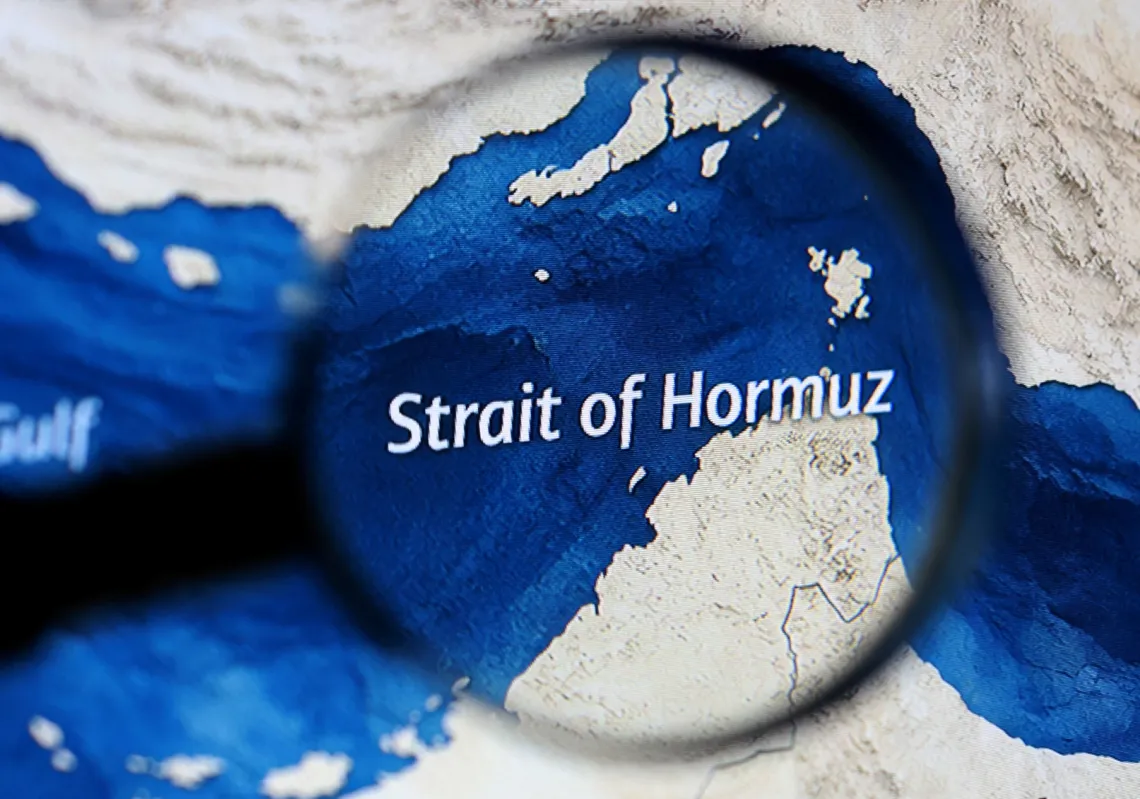
Helium is an element extracted as a by-product of liquefied natural gas, which ties its supply to a small number of geographical hubs, among them Qatar. Since the outbreak of the US-Israeli war on Iran, Qatar’s energy facilities have come under repeated Iranian attack, sustaining heavy damage that has forced Doha to halt LNG production and declare force majeure on supply contracts. And even if such gases can still be extracted, Iran’s closure of the Strait prevents their export to countries it deems ‘unfriendly’ towards it.

Helium boasts exceptional cooling properties, reaching close to absolute zero at minus 268.9 degrees Celsius, making it a critical element in the tech industry, from semiconductors to space exploration. Helium is indispensable for cooling electronic chips and fibre-optic cables during manufacturing and pressurising rocket fuel tanks, including those used by NASA and SpaceX.
Reuters
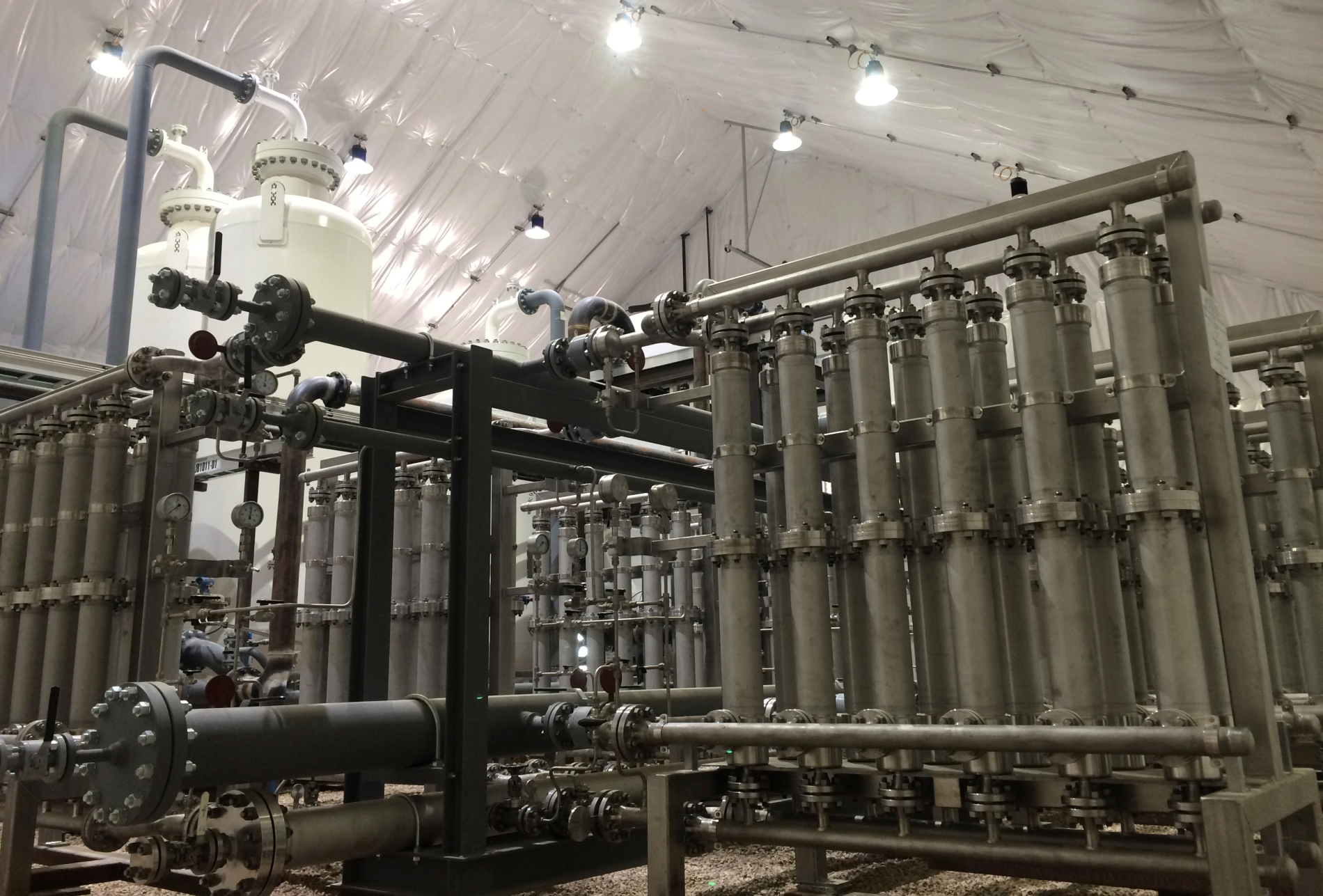
A helium production plant in Mancota, Saskatchewan, Canada, on 20 June 2016.

For that reason, any disruption to helium supplies sends tremors far beyond a single industry. It places an entire chain of sectors in jeopardy, from smartphones and cars to the most advanced technological systems. The effects are already being felt in East Asia, where semiconductor plants without helium risk contaminating the manufacturing environment, leaving delicate equipment in need of weeks of repair and costing the global economy billions in lost opportunities.

According to the latest data from the US Geological Survey, the United States produces about 81 million cubic metres of helium, accounting for roughly 42-44% of global output. Qatar follows with around 63 million cubic metres, approximately 33-35%; Russia produces 18 million cubic metres, about 9-10%; and Algeria produces 11 million cubic metres, about 6%.
A single Iranian blow wiped out 30-33% of global helium supply, equivalent to roughly 5.2 million cubic metres per month

Together, these principal producers account for the vast majority of global supply, with the United States and Qatar alone contributing roughly 75-80% of total production. These estimates are likely to shift in 2026, given the halt in Qatari production and the disruption to shipping through the Strait of Hormuz. A single Iranian blow wiped out 30-33% of global helium supply, equivalent to roughly 5.2 million cubic metres per month. As a result, QatarEnergy had to declare force majeure on LNG shipments and related products, and production has yet to resume. Getting production back online could take weeks or even months.

In the span of a few days, some estimates said helium prices spiked by 35-50%, while others put the figure at 70-100%. Prices could potentially go up to a whopping $2,000 per thousand cubic feet, or about $70.6 per cubic metre, should the war and the disruption in Hormuz continue.

Reuters
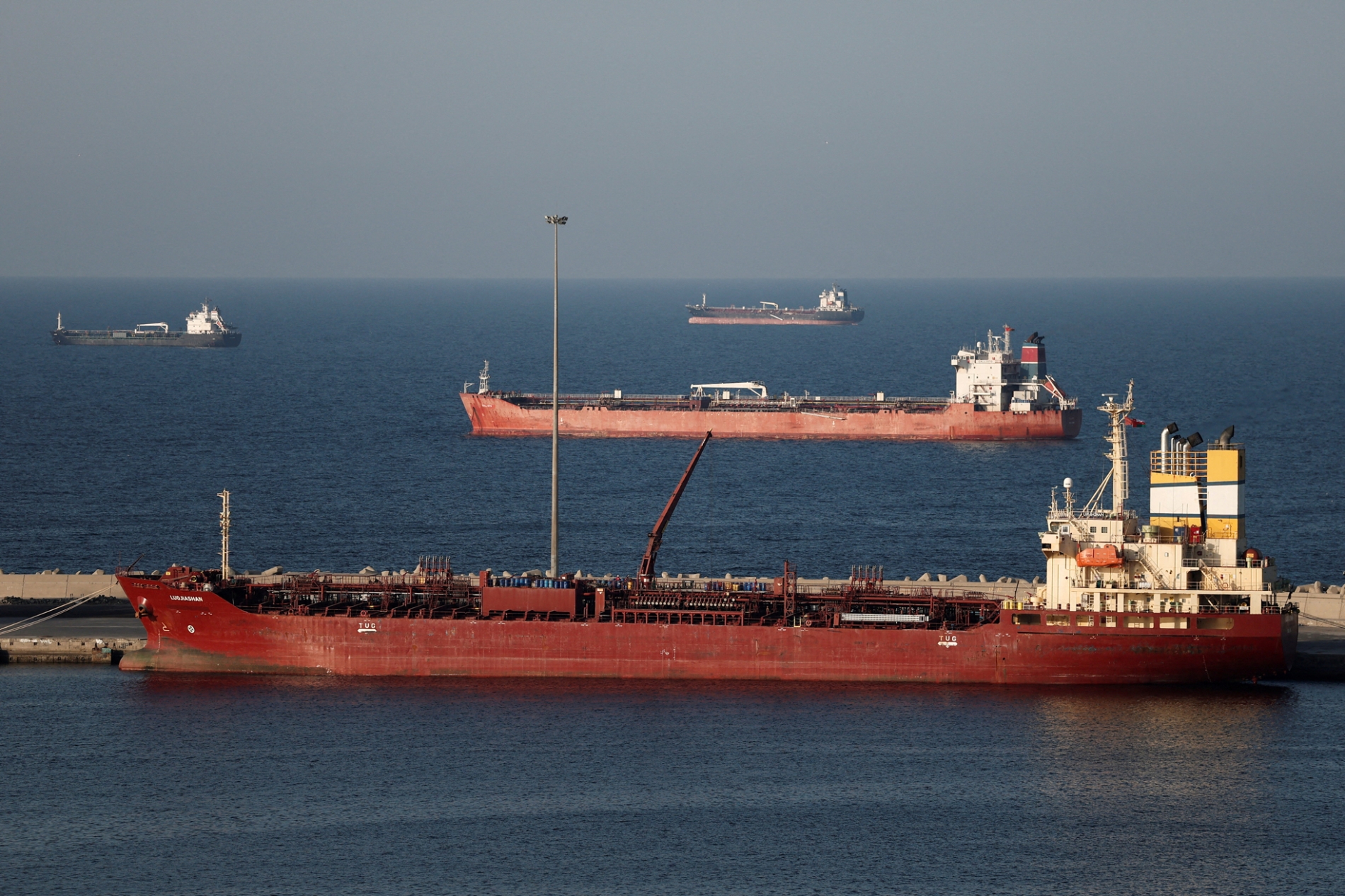
An oil tanker docked in Muscat port, Oman, amid Iranian threats to close the Strait of Hormuz, on 7 March 2026.

Domino effect

Factories at the heart of the global digital economy function on the assumption of uninterrupted supply. Any disruption, however brief, can force a slowdown or a complete halt in output. Given the complexity of modern supply chains, the crisis doesn't stay behind factory walls—it quickly spills into markets, causing delayed chip deliveries, device shortages, and rising prices.

As these effects ripple through the markets, a domino effect begins to unfold. A disruption in chip production reaches far beyond technology companies alone. It extends into the automotive industry, medical devices, hospitals, and even digital infrastructure itself.

One of the greatest challenges facing the helium market is that it remains captive to natural gas, since there are no mines from which it can be produced independently. This relationship ties supply to energy demand, not to the fast-growing needs of the technology sector. Any decline in gas production for heating purposes, therefore, automatically reduces helium supplies, even at the height of the artificial intelligence boom. This mismatch between supply and demand renders price forecasting exceptionally difficult.

Any disruption to helium supplies sends tremors far beyond a single industry. It places an entire chain of sectors in jeopardy.

In response to growing scarcity and geopolitical volatility, attention has turned to maximising the value of extracted helium through recovery systems. In the past, the gas was used once, then released into the atmosphere and lost forever. Today, semiconductor plants and MRI facilities are moving swiftly to install closed-loop systems that capture the gas released during cooling, purify it, and reliquefy it using highly efficient compressors and advanced heat exchangers.

This shift towards a circular helium economy is more than an environmental choice—it is a strategic economic necessity. In semiconductors and MRI alike, some of these systems can recover 90 to 95% of the gas used, reducing dependence on the volatile spot market and turning facilities into end consumers into sustainable reservoirs. It also materially mitigates the domino effect caused by supply disruptions, as seen during the March 2026 crisis.

Promising efforts to diversify supply are advancing in countries such as Canada and Australia. This offers a glimmer of hope that reliance on concentrated sources may be reduced. Even so, they remain far from sufficient to offset the immediate shortfall caused by major disruptions such as the suspension of Qatari production, leaving the strategic danger firmly in place in the near term.

font change