
In 1979, during a meeting between a delegation from the Arab Writers Union and members of the National Progressive Front, the late Syrian poet Mamdouh Adwan delivered a testimony lasting nine minutes and 35 seconds. In a turbulent gathering in Damascus, Adwan accused the Syrian media of falsehood and hurled a torrent of accusations at the authorities. Those accusations included charges of corruption, monopolising political life, silencing dissent, and sowing sectarian division.
Remarkably, the speech was recorded on cassette, smuggled out of the meeting hall, and endured as an act of cultural courage, passed furtively from hand to hand before eventually finding its way to YouTube years later. In doing so, it opened the way for other tapes featuring the poems of Muzaffar al-Nawwab, the songs of Sheikh Imam, the recordings of the Kurdish singer Şivan, and the works of Ziad Rahbani—all far removed from the standards, controls, and conditions imposed by the establishment.
Elsewhere, rudimentary recordings captured local wedding celebrations and sessions of ‘ataba, sweihli, moulia, and firaqiyyat—vernacular song forms steeped in lament, longing, and rural improvisation. This popular cassette culture served as a compass, guiding marginalised voices towards fame and circulation. Then came the electronic keyboard, with its inexhaustible musical permutations, displacing the rababa and the mijwiz—long-standing emblems of the region’s folk soundscape—and unsettling the original grain of melody and voice.
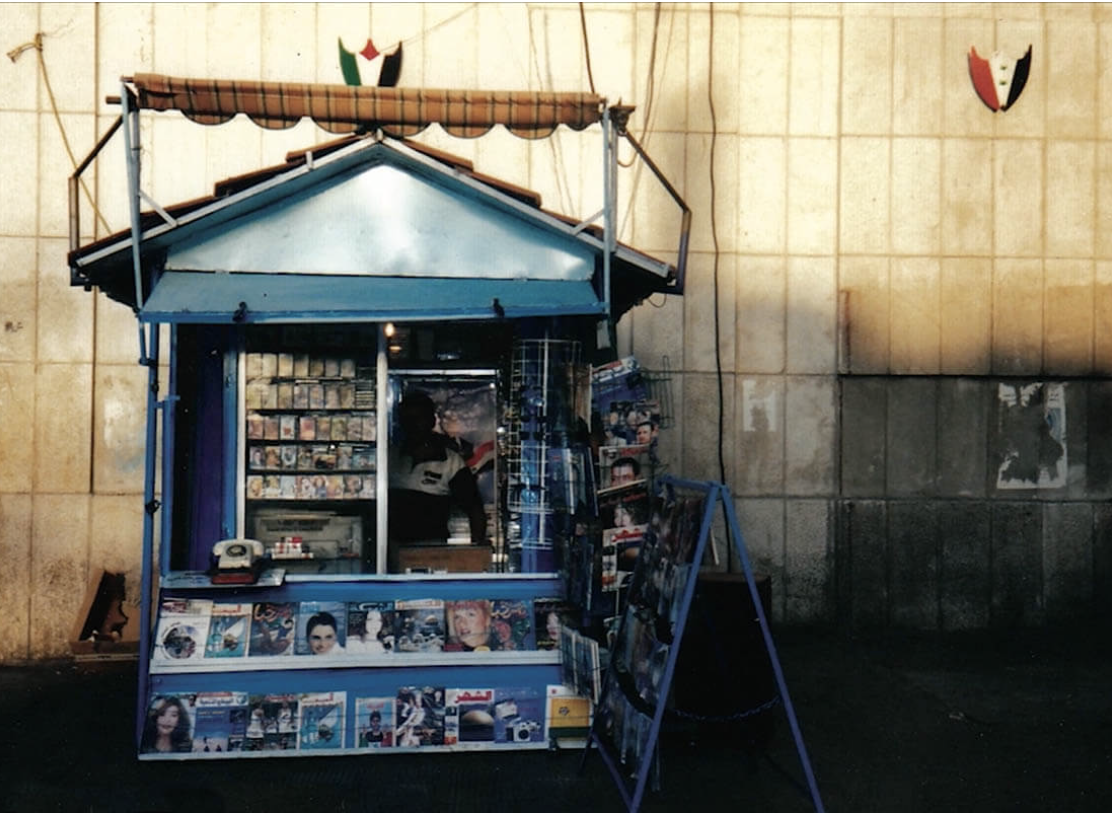
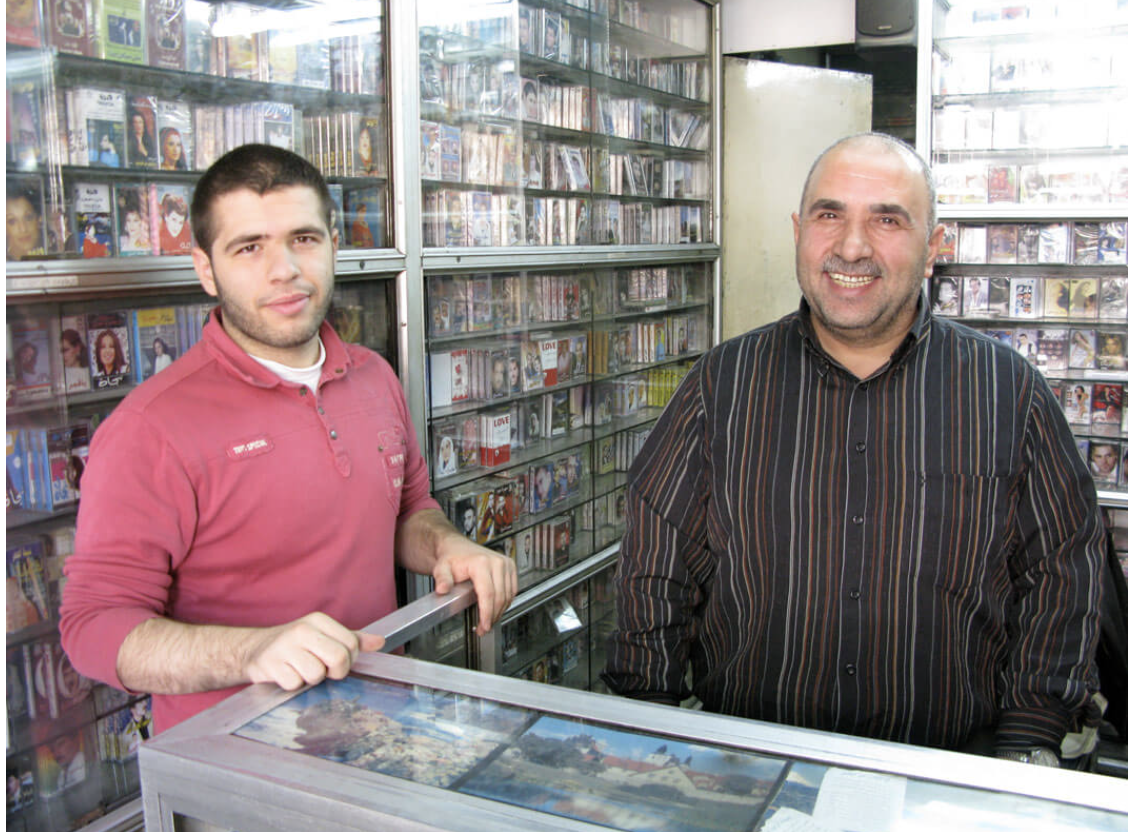
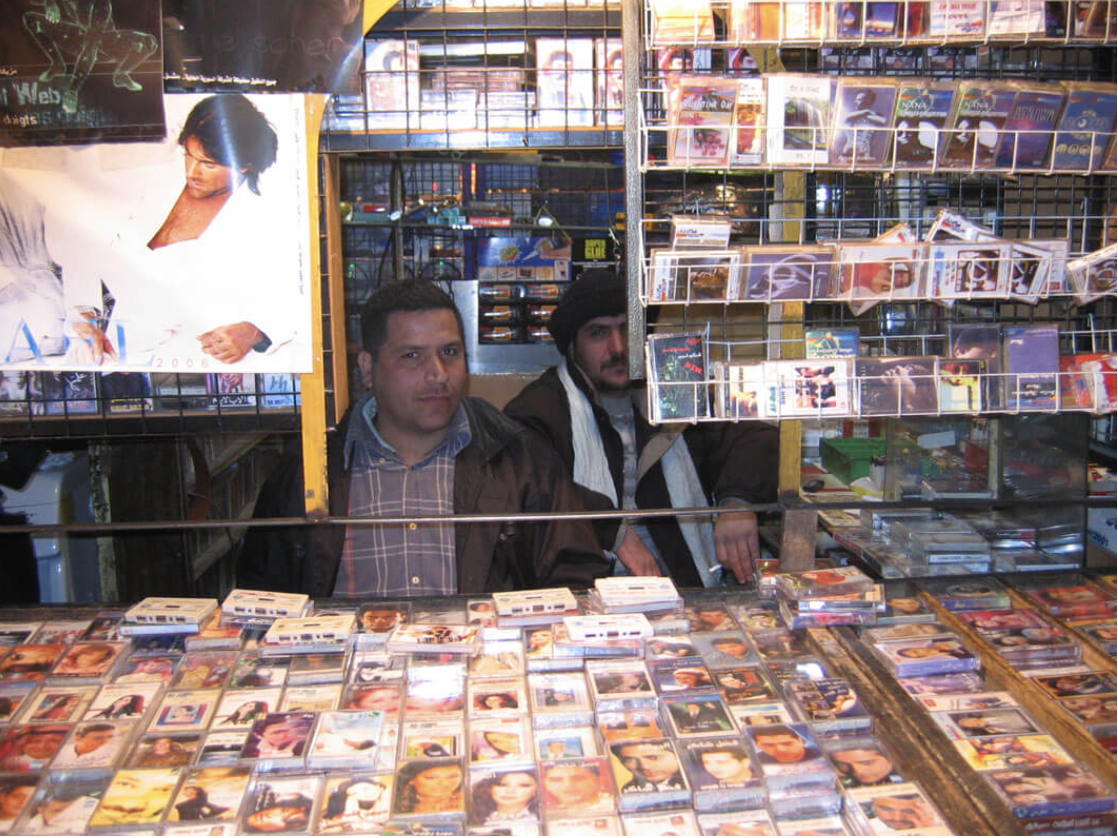
For nearly three decades, cassettes dominated the local and regional soundscape. Their sounds spilt out from pavement vendors, taxi drivers, garages, and cassette kiosks, religious supplications and devotional chants mingling with the wounded strains of an obscure singer’s ataba, or with the sounds of a wedding held on the rooftop of a house in an informal settlement. In the latter, a singer would pause during a set, turning to greet the bridegroom and certain guests. In doing so, they provided intimate expressions of marginal voices, long neglected by authorities and cultural elites in favour of what was deemed more elevated song.
From the late 1990s onwards, these precious fragments of intangible heritage captured the imagination of a new generation of cassette enthusiasts. A handful—most notably Mark Gergis, a young American of Iraqi origin, and the Syrian musician Yamen Mekdad—began collecting as many tapes as they could. They later set out to digitise what would become the Syrian Cassette Archives, helping to shield this neglected inheritance from oblivion and opening a sonic portal into the past.
A sonic portal into the past
Gergis first encountered the vibrant Syrian cassette scene during a visit to Damascus in the late 1990s. Captivated by the popular songs he heard pumping from the places he visited, he began buying tapes by the dozen. Later, he met Mekdad, and together they set about documenting and digitising these recordings.
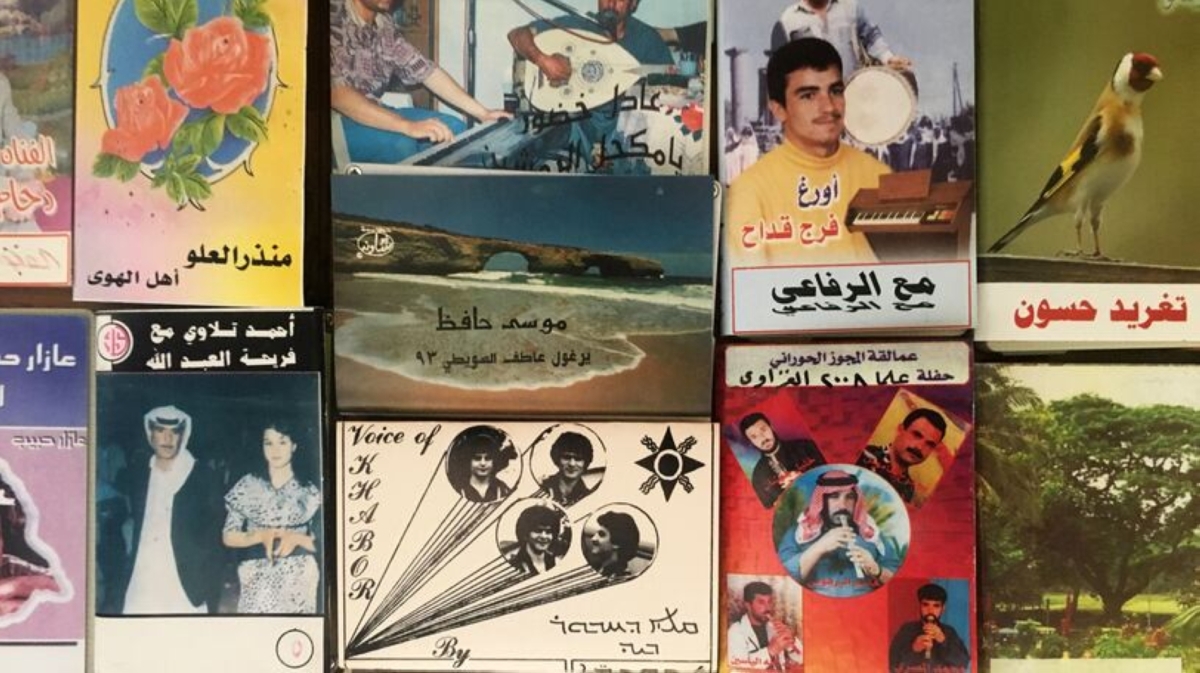
The distinctiveness of the cassette tape lay not only in its content, but also in the visual language of its cover, the name of the local recording company, the singer’s hairstyle, and even the florid preamble of the master of ceremonies. A performer and their band were often introduced with incendiary titles such as ‘the singer of the soldiers’ and the ‘singer of the dabke and the dal’ouna’.
Amid these trappings stood names that remained officially obscure, among them Kawthar Mansour, Sanaa al-Hussein, Suleiman al-Shaar, Mohammad Sadeq Hadid, Friha al-Abdullah, Hussein al-Hassan, Adel Khodour, and even Fouad Faqrou. The last of these, who would later become known as Fouad Ghazi, deserves particular attention, his ascent and decline closely mirroring the age he expressed with such singular force.
A rural Syrian singer, Ghazi, emerged from Syrian wedding celebrations, his sound drawing together mountain song, ‘ataba, and mawwal, as though someone had blended shanklish with mansaf. His musical output was preserved in rough recordings that found their natural habitat in cassette kiosks on the fringes of rural bus depots.