
If there is one tedious cliché that persists to this day, it is the comparison between Lebanon and the mythological phoenix. This immortal bird lives for thousands of years, burns at the end of its life, and then rises again from the ashes. As such, it has been invoked countless times in journalism, poetry, and the visual arts, its story repeatedly used to frame artistic continuity amid destruction and chaos.
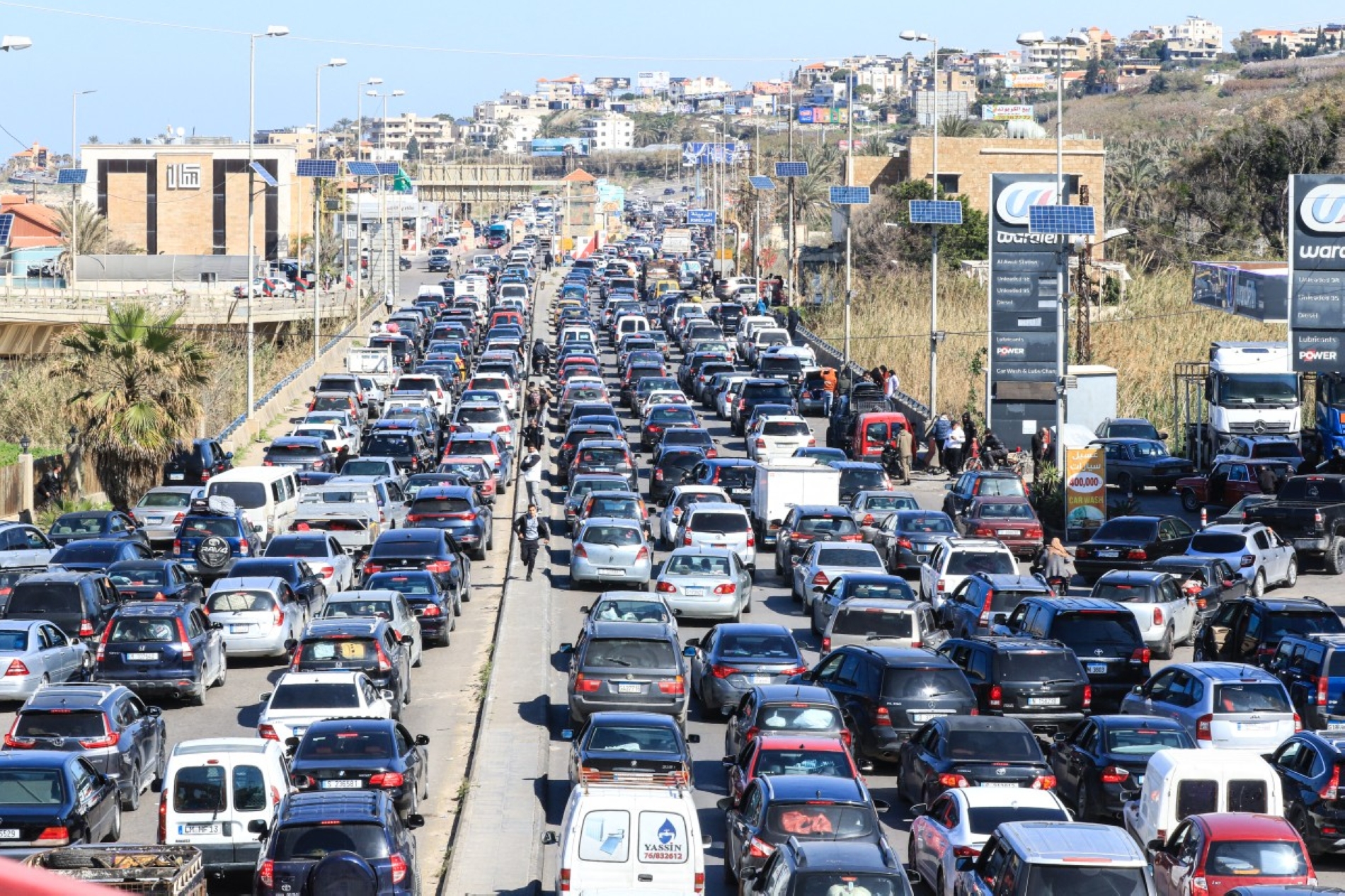
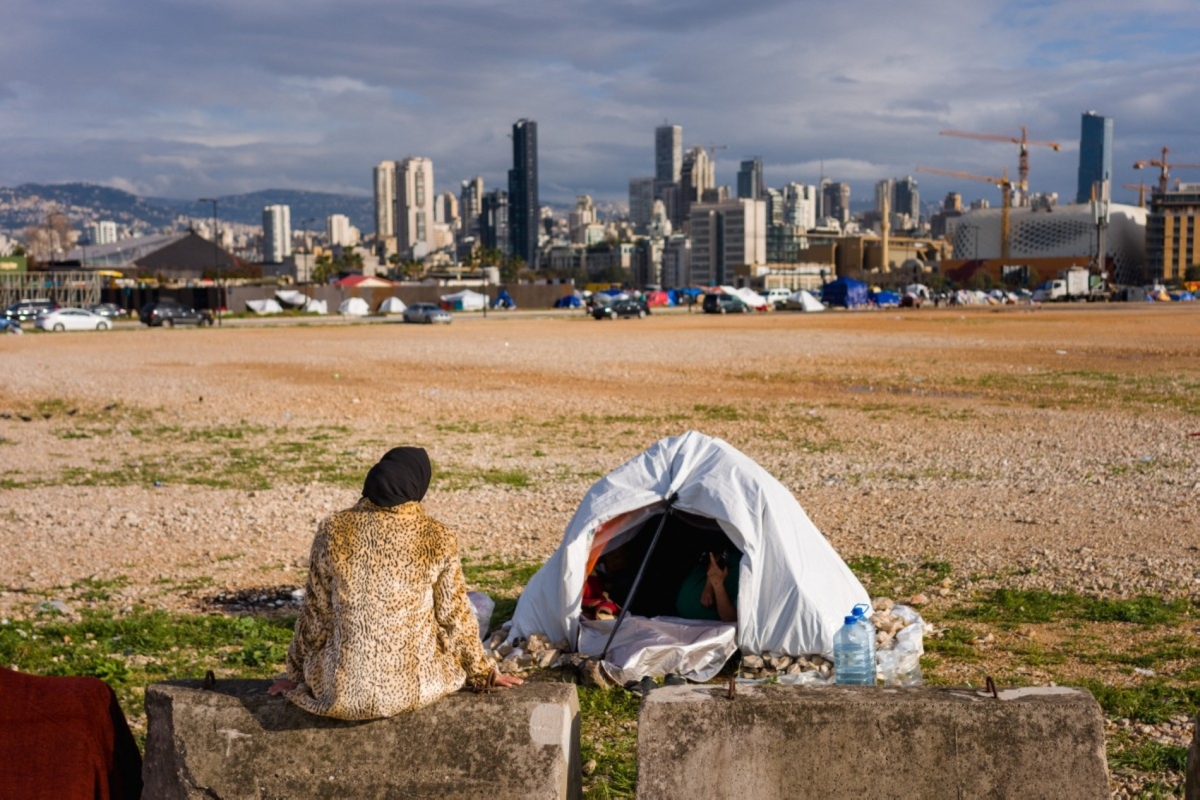
Beirut today feels exposed, held in an unsettling regional void. The city absorbs the suffocating, sulphurous smell of fires from bombardments along its edges and within the southern suburb of Dahieh, while the whine of warplanes cuts through the sky with impunity. Above all, there is the unceasing buzz of drones—rising, fading, and returning—until it acquires an existential quality that seeps into every corner of the city, affecting both people and stone.
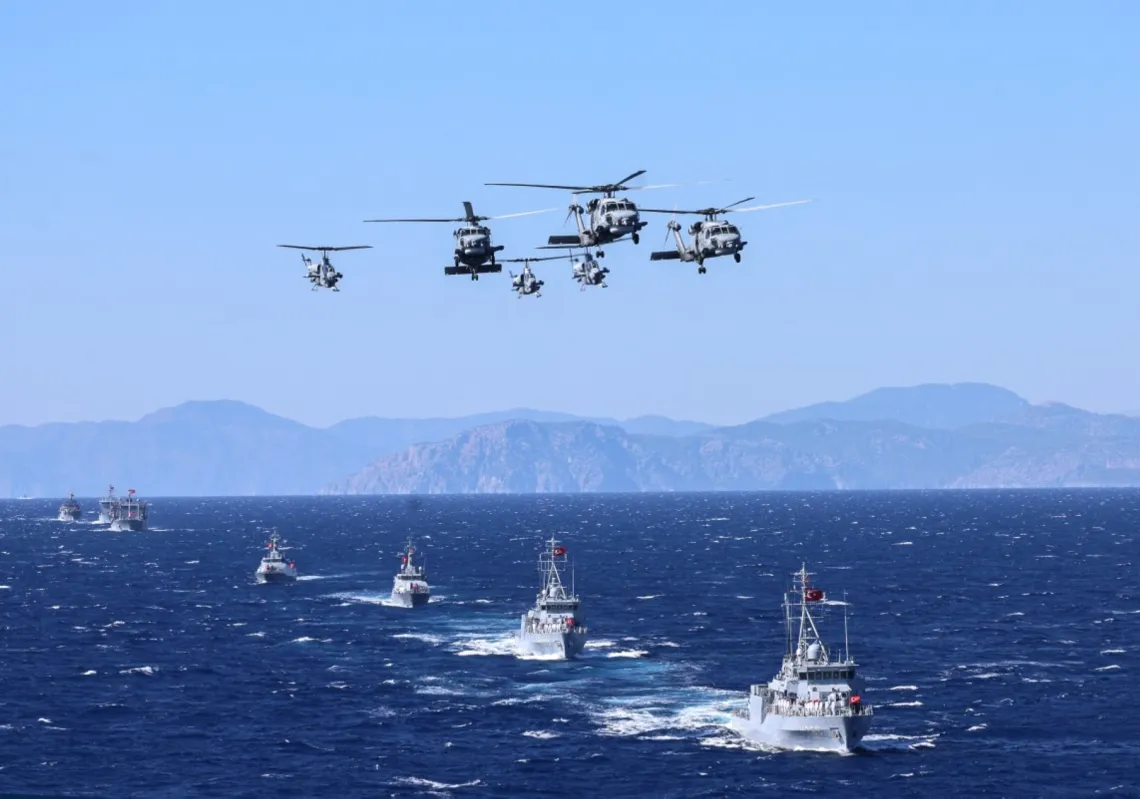
This audiovisual state recalls the opening of Apocalypse Now, where the sound of a ceiling fan merges with the hum of helicopter blades, creating a surreal, semi-sedated atmosphere charged with mute tension. It is easy to transpose this scene onto Beirut today, where art exhibitions continue despite the surrounding tension and danger. The steady internal noise of the city is not far removed from the buzz of drones spreading across its skies, widening the field of attack until it shapes perception and seeps into emotion. Doubt creeps in, anxiety rises, and a fragile inner refuge begins to take form—one that allows life to continue amid chaos. Sustained by discipline, neutrality, and a focus on daily preoccupations, this refuge is also marked by emotional numbness. The question, then, is how long Beirut can hold on in the face of one war after another.
The second idea emerging from this audiovisual state is captured in the phrase, ‘I am not a robot’. In Beirut today, it reads less like a digital verification than a quiet assertion of human presence. Daily life continues almost automatically, as people move through routine despite awareness, anxiety, and the surrounding threat. Many of our daily behaviours now follow this pattern. We repeat tasks, follow routines, and respond to challenges almost automatically, with little visible emotion and minimal reflection.
Routine as survival
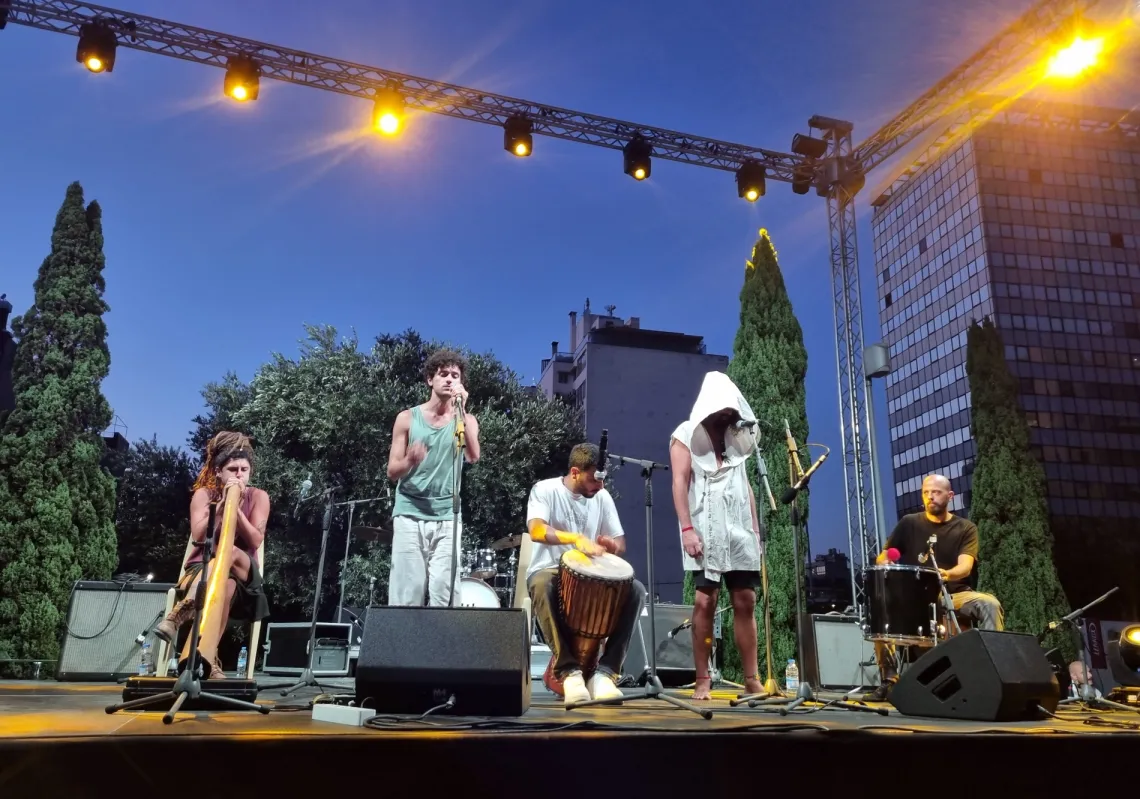
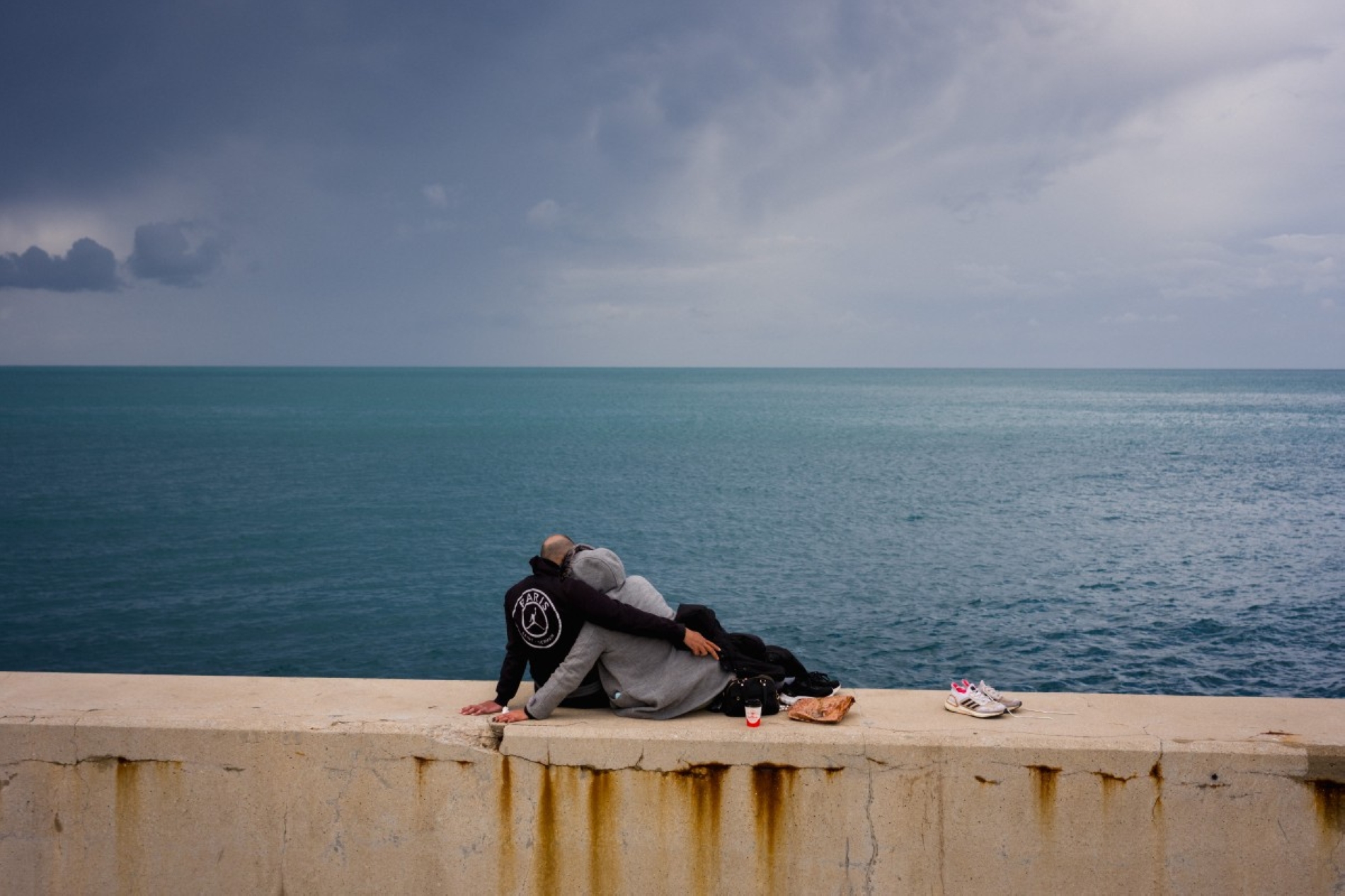
In tense environments such as Beirut, this automated behaviour becomes a survival strategy. People act quickly, regulate their emotions, and maintain functionality under prolonged pressure. The same applies to cultural life, which often reflects the condition of the country and its shared mood. Rather than celebrating artistic achievement, it has shifted into a quiet workshop of continuity, sustained by the routine organisation of exhibitions that pass almost invisibly.
This condition recalls the philosopher Hannah Arendt’s observation that culture depends on preserving a shared world that offers a minimum of stability, especially in moments of danger. Buying vegetables, visiting an exhibition, or writing about them are small acts that sustain this fragile continuity. Yet Arendt also warned of dissociation: when people detach from the human consequences of violence and tragedy begins to feel familiar, estrangement deepens, and a quiet anxiety settles over everyday life, as though the world were covered by a veil of unbroken tension.
It took me many years after the supposed end of the Lebanese Civil War to realise that, whenever bombardment intensified, I would begin cleaning and rearranging the house with quick, mechanical movements, even when nothing needed doing. It was not a search for order, but a form of defence—an attempt to control something within an external world that felt threatening and beyond control.