Operation ‘Epic Wrath’ and the 2026 Elections

Will war redraw America’s political map?

Al Majalla

Operation ‘Epic Wrath’ and the 2026 Elections

This is a direct translation from the original article that appeared in Arabic.


With the 2026 midterm elections now only eight months away, the United States is entering an exceptional and unusually fraught political moment, one in which geopolitical turmoil collides with the deep internal polarisation that has come to define American politics. These elections are no longer merely a routine referendum on the performance of an administration halfway through its term, as midterms have often been in the American political tradition. They are becoming a decisive test of an American political, security and social identity that is still taking shape, especially in the wake of the launch of Operation ‘Epic Wrath’ against Iran.

This military operation, which began in late February, does more than alter the balance of power and deterrence in the Middle East. Its effects reach well beyond the battlefield and into American domestic politics, casting an immediate shadow over the ballot box. It creates new and consequential pressures on the economy, especially energy prices and inflation, alongside questions of national security and partisan identity that are increasingly shaped by major decisions of the state. Contrary to the familiar tendency of American voters to close ranks behind the leadership in moments of national crisis, this war has exposed how fragile that instinct has become in the face of hardened partisan division. Growing anxiety over the war’s long-term economic and military costs has begun to outweigh any brief enthusiasm for military action.

Against that backdrop, the war’s impact on the American domestic scene and on voter sentiment can be traced through five interlocking strategic and sociological dynamics, each pointing towards a new phase of political realignment.

The narrative of strength and deterrence in Republican discourse

The electoral use of war lies at the heart of the strategy now being pursued by the Republican Party and President Donald Trump’s administration. The military operation is being presented to American voters as a necessary and overdue restoration of American deterrence, one that, in this telling, had been eroded by years of hesitation and failed containment under previous administrations. The president’s rhetoric seeks to reinforce the image of a strong, decisive leader in moments of danger, in the hope of reviving that familiar public instinct to close ranks when the nation faces an external threat.

At the same time, the administration is plainly seeking to put the Democratic Party on the defensive, portraying it as weak or incapable of defending vital American interests against foreign threats. The aim is to force the opposition into a politically costly dilemma: support the war effort and risk alienating its progressive base, or oppose escalation and open itself to charges of weakness on national security.

This narrative does not stop at the projection of force in the Middle East or the protection of allies. With notable political dexterity, it is tied to the domestic concerns that most energise the populist and nationalist base. The administration draws a direct line between military firmness abroad and strict border enforcement at home, offering a broad and deeply rooted reading of America First. In this framework, the defence of the country’s vital interests extends alike to armed groups and hostile regimes abroad, and to irregular migration and perceived security laxity at home.

That linkage helps keep the conservative base fully mobilised, as it sees the use of hard power as an authentic expression of national sovereignty and as a means of restoring state prestige once thought diminished. Politically, this mobilisation turns military action abroad into a means of reinforcing internal cohesion on the right, where cultural and security anxieties fuse into a single political frame that secures loyalty to the current presidential course.
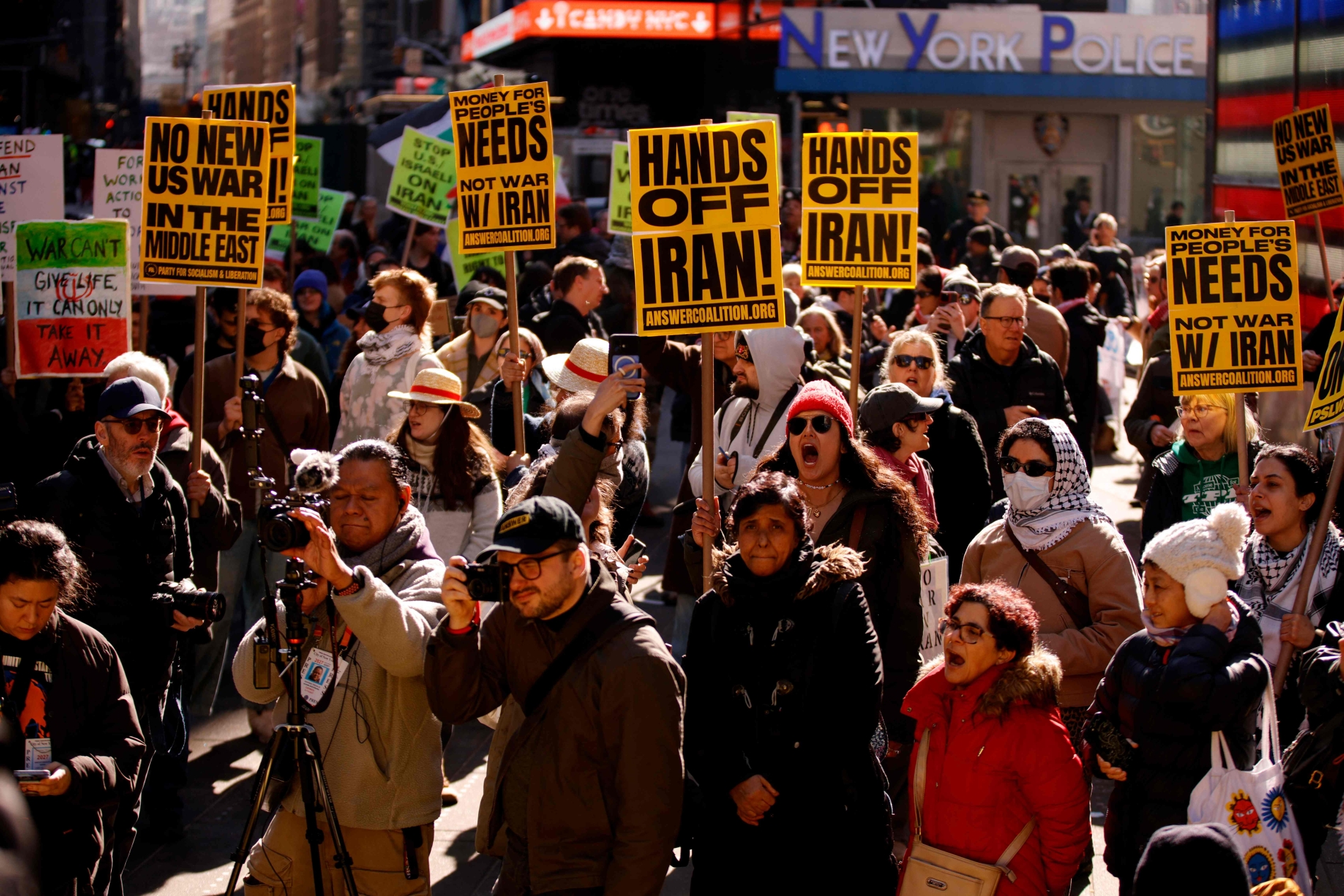
Leonardo MUNOZ / AFP
People hoist signs during a "Stop the War on Iran" protest in Times Square in New York City on 28 February 2026.

Voter sentiment and the economic effects on the midterms

In times of war, public psychology is often shaped by the impulse to rally around the leadership, as voters historically tend to set aside political quarrels in the early stages of conflict. Yet the present moment has broken with that familiar pattern. The administration has failed to secure approval ratings commensurate with the scale of Republican control over Washington’s sovereign institutions. From the opening strikes of Operation ‘Epic Wrath’, opinion polls pointed to a noticeable decline in public satisfaction, as concern over the consequences of the war and the prospect of a prolonged conflict eclipsed any temporary martial enthusiasm.

This failure of mass mobilisation reflects the depth of the polarisation now gripping American society. It deprives Republicans of the chance to translate war quickly into gains in swing districts in the House and Senate, while keeping alive the strong possibility that the president’s party will be punished in the midterms.

This public mood carries the risk of a damaging backlash against the governing party. American voters have become acutely sensitive to the economic cost of foreign interventions, especially in the middle and working classes that remain the most important voting blocs. As the war continues, rising oil prices, potentially above $120 a barrel, begin to hit household budgets directly, deepening inflationary pressures and raising the daily cost of living, including the price of essential goods. At that point, the war ceases to be a political asset and becomes an electoral burden.

Voters’ attention is forced away from the course of military operations abroad towards more immediate anxieties about economic security at home. In the absence of quick victories and if the operation slides into a war of attrition, public sentiment may turn sharply against the leadership. Democrats are counting heavily on exactly this development, focusing their attack on the war’s economic and political costs while demanding tighter legislative oversight, in an effort to channel public frustration towards the ballot box.
The Trump administration has failed to secure approval ratings commensurate with the scale of Republican control over Washington's sovereign institutions

The structural divide within the Republican party

For all the appearance of party unity, the war against Iran has exposed a deep structural fracture within Republican ranks. The fault line runs between the traditional wing, including neoconservatives and hawks who see the operation as a historic opportunity to reshape the Middle East and comprehensively degrade Iranian capabilities, and the populist isolationist wing that embraces America First and strongly resists new foreign wars that could become open-ended conflicts. From the perspective of political sociology, this split can be read as a genuine crisis over the purposes for which the state uses force beyond its borders, as an expansive, interventionist vision collides with a nationalist one in a struggle over the definition of the supreme national interest.

Trump faces a very delicate balancing act between these two currents. He must satisfy the hawks and the military establishment by projecting resolve, while also remaining true to the long-standing promise he made to his populist base not to drag the country back into another Middle Eastern quagmire. This predicament places the charismatic authority of the leader in sustained tension with the party's deeper ideological contradictions.

That tension shapes more than military tactics and operational choices. It also feeds directly into the battle over the party's future leadership. Those hoping to succeed Trump in the next presidential contest are being pushed to align themselves either with the camp of military decisiveness or with the camp of inward focus and restraint. That divide is likely to produce bruising struggles in future Republican primaries and may ultimately threaten the broad electoral coalition that has sustained Republican dominance.

The Republican Party today is split between adherents of its traditional political culture and the forces of Trumpism. The primaries that will determine the party's candidates for the midterms, covering all House seats, one-third of the Senate, and 36 governorships, will amount to a referendum among Republican voters on the party's future direction. It hardly needs saying that if the Trumpist wing fails to secure nominations, the political future of key figures in the current administration, most notably Vice President JD Vance, would be seriously damaged.

These contests will be far more than local nomination battles. They will help decide the party's identity for decades to come, and whether populist nationalism can endure as a governing creed, or whether the effects of war will drive the Republican base back towards the traditional establishment.

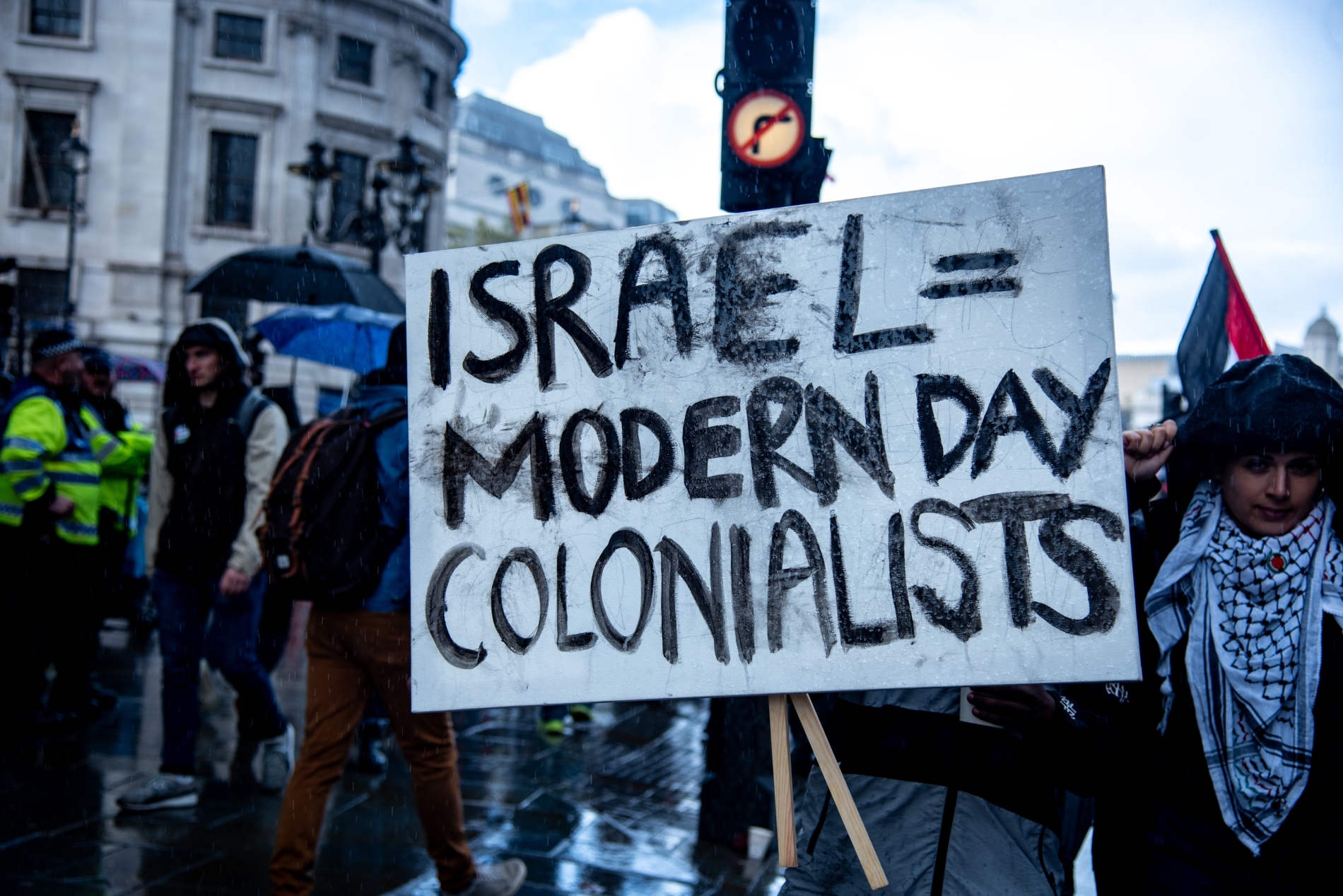
Shutterstock
Protestors march with placards during the National March for Palestine and Stop the War on Gaza Protest in London, England, UK on 21 October 2023.

Geopolitical reverberations and their domestic consequences

The way Washington is conducting this war is also reshaping America's image within an already fragile international order. A central question is now being asked across world capitals: is the United States acting as a decisive power seeking to restore order, or as an impulsive force gambling with the stability of the global economy?

That external perception feeds straight back into domestic politics and becomes material for an electoral contest. At a time when the international system is moving, in structural terms, towards multipolarity, American voters are watching their country's place in the world with growing unease. The traditional view of the United States as the guarantor of global order now collides with an increasingly powerful populist desire to shed the burdens of world leadership and concentrate on domestic priorities.

For Republicans, the attitudes of allies, whether supportive or cautious, are folded into an isolationist and nationalist narrative. Here, a striking contradiction emerges in the current administration's handling of regional alliances. America's full-throated and largely unconditional support for Israel stands against a noticeably slower and more selective response when it comes to the interests of Arab allies in the Gulf. This disparity reflects more than a shift in strategic calculation. It also mirrors the composition of the administration's domestic electoral coalition, in which the evangelical and conservative base regards Israel's security as a matter of political and spiritual conviction, while Gulf alliances are seen in more pragmatic and transactional terms.

Accordingly, if allies in Europe, or certain Gulf states seeking greater strategic autonomy, express reservations about escalation, the administration presents this as proof that the rest of the world is shirking its responsibilities while sheltering under the American security umbrella. If, on the other hand, it secures support from regional partners or from Israel, that is cast as evidence that the administration has restored respect for American power.

This discourse strengthens national pride among the Republican base and helps blunt Democratic criticism that the administration is damaging traditional alliances. Through a Weberian lens, this shift can be understood as a move away from the state's role as guarantor of a rational and legal international order, towards a charismatic legitimacy based on transactions, bargains and immediate national gain. In that sense, foreign policy itself becomes an instrument of domestic politics, shaped above all by electoral and mobilising needs.

AFP
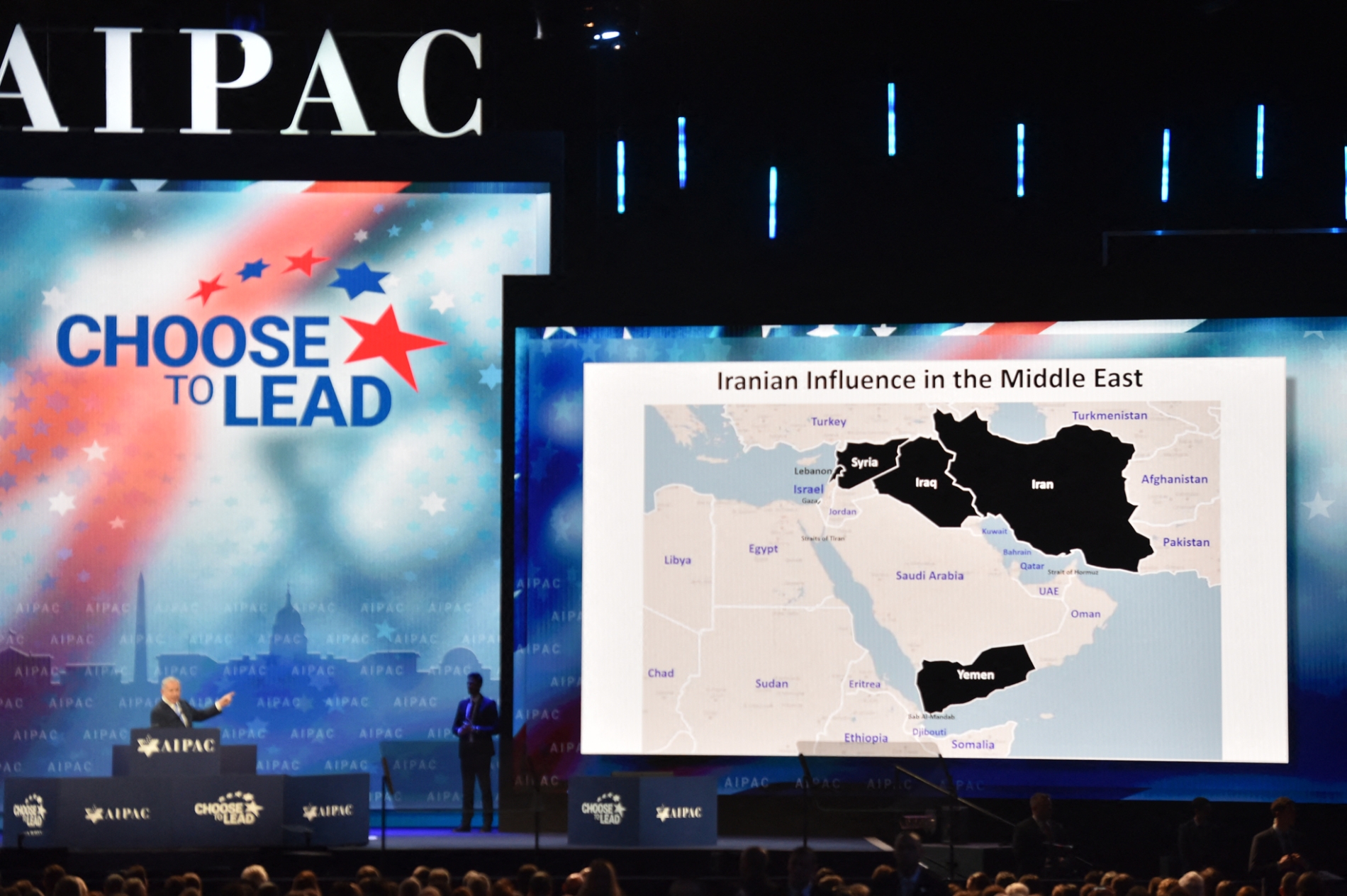
Israeli Prime Minister Benjamin Netanyahu speaks during the American Israel Public Affairs Committee (AIPAC) policy conference in Washington, DC, on 6 March 2018.

Redrawing the social and partisan map

In the longer term, this war may carry the seeds of a far-reaching reshaping of traditional electoral alliances. What may now be emerging is a security identity as a decisive force in shaping American voting behaviour, such that national security, cybersecurity, counterterrorism and the Iranian threat begin to outweigh more traditional concerns such as economic growth, or even the familiar terrain of culture wars and social conflict. This new security identity does more than consolidate the core base. It also draws in veterans, elements of the military establishment, evangelical constituencies that view conflict in the Middle East through a doctrinal and eschatological lens, and pro-Israel lobbying groups that see in this military escalation the fulfilment of long-standing goals.

From the standpoint of political sociology, and again through a Weberian frame, this shift may be read as an existential struggle between the charismatic authority embodied by Trump and his circle, whose legitimacy rests on the promise of swift and dramatic military success, and the legal-rational authority embodied in institutions, which gradually erodes under the pressure of bureaucracy and the drain of extended war. If this security identity comes to dominate the political field, the United States may find itself moving towards a more militarised and nationalist political order.

What comes next?

Two broad scenarios now come into view, and each would shape the future of domestic political alignments in markedly different ways.

Reuters
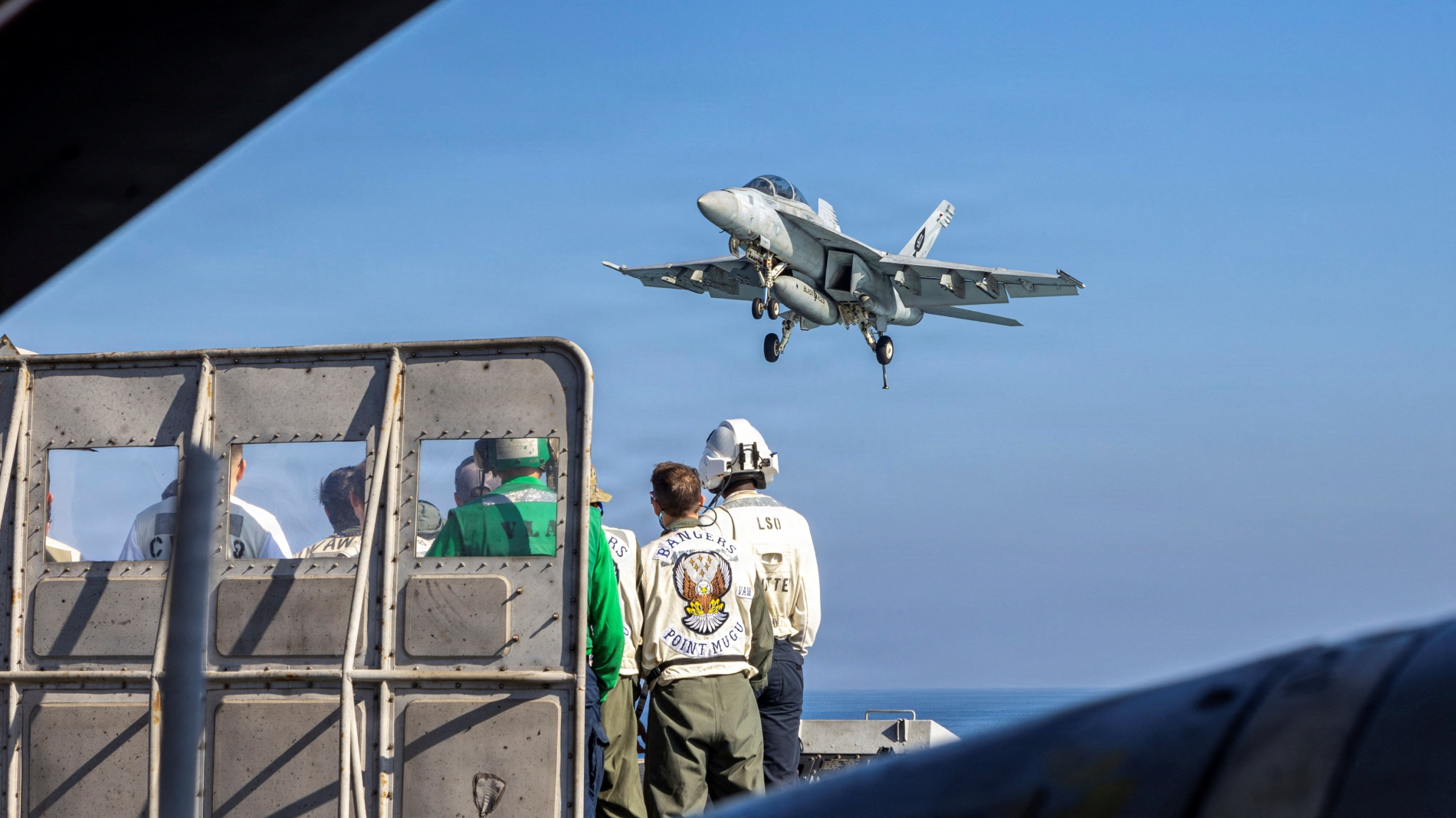
An F/A-18F Super Hornet prepares to land on the deck of the USS Abraham Lincoln (CVN 72), a Nimitz-class aircraft carrier, in the Arabian Sea, on 15 February 2026.

The first scenario assumes that the administration succeeds in containing the war as a limited and successful surgical operation. In that case, the model of the decisive strike would be strengthened as an effective Republican political tool. It would hand the party a security advantage that could help it retain control of Congress in 2026 and pave the way for a further entrenchment of Trumpism, with success in the subsequent presidential race consolidating figures such as JD Vance and other leading Republicans as the natural heirs to this approach.

The second scenario is that the operation slides into a broad regional war of attrition, exhausting an American economy already under strain and requiring additional ground forces while imposing human costs in the form of soldiers killed or seriously wounded. Such a development could trigger a broad public backlash against war, revive anti-interventionist rhetoric, and hand Democrats a popular and political mandate for a major shift in both foreign and domestic policy. It would also threaten to end Republican predominance and weaken the America First current for a considerable period.

The 2026 elections will decide more than who holds the committee gavels in the House and Senate. They will help determine America's identity in the decade ahead and define the course of its role as a great power in a turbulent world with little patience for half-measures or strategic hesitation.

font change