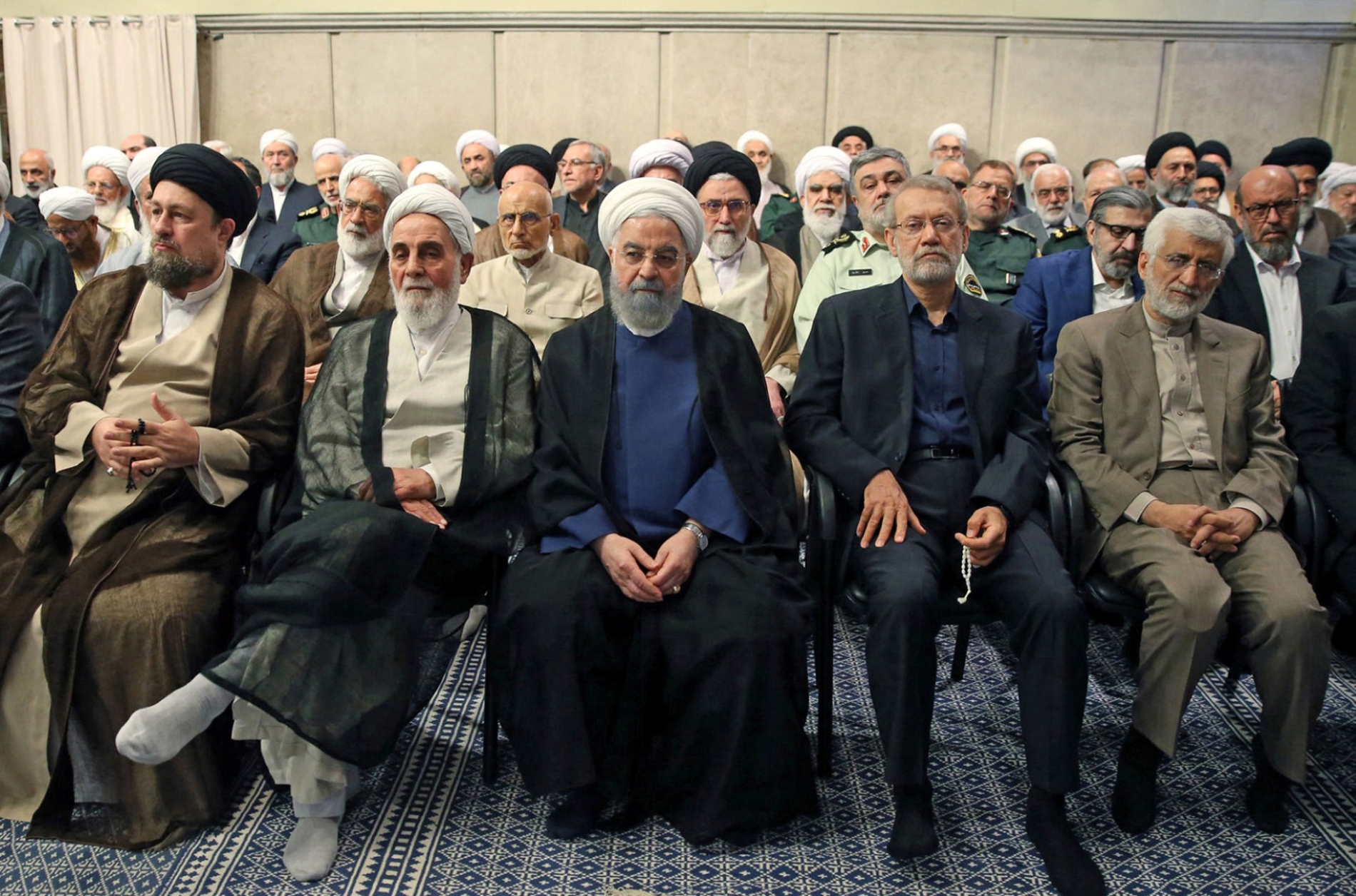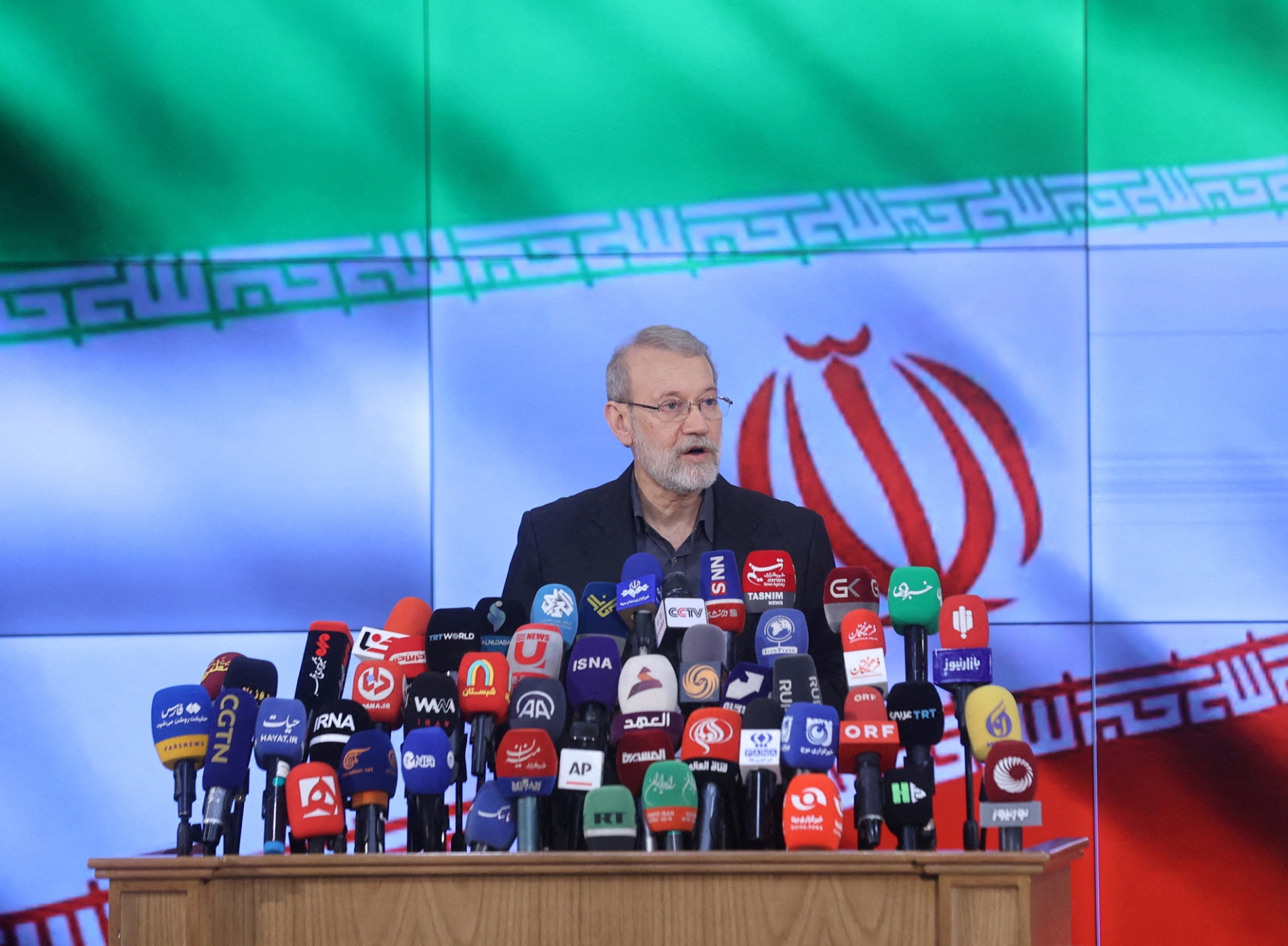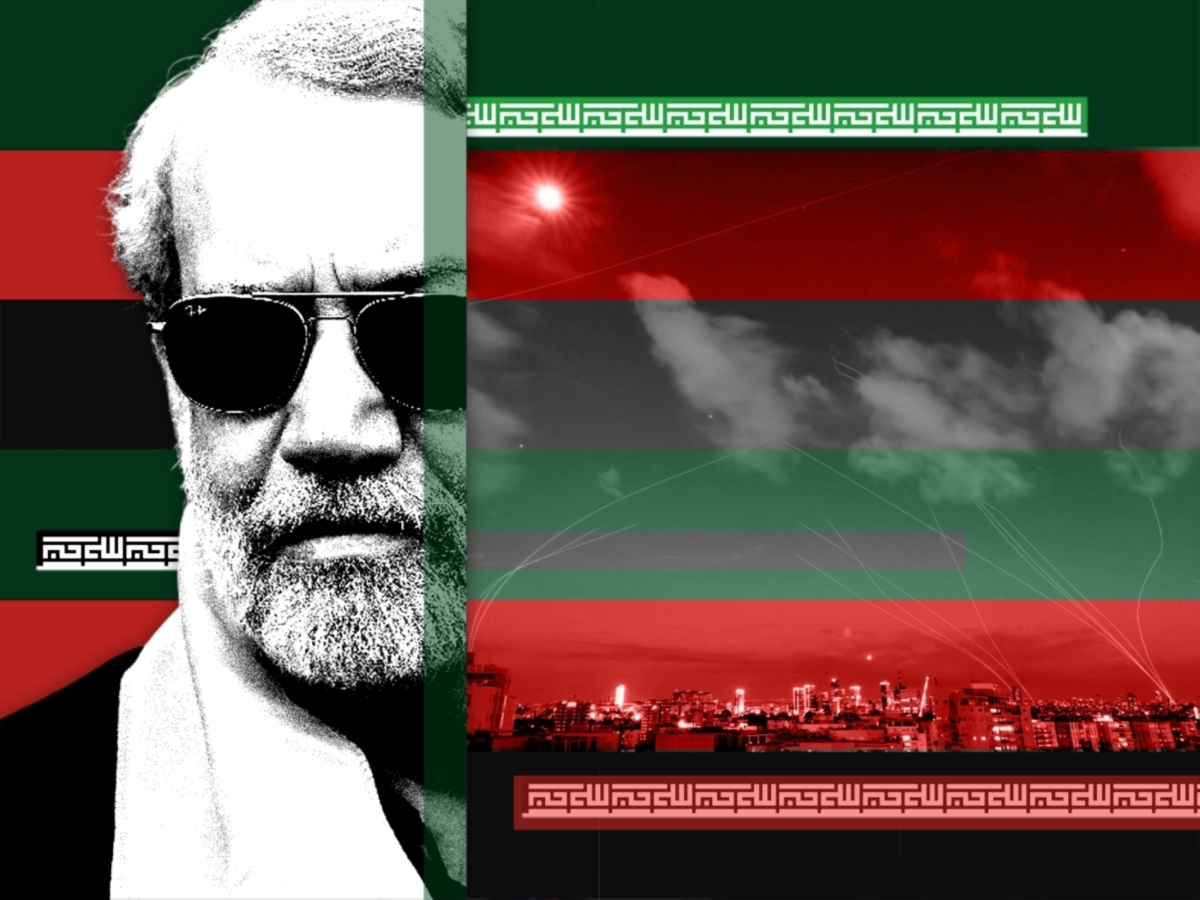

Israel’s Defence Minister Katz says Iran’s security chief, Ali Larijani, has been killed. The Israeli army also said it killed Basij force commander Gholamreza Soleimani in an attack last night. Iran has not commented on the claims yet. Below is a profile of Larijani published on 8 March.
In the aftermath of the 28 February assassination of Iranian Supreme Leader Ayatollah Ali Khamenei, attention has turned to Ali Larijani as the country’s de facto wartime leader. His position as secretary of Iran’s Supreme National Security Council (SNSC), roughly analogous to the US national security advisor, places him at the centre of Tehran’s strategic decision-making amid the all-out assault on Iran.
Many observers now portray Larijani as a pragmatic interlocutor with whom US President Donald Trump might strike a deal, much as he did with Venezuelan Vice President Delcy Rodríguez. But assessing that likelihood requires a deeper understanding of who exactly Larijani is—and, more importantly, the institutions of the Islamic Republic in which he has been immersed for his entire adult life and now ostensibly leads.
Born in 1957 in the holy Shiite city of Najaf, Iraq, into an Iranian clerical family, Larijani grew up in an environment shaped by religion. His father, Mirza Hashem Amoli, was a respected scholar who moved the family to the seminary town of Qom in 1961 amid rising Arab nationalism and hostility toward Iranians in Iraq. Unlike many sons of clerics, Larijani did not pursue theology. Instead, he studied computer science at Aryamehr University of Technology, later named Sharif University, a prestigious institution founded by the Pahlavi regime to train technocratic elites. During the politically turbulent 1970s, he remained largely apolitical, avoiding the era’s dominant ideological movements such as Marxism and Islamism.
His entry into politics came through marriage. In 1977, he married Farideh Motahari, daughter of Morteza Motahari, a prominent cleric and close associate of Ayatollah Ruhollah Khomeini. After the 1979 revolution, Motahari—then the chairman of the Council of the Revolution, which was tasked with establishing an Islamic republic—helped secure positions for Larijani and his brother Mohammad Javad at the state broadcaster, Islamic Republic of Iran Broadcasting (IRIB). Although Motahari was assassinated later that year, Larijani’s bureaucratic career had begun.
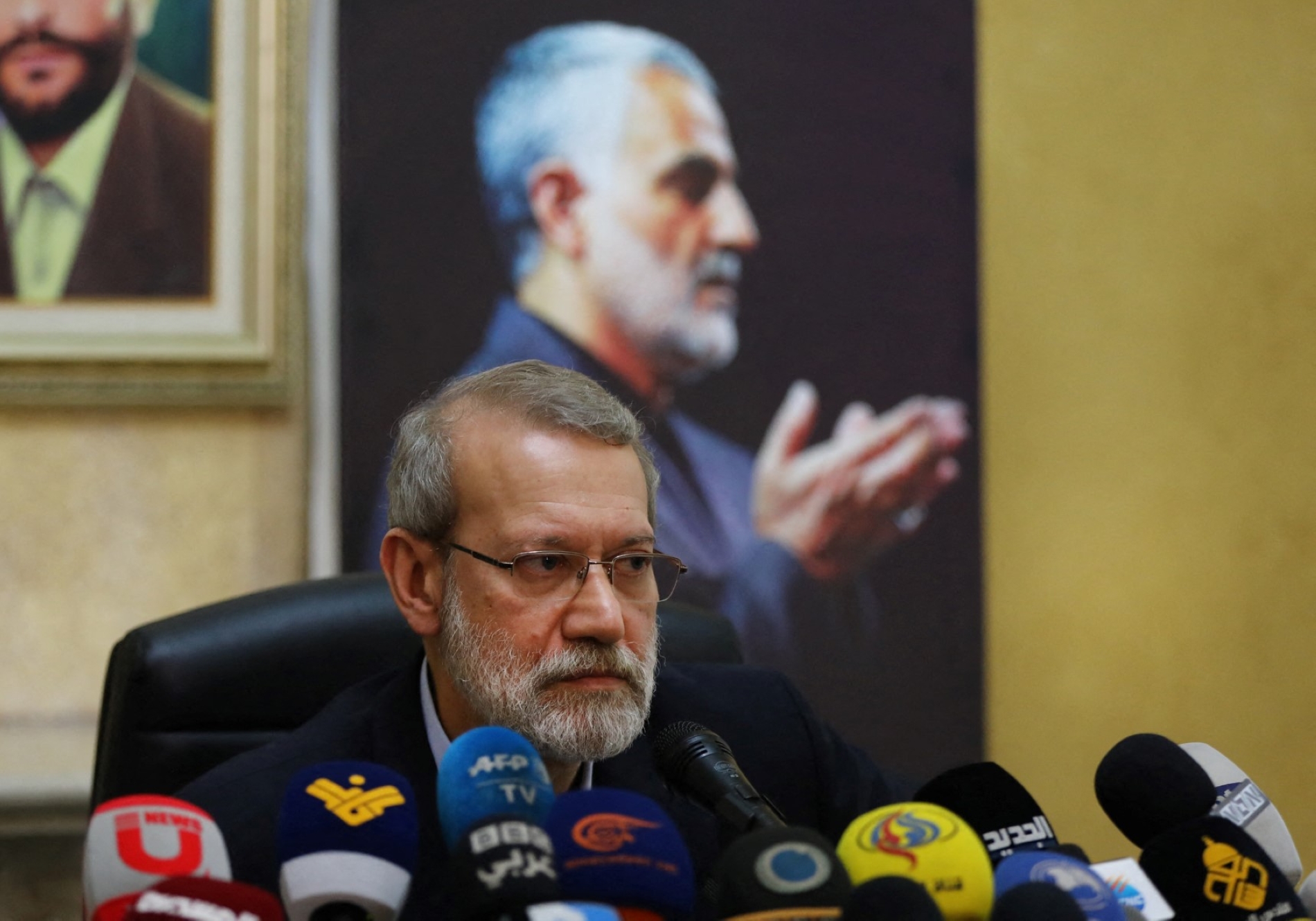
In 1982, two years after Iraq invaded Iran, Larijani joined the Islamic Revolutionary Guard Corps. Though he later admitted he was “not a guardsman by temperament,” he rose through the organisation and eventually became a brigadier general and the deputy chief of its joint staff.
His connections with powerful political figures, particularly former President Akbar Hashemi Rafsanjani, proved decisive. Rafsanjani appointed him as minister of culture and Islamic guidance in 1992. There, Larijani demonstrated pragmatic instincts, legalising videocassette recorders and foreign films rather than continuing ineffective bans.
His administrative abilities soon attracted Khamenei’s attention. In 1994, Khamenei appointed him as the director of IRIB and the leader’s representative to the Supreme National Security Council. Although Larijani initially belonged to Rafsanjani’s technocratic circle, he opportunistically shifted his allegiance to Khamenei.
During President Mohammad Khatami’s reformist administration, IRIB under Larijani became a powerful conservative platform, broadcasting televised confessions of political prisoners and promoting, with Khamenei’s blessing, narratives portraying reformists as threats to the Islamic Republic. At the SNSC, Larijani derided Khatami and then-Secretary Hassan Rouhani for seeking nuclear compromise with the West, dismissing their diplomacy as “trading pearls for bonbons.”
In 2005, Khamenei appointed Larijani as the secretary of the Supreme National Security Council and Iran’s chief nuclear negotiator. His strategy combined ideological firmness with tactical pragmatism: advancing Iran’s nuclear programme while maintaining diplomatic engagement with European mediators such as Javier Solana.
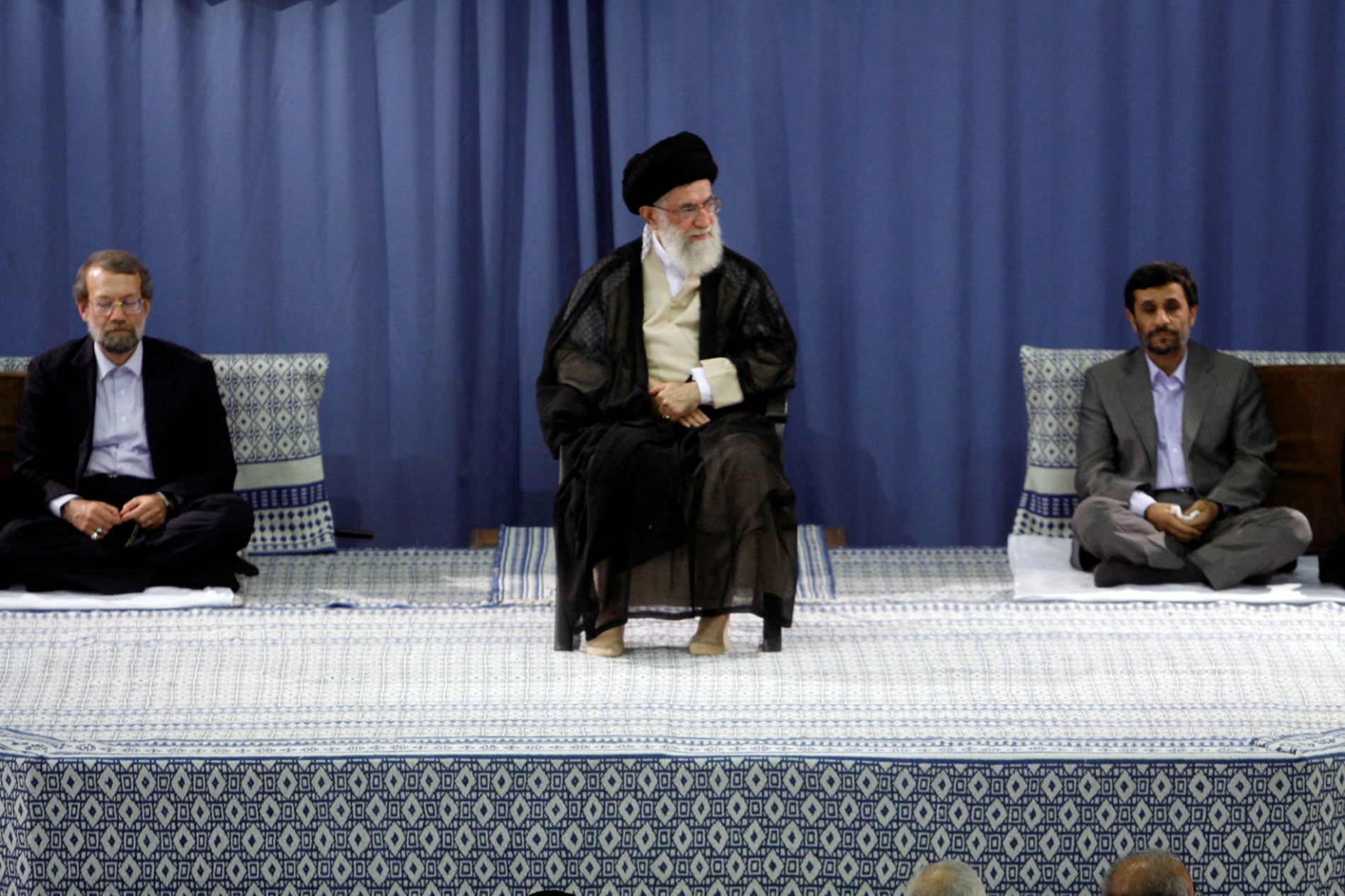
Tensions with President Mahmoud Ahmadinejad, whose incendiary rhetoric against Israel helped the latter mobilise world opinion against Iran, eventually led Larijani to resign from his post on the SNSC in 2007.
The setback proved temporary. In 2008, Larijani was elected speaker of parliament, a position that he held until 2020. At the same time, his younger brother, Sadegh, served as chief justice from 2009 to 2020, the first time two brothers simultaneously headed two branches of government in the Islamic Republic. As speaker, Larijani cultivated a reputation as a pragmatic conservative mediator during crises, including the suppression of the 2009 Green Movement protests—the leaders of which were prosecuted in show trials by Sadegh—and disputes over Iran’s nuclear programme.