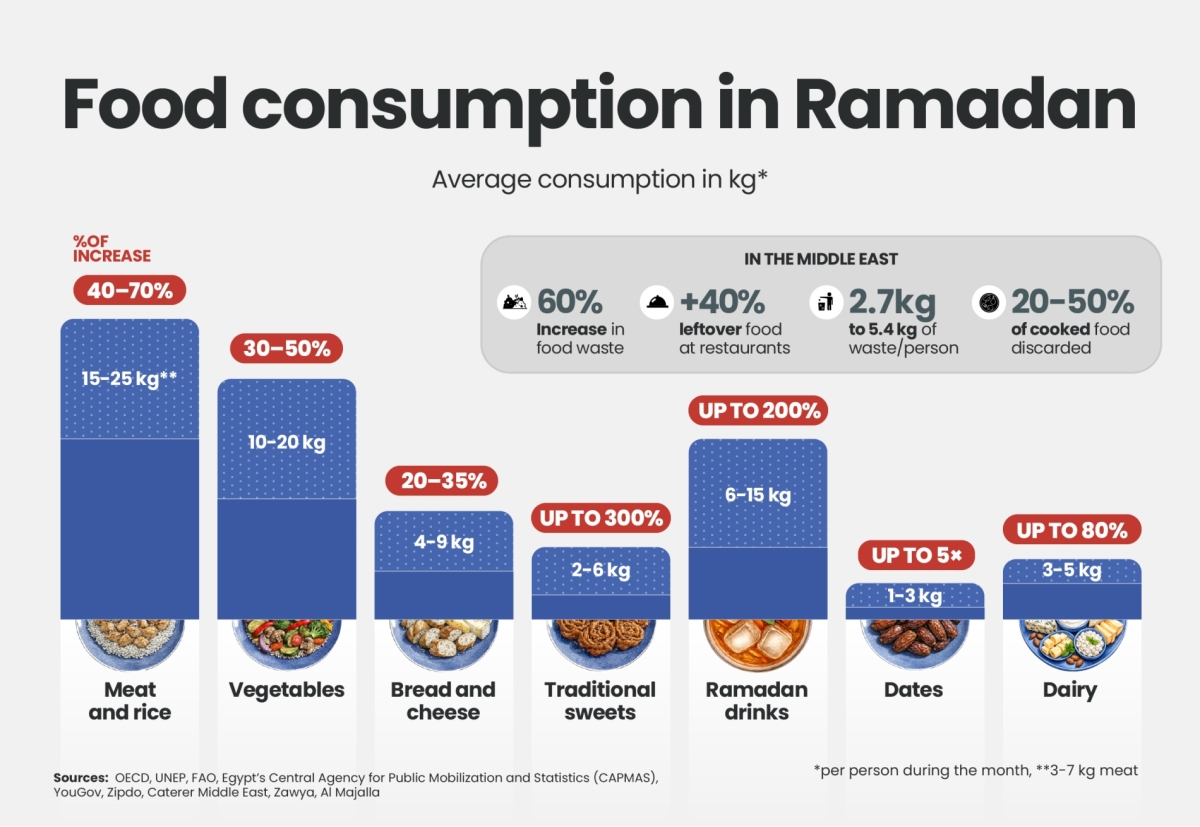

Food consumption shifts markedly during Ramadan, reflecting both spiritual traditions and social customs centred on generosity and hospitality. While the holy month is rooted in abstinence, evening iftar gatherings often lead to a surge in food consumption and waste.
The total food handled per person during Ramadan increases by approximately 50-100%, ranging from 50 to 90 kilogrammes over the month. This figure captures not only direct consumption, but also the volume purchased, prepared and eventually discarded. The surge is driven by larger iftar spreads, higher purchases of meat and staples, expanded production of sweets, and a sharp rise in beverages and date consumption. In many households, both the quantity and diversity of food nearly double, often surpassing actual dietary needs.
The impact is particularly pronounced in the Middle East. Food waste in the region rises by around 60% during Ramadan, with an estimated 2.7–5.4 kg per person discarded over the month. Restaurant leftovers increase by about 40%, and between 20% and 50% of cooked food is ultimately thrown away.
Gulf countries, characterised by higher purchasing power and large hospitality gatherings, tend to record sharper spikes in both consumption and waste. In contrast, lower-income countries may see smaller proportional increases, though food waste remains a common challenge.