Gulf sovereign debt: different approaches and results

Many of the big regional energy producers retain strong credit ratings as they boost their borrowing. How the money is spent will determine the wisdom of each approach.

Eduardo Ramon

Gulf sovereign debt: different approaches and results

The United Nations Development Programme is supporting the Kuwaiti government in deploying debt instruments to help finance development in education, healthcare, and clean energy. Those debt instruments include sovereign bonds and sukuk (sharia-compliant) bonds, now that Kuwait can access diversified financing channels thanks to the enactment of a new public debt law, which authorises government borrowing of around $97.5bn, with maturities extending to 50 years.

The aim is to let the state manage fiscal deficits from lower oil prices and non-oil revenue vulnerabilities. Although Kuwait has a sovereign wealth fund with $1tn in assets, the Future Generations Reserve Law keeps those resources out of bounds for debt financing, instead mandating the reinvestment of returns to preserve national wealth for future generations.

States and their IOUs

Sovereign borrowing has long formed part of the fiscal landscape of modern states, and some governments have accumulated substantial obligations. For them, debt servicing can impose heavy burdens and leave some countries on the brink of insolvency and default if fiscal governance is weak and spending is unchecked, particularly on defence or projects of limited productive value.

Further drains of state resources can include sprawling administration and urban overexpansion, yet sovereign borrowing can be a catalyst for constructive transformation when directed towards productive development. States that use debt to improve healthcare, education, and infrastructure, for instance, usually raise overall living standards.

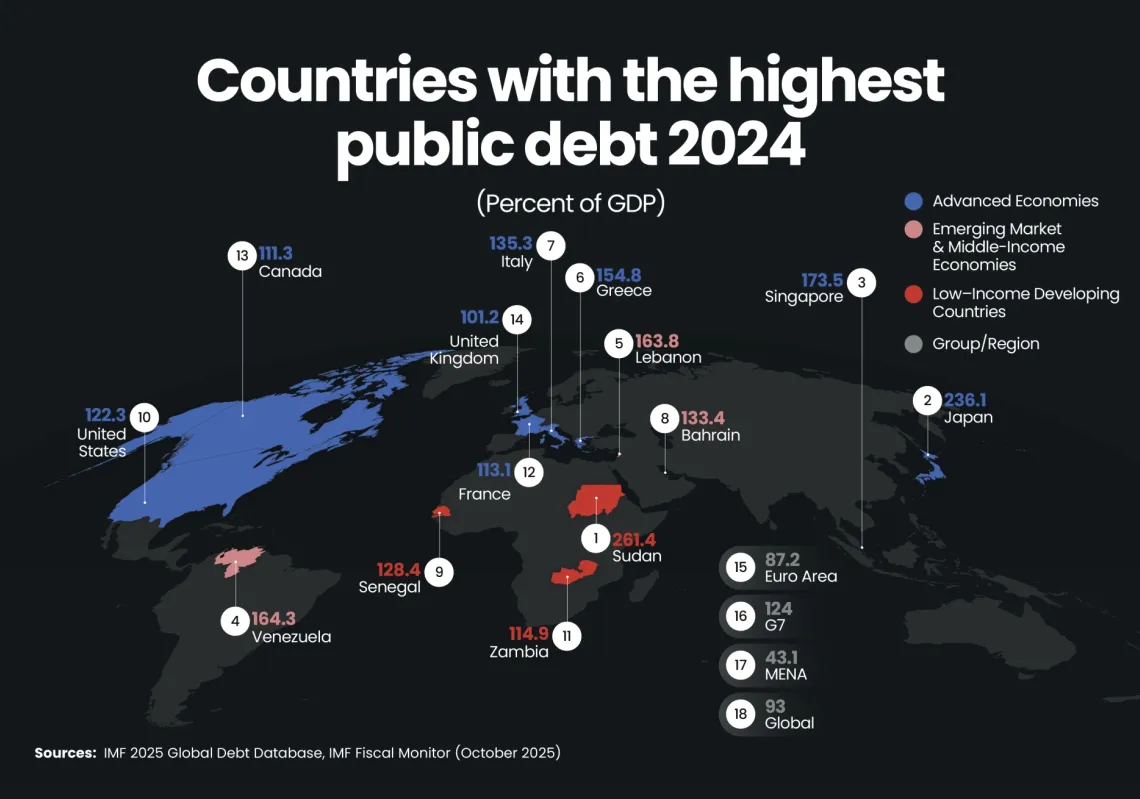
Japan offers a striking example. By March 2025, its sovereign debt had reached a colossal $8.4tn, with 88% held domestically (the Bank of Japan and insurers are among the biggest creditors). This was around 235% of gross domestic product (GDP) in 2024, a burden stemming from the 1991 financial market collapse, when government intervention became necessary.

Saudi Arabia is the leading sovereign debt issuer in the Gulf, accounting for roughly 44.8% of total issuance. The United Arab Emirates follows with 29.9%, with Qatar issuing 12.8%, and Bahrain, Oman, and Kuwait making up the rest. Saudi public debt has now reached around $390bn. The borrowing reflects the scale of projects pursued under Vision 2030, spanning infrastructure, tourism, education, health, and sustainability.

Getty Images
Saudi women stand next to the Saudi pavilion (Vision 2030) at the Gitex 2018 exhibition at the Dubai World Trade Centre in Dubai on 16 October 2018.

Such initiatives have strengthened core public assets and reinforced Saudi Arabia's economic position within the G20. The UAE maintains a comparable debt-to-GDP ratio, while Kuwait has entered the borrowing cycle over the past year, as lower oil prices add pressure to budgets.

Projections from the International Monetary Fund (IMF) show Saudi and Kuwaiti debt growing over the next few years, while the debt of the UAE, Qatar, and Oman is projected to fall. In 2024, total Saudi government debt was 26.2% of GDP, and in 2025 it was 29.2%, rising to 31.8% in 2026 and 40.7% by 2030. In Kuwait, it was just 2.9% of GDP in 2024, 7.3% in 2025, 10.7% in 2026, and is expected to be 24.5% by 2030.
Saudi Arabia is the leading sovereign issuer in the Gulf, accounting for roughly 44.8% of total issuance

By contrast, Qatari government debt stood at 41.2% of GDP in 2024, before dropping substantially to 30.6% in 2025. UAE debt was 34.9% of GDP in 2024 but is expected to be down to 26.6% by 2030. Similarly, Oman's debt was 35.5% of GDP in 2024 but is projected to be 28.8% by 2030.

As sovereign borrowing balloons, the principal challenge for Gulf states lies in its allocation. Will funds be spent on projects that generate tangible economic and social returns, or be absorbed into recurrent expenditure, with limited long-term impact? This is the test for those with stewardship of state treasuries, who are under pressure to rationalise expenditure and impose fiscal discipline.

AFP
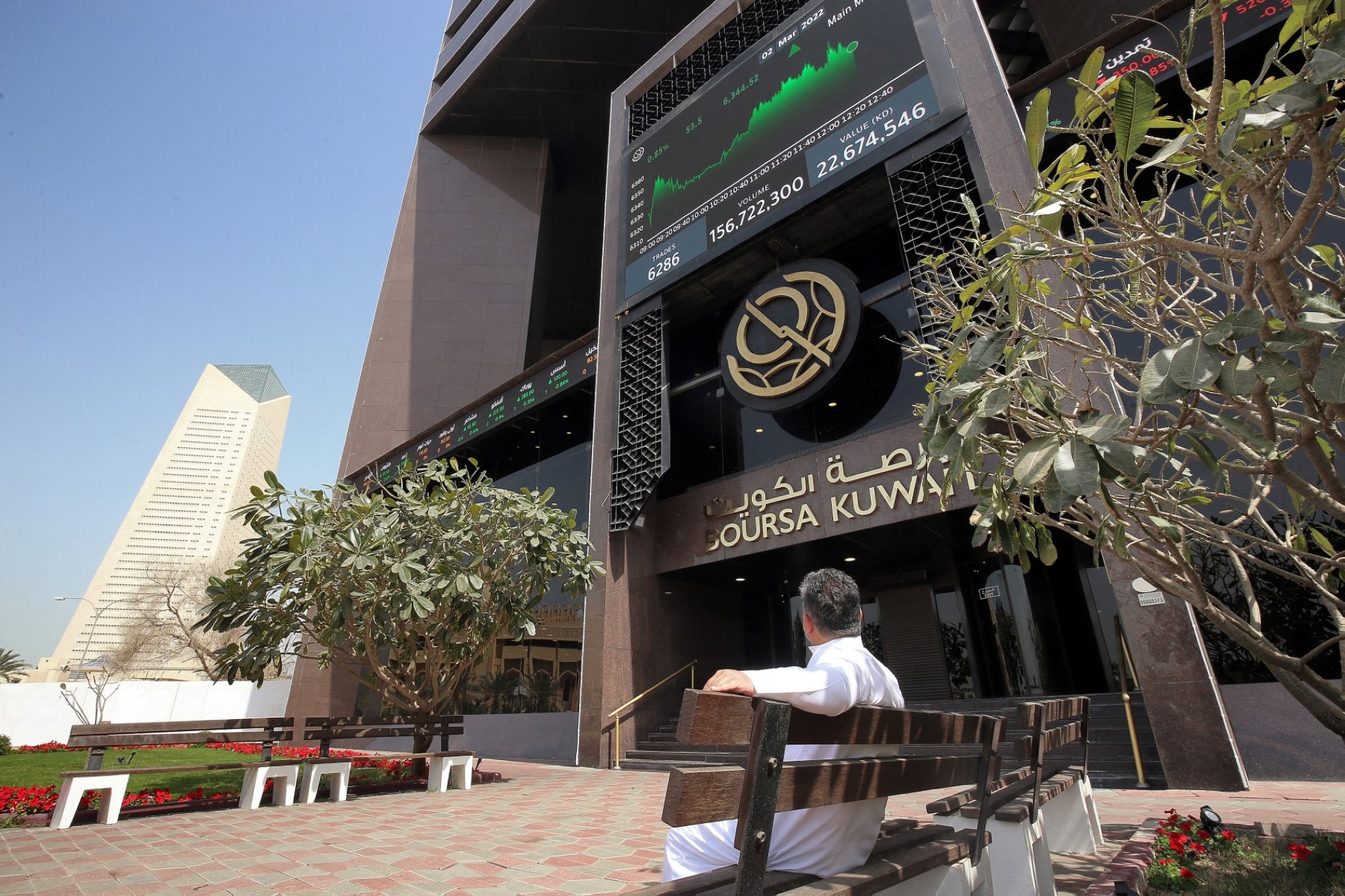
Kuwait Stock Exchange building, on 2 March 2022.

Long-term management

Long-term trends must be managed. Across Gulf societies, where young people constitute no less than 60% of the population, demographic realities mean that the number of elderly citizens is growing, yet statutory retirement ages remain comparatively low. This expands states' long-term social obligations, putting more strain on public finances.

It is a balancing act. Gulf states need to manage sovereign debt, honour future repayment commitments, and sustain established social contracts. In all circumstances, sovereign indebtedness has become an enduring feature of fiscal policy in the region, demanding prudent oversight.

Gulf states still have robust credit profiles, underpinned by their status as major energy producers and by the presence of sovereign wealth funds invested in high-quality assets across global markets. In December, Fitch reaffirmed the credit standing of these countries. S&P Global Ratings assigned the UAE a rating of AA+, Saudi Arabia A+, Kuwait AA-, Qatar AA, Oman BBB-, and Bahrain B.

Gulf states have robust credit profiles, buoyed by their status as major energy producers and investments in key assets across global markets

Relative strength

These assessments reflect the relative strength of each economy, the commitment to fiscal reform and expenditure discipline, and the capacity to bolster both oil and non-oil revenues. Data from the rating agencies and international financial institutions further suggest that the Gulf Cooperation Council collectively maintains strong credit fundamentals, which reinforces investor confidence in Gulf states' ability to meet their financial obligations in full and on time.

Should structural reforms advance in the coming years, the private sector's role in Gulf economies is likely to expand correspondingly. Firms will then seek credit to acquire assets, diversify operations, and extend their presence across multiple industries, so regional credit markets are expected to deepen, presenting new opportunities for banks to strengthen their role in both public and private financing. Sovereign debt will nonetheless remain a central instrument of economic management and a pivotal factor shaping the trajectory of structural reform across the Gulf.

font change