Pakistan proves its utility as a key US intermediary

Islamabad emerges as a key bridge in tricky conflicts from Iran to China

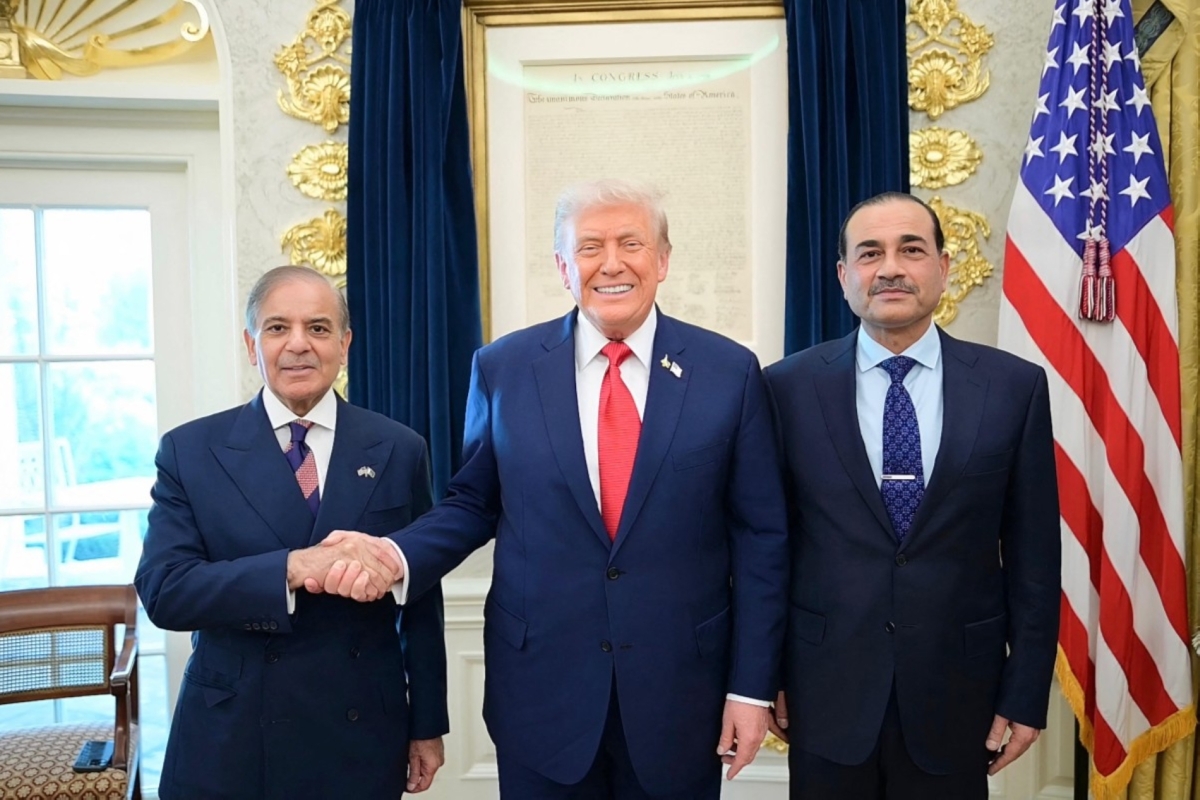
Pakistan's Prime Minister Shehbaz Sharif Army Chief and Field Marshal Syed Asim Munir pose with US President Donald Trump (C) at the White House in Washington, DC on 26 September 2025.
AFP
Pakistan's Prime Minister Shehbaz Sharif Army Chief and Field Marshal Syed Asim Munir pose with US President Donald Trump (C) at the White House in Washington, DC on 26 September 2025.

Pakistan proves its utility as a key US intermediary

Before the year began, analysts warned that 2026 could usher in a period of profound global uncertainty amid geopolitical fragmentation. In this shifting landscape, middle powers may prove decisive in shaping the global order, with Pakistan potentially standing to gain significantly from the Trump administration’s ‘Donroe Doctrine’, a neo-Monroe approach prioritising US hegemony in key regions.

Pakistan has a front seat at US President Donald Trump’s White House table, with Prime Minister Shehbaz Sharif and Field Marshal Asim Munir visiting in September last year. However, aside from its role as a traditional military and security provider in the Middle East, Pakistan has re-emerged as a middle power, acting as a bridge in difficult conflicts and bringing together major powers such as China and the US.

Pakistan brokered the US’s first diplomatic meeting with China during the presidency of Richard Nixon. Now, after decades in the diplomatic wilderness, Pakistan has re-emerged as a capable mediator, handling back-channel talks with Iran amid growing tensions and deepening its strategic alignment with China.

At the beginning of Trump’s second term, there was great uncertainty in Pakistan, given the US president’s previous close relationship with India—Trump’s strategic partner of choice in countering China. However, after a year in office, Pakistan has emerged not only as one of Trump’s regional favourites but as a favoured actor on the global stage. During the 12-day summer conflict between Israel and Iran, it was no coincidence that Field Marshal Munir found himself between the power corridors of Washington, D.C. and Langley.

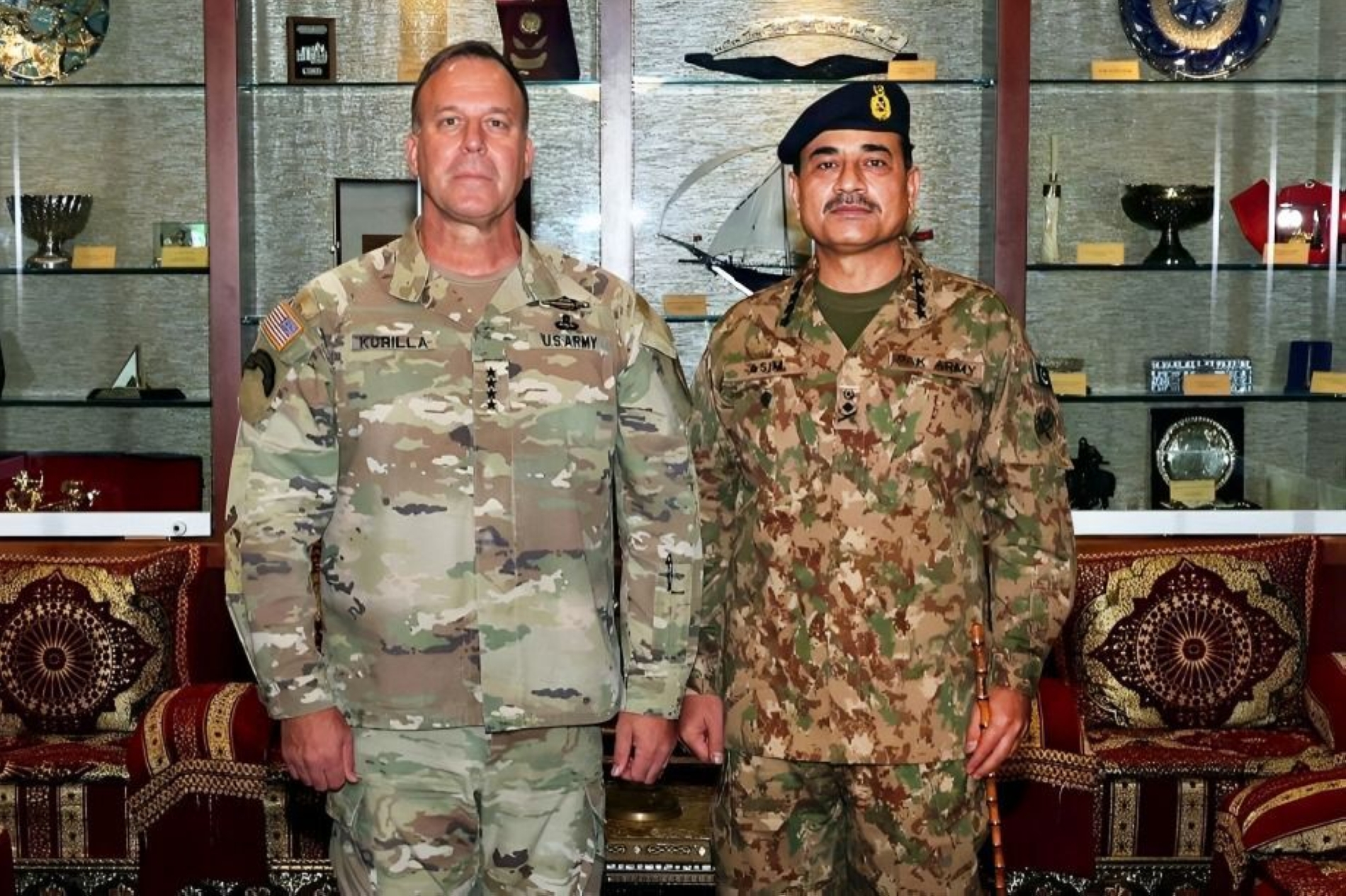
To many people’s surprise, the then commander of the US’s Central Command, General Michael Kurilla, defended Pakistan’s role as a counter-terror partner. His rhetoric went against a decades-long push at Capitol Hill, when leading congressmen, senators, and generals labelled Pakistan as a supporter of terrorism. So, what had changed?
Pakistani Army via Getty Images
Gen. Kurilla (L) meets Pakistani Army Chief Asim Munir (R) at the CENTCOM headquarters in Florida on 19 December 2023.

Quiet yet key role

For one, Kurilla had revived an old Cold War reliance on Pakistan’s ability to talk to undesirable regimes—something the US could not do directly, at least not openly. During last year’s Israel-Iran conflict and the US’s attack on Iran’s nuclear sites, Pakistan played a quiet behind-the-scenes role, limiting the possibility of out-and-out escalation. Pakistan did not simply pass messages back and forth between Tehran and Washington. It whispered in Trump’s ear, advising him how to deal with Iran.

Following his meeting with Munir in June last year, during which a strategy was discussed to curtail the fallout of US strikes on Iran, Trump said, “Pakistan knows Iran much better than most.” This was in line with the 2020 assassination of Qasem Soleimani, a major general in Iran’s Islamic Revolutionary Guard Corps, by a drone strike during Trump’s first term. One of the first calls Trump made following that attack was to General Qamar Javed Bajwa, then Pakistan’s chief of the Army Staff.
Pakistan did not simply pass messages back and forth between Tehran and Washington. It whispered in Trump's ear, advising him how to deal with Iran.

A key point to understand is that, unlike Switzerland, Qatar, and Oman—all established intermediaries in talks with Iran—Pakistan shares a long and sometimes tense border with Iran. Tehran also understands that, in the event of an all-out conflict, Pakistan would represent a military threat, with the backing of several Gulf states. Despite religious, cultural, and linguistic ties that prevent open conflict, Iran and Pakistan are in the midst of an undeclared intelligence and proxy war. 

Soleimani had often threatened Pakistan with open war, and aside from Israel and the US, Pakistan is the only other country to have struck Iran via aerial attack. This positions Pakistan as a critical back channel through which both pressure and inducements can be applied to Iran. 

AFP
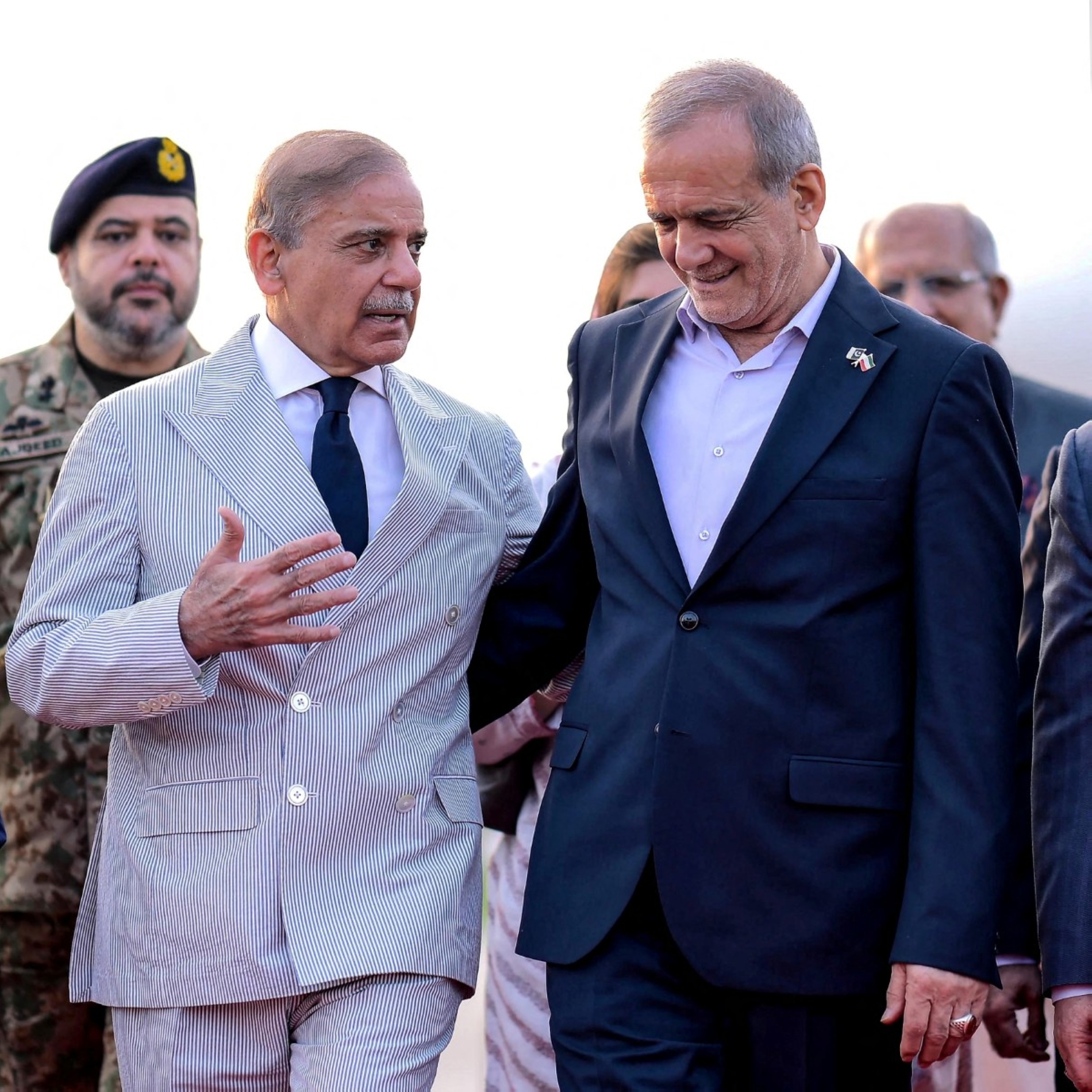
Pakistan's Prime Minister Shehbaz Sharif (L) speaking with Iran's President Masoud Pezeshkian upon the latter's arrival at the airport in Islamabad on 2 August, 2025.

While we do not know where the indirect Iran-US talks in Muscat will lead, given that the first round ended without a breakthrough, Pakistan's role is significant. The US can use Pakistan to deliver messages, while knowing that Tehran's relationship with Islamabad is complicated by longstanding tensions along the Baluch border and Iranian efforts to cultivate influence among Pakistan's Shiite population. Iran has also publicly thanked Pakistan for helping ease tensions during the 12-day war with Israel, as well as during recent protests against the regime.  

Pakistan, like the US and the Gulf states, does not trust Iranian intentions in the region. However, along with Saudi Arabia and Türkiye, it does not want regime change. This makes them a key bridge between both sides. 

Building bridges

In arranging US diplomat Henry Kissinger's back-channel diplomacy and paving the way for Nixon's visit to Beijing, Pakistan positioned itself as a pivotal bridge in the US-China rapprochement—a role for which old-school American national security experts remain forever grateful. Until the presidency of Pervez Musharraf, Pakistan maintained a relatively even-handed balance between China and the US, navigating their competing spheres of influence with a degree of parity.

Pakistan, which until the Musharraf era relied predominantly on US military hardware, from F-16s to Bell AH-1 Cobras, has since pivoted decisively towards China, becoming Beijing's closest defence partner and a principal recipient of its advanced fighter aircraft and missile technology. China, meanwhile, has benefitted from its deep military partnership with Pakistan. The deployment of Chinese-made fighters, missiles, and air-defence systems in clashes with India has given Beijing valuable real-world insight into how its equipment performs against a peer competitor's Western-sourced arsenal.

What this does is make Pakistan an indispensable interlocutor for Washington. It has one of the few militaries with close operational exposure to China's evolving doctrine while still maintaining direct access to the US political leadership. No other military in the world has Trump on speed dial and is simultaneously China's closest defence partner. Historically, Islamabad has also played a quiet role in facilitating China's relationship with Türkiye and Saudi Arabia. 

AFP
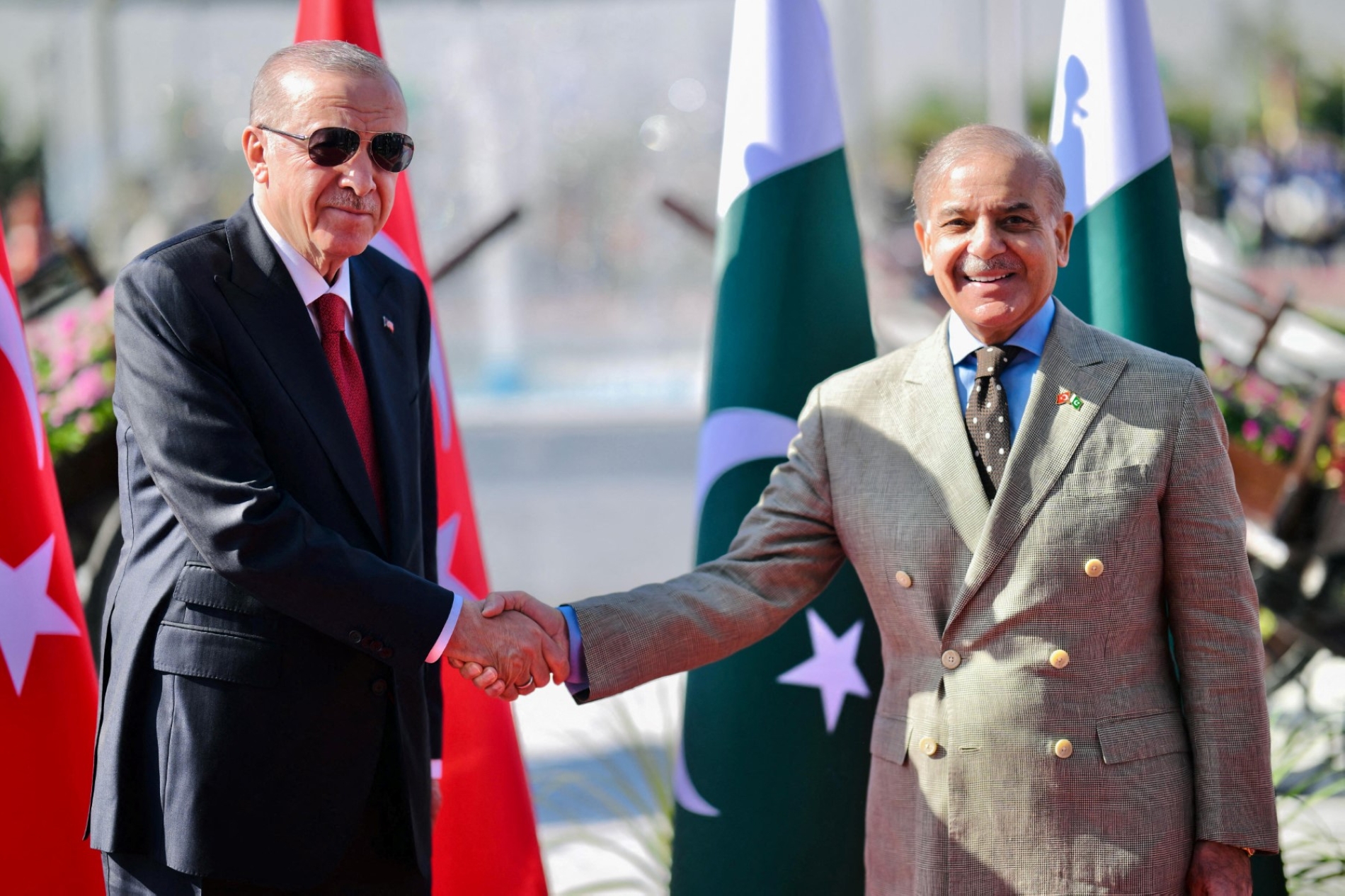
Türkiye's President Recep Tayyip Erdogan shakes hands with Pakistan's Prime Minister Shehbaz Sharif during his ceremonial reception at the Prime Minister's House in Islamabad on 13 February, 2025.

Admiral Cihat Yaycı, one of Türkiye's foremost strategic military thinkers and a key confidante of President Recep Tayyip Erdoğan, recently argued that Pakistan was key to China's rise during the Cold War, leveraging its relationship with the US, Türkiye, and Saudi Arabia to bring them closer to China during the 1980s. Yaycı also argued that, as one of Türkiye's most senior military officers, he witnessed firsthand how China described itself as Pakistan's closest ally, drawing them into a détente with Türkiye when tensions rose with Ankara over China's persecution of the Uyghurs in Xinjiang.

It is this Chinese leverage that has made Islamabad a bridge builder for many foreign powers, despite having once stood on the wrong side of Beijing. In a recent article, Aparna Pande, a senior fellow at the Hudson Institute, argued that Pakistan is a key part of China's Eurasia strategy, serving China's interests by constraining India's strategic ambitions through militarisation and positioning. 

Reliant on patronage

Of course, Pakistan has its limitations. Its economy is weak and reliant on several international patrons, including Saudi Arabia, China, the UAE, and the US. The very fact that Pakistan has so many financial backers positions it as a bridge rather than a partisan. By carefully balancing these relationships—and avoiding the perception of taking sides—it has managed a diplomatic dexterity that many in the EU and Latin America have struggled to achieve. 

As Washington intensifies pressure on states to choose between the US and China, Pakistan has, paradoxically, avoided being trapped in a zero-sum contest. Instead, it has leveraged its position to act as a conduit between competing powers. This gives Islamabad potential value as an interlocutor, not only for talking with China and the US, but also for conversations involving Iran. 

font change