Is Jeff Bezos defanging the Washington Post?

For two years, the Amazon CEO has been accused of quietly changing the paper's editorial line to be less critical of Trump, while a recent mass layoff has eliminated entire editorial departments

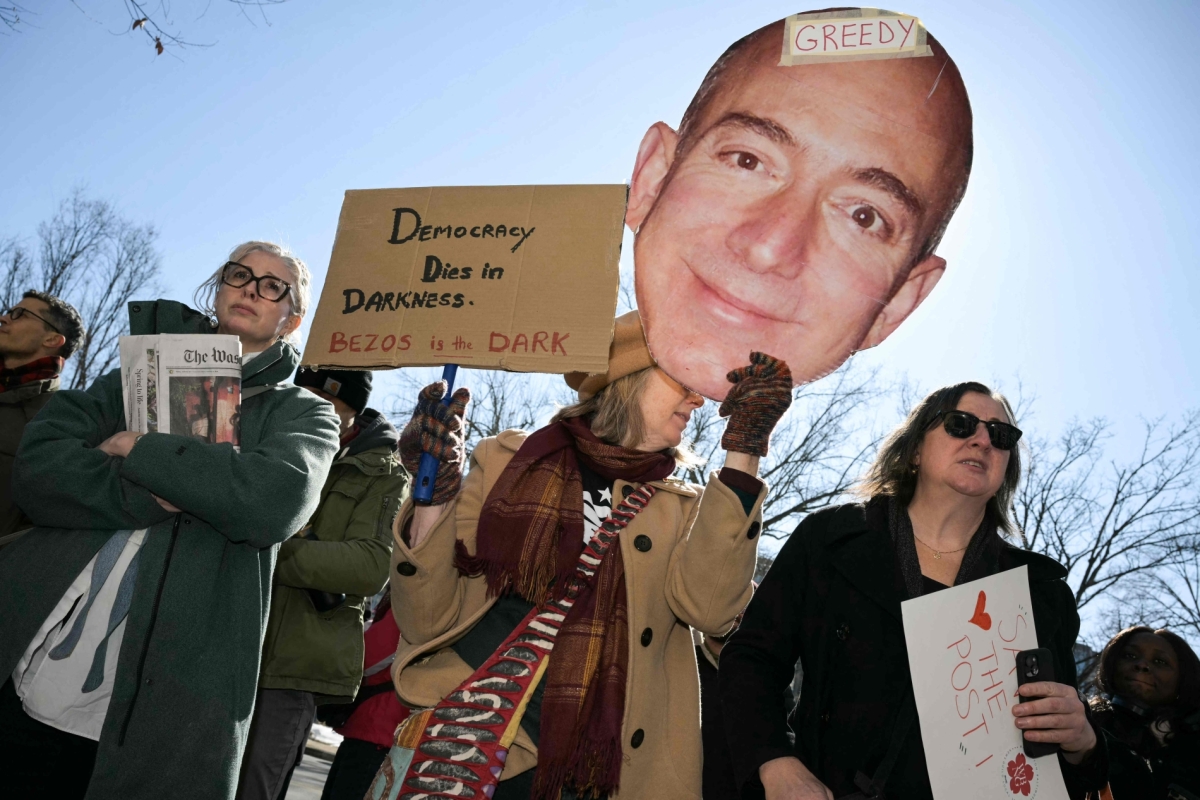
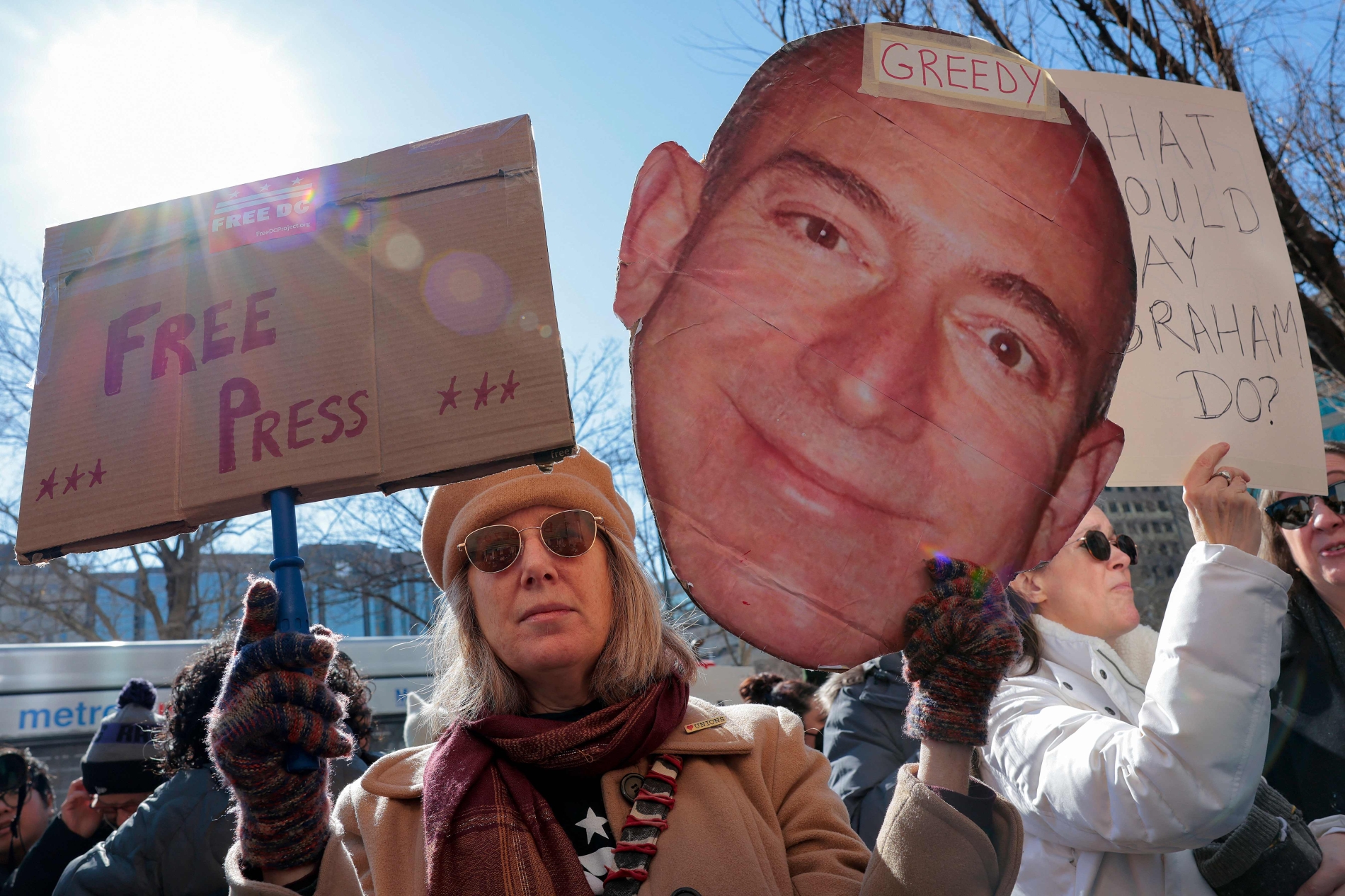
Washington Post employees, along with supporters from the Washington-Baltimore News Guild, rally outside the Washington Post office building in Washington, DC, on 5 February 2026.
Oliver Contreras / AFP
Washington Post employees, along with supporters from the Washington-Baltimore News Guild, rally outside the Washington Post office building in Washington, DC, on 5 February 2026.

Is Jeff Bezos defanging the Washington Post?

Amazon founder Jeff Bezos’s reputation as one of the world’s most dynamic and successful business pioneers is under intense scrutiny due to his controversial ownership of the Washington Post.

For decades, the liberal-leaning legacy paper has been regarded as one of America’s most feted media organisations, both for the exceptional quality of its coverage of world events and its no-holds-barred reporting on American politics.

The high point of the Post’s uncompromising approach to investigative journalism was undoubtedly its role in exposing the Watergate scandal in the 1970s. This ultimately resulted in the resignation of Republican President Richard Nixon in 1974 over his administration’s involvement in bugging their Democratic rivals.

Yet, despite its reporters winning dozens of Pulitzer Prizes for their coverage of key events over the decades, by the turn of this century, the Post found itself facing financial uncertainty as it struggled to adapt to the challenges of the digital age.

This ultimately resulted in 2013, with Bezos, whose ownership of his global Amazon empire has made him one of the world’s richest entrepreneurs, deciding to purchase the Post from the Graham family, the renowned Washington media dynasty that had owned the newspaper for decades.

At the time, Bezos’s purchase of the Post was seen by many as a lifesaving move, with expectations that the wealthy entrepreneur would use his exceptional business acumen to enable the publication to thrive in the digital age.
Oliver Contreras / AFP
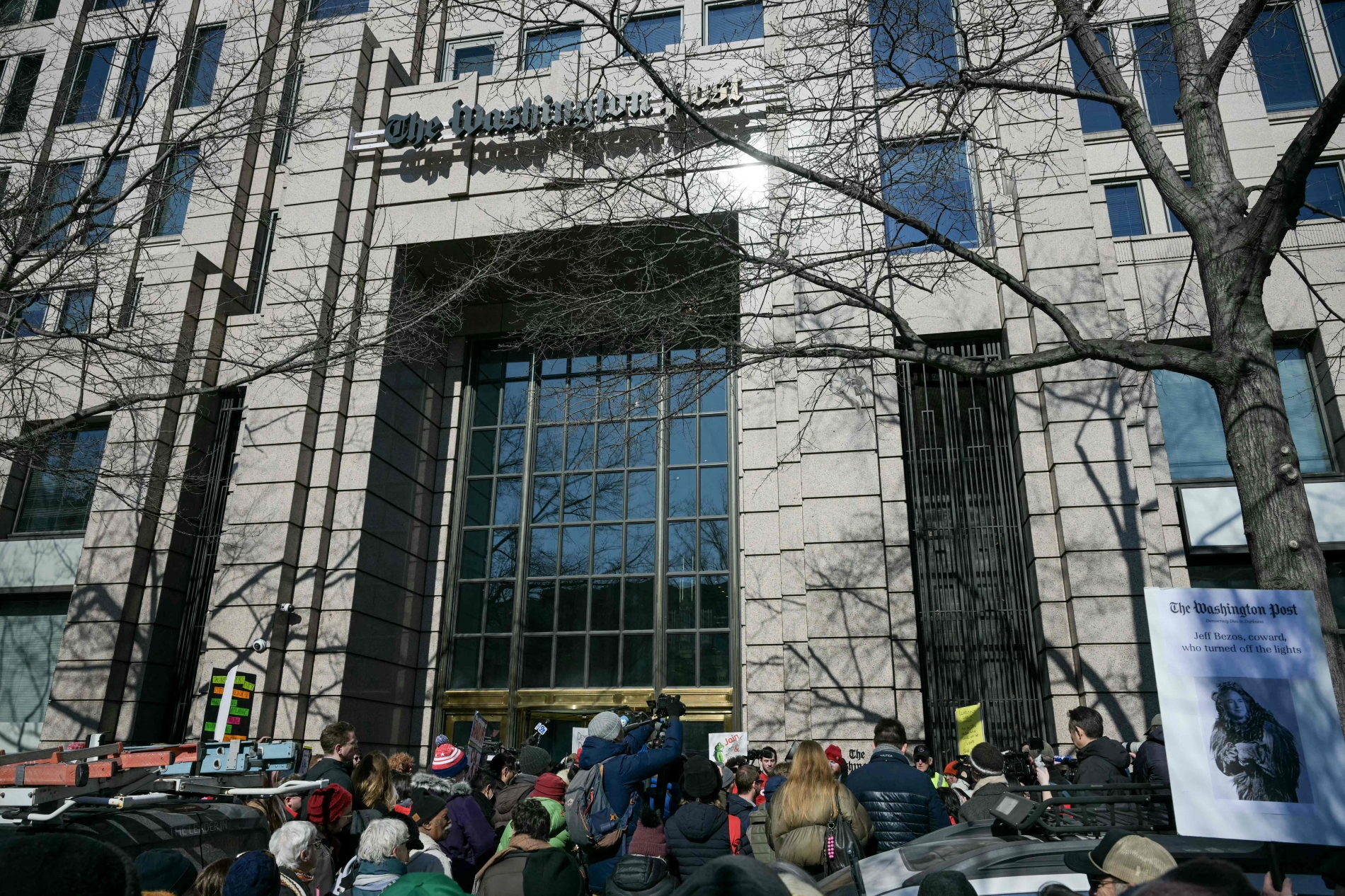
Washington Post employees, along with supporters from the Washington-Baltimore News Guild, rally outside the Washington Post office building in Washington, DC, on 5 February 2026.

Bezos had, after all, demonstrated his remarkable ability to monetise the World Wide Web through his bold plan to create his Amazon empire back in 1994, when, as a 30-year-old Princeton graduate with a successful career working for a Wall Street investment bank, he decided to set up his own company.

Having identified the commercial potential provided by selling goods online, Bezos moved his family to Seattle, where, having raised $1mn from family and friends, the entrepreneur began selling books from the garage of his family home.

Just four years after Bezos founded Amazon.com, the virtual bookstore became the template for how e-commerce businesses should be run, with sales exceeding $610mn and more than 13 million customers worldwide.

And it was the success of this initial introduction to the world of e-commerce that enabled Bezos to eventually turn Amazon into one of the world’s dominant retailers, as well as expand its operations into media outlets with the development of streaming services such as Amazon Prime.

But while Bezos’s entrepreneurial skill in turning Amazon into the world’s dominant retailer, with estimates suggesting the company controls around 40% of all online retail sales, has earned him many plaudits, his decision to acquire ownership of the Washington Post has proved to be more problematic.

He has been accused of quietly changing the Post’s editorial line, which has traditionally been pro-Democrat, to make it less critical of the Trump administration’s policies.
Saul Loeb/Reuters
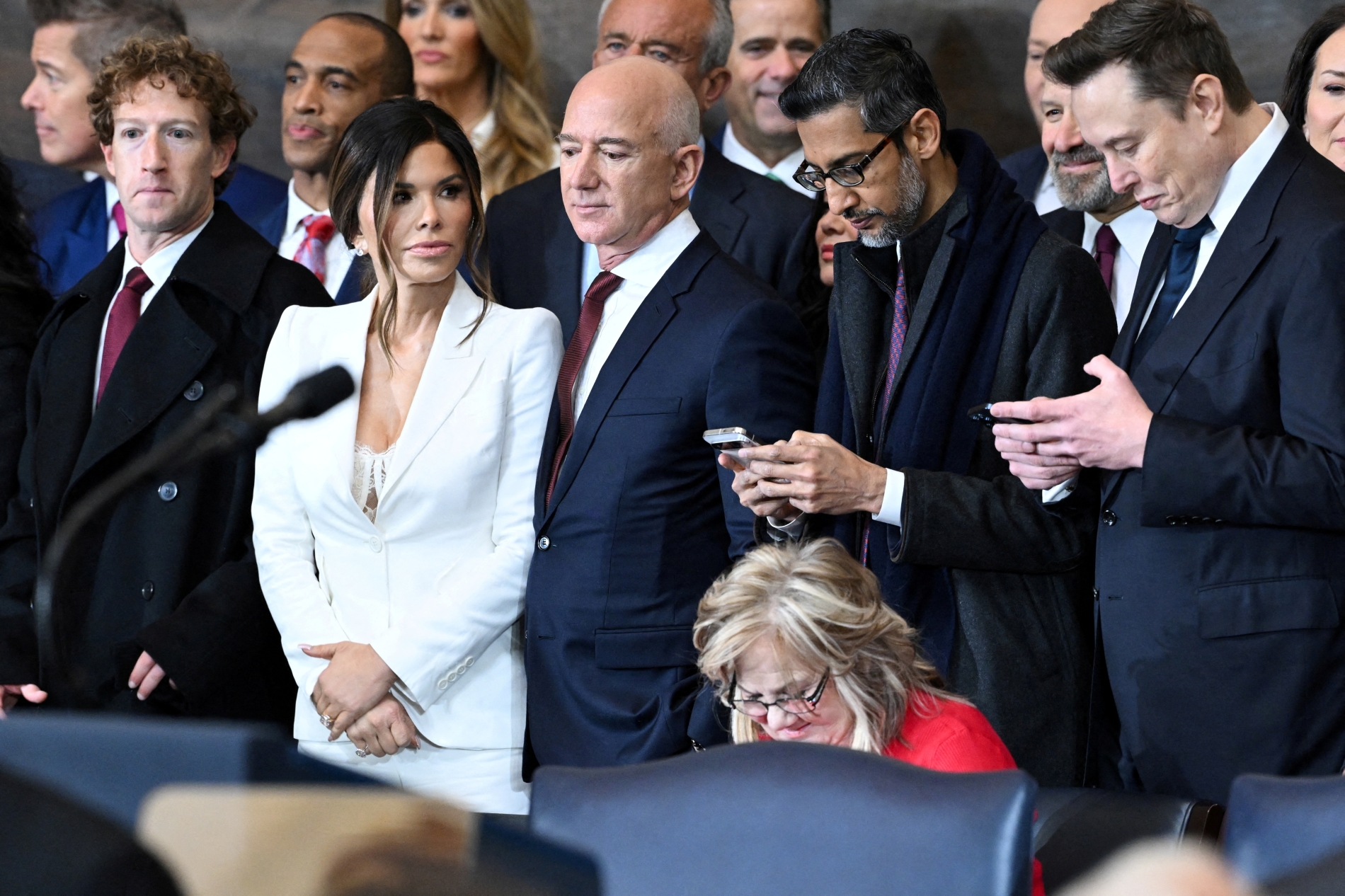
Mark Zuckerberg (L) Jeff Bezos (C), Google chief executive Sundar Pichai (2R) and Elon Musk (R) attend the presidential inauguration ceremony of Donald Trump in January 2025.

The first clear indication that Bezos was seeking to steer the Post in a different editorial direction came on the eve of the 2024 presidential election, when he was accused of personally ordering the removal of an editorial endorsing Democratic nominee Kamala Harris on the eve of the election.

The move prompted a subscriber exodus, further adding to the organisation’s financial woes. And it led to allegations by former prominent Post journalists that Bezos was vandalising the paper to appease Trump and protect his other, much larger, businesses. “Bezos is not trying to save The Washington Post,” wrote former Post  journalist Glenn Kessler in an essay. “He’s trying to survive Donald Trump.”

The controversy surrounding Bezos’s ownership of the Post, has deepened further after it was announced earlier this week that the newspaper’s management was making one-third of the workforce redundant in order to cut costs.

Managers at the media company insist that, with annual losses projected at $100mn per year, the measures are vital to ensure its long-term survival.

But the sheer scale of the cuts, which have resulted in the wholesale closure of the sports and books departments, and savage reductions to the Post’s globally recognised international coverage, have provoked an outcry from both staff and readers alike.

In a move described by one former executive editor as being “among the darkest days” in the newspaper’s history, management blamed the decision on the fact that the paper's online traffic had plummeted in the last three years amid the artificial intelligence boom.
Heather Diehl / AFP
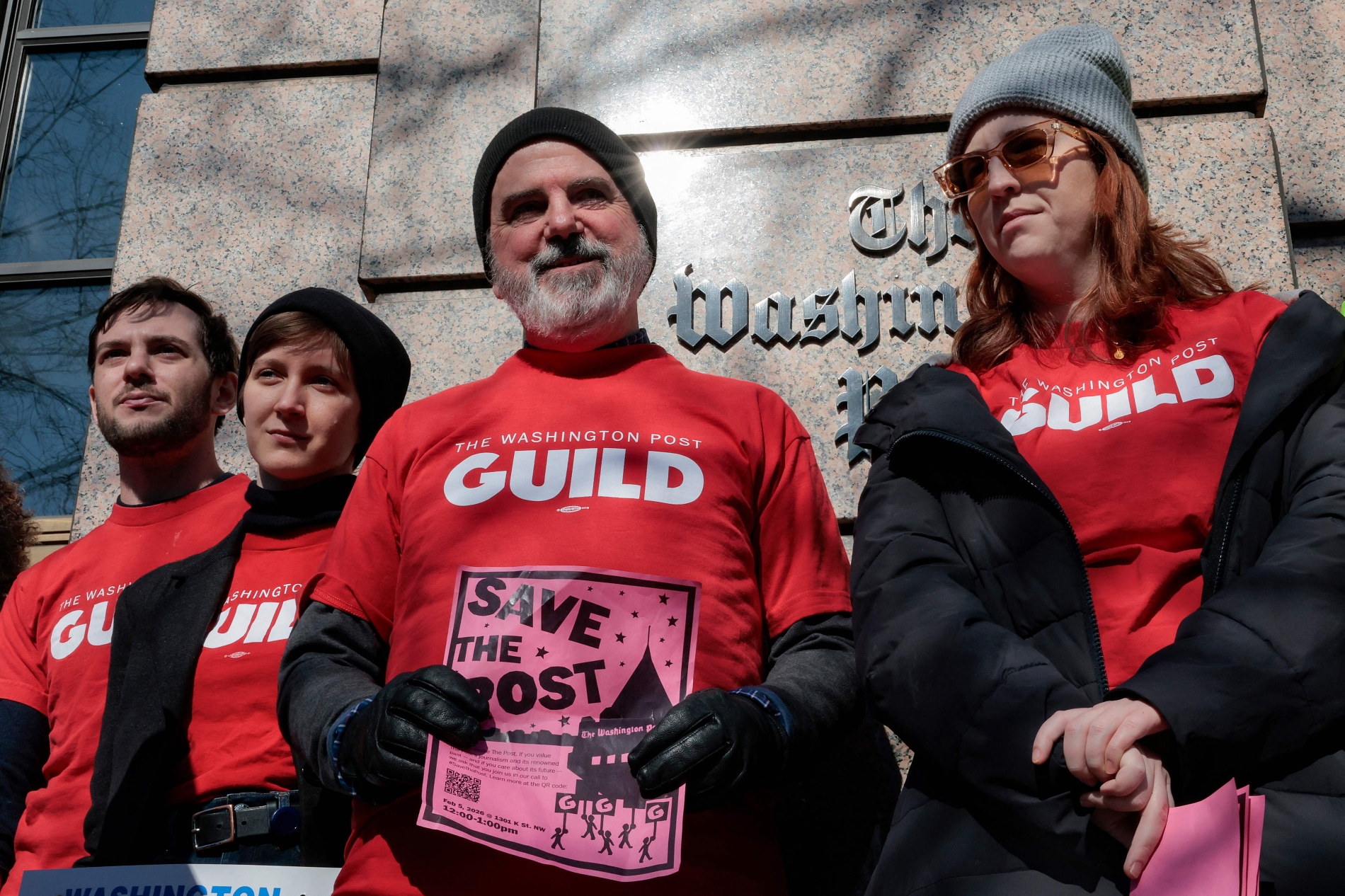
Guild members are joined by other protesters during a rally outside the Washington Post office building on 5 February 2026, in Washington, DC.

Executive editor Matt Murray said the cuts would bring "stability". But the announcement was met with condemnation from the paper's employees and some former leaders, one of whom described it as among the "darkest days in the history of" the storied newspaper.

"Today's news is painful. These are difficult actions," Murray wrote in a note to staff on Wednesday.

"If we are to thrive, not just endure, we must reinvent our journalism and our business model with renewed ambition."

Laid-off journalists took to social media, with many voicing anger about the decision to scale back coverage of foreign news. One employee, not authorised to speak publicly, said: “It’s an absolute bloodbath.”
Bezos's sickening efforts to curry favour with President Trump have left an especially ugly stain of their own

Marty Baron, former Post editor

The paper's former Cairo bureau chief said she was laid off alongside the "entire roster" of Middle East correspondents and editors. A correspondent based in Ukraine lamented losing her job "in the middle of a warzone".

Another reporter said most of the paper's metro section, which focuses on news in the Washington, DC, region, had also been laid off.

Marty Baron, who served as The Post's editor until 2021, called it "among the darkest days in the history of one of the world's greatest news organisations".

He said Bezos, who bought the newspaper for $250mn in 2013, had spoken "forcefully and eloquently of a free press" during his tenure as the paper's editor, which encompassed Trump's first term in the White House. 

Heather Diehl / AFP
Local DC residents who read the Washington Post join members of the guild to protest during a rally outside the Washington Post office building on 5 February 2026, in Washington, DC.

But, Baron added, "I wish I detected the same spirit today. There is no sign of it."

Baron was hired to serve as the paper's top editor just a few months before Bezos bought it in 2013. Across his eight years in charge, when the Post  cemented itself as a powerful force in Trump's first term and earned 10 Pulitzer Prizes along the way, Baron enjoyed the full backing of the owner. In his 2023 book Collision of Power, he wrote that Bezos stood up to Trump's attacks on the Post  and resisted enormous pressure from the administration to rein in its coverage.

Now, Baron believes Bezos has succumbed to the more extreme pressures of Trump's second term. "Bezos's sickening efforts to curry favour with President Trump have left an especially ugly stain of their own," he wrote in his statement. "This is a case study in near-instant, self-inflicted brand destruction."

He has added: "He is trying to stay out of Trump's crosshairs. He's certainly trying to make sure that Amazon is not damaged by his ownership of The Washington Post."

The Post  was founded in 1877. In its early years, it changed hands several times and struggled financially and editorially. In 1933, financier Eugene Meyer purchased it out of bankruptcy and revived its health and reputation; his successors continued this work , Katharine and Phil Graham, Meyer's daughter and son-in-law, respectively, who bought out several rival publications.

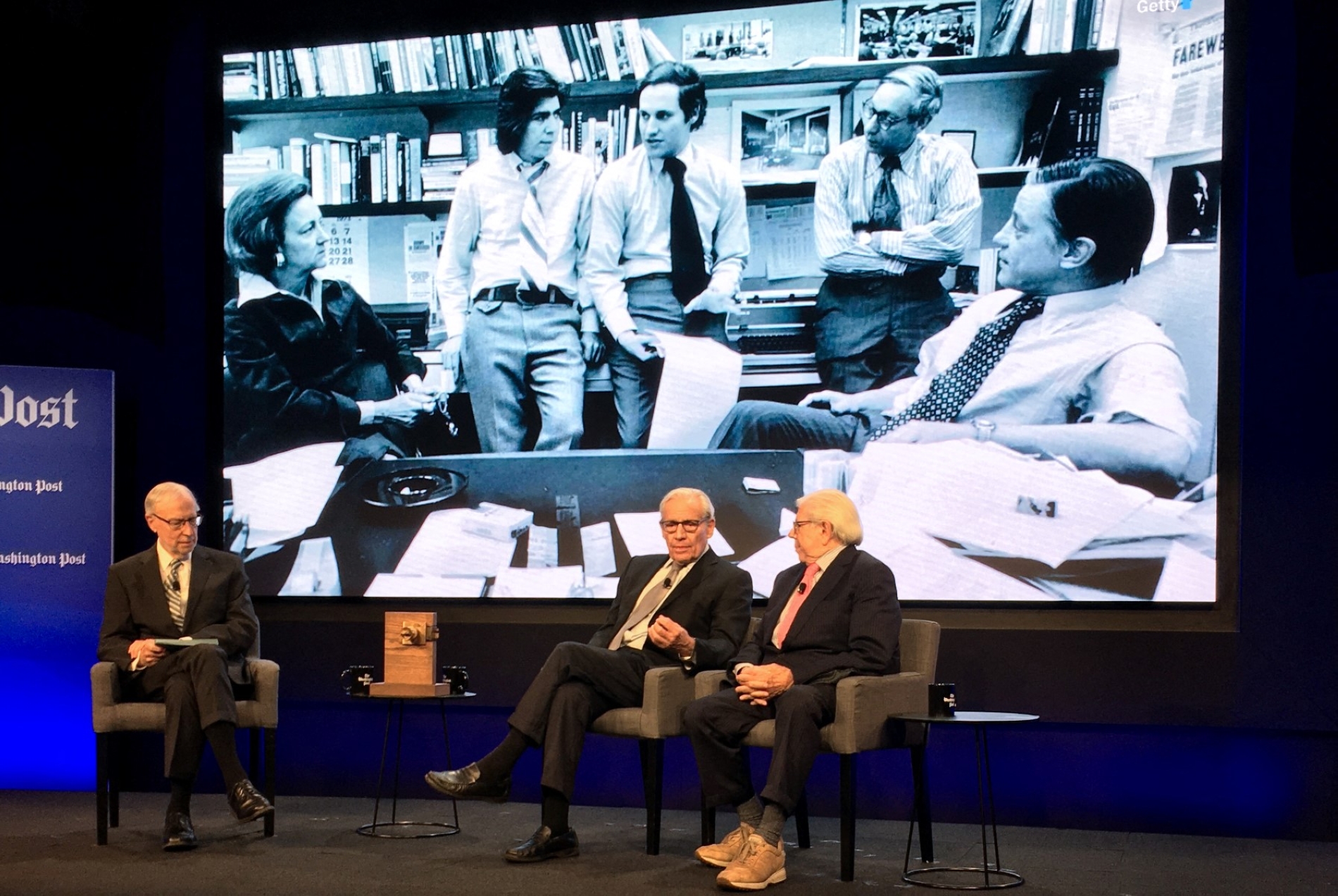
The Post's 1971 printing of the Pentagon Papers helped spur opposition to the Vietnam War. Reporters Bob Woodward and Carl Bernstein led the investigation into the break-in at the Democratic National Committee, which developed into the Watergate scandal and Nixon's subsequent resignation.

JOSHUA MELVIN / AFP
Journalists Bob Woodward (C) and Carl Bernstein (R) give remarks during an event marking the 50th anniversary of the Watergate burglary at the Washington Post office in Washington, DC, 17 June 2022.

In October 2013, the Graham family sold the newspaper to Nash Holdings, a holding company owned by Jeff Bezos, for US $250mn.

The layoffs come as The Post continues to face significant financial struggles. The outlet lost an estimated $100mn in 2024, according to The Wall Street Journal, adding pressure on management to rein in costs.

"In just the last three years, The Post's workforce has shrunk by roughly 400 people," the Washington Post Guild, a union that represents some of the paper's journalists, said in a statement Wednesday. "If Jeff Bezos is no longer willing to invest in the mission that has defined this paper for generations and serve the millions who depend on Post journalism, then The Post deserves a steward that will."

Several Democratic members of Congress also voiced their outrage over the sweeping cuts, calling out Bezos for Amazon's recent multi-million-dollar investment in the "Melania" documentary while gutting the paper.

"Bezos just spent $40mn sucking up to Trump with Amazon's 'Melania', but is now cutting a third of (Washington Post) staff—including much of the international & local teams—for 'budget' reasons?" Democrat Senator Chris Van Hollen wrote on X. "The corporate takeover of media is a threat to our democracy & the delivery of the truth to the American people."

font change