Alawite protests return. But this time, they turn deadly.

The latest demonstrations, killing four and injuring 100, reveal the limits of containment, the cost of postponing accountability, and the risks of trading short-term calm for durable legitimacy

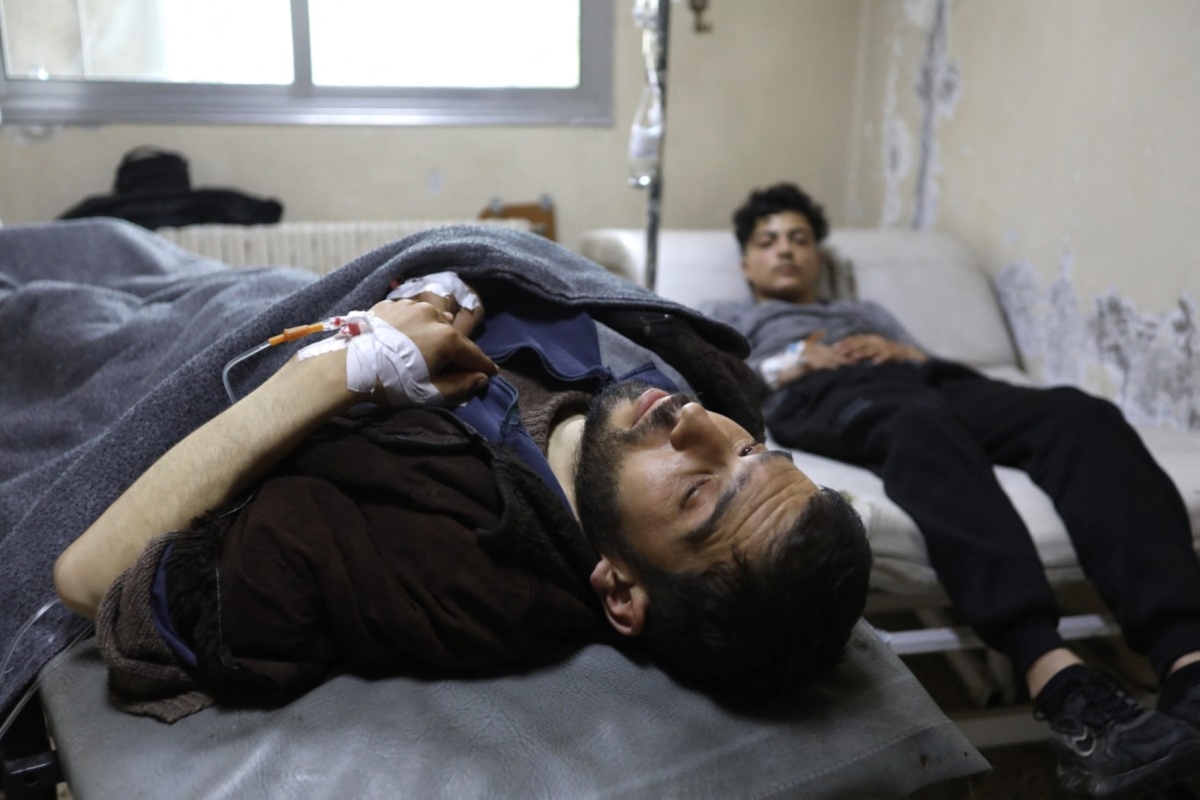
Men recover at the Karm al-Louz Hospital following an explosion at the Imam Ali ibn Abi Talib Mosque, in Homs, on 26 December 2025.
OMAR HAJ KADOUR / AFP
Men recover at the Karm al-Louz Hospital following an explosion at the Imam Ali ibn Abi Talib Mosque, in Homs, on 26 December 2025.

Alawite protests return. But this time, they turn deadly.

Demonstrations by Alawite communities swept through Latakia, Tartus, Homs, and Hama again last week, just a month after a similar wave of protests. This time, however, they unfolded in a far more volatile environment, particularly in Latakia, where unrest turned deadly. Four people were killed, including a member of the security forces, and more than 100 were injured. The violence underscored a growing reality: Syria’s transitional authorities are struggling not only to manage dissent, but also to protect those who express it.

The transitional authorities attributed the violence to remnants of the former Assad regime, accusing them of exploiting the demonstrations to attack both civilians and security forces. While the involvement of such actors is highly plausible, this explanation alone does not account for the scale of the violence, the timing of its escalation, the clear breakdown in crowd control, or the dynamics of the violence that unfolded during the protests and after they dispersed.

Reports from the ground indicate that rival demonstrations in support of the transitional government confronted Alawite protesters, creating a chaotic environment in which violence became easier to ignite and harder to contain. Security forces’ attempts to regain control by firing shots into the air further blurred lines of responsibility and complicated efforts to reconstruct events. In the aftermath, competing narratives took hold, obscuring accountability and deepening mistrust.

Understanding what drove the violence is not about managing narratives; it is the only way to prevent its repetition. As long as responsibility is narrowly assigned to shadowy spoilers while institutional failures go unexamined and underlying grievances remain unaddressed, official responses will remain reactive and ineffective. With the conditions that produced these protests still firmly in place, renewed unrest is not a question of if, but when. The real test is whether the authorities will persist with symbolic gestures aimed at containment, or begin confronting the drivers of violence so that the next crisis—when it comes—releases pressure rather than ignites it.

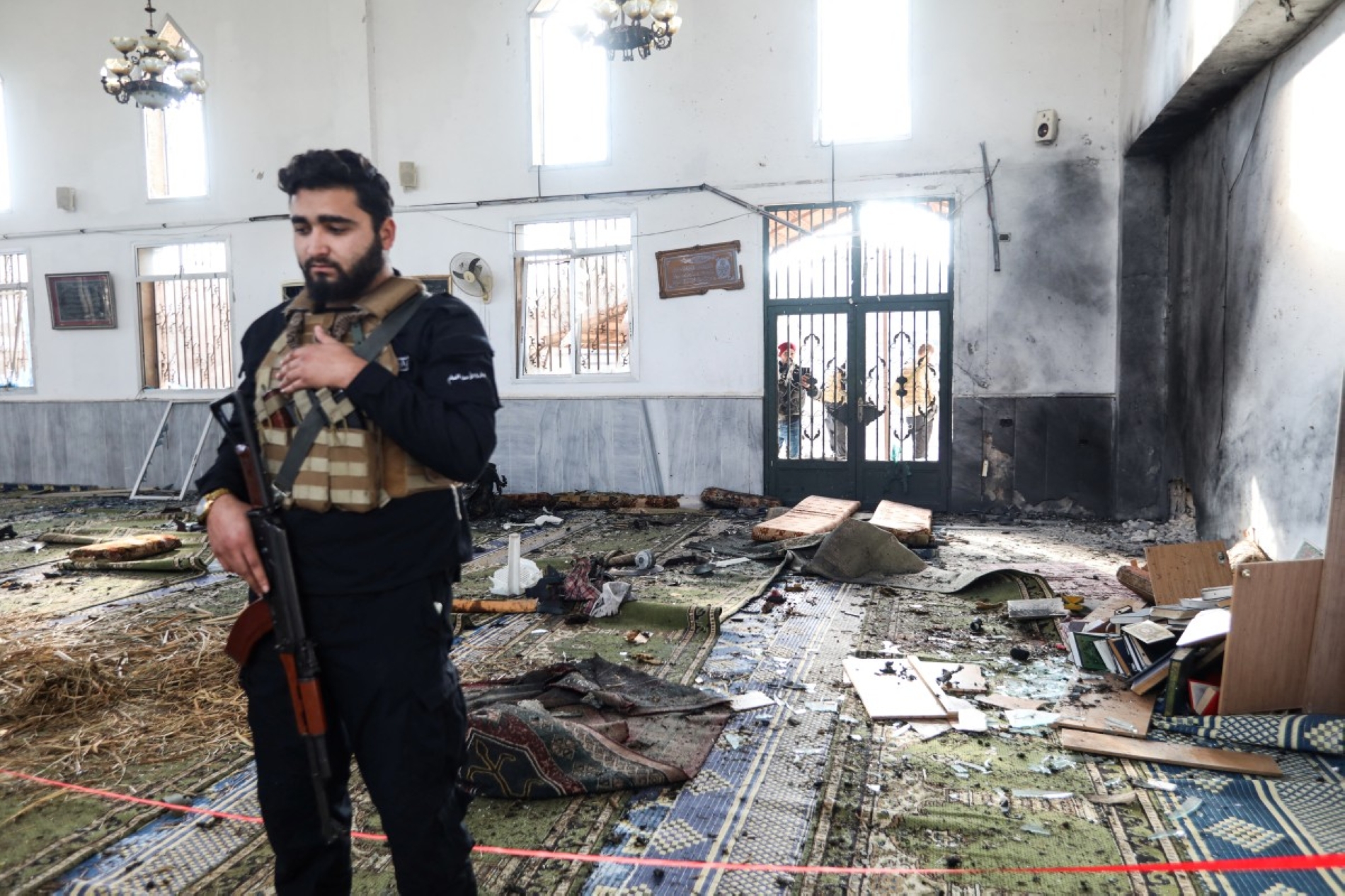
The protests on 28 December followed a call by Ghazal Ghazal, an Alawite cleric based outside Syria who heads the Supreme Alawite Islamic Council in Syria and the diaspora. His appeal came after a deadly attack targeting the Alawite community—highlighting how central the persistence of sectarian violence has become to community mobilisation. This time, the catalyst was a bombing at a mosque in a predominantly Alawite neighbourhood in Homs that killed eight people and wounded around 20.
OMAR HAJ KADOUR / AFP
A security officer stands near red tape cordoning off the area following an explosion inside Imam Ali ibn Abi Talib Mosque in the Wadi al-Dahab neighbourhood of Homs on 26 December 2025.

Reinforcing existing fears

A Sunni extremist jihadist group, Saraya Ansar al-Sunna, claimed responsibility for the attack. Responsibility for several other recent assaults targeting Alawite communities, however, has remained unclear. Many of these incidents, which have increased since the fall of the former regime, appear indiscriminate in nature. Together, they have reinforced fears among Alawites that they are being collectively punished for crimes associated with the Assad era.

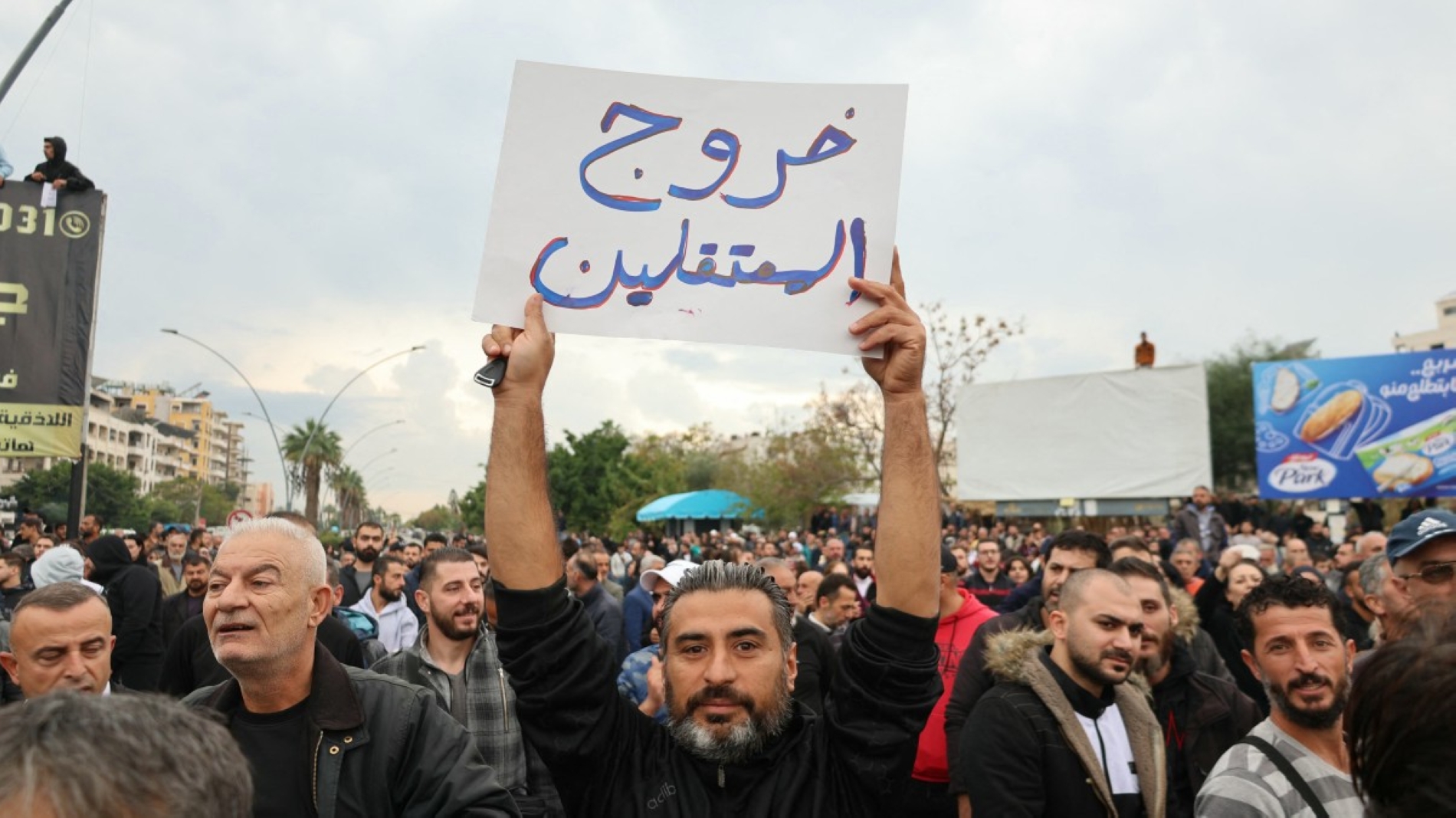
Those anxieties were clearly reflected in the protests themselves. Demonstrators carried banners demanding an end to violence against Alawites, the release of detainees, and guarantees of basic security. Notably, calls for decentralisation and federalism were far more prominent than in earlier protests. This shift aligns closely with Ghazal’s messaging and signals an evolution from reactive protest toward more explicit political demands.

The demonstrations were initially peaceful, despite occasional sectarian or inflammatory chants. Security forces were deployed to protect demonstrators rather than disperse them, but the violence that followed exposed the fragility of the authorities’ crowd-management capabilities.
The 28 December protests followed a call by Ghazal Ghazal, a prominent Alawite cleric in the diaspora, to protest the bombing of an Alawite mosque

In several locations, pro-government rallies assembled nearby, transforming a controlled protest environment into a confrontational one. Efforts to keep rival groups apart quickly collapsed, giving way to clashes that escalated into stone-throwing and the use of bladed weapons. Gunfire was reported, prompting many demonstrators to flee.

Authorities attributed the shooting—which resulted in deaths and injuries—to armed elements linked to the former regime. While that scenario remains plausible, it does not fully explain what unfolded. Eyewitness accounts and open-source analysis indicate that some gunfire also originated from within pro-government gatherings, particularly in Latakia's Azhari Square, where the most severe clashes occurred. This does not rule out the involvement of regime remnants, but it suggests a more complex dynamic than official accounts have conveyed.

Eyewitnesses also reported that security forces fired shots into the air to disperse crowds after losing the ability to separate rival groups, and that some injuries may have resulted from this indiscriminate gunfire. While these claims haven't been independently confirmed, they cannot be automatically dismissed given the chaotic conditions and the limited experience of security forces on the ground.

Ripple effect

REUTERS/Karam al-Masri
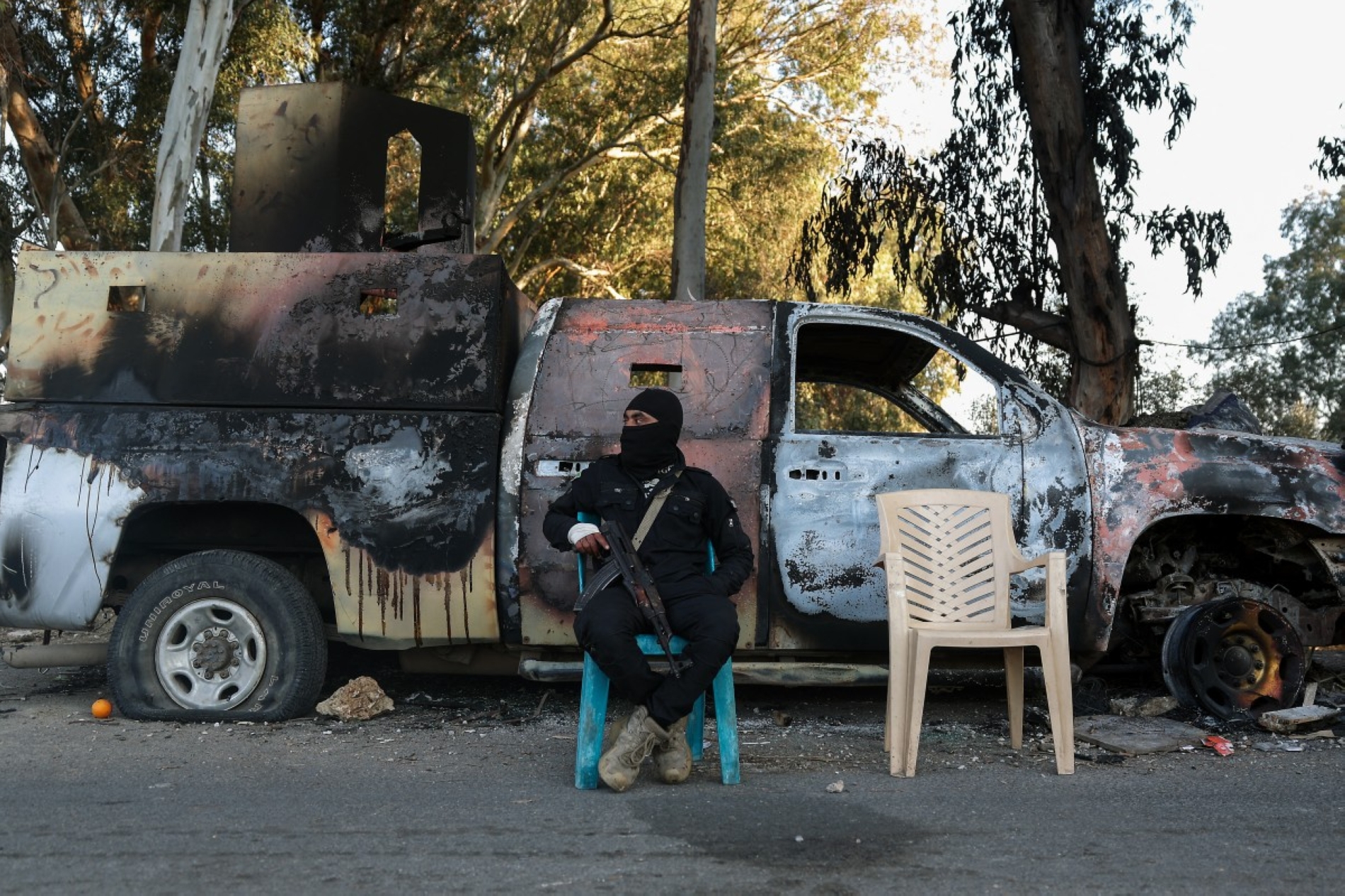
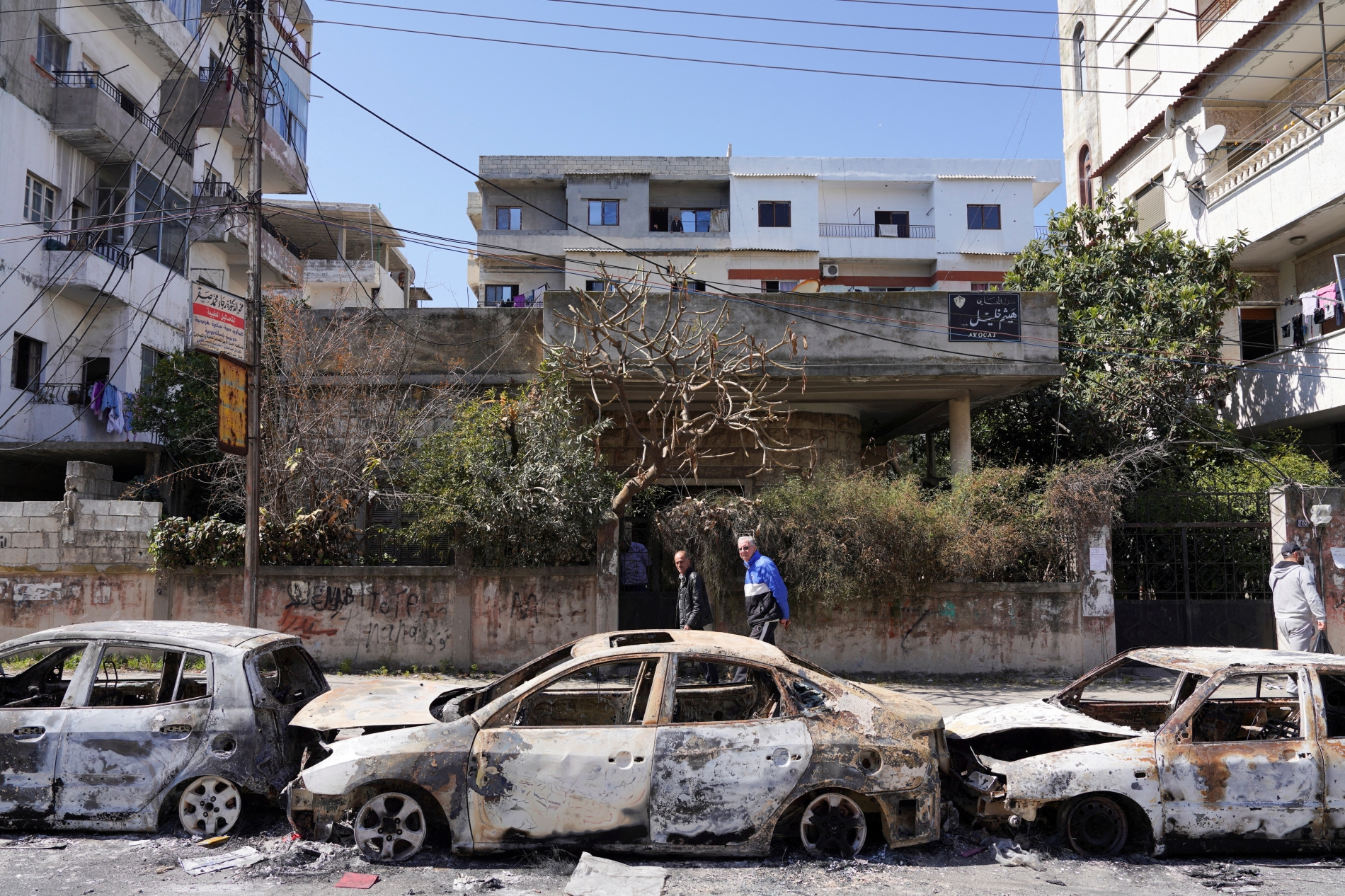
People walk past damaged vehicles, as Syria's interim President Ahmed al-Sharaa grapples with the fallout from reported mass killings of Alawite minority members, in Jableh, Syria, on 12 March 2025.

The violence did not end with the dispersal of the demonstrations, underscoring its broader ripple effects. In the days that followed, indiscriminate attacks were reported in several Alawite neighbourhoods, particularly after the funeral of a security forces member killed during the unrest. Rioting included vandalism of commercial establishments and destruction of parked vehicles.

These incidents laid bare the limits of the government's containment approach—both in protecting protesters and in preventing indiscriminate violence against Alawite communities. The violence during and after the protests, regardless of those responsible, reinforced perceptions of vulnerability and deepened distrust within the community.

It is precisely this pervasive sense of fear that has driven many people into the streets, irrespective of their views on Ghazal's leadership or political agenda. For many protesters, participation reflected accumulated frustration with deteriorating security, economic hardship, and political marginalisation rather than ideological mobilisation alone.

Preventing future demonstrations will not be achieved simply by tolerating protests or managing them more tightly. As long as the economic, security, and political grievances underpinning them deepen and remain unaddressed, protests are likely to intensify. Ensuring the protection of demonstrators is therefore essential —but not sufficient. Failure to shield them from spoilers, counter-mobilisation, or vigilante violence will only accelerate that trajectory. 

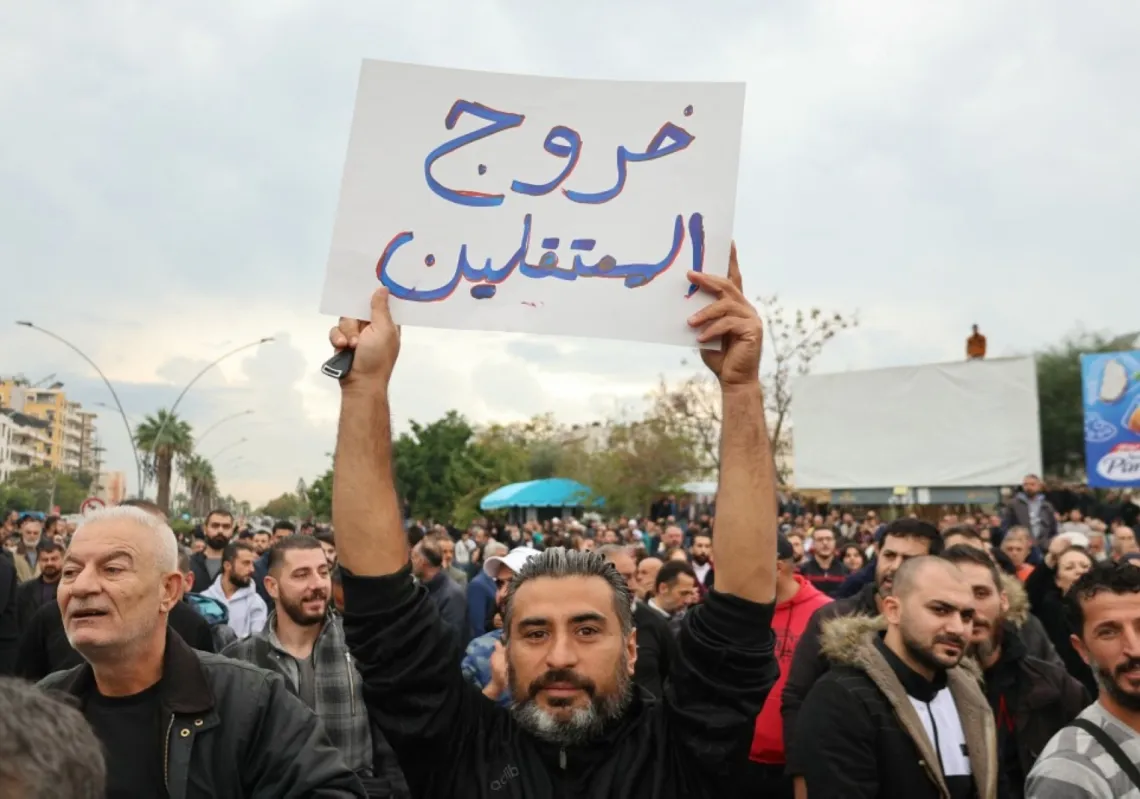
HAIDAR MUSTAFA / AFP
A man holds up a sign that reads in Arabic, "Release of the detained", as people take part in a protest in the coastal city of Latakia in Syria's Alawite heartland on 25 November 2025.

Heavy cost of silence

The latest protests confirm that the communal frustration expressed last month was not an isolated episode. It reflects a deeper shift in the community's political calculus: for many Alawites, the perceived cost of silence now outweighs the risk of speaking out. The violence surrounding the most recent demonstrations is unlikely to reverse this logic. If anything, it may entrench it by highlighting the consequences of inaction.

Addressing the drivers of these protests is not easy, particularly during a fragile and under-resourced transition. What is required is not immediate transformation but a credible demonstration of intent. So far, the transitional authorities have relied on a mix of symbolic gestures—such as the release of limited numbers of detainees—and engagement with traditional elites, prioritising containment over addressing root causes.

These efforts, while not insignificant, have fallen short and are increasingly outpaced by rising frustration. Absent a course change, that frustration is likely to intensify, raising the risk of further instability. A viable response, therefore, requires a comprehensive strategy that is inclusive in design, participatory in implementation, and transparent in execution. Above all, it requires a shift in framing. Alawite protests are not primarily a security problem. They are a political one.

Some gunfire came from within pro-government gatherings, particularly in Latakia's Azhari Square, where the most severe clashes occurred

Addressing root causes

Equally critical is addressing the drivers of sectarian violence and vigilante justice. Indiscriminate attacks and revenge killings in Alawite neighbourhoods are symptoms of a broader failure to deliver justice for crimes committed under the former regime. In the absence of credible accountability, entire communities are treated as complicit, providing moral cover for collective punishment.

This is why justice processes are not a threat to stability but a prerequisite for it. Without accountability, cycles of violence will continue to regenerate, drawing new actors into familiar patterns of retribution.

The authorities have acknowledged the importance of preserving civil peace, but their approach remains overwhelmingly security-centric and ill-suited to reconciliation. The Supreme Committee for the Preservation of Civil Peace, established by President Ahmed al-Sharaa, has relied heavily on opaque trade-offs aimed at neutralising potential spoilers. These arrangements—often involving amnesties for former security figures—may reduce short-term risk, but they undermine transparency, weaken judicial independence, and erode public trust.

While some degree of confidentiality may be unavoidable during a transition, peace-building cannot be conducted entirely behind closed doors. Communities need to understand what is happening, why, and how they can shape outcomes. Participation is not a luxury; it is essential for legitimacy.

Compounding the problem, the committee's reliance on figures accused of past abuses has further undermined confidence in its work. Cutting controversial security deals may buy temporary calm, but it does not build trust. Instead, it risks fueling the very sectarian tensions the committee was created to defuse.

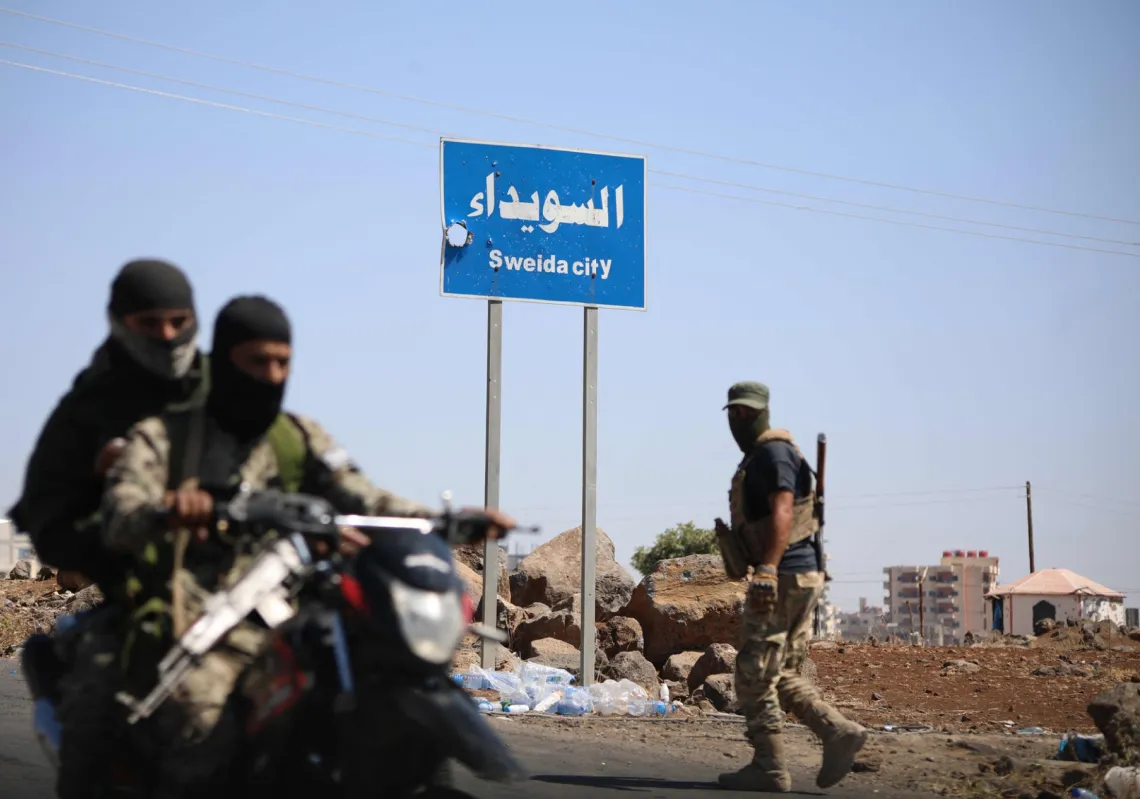
 OMAR HAJ KADOUR / AFP
A security officer loyal to the interim Syrian government guards a checkpoint previously held by supporters of deposed president, Bashar al-Assad, in the town of Hmeimim, in the coastal province of Latakia, on March 11, 2025.

Unmistakable warning signs

Even when November's demonstrations unfolded without violence, the warning signs were unmistakable. Containment was never going to suffice. By treating those early signals as manageable rather than structural, the authorities did not preserve stability; they set the stage for a far more damaging escalation.

An accurate understanding of what drove the latest protests—and the subsequent violence—is now critical. The problem is not merely operational, but political. When dissent is treated as a threat to be contained rather than a signal to be addressed, mistrust deepens, grievances harden, and communal divides widen.

Transitions rarely fail because dangers are unseen. They fail because warnings are misread or deferred. Syria's Alawite protests are such a warning. They reveal the limits of containment, the costs of postponing accountability, and the risks of trading short-term calm for durable legitimacy. The question is no longer whether another crisis will emerge, but whether the authorities will change course before it does.

font change