Brexit has deepened the UK economy’s flaws and dulled its strengthshttps://en.majalla.com/node/329016/business-economy/brexit-has-deepened-uk-economy%E2%80%99s-flaws-and-dulled-its-strengths
COVID-19 was a gift to Brexiteers. After years of argument over the Vote Leave campaign’s irreconcilable promises, the pandemic finally redirected public attention elsewhere. Boris Johnson, a former prime minister, used it to claim that “Brexit helped save lives”, based on a dubious assertion that leaving the European Union hastened the vaccine roll-out. Yet perhaps the longest-lasting dividend for Brexiteers has been in the pandemic’s effects on economic statistics. By scrambling almost every relevant data series, it has made it harder to assess Brexit’s effects.
Every few months, a new study appears saying that Brexit’s costs have been high. Leave supporters retort that the figures are exaggerated because they fail to account for other factors, not least the pandemic. Some of these objections are reasonable. But the fixation on precise numbers misses the broader point. The real problem with Brexit is the way that it lingers like a toxin in the economy’s bloodstream, binding itself to long-standing weaknesses, from higher energy costs to weak investment. That has helped keep Britain stuck on a low-growth path.
The latest skirmish over numbers came in November, when the US-based National Bureau of Economic Research (NBER) published a paper finding that leaving the EU has already reduced British GDP per person by 6-8%. That is well above the predictions made during the 2016 referendum campaign, when the average forecast suggested GDP would be 4% lower in the longer term—a figure that Britain’s fiscal watchdog, the Office for Budget Responsibility, still considers accurate.
Julian Jessop, a Leave-supporting economist, says the NBER study fails the “smell test”. Its macro estimates benchmark Britain against 33 countries, including America, whose economic outperformance since the pandemic makes it a tricky comparator. Strip America out, and Britain’s record has been fairly average among the G7 group of large, rich countries. GDP per person grew by 3.9% between 2016 and 2024—less than in France and Italy, but more than in Germany and Canada. This suggests that if the NBER figures were correct and Brexit had not happened, Britain would have grown much more strongly than France or Germany. Mr Jessop is right that this counterfactual smells a bit whiffy.
The benefits of new trade deals have been trivial, and Britain has largely failed to use its new regulatory freedom to spur growth
Yet it is hard to argue that Brexit has been anything other than a source of real economic damage so far. The benefits, such as new trade deals with countries like Australia and India, have been trivial, and Britain has largely failed to use its new regulatory freedom to spur growth. But in three areas, the costs have been great—especially because they have either magnified the country's existing weaknesses or blunted its strengths.
One of these areas is investment. For decades, Britain has languished near the bottom of the G7 league for capital spending on things like infrastructure and R&D, a major cause of its feeble productivity growth. Between 2011 and 2016, it briefly broke out of the rut, with business investment growing by 6% annually. The Brexit vote ended that revival: investment flatlined for the next six years. The pandemic certainly played a part in this, but two separate estimates attribute a 10% shortfall in business investment by 2022 to Brexit alone, reflecting the prolonged uncertainty that deterred investors. Although that uncertainty has now faded, Brexit's impact lingers, with the episode reinforcing the old habits among British companies—risk-aversion and short-termism—that have long held their investment back.
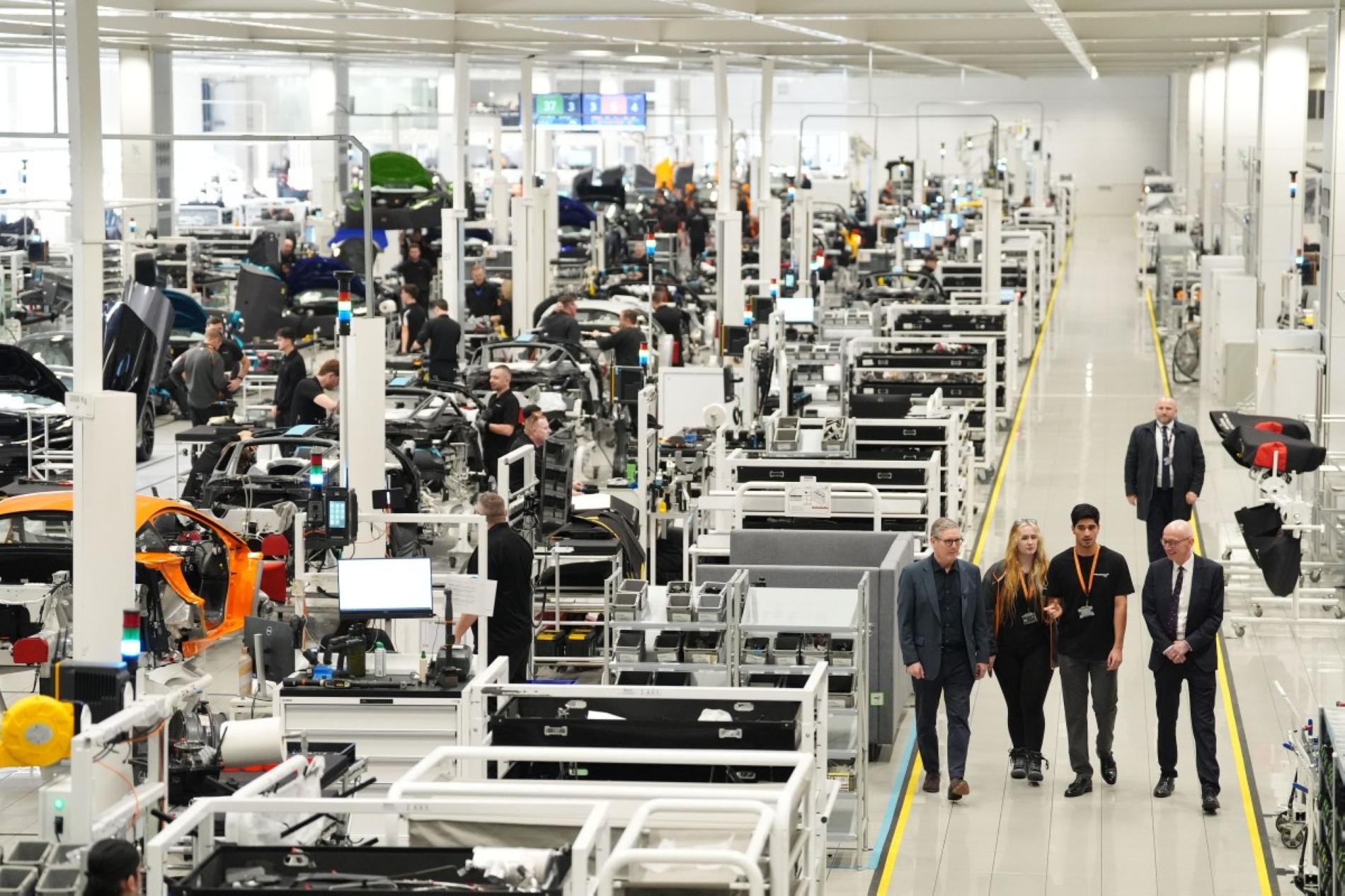
UK PM Keir Starmer visits the McLaren Automotive factory in Surrey, south-west of London, on 8 December 2025, to announce a major investment in apprenticeships in an effort to tackle rising youth unemployment.
The second area is manufacturing. Britain's share of global manufacturing exports fell by more than half between 2000 and 2022, dragged down by high labour costs, increasing foreign competition and crippling energy bills. Pre-Brexit, Britain's access to a single market of half a billion consumers made up for these drawbacks. With that advantage gone and replaced by a host of non-tariff barriers, it is no surprise that goods exports have fallen to nearly 15% below pre-pandemic levels. Worse, this sharp decline occurred for exports to both the EU and the rest of the world, as higher input costs from the EU compounded Britain's long-standing disadvantages and further eroded the global competitiveness of its manufacturers.
Brexit has not only intensified Britain's weaknesses; its third major cost has been to dull one of the country's strengths. Britain is the world's second-largest services exporter after America. City bankers, arty film-makers and hordes of consultants all contribute to a thriving services economy.
On the surface, Britain appears to have weathered Brexit fairly well on this front: services exports are up by about a quarter since 2019 in real terms. But that mainly reflects a global boom. Britain would almost certainly have done better had barriers not sprung up with the EU, from new licensing requirements for insurers to nationality rules for biologists. A study published in June estimated that services exports are 4-5% lower due to Brexit.
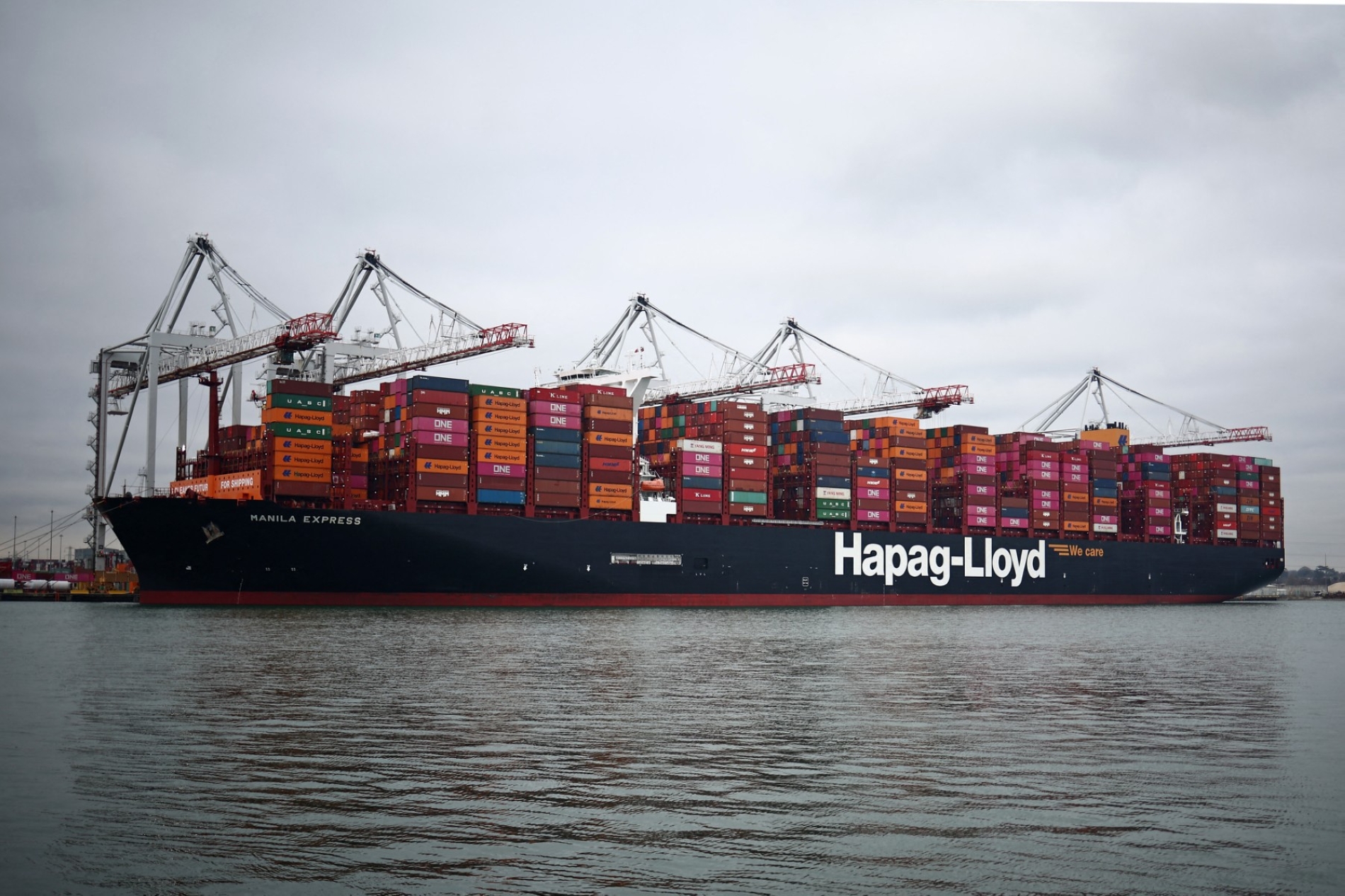
Containers are pictured on the deck of the Minila Express container ship, docked beside cranes at Southampton docks on the south coast of England, on 16 January 2025.
A choice of antidotes
Keen as the Labour government is to now blame Britain's economic malaise on Brexit, its costs should not be overstated. The economy did not fall off a cliff. Fears that London would lose its status as a global financial centre have gone unrealised. London remains the world's second-largest such centre, after New York; Britain's share of global turnover in foreign exchange and interest-rate-derivative trading is in fact higher than in 2016. Worries that lower EU migration would cause serious economic harm have not been borne out either, with higher immigration from outside Europe more than making up the shortfall.
But neither should the costs caused by Brexit be ignored. Labour's efforts to rectify the damage so far have been small beer: its "reset" deal in May 2025 narrowly focused on food and energy and is estimated to boost GDP by only 0.3% in the long run. Some Labour MPs are flirting with the idea of rejoining the customs union. Frontier Economics, a consultancy, estimates this could increase Britain's GDP by over 2% in the long run; other forecasters are much more conservative. Yet Labour ruled out joining the customs union in its manifesto, and quick action is unlikely.
A more promising remedy might be to tackle the structural problems Brexit has worsened. The referendum and its aftermath distracted politicians from that task for years. If the government began to act on them—reducing planning red tape, cutting industrial energy costs—the toxic effects of Brexit could begin to fade.