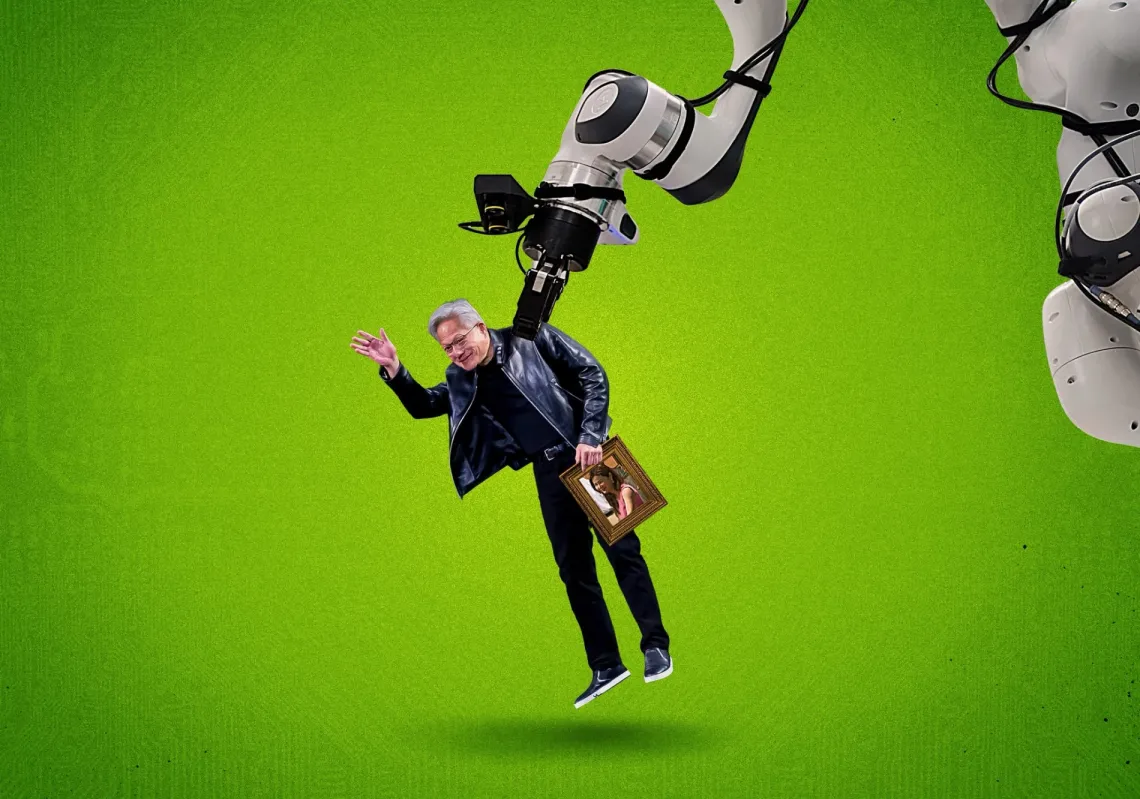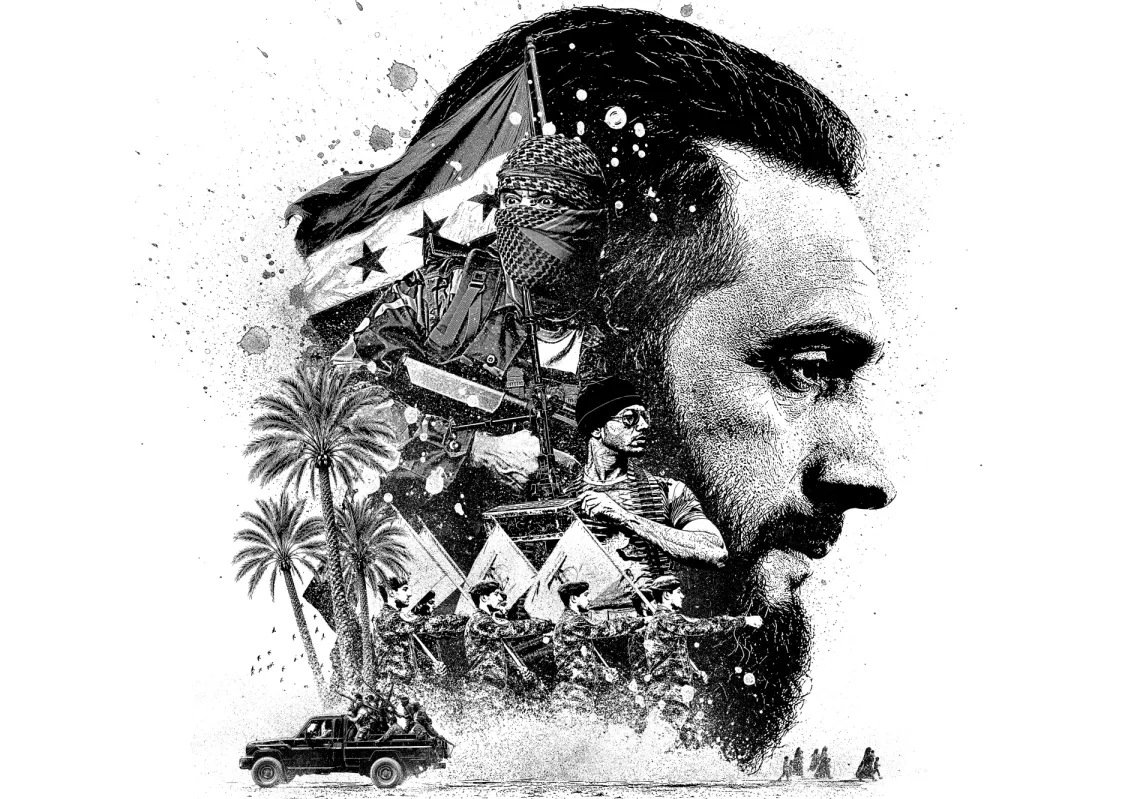
Alice Huang: the woman who shook Nvidia

A Chinese businesswoman's affair with Nvidia CEO Jensen Huang stirs questions over intent, given the intense race between Beijing and Washington over tech domination

Eduardo Ramon / Al Majalla

Alice Huang: the woman who shook Nvidia

It has been called ‘the most expensive affair in history’. When it emerged that Jensen Huang, the founder and enigmatic chief executive of the world’s second most valuable company, had cheated on his wife with a businesswoman alleged to be a Chinese spy (and with two female colleagues), he resigned from Nvidia, and the markets wiped around $1tn from its value. However, US investigators have not substantiated her links to Chinese intelligence.

Nvidia became the world’s first $5tn company because its chips provide the computing capacity essential to AI technology, meaning they have an impact on scientific research, industry, and military and intelligence applications.

While the US has banned exports of the cutting-edge chips Nvidia produces to China, Beijing has, at various points, placed temporary halts or import warnings on Nvidia chips (such as the H200) to protect local markets and incentivise domestic semiconductor alternatives from Huawei and SMIC. This casts doubt on the claim that China is desperately seeking access to these chips.

Chinese businesswoman Alice Huang's career has meandered through media, finance, and advanced computing. Also known as Huang Li, she comes from Xiangtan, a city in Hunan province. According to published biographies, she began her career in broadcasting, working for Hunan Television and China Central Television before moving to Hong Kong to pursue a master’s degree in media management at Hong Kong Baptist University.

She then entered the financial sector, working in private banking at HSBC in Hong Kong and at CITIC Securities. By 2016, she held senior positions at Shanghai Hexi Investment, serving as deputy general manager and executive director. In 2023, she became a director of Megaspeed, a Singapore-based company founded in 2015 under the name Seven Road International. It began in the gaming industry before shifting its focus to data centres and the computing services needed to run AI applications.

Megaspeed’s business model involves purchasing computing equipment equipped with Nvidia processors, operating it in data centres, and renting the resulting computing capacity to corporate customers. Clients can thus train and run AI models remotely without having to purchase processors or build data centres of their own. Although Megaspeed operates independently of Nvidia, it relies on the American company’s technology to provide the services it offers.
Reuters
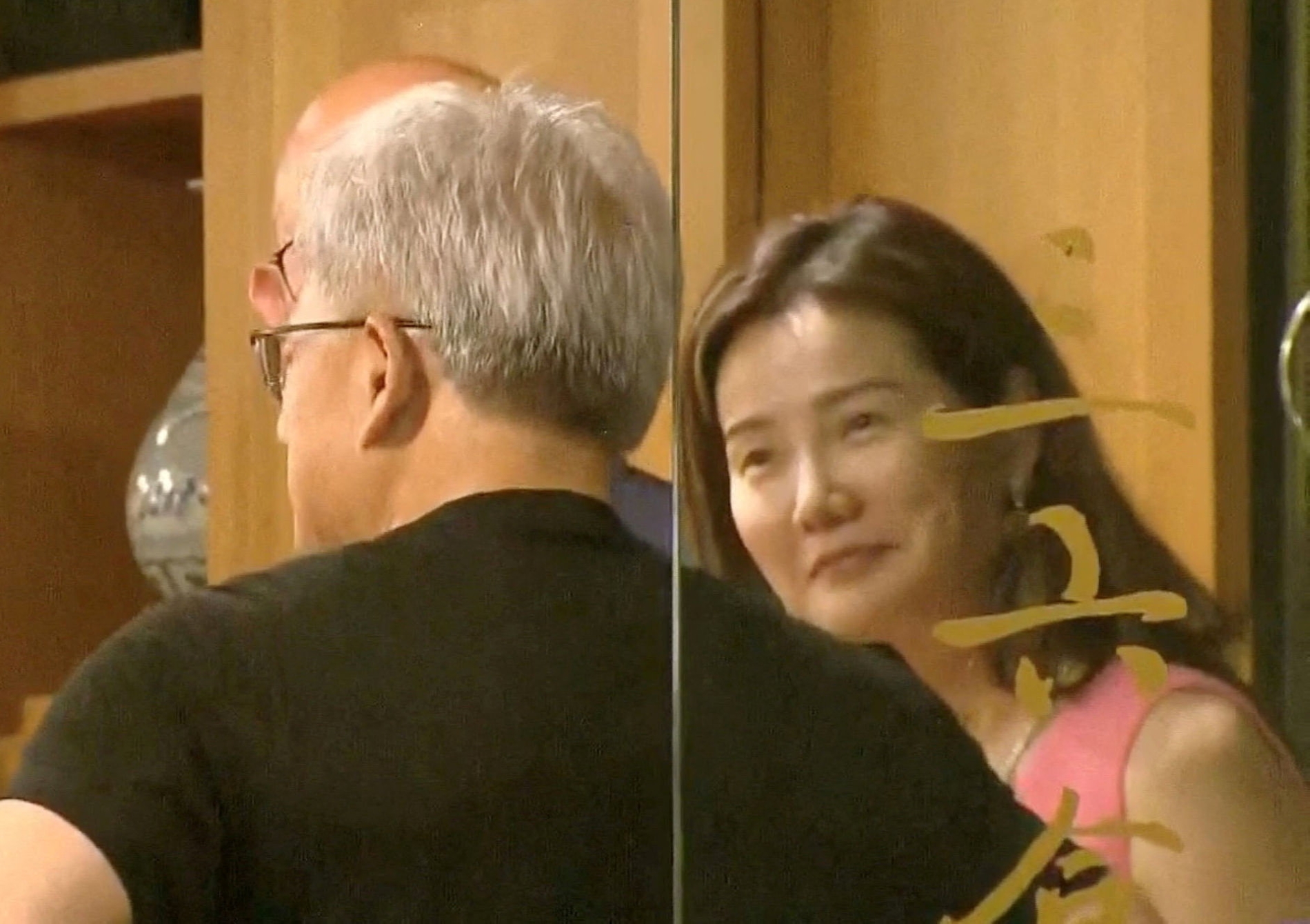
Alice Huang at a dinner with Jensen Huang, CEO of Nvidia, at a restaurant in Taipei, Taiwan, on 22 May 2025.

Megaspeed’s makeover

In March 2023, Megaspeed’s shares were transferred to Huang Li Ltd, a company registered in the British Virgin Islands, and Alice Huang became a director. A few months later, the ownership structure changed, and her name disappeared from the official register of directors, although she is understood to have retained her role in the company’s management. In the same month that she disappeared from the register (November 2023), Megaspeed became an official Nvidia cloud partner. This gave it priority access to the company’s chips.

Megaspeed’s business expanded rapidly. For the next two years, it imported at least $4.6bn worth of Nvidia equipment through its subsidiaries in Malaysia and Indonesia, including 136,000 graphics processing units (GPUs), according to Bloomberg, which analysed customs records. This includes equipment obtained from server suppliers and is therefore not confined to purchases made directly from Nvidia.

US Attorney General Todd Blanche maintains that the claim that Alice Huang is a Chinese spy is still unproven

The figures illustrate Megaspeed's remarkable transformation from its origins in the gaming industry in a short period. By 2024, photos had begun to document Alice Huang's apparent closeness to Jensen Huang. At a tech industry gathering in Taipei, she appeared seated beside him (this photo resurfaced as their affair became public). She appeared with him again on 22 May 2025, at a dinner he hosted in Taipei during the Computex technology exhibition. Video footage showed them interacting closely before leaving the restaurant in the same car.

Unproven claims

US Attorney General Todd Blanche stated on 12 November 2026 that the allegation that Alice Huang is a Chinese spy remained unproven. Still, questions swirl over whether she helped facilitate access to technology Washington had sought to keep out of Chinese hands.

Reuters
Alice Huang at a dinner with Jensen Huang, CEO of Nvidia, at a restaurant in Taipei, Taiwan, on 22 May 2025.

In early 2025, Alice Huang and her business partner, Kang Wei, presented investors with plans for a data centre in south-east Asia, a project expected to cost hundreds of millions of dollars. According to The Financial Times, they assured investors that they could secure Nvidia processors and identified the Chinese technology group Alibaba as a customer. Alibaba was already among the leading clients of Megaspeed's computing services in the region. The ability to obtain Nvidia processors had thus become a major advantage in attracting investment and business.

A Bloomberg investigation published on 13 November revealed another route through which US technology reached China. Financing documents dating from January 2025 disclosed the presence of servers containing Nvidia processors subject to US export restrictions at a data centre in Shanghai. The equipment was listed among the assets of a subsidiary of Shanghai Longteng Intelligent Computing, which Alice Huang had helped establish years earlier.

Unanswered questions

The documents identified 22 Dell servers equipped with Nvidia's H800 processors and 52 Supermicro servers containing H100 or H200 processors. Dell had sold some of this equipment to Aperia Cloud Services, a Singaporean company, before it eventually reached Shanghai. Aperia is an independent company, and there is no published evidence that Alice Huang held a stake in it. Nor do the financing documents explain how the equipment reached China or establish her involvement in its purchase, since she had relinquished her stake in Longteng in 2017.

These details reveal two distinct channels through which American technology became accessible within the business network associated with Alice Huang: the first involved providing Chinese companies with computing services through data centres located outside China, the second concerned the arrival on Chinese soil of servers equipped with processors subject to export restrictions.

Renting computing capacity overseas does not, in itself, constitute evidence of smuggling. The presence of restricted equipment in Shanghai, however, raises questions about how the servers reached China, whether their transfer violated US export controls, and who facilitated their movement.

Influencing policy

Jensen Huang has publicly advocated sales to the Chinese market. In May 2025, he criticised US restrictions on the export of chips. His argument was that denying China access to American products would accelerate its development of domestic alternatives and create greater opportunities for companies such as Huawei. Sales of US chips would keep Chinese companies dependent on American technology, he said.

Reuters
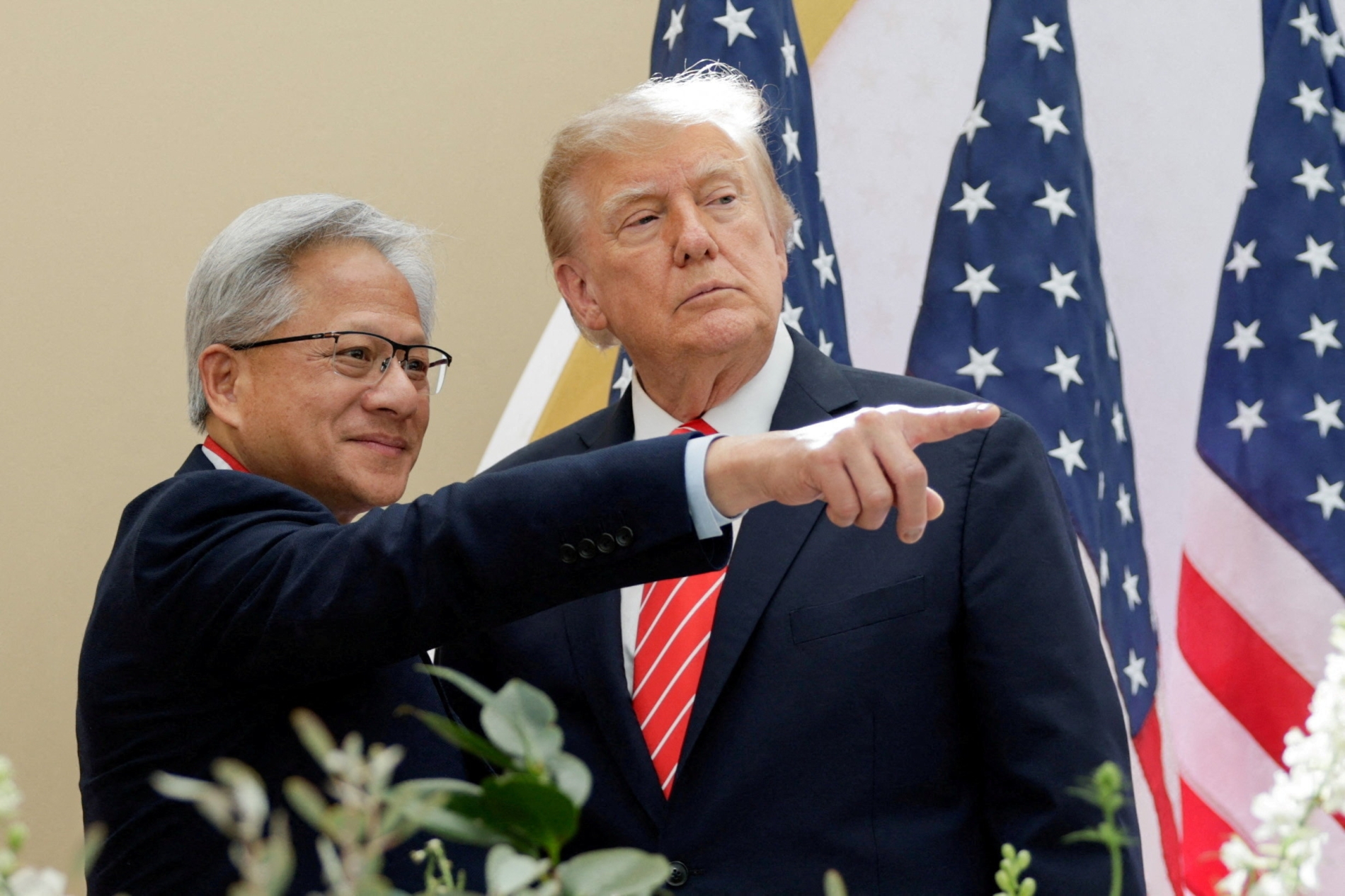
US President Donald Trump alongside Jensen Huang, CEO of Nvidia, following the presentation of the National Medal of Science to Huang during the "New Golden Age" summit in Washington, DC, on 8 October 2026.

His close relationship with US President Donald Trump meant that his arguments were heard, as he became one of the administration's most prominent interlocutors on AI and semiconductor exports. In December 2025, Trump announced that exports of H200 processors to China would now be permitted, in exchange for a share of the sales revenue going to the US government. Jensen Huang's influence over industrial policy would have been of acute interest to China.

The proximity Alice Huang engineered could have given her insights into chip design, product plans, customers, trade negotiations, or political access. It could also have helped facilitate access to Nvidia's advanced equipment. These are all now topics of interest to Washington's lawmakers and to the Federal Bureau of Investigation, America's domestic intelligence service. The answers will likely be revealing.

font change