

Al Majalla’s cover story last week examines the opportunities and risks of Syria’s shift from being a corridor of Iranian influence to a state intent on containing it. Subhi Franjieh details how Damascus is increasingly cracking down on Iran’s proxy militias, while Ibrahim Jalal lays out ways that Syria can help Saudi Arabia confront the Houthi rebel group.
And in the aftermath of the US midterms, Alex Vatanka argues that Trump and the Republican Party’s stunning loss opens a window for Iran diplomacy, while Neil Quilliam and Alice Gower offer a less optimistic take. Meanwhile, Tarek Rashed looks at the pushback within the Democratic Party over business-as-usual politics, as the party’s progressive base rebels against putting establishment figures like Chuck Schumer and Hakeem Jeffries into leadership positions.
For his part, Christopher Phillips examines the historical record on how electoral change affects foreign policy, arguing it doesn’t make much of a difference. Ibrahim Hamidi looks at how the Kurds in the region cannot escape their geography and history, while Haid Haid examines how a controversy over textbooks in Syria deepens public distrust of government.
And after NVIDIA CEO Jensen Huang stepped down amid controversy, we look at who can fill one of the toughest roles in the tech world. For his part, Abdulfattah Khattab explains how Britain’s debt squeeze tests the pound’s power, while Alaa Emara explains how Climate change is redrawing national borders. Can a selfie tell how long we might live? Read our Science and Tech section to find out. And finally, Ibrahim Adel reviews five Arabic novels that paint an AI-dominated future.
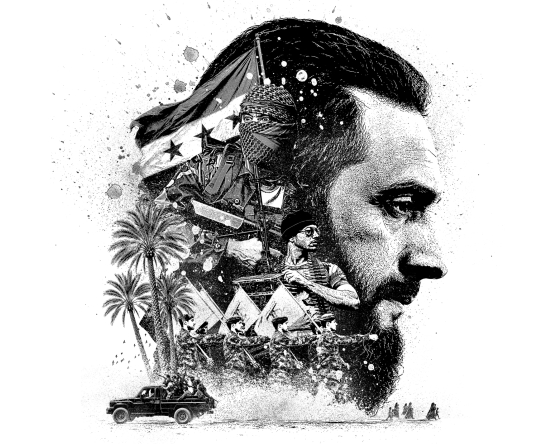
Syria takes on Iran’s proxies
Our cover story this week explores the opportunities and risks accompanying Syria's shift from being a corridor of Iranian influence to a state intent on containing it
 Business & Economy
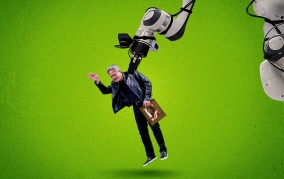
Jensen Huang is out. His successor has the toughest job in tech
A company built around one man must now learn to run without him
 Politics
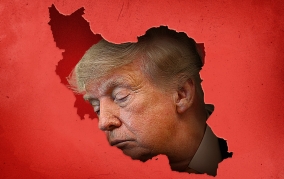
Trump's midterm loss opens a window for Iran diplomacy
Both Tehran and Washington have powerful incentives to resolve the conflict through negotiations, but actors on all sides have reasons to derail these efforts
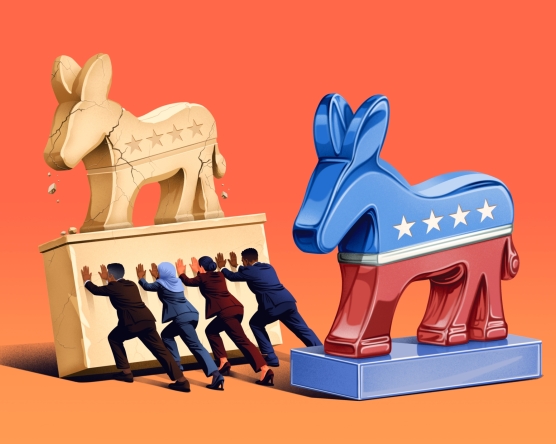
The Democrats’ old guard faces a progressive revolt
Following an historic landslide, a new progressive wave is calling for establishment figures to step aside and make way for new blood who better represent the future direction of the party
Tarek RashedKurdistan: allies come and go, neighbours remain
Ibrahim HamidiWhy the midterms complicate Trump's search for an Iran deal
Neil Quilliam and Alice GowerSyria textbook controversy deepens distrust in government
Haid Haid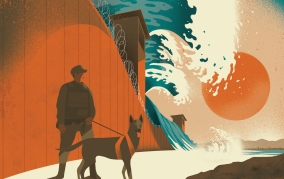 Science & Technology
Climate change is redrawing national borders
Whether it is rivers, glaciers, or sea-level submergence, the implications of rising temperatures are becoming an increasingly urgent issue for states
 Science & Technology
AI in medicine: can a selfie tell how long we might live?
Artificial intelligence can analyse facial features for clues to biological ageing and cancer survival, but further validation is needed before clinical use
 Business & Economy
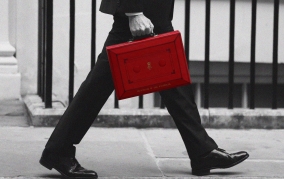
Britain's debt squeeze tests the pound’s power
Rising borrowing costs and persistent inflation are narrowing the UK's fiscal room for manoeuvre, exposing the limits of monetary independence
 Culture & Social Affairs
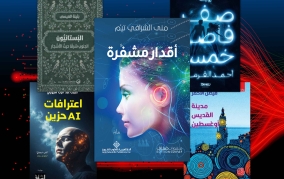
Five Arab novels that paint an AI-dominated future
From machines that develop human emotions to societies governed by artificial intelligence, Arab novelists explore the promises and perils of a radically transformed future
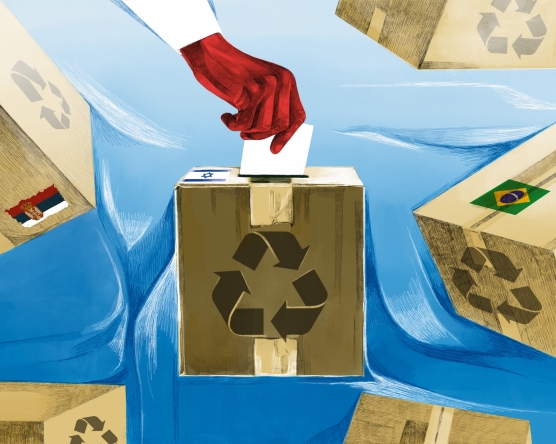
The muted impact of electoral change on foreign policy
Despite domestic shifts, new leaders often face structural constraints and have limited parameters to operate
