Hakim Al-Aqel’s Yemen: a world ablaze with colour

In his Cairo exhibition, the Yemeni artist brought his native Taiz and the landscape of Yemen vividly to life

A painting by the Yemeni artist Hakim Al-Aqel
Hakim Alakel- facebook
A painting by the Yemeni artist Hakim Al-Aqel

Hakim Al-Aqel’s Yemen: a world ablaze with colour

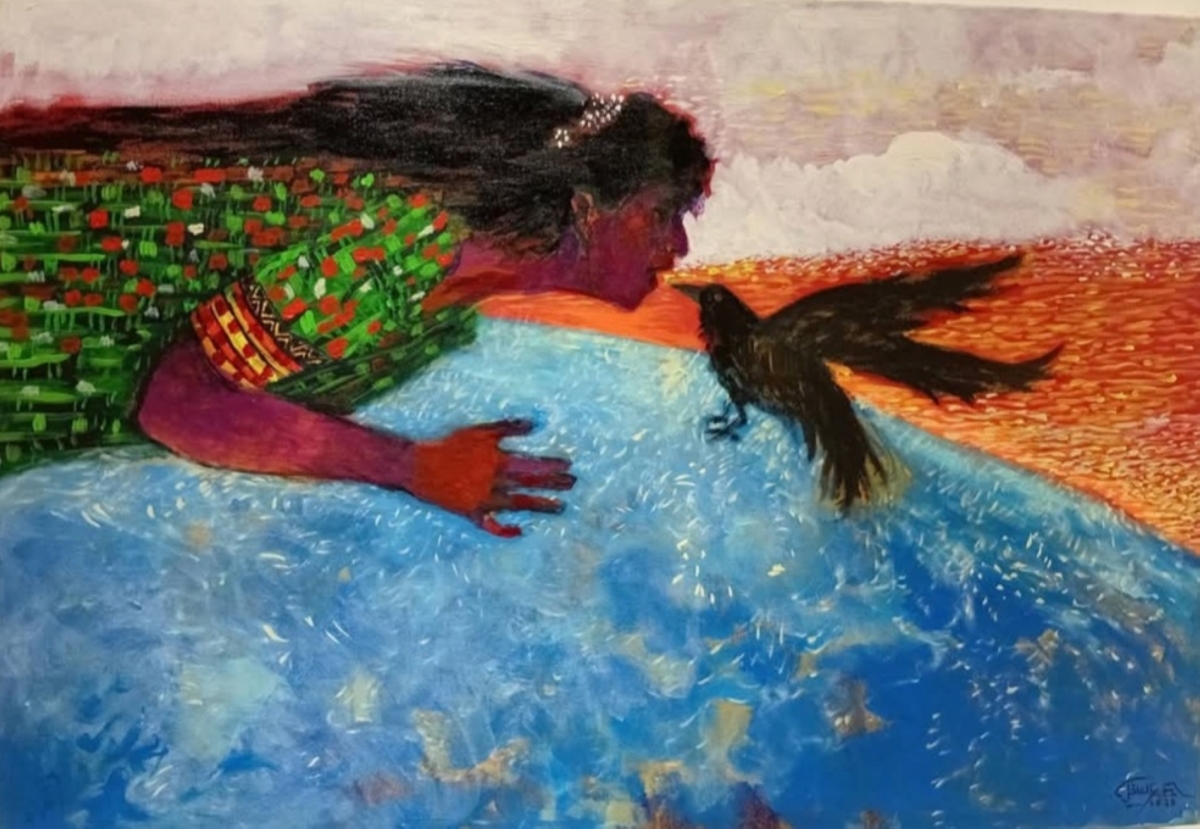
​At Villa Azad in Cairo, Yemeni artist Hakim Al-Aqel presented two collections of paintings. The exhibition, Between Endless Chants and Star Divination, continued the artist’s exploration of the bird in flight, through whose watchful eye he has captured Yemen's emotional and geographical landscapes.

For more than a year, Al-Aqel has devoted himself to a new series of paintings rooted in Yemeni memory and heritage, its rituals and ceremonies, and the mysteries of “cosmic mythology and ancient Sabaean symbols”. The paintings follow the bird’s journey across Yemen, capturing scenes of everyday life in which memory and imagination intertwine with the realities of a country scarred by war and economic crisis, yet still rich in colour, vitality, and beauty.

Over the past decade, Al-Aqel’s paintings have evolved remarkably while remaining rooted in his enduring preoccupation with his homeland, which he has refused to leave despite the ravages of war. His artistic vision shifted when he imagined himself as a Yemeni bird, rising above the earth to survey the landscape and observe the rhythms of daily life, from cultivation and harvest to gatherings of friends and musical performances in courtyards and home interiors.

Music remains central to Al-Aqel’s work, featuring prominently in his earlier paintings and reflecting its deep roots in Yemeni cultural life. In the exhibition’s second collection, Endless Chants, music becomes a recurring refrain, its melodies continually renewed while retaining the intimacy, warmth, and mystery that suffuse his art.
Hakim Alakel- facebook
A painting by the Yemeni artist Hakim Al-Aqel

From the moment the artist took flight to the melodies of Yemen, interwoven with the oud’s joyous strains, he confronted formidable artistic challenges. He had to master perspective, gauge distance and proportion, and capture how forms change from different angles.

Birdseye perspective

In the early stages of his aerial wanderings, the artist, transformed into a bird, surveyed the landscape from above, employing a limited range of viewpoints and relatively simple forms. As the years passed and he grew more accomplished, his movements over the landscape became lighter and more varied. The painted scenes increasingly drew their significance from the interplay of two viewpoints or, at other times, from the height at which they were observed.

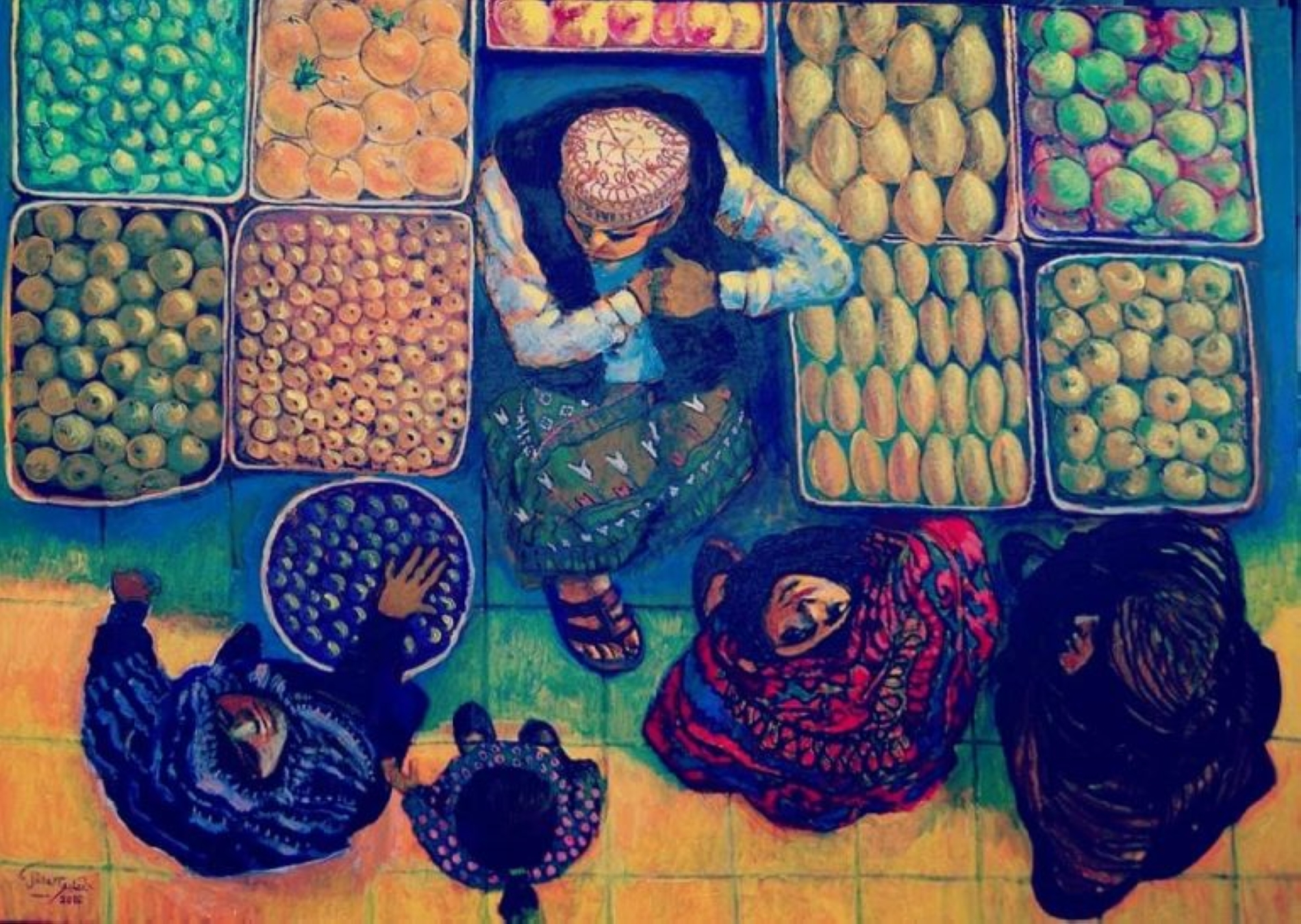
In one painting, two men stand on a hilltop, one pointing towards a distant landscape viewed from a greater height, its intricate details unfolding across a shallow valley. Another painting anticipates the works of the present exhibition, exploring the relationship between earth and sky. Here, women gathered beside a fruit seller gaze upwards, beyond the scene depicted in the painting, towards the bird watching them intently. The dynamic suddenly reverses: the bird that once observed Yemen from above has become visible itself, entering into an exchange with the people below.
From the works of Yemeni painter Hakim Al-Aqel

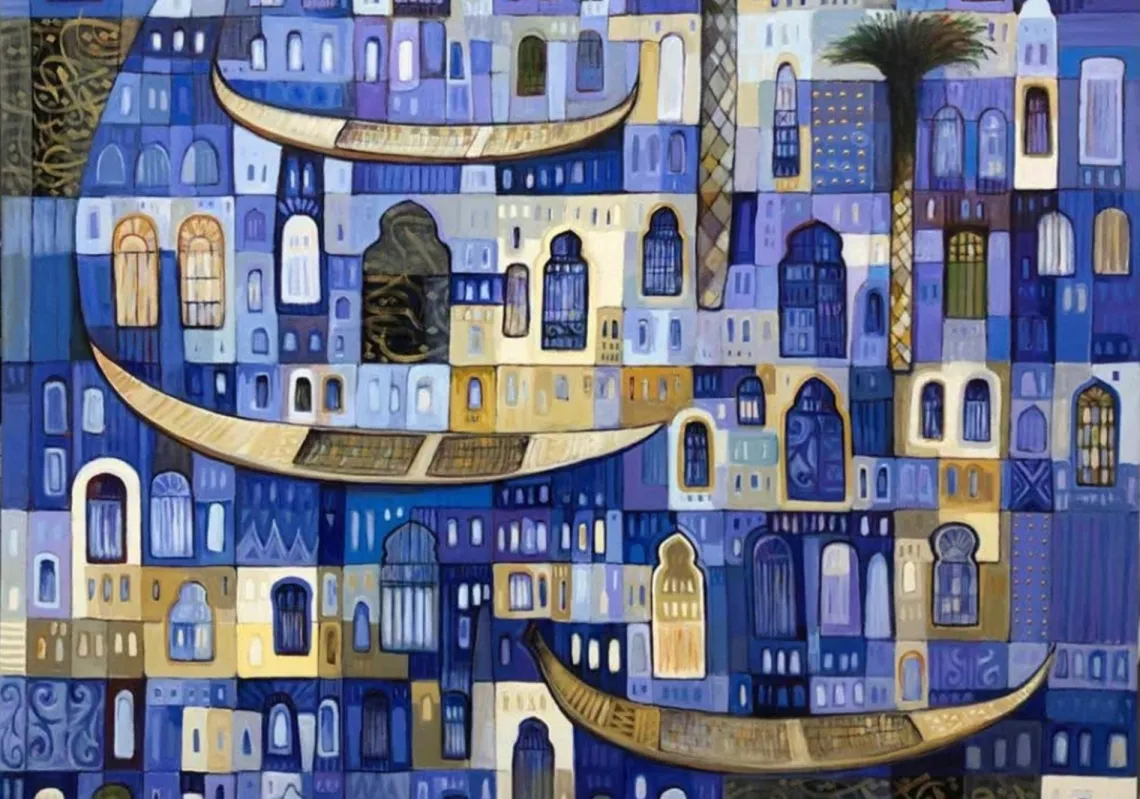
A journey through Al-Aqel’s earlier and recent paintings reveals an enchanting Yemen, where greenery meets sand, colourful ornamentation mingles with the imposing grandeur of rocky fortresses perched on towering heights, and fertile agricultural terraces descend towards mist-shrouded valleys. Towns nestle among rugged peaks, their surroundings suddenly cloaked in green after the rain.

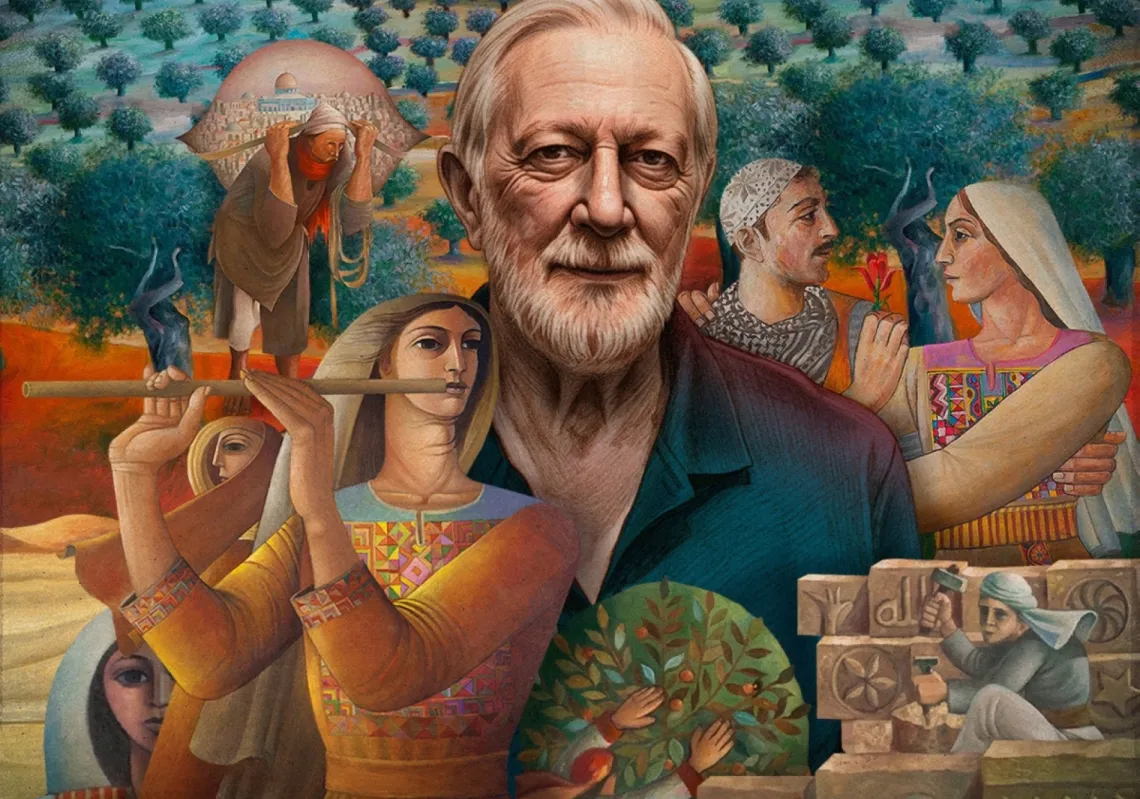
One of the most compelling qualities of Al-Aqel’s paintings is how the Yemeni landscape becomes inseparable from the figures and objects that inhabit it. Decorative patterns and warm colours appear entirely natural, woven organically into each composition. This is particularly evident in the intimacy with which trees, animals, and human figures coexist. Perhaps this explains why nature, along with scenes from the artist’s childhood in Taiz, occupies such a profound place in his imagination.

The women descending from the mountains and highlands, dressed in brightly coloured garments and enveloped in refreshing mists, lush vegetation, and blossoms after the rain, remain vivid in his memory. So do the stones and rocks in their myriad hues, from yellow, red, and green to grey, alongside agate, onyx, and amethyst.
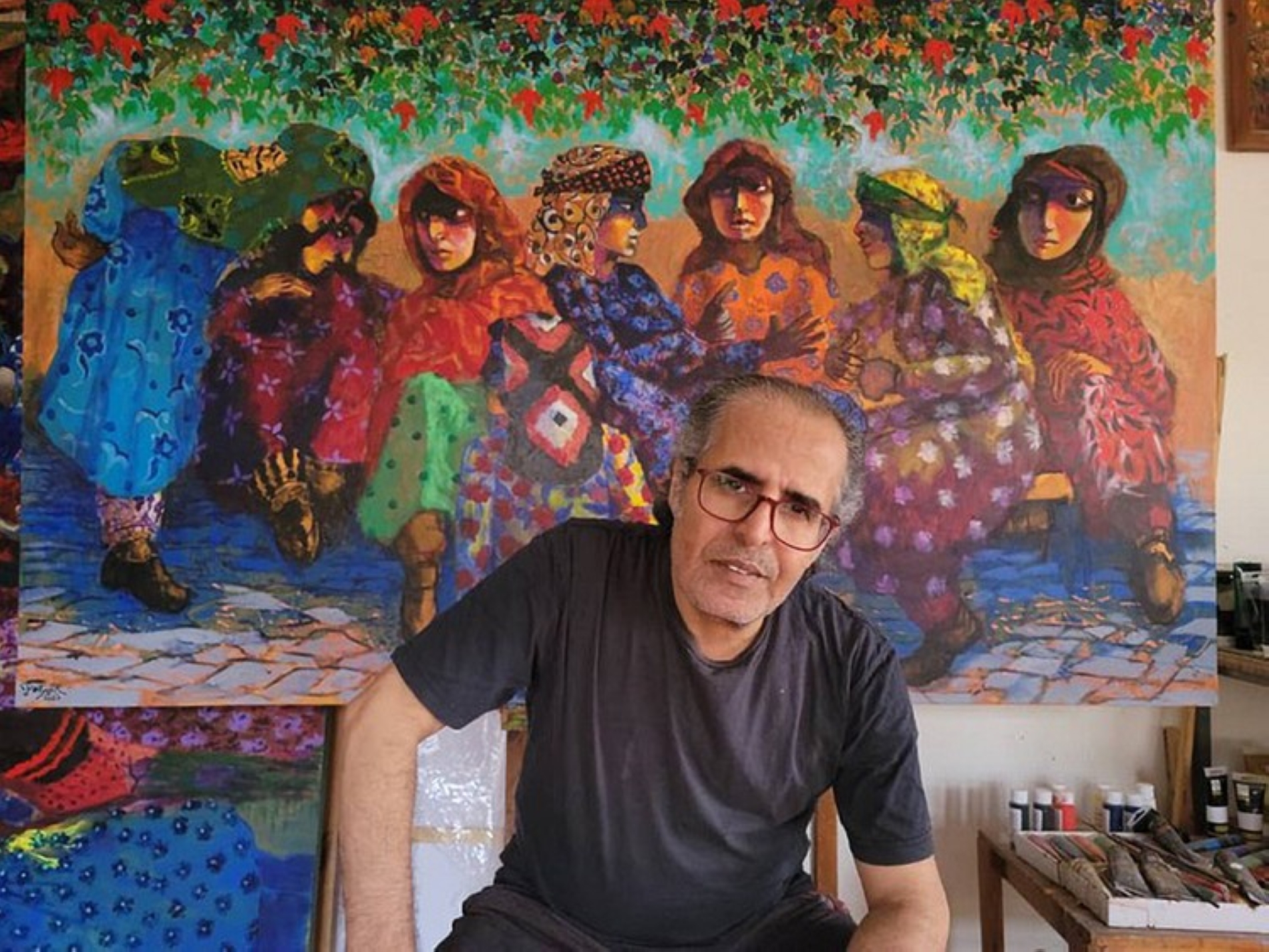
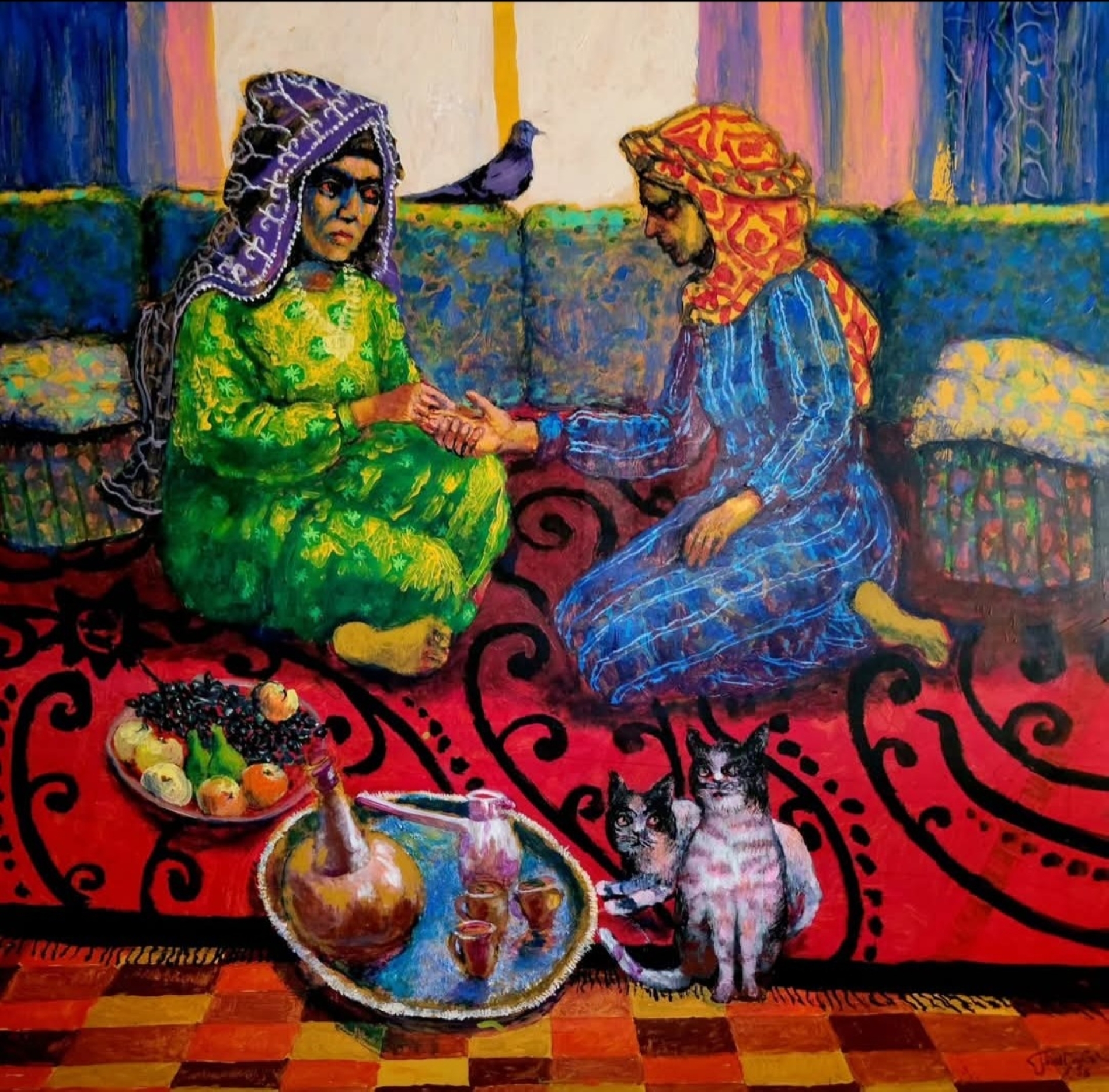
Al-Aqel's figures, particularly his women, move and rest amid an atmosphere fragrant with Arabian jasmine, sidr blossoms, basil, and roses of every colour

Agate is perhaps especially evocative of this visual world, with certain varieties displaying gradations of colour and intricate formations resembling miniature landscapes. Such impressions have stayed with the artist since childhood, shaping his way of seeing long before that vision found expression in his art.

Fragrant and colourful worlds

Upon entering Al-Aqel's artistic world, familiar images of Yemen, with its earthy hues, rocks, and mud-brick houses striped with white and desert landscapes, immediately recede. In their place emerge immersive scenes from an imaginary world steeped in fragrance. The chromatic and sensual richness of Al-Aqel's earlier paintings, and particularly those in the present exhibition, recalls the Tahitian works of French painter Paul Gauguin, with their similarly unspoilt beauty. Yet the Yemeni artist's paintings possess a greater authenticity, rooted more intimately in his childhood impressions and his experience of living among the traditions and legends that shaped his imagination.

The resemblance is striking in the vivid, saturated colours, where the fiery reds and brilliant pinks of bougainvillaea and local roses mingle with the deep greens of the mountains. Even more compelling is the spontaneous harmony between people and the land. Just as Gauguin immortalised the women of Tahiti adorned with local flowers, the women of Taiz appear with fragrant blossoms upon their heads.

From the works of Yemeni painter Hakim Al-Aqel

To suggest that Al-Aqel's paintings are sometimes more expressive than Gauguin's, precisely because they spring from the imagination of a Yemeni artist, requires some explanation. A close examination of the women's faces reveals, for instance, traces of green spreading across their foreheads like translucent fabric softening the harshness of the sun. The effect suggests something beyond expressive colour alone.

The brown complexions of Al-Aqel's women appear natural and changeable, responsive to shifts of emotion, unlike the relatively uniform skin tones of Gauguin's figures. Their colouring possesses a certain 'tension', shaped by sunlight and shadow, the lines of facial expression, and the delicate patterns of tattoos. Their complexions glow, recalling the rich tones of Yemeni honey, known as 'golden honey'.

Al-Aqel's figures, particularly his women, move and rest amid an atmosphere fragrant with Arabian jasmine, sidr blossoms, basil, and roses of every colour. Taiz, the artist's native city, is among Yemen's greenest and most beautiful regions, while Mount Sabir, overlooking the city, is a veritable reservoir of fragrant vegetation. In both his earlier and recent paintings, it remains ever-present, whether visible to the eye or perceptible to the senses, permeating each composition's layers.

From the works of Yemeni painter Hakim Al-Aqel

The star diviners

This atmosphere, laden with fragrance and suffused with sunlight and the shimmering moonlight that falls upon Yemen's hills, pervades much of Al-Aqel's work, particularly the paintings in which he summons a bird to capture scenes of almost paradisiacal beauty.

The paintings on display at Villa Azad appeared to herald a new phase in his artistic development. The artist's bird has begun to withdraw from the wider scene, bequeathing its magical qualities to a group of Yemeni women. Along with its ability to survey landscapes from different angles and heights, it grants them the gift of seeing from above. The women thus acquire the bird's extraordinary vision: their gaze pierces the clouds, sweeps across open vistas, and penetrates the mysteries and tidings concealed beyond them. Together, these women are called The Oracle of the Stars.

Hakim Alakel- facebook

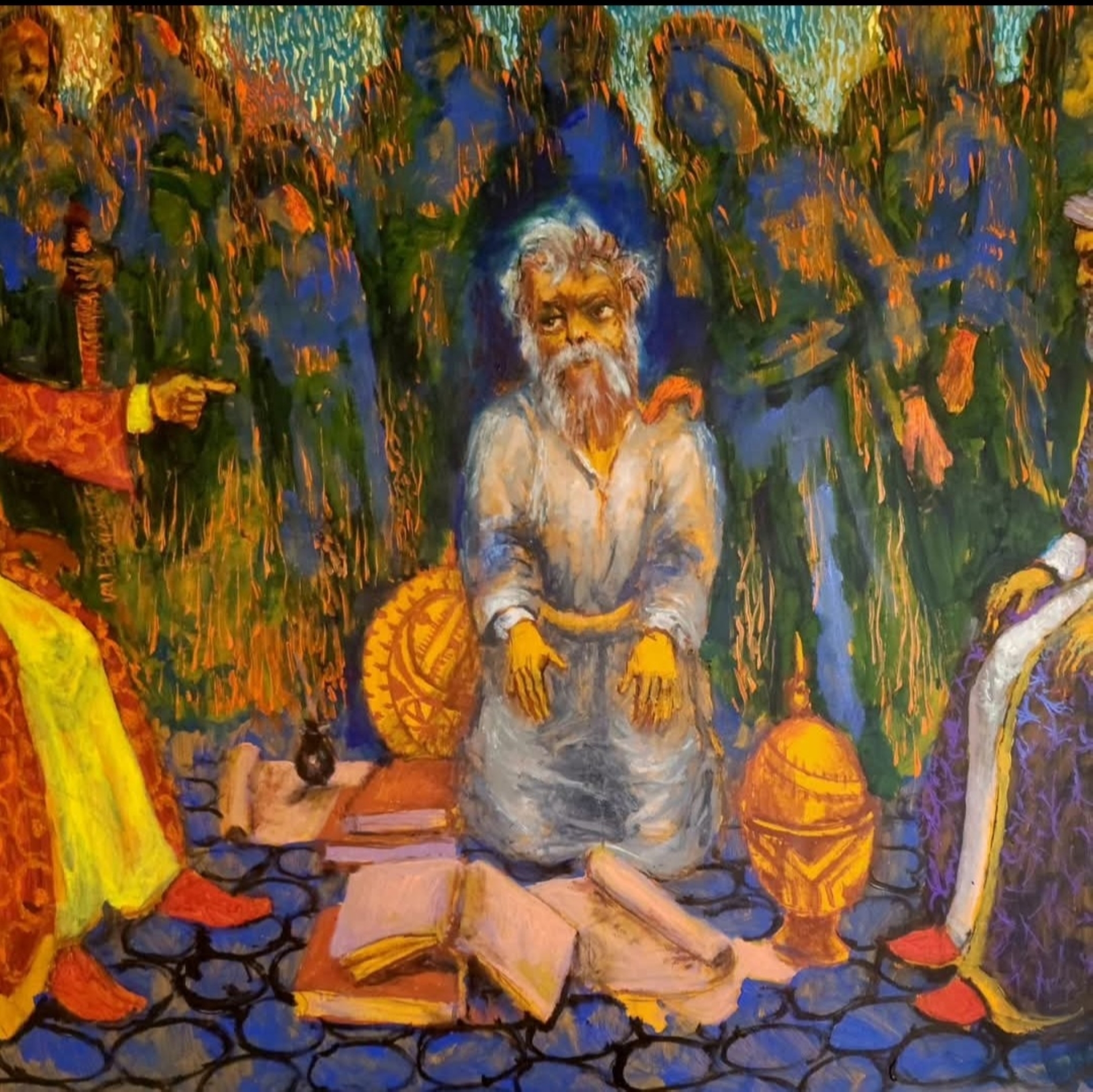
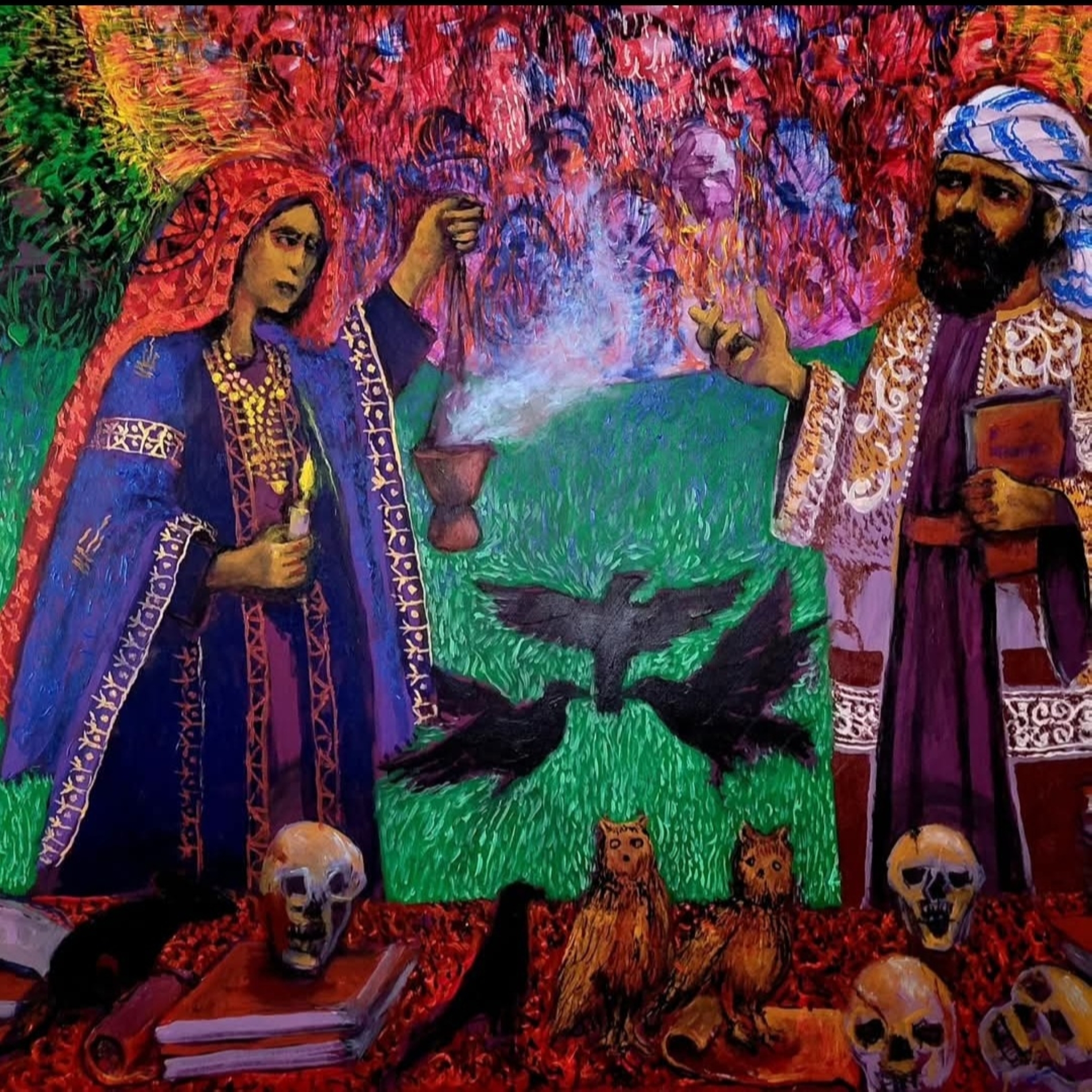
Around these women who divine the stars, other scenes from the same imaginative world unfold. The artist explained that the titles of certain paintings, including The Trial of the Philosopher, The Meeting of the Sorcerers, and The Sufi and the Sorceress, reflect an impulse that has endured throughout human history: the search for reassurance in such mysterious realms. When the world below—the earth—grows confined, the world above—the heavens—opens wide. The stars become a boundless realm of possibility, freedom and hope.

It is hardly surprising that Al-Aqel entrusts women with listening to what the stars might reveal. According to the exhibition statement, the oracle "appears not as a mythical figure, but as a philosophical symbol of human consciousness seeking answers in times of adversity". 

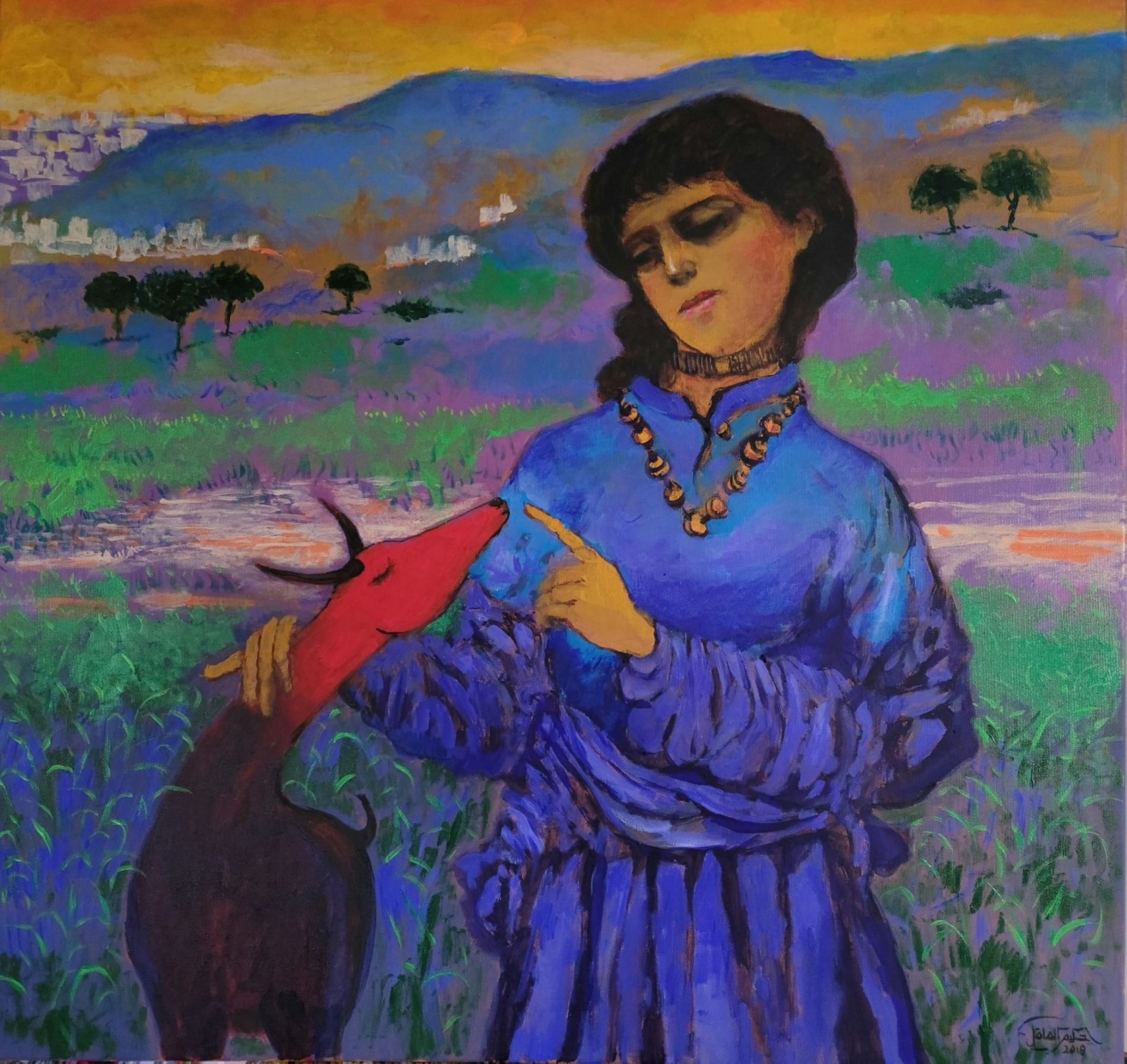
Women had already been assuming an increasingly prominent place in the artist's earlier paintings. In one, a woman extends her arms to receive pomegranates that seem to have leapt into her lap from the verdant hillside where they once rested. The pomegranate, it should be noted, is a fruit symbolically associated with Yemen. In another painting, a woman confronts swirling currents of colour that resemble flowers one moment and strange, otherworldly forces the next. In a third, she places a fingertip against the mouth of a graceful wild gazelle.

Hakim Alakel- facebook
A work by the Yemeni artist Hakim Al-Aqel

Within these painted worlds, which evoke a Yemeni sensibility steeped in myths of water, resurrection, destiny, and fertility, Al-Aqel lets his imagination run free as he conjures The Oracle of the Stars. She appears fortified by patience, guided by her inner instincts and convinced that she can truly listen to the stars. Through her endless chants, she carries their tidings to the people of Yemen.

font change