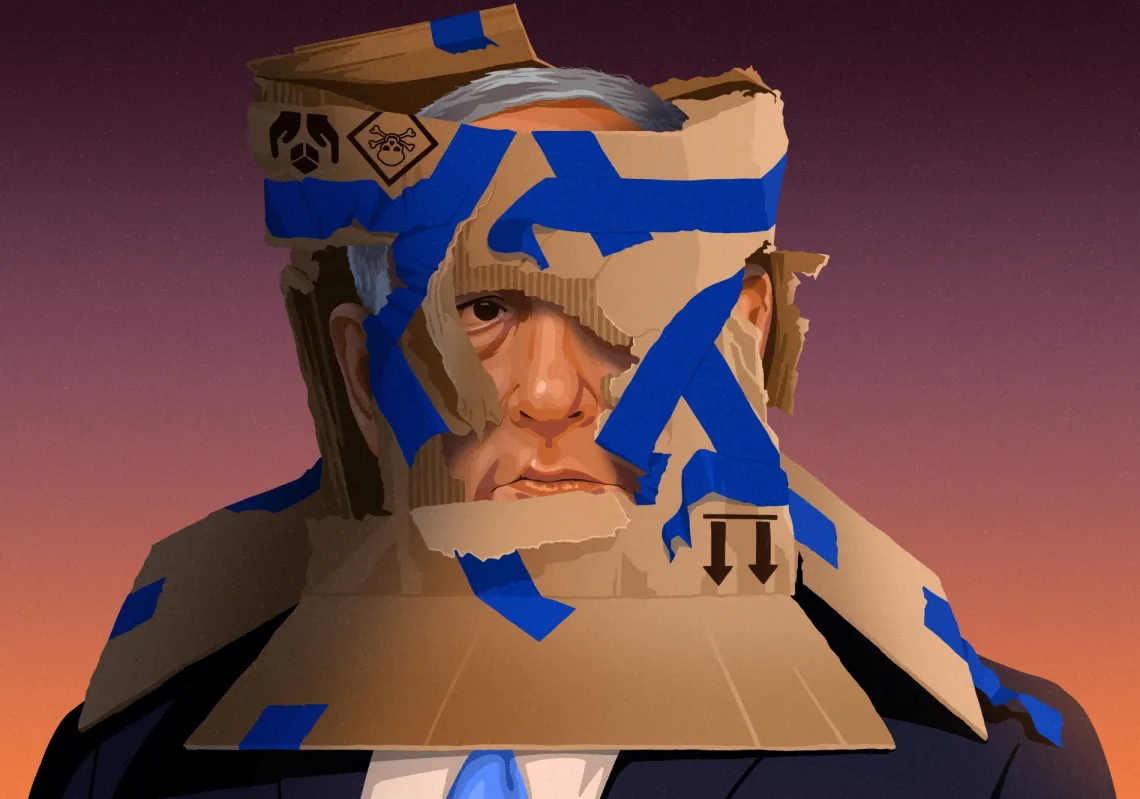

Israelis head to the polls today, 27 October, to elect the 26th Knesset, in the country’s first legislative election since Hamas’s October 7 2023 attack and the ensuing wars in Gaza, Lebanon, and Iran. The vote takes place amid divisions over responsibility for the security failures, ultra-Orthodox exemptions from military service, and the future of Benjamin Netanyahu’s right-wing government.
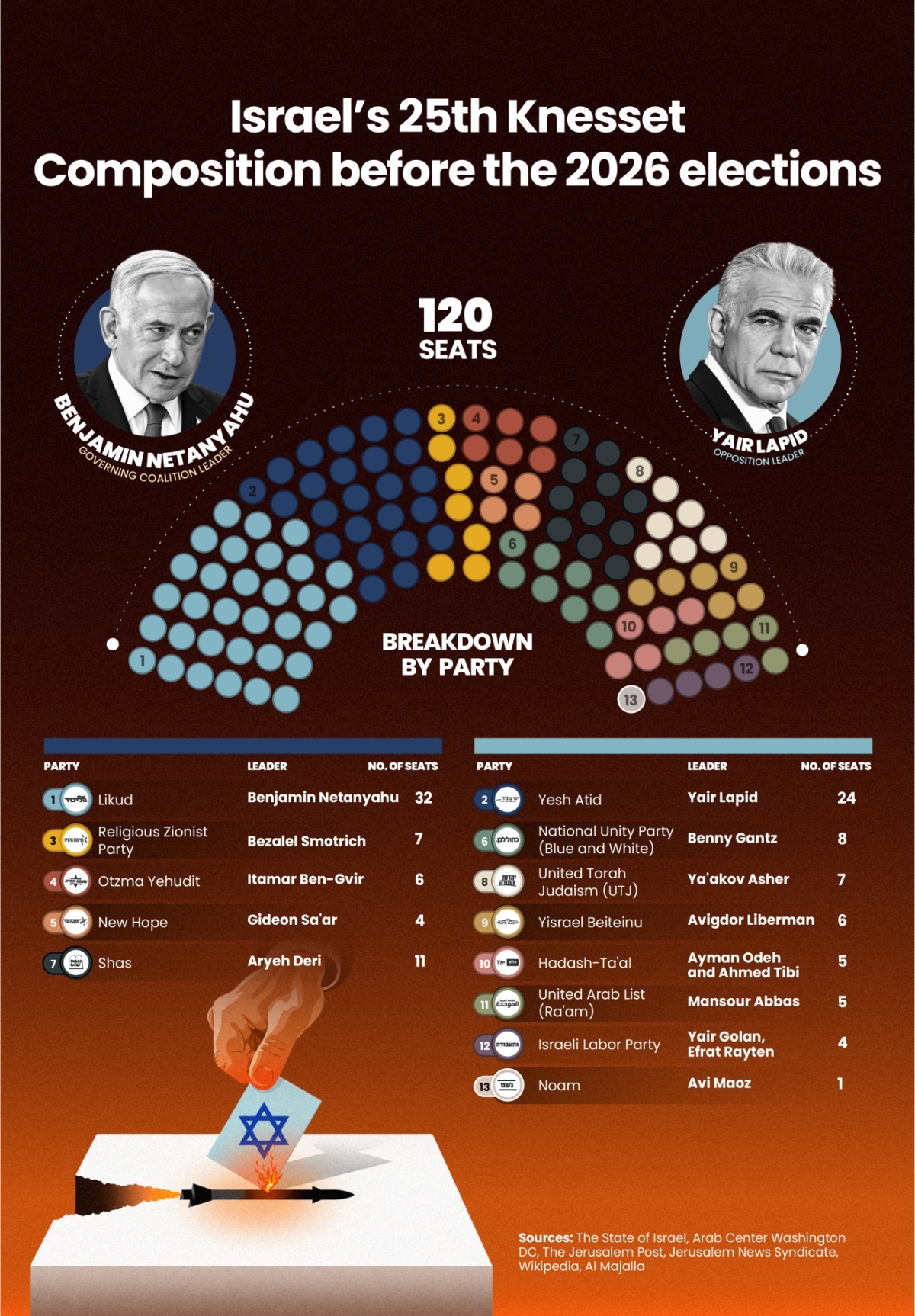
The 25th Knesset began its term in November 2022, following Netanyahu’s return to power at the head of a coalition comprising Likud and right-wing nationalist and religious parties, including Shas, Religious Zionism, and Otzma Yehudit. The opposition comprised centrist, right-wing, and left-wing parties, alongside Arab lists, notably the United Arab List and the Hadash-Ta’al alliance.
The Knesset’s composition shifted during its term. Shortly after the election, the Religious Zionism electoral alliance split into three parliamentary factions: Religious Zionism, led by Bezalel Smotrich, Otzma Yehudit, led by Itamar Ben-Gvir, and Noam, led by Avi Maoz.
In March 2024, Benny Gantz’s National Unity Party split amid disagreements over the Gaza war and Gideon Sa’ar’s role in political and security decision-making. The main party retained eight members, while four led by Sa’ar formed a separate faction, initially known as the National Right and later as New Hope–The United Right. In January 2025, Idan Roll left Yair Lapid’s Yesh Atid to sit as an independent.
Membership also changed through resignations and the so-called Norwegian Law, which allows ministers, under certain conditions, to vacate their Knesset seats for other candidates on their party lists. While not all these changes altered the balance of power, they highlighted the difference between electoral alliances and parliamentary factions, which can shift during a legislative term.
In July 2026, the Knesset voted to dissolve itself, triggering the 27 October election. The outgoing government remained in a caretaker capacity pending the formation of a new administration.