Trump’s diesel deal has no winners

It won’t help consumers, won’t help Kyiv, and won’t mean riches for Moscow

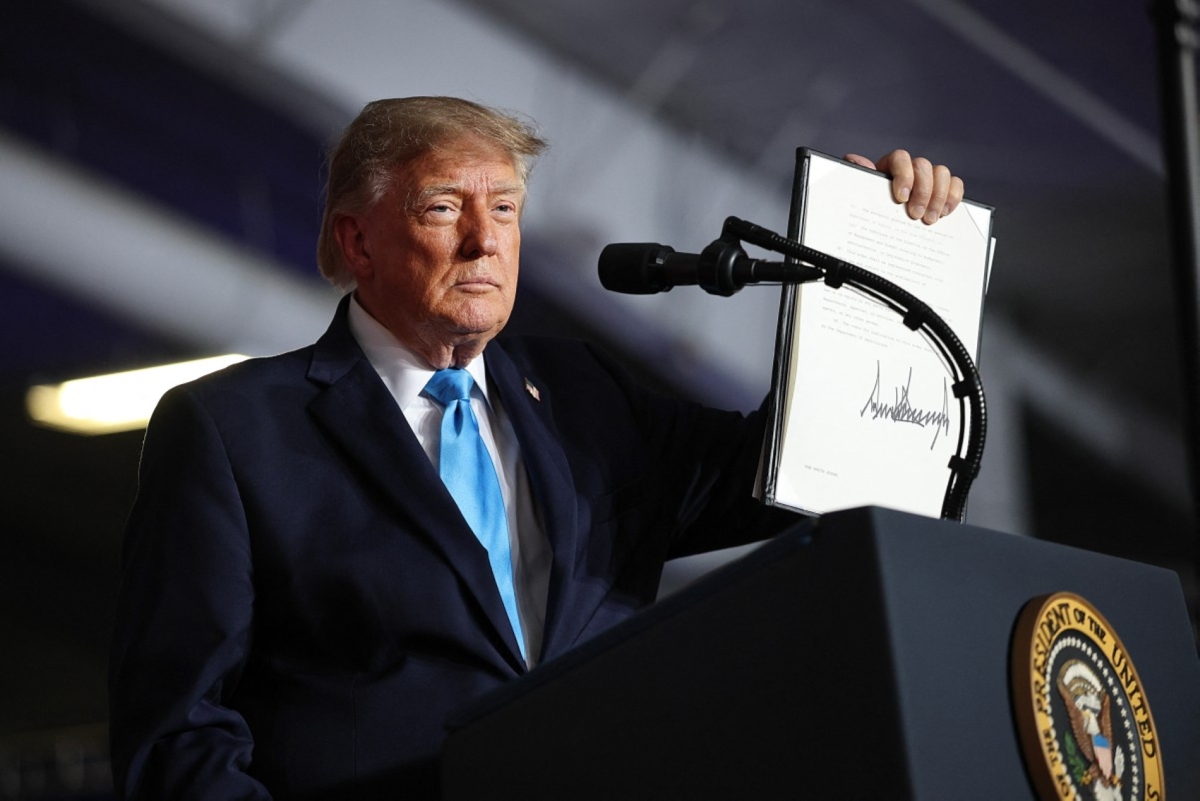
US President Donald Trump signs an executive order to lower the cost of diesel fuel during a campaign rally at Pinnacle Bank Expo Centre on the Nebraska State Fairgrounds on 5 October 2026 in Grand Island, Nebraska.
WIN MCNAMEE / AFP
US President Donald Trump signs an executive order to lower the cost of diesel fuel during a campaign rally at Pinnacle Bank Expo Centre on the Nebraska State Fairgrounds on 5 October 2026 in Grand Island, Nebraska.

Trump’s diesel deal has no winners

President Donald Trump’s controversial decision to suspend sanctions on Russian diesel exports won’t do much, if anything, to lower fuel prices, especially before next month’s midterm elections. Yet it won’t provide Moscow with a financial windfall, either.

The administration’s surprise suspension of bans on Russian diesel exports, announced on Friday, faces legal and political challenges, as many lawmakers have noted. In 2022, in the wake of Moscow’s invasion of Ukraine, Congress passed legislation that prohibits the United States from importing fossil fuels from Russia, as Trump’s waiver would allow. And less than a month ago, Trump signed tough new legislation meant to further hamper Russian energy sales.

The Trump administration's abrupt about-face has sparked a large and growing bipartisan backlash in Congress.

“This deal is a gift to our adversary and a betrayal of our allies; it should be rescinded,” a dozen senators from both parties wrote to Trump in a letter Tuesday.

Trump’s sanctions relief was paired with a written demand for an “energy ceasefire” from both Moscow and Kyiv, a move that would strip Ukraine of the most powerful weapon in its four-plus-year war with Russia: long-range drone and missile strikes that have wrought great damage on Russia’s oil industry, especially its refineries. Nearly all Russian refineries, except those in distant Siberia, have been hit at least once by Ukrainian attacks, the International Energy Agency (IEA) said in September, and it estimates that Russia’s diesel production has declined by about 30% over the past year.
AFP
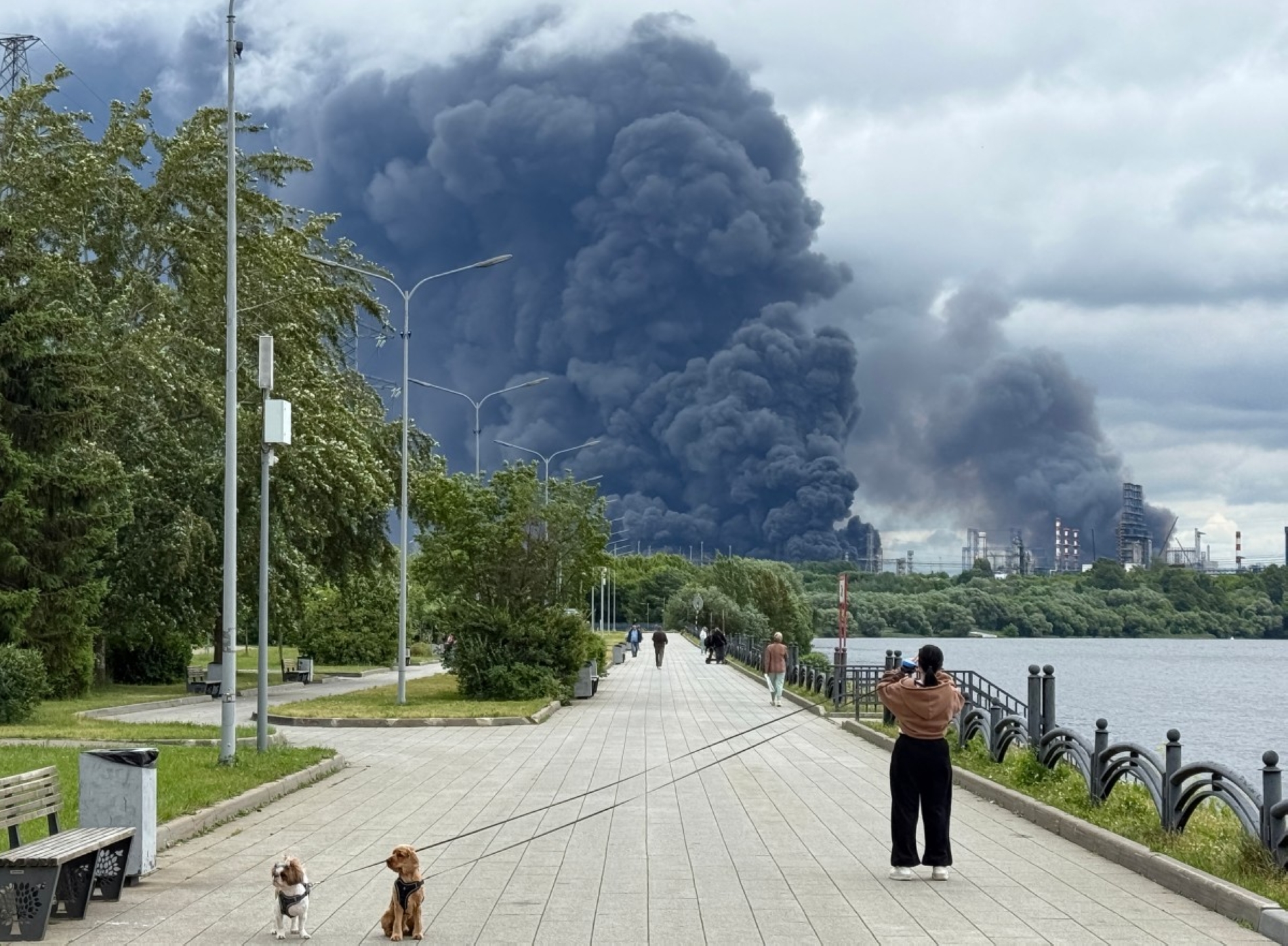
People walk in a park as black smoke rises from the area of the Russian oil producer Gazprom Neft's Moscow oil refinery on the south-eastern outskirts of Moscow on 18 June 2026.

More recently, Ukrainian attacks have targeted more complex parts of Russian refineries, the IEA said, requiring much longer repair times and causing lasting damage to Russia’s refining complex, which has shrunk from a prewar capacity of about 5.5 million barrels a day to about 4 million barrels a day. The IEA also said that Russia’s capacity is at a 20-year low.

Even Trump’s former envoy for the Ukraine war, retired Lt. Gen. Keith Kellogg, said Ukraine should be encouraged to continue its long-range strikes, as one of the few effective ways Kyiv can weaken Russia’s war machine by limiting its energy revenues. In August, Russia’s exports of oil products by sea reached the lowest level since the start of the full-scale war, said the Centre for Research on Energy and Clean Air, which tracks Russian energy earnings.

Ukrainian President Volodymyr Zelensky has, in the wake of Trump’s diesel deal and demand for a pause on energy attacks, complied, making no new strikes on Russian oil facilities since 10 October. Russia has neither accepted the demand for a cease-fire nor lessened the pace of its drone and missile offensive on Ukrainian cities, including on vital power plants.

But Zelensky’s forbearance has yet to pay off, with apparent restrictions starting Wednesday on the Ukrainian military’s ability to use Elon Musk’s SpaceX military-grade version of the Starlink internet service for its high-speed weapons. That sudden interruption of service won’t necessarily affect Ukraine’s ability to conduct long-range strikes into Russia, which rely on other platforms, but it will erode Kyiv’s ability to defend against high-speed Russian drones and missiles.

Despite all the damage done to Russia’s oil industry, it should easily be able to supply the volumes of diesel exports envisioned in Trump’s diesel deal—300,000 tons in the rest of October, 500,000 tons in November, and then as much as a million tons each month until April.
Trump's diesel deal, his second burst of sanction relief for Russia this year to offset the impact of his war in Iran, likely won't affect the price of diesel at the pump

Russia's diesel exports have fallen from about 3 million tons a month this spring to about 325,000 tons a month in September, said Sergey Vakulenko, a former Russian oil executive now at the Carnegie Endowment for International Peace. Russian domestic demand for diesel falls sharply heading into winter, after the harvest season is over, which could free up 1 million tons a month for export, Vakulenko said—provided that Ukraine doesn't materially intensify its drone

But Trump's diesel deal, his second burst of sanction relief for Russia this year to offset the impact of his war in Iran, hasn't yet affected, and likely won't affect, the price of diesel at the pump. Average diesel prices remain at about $6.30 a gallon, near their record high, and futures contracts for diesel rose sharply despite Trump's announcement. Wholesale diesel prices also rose sharply early this week, suggesting the fuel market does not expect a flood of new supply.

In a global market of 120 million tons of diesel a month, 300,000 or 500,000 tons is too small to move prices, Vakulenko said. Moreover, the market already expects even higher Russian exports over the winter, since the country has no place to store the excess diesel it will accumulate as domestic demand softens.

The good news, as good news as it is, is that Trump's diesel deal does not represent a sudden, multibillion-dollar windfall for Moscow's war machine. Russia was already exporting as much diesel as it could (despite a nominal ban on diesel exports since July) to countries such as China, India, Türkiye, and Brazil. The only upside for Russia from the sanctions relief is that it may sell the diesel at a slightly higher price, which would mean "tens of millions" of dollars a month in additional revenue for refiners, though not for the Kremlin, Vakulenko said. (He's also written about Trump's diesel deal.)

BRANDON BELL / AFP
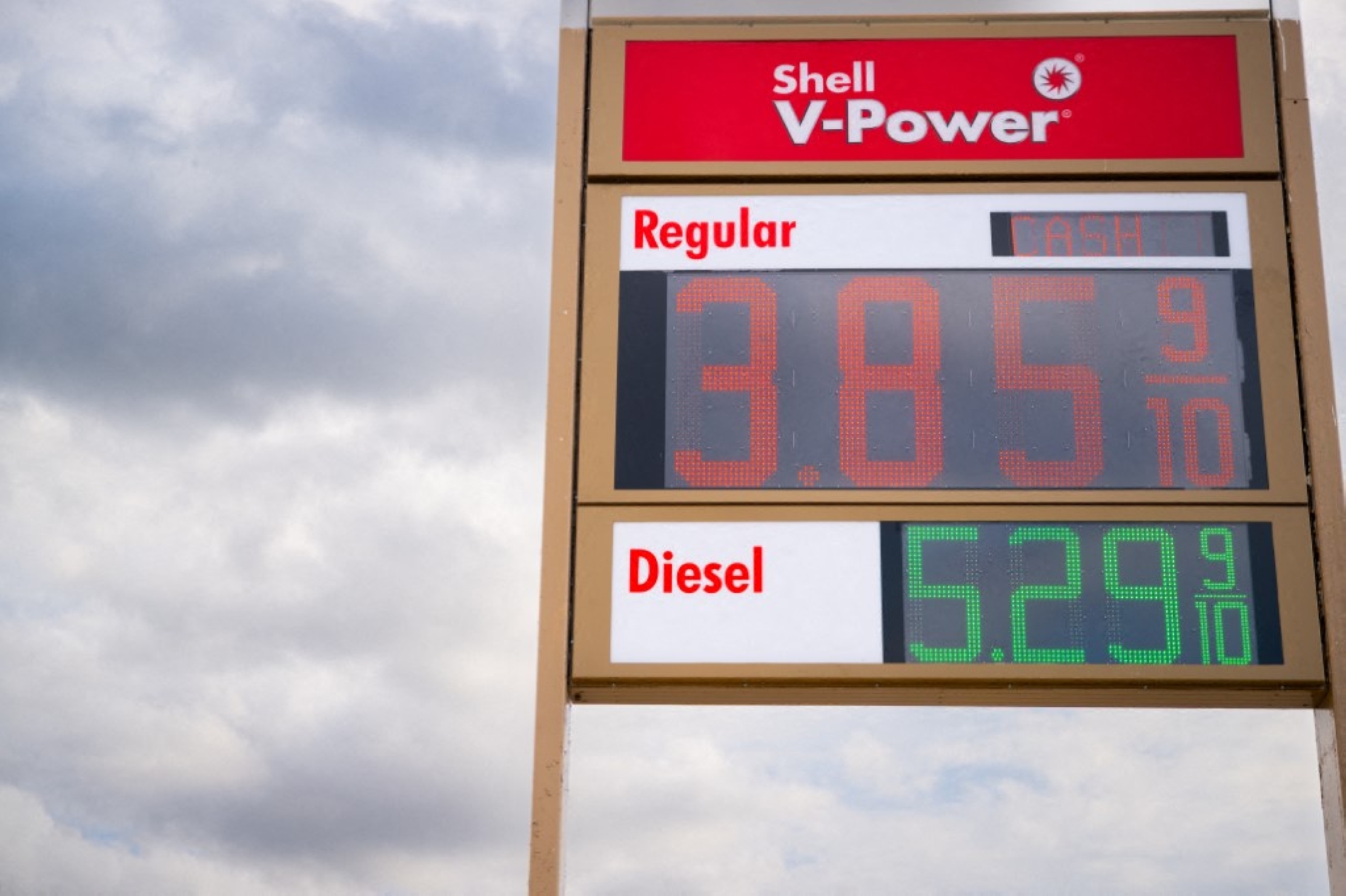
Gas and diesel prices are displayed at a Shell gas station on 2 April 2026 in Lockhart, Texas. Oil and diesel futures climbed approximately 11% to nearly $112 per barrel after Trump signalled continued military action against Iran.

Meanwhile, the real cause of the global energy crunch—the war on Iran—is getting worse again after a brief return to near-normal conditions in late September. Iran has sharply escalated attacks on shipping in and around the Strait of Hormuz, especially on tankers; the two-dozen-plus strikes since September have comprised the worst spate of attacks since the start of the war in February. The attacks are specifically aimed at disrupting the ship-to-ship oil shuttle system that has restored oil exports under the protection of the  Navy. 

As a result, oil flows through Hormuz, which in late September had come close to prewar levels, are back down to less than half, according to ship-tracking companies. And that is just crude oil; refined products such as diesel remain in short supply in the Gulf, exacerbating the global price spike. At the same time, the Iran-backed Houthi militants in Yemen have intensified their fight against Saudi Arabia, including against the regional energy infrastructure that has acted as a safety valve given the closure of Hormuz. The IEA estimates that the global market for diesel will remain tight until well into 2027. Benchmark oil prices rose to more than $106 a barrel on Wednesday.

Vakulenko said the ultimate solution to the fuel price crunch hammering economies in the United States, Latin America, Europe, and Asia would be to fix the mess in the Middle East. "Oil flows from the Gulf are getting close to prewar levels, but oil products, including diesel, are still quite low," he said. "Getting them to full levels would be the best way to alleviate the crisis, but there is no clear path to that at the moment."

font change