Are screens making us lonelier?

Technology keeps us connected, but it may be changing what human closeness really means

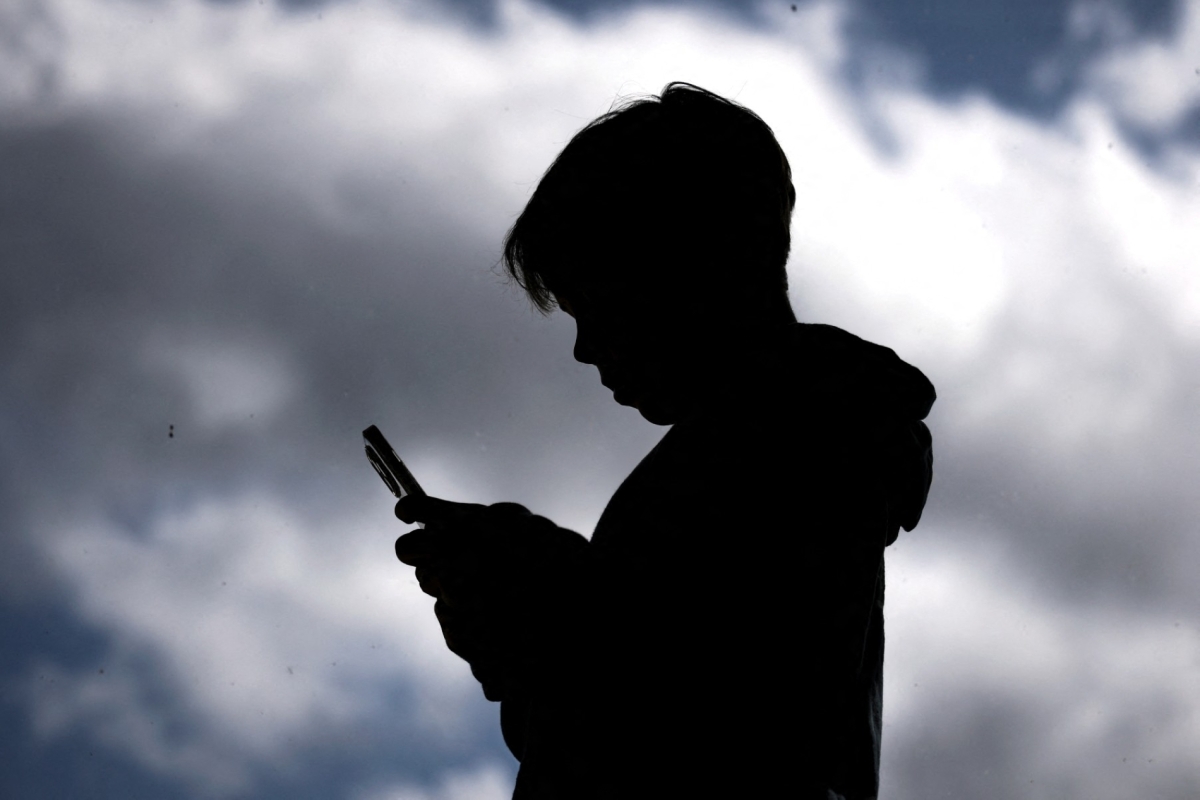
A 14-year-old child using a mobile phone and browsing social media
AFP
A 14-year-old child using a mobile phone and browsing social media

Are screens making us lonelier?

The question today is no longer whether technology has changed the way we communicate, but how profoundly it has reshaped the very meaning of human relationships. More and more of our social lives now take place not face-to-face but on social media, messaging apps, and increasingly through artificial intelligence chatbots. While these tools have given us near-constant connectivity, they have not brought us a deeper sense of closeness or belonging.

This is the central question posed by sociologist Vidar Halldórsson, a professor at the University of Iceland, in his new book on the impact of screen use on social alienation. Halldórsson argues that the migration of social life to digital interfaces has changed more than the way we communicate; it has altered the nature of human interaction itself. Relationships are no longer always one-to-one. Increasingly, they are mediated by a device, platform, or algorithm that determines what we see and how we respond.

The problem, according to Halldórsson, is not a lack of contact. We send more messages, see our friends’ pictures throughout the day, receive constant notifications, and can follow people's lives on the other side of the world almost in real time. But more contact does not necessarily mean greater human closeness. Knowing what someone is doing is different from sitting opposite them. You can see their face, hear their voice, and notice the hesitation, silence, and emotion that words or symbols cannot easily convey.

Neuroscience offers a partial explanation. Research into in-person conversations suggests that two friends’ brain activity may become synchronised, including in regions associated with social perception and understanding other people’s intentions, such as the right temporoparietal junction. This phenomenon is sometimes described as ‘interpersonal neural synchrony’, in which the neural activity of both participants begins to display similar patterns during an interaction.

Some studies, however, suggest that this synchrony does not occur to the same degree when communication takes place through a screen. This does not mean that digital conversations have no value, or that the brain somehow stops communicating. Rather, face-to-face interaction exposes us to a richer mix of sensory and social cues. We do not simply listen to words; we read facial expressions and body language, distance and posture, gaze, tone of voice, and rhythm—all part of a broader system of signals that helps us understand the other person.
AFP
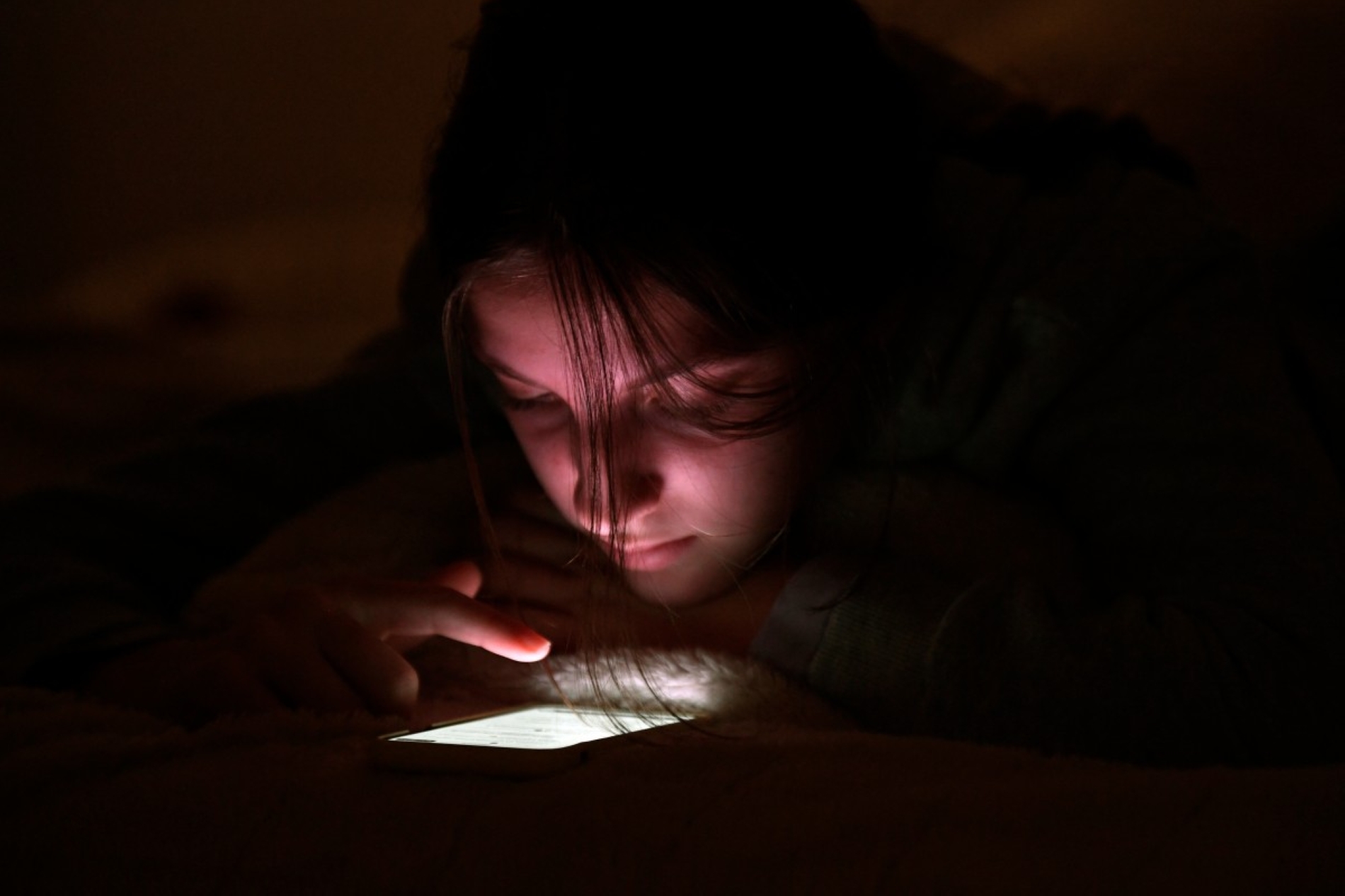
A teenage girl uses her mobile phone in her dark room.

Halldórsson invokes sociologist Randall Collins's concept of 'emotional energy', the state that emerges when people share attention, emotion, and a sense of mutual presence. Such moments do more than convey information. They strengthen trust, belonging, and our sense of connection with others.

By contrast, sociologists often describe screen-based communication as low in social cues. When we write a message, for example, most of the subtle signals conveyed by the face and body disappear. Even video calls, although richer than text, cannot fully reproduce the sense of physical distance, shared space, or natural eye contact. More subtle signals, such as smell and physical proximity, are absent altogether, despite having long played a role in human communication.

This loss of cues may help explain why tone is so easily misunderstood in messages or why digital arguments can seem harsher than in-person conversations. When signs of hesitation, friendliness, or humour disappear, we rely more heavily on our own assumptions to interpret what someone means. Recent studies have also linked excessive or addictive social media use with declines in some aspects of people's ability to take others' perspective and understand their emotions, although these associations alone do not establish a direct causal link.

A sense of community

The effects of this digital shift are not confined to relationships with friends and family. They extend to brief, passing encounters. Sociologist Erving Goffman was interested in these apparently simple details of everyday life, such as greeting a neighbour, exchanging a few words in a queue, or smiling at someone on public transport. These brief interactions form small social rituals that recur throughout daily life.

We do not simply listen to words; we read facial expressions and body language, distance and posture, gaze, tone of voice, and rhythm

We may not remember most of these encounters, but they help create an implicit feeling of community. Other sociologists, including Émile Durkheim, associated human gathering with a collective sense of belonging. 

Screens, however, have begun to occupy the space once reserved for such moments. People walking side by side while looking at their phones have become a familiar sight, as have passengers on public transport isolated from one another by phones and earphones. Using a phone in the street is not inherently harmful, but when repeated, this behaviour may cause thousands of small interactions between people to disappear.

Halldórsson argues that these 'interaction ritual chains' once gave everyday life a rhythm and stability, enabling people to develop an implicit social map of the places they lived in. Then came the pandemic, which dramatically accelerated the migration to screens. It also entrenched the idea that a digital encounter could serve as a natural substitute for in-person meetings.

Remote work, virtual meetings, and online lessons have remained part of everyday life. This raises the question posed by the book: have we taken tools designed for exceptional circumstances and turned them into permanent substitutes for forms of interaction that served social functions we rarely noticed?

This question becomes more pressing as loneliness grows. In the UK and Japan, Halldórsson notes, policies and government posts have been introduced to tackle loneliness and social isolation. Around the world, people are dying alone, their absence undiscovered for weeks or months. Some researchers regard such cases as an extreme indicator of social fragmentation and isolation.

AFP
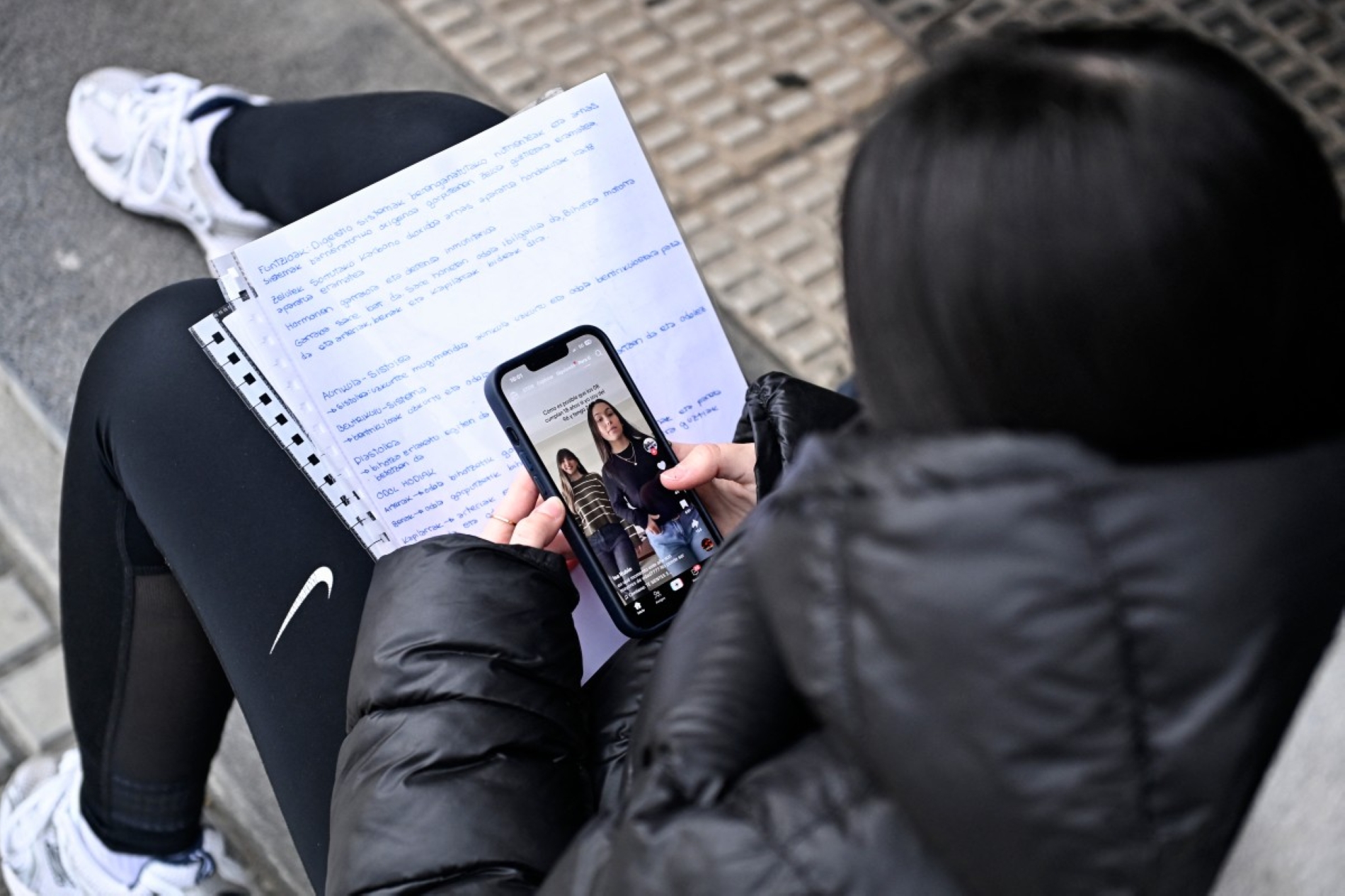
A teenage girl using her mobile phone

Symbolic rituals

However, it is important not to interpret this 'epidemic of loneliness' as the sole responsibility of mobile phones. Isolation is a complex social phenomenon linked to changes in family structure, increased solo living, population mobility, work pressure, poverty, and the decline of local institutions. Halldórsson nevertheless argues that the erosion of in-person interaction may form part of the social environment in which loneliness can spread.

At the other end of the spectrum is an entirely new phenomenon: AI companions. Apps and chatbots can talk for hours, remember a user's details, offer words of support, and simulate concern. Some reports have even described people characterising their relationships with chatbots as romantic and holding symbolic ceremonies resembling weddings with AI characters.

The appeal of this companionship lies in how fundamentally different it is from a human relationship. A chatbot does not tire, need time to itself, or become preoccupied with something else. Its personality can be designed to appear supportive and highly compatible. For someone experiencing loneliness or difficulty with relationships, this form of communication may be extremely attractive. Yet it raises the question of whether a response tailored to our preferences can ever match a relationship with an independent human being who has needs and boundaries of their own.

Halldórsson says these systems lack 'social magic'—the complex mixture of physical presence and sensory and emotional signals that generates trust and empathy. Human relationships do not depend on us hearing the right words. They require us to deal with another person we cannot fully control. Friendship, love, and family life involve negotiation, disagreement, compromise, understanding and, tolerating frustration.

From this perspective, a common thread runs between someone who dies alone and someone who replaces human relationships with an algorithm. The circumstances and causes, of course, differ greatly. Still, in Halldórsson's analysis, they represent two extreme expressions of the same problem: the erosion of forms of direct human connection that once bound individuals to others and to society.

أ.ف.ب
A woman looks at her mobile phone on a street in Havana, Cuba, 23 February, 2026

We risk losing not only the opportunity to talk or spend time with others. Repeated interaction teaches us what might be called a social 'sixth sense': the ability to read a room, sense tension before it turns into conflict, realise someone is upset even when they say they are fine, and adjust what we say based on the listener's response. We don't learn these skills from rules alone, but through thousands of small encounters.

A vicious circle may then develop. As direct interaction declines, people have fewer opportunities to practise these skills. If real-life encounters become more difficult or tense as a result, communication through a screen may begin to feel easier and safer, further reducing the opportunities for social interaction. This does not mean the cycle affects every user, but it is one of the possible mechanisms researchers have warned about.

However, portraying the issue as a struggle between technology and humanity would be misleadingly simplistic. Screens let families stay in touch, enable sick and elderly people to maintain relationships, and allow those with unusual interests to find communities that might once have been inaccessible. AI chatbots may also provide support or a sense of companionship in certain circumstances.

What we risk losing is not only the opportunity to talk or spend time with others. Repeated interaction teaches us what might be called a social 'sixth sense'

The crucial question, then, may be what digital technology is replacing. If a video call allows someone to see family members living thousands of miles away, it expands social connection. If a phone prevents two people sitting at the same table from speaking to one another, its role is very different. If a chatbot helps someone through a moment of loneliness, that is one thing. If it becomes a permanent substitute for dealing with other people, the question becomes more complicated.

A return to a world without screens is neither possible nor desirable. The real challenge is to prevent the digital world from swallowing the spaces where people learn how to be with others. Human communication is not simply the transfer of information. It is a complex physical, emotional, and social process that builds trust, empathy, and belonging over time.

The real test of technology in the years ahead may not be its ability to keep us connected at all times, but our ability to use it without allowing connection itself to become a substitute for closeness. In a world where anyone can send a message to someone else within seconds, preserving the ability to sit with another person, look at them, listen, and pay attention may become a more important social skill than ever.

font change