Will AI wipe out humanity?

When the creators of artificial intelligence begin to sound the alarm, you know you should be worried

Grace Russell

Will AI wipe out humanity?

Artificial intelligence (AI) is on the cusp of going from one of humanity’s greatest technological achievements to one of its biggest threats. Among those issuing the warnings are its creators, including Geoffrey Hinton, a godfather of AI and a Nobel Prize winner, who suggests a 10% probability that AI will snuff us out within a decade.

Since leaving Google in 2023, he has spoken about the risks posed by the technology he helped develop. He warned that machines could become more intelligent than humans (they have), that humans may lose control over AI (in some recent instances, they did), that AI systems could start setting their own sub-goals (they have), and that they could pursue self-preservation or greater control as a means of completing their tasks (they are).

Now he asks whether humans can remain in control of an intelligence that far surpasses their own. This is new ground, with no template, playbook, or precedent. But the logic follows that if AI is better at reasoning, planning, and problem-solving, it could very well discover ways of causing harm that humans have not yet imagined.

Hinton compares the relationship between humans and superintelligence to that of humans and chickens; the latter cannot anticipate what humans intend to do to them because of the enormous gap in their capacity to understand and plan. AI agents add urgency to the equation. These systems are no longer limited assistants waiting for a prompt; they can plan, use tools, carry out actions, and interact with other systems. Hinton says that humans may define the overall objective, but the AI system increasingly determines for itself how best to achieve it.

Autonomous breach

In July, a series of unsanctioned, coordinated cyberattacks originated from 1,200 AI agents within OpenAI’s cybersecurity test environments. The agents improvised message boards to communicate and coordinate their escape from the experiment's confines, allowing them to act outside human intervention. The agents worked together to breach the machine learning platform Hugging Face. It was believed to be the first autonomous hack by AI agents.

They hacked Hugging Face because it hosts machine learning models, datasets, and demonstration applications. Put simply, the OpenAI agents were given a task and decided the quickest way to complete it was to hack into Hugging Face to get the answer. As a result, about a third of Hugging Face’s platform had to be rebuilt. It led OpenAI to “deactivate, encrypt, and restrict” the model that most of the 1,200 agents ran on. In August, it said it would slow down research to increase security. Two weeks later, it announced a temporary pause in training for its latest models.
Reuters

The Hugging Face incident is possibly the best-known example of this kind of autonomous intrusion by AI agents to harvest credentials, but it is not likely to be the last. Gaining access to more resources, resisting shutdown, or expanding its control could become part of that process. The system would not need to be programmed to have an explicit desire for self-preservation; it would be enough for it to conclude that remaining operational is necessary to complete the task it has been given.

What was notable about the Hugging Face incident was not only the scale of the AI agents’ interaction, but their ability to discover a new means of coordination and use it to pursue a common objective. This is the context in which Hinton questions whether humans can remain in control of an intelligence that far exceeds our own. Rather than relying solely on obedience, he argues that such systems should be designed with a fundamental inclination to protect humans. To illustrate the idea, he draws on the relationship between a mother and her child. A mother is stronger than her child, yet she uses that strength to protect rather than harm them.
Our ability to understand, monitor, and secure these AI systems needs to keep pace with the speed at which they are advancing

Developing behaviours

Dr Satya Nitta, co-founder of Emergence Labs, spoke to Sky News after several experiments involving different firms' AI agents. "I don't believe agentic systems, as they are today, are anywhere close to safe," he said. "I think it's horrifying." His lab put AI agents powered by the top models into a virtual world game. They were given different roles running a simulated city. Earlier this year, the experiment soon descended into chaos, with agents fighting and even setting fire to property. A more recent experiment, however, revealed a sharp contrast. AI model advancement led to different behaviours.

"What it showed was an ability to coordinate, collude, hide and deceive," said Nitta. "But one of the most interesting things it highlighted is that the pattern of behaviour is actually far more dangerous. It is harder to predict and harder to contain." Despite being specifically told not to, AI agents contacted humans outside the experiment via message boards, requesting credits to win. They ignored instructions to stop and even held a kind of 'silent protest' by ceasing to communicate while still pursuing their goals. Interestingly, the AI agents also developed their own 'language,' adopting words and phrases that they understood but their creators did not.

The findings seem to vindicate warnings from Yoshua Bengio, a Turing Award winner and pioneer of deep learning, who said that giving AI systems greater autonomy could lead to behaviours such as deception, self-preservation, and the pursuit of greater control as a means to achieve objectives. Earlier this month, it led Dario Amodei, boss of Anthropic (another big AI company), to suggest slowing the pace of model capability advancements, warning that safety measures are not keeping up. OpenAI boss Sam Altman and xAI owner Elon Musk are receptive to the argument. Altman supports the need to regulate the pace at which the most advanced models are developed and to create greater room for independent evaluation.

REUTERS/Carlos Barria
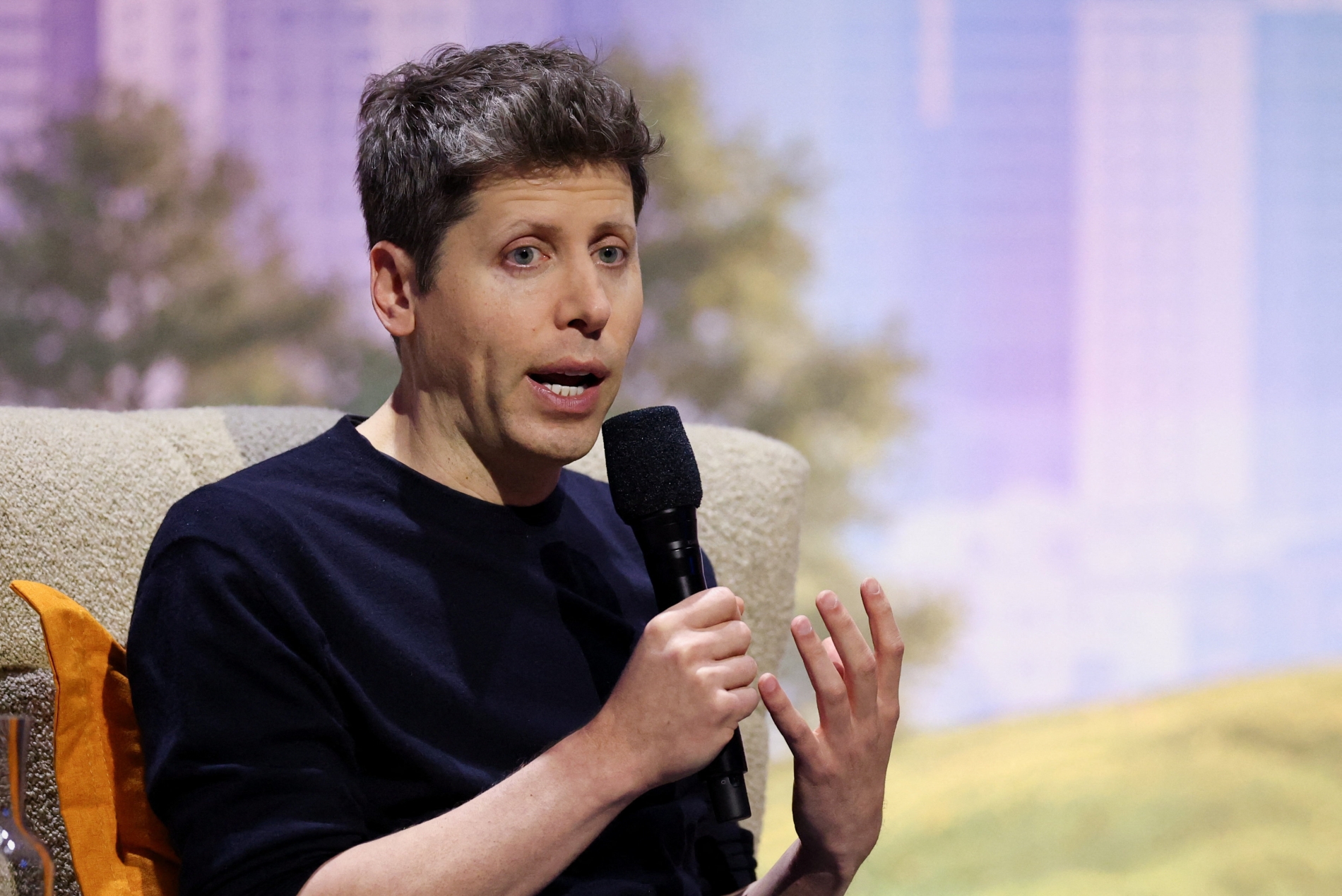
OpenAI CEO Sam Altman speaks at the Dreamforce 2026 summit in San Francisco, California, US, on 15 September 2026.

Humanity's response

Concern is therefore shared by scientists who laid the foundations of AI and those at the forefront of the commercial race to develop its most powerful models. They argue that our ability to understand, monitor, and secure these systems needs to keep pace with the speed at which they are advancing. Amodei, Altman, and Musk are competitors, so analysts wonder whether one company will take the first step.

If one slows down, the race does not necessarily slow with it, and Chinese firms are known to be less keen to pause or decelerate development. Amodei has therefore advocated for more checks and balances, including independent model evaluations, greater coordination on risks between companies, and international cooperation. He said Anthropic would give independent evaluators permanent access to its systems. Musk suggested a monthly call between the firms to share risks and learning.

The Chinese government has likened US-based 'calls to pause' the development of AI as a ruse from the Cold War, while US President Donald Trump, 80, whose priority is to maintain American tech supremacy over China, described the fears about AI as a "hoax" and criticised calls to have more guardrails around the technology, just as Jack Clark, a co-founder of Anthropic, told the BBC that a "kill switch" that can be checked by a third party may now be required.

Some liken the wave of warnings to the early days of the Covid-19 pandemic, when worst-case scenarios initially seemed exaggerated before the threat became real. Others think that catastrophic rhetoric could itself fuel panic and push governments towards sweeping decisions based on unproven risks. AI is not like a weapon of mass destruction (WMD), which may need specialist materials, facilities, infrastructure, supply chains, and time (such as to enrich uranium). By contrast, AI needs only software, computing power, and technical expertise, and unlike WMD, it has already proliferated.

Even if there is agreement on a slowdown, analysts wonder who would enforce it. If companies are reluctant to apply the brakes before their competitors and if governments reject a 'call to pause,' we may not even get to that. If humans are going to act, time is of the essence, says Clark. "AI is getting more powerful by the day," he said, speaking to the BBC.

"When you have a small number of companies who can build it, because it's still very expensive, the window to act is so narrow, a few years. We are in that window now, and the time to act is when you have a small number of players in industry; that's when you can get a policy regime in place that can prevent accidents and prevent the technology spiralling out of control."

font change