A bold road: Saudi Arabia bets on driverless trucks
Two tech companies are partnering to use AI to develop a nationwide autonomous transportation network, in an initiative that will be costly but could pay off long-term
Humain
A bold road: Saudi Arabia bets on driverless trucks
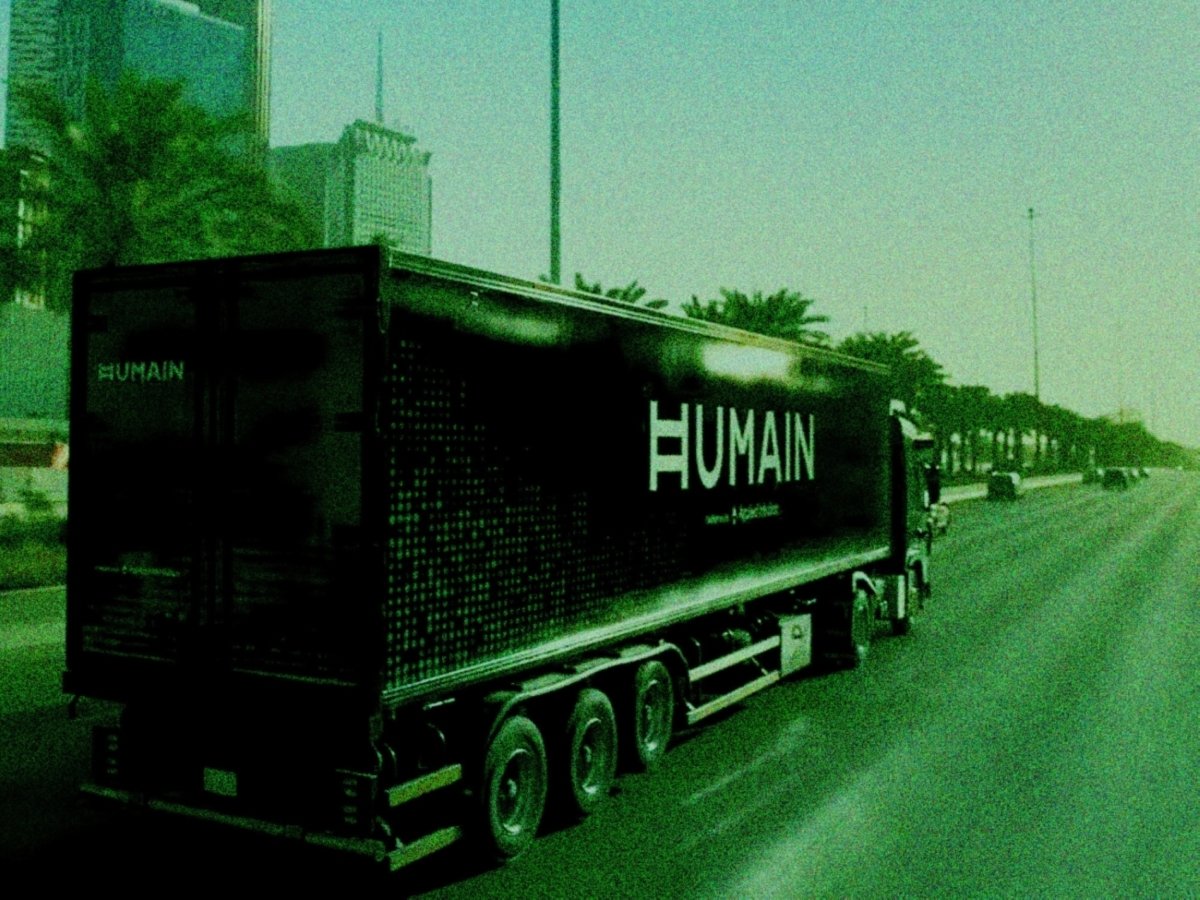
The biggest news to emerge from the LEAP 2026 technology conference in Riyadh at the end of August came from the Saudi AI company HUMAIN, which unveiled plans to introduce autonomous freight trucks across the Saudi road network by the end of 2030. The challenge is as vast as the country.
Saudi Arabia has one of the world’s largest road networks, almost half a million trucks, and more than 300,000 truck drivers (based on licences issued), so driverless trucks could lower costs, increase productivity, and reduce road accidents by eliminating human error. Yet the scale of the project, which is part of the country’s Vision 2030 programme, brings formidable obstacles.
HUMAIN, launched only last year, is working with the US-based Applied Intuition to deploy thousands of autonomous trucks along Saudi Arabia’s principal smart logistics corridors by 2030. According to the partnership statement, the project will begin with freight trucks before extending to autonomous taxis and other vehicles involved in ports, mining, manufacturing, agriculture, and construction.
High ambitions
Alongside introducing new technology into the transport sector, the project aims to create what the two companies describe as the “world’s largest autonomous trucking network”. It makes Saudi Arabia one of the first countries to progress from limited trials to large-scale commercial deployment nationwide using ‘physical AI,’ a system capable of seeing the road, interpreting its surroundings, making instant decisions, and controlling a vehicle weighing several tonnes.
Applied Intuition, which has opened an office in Riyadh, will provide the autonomous-driving system and the vehicle operating system, together with technologies for simulation, sensing, prediction, and control. HUMAIN will help take the project from trials into a large-scale operational network. The American firm is set to build a local team of engineers and specialists to operate the fleets and adapt the systems to Saudi conditions.
HUMAIN is working with the US-based Applied Intuition to deploy thousands of autonomous trucks along Saudi Arabia's principal smart logistics corridors by 2030
HUMAIN chief executive Tareq Amin said the objective was for the Gulf to be the world leader in the large-scale deployment of autonomous trucks, with thousands of vehicles operating around the clock to transform the speed, cost, and operating capacity of the logistics network. More than half a million trucks on Saudi roads are dedicated to goods transport, operated by around 18,000 licensed companies.
The HUMAIN-Applied Intuition autonomous trucks project is one of two linked ambitions under Vision 2030. The second is the broader target of equipping 25% of freight transport vehicles with autonomous-driving technologies. It could form the nucleus of a much larger expansion beyond 2030, with Saudi Arabia having around 16 million vehicles.
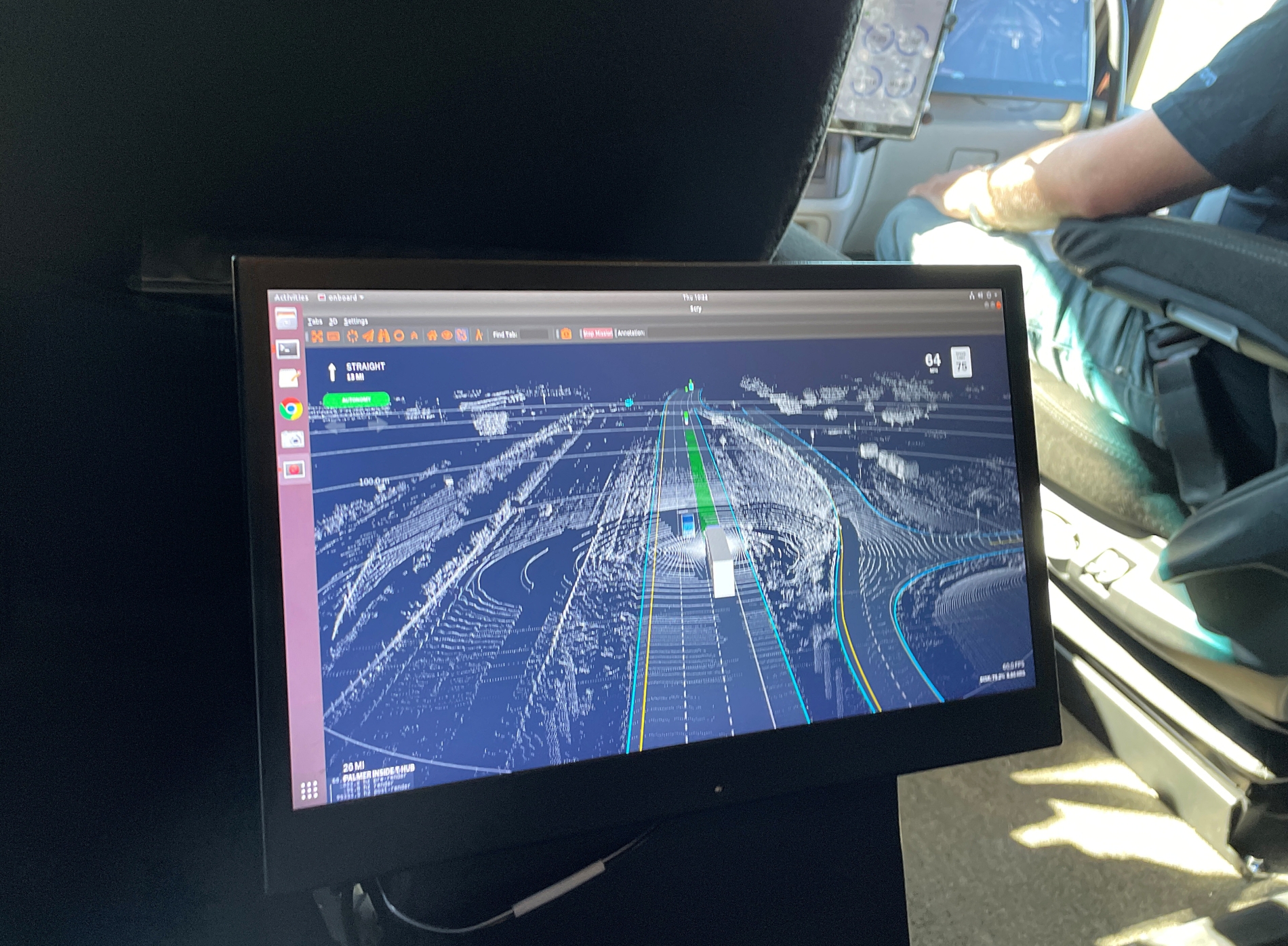
A Peterbilt 579 truck equipped with Aurora's autonomous driving system at the company's facility in Palmer, south of Dallas, Texas, on 23 September 2021.
World examples
Autonomous trucks remain relatively new to the global market, but commercial operations are already underway in the US, Canada, and major mining sites (although they remain confined to specific corridors and comparatively small fleets).
In the US, Aurora began regular commercial operations in May 2025 with driverless Class 8 heavy trucks running between Dallas and Houston, before expanding its network across the southern states. In February 2026, it completed 250,000 driverless miles and wants to operate more than 200 autonomous trucks by the end of 2026. It also tested a 1,600km route (between Fort Worth and Phoenix), more than a single driver can legally cover without a mandatory rest period.
Gatik has adopted a different model. Its medium-duty autonomous trucks carry goods along the 'middle mile' between warehouses and retail outlets, rather than undertaking long interstate journeys. The company has conducted commercial operations for firms including Walmart, PepsiCo, and Kroger in the US and Canada. Short, repetitive routes let it control more variables and avoid the most complex roads.
Kodiak, meanwhile, began in an environment that bears some resemblance to Saudi conditions: the oilfields of Texas's Permian Basin. By the end of June 2026, it had 35 trucks operating with no human at the wheel, working in harsh desert conditions to transport material used by the oil and gas industry. In three months, it racked up 40,000 hours of driverless operation, transporting 300,000 tonnes.
In Japan, Applied Intuition is working with Isuzu on a 450km route, but the Japanese trucks still operate with a safety driver as part of a programme intended to reach Level 4 autonomy (there are six levels of autonomous driving; Level 4 means that a vehicle can drive completely by itself but only within specific areas or conditions).
Inside mines and quarries, autonomous trucks have been a commercial reality for years at companies such as Rio Tinto, using vehicles manufactured by Komatsu and Caterpillar. Success inside a closed mine is easier to achieve than operation on an open public road because the environment is controlled and contains no family cars, pedestrians, or drivers behaving unpredictably.
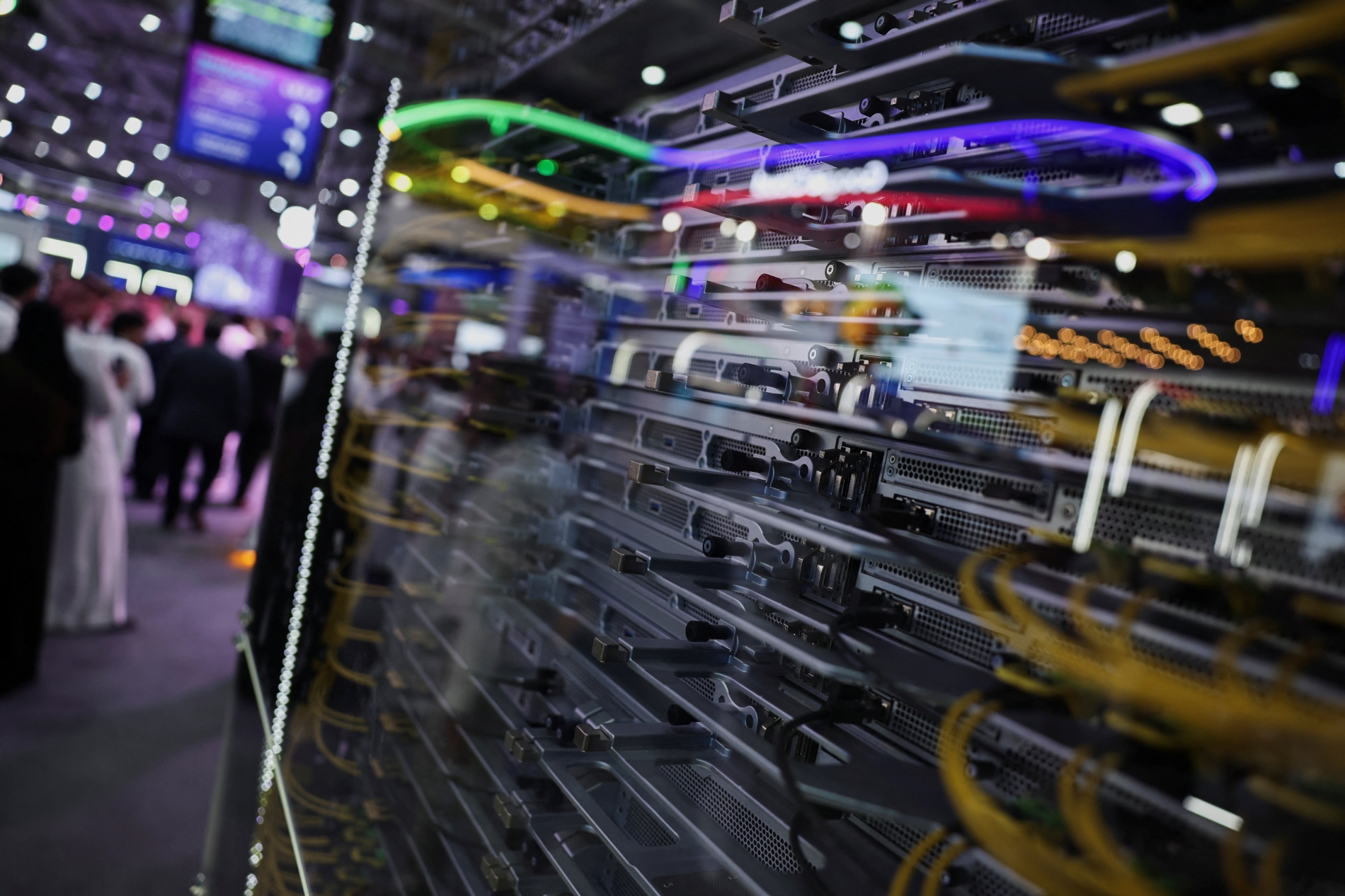
An AI-powered smart assistant displayed at the Humane booth during the opening ceremony of the "LEAP" technology event in Riyadh, Saudi Arabia, on 31 August 2026.
Cost vs benefits
If Saudi Arabia deploys thousands of driverless trucks on public roads by 2030, it will be the largest such operation elsewhere in the world, but it will be costly, too. Autonomous trucks are much more expensive than conventional ones. A new heavy tractor unit costs between $150,000 and $220,000, while autonomous-driving hardware, sensors, computers, and redundant safety systems can add a further $100,000 to $150,000, so a fully equipped autonomous truck could cost up to $350,000 before importation and adaptation costs.
There is a broader economic picture, however. Conventional trucks must stop due to legal limits on a driver's working hours (the need for rest and sleep), whereas autonomous vehicles pause only for fuel, maintenance, loading, and unloading. If a truck's daily utilisation goes from 8-10 hours up to 20 hours, it doubles productivity, with shorter delivery times and lower labour costs. Furthermore, the cost of autonomous-driving systems is also expected to fall as production expands. The second generation has already slashed hardware costs by up to half.
Saudi Arabia's trucking sector depends on hundreds of thousands of drivers, many of whom are foreign nationals. These workers will not disappear overnight. The first stage will focus on long-distance routes between major hubs, but human drivers will still be needed in cities, ports, warehouses, and any conditions that fall outside the system's defined operational domain.
Some think the introduction of driverless trucks will create jobs better suited to Saudi workers, such as monitoring vehicles from remote control centres, intervening remotely when needed, systems maintenance, digital mapping, accident analysis, cybersecurity, operating logistics terminals, and moving trailers within cities.
HUMAIN, a Saudi company specialising in artificial intelligence, on display at the opening ceremony of the "LEAP" technology event in Riyadh, Saudi Arabia, on 31 August 2026.
Lingering questions
Questions remain. The HUMAIN-Applied Intuition announcement did not disclose the value of the investment, the truck manufacturers, the number of vehicles, the first operating corridors, the annual deployment schedule, nor whether logistics firms will buy the trucks, pay for an 'electronic driver' service, or whether HUMAIN and its partners will establish an independent fleet offering transport services. Beyond that, regulators and the Saudi Transport Ministry need to develop a legal framework addressing questions of liability, including how to investigate a decision made by an algorithm.
Cybersecurity presents a risk. A truck connected to a data centre becomes part of a national digital network. A large-scale breach of that network could therefore disable an entire fleet or disrupt the movement of goods. Protecting software, communications, and control keys affects not just road safety but supply-chain security.
The Saudi project is unquestionably ambitious. It is also a race against time. Today, only a few dozen autonomous trucks operate along limited corridors in the US. Going from that to thousands of vehicles running on public roads across a country the size of Saudi Arabia in less than four years is an enormous leap. If it succeeds, however, Saudi Arabia will have built the world's first AI-driven national logistics network.