When Orientalism stuck its nose into the history of scent

Are ‘Oriental’ perfumes really linked to sensuality and ill repute, or are they a Western invention nourished by an unwarranted sense of superiority?

Lina Jaradat

When Orientalism stuck its nose into the history of scent

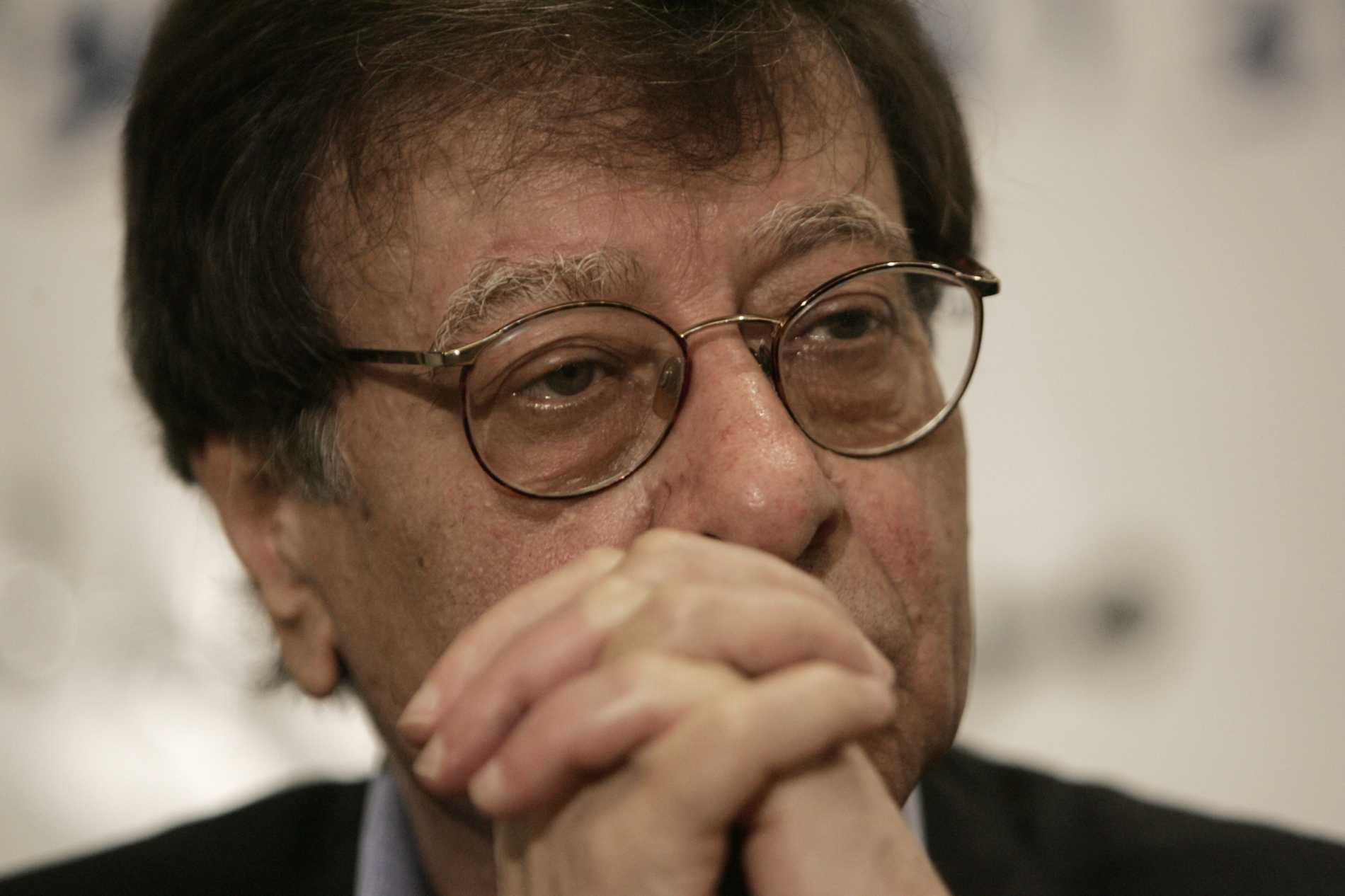
In a celebrated passage from In the Presence of Absence, the Palestinian poet Mahmoud Darwish summons cities through their scents, granting each an aromatic memory of its own. “Cities are smells: Acre smells of sea iodine and spices,” he wrote. “Haifa smells of pine and crumpled sheets. Moscow smells of vodka on snow. Cairo smells of mango and ginger. Beirut smells of sun, sea, smoke, and lemon. Paris smells of fresh bread, cheeses, and the derivatives of temptation. Damascus smells of jasmine and dried fruit. Tunis smells of night-blooming jasmine and salt. Rabat smells of henna, incense, and honey. And any city you cannot recognise by its smell is not a city whose memory can be relied upon.”

Across the Levant and the Maghreb, and in Egypt, Türkiye, and Iran, a city’s identity takes shape in the scents of its markets and alleyways before minarets and stone complete the picture. For the peoples of the East, there is nothing unfamiliar in such an idea.

The Orientalist imagination, however, did more than breathe in aromas steeped in history. It reduced them, reinterpreted them, and recast them, drawing a line between a sensual East shrouded in mystery and a West that mapped the geography of the senses and assigned meanings to its terms according to its own perspective. ‘The East’ and ‘Oriental’ gradually ceased to signify mere direction or place. They acquired the weight of a stigma, became shorthand for sensuality, and came to embody a European misunderstanding nourished by an unwarranted sense of superiority.

The West now appears to be recognising the troubling legacy of this classification and its colonial associations. Among the institutions to have taken a firm position is The Fragrance Foundation, a leading body in fragrance education and public awareness. Its president, Linda Levy, described the term ‘Oriental’ as “outdated and offensive”, adding that “alternative terminology should certainly be adopted to describe fragrances”.

In 2021, the designation ‘Oriental fragrance’ was replaced by ‘amber fragrance’, in an effort to prevent the word ‘Oriental’ from carrying the accumulated burden of Orientalist interpretations of scent. Those interpretations have a long history.
REUTERS/Jamal Saidi
Palestinian poet Mahmoud Darwish before a reading of his poems during a book exhibition in Beirut, 13 April, 2007

An obsession with sensuality

By the early 17th century, many of the principal scents later associated with the ‘Oriental’ fragrance family had already become embedded in the European imagination of the East and its aromas. Amber, musk, rose, and civet figured prominently, alongside broader literary and commercial references to spices.

Orientalist stereotypes began appearing in French cosmetic and perfume advertisements in the late 18th and early 19th centuries. The settings and emotions associated with these scents also evolved. Earlier descriptions had emphasised fragrant, refined, and sweet aromas, often invoking tales of perfumed Arabian shores or the incense mentioned in sacred texts.

From the late 17th century onwards, however, the association of the East with sensuality and seduction became increasingly explicit, laying the groundwork for the later advertising language of ‘Oriental’ perfumes. Words such as ‘enchanting’ entered the vocabulary, followed by ‘intoxicating’.

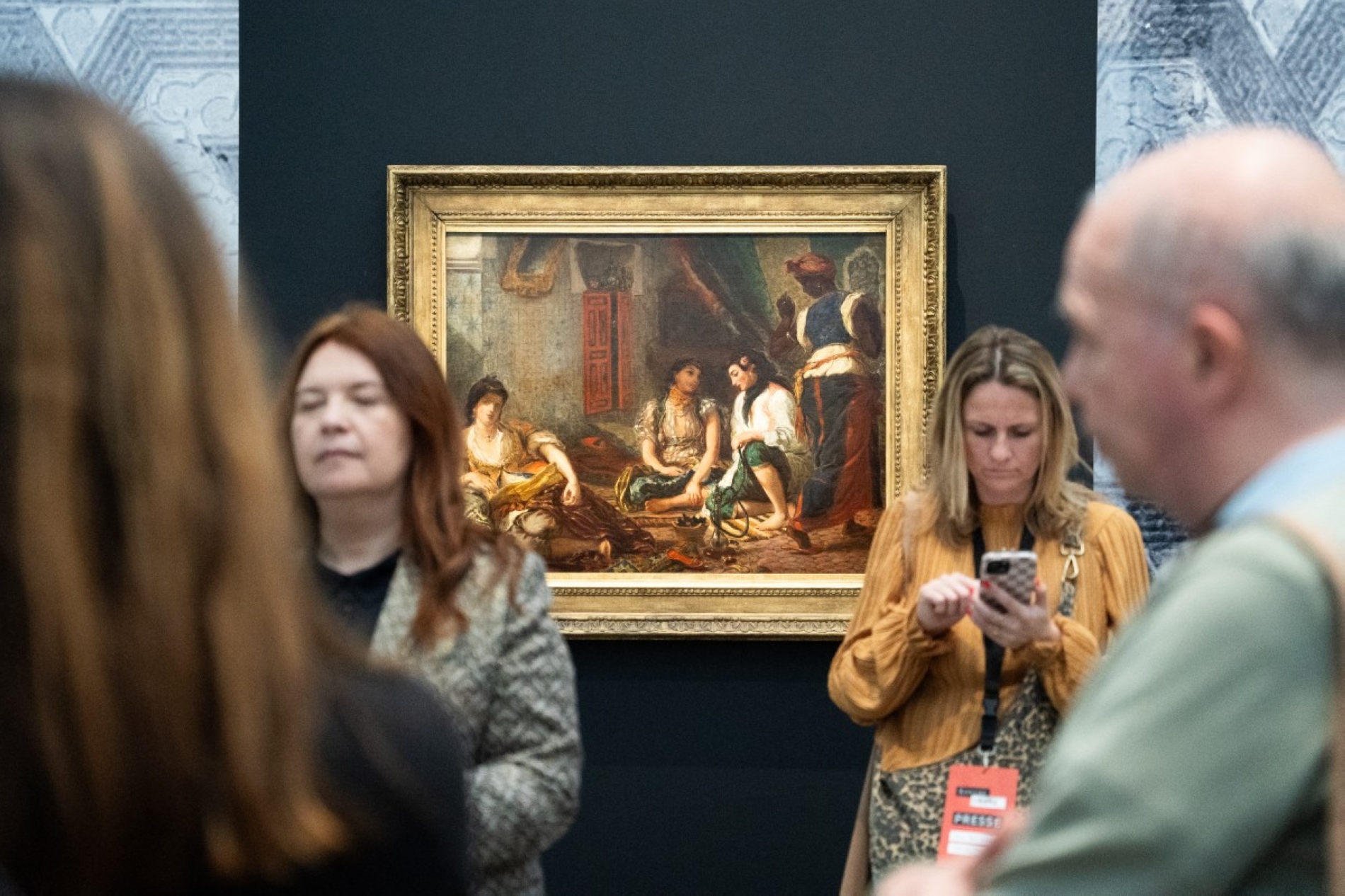
This development coincided with the prominence of the harem in literary and visual representations of the East. Eugène Delacroix’s painting ‘Women of Algiers in their Apartment’ remains one of the most familiar examples. The French poet Charles Baudelaire wrote of the painting that it “exhales the intoxicating smell of a house of ill repute”.

The question, then, is how the scents of the East came to serve as metaphors for sensuality, and why such meanings were imposed on the lives and customs of societies whose only offence was to inhabit this part of the world.
ELISE HOUBEN / AFP
People view Eugène Delacroix’s Women of Algiers in their Apartment at the Louvre-Lens Museum in Lens, France, 24 March, 2026

A geography of fragrance

Classical Arabic literature—above all One Thousand and One Nights and the Arabic maqamat, particularly those of al-Hariri—celebrated the olfactory life of the Arab city. Bathing and perfuming formed part of the rites marking passage from one stage of life to another: from grief to recovery, from childbirth to the end of confinement, from a girl’s life as an unmarried daughter in her family home to her departure as a bride. They were also integral to the rituals of entering a city, returning from a journey, and attending celebrations and weddings.

In Egypt, this ancient attentiveness to fragrance stretches back to the Pharaonic age. Queen Hatshepsut sent her ships to the Land of Punt in search of incense and perfumes. In Cairo, perfuming bodies and buildings with saffron became a long-standing ceremonial expression of welcome and festivity. The Fatimids were famed for their passion for rare fragrances, while Mamluk sultans and their horsemen were celebrated for their striking elegance and fondness for civet and musk. Under their rule, perfume became entwined with their identity and with Cairo’s own olfactory memory.

During the Ottoman period, however, Cairo came to smell closer to decay. Evidence of this appears in the writings of historians, police records, documents issued by health authorities, and even the Sharia courts, as well as in the accounts of foreign physicians and, inevitably, Orientalists.

In 2002, the Egyptian historian Khaled Fahmy chose to reconstruct 19th-century Cairo through smell rather than visual representations, presenting his findings in a study entitled An Olfactory Tale of Two Cities: Cairo in the Nineteenth Century. It is possible to understand the theories advanced by physicians and Orientalists who linked Cairo’s foul air and putrid odours to the epidemics then sweeping through the city. Far harder to comprehend is how the exquisite fragrances of Eastern cities themselves could become a stigma and a source of ridicule.
EGYPT-TOURISM/ REUTERS/Peter Andrews
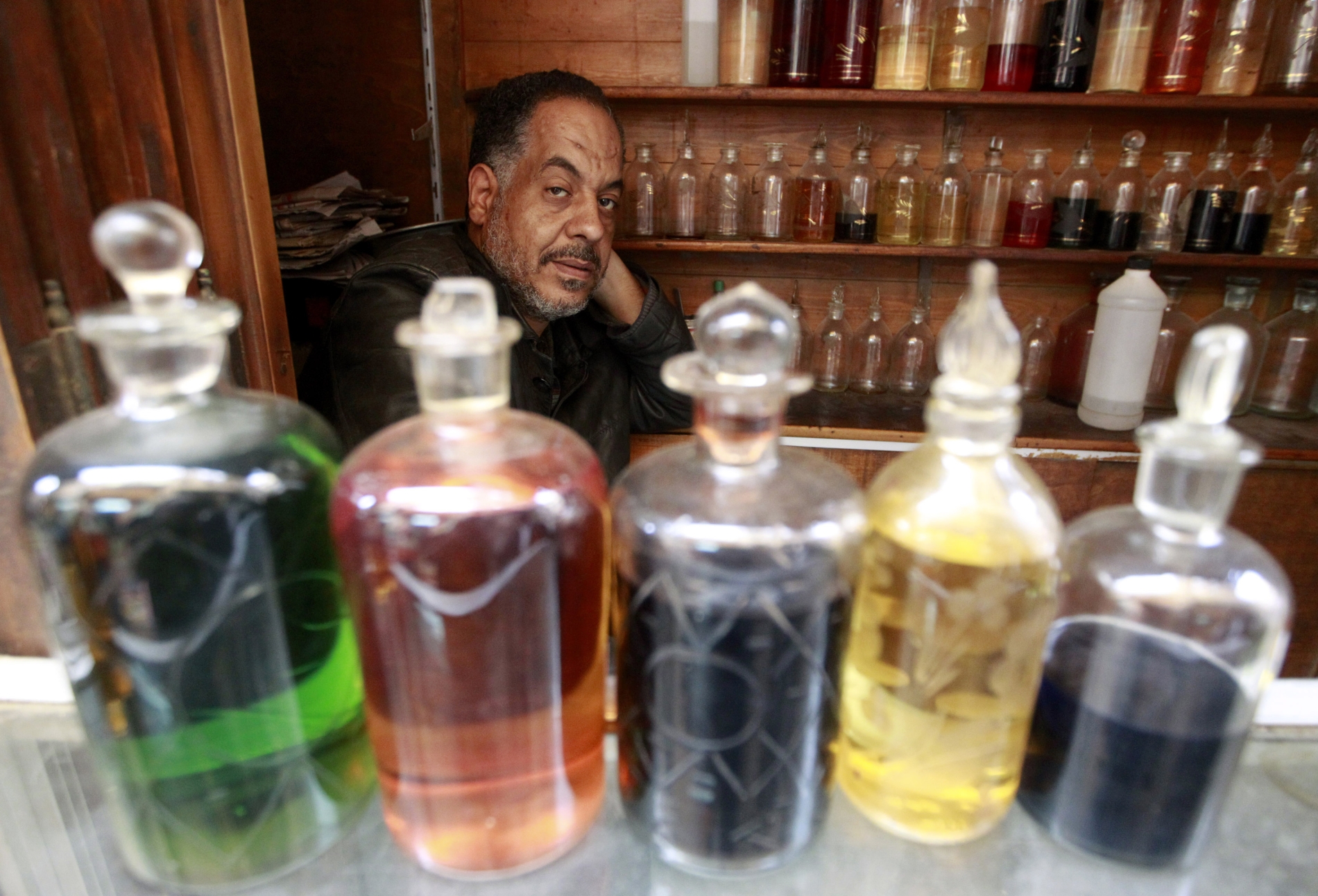
A store keeper sits in his perfume shop in the Khan al-Khalili area of Cairo, 28 February, 2011

In a research paper entitled Thinking Through Smell: Theories of Olfaction in Early Modern Ottoman and Islamic Culture, Christian Lange examines the formation of the fragrant geography of Islamic and Ottoman cities. He shows how perfume reached far beyond outward adornment, or even what might loosely be called an instinctive or spontaneous culture of scent, entering the domains of law, accounts of Sufi miracles, and philosophical reflection.

Istanbul emerges in this landscape as a vibrant centre of perfume culture and one of its principal commercial and regulatory hubs. The city contained hundreds of specialist shops organised into carefully structured guilds selling musk, ambergris, oud, incense, scented soap, and rosewater. These fragrances were woven into the rhythm of daily life and into public space itself. Vendors of scented waters moved through the markets, while the prevalence of itinerant perfume sellers reflected a society accustomed to scenting even the smallest details of everyday existence, from moustaches perfumed with ghaliya to food and coffee.

Even Türkiye's intellectual spaces received this sensory attention. In the 18th and 19th centuries, public libraries in Istanbul routinely perfumed their interiors with flowers, spices, and incense to create an atmosphere conducive to reading and contemplation. The culture of scent also entered law and social regulation. Court records preserve disputes involving smell, including prohibitions on the sale of adulterated musk in mosque courtyards and lawsuits brought by the sausage-makers' guild against out-of-season sales because of the unpleasant odours they produced and the disturbance they caused to public tranquillity.
Across this olfactory map, the cities of the Levant shared a rich culture of fragrance expressed in everyday life, literary rhetoric, legislation, and jurisprudence alike.

Across this olfactory map, the cities of the Levant shared a rich culture of fragrance expressed in everyday life, literary rhetoric, legislation, and jurisprudence alike. In the 16th-century memoirs of the Aleppine weaver Kamal al-Din, for example, we find records of his daily use of musk, saffron, and rosewater. Damascus, meanwhile, brought fragrance and language together in its literary salons and gatherings. The poetry of Manjik al-Dimashqi abounds in references to ambergris as a scent capable of stirring poetic inspiration, while the Damascene scholar al-Khazraji composed a comprehensive study of the ethics of perfume use based on the Prophetic tradition.

The sacredness of scent

The study then turns to Madinah, the principal centre of an olfactory sacredness associated with the Prophet Muhammad. Visitors and writers described the sweet fragrance of the soil that held his body as a foremost source of the scents of paradise. Traditional accounts also dwell on the natural fragrance of the Prophet's body, citing the words attributed to Ali ibn Abi Talib while washing him after his death: "May my father and mother be sacrificed for you. You were fragrant in life and fragrant in death." Sufi traditions likewise connect the rose with the Prophet's perspiration during the Night Journey and Ascension.

Jurists drew upon these fragrant attributes to encourage the use of perfume for Friday prayers and special occasions, emphasising pleasant scent as an inherent quality of the Prophet himself. Yemen, too, acquired its own olfactory associations, combining spiritual resonance with material sources of fragrance. These associations appear in the famous hadith narrated by Abu Huraira, in which the Prophet says: "The people of Yemen have come to you. They are the gentlest of hearts and the most tender of souls. Jurisprudence is Yemeni and wisdom is Yemeni, and I find the breath of your Lord, the Merciful, coming from the direction of Yemen." 

GIUSEPPE CACACE / AFP
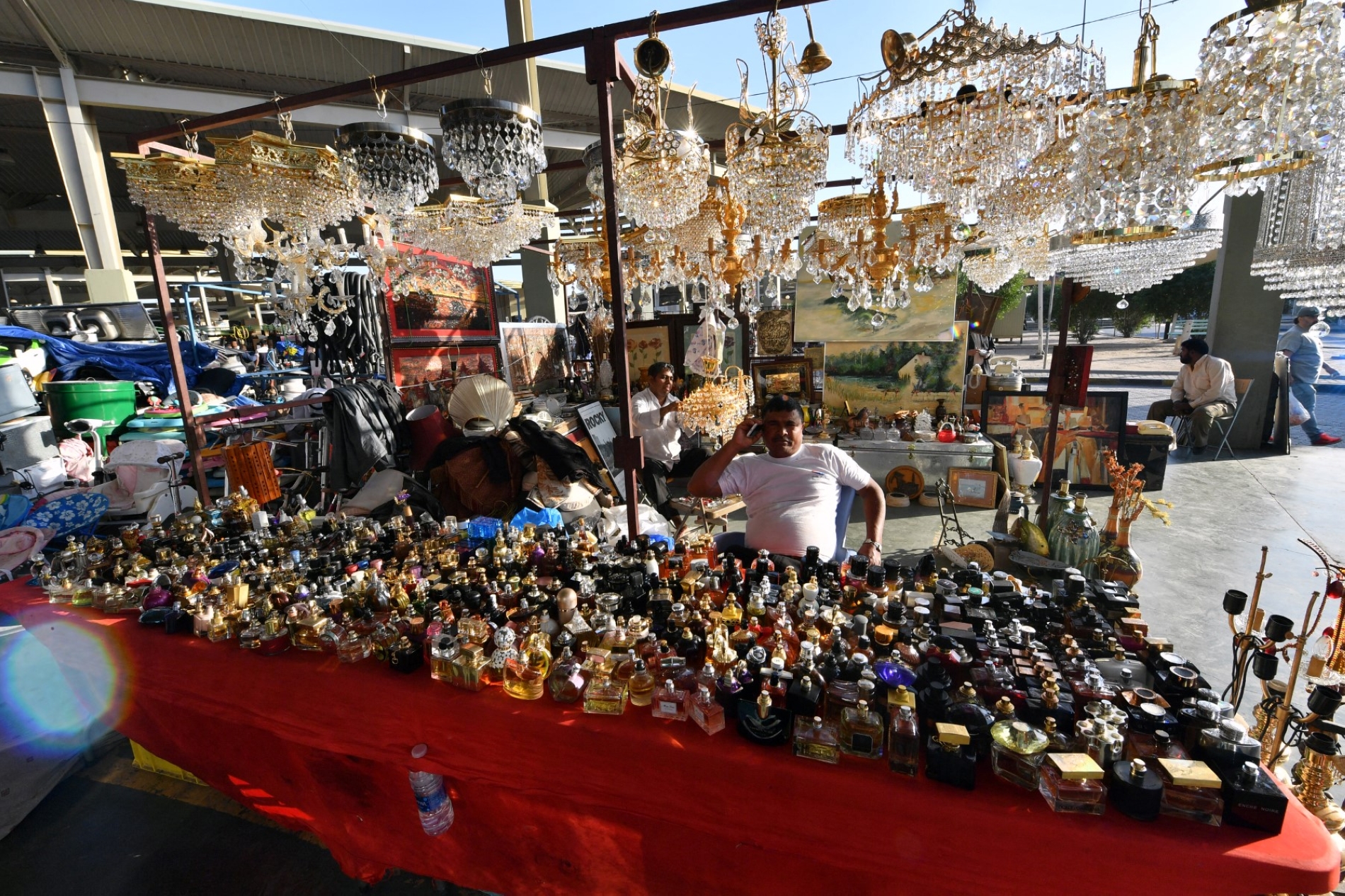
A picture taken on 4 January 2018 shows a perfume vendor sitting in a public market in Kuwait City.

Sufis such as Ibn Arabi and Ismail Hakki Bursevi did not confine this "breath" to metaphor. They understood it as a real fragrance capable of acting upon the soul and bringing tranquillity. This olfactory geography extends to the coastal city of al-Shihr, which served as a trading centre for the export of ambergris and frankincense. Poets went so far as to use its name as a metaphor for the beauty and elegance of a text.

Further east, scent encountered philosophy in the cities of Iran and Central Asia. Under the Safavids, Isfahan became an intellectual centre where scholars such as al-Majlisi discussed the physical properties of smell and the mechanisms of perception in their encyclopaedic works. In India, Kannauj emerged as a capital of traditional perfumery, alongside Rae Bareli, thought to be the 'Ray of India' mentioned by the Ottoman traveller Evliya Çelebi. It was associated with Atr al-Din, a saint whom Istanbul's guild of rosewater sellers adopted as a patron and emblem of their profession.

In Anatolia, Bursa embodied a more contemplative dimension in the interpretations of Bursevi, who regarded the sense of smell as a means through which the soul might connect with the 'Breath of the Merciful'.

These cities were more than isolated and distant points on a map, divided by language and geography. Fragrance bound them together, creating a living network of overlapping olfactory worlds. Scents travelled among them as commodities along land and sea routes, as metaphors through literary texts, and as major subjects of philosophical and juridical debate. Yet this ancient and refined culture would eventually be recast in the West as an instrument for demonising the East.

Western theorists turned the East's passion for perfume into a political instrument that reinforced the notion of 'Oriental despotism'.

The failure to understand perfume as culture

As successive waves of Orientalist artists and writers travelled through Arab lands and the wider East in the 17th and 18th centuries, encountering the region's rich culture of fragrance, European understandings of smell in the Islamic world became increasingly reductive. Compared with the philosophical, spiritual, and even psychological depth that Muslim thinkers had developed around the sense of smell, Orientalist discourse stripped fragrance of much of its complexity and confined it within a narrowly material frame.

Western theorists turned the East's passion for perfume into a political instrument that reinforced the notion of 'Oriental despotism', portraying Eastern societies as driven by obscenity and subservience to bodily pleasure at the expense of reason and logic. This reductionist tendency extended even to the Prophet Muhammad. His love of perfume became a pretext for disparagement and suspicion, while his appreciation of pleasant scents was interpreted as evidence of sensual impulse, with little regard for the spiritual, medicinal, and symbolic dimensions that Muslim scholars had explored and explained over the centuries.

This 'olfactory Orientalism' gradually expanded into a fixed repertoire of images linking the fragrances of the East with mystery and sensuality. More striking was the way this tendency became entangled with Europe's own religious conflicts. In its polemics against Catholicism, Protestantism rejected incense and strong fragrances as signs of irrational 'Eastern' ritual. Orientalist thought thus failed to grasp the place of scent in Islam as an intermediate bridge between body and spirit. Fragrance was reduced instead to a material commodity, used to manufacture stereotypes and fuel polemical disputes.

REUTERS/Jamal Saidi
Palestinian poet Mahmoud Darwish before a reading of his poems during a book exhibition in Beirut, 13 April, 2007

In his best-known book, Orientalism, the Palestinian academic and literary critic Edward Said identifies the central problem within the very concept of Orientalism. It is an ambiguous construction that brings together two distinct elements: knowledge derived from the study of Eastern phenomena, cities and societies, and the imaginary East fashioned by the West over centuries. The fusion of scholarship and fantasy produced distorted, and at times offensive, ideas about the East. Yet such ideas proved attractive, convenient, and often profitable to the West, which used them to justify claims of superiority and the exercise of power.

Said also shows how the West needed to construct this Eastern 'other' in order to define itself. In the European imagination, the East became a contrasting mirror, a cultural rival through which the West could present itself as the embodiment of rationality and the future, while depicting the East as an enchanting world suspended in the past. In Orientalism, Said argues that Europe fashioned the East as an opposite and counterpart through which it could affirm its own intellectual superiority.

The East thus became integral to Europe's understanding of its own civilisation. Despite the upheavals and transformations of history, its image in the Western imagination remained remarkably fixed. Much of what was written about it merely recycled older narratives and inherited tales. This imposed immobility confined Eastern peoples within a single mould and assigned them characteristics that at times reflected a racial hierarchy, placing them in an inferior position. This helps explain the contemporary unease surrounding the word 'Oriental' in Europe, particularly in academic circles that recognise how often the East, as an idea, was fashioned less to describe Eastern societies on their own terms than to serve the imagination and needs of the West.

A glance at the history of the words 'East' and 'Oriental', and at the meanings they acquired in the West, reveals a striking paradox. Most people in the East were scarcely aware that the expression 'Oriental perfume' carried such a burden of fantasies and metaphors in the Western imagination, or that it had accumulated there a sense of guilt, almost a stigma from which some now feel compelled to distance themselves.

For us, the term has been, and largely remains, a straightforward geographical and cultural description: a reference to our lands, our tastes, and our place in the world, without the colonial projections or accumulated historical connotations attached to it elsewhere.

This 'olfactory Orientalism' gradually expanded into a fixed repertoire of images linking the fragrances of the East with mystery and sensuality.

Here the West's uneasy relationship with its own terminology and inherited interpretations becomes clear. It was the West that constructed the Orientalist mythology of perfume and commercialised it for centuries. Today, it seeks to abandon the term and revise its fragrance vocabulary in response to the legacy of those earlier interpretations.

This raises a more fundamental question: should we in the East once again submit to a Western perspective and adopt its revised classifications, replacing 'Oriental' fragrances with 'amber' fragrances simply because the West is attempting to correct the legacy of its own misconceptions?

Should we, by extension, abandon expressions such as 'Oriental perfume' and 'Arab perfume' for fragrances rooted in our own roses, incense, and cultural traditions? Or has the time come to reclaim our own understanding of perfume and scent, free from Western guilt and from the dictates of the fashion market?

font change