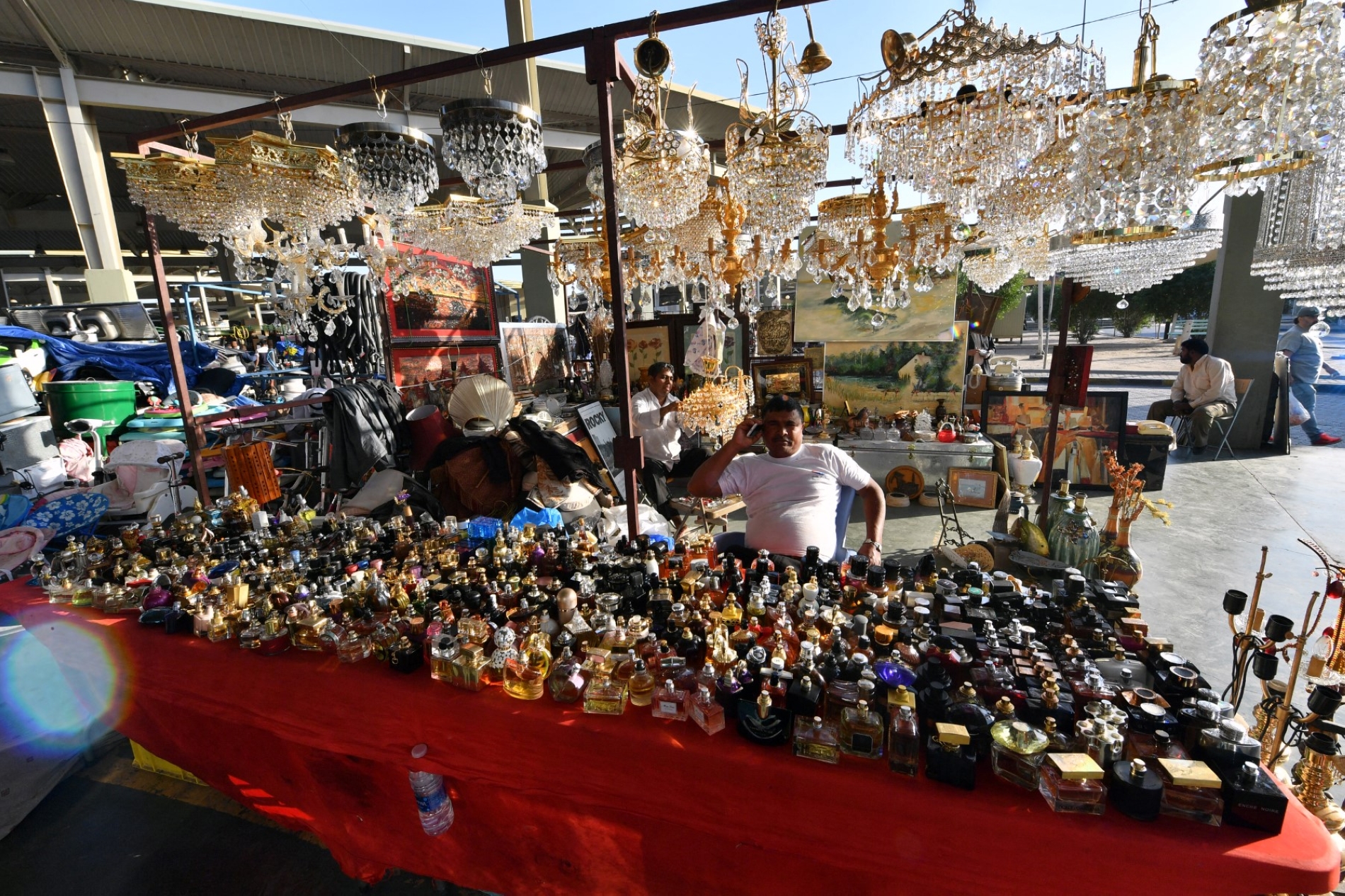

In a celebrated passage from In the Presence of Absence, the Palestinian poet Mahmoud Darwish summons cities through their scents, granting each an aromatic memory of its own. “Cities are smells: Acre smells of sea iodine and spices,” he wrote. “Haifa smells of pine and crumpled sheets. Moscow smells of vodka on snow. Cairo smells of mango and ginger. Beirut smells of sun, sea, smoke, and lemon. Paris smells of fresh bread, cheeses, and the derivatives of temptation. Damascus smells of jasmine and dried fruit. Tunis smells of night-blooming jasmine and salt. Rabat smells of henna, incense, and honey. And any city you cannot recognise by its smell is not a city whose memory can be relied upon.”
Across the Levant and the Maghreb, and in Egypt, Türkiye, and Iran, a city’s identity takes shape in the scents of its markets and alleyways before minarets and stone complete the picture. For the peoples of the East, there is nothing unfamiliar in such an idea.
The Orientalist imagination, however, did more than breathe in aromas steeped in history. It reduced them, reinterpreted them, and recast them, drawing a line between a sensual East shrouded in mystery and a West that mapped the geography of the senses and assigned meanings to its terms according to its own perspective. ‘The East’ and ‘Oriental’ gradually ceased to signify mere direction or place. They acquired the weight of a stigma, became shorthand for sensuality, and came to embody a European misunderstanding nourished by an unwarranted sense of superiority.
The West now appears to be recognising the troubling legacy of this classification and its colonial associations. Among the institutions to have taken a firm position is The Fragrance Foundation, a leading body in fragrance education and public awareness. Its president, Linda Levy, described the term ‘Oriental’ as “outdated and offensive”, adding that “alternative terminology should certainly be adopted to describe fragrances”.
In 2021, the designation ‘Oriental fragrance’ was replaced by ‘amber fragrance’, in an effort to prevent the word ‘Oriental’ from carrying the accumulated burden of Orientalist interpretations of scent. Those interpretations have a long history.

An obsession with sensuality
By the early 17th century, many of the principal scents later associated with the ‘Oriental’ fragrance family had already become embedded in the European imagination of the East and its aromas. Amber, musk, rose, and civet figured prominently, alongside broader literary and commercial references to spices.
Orientalist stereotypes began appearing in French cosmetic and perfume advertisements in the late 18th and early 19th centuries. The settings and emotions associated with these scents also evolved. Earlier descriptions had emphasised fragrant, refined, and sweet aromas, often invoking tales of perfumed Arabian shores or the incense mentioned in sacred texts.
From the late 17th century onwards, however, the association of the East with sensuality and seduction became increasingly explicit, laying the groundwork for the later advertising language of ‘Oriental’ perfumes. Words such as ‘enchanting’ entered the vocabulary, followed by ‘intoxicating’.
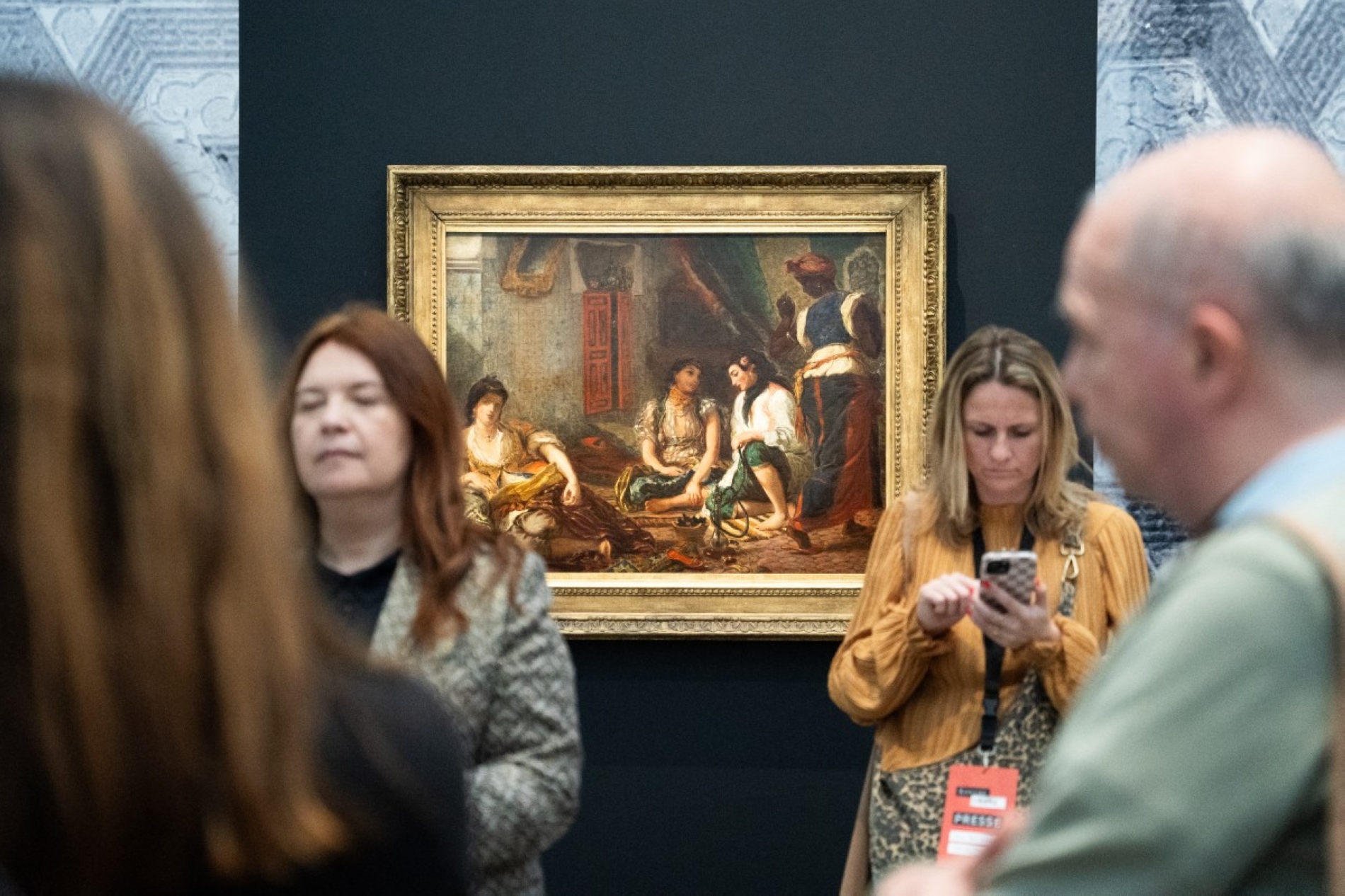
This development coincided with the prominence of the harem in literary and visual representations of the East. Eugène Delacroix’s painting ‘Women of Algiers in their Apartment’ remains one of the most familiar examples. The French poet Charles Baudelaire wrote of the painting that it “exhales the intoxicating smell of a house of ill repute”.
The question, then, is how the scents of the East came to serve as metaphors for sensuality, and why such meanings were imposed on the lives and customs of societies whose only offence was to inhabit this part of the world.
A geography of fragrance
Classical Arabic literature—above all One Thousand and One Nights and the Arabic maqamat, particularly those of al-Hariri—celebrated the olfactory life of the Arab city. Bathing and perfuming formed part of the rites marking passage from one stage of life to another: from grief to recovery, from childbirth to the end of confinement, from a girl’s life as an unmarried daughter in her family home to her departure as a bride. They were also integral to the rituals of entering a city, returning from a journey, and attending celebrations and weddings.
In Egypt, this ancient attentiveness to fragrance stretches back to the Pharaonic age. Queen Hatshepsut sent her ships to the Land of Punt in search of incense and perfumes. In Cairo, perfuming bodies and buildings with saffron became a long-standing ceremonial expression of welcome and festivity. The Fatimids were famed for their passion for rare fragrances, while Mamluk sultans and their horsemen were celebrated for their striking elegance and fondness for civet and musk. Under their rule, perfume became entwined with their identity and with Cairo’s own olfactory memory.
During the Ottoman period, however, Cairo came to smell closer to decay. Evidence of this appears in the writings of historians, police records, documents issued by health authorities, and even the Sharia courts, as well as in the accounts of foreign physicians and, inevitably, Orientalists.
In 2002, the Egyptian historian Khaled Fahmy chose to reconstruct 19th-century Cairo through smell rather than visual representations, presenting his findings in a study entitled An Olfactory Tale of Two Cities: Cairo in the Nineteenth Century. It is possible to understand the theories advanced by physicians and Orientalists who linked Cairo’s foul air and putrid odours to the epidemics then sweeping through the city. Far harder to comprehend is how the exquisite fragrances of Eastern cities themselves could become a stigma and a source of ridicule.
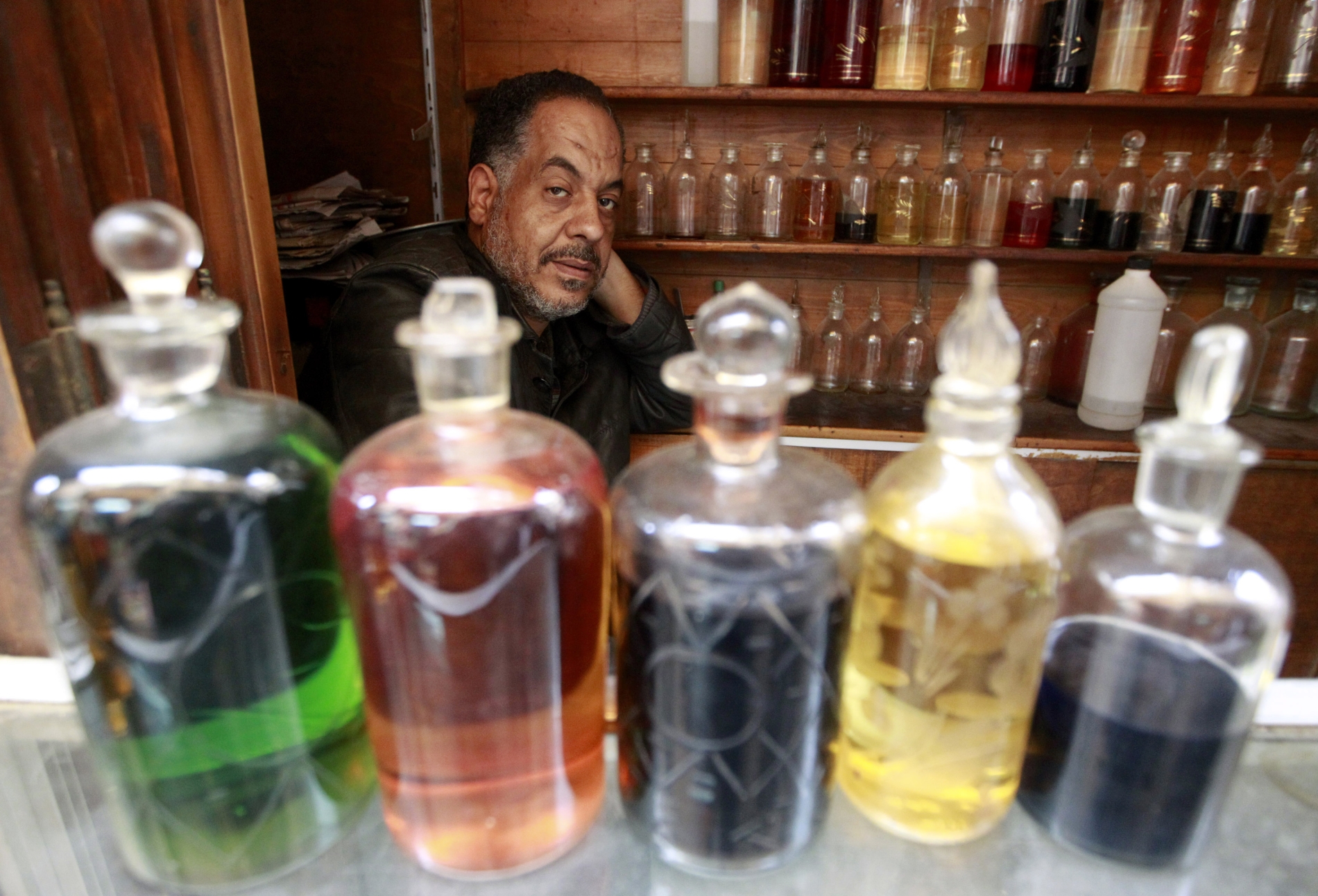
In a research paper entitled Thinking Through Smell: Theories of Olfaction in Early Modern Ottoman and Islamic Culture, Christian Lange examines the formation of the fragrant geography of Islamic and Ottoman cities. He shows how perfume reached far beyond outward adornment, or even what might loosely be called an instinctive or spontaneous culture of scent, entering the domains of law, accounts of Sufi miracles, and philosophical reflection.
Istanbul emerges in this landscape as a vibrant centre of perfume culture and one of its principal commercial and regulatory hubs. The city contained hundreds of specialist shops organised into carefully structured guilds selling musk, ambergris, oud, incense, scented soap, and rosewater. These fragrances were woven into the rhythm of daily life and into public space itself. Vendors of scented waters moved through the markets, while the prevalence of itinerant perfume sellers reflected a society accustomed to scenting even the smallest details of everyday existence, from moustaches perfumed with ghaliya to food and coffee.
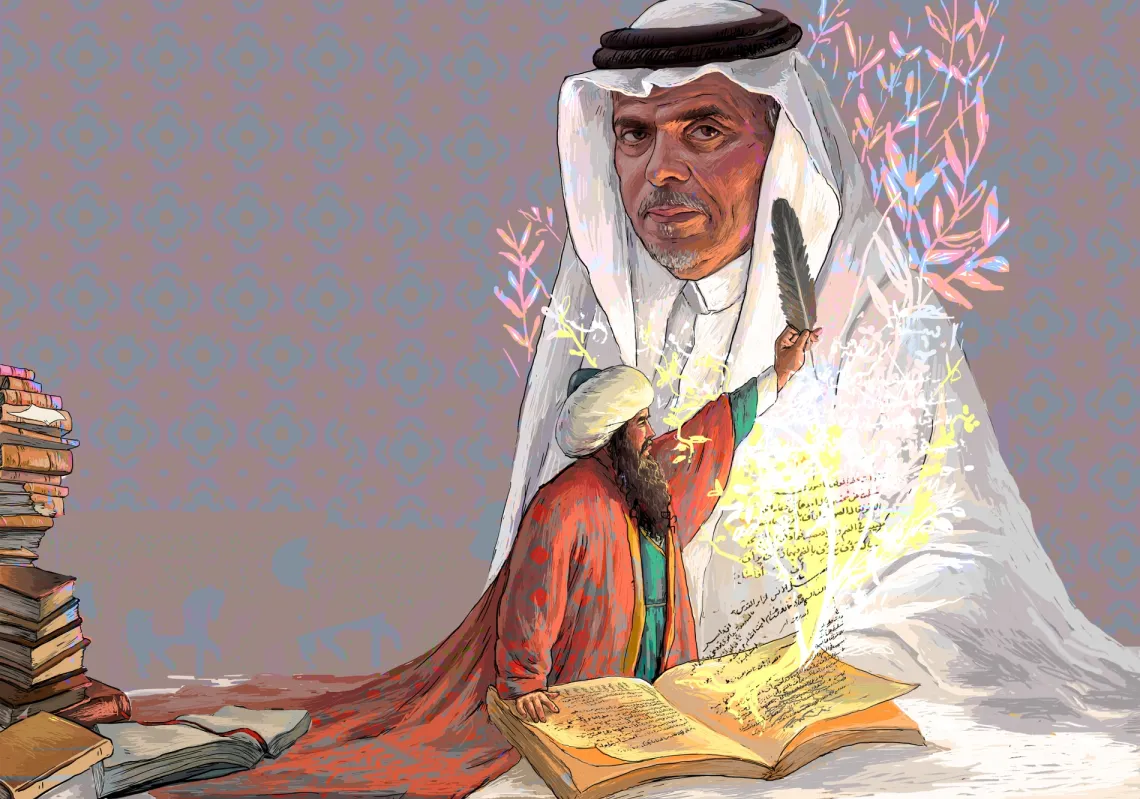
Even Türkiye's intellectual spaces received this sensory attention. In the 18th and 19th centuries, public libraries in Istanbul routinely perfumed their interiors with flowers, spices, and incense to create an atmosphere conducive to reading and contemplation. The culture of scent also entered law and social regulation. Court records preserve disputes involving smell, including prohibitions on the sale of adulterated musk in mosque courtyards and lawsuits brought by the sausage-makers' guild against out-of-season sales because of the unpleasant odours they produced and the disturbance they caused to public tranquillity.