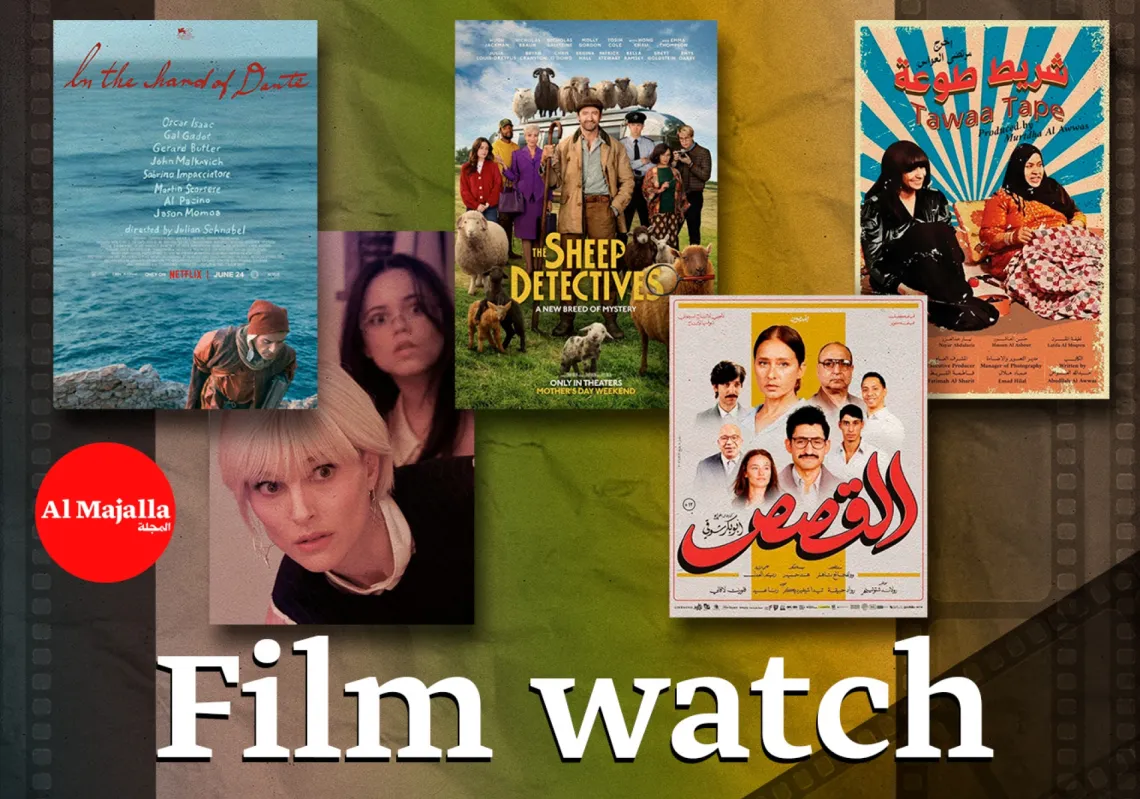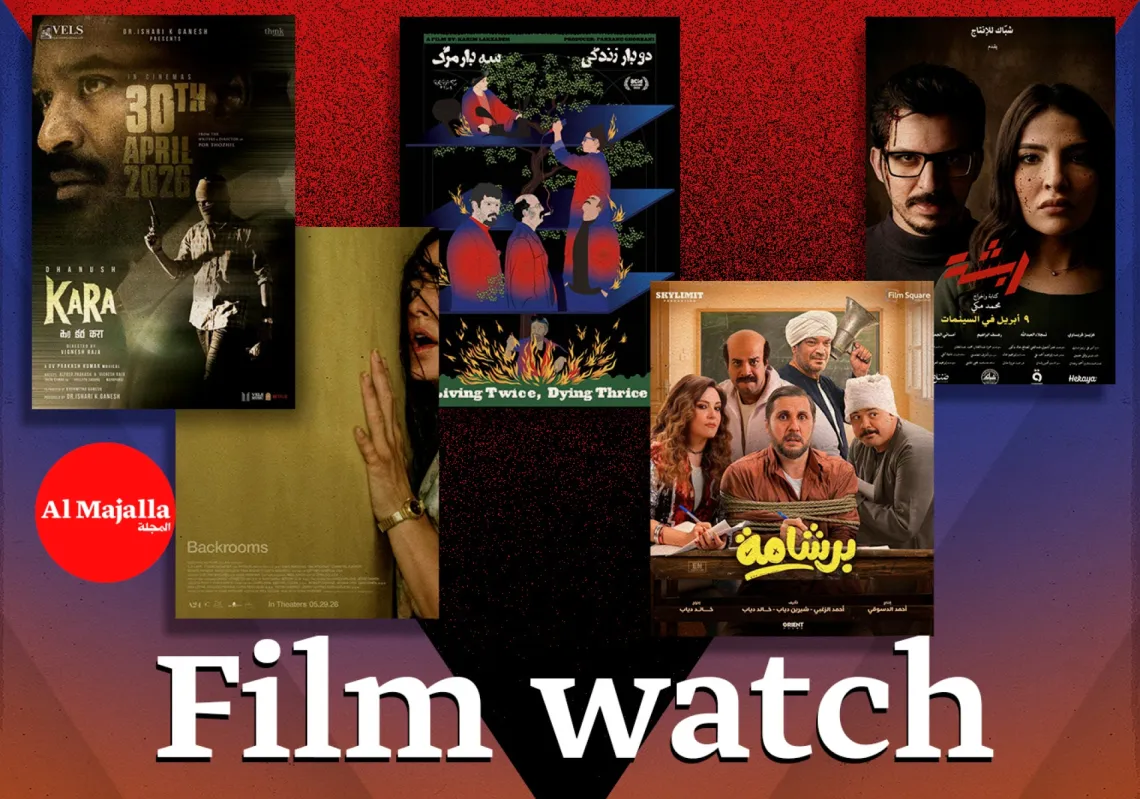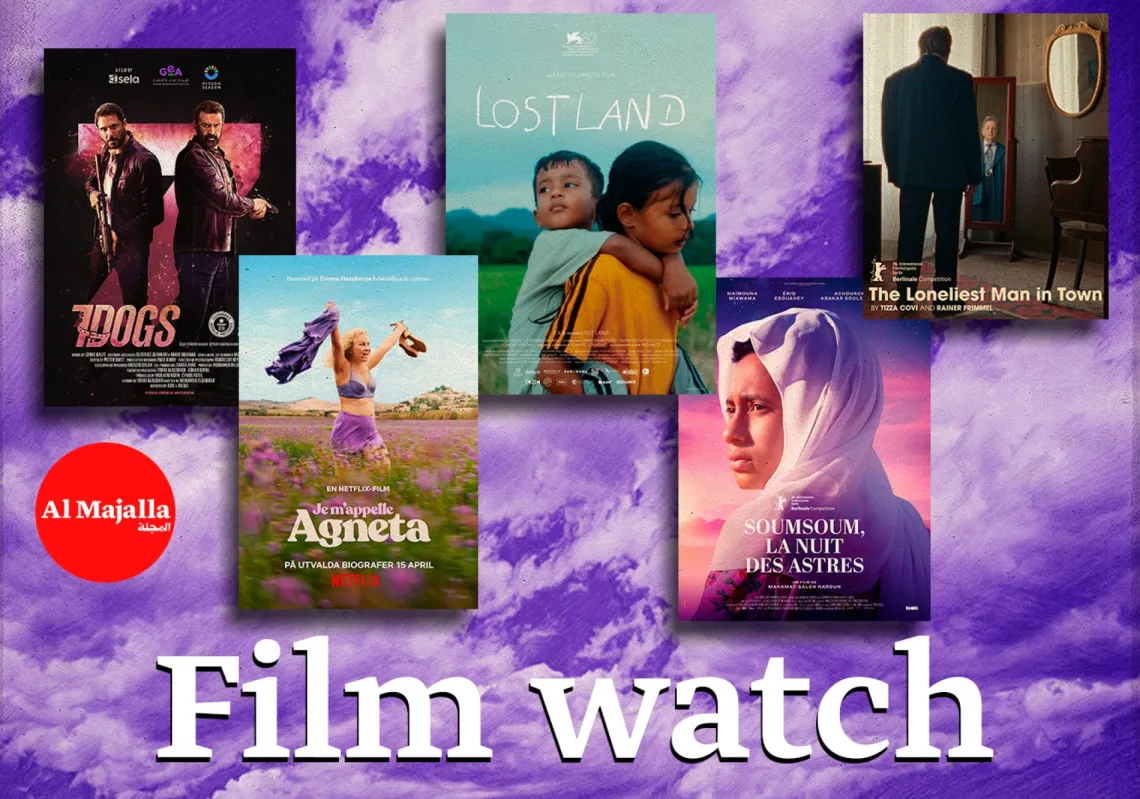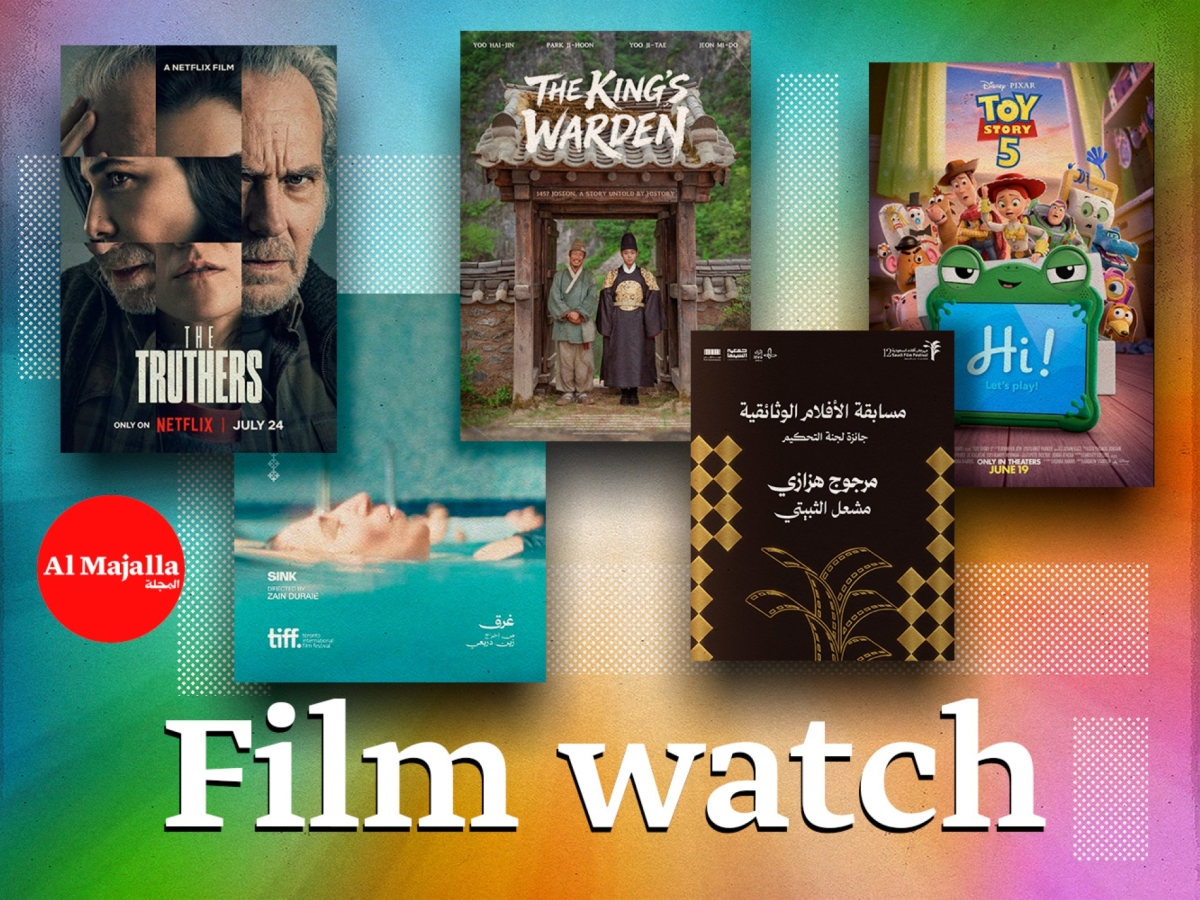

Every month, Al Majalla grabs the popcorn and settles back to watch a selection of the latest films (and occasionally a golden oldie) before offering an assessment. In this, we cover new releases in Arab cinema and beyond.
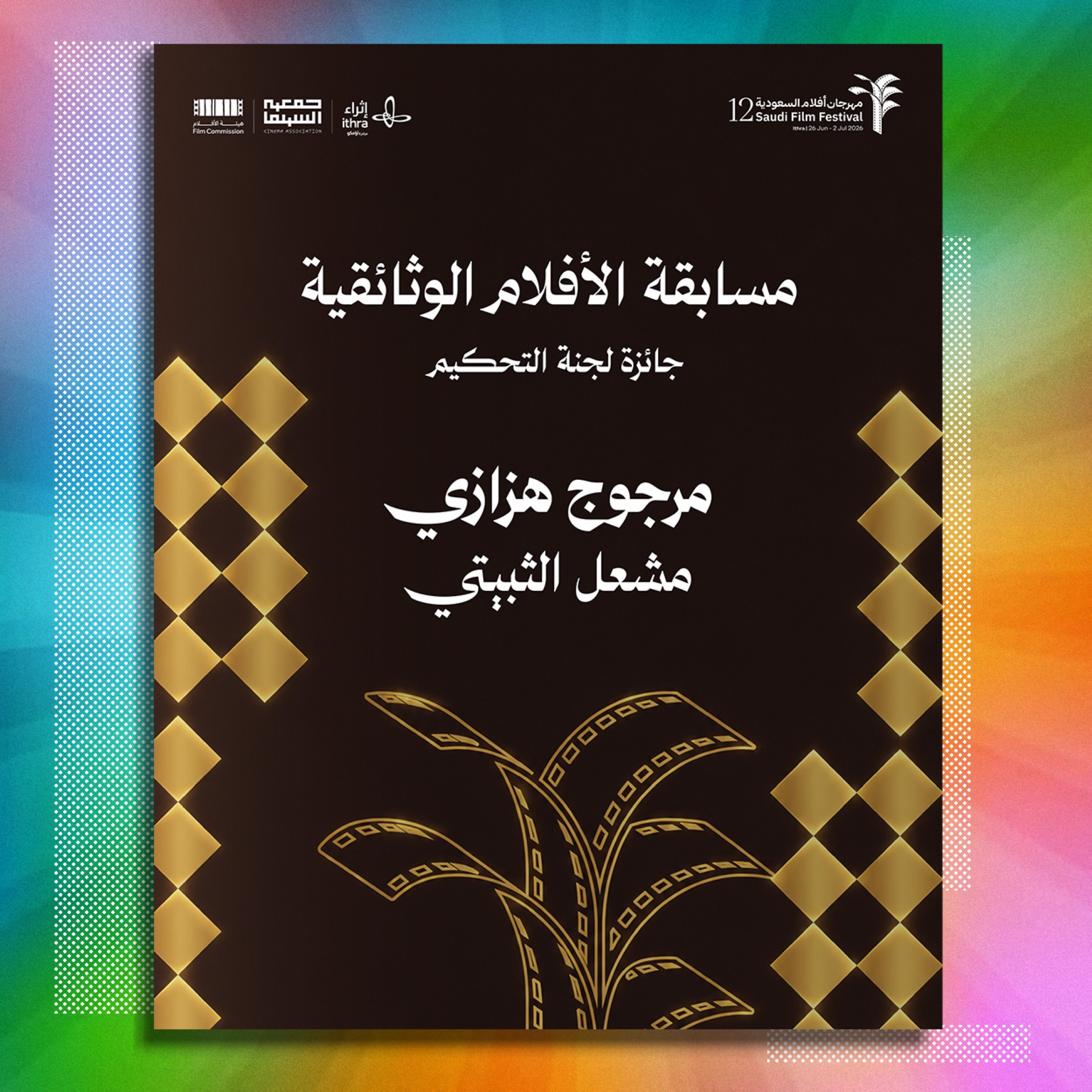
Marjouj
Writer and director: Mishal Al Thubaiti
Country of production: Saudi Arabia
Toward the end of the first decade of the new millennium, a young Saudi man began attracting widespread attention and soon became a national talking point. His fame quickly spread across the region as his website-hacking exploits made him one of the Arab world’s best-known hackers. He went by the alias ‘Marjouj Hazazi’.
This is the figure at the heart of Marjouj, the documentary that bears his name. Directed by Mishal Al Thubaiti, who also edited the film, it won the Jury Prize in the documentary competition at the most recent edition of the Saudi Film Festival.
The story of Marjouj, whose real name is Turki Al Sufyani, began when he discovered an aptitude for computing that enabled him to hack into the digital systems of government bodies and universities, exposing vulnerabilities that gave him access to their data. One of his most notable exploits involved Taif University, whose systems he said allowed him to access student and staff data and the university’s internal email.
The episode led to a series of widely followed exchanges between Al Sufyani and the education minister on the ministry’s social media accounts. Al Sufyani maintained that his hacking served the public interest, arguing that Saudi institutions should make better use of the country’s young tech talent rather than leave it outside the system. As Marjouj wrote: “The hacking is not intended as sabotage. Its purpose is to deliver a message to those concerned.”
In telling his story, Marjouj blends factual narration with dramatised reconstruction, while examining competing legal and ethical views of Al Sufyani’s hacking. Some argue that noble intentions mean the act should not be regarded as criminal, while the law treats unauthorised access as an offence, no matter how worthy the motive. The film also delves into the more private aspects of Al Sufyani’s life, tracing the period before his fame, his years in the public eye, and his eventual withdrawal from it.
Seen from another angle, the story of Marjouj Hazazi evokes a modern-day Robin Hood, the legendary outlaw who stole from the rich to give to the poor. The parallel concerns the wider forces at play rather than the individuals themselves. On one side lies the enormous potential of the digital world, with its vast resources and seemingly limitless possibilities. On the other is a generation of young people only beginning to discover this new realm of knowledge and technology, and eager to find their place in it.
Hazazi’s experience can therefore be read as an attempt to challenge the boundaries between these two worlds and to draw attention to the gulf between those who possess the tools of the digital age and those who remain largely passive recipients of it.
Toy Story 5
Directors: Andrew Stanton, McKenna Harris
Screenplay: McKenna Harris, with the director
Country of production: United States
With a wry cinematic irony, the animated film Toy Story 5 holds up a critical mirror to our relationship with screens. As audiences sit absorbed by ever more sophisticated displays, the film offers a philosophical warning about children’s growing dependence on smart screens and their uncanny ability to consume both awareness and imagination.
Yet the film avoids becoming a straightforward moral lecture about the age of screens. Instead, it draws on a familiar narrative opposition in which traditional toys embody genuine human connection, while digital interfaces threaten to replace it with a virtual relationship shaped by isolation.
The irony crystallises around a device Bonnie receives, called ‘Lilypad’. Designed to bridge a social gap between her and her peers, it also opens the door to a virtual relationship that cannot offer what friendship rooted in the real world can. By the end, the film suggests that technology itself can become a means of reaching others without replacing the experience of meeting them in person.
For more than three decades, the Toy Story series has explored the changing psychology of play, tracing a shift from creative interaction to increasingly passive forms of consumption as toys become more sophisticated. This tension was established in the first film through the striking contrast between Woody, whose appeal depends on the child’s own imagination, and Buzz, who arrives equipped with a ready-made world of technology, functions, and heroic fantasies that requires less imagination from the child.
The fifth instalment turns more directly to digital wellbeing. Its dramatic conflict moves beyond the familiar adventure of rescuing a lost toy into an existential struggle against passive consumption of technology, among children and adults alike. The film’s defence of traditional toys ultimately becomes a defence of imagination itself, and of the ability to form genuine bonds in the physical world, where digital technology serves as a purposeful tool rather than a substitute for human connection.
Los Creyentes
Director: Roger Gual
Screenplay: Darío Madrona, Carlos Montero
Country of production: Spain
Los Creyentes, recently released on Netflix as The Truthers, begins with Ruth (Stephanie Magnin) returning to the family home after her mother dies in mysterious circumstances. There she finds her retired father, Martín (José Coronado), an abrasive, unsettling figure consumed by an obsession with conspiracy theories.
As suspicion deepens, trust between father and daughter gradually erodes, until Ruth begins to wonder whether Martín himself may have been involved in her mother’s death. The search for the truth becomes entwined with her attempt to understand her father and determine whether his convictions are rooted in fact.
The plot is relatively straightforward, despite combining elements of crime drama, thriller, and psychological suspense. The more she tries to connect the threads, the more the viewer begins to wonder whether she too has been drawn into the logic of conspiracy and is slipping into paranoia herself.
The film reunites writers Darío Madrona and Carlos Montero following the success of their acclaimed series Elite. Here, they construct a tightly controlled screenplay around the human fascination with conspiracy theories and the distortion of collective consciousness in today’s digital environment.
Director Roger Gual builds much of the film around the power of ‘alternative truth’, giving the concept a dark and unsettling treatment. The emphasis falls on conspiratorial thinking itself, an increasingly prominent feature of contemporary life in an era when algorithms can manipulate what we see and shape our perceptions.
The film reaches beyond conventional suspense to pose a more fundamental question: are we genuinely searching for certainty, or merely chasing seductive falsehoods that prey upon our fears? In this respect, the original Spanish title, meaning ‘The Believers’, captures the film’s concerns more precisely than its English counterpart. The issue goes beyond the pursuit of truth; it concerns believing in a particular version of it, even when doubt itself becomes woven into that belief.
The King’s Warden
Director: Jang Hang-jun
Screenplay: Hwang Seong-gu, with the director
Country of production: South Korea
The King’s Warden, directed by Jang Hang-jun, marks a major turning point in both his artistic career and his wider public profile. After years spent moving between comedy, suspense, and thriller across films of varying success, Jang has now established himself as a filmmaker capable of handling the scale and ambition of the historical epic. The film’s exceptional box-office performance has reinforced that ascent, making it the second-highest-grossing film in Korean cinema history.
Jang has shed his earlier image as a director of moderately successful films and a familiar face on entertainment and television programmes. He emerges here as a filmmaker with a more distinctive sensibility, using assured visual storytelling to give a sweeping historical narrative both human and philosophical depth. Such freedom, however, remains beyond the reach of his protagonist, a deposed 15th-century king trapped in a world of oppressive structures that consume those subjected to them.
Based on real events, the film follows the final days of the young King Danjong, played by K-pop singer Park Ji-hoon, during his exile in a remote mountain village. He was driven there after a violent coup led by his uncle, Prince Suyang, and other members of the royal family forced the boy king to relinquish the throne.
Within this Shakespearean frame, the screenplay moves between tragedy, satire, and social criticism. Its strength lies in recasting the period in human terms, presenting it from the perspective of ordinary people rather than palace officials or court chronicles.
The filmmakers faced a lawsuit seeking to block the film’s release. The family of dramatist Eom Heung-do alleged the screenplay was taken from one of his earlier works. The accusations centred on similarities in the portrayal of several characters, including the court lady Maehwa and members of Heung-do’s family, as well as key scenes involving the king’s refusal of food and his attempt to perform a particular act.
The court dismissed the case last month, ruling that although both works are historical dramas based on real figures, they differed substantially in their central themes and narrative structure.
Sink
Writer and director: Zain Duraie
Countries of production: Jordan, Qatar, Saudi Arabia
The Jordanian film Sink has been gaining attention on the Arab and international festival circuit, winning awards along the way. Its journey began with support from the Red Sea Film Fund, and its latest stop was the seventh edition of the Amman International Film Festival, which concluded in early August.
Sink is the first feature-length fiction film by director Zain Duraie, following a number of acclaimed and award-winning shorts, including Salam. That earlier film explored similar territory, telling the story of a woman whose hopes of motherhood fade after she discovers that she cannot build a family with her husband.
In her new film, Duraie turns to psychological realism to explore the social denial experienced by people perceived as different. She does so through the seemingly ordinary story of a Jordanian family confronting a psychological and behavioural disorder that is gradually consuming their teenage son.