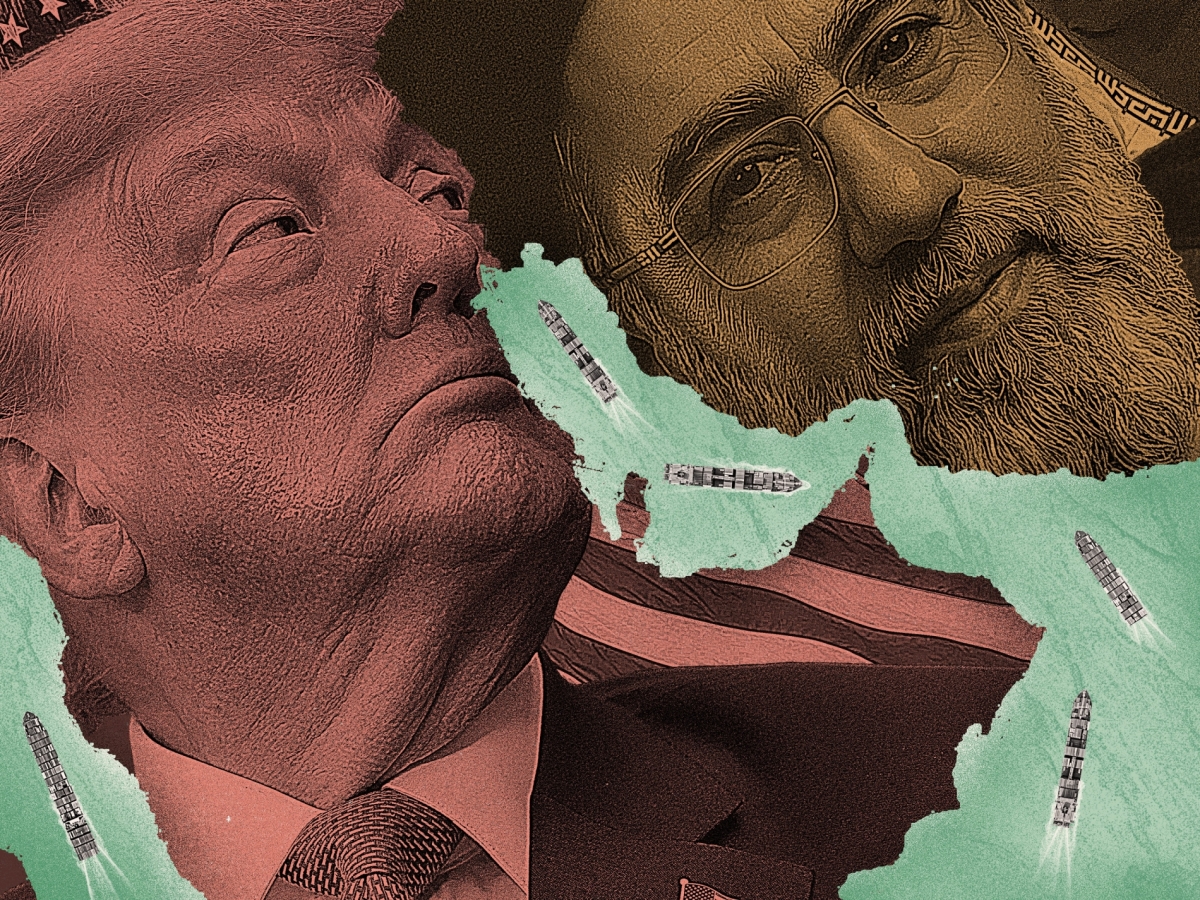

On 9 August, Donald Trump sat for an interview with Axios and, in the space of a few sentences, reversed the tone of the previous week. “We're moving very quietly,” he said. Rather than ordering the sweeping new strikes he had threatened days earlier, the president said he preferred to let sanctions and the naval blockade do the work: “We're just watching them, with their tremendous inflation, and the fact that they have no money.” Asked about the endless swings of the standoff, he shrugged it off as familiar territory. “It'll work out in the end. It always does. It's like a chess game.” On Truth Social the same week, he added that Iran had no money and that the Islamic Republic “has behaved badly for 51 years.”
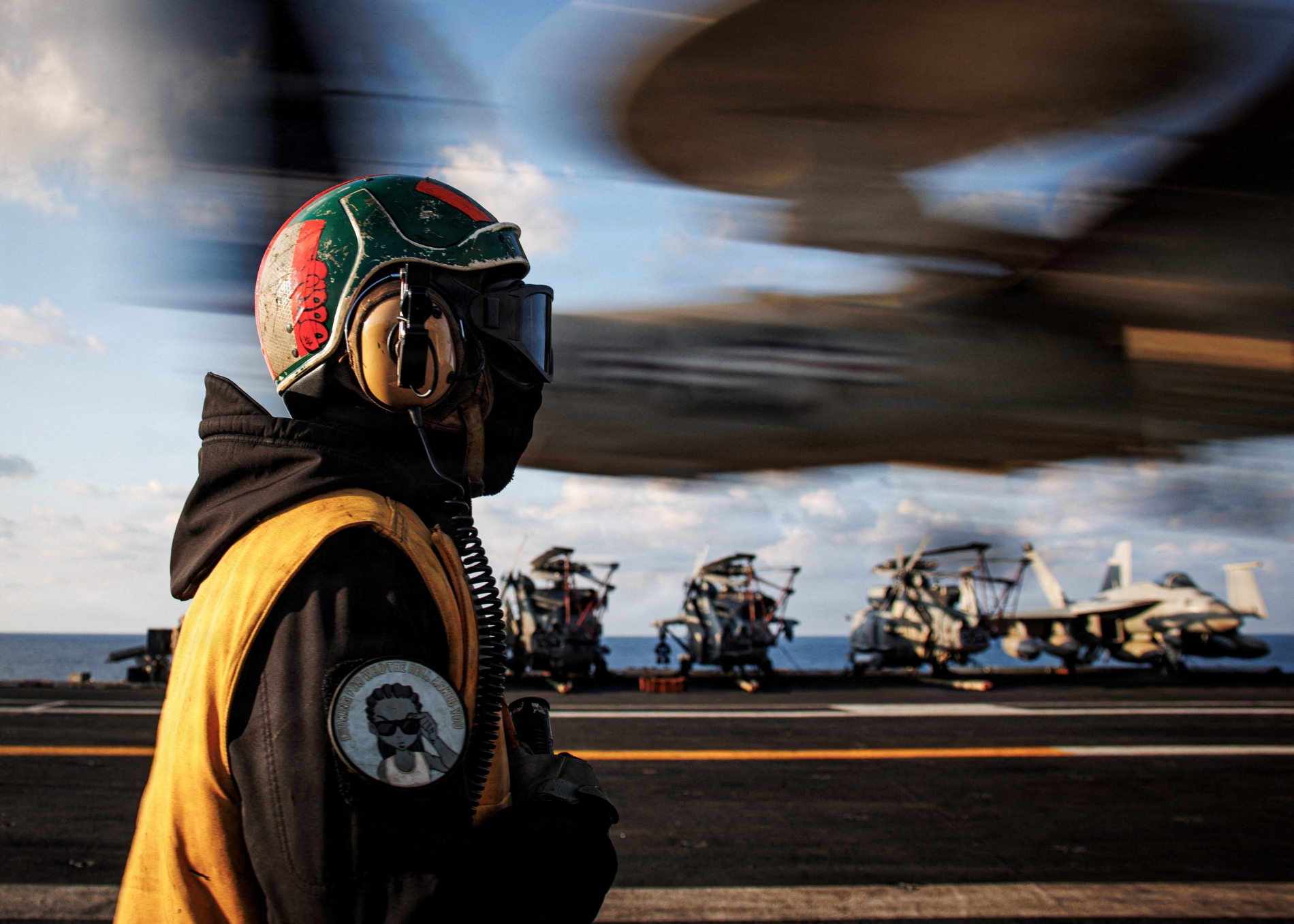
Behind the rhetoric sat a harder fact. US Central Command confirmed that more than 20 US warships had been deployed to enforce a second naval blockade of Iran's ports. By 9 August, CENTCOM said it had rerouted 55 commercial vessels, disabled two and detained two more “to ensure compliance.” A day later, Iranian foreign ministry spokesman Esmaeil Baghaei confirmed there were no direct talks between Tehran and Washington, only messages passed through mediators, though he said Iran and Oman had agreed on a “transit map” for the Strait of Hormuz and that talks remained “very constructive.” All of this came only a week after the US had stood on the brink of resuming large-scale strikes on Iran over the strait's continued closure.
The whiplash captures where the war now sits. Both governments have concluded, for now, that further fighting costs more than it buys, and have shifted the contest onto ground where each believes time favours it: the US is betting Iran's economy breaks first; Tehran is betting Washington's political patience runs out first.
Part of US caution is practical as well as political, with reporting linking the pause in strikes to concerns inside the Pentagon about depleted stocks of air-defence interceptor missiles—a constraint that makes a third round of large-scale strikes considerably more expensive to sustain than the first two were.
A cheaper war...for now
The war that began on 28 February set out with far larger ambitions: eliminating Iran's nuclear programme, curbing its ballistic missiles, rolling back its regional allies, and at various points, regime change itself. Each of those goals has since been narrowed or quietly dropped. The clearest sign of Washington's recalculation is the most recent one. Officials have told the Wall Street Journal that Trump is now prepared to end the war without a comprehensive nuclear settlement, provided Tehran guarantees the full reopening of Hormuz.
The administration's own assessment, relayed to the paper, is that US intelligence dominance and the standing threat of renewed strikes make a formal nuclear agreement unnecessary. In this reading, Iran will not be able to rebuild its programme in practice regardless of what any deal says on paper. Hormuz has effectively displaced the nuclear file as the war's central deliverable, driven in no small part by domestic politics: gasoline prices and the strait's closure are weighing on how Americans will vote in the November midterm elections.
The remaining obstacle is money. Iran wants sanctions lifted and compensation for war damage; the White House will not agree to either. Iran regards Hormuz as its most effective tool for forcing Washington to deliver commitments it already made once, in the memorandum the two sides signed on 17 June—sanctions relief on oil and petrochemicals, releasing frozen assets, ending the naval blockade, pulling forces back from around Iran— rather than reopen the strait first and trust Washington to follow through afterwards.
Much of what Tehran is now demanding, in other words, is not new. It is close to what Trump himself accepted and publicly called a "success" when he signed that memorandum in June, before it collapsed within days over how to manage the strait. Talks between Iran and Oman on how ships would transit Hormuz after any reopening have essentially concluded; what remains unresolved is Tehran's insistence on tying activation of that arrangement to reviving the June memorandum in full, nuclear talks included.
For his part, Vice President JD Vance has said publicly that Washington does not trust Iranian assurances that it has no plans to toll shipping through Hormuz, and that any such promise will have to be verified rather than taken at face value: a small detail that captures how little goodwill either side is extending the other even as the technical work with Oman moves forward.
JD Vance: Iran Promises Maximum Oil Flow Through Hormuz “We Verify”
Vice President JD Vance says Iran has committed to allowing commercial vessels and maximum oil flows through the Strait of Hormuz, but the U.S. will verify the arrangement before trusting Tehran#WashingtonEye pic.twitter.com/YclILCdXpp
— Washington Eye (@washington_EY) August 9, 2026
What's actually on offer
A potential deal already has a rough shape in the form of the June memorandum. It called for at least $300bn for Iran’s reconstruction and economic development. Reuters reported at the time that the mechanism being assembled was a private “Reconstruction and Development Fund,” with more than half of the proposed capital already committed by companies from the United States, Gulf states, Asia and elsewhere, for investment in energy, transport, logistics and manufacturing.
Vance has said Iran would gain access to that money only after dismantling its nuclear programme, surrendering its enriched uranium stockpile and accepting a stringent inspection regime. But those conditions also expose the weakness of the offer: Tehran has repeatedly indicated that it might accept a long suspension of enrichment and give up or dilute its most highly enriched stockpile, but not permanently surrender what it regards as its right to enrich.
The fund may therefore be Washington’s largest economic inducement, but on Vance’s terms it risks looking less like an incentive than a reward for capitulation. The real bargaining space lies somewhere between those positions: whether Washington can accept a verifiable, years-long freeze rather than permanent dismantlement, and whether Tehran can accept restrictions intrusive enough to convince the US that any bargain will be enforced. It is the same problem now hanging over Hormuz, where Washington is reluctant to exchange concrete concessions for Iranian promises it fears it cannot reliably verify.