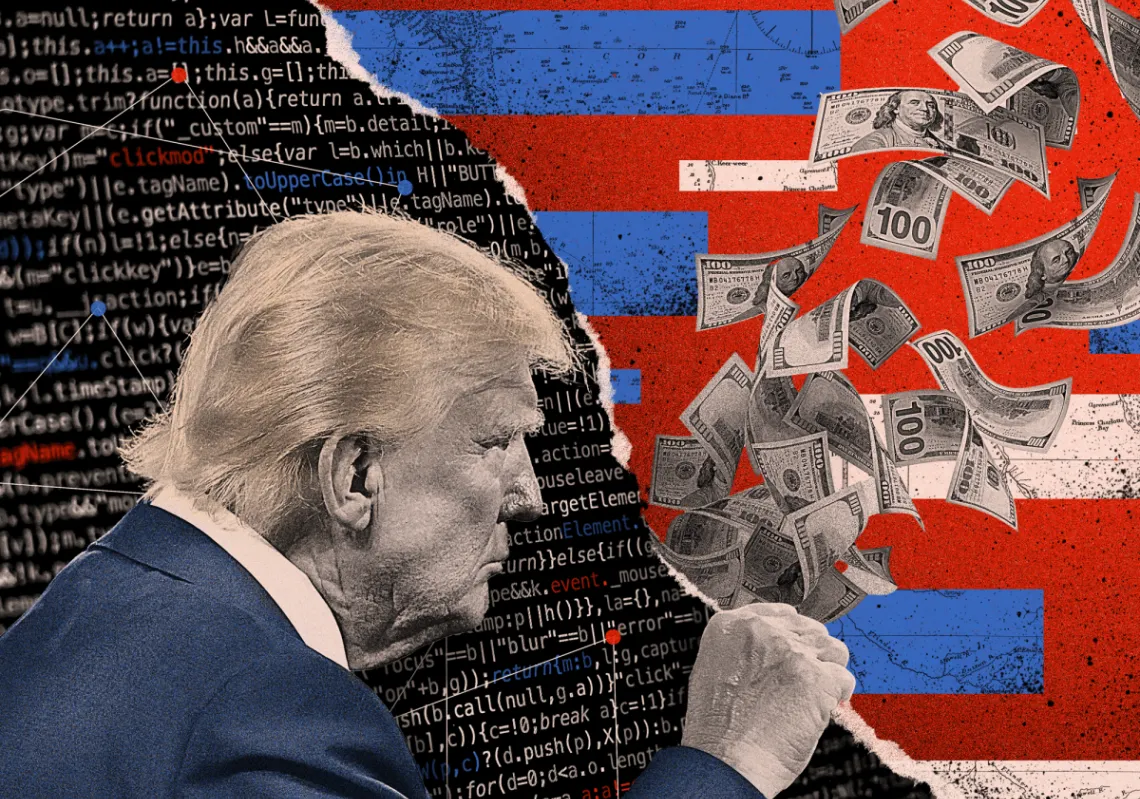
Why the race to AI dominance has echoes of the Cold War
Global competition to lead the 21st century artificial intelligence revolution is currently a two-horse race between America and China. Is this today’s arms race, or are we headed for multipolarity?
Sara Padovan
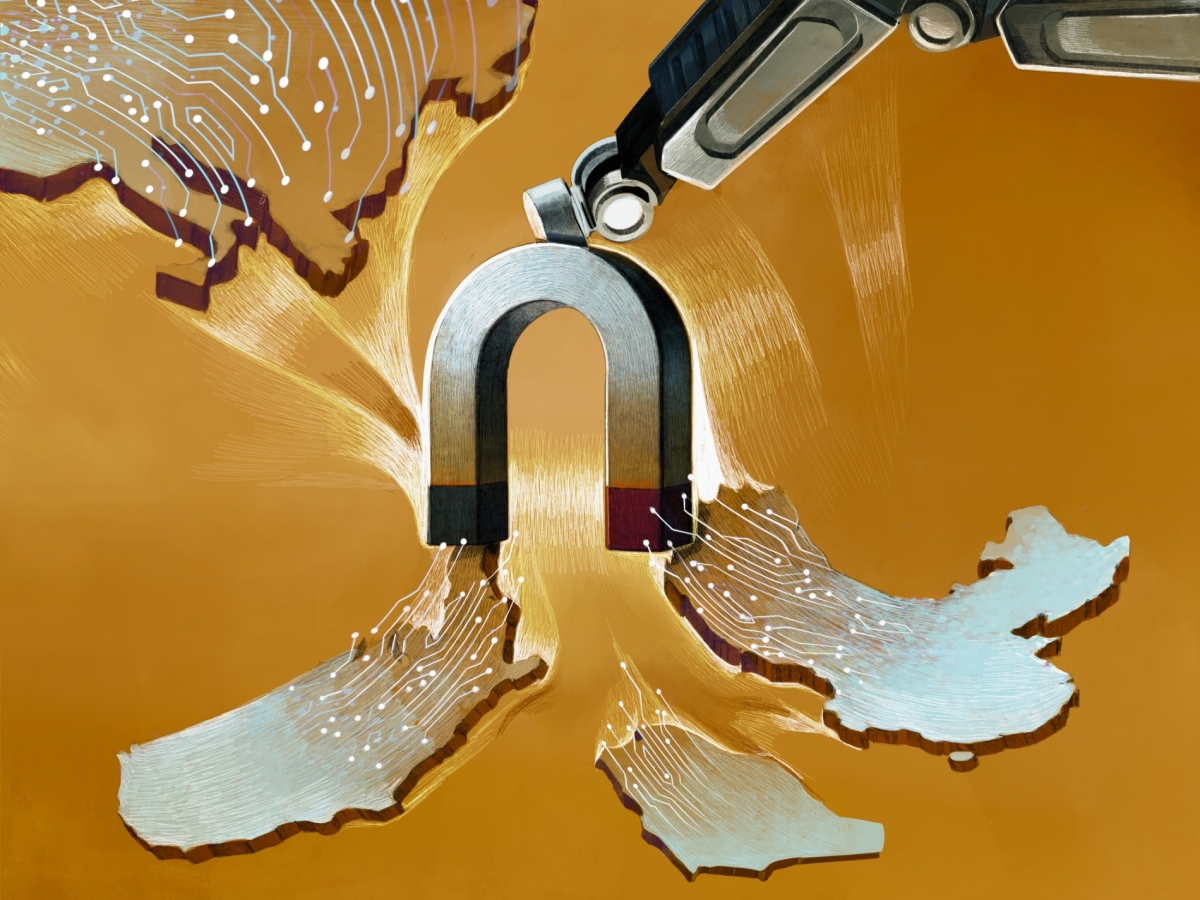
Some consider the AI rivalry between China and the United States to be not dissimilar to the technological rivalry between Washington and Moscow during the Cold War.
Why the race to AI dominance has echoes of the Cold War
For years, Artificial Intelligence (AI) has been the subject of a great power competition in technology, but midway through 2026, AI is increasingly a key arena for great power competition in contemporary geopolitics, too.
When the US-led ‘unipolar’ order of the post-Cold War era gradually gave way in the 2010s, analysts expected the new era to resemble past multi-polar competition, and in many ways, it does. Military power remains a key marker of ‘great power’ status and conventional conflicts, the wars in Ukraine and Iran underlining its continued importance, with economic strength another sign of a country’s clout.
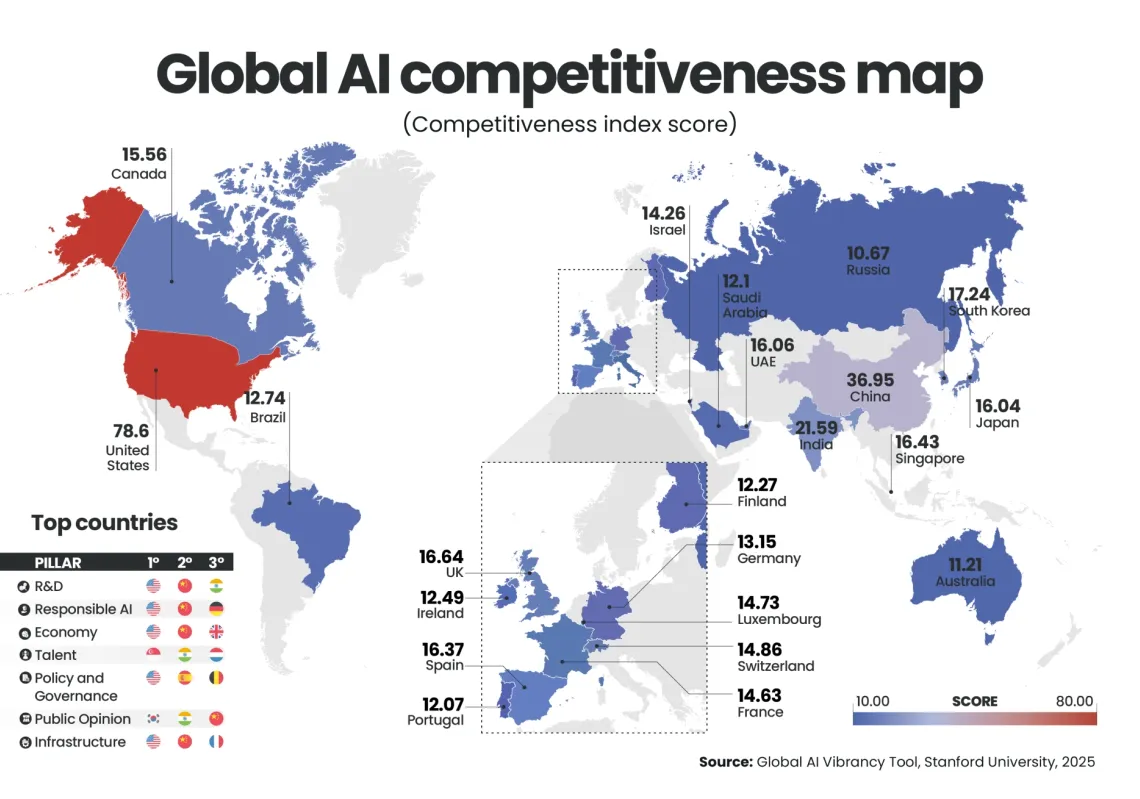
But AI capability is rapidly emerging alongside these traditional measures as a vital component of national power, and governments are spending vast amounts to keep up with their competitors. Some, understandably, have labelled this an AI ‘arms race’, with the US and China the leading protagonists, well ahead of their nearest rivals, with China having recently narrowed the gap with Silicon Valley.
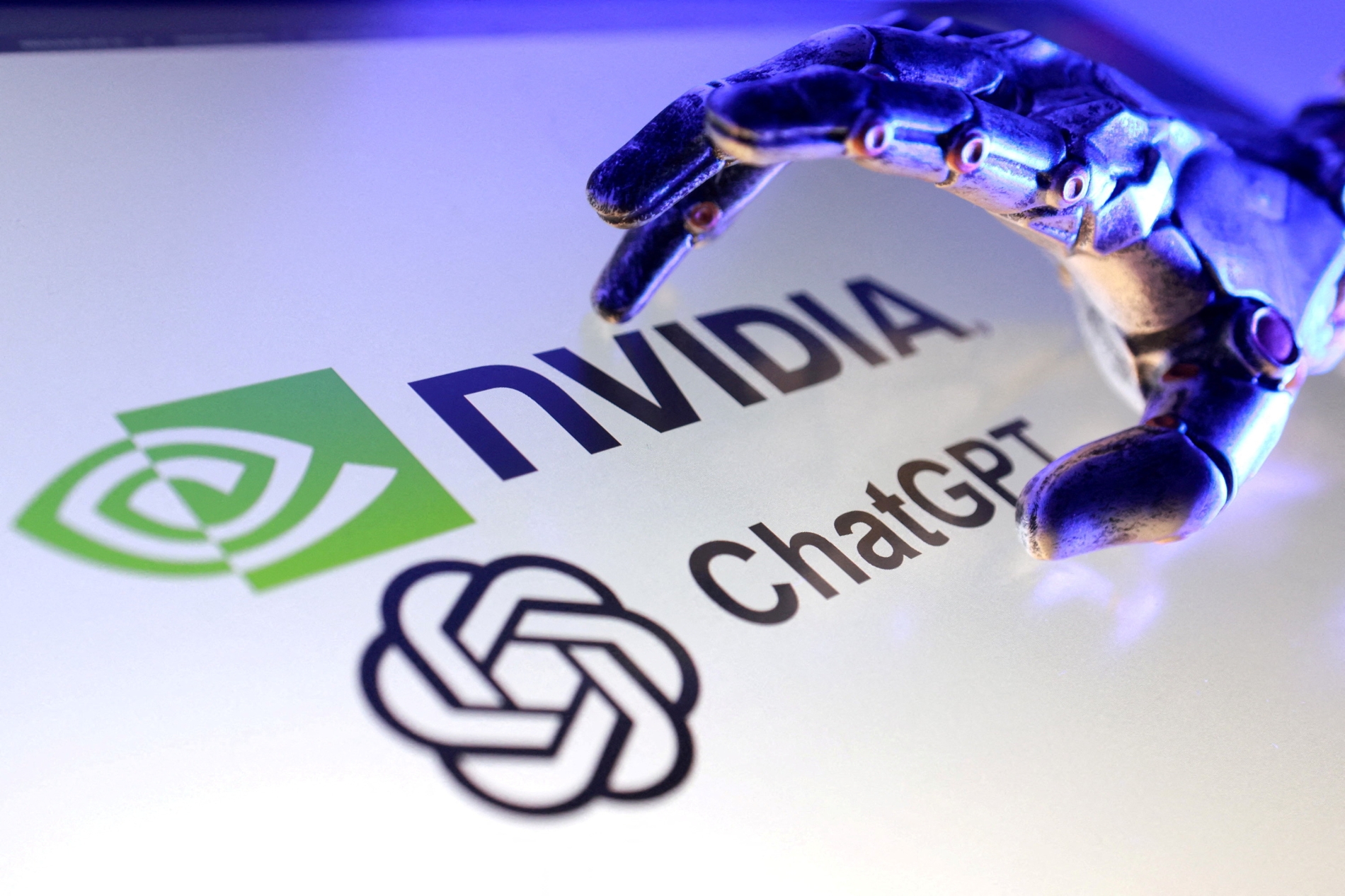
Nvidia and ChatGPT logos. American tech firms have spent hundreds of billions of dollars developing their AI infrastructure.
Parallels with past ‘races’ between the US and USSR over nuclear weapons or space exploration have inevitably been drawn. In contrast, others have insisted the arms race metaphor is an oversimplification. Diane Coyle, Professor of Public Policy at Cambridge University, argues that while the US and China might be competing on AI, that need not make it a ‘zero sum’ game. Instead, AI’s ‘middle powers’ in Europe and the Gulf can make strategic choices and avoid being forced into one camp or another, ensuring greater ‘multipolarity’ in AI.
A US-China arms race?
The Economist describes the US and China as “the world’s two AI superpowers,” with the former in the lead. America’s advances have been led by the private sector, which the government then shapes via strategic investment and comparatively permissive domestic regulation. In 2025 alone, US private AI investment approached $300bn, while the value of directly obligated federal AI contracts exceeded $7bn in 2026.
China, meanwhile, was reported in 2026 to be preparing a five-year $295bn programme to expand its AI and data-centre infrastructure. In contrast to the US, state-backed and state-owned entities play a much larger role in financing and building that infrastructure. Beijing still has some catching up to do. From 2013-24, US companies are estimated to have spent four times as much on AI than their Chinese counterparts ($471bn, compared to $119bn). The UK, in third, spent just $28bn.
In 2025 alone, US private AI investment approached $300bn, while the value of directly obligated federal AI contracts exceeded $7bn in 2026
Alongside contrasts in funding, the two superpowers' approach to AI is different. The US invests far more in key components of the AI ecosystem, such as data centres and frontier models. China has struggled to match the US in access to leading-edge chips and some forms of hyperscale frontier-model investment, so it has focused on research efficiency and developing domestic compute capacity. This has let it close the gap in several areas, offering alternative AI products at lower costs.
In January 2025, China sent shockwaves through the tech sector by releasing DeepSeek-R1, a Generative AI model that was competitive with leading US models but cost a fraction of the amount to train. Beijing and Washington have both been keen to ensure that their rivals cannot access their latest technology. In June, the US Commerce Department briefly barred foreign nationals, both inside and outside the US, from accessing Anthropic's most advanced models, Fable 5 and Mythos 5.
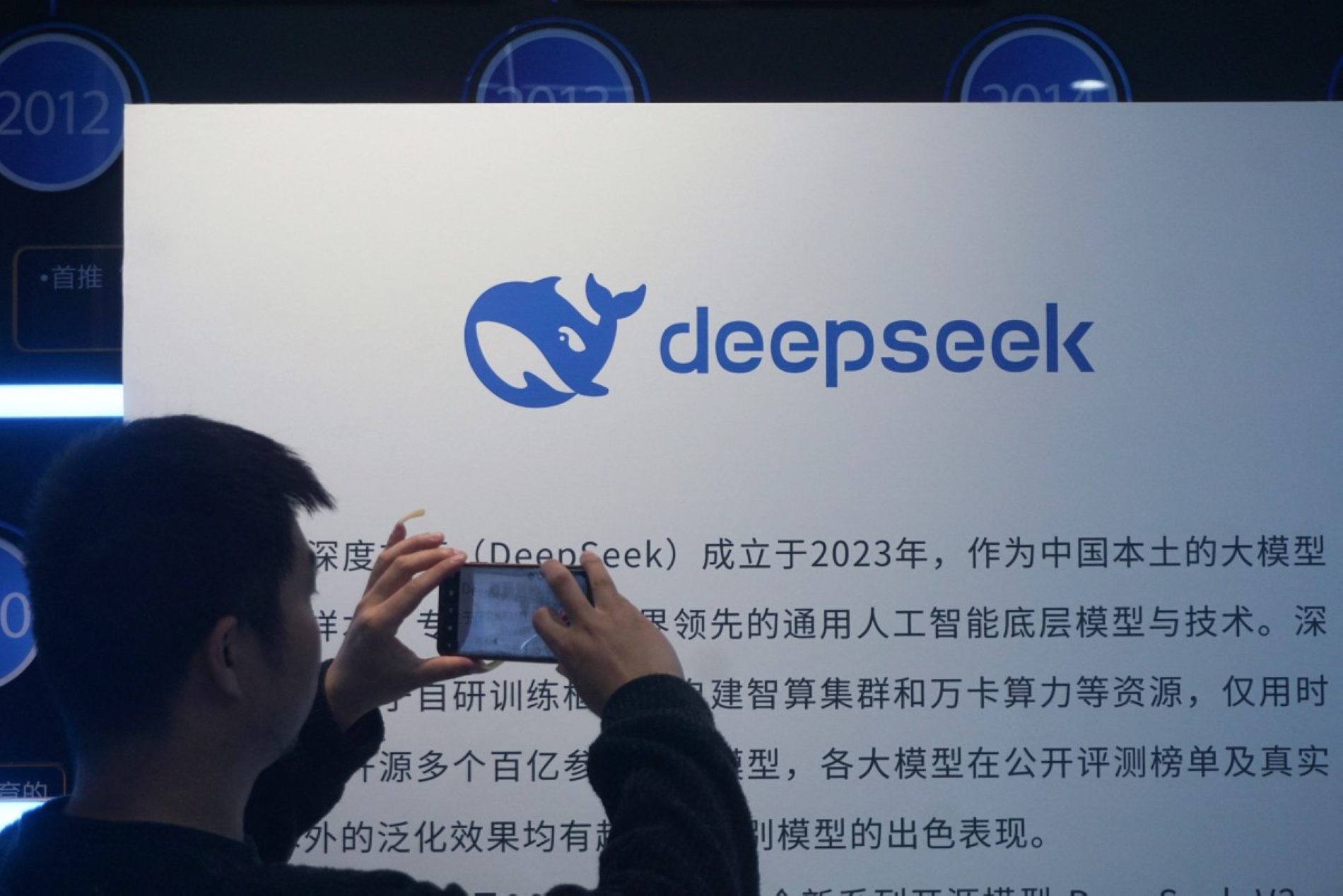
China's Deepseek AI model caused waves when it was released last year. Chinese and American AI firms are constantly looking to get the upper hand.
Soon, OpenAI imposed its own restrictions. The following month, Reuters reported that Chinese officials were considering restricting foreigners' access to some of its advanced AI. This increasingly looks like a 'race' akin to the Cold War, which pitted the communist and capitalist ideologies against one another. Then, as now, the rival centres sought to ensure their most advanced technology did not fall into 'enemy' hands. And then, as now, each centre sought to push the rest of the world into 'their' camp.
As China and the US have diverged in their approaches and sought to exclude the other from accessing their AI ecosystems, the rest of the world increasingly faces a choice between alternative Chinese and American AI 'Stacks'. A few years ago, states and companies could 'mix and match' a range of AI components. Today, Washington and Beijing are making it harder to do this as the AI world becomes increasingly bipolar.
A middle path
China's trade partners in Africa and Asia are drawn to Beijing's cheaper, open-weight AI models, while many Western economies depend on US products, access to which the Trump administration has increasingly linked to wider trade, security, and diplomatic negotiations. However, not all governments are falling into line, which has caused the likes of Prof. Coyle to challenge the 'AI arms race' narrative.
An AI company's advertising in San Francisco as the sector expands, on 16 September 2025.
Middle AI powers (defined by Coyle as all the OECD and middle-income nations except the US and China), though keenly aware of the superpower rivalry, are deliberately choosing to minimise their vulnerability. Increasingly, they hope to develop 'sovereign AI', or, more realistically, sufficient domestic capabilities and infrastructure to limit excessive dependence on China and the US. This would have financial, security and geopolitical benefits. It could reduce the economic outflows associated with reliance on foreign AI providers, keep key data secure, and give them independence.
As a result, the European Union, Japan, Canada, India, UK, Saudi Arabia, the UAE, South Korea and Singapore are investing in their own AI. They are not naïve, though. They know that such investments will not allow them to completely detach from China and the US, and most accept a continued dependence on one or both for some time, even as the environment becomes increasingly difficult.
Saudi Arabia and the UAE, for example, while planning to invest over £100bn in AI, have nevertheless made access to vital American chips a key component of discussions with US President Donald Trump during his recent visits. But, as The Economist notes, developing your own AI means that, while not being fully 'sovereign', or even close, middle powers will have more leverage over Washington and/or Beijing, making it harder for either to coerce allies into unquestioning dependence.
AI bipolarity or multipolarity?
How this middle power activity plays out in global geopolitics remains to be seen. On the one hand, 'sovereign AI' spending may do little beyond providing a degree of protection for a limited number of wealthy states. During the Cold War, France, Britain, China, India, South Africa and Israel developed their own nuclear weapons independently of the superpowers, but this did not tilt the world away from the bipolar dominance of the US and USSR.
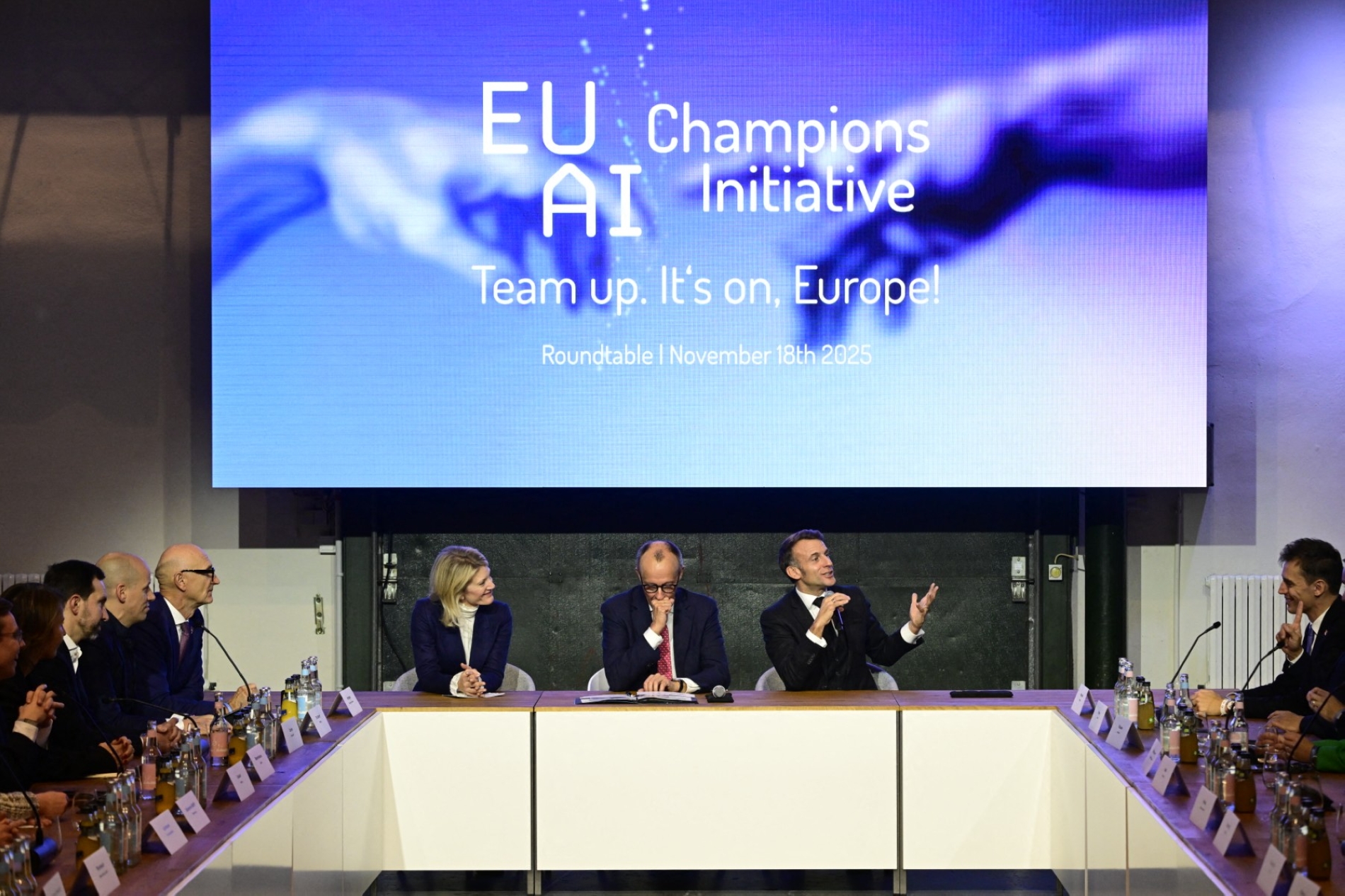
German and French leaders want European states to pool resources to build some of the continent's own AI capabilities.
On the other hand, an arms race between the two leading powers does not always have to be the dominant characteristic of the international order. On the eve of the First World War, the UK and Germany were locked in an arms race over Dreadnought Class warships, but this proved to be only one aspect of a broader multipolar global order, not its defining characteristic.
It is too soon to know whether the development of AI will continue as a two-horse race, or whether any others will offer a serious challenge. Moreover, even if the AI arms race between China and the US continues, it is not clear whether this will exist within the current global multipolar order or contribute to squeezing the rest of the world into bipolar geopolitics. One interesting question is whether AI will ultimately reflect the pre-existing geopolitical order or play a role in shaping and determining it. Time will tell.