
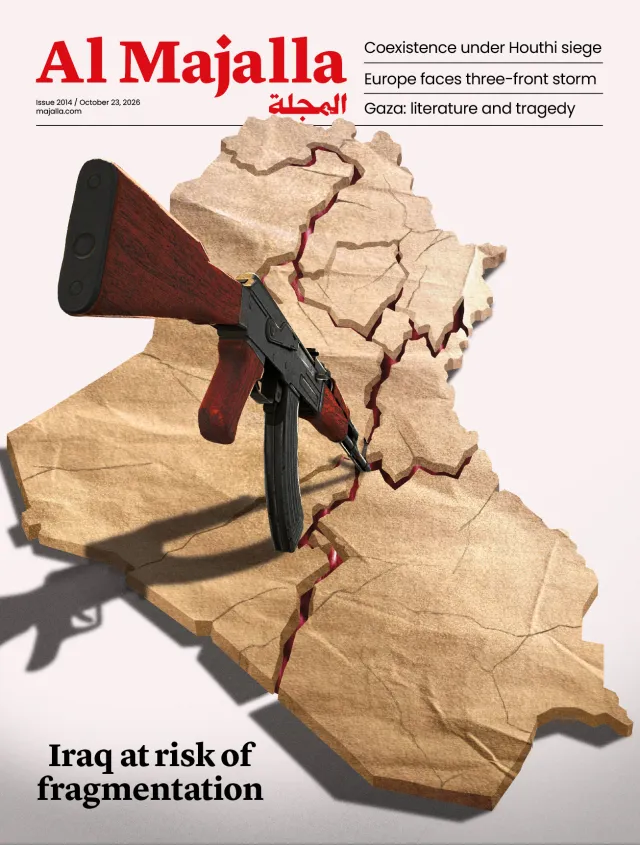

Najaf and Karbala are no ordinary cities for followers of Shia Islam. Their significance cannot be confined to historical events arranged within the limits of geography, and Iran’s clerics do not regard them solely as sacred lands and shrines visited in search of blessing and as places where remorse is repeatedly expressed for the failure to support Imam Hussein, who was left alone to face the Umayyad army.
The two cities also form a link between Arab Iraq and the Persian world. In a sense, they embody all these meanings at once. They represent one of the most intricate bonds between the Iranian plateau and the Mesopotamian plain to its west. In earlier centuries, that relationship took the form of wars between empires. In its religious, sectarian and historical dimensions, it extends far beyond the exercise of influence in the name of reverence for the religious authority of the seminaries or the spiritual aura of the shrines.
In Kufa, the Tawwabin movement emerged under the leadership of the Companion Sulayman ibn Surad al Khuzai. It was driven by a profound sense of guilt over the failure of the people of Kufa to support Hussein ibn Ali, a failure that led to his killing at Karbala. The Tawwabin believed they could atone for abandoning him only by avenging the Imam and fighting until death. That logic of vengeance has since found expression in Iranian extremism and violence extending across predominantly Sunni regions.
Vengeance today
History here is no lifeless relic confined to the past. During the final farewell to the body of Iran’s Supreme Leader, Ali Khamenei, from Iraq’s sacred precincts, it carried an Iranian message drawn from a distant age. Its meaning was clear: jihad and the defence of the Imam’s followers remain fixed principles. Iraq, however, has been their first victim. Its prime minister, Ali al Zaidi, is now attempting to rescue the country from the disorder of dependency and the grip of Iranian militias, while restoring the primacy of the national state.
During the funeral ceremonies, the principle of ‘exporting the revolution’ was no longer confined to the constitution. Its symbolic purpose was to summon fresh religious momentum and renew the Supreme Leader’s legitimacy in the imagination of his followers. Khamenei’s Iran sought to cloak its slain leader in the aura of noble lineage by carrying his body past the shrines of the Prophet’s family.
The gesture also pointed to the erosion of popular support for the revolution at a moment of war, after much of the appeal once carried by the rhetoric of defending the oppressed and waging jihad against America had been depleted. The journey may also have served as a farewell and a final signal from the Supreme Leader, even in death, to his followers in Iraq.
Longstanding custom
Iran may now have to accept a symbolic presence in a country gradually emerging from its domination. Losing its grip on Iraq does not mean disappearing from its memories, emotions, rituals, disappointments or impulses of vengeance. Why, then, was Ali Khamenei not buried in Najaf or Karbala, instead of being taken to Mashhad in Iran? The burial of Shia Muslims, or the transfer of their remains, to Najaf and Karbala is a longstanding custom among communities from Pakistan and India to Mount Lebanon.

