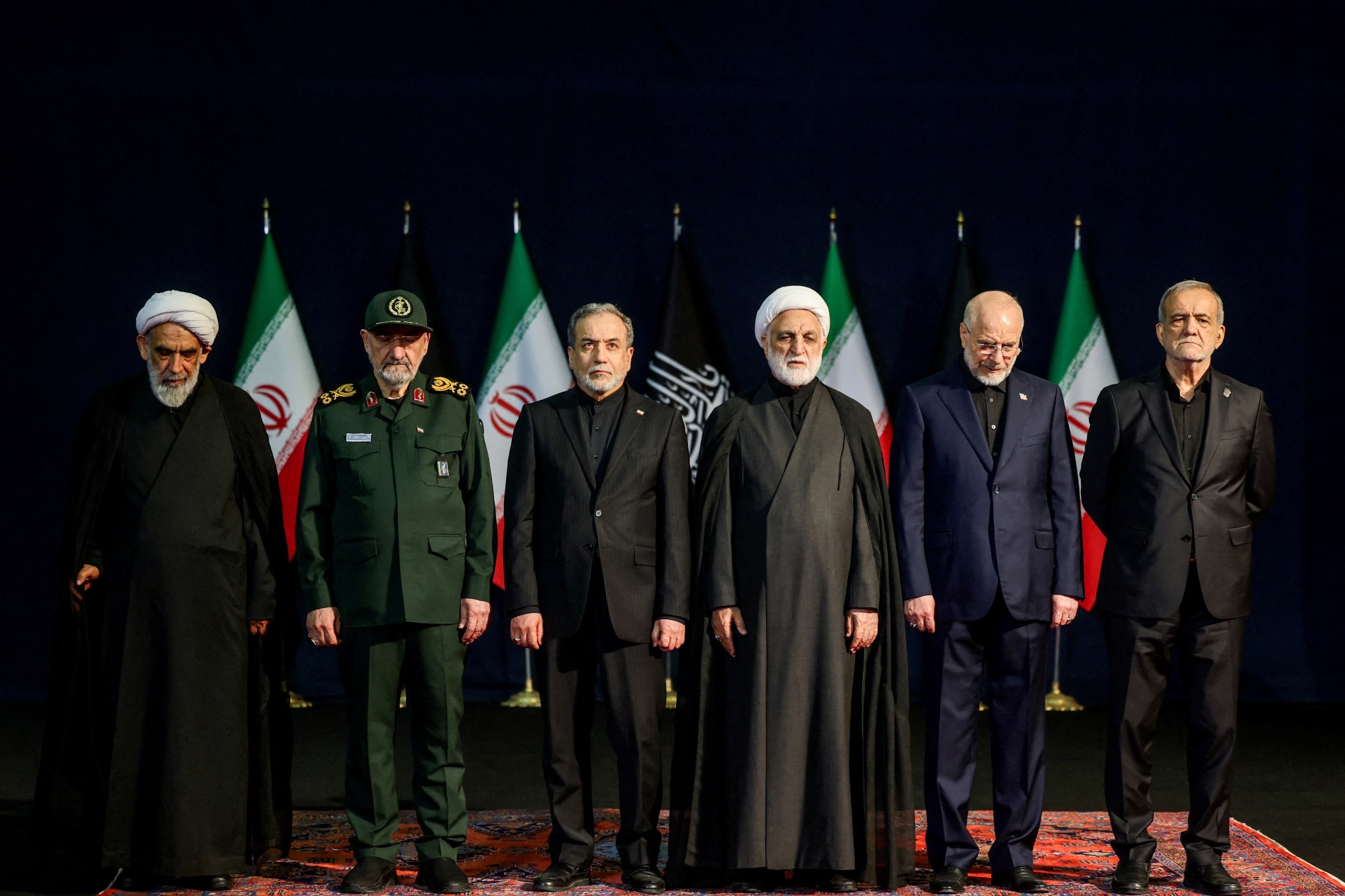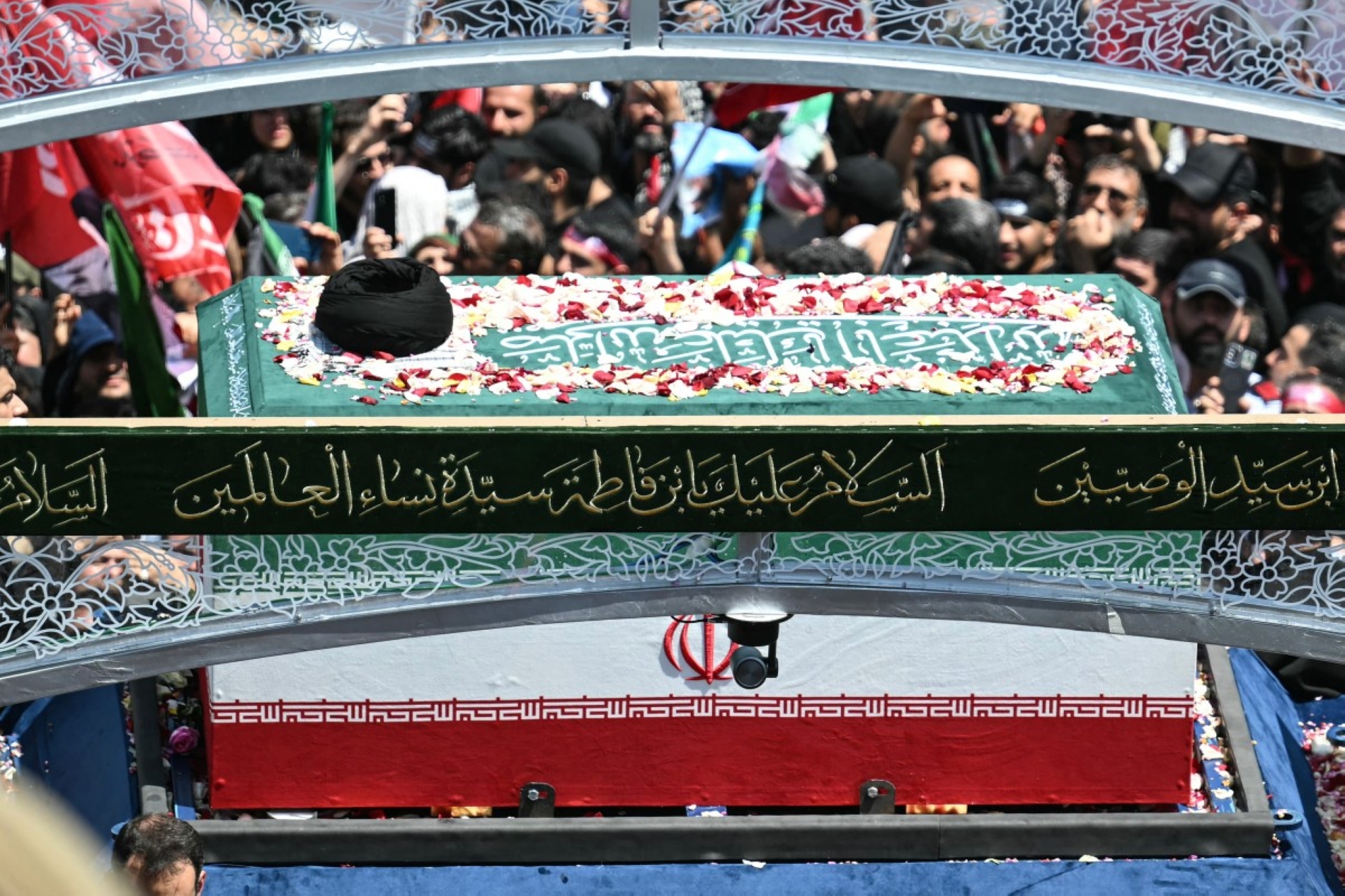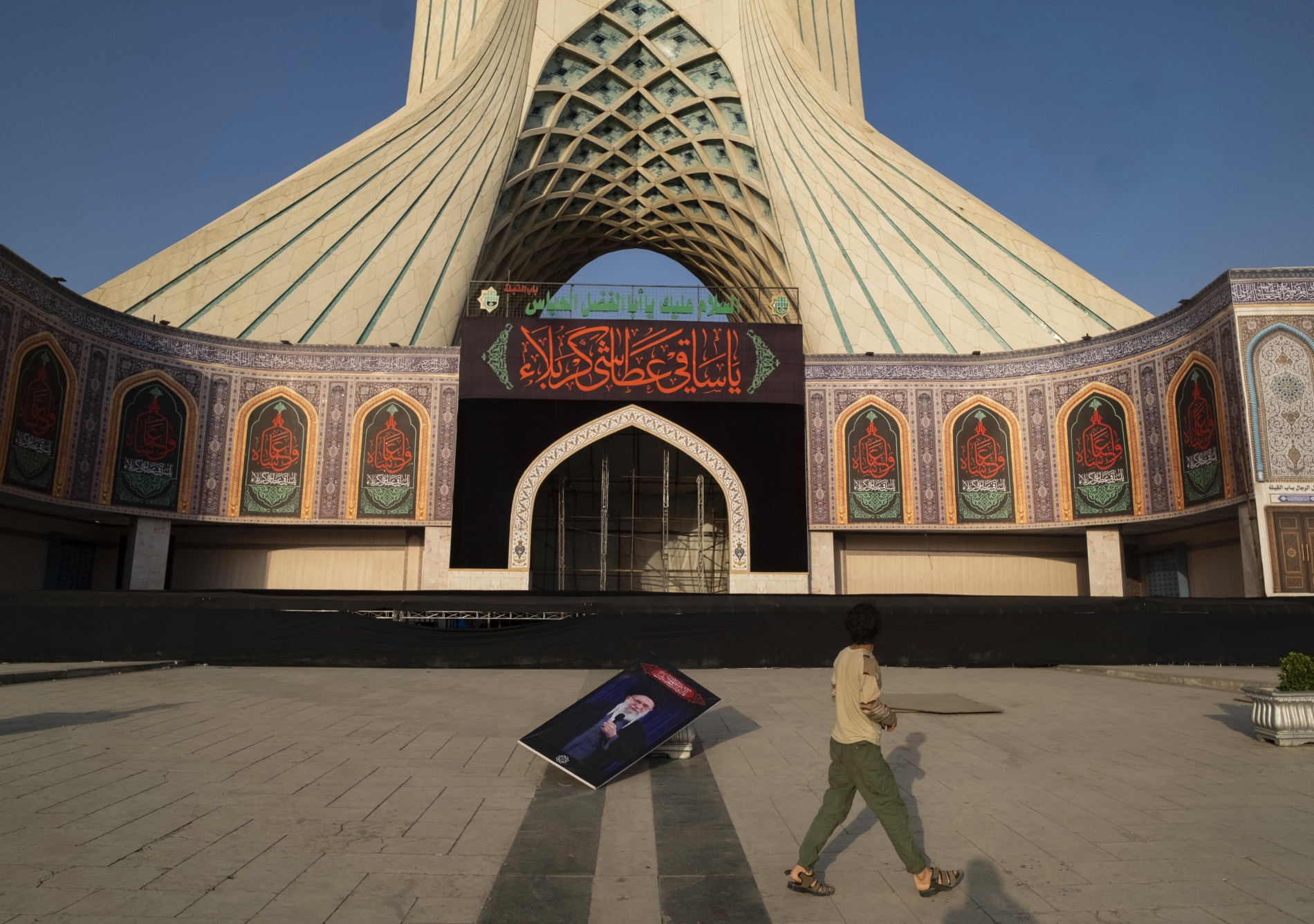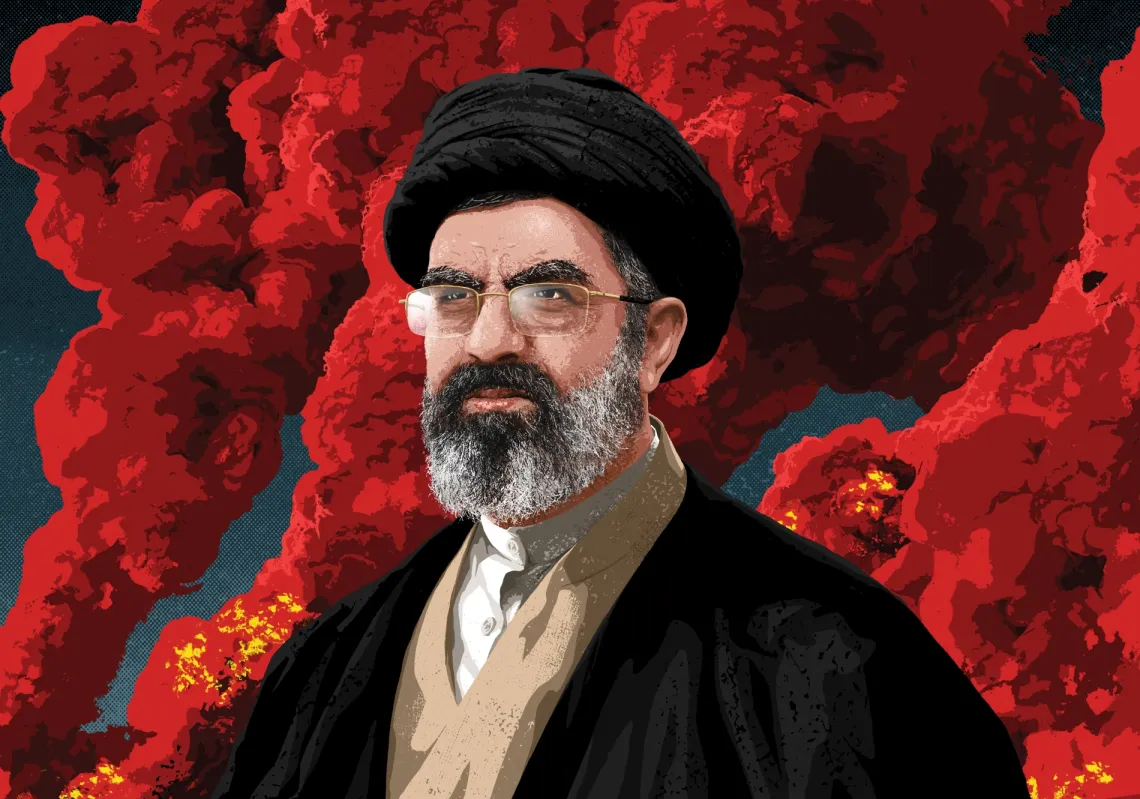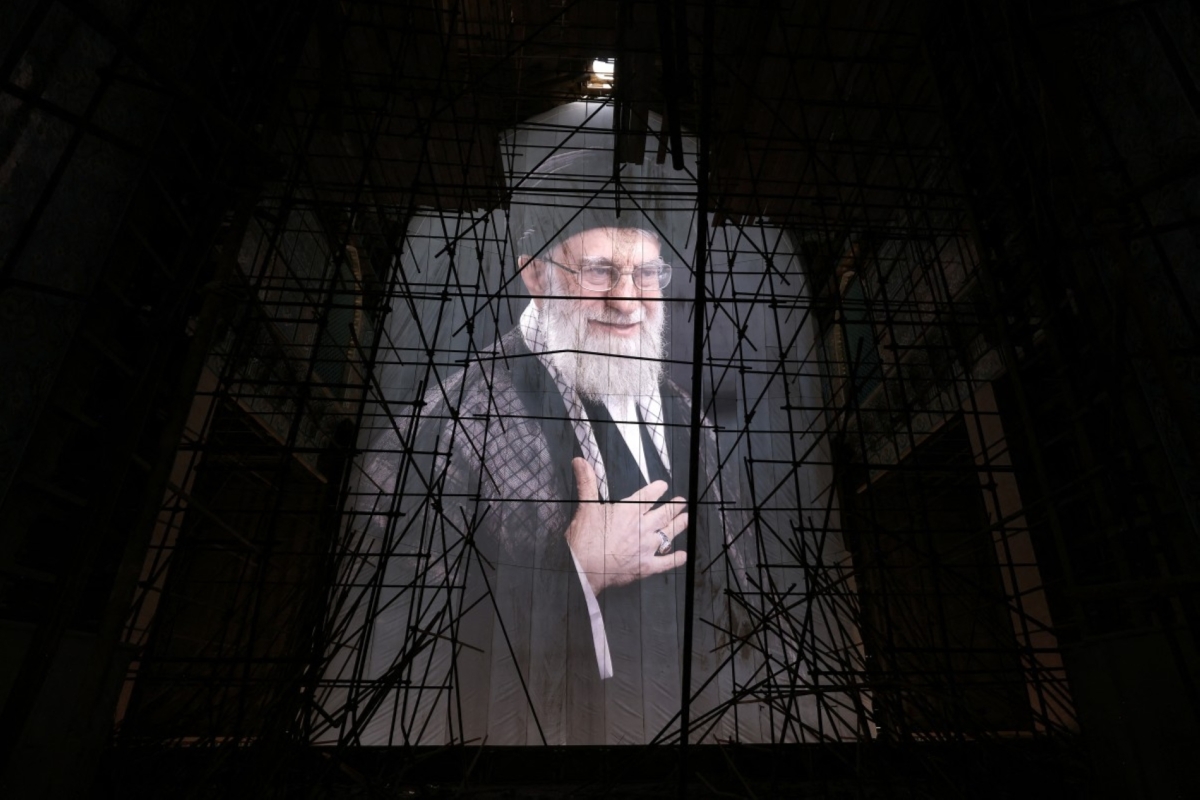

When it came to the funeral of Iran’s Supreme Leader Ali Khamenei in Tehran this week, the most important man—his son and successor—did not appear. Other relatives came, as did senior officials, who spoke of loyalty and bay’a (the oath of allegiance), as the crowds were told to chant for revenge. But Mojtaba Khamenei was nowhere to be seen at the ceremony designed partly as a handover.
His absence may have been one of caution, or clerical mystique, or stagecraft, but politically, it exposed the problem the whole event was meant to hide: that Mojtaba needs his father's legacy. He cannot simply inherit his father's power. An office can be transferred in an afternoon, but authority cannot. The funeral tried to convert grief into legitimacy, but the empty place where the heir should have stood left the transaction visibly unfinished.
This was not the burial of a man, but the attempt to bury uncertainty. Khamenei did not merely keep his predecessor Ayatollah Ruhollah Khomeini’s revolution alive; he converted it into a security apparatus built to run without him. Whether it can is the question that the funeral was meant to answer.
Funeral as referendum
A state funeral held at a moment of maximum vulnerability is never just about mourning. This job of this event was to prove that the state had survived the loss of its leader, that its institutions were still functioning, that its security apparatus was intact, that the crowds could still be summoned, and that foreign delegations would still arrive to pay their respects. It was arranged as a visual referendum on continuity, and the regime worked hard to win it.
The audiences were several, and Tehran knew each one. To Iranians, the message was inevitability: the system stands, and the loyalty owed to the dead leader now transfers to the next. To the ruling elite, it was a warning against hesitation—that this is a moment for discipline, not manoeuvring. To Washington and Jerusalem, it was a deterrent: killing Khamenei would not break the regime. To Iran’s regional partners, it was a reassurance that the networks would hold. And to Moscow, Beijing, and the Gulf, it was a reminder that Iran remained a governable, dangerous player.
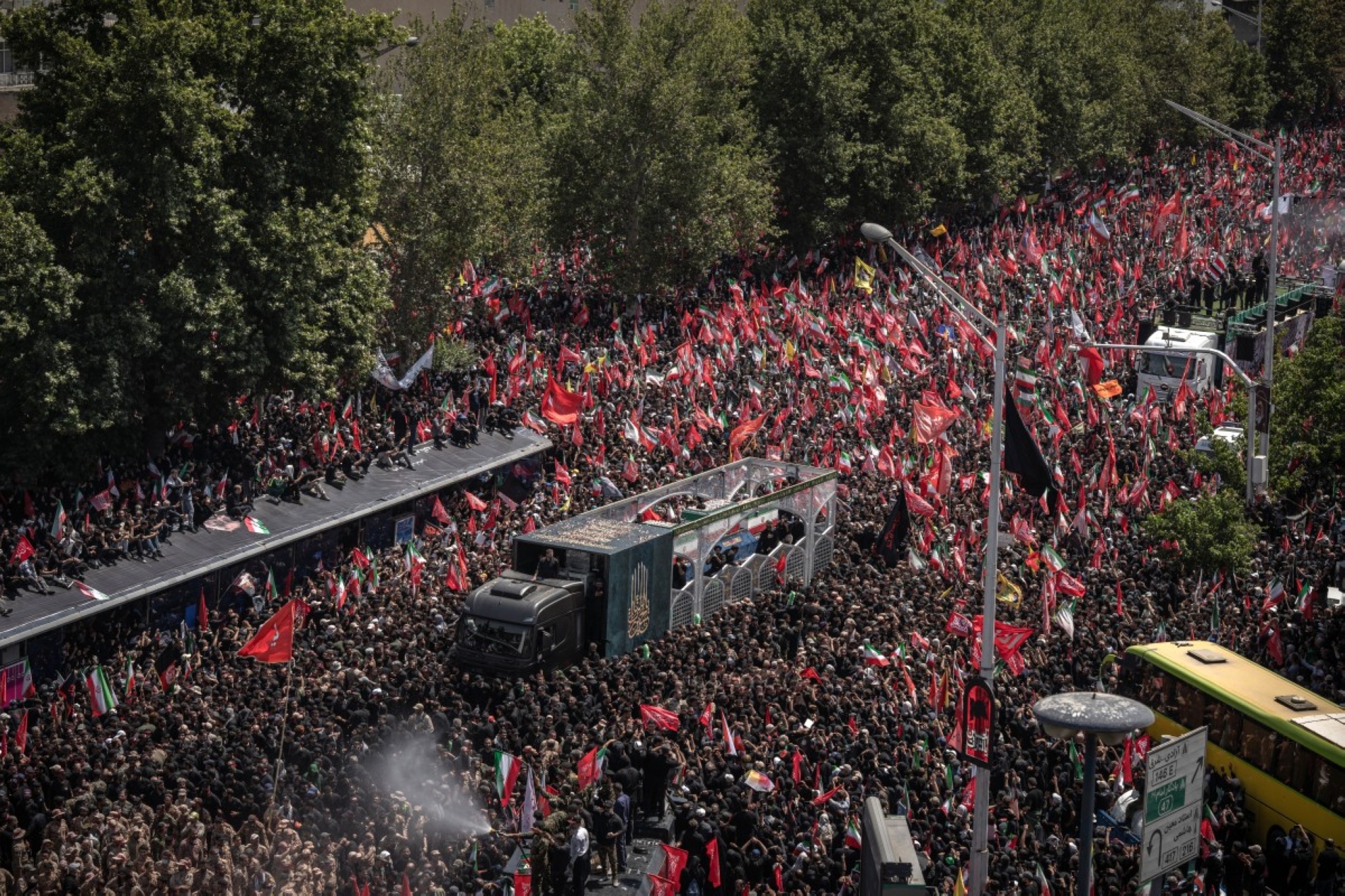
Yet the effort itself gave the game away. A state confident in its own succession does not need a funeral to function as a mass plebiscite. On the one hand it showed real power—the ability to close roads, move crowds, feed participants, blanket the television coverage, and dominate the day’s images. On the other, it looked like coercion and expense, public money spent on mourning theatre while ordinary Iranians faced record inflation, war damage, shortages, and a new economic grind.
Official commentary was on repeat: stability, sovereignty, deterrence, continuity. Rare was the revolutionary Islamist language of the Republic's first decades. That substitution is the real story. The funeral was not about burying Khamenei; it was about rehearsing how the state intends to rule without him, quietly changing the terms on which it asks to be obeyed.
Shifting narrative
Within weeks of his death in US-Israeli airstrikes on 28 February 2026, the official account of Khamenei’s life began to shift. For years he had been cast as the keeper of Khomeini’s 1979 revolution, a custodian more than a creator. Now he was being described as the leader who cured Iran of its long “psychology of defeat,” who ended a run of humiliations stretching from the 19th-century losses to Imperial Russia, through the Qajar capitulations, to the foreign occupations of the 20th century.
The claim now being built is that Khamenei proved Iran could absorb a direct blow from the world’s strongest military coalition and not collapse. Whether that survives scrutiny is beside the point; what matters is what the regime is doing by asserting it. It is changing the source of its own legitimacy. The revolution of 1979 is a wasting asset. Most Iranians alive today were born after it. Many have no memory of Khomeini at all.
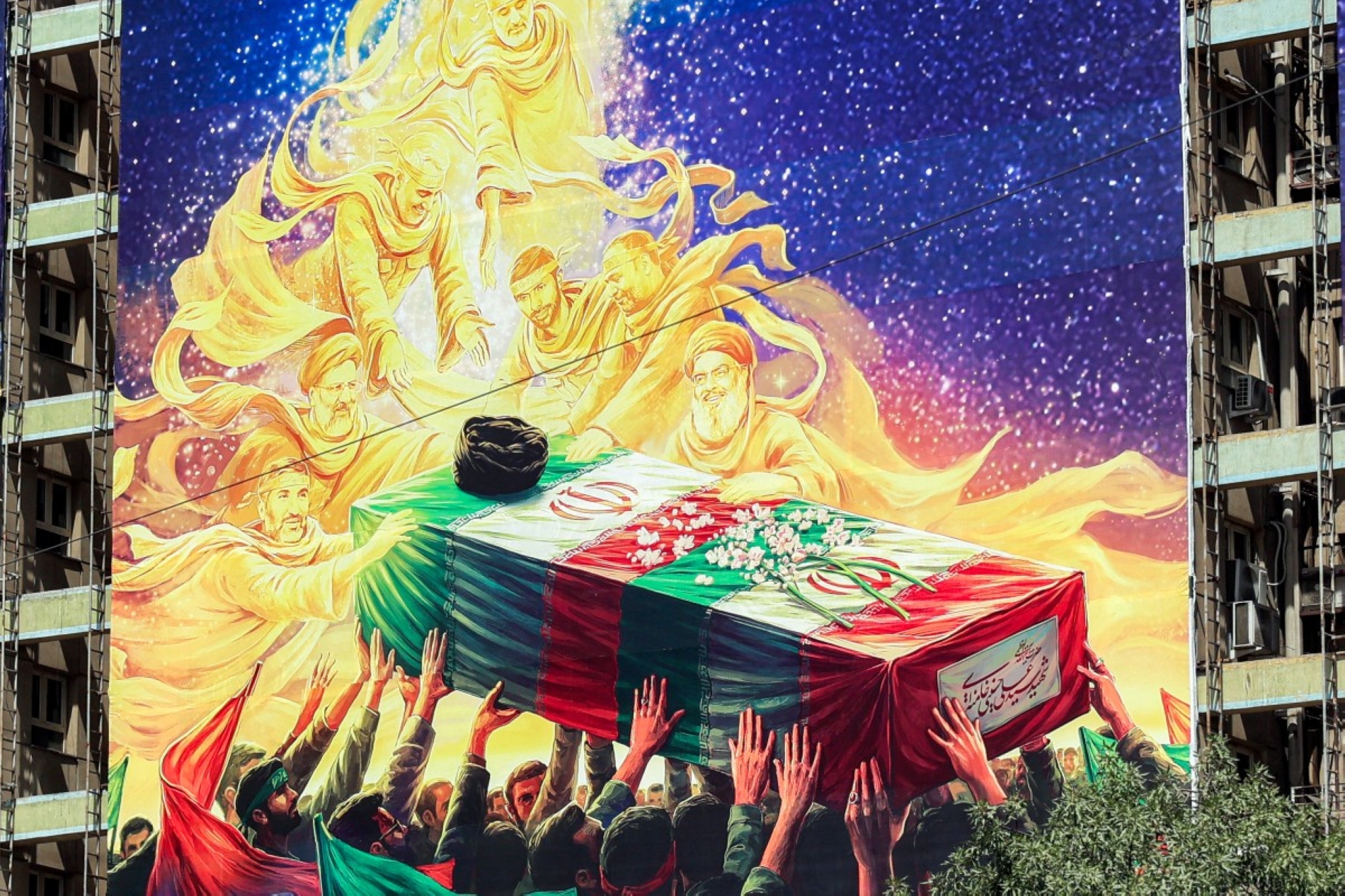
A state that once justified itself by the promise of transformation now justifies itself by its survival. It no longer compares itself to other revolutionary movements, but to earlier chapters of Iranian history, when foreign powers dictated the country’s fate. The pitch has quietly moved from “we will remake the world” to “we alone kept Iran from being dictated to”. Swapping revolutionary purpose for national endurance may be Khamenei's most durable political mark. It is also a tell. States reach for nationalism when the revolution stops selling.
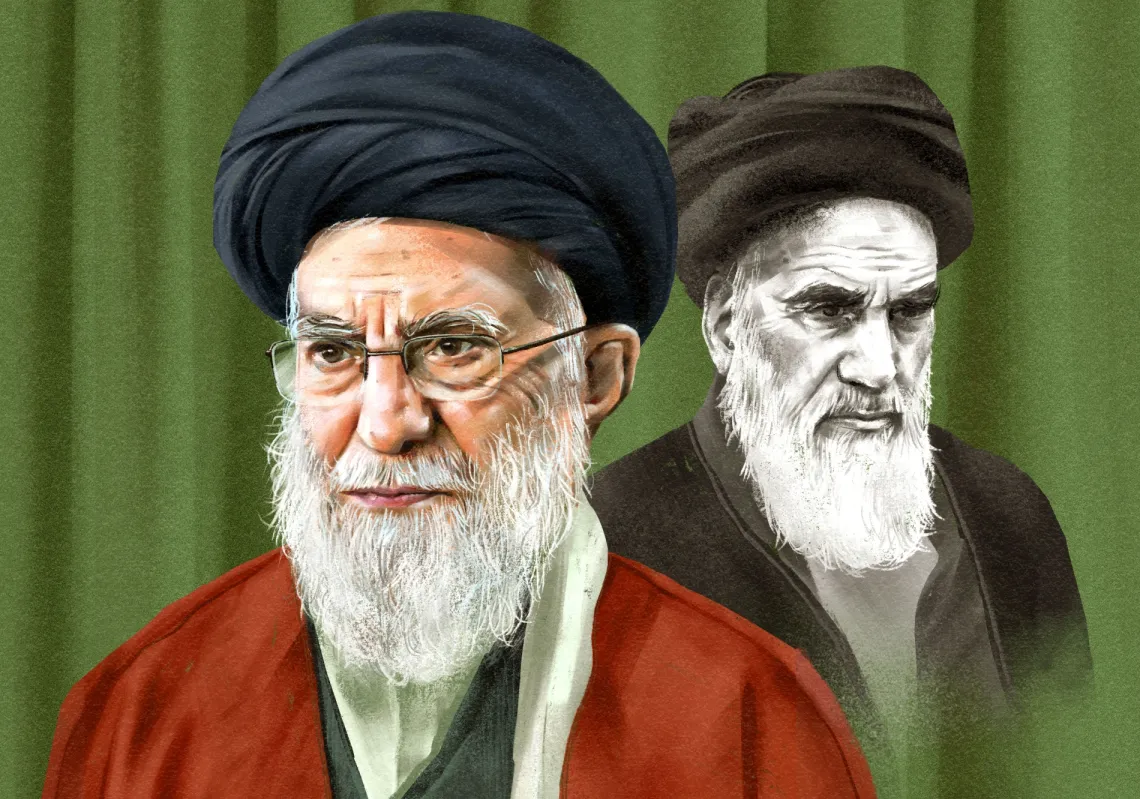
Khomeini made the revolution, Khamenei built the apparatus, and the lazy assumption is that Khamenei inherited Khomeini’s system and simply kept it running. In fact, he did something more consequential, because he had no choice. Khomeini ruled by charisma and religious stature; the institutions were extensions of his will. Khamenei had neither. When he took the office in 1989, he was not a marja (the senior clerical rank the role was assumed to require). His elevation needed the constitution to be rewritten to accommodate him.
Building authority
At first, much of the clergy watched with open scepticism, but Khamenei spent the next 37 years constructing a substitute for the authority he lacked. The Office of the Supreme Leader swelled from a modest bureau into a parallel government. He made sure that the Revolutionary Guards grew from a wartime militia into the country’s dominant political, economic, and intelligence institution, to act as his armed foot soldiers against his political enemies.
The Guardian Council tightened its grip on who was even allowed to run for office. The Supreme National Security Council became the room where strategy was coordinated across the state. Parallel intelligence services multiplied, watching the population and one another. Security-linked conglomerates spread into every corner of the economy: oil, construction, telecoms, ports.
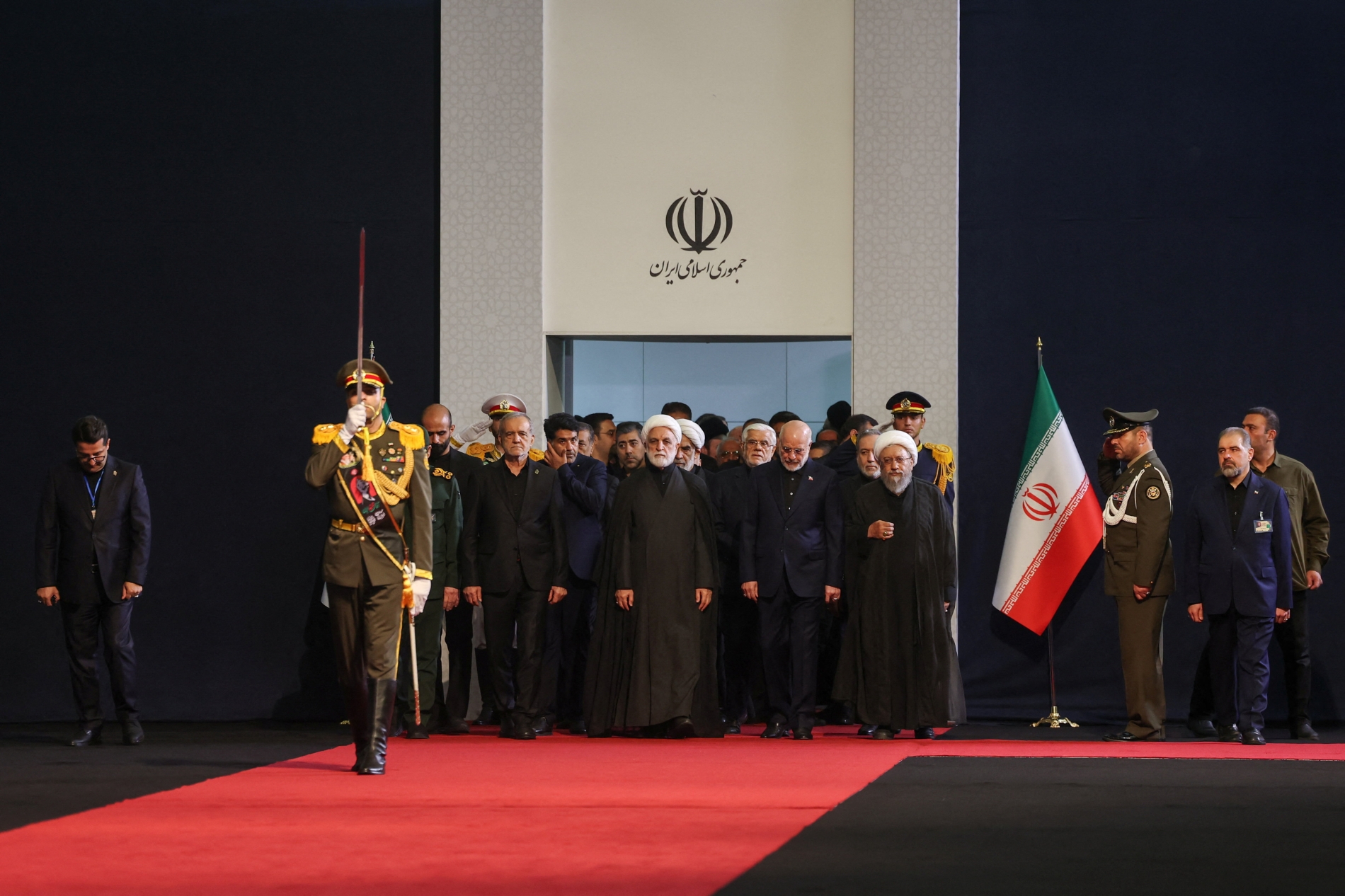
Each of these is familiar on its own, but together it amounted to the quiet conversion of a revolutionary regime into a security state. It was administrative work, not ideological. Khamenei's real innovation was essentially bureaucratic. He governed through committees, councils, and appointments, rather than from the pulpit, as Khomeini had done. He rarely picked open fights with rival power centres, but seeded loyalists throughout the system and made sure no single institution ever grew independent enough to threaten his office.
All this did not diminish the centrality of the Supreme Leader; rather, it changed what ‘being at the centre’ meant: less a prophet issuing commands than a chairman holding a board together. Here is the distinction the whole succession turns on, and it is worth being precise about, because it explains why replacing a Supreme Leader is harder than it sounds.
Inheriting power only
Khamenei had power and authority, and they are not the same thing. ‘Power’ was the office—appointments, command of the armed forces, control of intelligence, dominance of the political field—whereas ‘authority’ was everything the office could not confer—four decades of experience surviving crises, a personal thread running to every institution, knowing how to deter an elite that knew nothing else.
Power can change hands overnight, but authority is earned in time and cannot be handed over. Whoever succeeds Khamenei inherits the first and almost none of the second, which brings us back to the empty platform at the funeral. For 20 years, Mojtaba Khamenei has been one of the least visible and most powerful men in the Islamic Republic. He worked the Guards, the intelligence services, and his father's office while keeping his name off almost everything. That was an asset while his father was alive: influence without accountability. Unfortunately for him, leadership inverts every part of it.
He cannot summon Khomeini’s charisma, and he cannot fake his father’s authority, which took a lifetime of crises to build. There is also the thing the regime will never say aloud: this is a son following a father, a hereditary succession, in a republic founded on the rejection of monarchy. The Islamic Republic was designed, in part, precisely to prevent power from passing by blood. The entire doctrine of Iran’s Velayat-e Faqih system of governance is rule by the qualified jurist. That was Khomeini’s answer to a century of strongmen handing their countries to their sons. Now the machinery Khamenei built to embody that rejection is being asked to launder its most glaring contradiction.