
A 2024 report by the International Agency for Research on Cancer (IARC) and the American Cancer Society estimated that there were nearly 20 million new cancer cases and almost ten million cancer-related deaths worldwide in 2022. Based on demographic predictions, the number of new cases annually is expected to reach 35 million by 2050, representing a 77% increase compared with 2022.
Lung cancer was the most common cancer in 2022, accounting for nearly 2.5 million new cases (12.4% of all cancers globally), followed by female breast cancer (11.6%) and colorectal cancer (9.6%). It was also the leading cause of cancer mortality, killing 1.8 million (18.7%), followed by colorectal (9.3%) and liver (7.8%). Yet advances in diagnosis and treatment have ushered in a new era of precision oncology, driven by a deeper understanding of tumour genomics and immunological profiles.
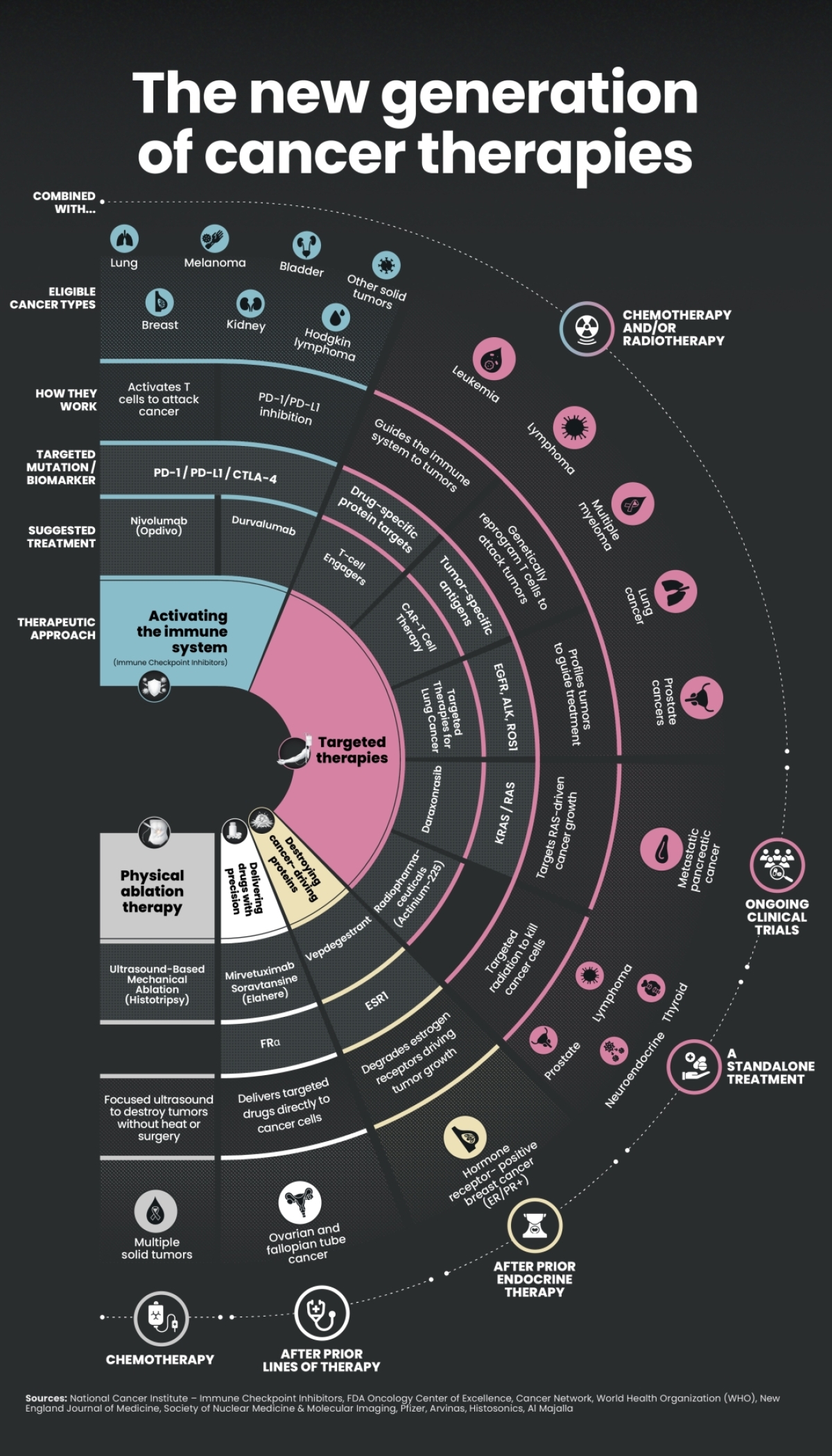
One of the most transformative advances has been immunotherapy, which helps the immune system recognise and destroy cancer cells. Immune checkpoint inhibitors have significantly improved outcomes in cases of advanced melanoma and lung, kidney, and bladder cancers. The drug nivolumab (Opdivo) was approved by the US Food and Drug Administration (FDA) in 2026, in combination with chemotherapy for patients with advanced classical Hodgkin lymphoma, highlighting the increasing integration of conventional and next-generation therapies.
Designing new therapies
Tumour genomic profiling is central to precision medicine, particularly in lung cancer, where it guides targeted therapies against alterations such as EGFR, ALK, and ROS1, as well as immunotherapy based on predictive biomarkers. In haematological (blood) cancers, CAR-T cell therapies continue to advance treatment by genetically modifying immune cells to recognise and attack cancer cells, especially in resistant leukaemia, lymphoma, and multiple myeloma.
In 2026, targeted protein degraders emerged as another promising therapeutic class, with vepdegestrant approved for advanced breast cancer with ESR1 mutations. By promoting oestrogen receptor degradation rather than simply blocking its activity, it represents a new approach to targeting cancer-driving proteins. In ovarian cancer, mirvetuximab soravtansine (Elahere), an antibody-drug conjugate targeting folate receptor alpha (FRα)-expressing tumours, enables more precise delivery of cytotoxic therapy to cancer cells.
In pancreatic cancer, the investigational drug daraxonrasib showed promising results in a Phase III trial, extending median overall survival to approximately 13 months compared with 6-7 months with chemotherapy. By targeting RAS mutations, it addresses one of oncology’s most challenging therapeutic targets.
Other advances include durvalumab-based bladder-preservation strategies for muscle-invasive bladder cancer, ultrasound-based drug-delivery technologies, and radiopharmaceutical therapies that deliver radiation directly to tumour cells. Together, they reflect the shift toward increasingly precise and personalised cancer treatments aimed at improving survival and quality of life.