10 books that showcase how football mirrors the world

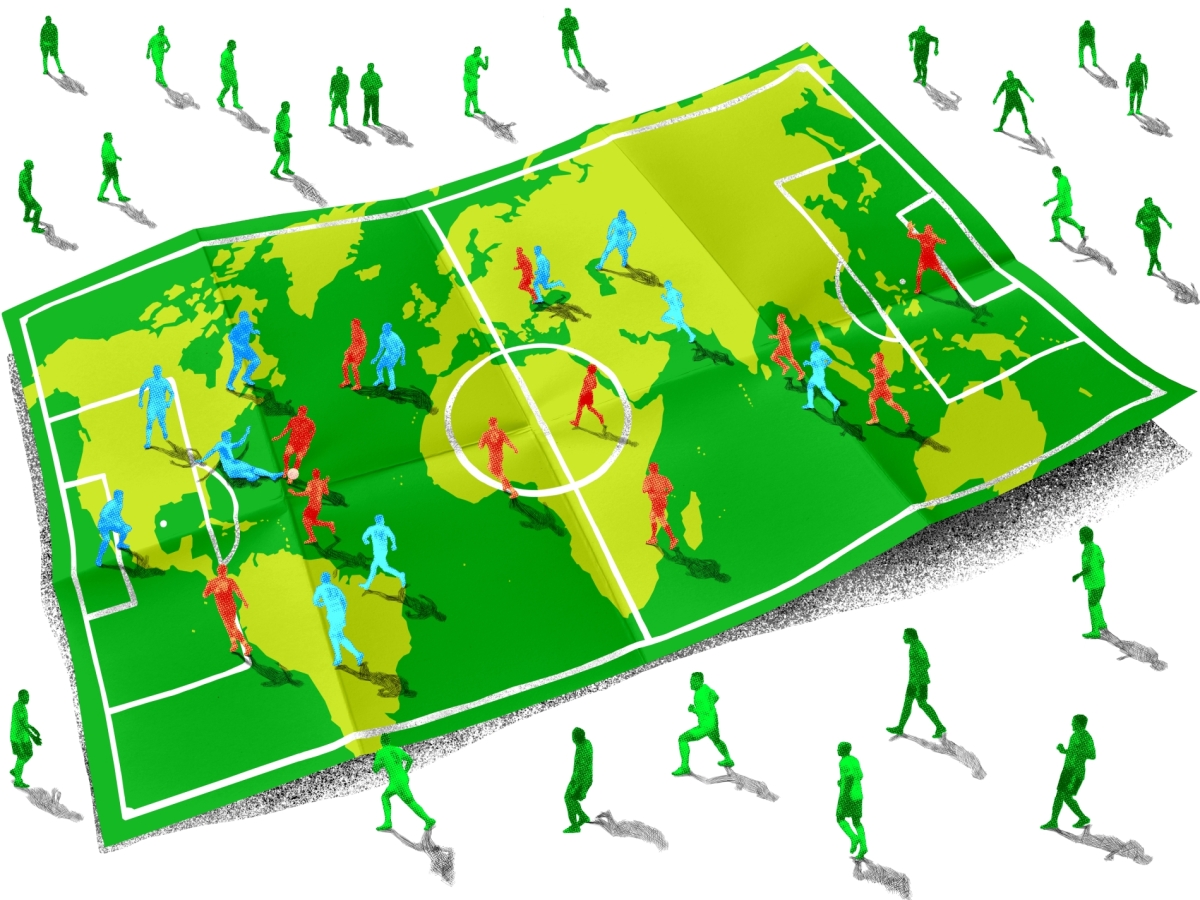
All of life can be seen and understood through the world's most popular sport, as authors from different countries and eras have shown. Al Majalla looks at the books with the biggest impact.

Boris Séméniako

10 books that showcase how football mirrors the world

As the popularity of football grew to such an extent that it became the world’s common language, a library of books about the sport began to take shape. Historians traced its origins, sociologists took inferences from the terraces, statisticians drilled into the data, pundits offered tactical analysis, journalists found the stories, images, and stars of their age, and novelists and poets mined it for literature including fiction and memoir.

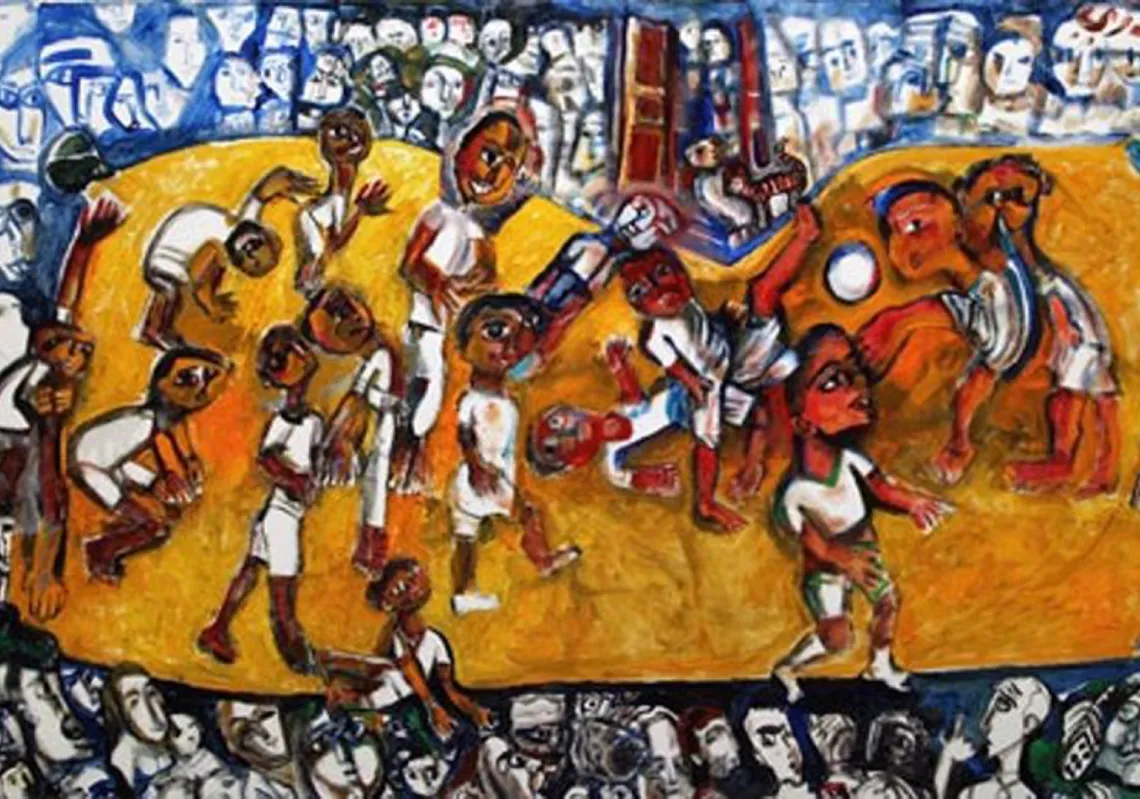
The secret of this abundance lies in a paradox at the heart of the game: its apparent simplicity gives it room to contain the most intricate elements of human experience. A ball, two nets and a few white lines across an open space somehow manages to create and embody stories of exile, class, war, nationalism, dreams, and belonging. In many ways, the history of the game over the past century is a history of the century itself.

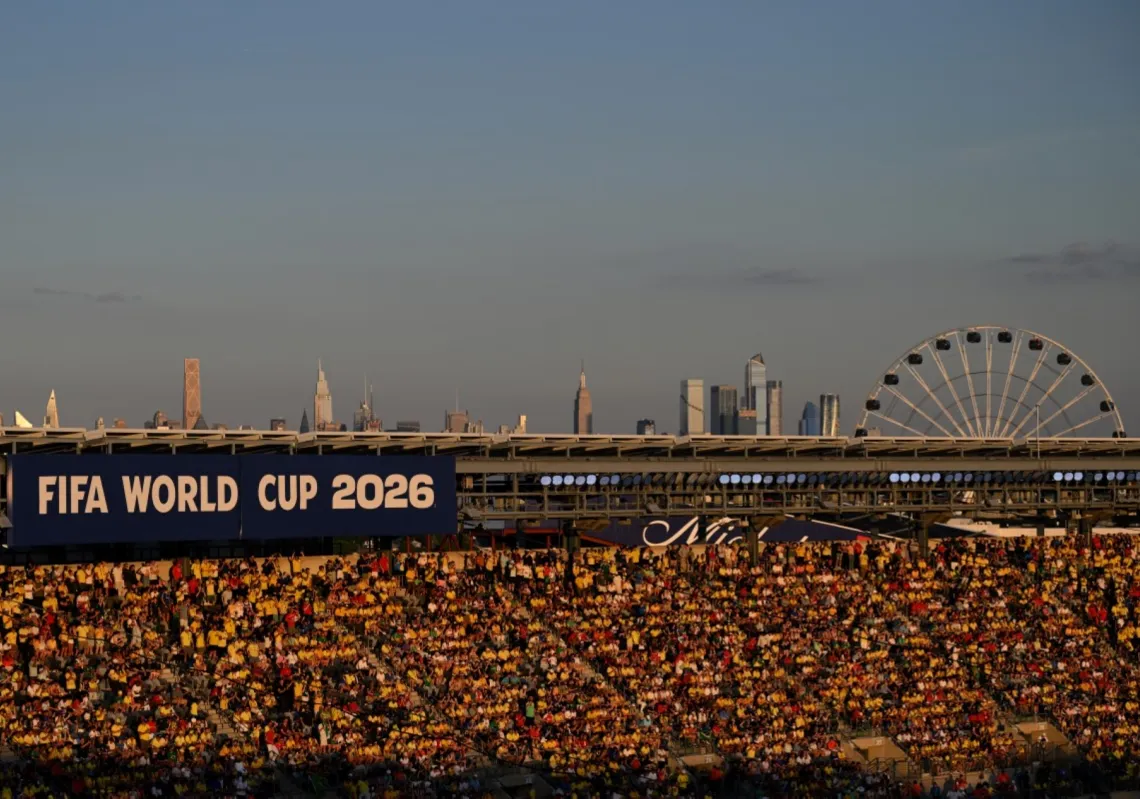
In honour of this year’s World Cup, Al Majalla has compiled ten books that cover the length and breadth of the sport. These books differ in language, time, focus, temperament, and place, yet they share the belief that the football pitch is one of the truest theatres of modern life—and among the most revealing.
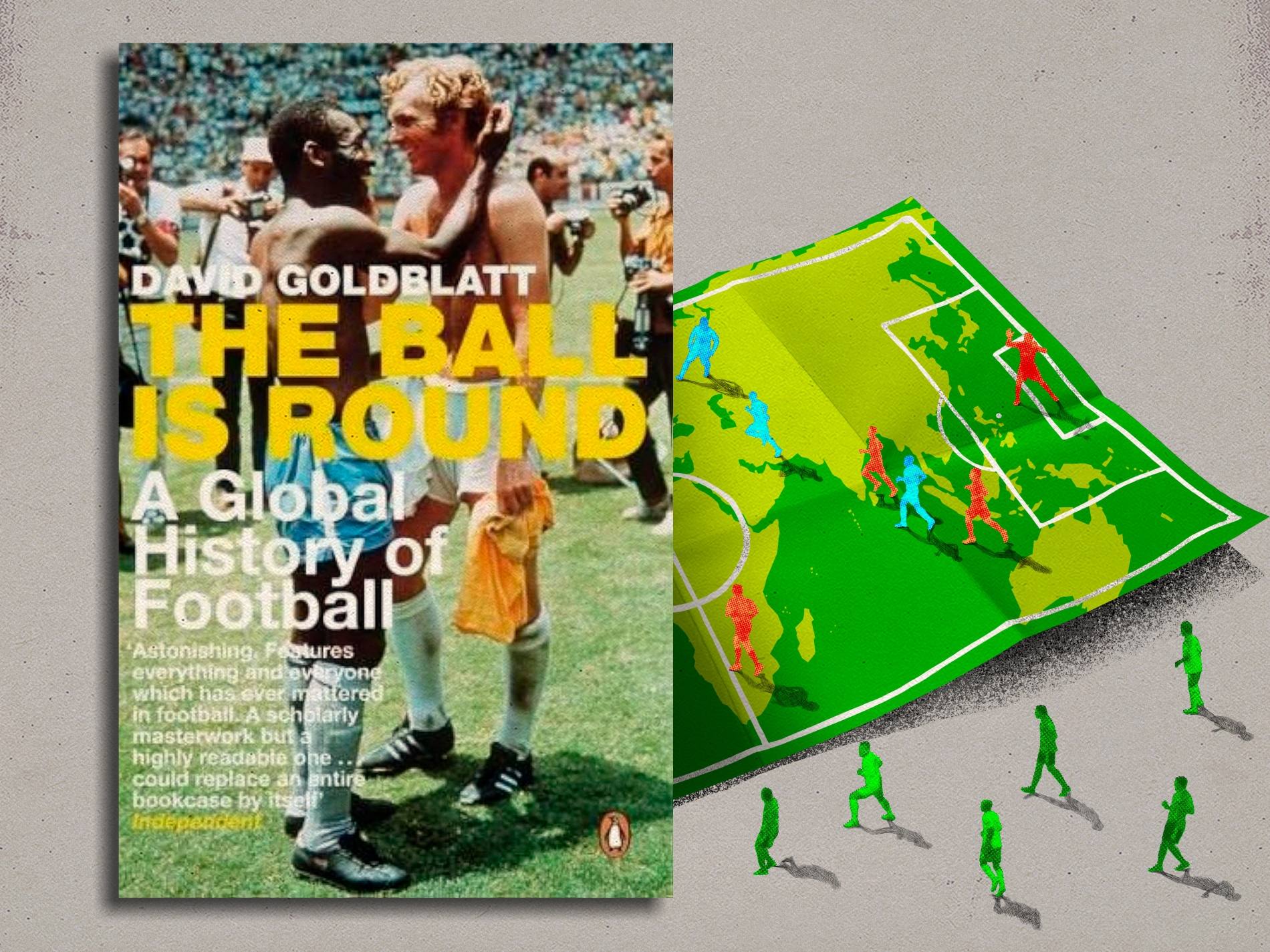

1. The Ball Is Round (2006) by David Goldblatt

It takes audacity to write the history of the world through football, but that is what British historian David Goldblatt has done with this 900-page book, tracing the game from the meadows of Victorian England to the alleyways of Buenos Aires, the mines of the Ruhr Valley, the sands of Rio de Janeiro, and the modern stadiums of Asia.

The Ball Is Round is more history of modernity than a chronicle of goals and trophies, showing how football rode the industrial revolution, empire, migration, television, and money to become the first truly global culture. With the eye of a social historian, Goldblatt links football’s spread to the railways, ports, and factories that carried it to the ends of the earth by way of British workers and sailors.

Readers pass the great milestones of football history, from the codification of its rules in England in 1863 to Latin America’s adoption and transformation of the game, the co-optation of football by tyrants like Italy’s Benito Mussolini, and the advent of corporate money and television rights, and the changes they brought. In the rise of a club or a national team, the author looks at class, nation, and ideology, through which capitalism, colonialism, and nationalism can be understood as clearly as tactics.

The practical value of this book lies in its breadth and global ambition. It is a vast map that places everything in its proper setting. After reading it, watching a match no longer seems like an isolated event, but a knot in a network stretching across continents and centuries.

A paradox that has accompanied the game since its birth then comes into focus. As Goldblatt puts it: “The sport that seems the most local on the surface is, at its core, one of globalisation’s deepest expressions.” This is football’s most comprehensive reference, a work that places any local game within its immense global frame.
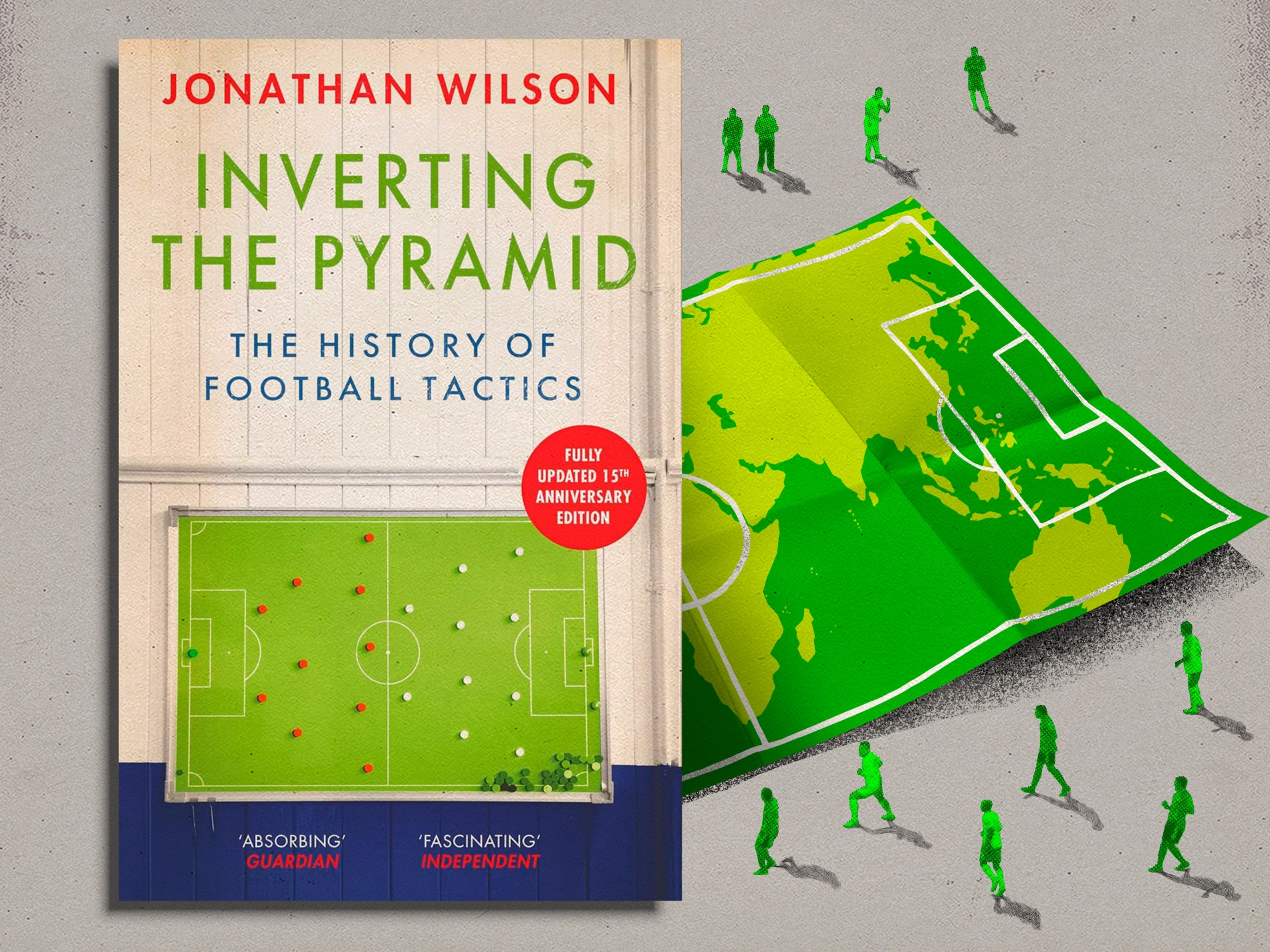
2. Inverting the Pyramid (2008) by Jonathan Wilson

Do football tactics amount to a series of diagrams and arrows on a board, or are they a history of ideas and a contest of philosophies? Jonathan Wilson reveals them to be the latter. The title of this book, Inverting the Pyramid, is itself a richly suggestive metaphor. The game began as an attacking pyramid, its summit crowded with forwards in a 2-3-5 formation, then gradually that structure turned upside down over the course of a century, until its weight settled at the back, and the more commonly known 4-4-2.

From the original attacking set-up to the more recent instinct for caution, Wilson links every evolution in footballing formation to the temperament of the nation that produced it. He recounts how Herbert Chapman devised the ‘W-M’ system (the 3-2-2-3 shape) at Arsenal to strengthen his defence; how Hungary arrived at Wembley in 1953 and defeated England 6-3 thanks to a withdrawn centre-forward (Nándor Hidegkuti) who bewildered England’s defenders; how Helenio Herrera raised the Italian catenaccio (meaning ‘door-bolt,’ a heavily defensive Italian tactical system) into a fortress; and how Ajax Amsterdam unveiled ‘total football’ as a doctrine of freedom and space.

In every formation, Wilson finds a vision of the world translated into 11 men on grass. In the Danubian school of Vienna, he detects an inclination toward elegance. He also shows how ideas cross borders. Englishman Jimmy Hogan was a football coach who planted his school in Vienna and Budapest. It bore fruit, as Hungary beat England. The book shows the evolution and takes us to today, to the age of the high press and the ‘false nine’, as tactical boundaries shift.

Reading Inverting the Pyramid changes the way the game is read. The apparent disorder of play begins to reveal its hidden architecture, and the 90 minutes begin to look like a silent argument between schools, eras, and ideas. Wilson writes less for those who want to coach football than for those who want to understand it, turning tactics into a language through which every footballing culture inscribes its identity.
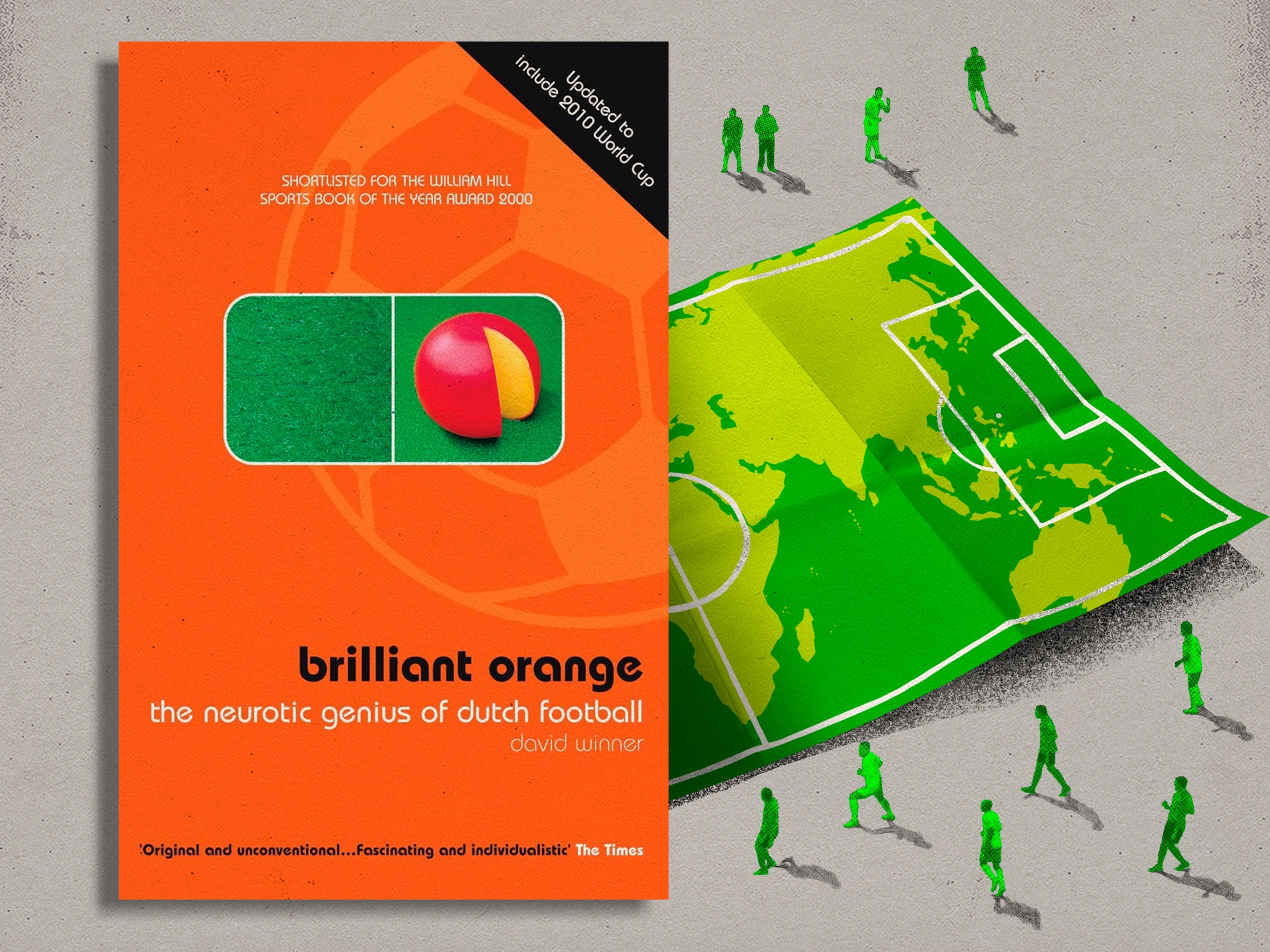
3. Brilliant Orange (2000) by David Winner

For David Winner, Dutch football can be reduced to one word: space. In a country that wrested its land from the sea through dikes and reclamation, measuring and designing every inch, the nation’s football too grew obsessed with space, whether creating it, constricting it, stretching it, or suffocating it. This was ‘total football,’ a term conceived by Dutch footballer and coach Rinus Michels and taken to the summit of footballing refinement by Johan Cruyff, the greatest Dutch footballer of all time, who was recognised globally by winning three Ballon d’Or accolades during his career.

Winner builds a witty bridge between the terraces of Amsterdam, Dutch painting, urban architecture, and landscape design. He sees the Dutch obsession with organising space on the pitch as an extension of a historical obsession with taming nature and ordering place, until ‘total football’ becomes an aesthetic philosophy before it is a sporting plan. The same sensibility echoes in the abstraction and geometric severity of modern Dutch art, then travels from Amsterdam to Barcelona, where Cruyff later coached, turning it into a school inherited by successive generations.

The book’s intellectual depth but light spirit is encapsulated by the subtitle: The Neurotic Genius of Dutch Football. Inhabiting the text is a paradox: this nation has produced some of the most beautiful football in history, but has never won the World Cup, having lost in the final in both 1974 and 1978, during an era when the Netherlands were dominant. It shows how the quest for aesthetic perfection can in fact be an impediment. Winner meditates on this tension—between invention and winning. He has produced a book as much about the Netherlands as it is about football, explaining why that style remains among the game’s deepest imprints.
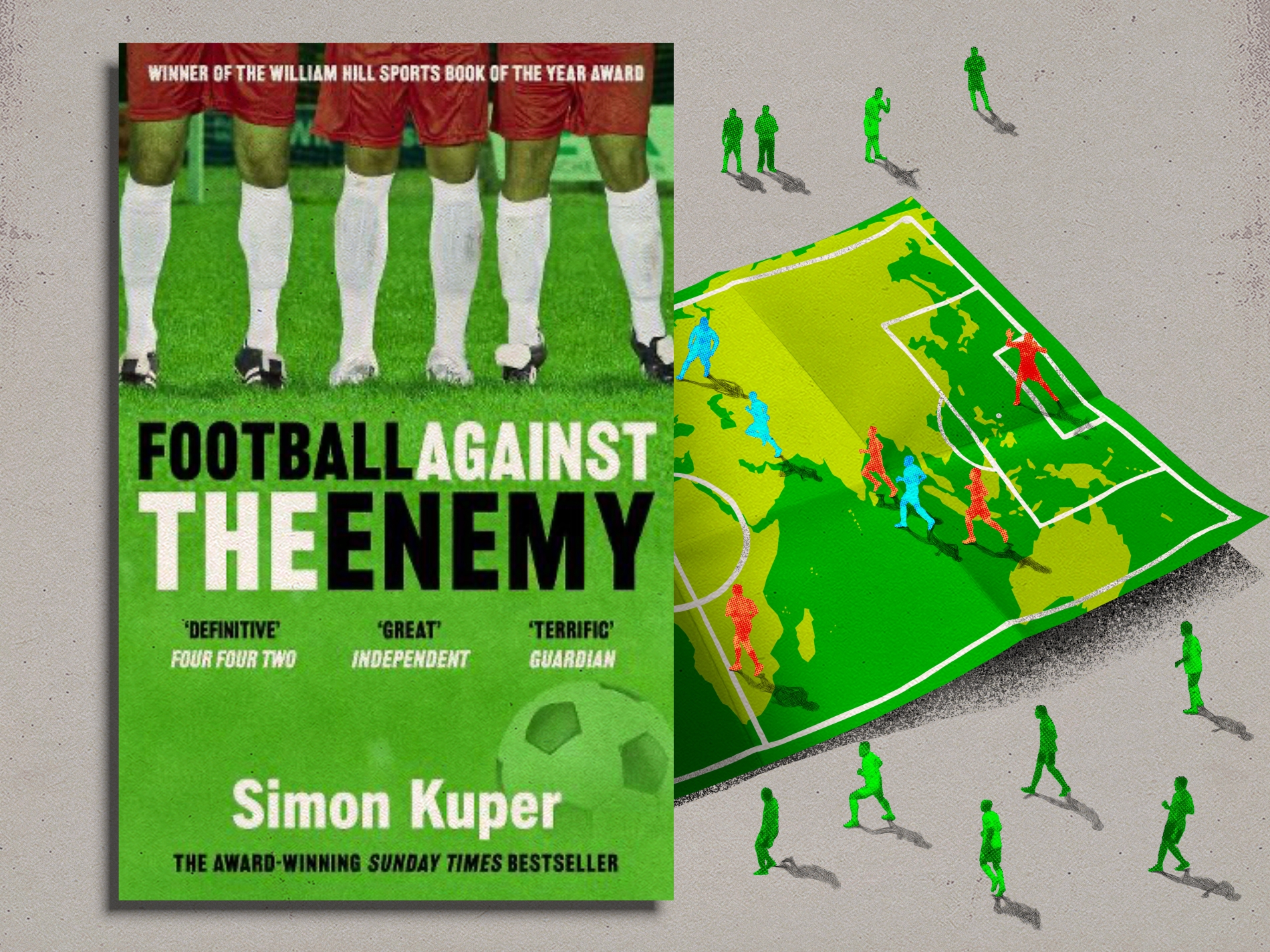
4. Football Against the Enemy (1994) by Simon Kuper

At the beginning of the 1990s, the young journalist Simon Kuper took a single idea and carried it around the world: that football is a mirror of nations, exposing what they conceal even from themselves. He visited 22 countries, from ex-Soviet states to Argentina, Cairo, and a South Africa newly emerging from apartheid, gathering testimony to the entanglement of the game with power, repression, and identity.

Kuper’s light-touch style nevertheless combines the curiosity of the traveller with the intelligence of the analyst. He tells events as living stories, without burdening them with the weight of an academic thesis. He shows how Argentina’s dictatorship used the 1978 World Cup to burnish its image, how matches between the Netherlands and Germany still summoned the wounds of Nazi occupation decades later, and how clubs became havens for the suppressed and the voiceless.

The author pauses in Glasgow, where the rivalry between Celtic and Rangers condenses centuries of religious division, and in Africa, where football intertwines with sovereignty, independence, corruption, and the hopes invested in national teams. At every stop, he discovers that what happens in the stands is a concentrated echo of what happens in the streets and in the palaces.

The book established an entire literary genre when it won the William Hill Sports Book of the Year award as a way of understanding international relations and national conflicts through the pitch. Those who read it will draw inferences from games between two national teams, sensing the history, grievances, and dormant enmities that lie behind the 90 minutes. In Kuper’s hands, viewers become readers of the world.
5. The Soccer War (1978) by Ryszard Kapuściński

In July 1969, war broke out between Honduras and El Salvador, claiming thousands of lives in just a few days. Short but brutal, it later became known as the ‘Hundred Hours War.’ What helped ignite it were football matches in the World Cup qualifiers that stirred old grievances over migration and land. The Polish writer Ryszard Kapuściński was a witness and correspondent, recording how a football match could detonate the pressures accumulated between two countries.

From that episode, his book drew its title. The Soccer War brings together reports by one of the greatest correspondents of the 20th century, moving through African coups, Latin American revolutions, and wars of independence, from Congo to Algeria and the jungles of Central America. Between them runs the thread of football—a match here exposing a social time bomb, a crowd there revealing what censorship keeps hidden.
A ball, two nets and a few white lines across an open space somehow manage to create and embody stories of exile, class, war, nationalism, dreams, and belonging

In Kapuściński's hands, journalism becomes literature, and the passing dispatch rises into an enduring human scene through the dense, poetic language that made him one of the fathers of modern literary reportage. He writes of refugees fleeing bombardment and of cities in flames, then turns to a stadium or a chant that reveals the human root of the catastrophe.

This is a work of global journalism that uses football as a lens through which to read disorder, letting the sport reveal a sometimes violent voice of anger, belonging, and wounded dignity. Kapuściński saw war up close and personal, having heard its omens in the roar of the terraces. No other writer could have done what he has done here.

6. Faruk's Last Penalty (2016) by Gigi Riva

In Florence, in the summer of 1990, Faruk Hadžibegić walked toward the penalty spot carrying an entire country on his shoulders. A goal separated his Yugoslavia side from the World Cup semi-finals. It was not to be. He was bested by the Argentine goalkeeper Sergio Goycochea, which sent Yugoslavia's 'golden generation' out of the tournament. Shortly after, Yugoslavia dissolved into its constituent parts.

That last Yugoslav side embodied multiplicity at its height, from the Serb Dragan Stojković, to Croats Robert Prosinečki and Davor Šuker, Macedonian Darko Pančev, Slovenian Srečko Katanec, Montenegro-born Dejan Savićević, to Faruk himself, the Bosnian son of Sarajevo, a city that would be besieged and bombarded in a civil war two years later.

When they came to Italy for the 1990 World Cup, their country was already cracking. The Maksimir Stadium riots in Zagreb, which became an omen of war, took place just weeks earlier. By 1992, the Yugoslav players were scattered across opposing fronts. Pančev and Savićević lifted the European Cup with Red Star Belgrade in the last glory of a footballing country. Prosinečki and Šuker became heroes of Croatia at the 1998 World Cup. In this way, yesterday's teammates became divided by warring flags.

From this, the Italian journalist and Balkan specialist Gigi Riva weaves his book, returning years later to those men, their testimonies, and that missed penalty that compressed the last moment of togetherness for Yugoslavs. The pages of Riva's book slide from sports reporting into a quiet elegy for a vanished homeland plurality. The author knows war as intimately as he knows the pitch.

Faruk stands at the heart of the book as a painful symbol: a Bosnian captain who carried the final kick of a united country, then watched his city sink into the longest siege in modern European history. In one sense, it was a missed shot. In another, it was the last thing the children of a country shared just before it disappeared into history.

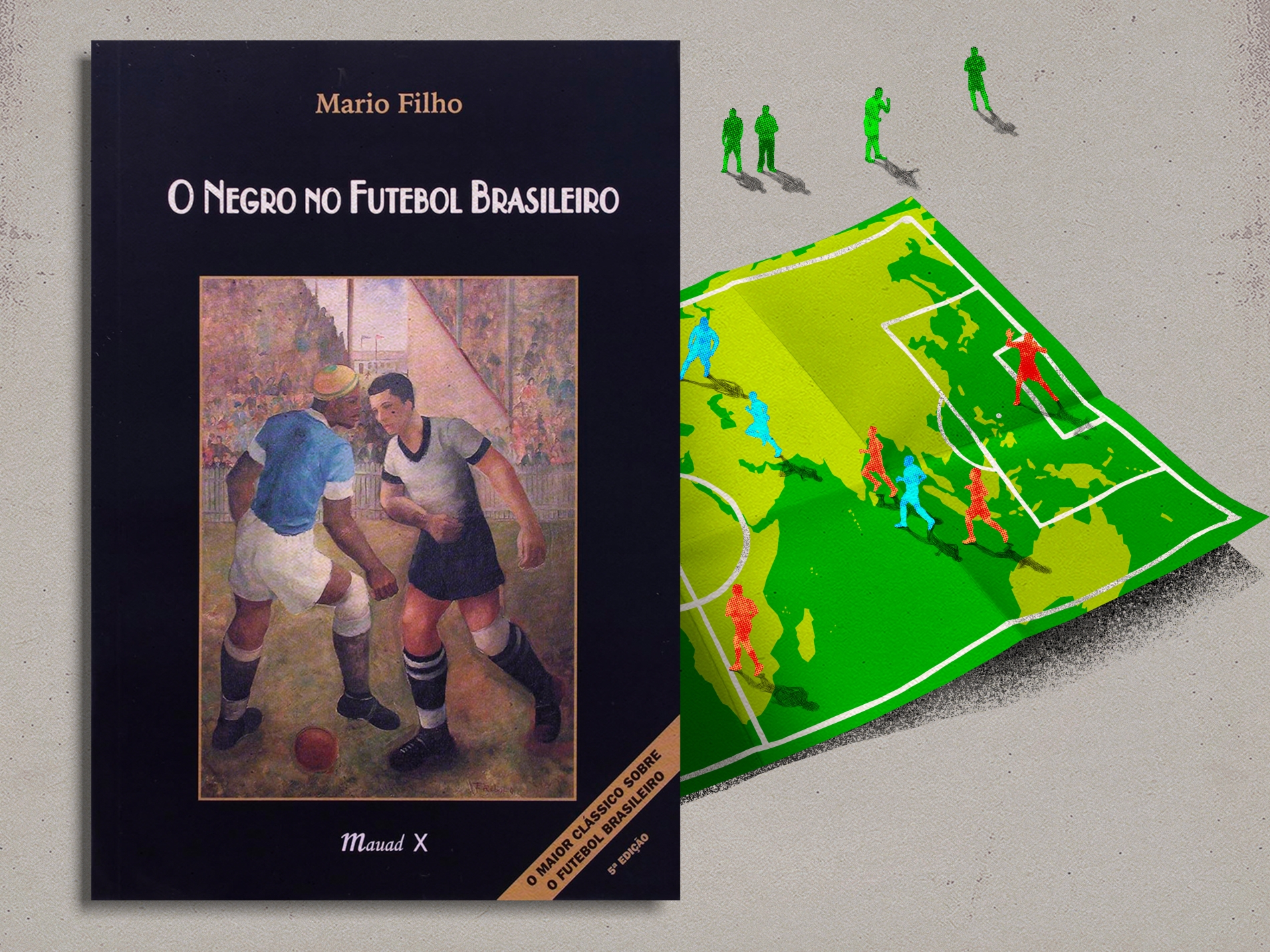
7. The Black Man in Brazilian Football (1947) by Mário Filho

At the beginning of the 20th century, Brazil's white elite monopolised football and closed its gates to Black people and the poor. From that era comes a story that became a symbol: a mixed-race player covering his face with rice powder to appear white, leaving his team to inherit the bitterly ironic nickname Rice Powder (Pó-de-arroz). That team was Fluminense, one of Brazil's most famous football clubs and home to legends such as Ademir, Rivellino, Carlos Alberto, Romário, Marcelo, and Thiago Silva.

Upon these details, journalist Mário Filho, who died in 1966, builds his foundational book on race and football in Brazil. He chronicles the journey of the Black player from exclusion to ascendancy—from Arthur Friedenreich, son of a German immigrant father and an Afro-Brazilian mother, and one of the first great mixed-race stars, to Leônidas da Silva, the "Black Diamond" widely credited with popularising the bicycle kick who dazzled at the 1938 World Cup.

A few years earlier, in 1923, Vasco da Gama broke the barrier by fielding Black players and winning the title. The elite clubs responded with rules on player literacy and professionalism that excluded most poor and Black players. Out of that struggle, according to Filho, Brazilian football emerged with its free, dancing style, one that would become its signature on the global stage.

The book reaches far beyond sports history into Brazilian sociology. It dismantles the myth of racial democracy and reveals the price Black players paid to become heroes in a country that had long denied them. The legendary Maracanã stadium officially bears Filho's name in tribute to his influence in football journalism in Rio. It is a reminder that the 'beautiful game' was a victory wrested from the heart of discrimination at great human cost. This is the story of modern Brazilian history as seen from the pitch, where football intersects with slavery, migration, and the making of a nation.

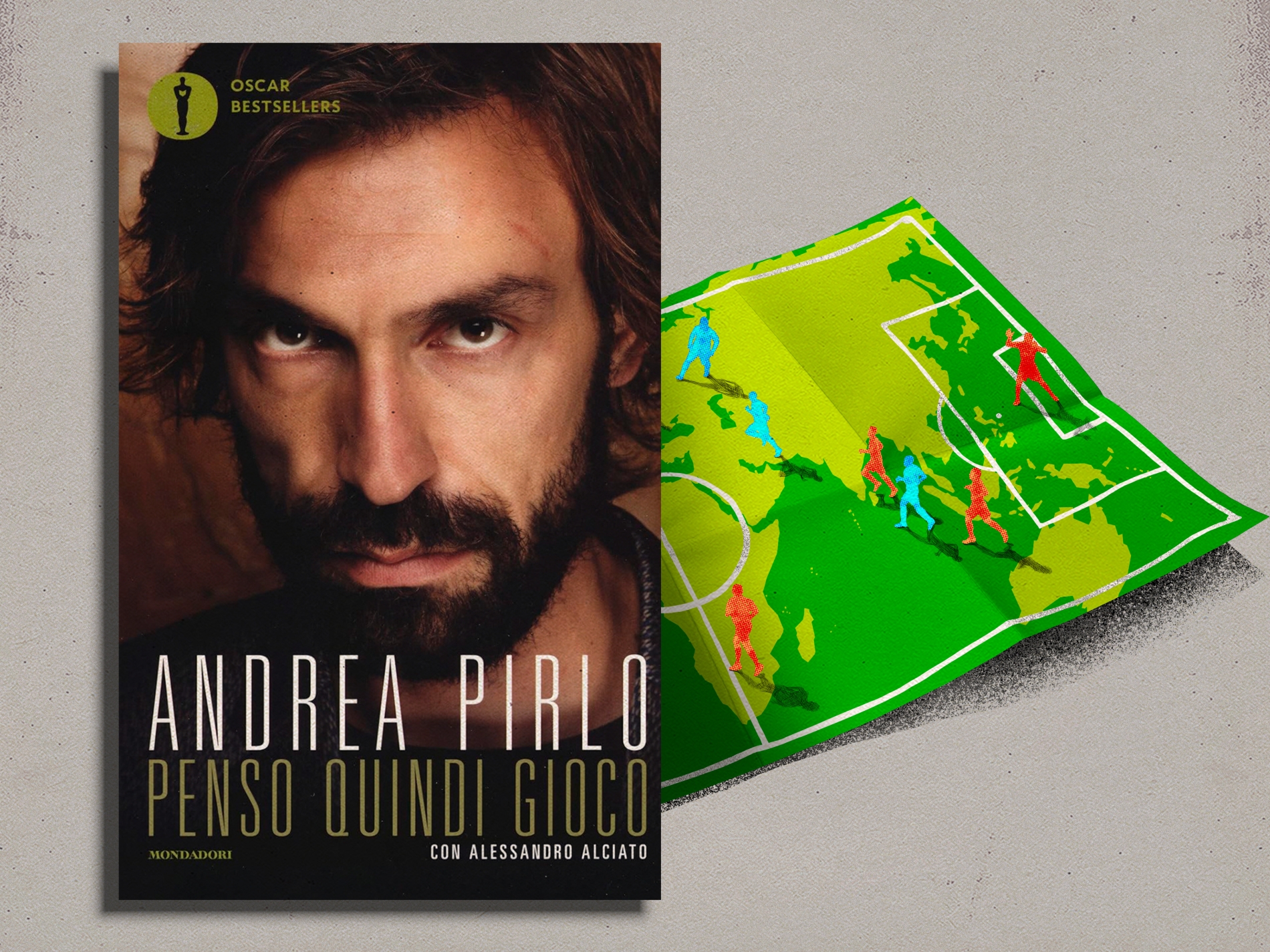
8. I Think Therefore I Play (2013) by Andrea Pirlo

Imagine a player who detests running, regards physical training as an insult to his intelligence, and describes himself as a chess player who happened to inhabit an athlete's body. This is how Italian midfielder Andrea Pirlo presents himself in his memoirs, in a languid, ironic voice that springs from his philosophy of play itself.

This is a lightly pensive monologue from a world-class playmaker who played with vision, at times seeming to look down upon the pitch from above. He recounts his great moments with the same ease with which he controlled the ball, including his triumph at the 2006 World Cup, his golden years at Milan, his rebirth as a star at Juventus, and his audacious 'Panenka' penalty against England at Euro 2012, when he slowly lifted the ball into the middle of the net with serene confidence.

He moves among grass, vineyards, wine, friendships, and enmities, gently mocking the game's manufactured sanctity while revealing the anxiety that lies beneath the mask of nonchalance. This book breaks the monotony of the star memoir. In place of a catalogue of achievements, it offers a contemplation of the game with delicacy and wit. Readers will laugh, then discover that they have grasped something of the essence of play that earnest volumes failed to convey.

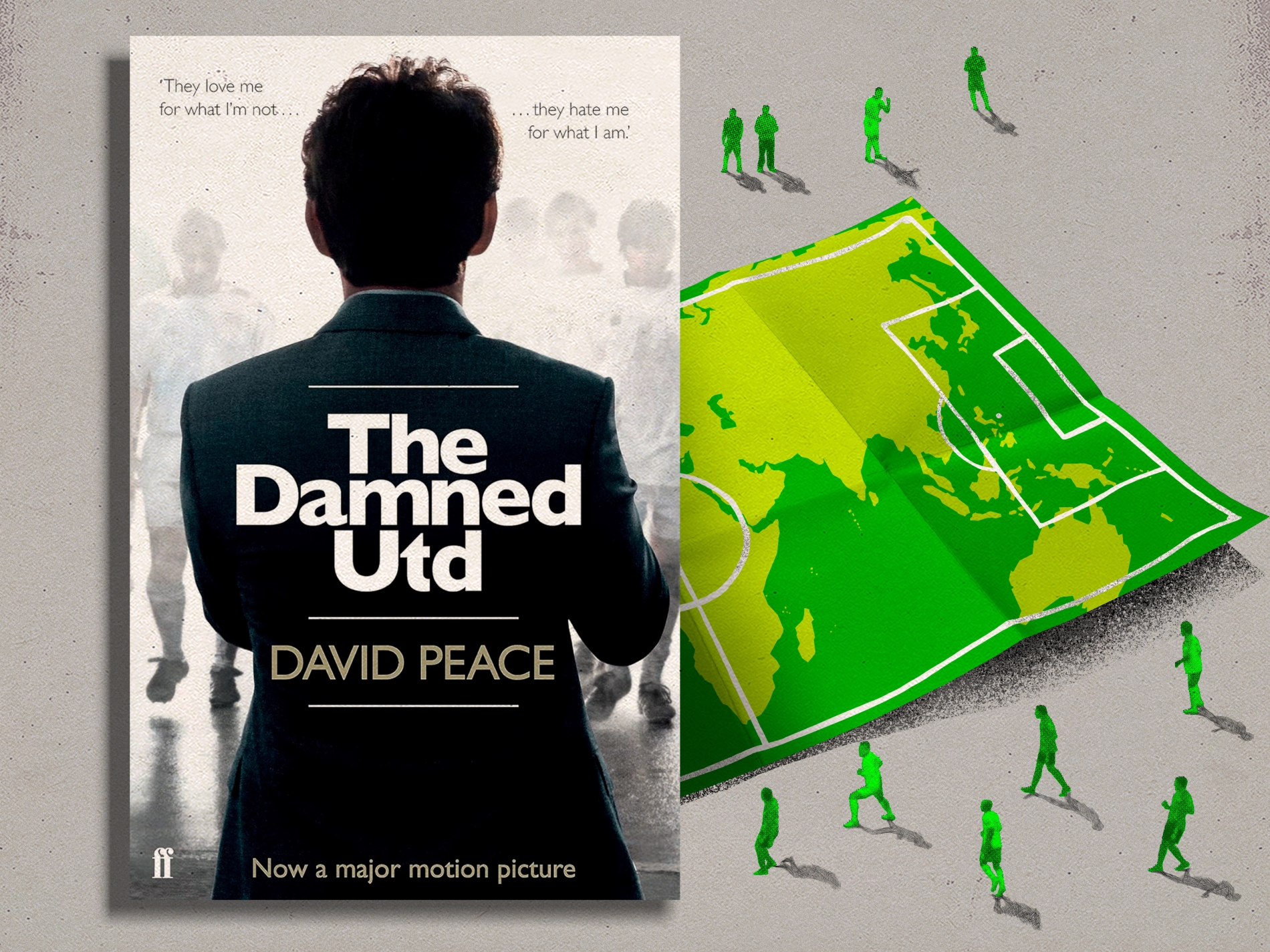
9. The Damned United (2006) by David Peace

Legendary British football manager Brian Clough's reign as manager of the title-winning Leeds United in 1974 lasted just 44 days, before he was sacked by the board of directors. He had taken over from Don Revie, his rival, who had been the manager at Leeds for about 13 years. Clough inherited a team deeply loyal to Revie, who was known to have recommended another manager as his successor.

Those 44 days are what David Peace builds his novel on. He dives into Clough's mind and emerges with a fevered, recursive text full of short, sharp sentences circling around a single obsession: Clough's hatred of Revie, who had built Leeds in his own image. Clough arrived determined to dismantle that edifice stone by stone, but was fired after a players' revolt that effectively amounted to a vote of no confidence.

Peace's literary technique offers a feverish first-person present-tense voice that creates a psychological vortex. Readers soon feel imprisoned inside a mind consumed by envy, pride, and solitude. In this way, the novel moves beyond football and enters the human psyche, noting its corrosion under the tyranny of ambition and resentment.

The work provoked controversy and legal action from some of those portrayed within it. Still, it established itself as one of the greatest football novels ever written and later became a celebrated 2009 film of the same name, starring Martin Sheen. Clough rose from the wreckage of those 44 days to lead Nottingham Forest to two consecutive European titles, an astonishing vindication of the man the novel depicts as broken, and who would later battle alcoholism.

The Damned United succeeds in elevating football to the status of material for serious literature. The dressing room becomes a theatre of tragedy worthy of any Shakespearean court. The reader closes the book knowing Clough more intimately than any official biography would ever allow. With a naked frailty, he was both hero and villain.

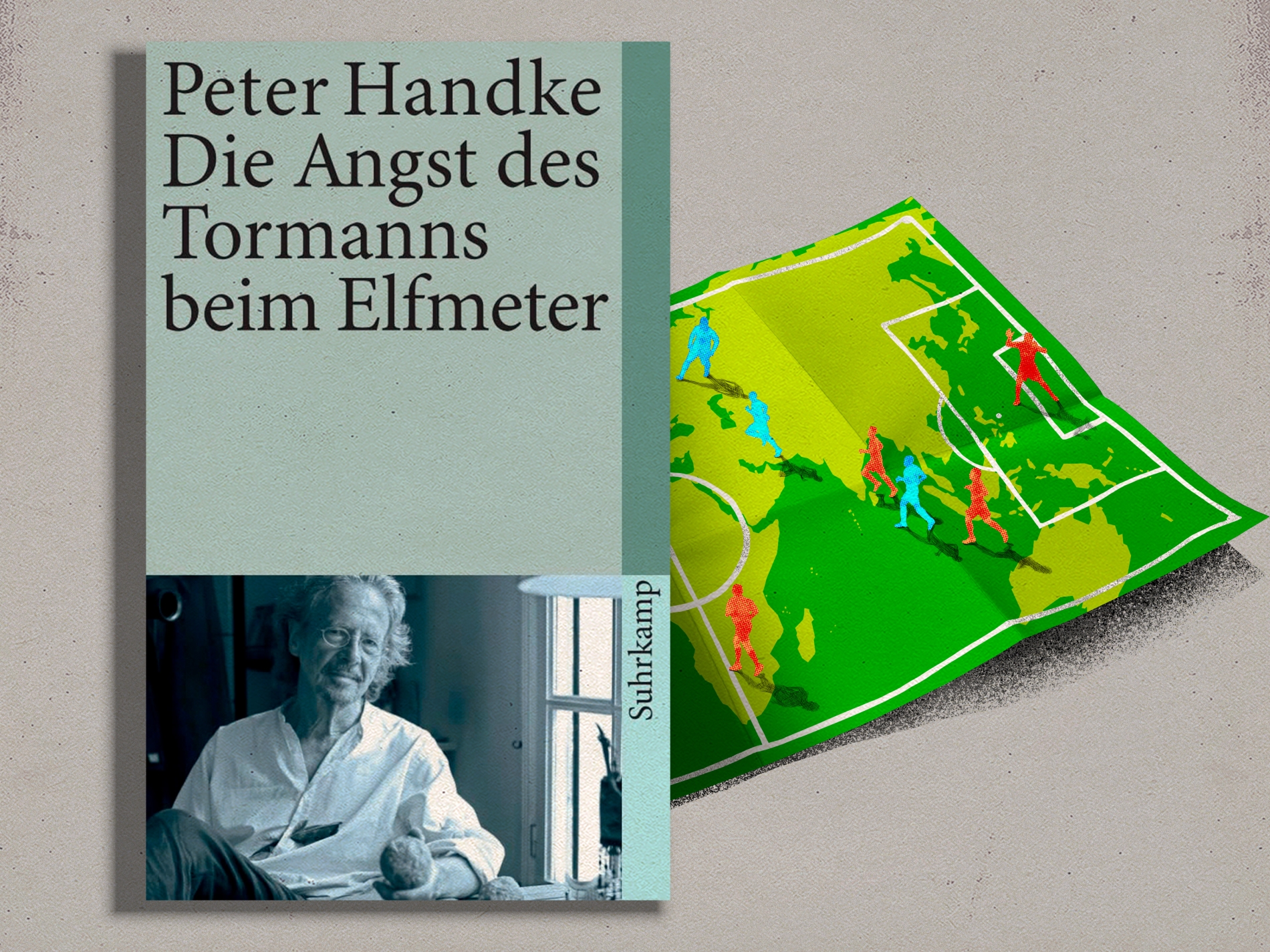
10. The Goalie's Anxiety at the Penalty Kick (1970) by Peter Handke

The goalkeeper stands alone before the penalty taker. He must choose his diving direction (if any) before the ball is struck, wagering everything on intuition. In that suspended instant between control and helplessness, Peter Handke condenses the anxiety of the human condition in this 1970 novel.

Its protagonist, Josef Bloch, is a former goalkeeper who, after losing his job, drifts into bewilderment and a crime of obscure motive. Everything has become strange to him: language, objects, faces. Handke describes this estrangement with terrifying precision, gathering the details of things in a way that empties them of meaning, until the bond between word and object begins to fray. He turns the goalmouth into an existential metaphor: a goalkeeper forced to guess, a spectator awaiting the decisive instant, an isolated individual facing a destiny toward which he has only conjecture.

This book belongs to the wave of postwar Austrian literature that made alienation its central concern. Today, it is a foundational text on anxiety. Handke's style is cool and exact, recording the details of the world and an inability to understand them, which infects the reader with Bloch's estrangement. With the final sentence on the goalkeeper and the penalty kick, it becomes clear that the title carried its philosophical key all along.

In 1972, Wim Wenders adapted the book into one of the landmarks of New German Cinema, while the author won the Nobel Prize in 2019, confirming that the game is capacious enough to hold literature's great questions. In Handke's goalkeeper, the modern man himself stands: alone, guessing, waiting.

font change