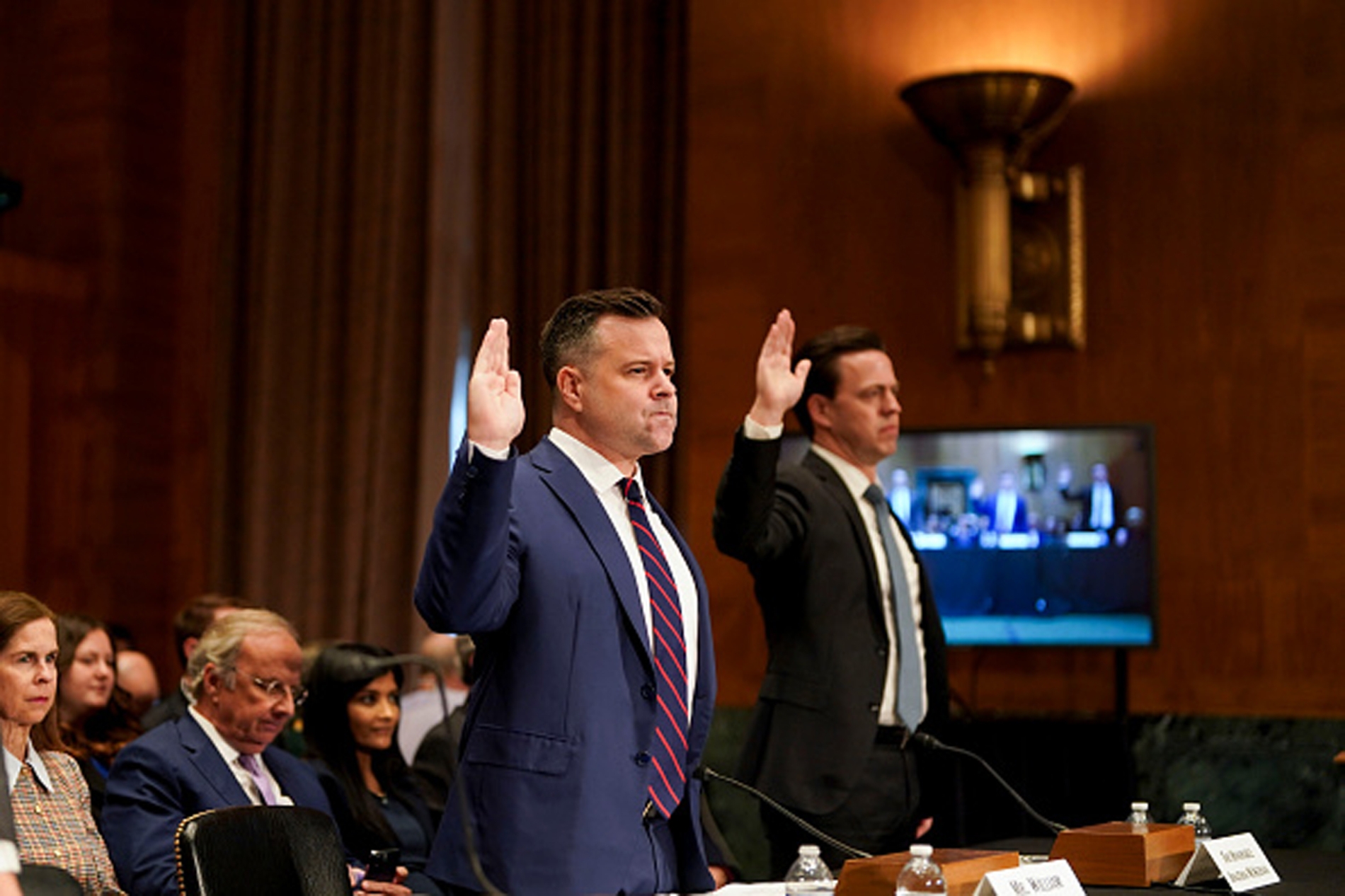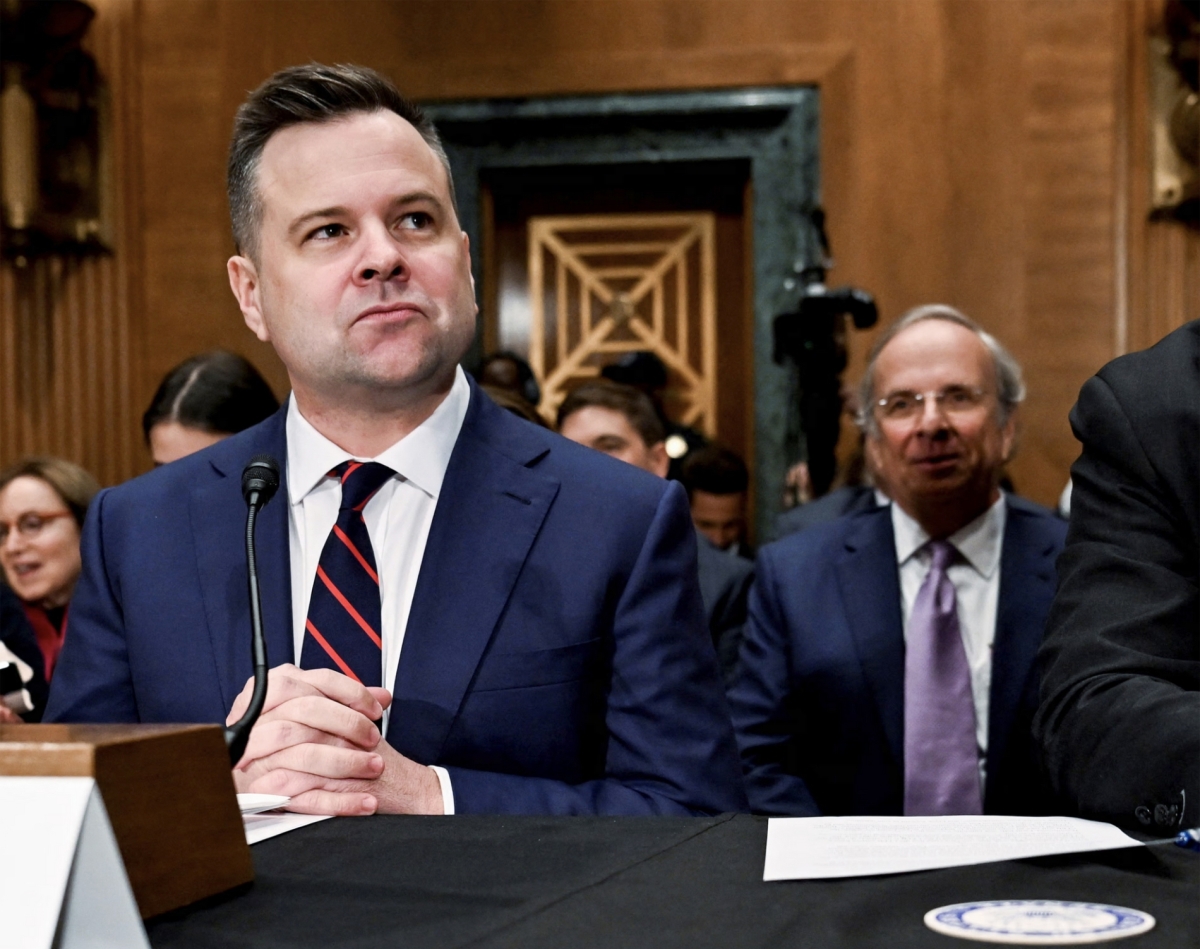

In keeping with Donald Trump’s tendency to choose loyalists over specialists for his administration, the US President has appointed his friend Bill Pulte, 38, as the Acting Director of National Intelligence (DNI), despite him having no intelligence or national security experience. The DNI oversees 18 agencies, including the Central Intelligence Agency (CIA), the Defence Intelligence Agency (DIA), and the National Security Agency (NSA), so is incredibly sensitive.
He replaces Tulsi Gabbard on 19 June. She resigned citing family reasons but was reported to have disagreed with Trump over the administration’s approach to Iran. While he is acting DNI, Pulte will retain his positions as director of the Federal Housing Finance Agency and as chairman of the two giant federal mortgage finance institutions—Fannie Mae and Freddie Mac—which oversee transactions worth more than $10tn.
Trump has faced a storm of opposition to Pulte’s appointment from both Democrats and Republicans, so has announced the nomination of Jay Clayton, the US Attorney for the Southern District of New York and former chairman of the Securities and Exchange Commission (SEC), as permanent Director of National Intelligence. Clayton enjoys the approval of lawmakers from both parties, but Trump still insists on appointing Pulte as Acting DNI before the Senate confirms Clayton. Pulte could serve for up to seven months, during which time he would have all the powers of a permanent DNI.
Who is Pulte, and why is he so controversial? Born in Florida in 1988 into a wealthy family, he was the sole heir of his grandfather, the construction billionaire William Pulte, and the first son of Noreen and Mark Pulte before his father remarried. His grandfather founded the real estate construction company PulteGroup. During high school, Pulte worked for a construction company. He later graduated in journalism from Northwestern University, where he met his wife, a chemical engineer.
After graduating, he worked for several capital investment companies before founding Pulte Capital in 2011. It employed more than 200 people and generated annual revenue of $30mn. In 2016, Pulte was appointed to the board of PulteGroup, chaired by his grandfather, becoming the youngest board member at one of the 500 largest companies, according to Forbes, but the board dismissed him in 2020, after his grandfather’s death.
Pulte then launched a charitable initiative on Twitter, attracting more than 3 million followers. In July 2019, Pulte promised to give cars to two veterans if Trump reposted a tweet praising him (Trump did). Pulte claimed that he had met Trump several times and that the president was aware of his charitable foundation’s activities. Pulte became a Republican donor and got involved in the Republican National Committee, and in Trump’s 2024 election campaign. Estimates of his wealth vary, but he said he would distance himself from his companies if he took up political office, and lobbied Trump for the post of Housing Secretary (which went to Scott Turner).

The president’s bulldog
After his inauguration in January 2025, Trump nominated Pulte to lead the Federal Housing Finance Agency (FHFA). After Pulte won Senate approval, he began by tightening his grip on the mortgage finance giants Fannie Mae and Freddie Mac, dismissing 14 senior board members and cancelling many of the policies and decisions adopted by the two institutions under Trump’s predecessor, Joe Biden. These included programmes designed to combat fraud and unfairness in mortgage lending.
He also dismissed dozens of employees at the two institutions with no notice, particularly those overseeing fairness in housing policies within the Federal Home Loan Bank system. Pulte also obstructed the implementation of Diversity, Equity and Inclusion (DEI) policies introduced by the Biden administration. He claimed that he had dismissed about 25% of the FHFA’s workforce and accused more than 100 officials at Fannie Mae and Freddie Mac of unethical conduct. Senate Democrats called on the FHFA’s inspector-general to investigate the dismissals.
In June 2025, Pulte directed the two lenders to recognise cryptocurrencies as assets that could qualify borrowers for mortgage loans. He also ordered a comprehensive review of credit rating agencies, causing their market value to fall. According to The Wall Street Journal, Pulte announced policies on Twitter (now X) without consulting officials or experts, and instructed Fannie Mae and Freddie Mac to approve alternative credit rating agencies after questioning the reliability of the traditional firms.