
From stadiums to conferences, concerts to exhibitions, artificial intelligence (AI) has become part of the experience of big events, and the 2026 World Cup is no exception. AI now helps organise crowds, analyse performance, assist referees, improve audience experience, strengthen security, and shape the images viewers see, to name but a few.
The 2026 World Cup, which is being co-hosted by Canada, the United States, and Mexico, will include a ‘smart ball’ that transmits instant data, three-dimensional (3D) digital models of players, AI tools that help coaches with analysis, and new viewing angles that bring fans closer to the details of the match.
Football fans have had a controversial experience with video technology since VAR (video-assisted referee) entered the game in recent years. The aim was to reduce refereeing errors by offering the on-field referee a second chance to review their decisions with the help of video from a different angle, if the VAR felt it would help, but this has led to delays in the game and a loss of momentum for the attacking team. Moments of celebration increasingly become decisions of technical dispute.
In 2026, however, the trend is to move from video reviews to building an entire system based on the smart ball, digital models, AI, and data analysis. FIFA, world football’s governing body, is moving towards the use of AI and data within the details of the match itself, from the movement of the ball to the position of the player (such as for offside decisions), as well as for performance analysis and viewing experience.
Using data
FIFA has said that the ball (called Trionda) is fitted with a 500 Hz motion-sensor chip that sends precise data to the VAR system in real time. This helps determine the exact moment that the ball is touched—a crucial reference in decisions such as offside, handball, and incidents inside the penalty area. The ball is therefore now part of the data collection system, to be used alongside semi-automated offside technology.
This allows offside decisions to be made more quickly, especially in clear cases. The system used at the 2022 World Cup sent information directly to the VAR room, but in 2026, clear incidents will be sent directly to the match officials on the pitch. This means the assistant referees can raise their flags more quickly, rather than waiting for a longer review from the video room. The hope is to improve the flow of play.
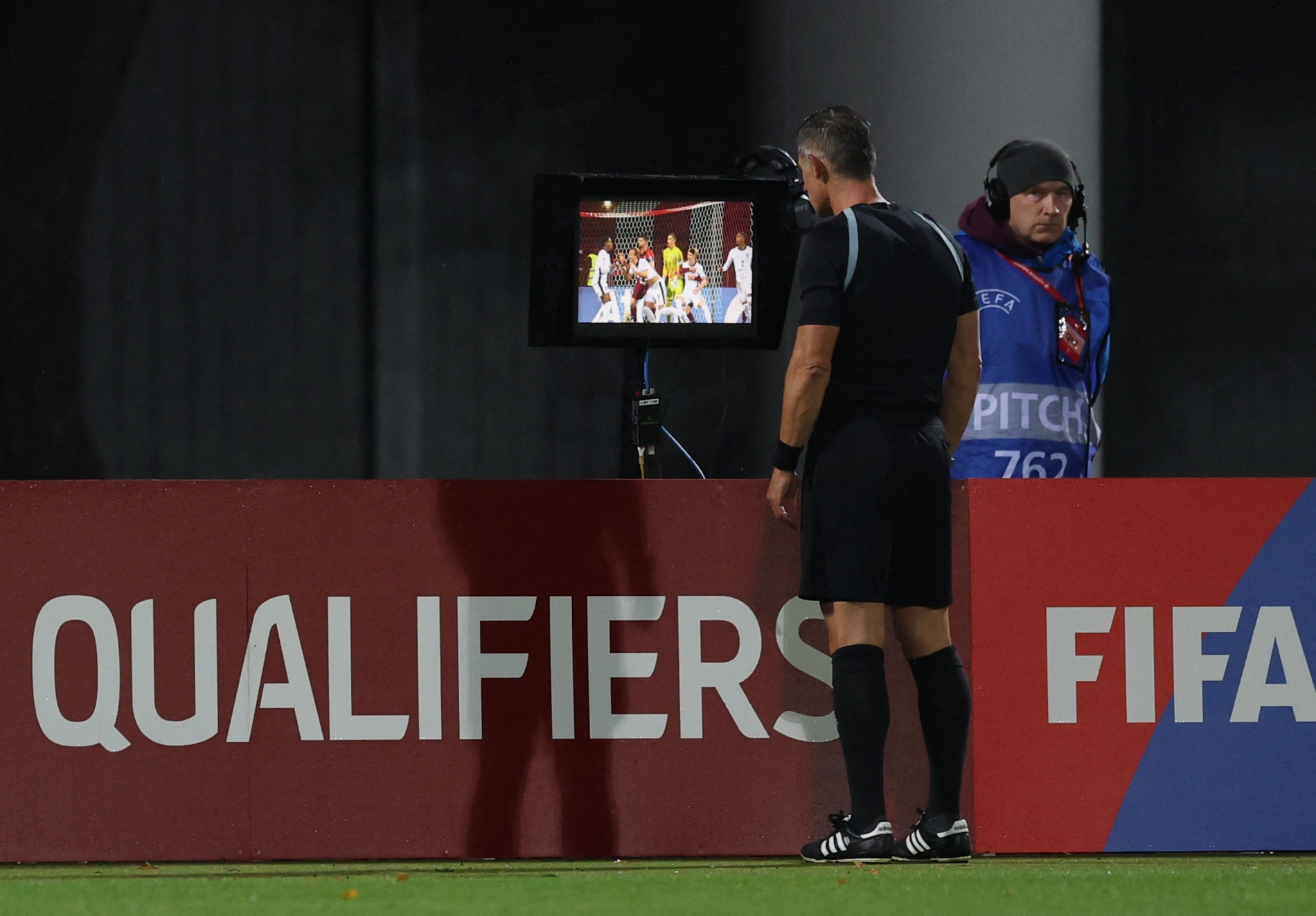
The accuracy of an offside decision depends not only on knowing the player’s position in relation to others, and on identifying the moment the ball is passed. This is where the integration of the connected ball, cameras, and digital player models becomes important. Each element adds a layer of information for the referee, who remains present in situations that require interpretation or judgement.
One of the most notable features expected this year is the creation of 3D digital player models. FIFA has explained that every player taking part in the tournament will undergo a 3D scan, after which the player’s image and digital version will be integrated into the semi-automated offside system, because offside may be called because of a shoulder, head, or foot—not just a player’s general position on the pitch.