Sadr once again dismantles his armed militia. Why now?

The decision to dismantle the Peace Brigades may herald a new stage in the Iraqi state’s trajectory, or it could just be a shrewd recalibration to disorient friend and foe alike

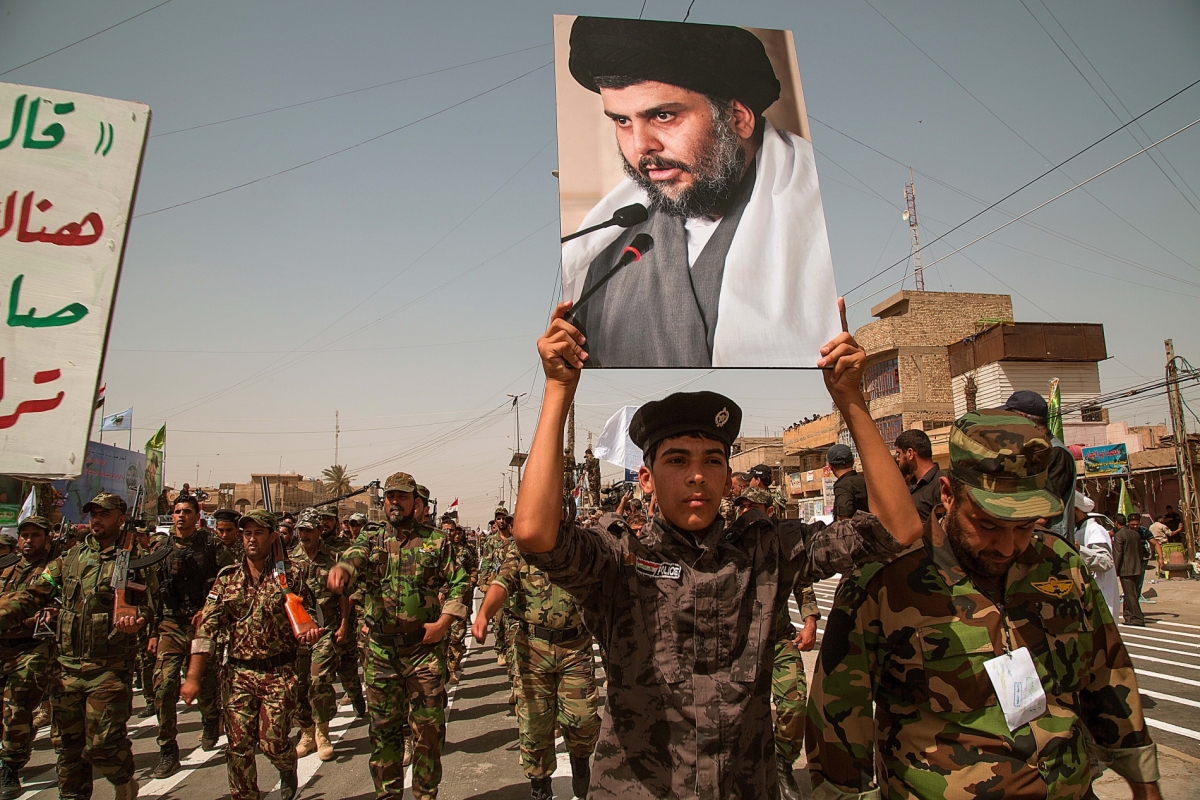
Units of Moqtada Sadr's militia parade with his photo down a main street of the Shiite stronghold of Sadr City June 21, 2014, in Eastern Baghdad.
Washington Post
Units of Moqtada Sadr's militia parade with his photo down a main street of the Shiite stronghold of Sadr City June 21, 2014, in Eastern Baghdad.

Sadr once again dismantles his armed militia. Why now?

For the third time in less than two decades, prominent Iraqi Shiite cleric and politician Muqtada al-Sadr has announced the dismantling of a militia he created and oversaw. Last month, he announced that the Peace Brigades—the last and most important armed wing linked to the Sadrist current—would disarm and fully integrate into the Iraqi army, and affiliated civilian institutions would be transformed into the Bunyan al-Marsous project, without weapons, headquarters or military uniforms, becoming a purely civilian service institution.

The timing of the move is far more significant than the dismantling itself. It comes as US pressure on Baghdad to disarm militias is at an all-time high. It also coincides with rapid regional shifts that have redrawn the balance of power across the Middle East, and with the formation of a new Iraqi government seeking to restore state authority and recalibrate the relationship between official institutions and armed factions.

Weeks before the announcement, al-Sadr had set strict conditions for the move. He called for the exclusion from government of any party possessing an armed wing and demanded that all weapons be placed exclusively under state control. It appeared as if he was trying to redefine himself as a statesman rather than a leader of an armed faction, and also position himself as a proactive player in Iraqi politics, not just a reactionary figure.

To understand the latest development, it is helpful to view it through the lens of Sadrist history. After the fall of Saddam Hussein’s regime in 2003, the Mahdi Army led by Muqtada al-Sadr emerged as one of the most important armed actors in the new Iraq. Within a few years, it had grown into a formidable military and social force that fought American troops and later became involved in Iraq’s internal conflicts. As armed confrontations escalated and political pressure mounted, al-Sadr announced a ceasefire in 2007, before taking his most famous decision in August 2008 when he froze the activities of the Mahdi Army indefinitely.

At the time, the decision was less an admission of defeat than an attempt to save the Sadrist project from military and political exhaustion. Al-Sadr realised that the militia’s continued existence in its old form threatened his political future and eroded his ability to manoeuvre within the new Iraqi system. He then pivoted by restructuring it and launching new religious and social wings, while retaining a more disciplined and less visible core.
AFP
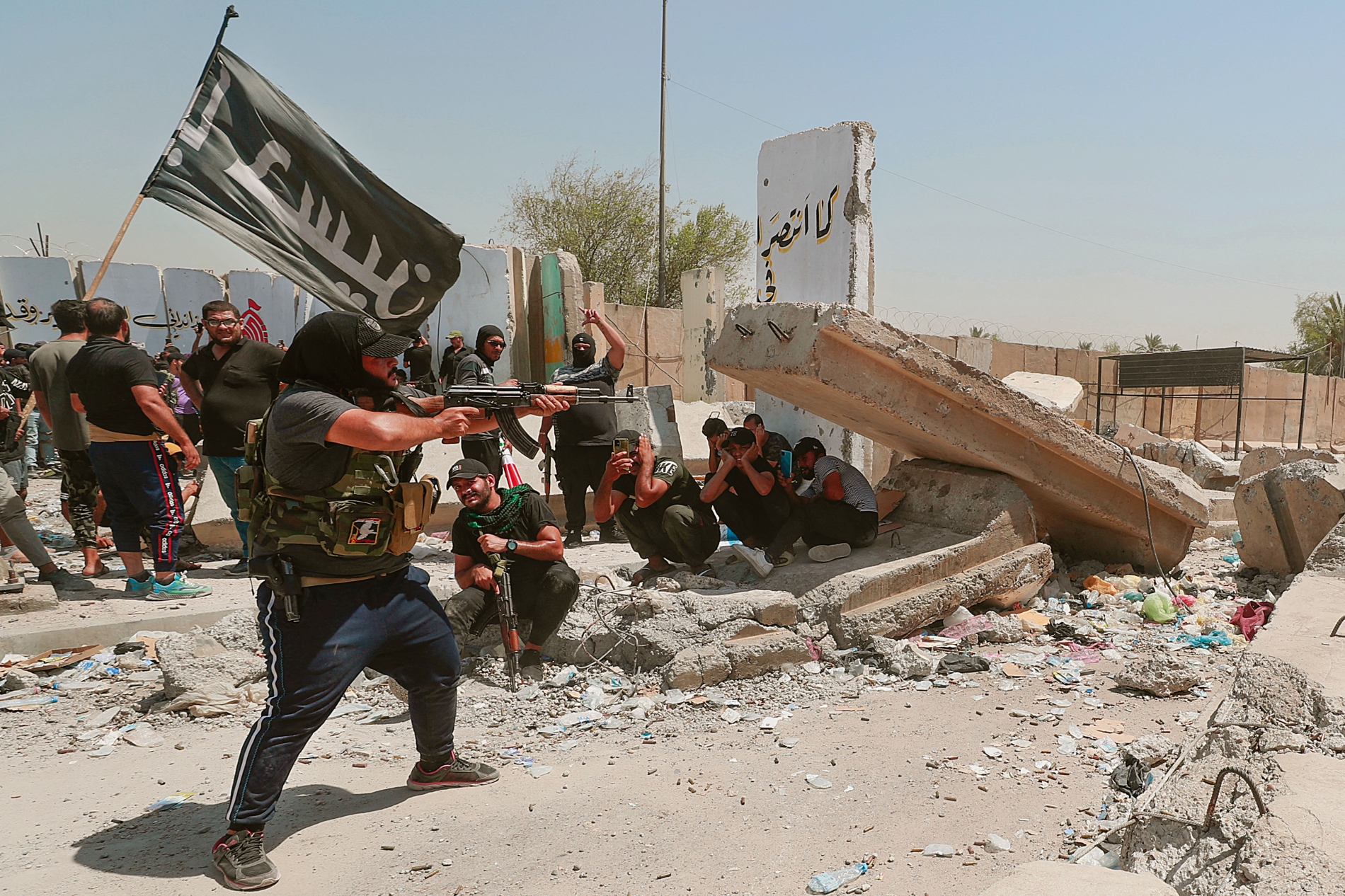
Armed members of Saraya al-Salam (Peace Brigade), the military wing affiliated withShiite cleric Moqtada al-Sadr, take aim during clashes with Iraqi security forces in Baghdad's Green Zone on August 30, 2022.

Repeated pattern

That was not the first time he suspended and reactivated his militia. He had done the same several times over the years, especially when he felt any militia encumbered his political prospects. Later, with the rise of the Islamic State (IS) in 2014 and the collapse of large parts of Iraq’s security apparatus, al-Sadr returned to the military scene through a new gateway: the Peace Brigades. When he first launched the group, its declared remit was to protect religious shrines and participate in the fight against IS, following a historic fatwa of collective duty issued by the highest religious authority, Ayatollah Ali al-Sistani. Despite the change in name and circumstances, the new formation represented, at its core, the return of a Sadrist fighting force to Iraq's military landscape.
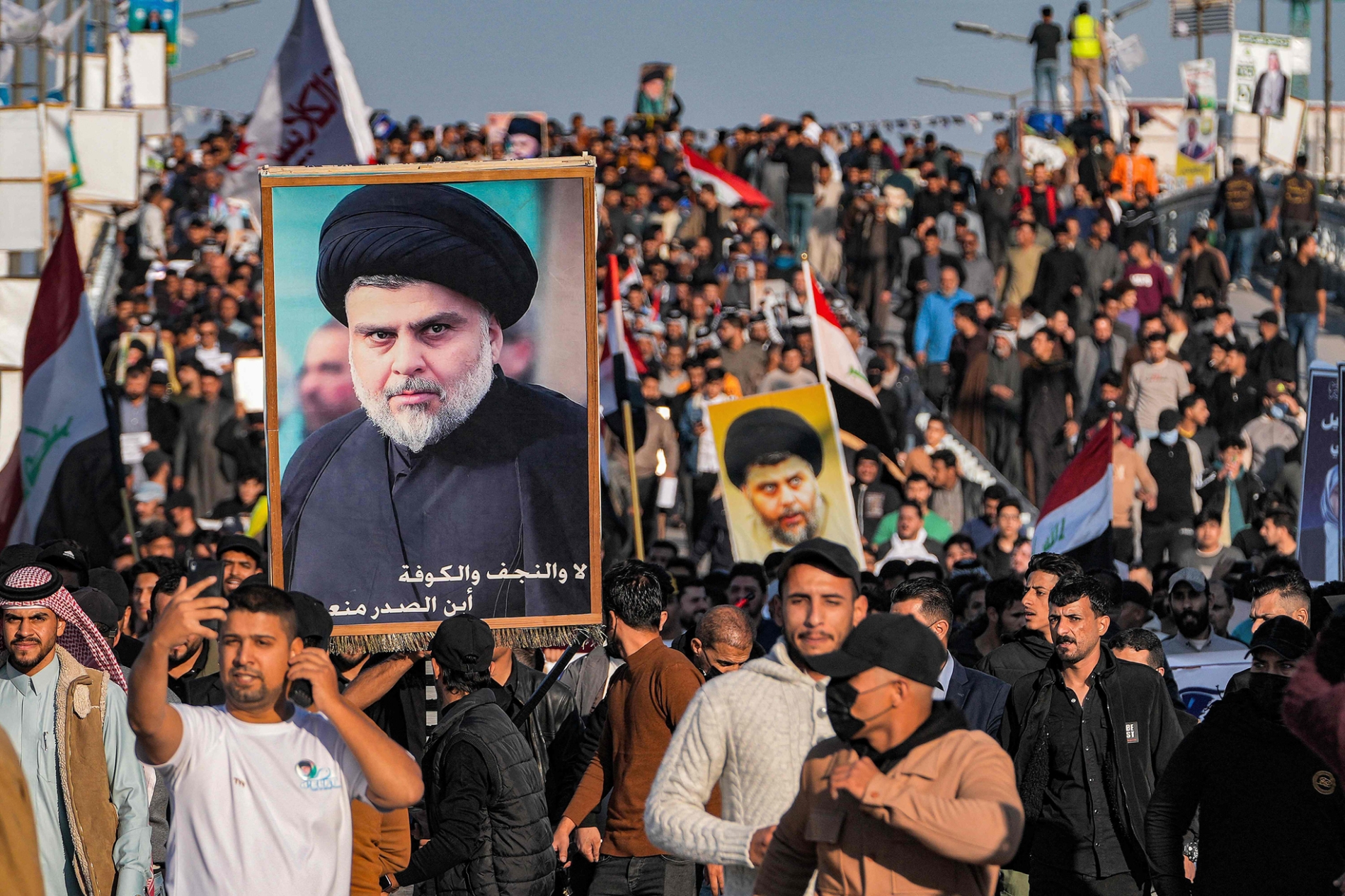
Al-Sadr has suspended and reactivated his militias several times over the years

The Mahdi Army may have vanished in name, but its function quietly resurfaced. For this reason, many researchers view what happened in 2014 less as a rupture and more as a rebrand. In fact, earlier this year, he froze the Peace Brigades' activities in the Basra and Wasit provinces, citing 'organisational and behavioural' violations, but later reversed his decision. This episode matters because it reveals that al-Sadr does not treat his armed organisations as independent institutions but as instruments that can be recalibrated and redirected to suit the demands of the political moment.

AFP
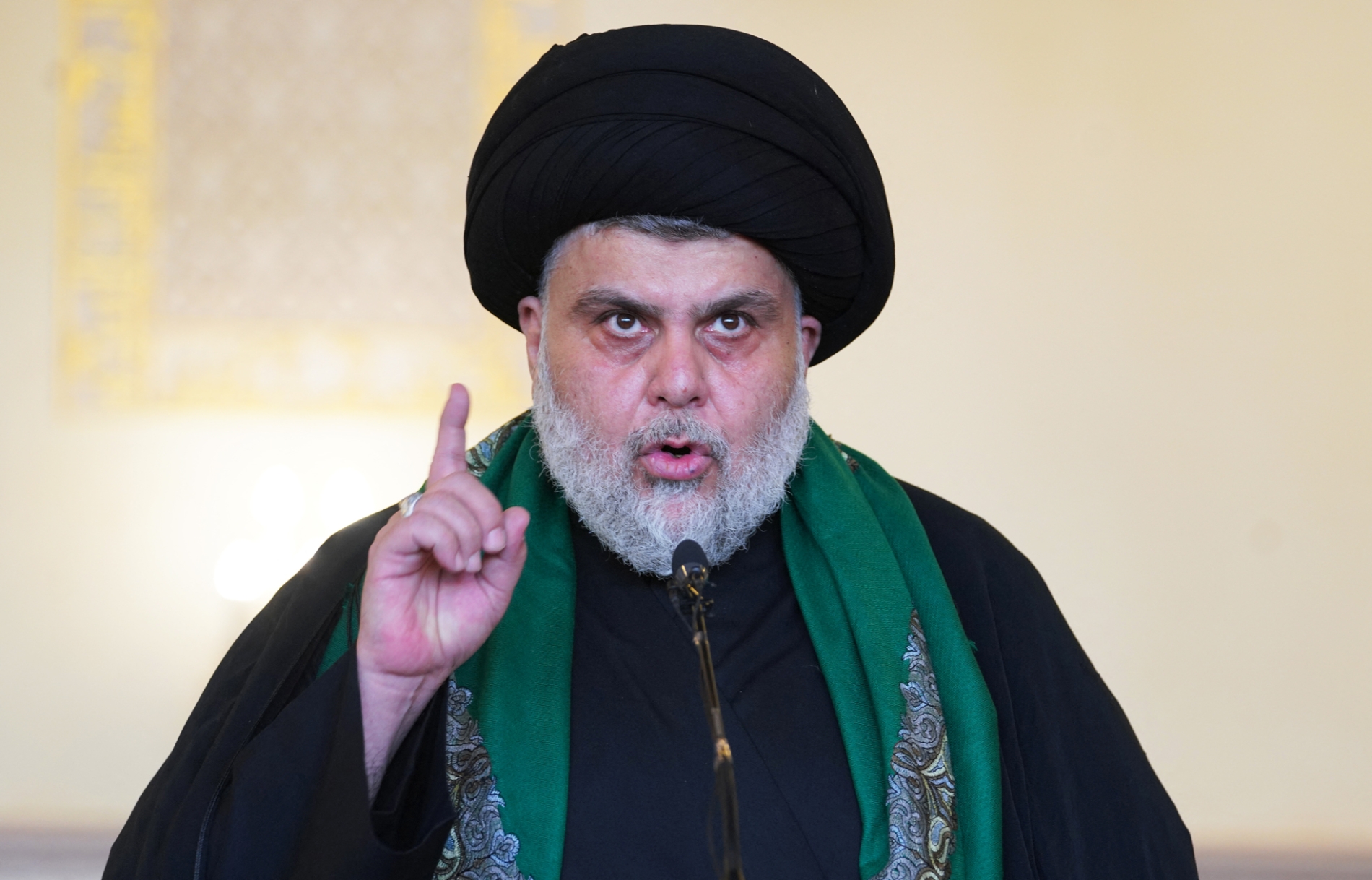
Iraqi Shiite cleric Muqtada al-Sadr delivering a speech at the Great Mosque of Kufa in Najaf, central Iraq, on 4 November 2022.

Shrewd political operative

So why this repeated behaviour? The answer may lie in the nature of Sadrist leadership more than in the moves themselves. Muqtada al-Sadr did not build his influence on a traditional party institution or a fixed military apparatus; he built it on an exceptional capacity to mobilise a broad constituency and move it between religious, political and grassroots mobilisation. He has earned a reputation as a shrewd political actor who can move along contradictory and ambiguous paths. Since 2003, he has worn several hats: a militia leader, a protest leader, a politician, and then a reform advocate working on the political periphery. For him, arms are an instrument of power, not the end goal itself. When they become a political burden, he does away with them or repurposes them. Over the past two decades, the Sadrist movement has oscillated between being a popular protest group and a full-fledged militia, without settling definitively into either. This is why many observers view the latest decision to dismantle it with some scepticism. 

Yet there is an important difference between al-Sadr and other Iraqi factional leaders. The social contract that he built with its popular base over more than two decades differs fundamentally from the relationship that binds other factions to their constituencies. It enjoys a broad religious, social, service-oriented and popular reach that outweighs its military dimension.

For this reason, al-Sadr's abandonment of arms does not necessarily amount to a surrender of influence, nor does it automatically lead to a decline in his ability to mobilise or shape the political scene. For now, he may see it more beneficial to project an image of responsible statesman than of militia leader. 

But it would still be a mistake to write off his latest decision as political manoeuvring. Iraq today is different from the Iraq of 2008 or 2014. Iranian influence faces growing regional pushback; the Iraqi state is seeking to reassert control over the country's armed forces; and al-Sadr himself appears more inclined to present himself as a national reference point that rises above narrow factional calculations.

AFP
Supporters of Shiite cleric Muqtada al-Sadr carry his pictures and national flags during a rally calling for a boycott of the 2023 Iraqi municipal elections.

Biggest obstacle

The greatest obstacle, however, remains the factions most closely aligned with Tehran. At the same moment that al-Sadr announced the separation of the Peace Brigades from his movement and their incorporation into the state, prominent groups such as Kataib Hezbollah, Harakat al-Nujaba, and Kataib Sayyid al-Shuhada doubled down on retaining their respective military capabilities. They have shown no willingness to fully disarm, integrate their armed capacities into state institutions, or accept the principle that the state alone should have a monopoly on force. For these factions, weapons are tied not simply to Iraq's domestic balance of power but to a broader strategic and regional role that extends beyond Iraq's borders, linking them to the 'Axis of Resistance' and the networks of influence built over the past two decades.

This is where the key difference between the Sadrist model and the factions aligned with the Iranian axis becomes clear. Al-Sadr can rely on a broad social and political constituency even in the absence of an armed wing. Those factions depend far more heavily on military force as a primary source of influence and legitimacy. For that reason, al-Sadr's decision, whatever his underlying motives, does not necessarily herald a broader shift across the Shiite landscape. Instead, it may expose a widening gulf between two divergent projects: one seeking to reposition itself within the state's framework, and another that continues to regard arms as an indispensable pillar of power.

Muqtada al-Sadr is a political figure accustomed to taking paths that appear contradictory, known for ambiguity and his ability to manoeuvre politically.

Genuine shift?

Still, the question remains: are we witnessing a genuine strategic shift in the Sadrist movement's trajectory, or merely another episode in the cycle of retreat and return that has defined Muqtada al-Sadr's political career over the past two decades?

The true test begins where al-Sadr's step ends. The Peace Brigades may be absorbed into state institutions because of their direct link to a central political decision, but the greater challenge lies in dealing with armed forces that view their role as part of regional equations extending beyond Iraq's borders. The future of the project to confine weapons to the state will therefore be settled not by the decision of a single faction, but by the state's ability to impose a unifying national vision on all armed actors.

We could be witnessing a new chapter unfolding in Iraq, or it may just as plausibly reflect a shrewd recalibration by a man accustomed to disorienting friend and foe alike. The truth of the matter is that Iraq cannot be understood through a singular event, nor are its shifting political balances determined by a single political decision.

font change