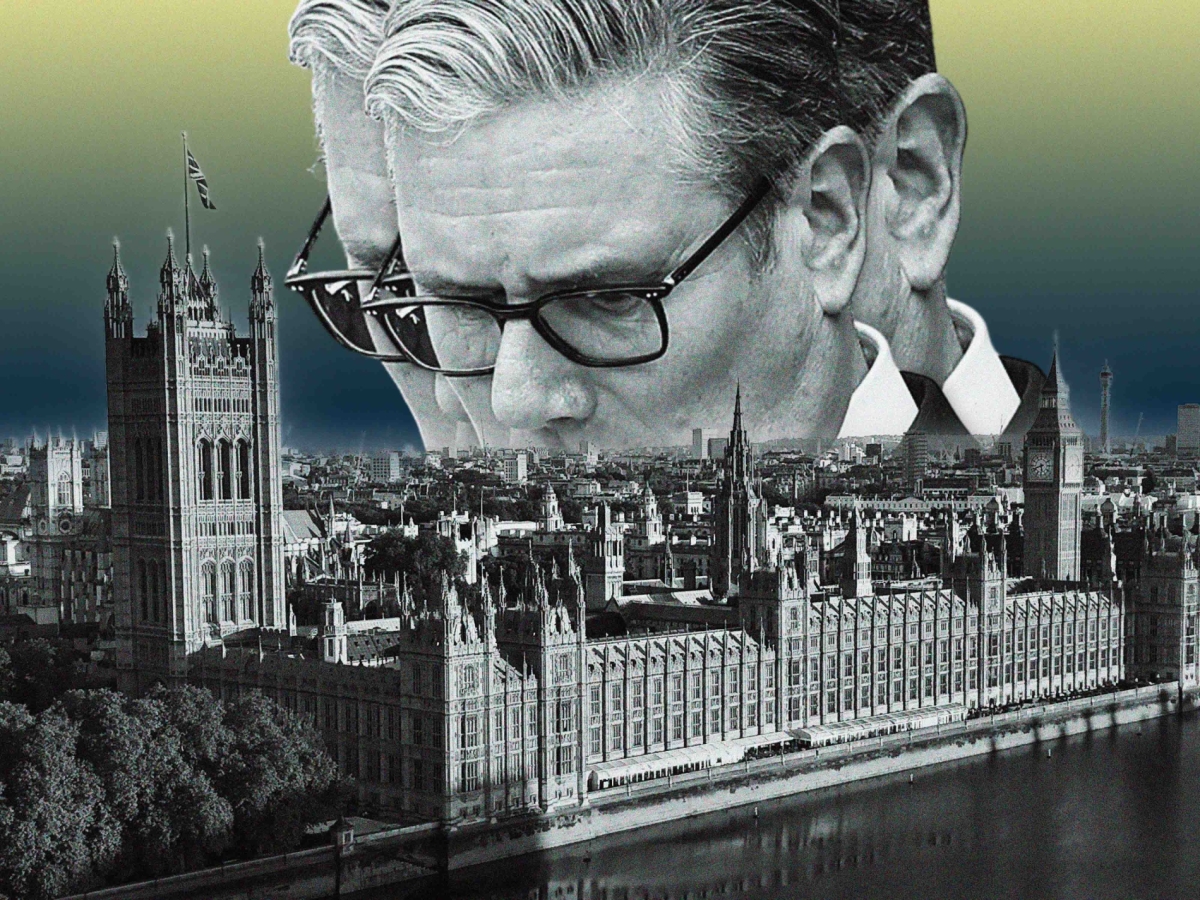
Britain's next leader could be made in little-known Makerfield

In a constituency just outside Manchester, voters could soon elect a challenger to Prime Minister Sir Keir Starmer, but this is Brexit territory, as the nationalist Reform party of Nigel Farage knows.

A would-be challenger to the unpopular Prime Minister Sir Keir Starmer may soon be elected as a Member of Parliament.
AFP/Reuters/Al Majalla
A would-be challenger to the unpopular Prime Minister Sir Keir Starmer may soon be elected as a Member of Parliament.

Britain's next leader could be made in little-known Makerfield

In the little-known constituency of Makerfield in northern England, the leadership of the United Kingdom for the next three years could soon be decided, because a win for the Labour candidate could decide the leadership of the Labour Party, which currently governs the country with a large parliamentary majority.

Makerfield is a byelection, a one-off local election on 18 June triggered by the resignation of the sitting local Labour MP, who is standing down so that the Mayor of Manchester, Andy Burnham, can run to be the MP instead. Burnham wants to lead the Labour Party and therefore the country, and he has a lot of support, but he needs to be a Member of Parliament to do so.

The UK only recently held local elections in which Labour did so badly (losing almost 1,500 councillors) that it all but rendered Prime Minister Sir Keir Starmer a lame duck, in office but not in power. Voters paved the way for huge advances for the smaller parties, notably the left-wing Greens and the right-wing nationalist party Reform UK, while the traditional ‘big two’ (Labour and the Conservatives) were roundly rejected in what felt like a political changing of the guard.

After decades of dominance there, Wales ditched Labour in favour of nationalist party Plaid Cymru. In Scotland, the nationalist SNP held onto power despite a long and troubled hegemony. In Makerfield, where most residents voted to leave the European Union a decade ago, every single ward went Reform’s way. Makerfield would once have been considered Labour’s heartland. In short, this is no walk in the park for either Burnham or Labour.

A safe pair of hands

The local elections threw Labour into something resembling civil war and appears to have fatally wounded prime minister. This is new territory for Labour; defenestrating leaders while in office has hitherto been a strictly Tory tradition. Starmer has occupied No.10 Downing Street for less than two years after being elected with a landslide, proving to be a safe pair of hands.

‘Abundance of caution’ could have been his motto, yet from the outset his government of shown a lack of it. Self-inflicted problems have included freebies donations, countless U-turns, and anaemic national growth. Starmer’s critics accuse him of a lacklustre performance, with poor communication skills. Yet it is his judgement that has been most called into question, not least when it came to his choice of Ambassador to the United States.
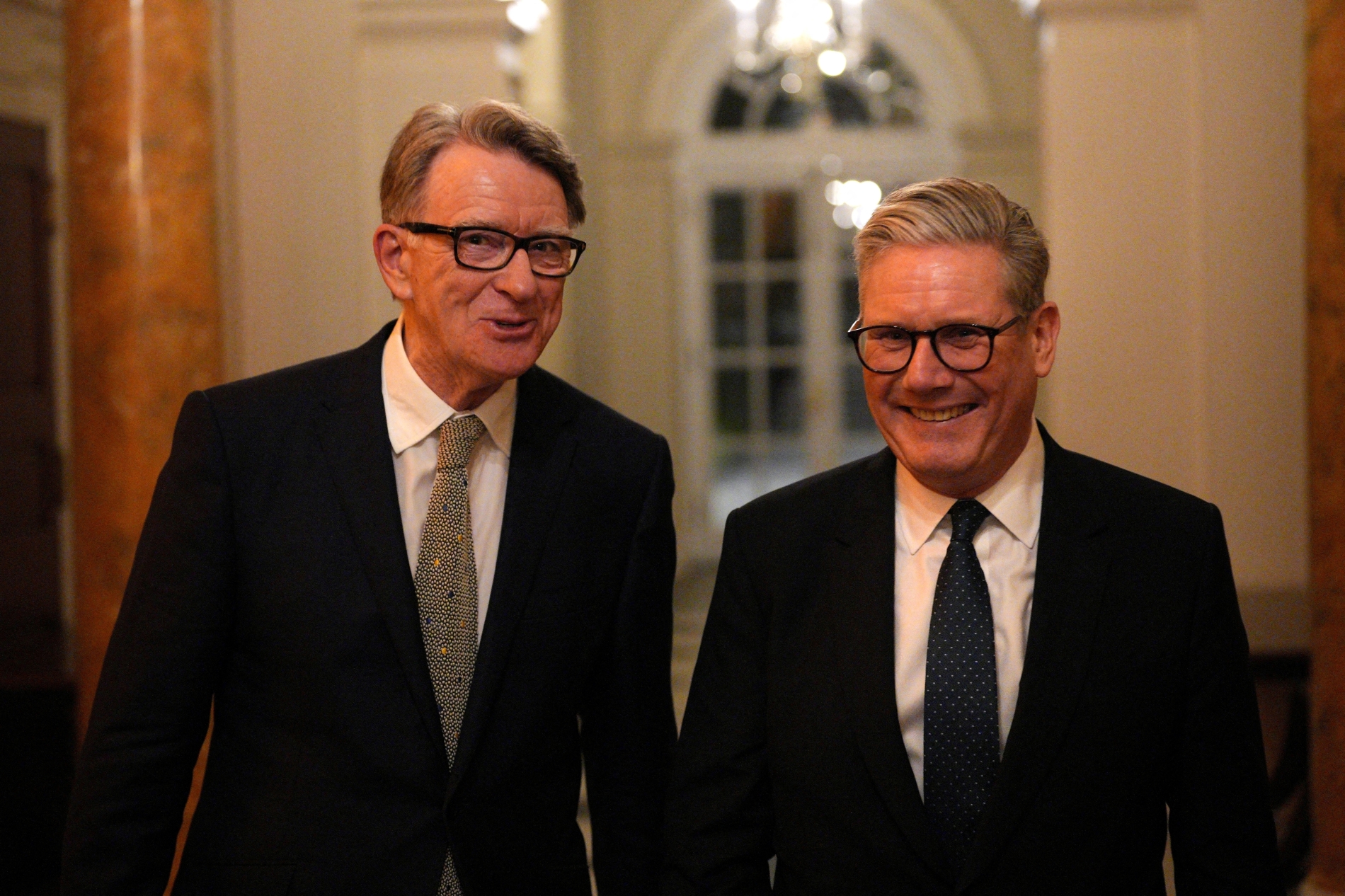
Reuters
UK Prime Minister Keir Starmer talks with UK ambassador to the United States Peter Mandelson during a welcome reception at the ambassador's residence on 26 February 2025, in Washington, DC.

Lord Mandelson was already a known associate of the late paedophile Jeffrey Epstein when Starmer asked him to be the UK’s man in Washington, but the closeness of the Epstein-Mandelson relationship has since been revealed by the release of files. For a time, the whole Epstein scandal leapt over the Atlantic.

In the aftermath of the local elections, there was gossip about Starmer’s ability to survive, so he gave a speech to make-or-break his premiership, yet many thought it was flaccid, containing barely any new policy. The vultures began circling, but not until the King had delivered his speech outlining the next parliament’s agenda (in Britain, even the vultures respect constitutional decorum).

Ministers were asked whether they still supported the prime minister on their way into the next cabinet meeting. The studios were soon abuzz with excitable chatter about ‘stalking horses’ and ‘runners and riders.’ Starmer’s Labour government could be described as centre-left or soft-left, so pundits began analysing the policies of would-be leadership contenders.

It was left to former newspaper editor Andrew Neil to call this a new reductio ad absurdum of British politics and to protest that we are all caught up in the byzantine coils of the ruling party’s bureaucracy. He has a point, because the Labour party’s methods for conducting civil war are frighteningly complex.

And they’re off

Soon, the Minister for Health Wes Streeting made his move by resigning, foreshadowed by the resignations of his allies. But although he criticised Starmer and acknowledged that he had leadership ambitions, he did not launch a formal challenge. To do so, he would need the backing of around 80 members of the parliamentary Labour party (PLP). Some suggested that Streeting did not have the numbers. Streeting suggested that he was holding off to let Burnham stand.

To stand, Burnham has to be an MP, which meant finding a constituency, which meant asking a current Labour MP to stand down. Finally, after several days, he found Josh Simons in Makerfield. Simons had been a junior minister in Starmer’s government until March, when he had to step down after he was revealed to have ordered an investigation into journalists’ private lives. Some think this may be payback.
Starmer's critics accuse him of a lacklustre performance, with poor communication skills. Yet it is his judgement that has been most questioned

Joining Burnham and Streeting as a contender could be Angela Rayner, a no-nonsense former deputy prime minister who has just been vindicated following an investigation into the stamp duty (a property tax) that she underpaid. The trio share a sense of urgency to replace an unpopular leader, but in policy matters they are very different. Rayner is well-liked within Labour and somewhat to the left of Starmer, politically. Streeting is on the party's right-wing and a good communicator but is tarnished by his association with Mandelson and, more recently, the technology company, Palantir.

There are other possible contenders. Former Labour leader Ed Miliband might emerge if everything goes badly for the other left-wing candidates, but he is hardly a silver bullet for the left, having lost the party a general election. The Home Secretary Shabana Mahmood is a darling of the right, tapping into the anti-immigrant feeling in the country. But the main figure is Burnham, which brings us back to Makerfield.

Feeling the Burn

Allies of Starmer blocked Burnham from running in the Gorton and Denton byelection on spurious grounds back in February, which riled many of his parliamentary supporters, so the option of blocking him again in Makerfield in May was no longer viable. In Labour eyes, Burnham is Mr Charisma—the King of the North, the champion of hard-working people.

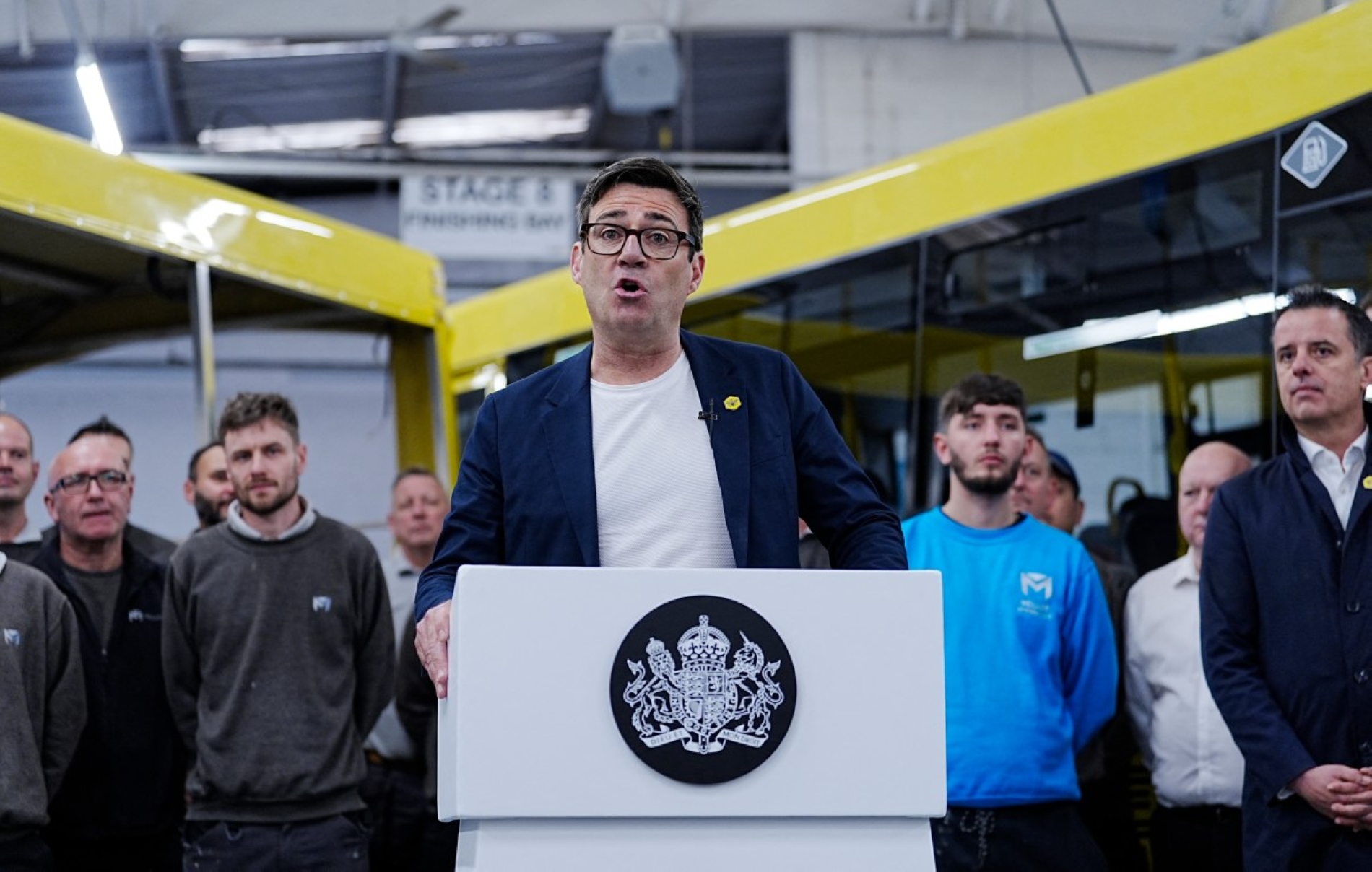
PETER BYRNE / POOL / AFP
Mayor of Greater Manchester, Andy Burnham, speaks during a visit to Mellor Bus in Rochdale, northern England, on June 4, 2025.

He brought the city's bus network back under public control. If one thing sums up his 'Manchesterism' it is the reversal of privatisation for all the utilities. "Public control is everything," he said. Now he wants more control of housing, energy, water, and rail, "the basics of life" as he calls them. "I've described what we've been doing here as rolling back the 1980s."

Policies aside, Manchester's most famous son is a communicator. One of his most memorable missives was in January, telling the Institute for Fiscal Studies that the UK should not be "in hock" to the bond markets. Instead, along with a nationalisation of utilities, a Labour government should pursue a big council housebuilding programme paid for by a wealth tax, a charge on expensive London homes, and £40bn of extra borrowing.

This made the bond markets nervous. On 5 May, The Guardian reported that the yield on 10-year UK government debt had risen by more than that in the US, France and Germany to trade above 5%, the highest level since the 2008 financial crisis, as investors demanded a greater return for buying UK debt. On 30-year debt, the rate had climbed to the highest level since 1998. So in recent days, Burnham committed to honouring the current Chancellor Rachel Reeves' fiscal rules, and the markets duly settled down.

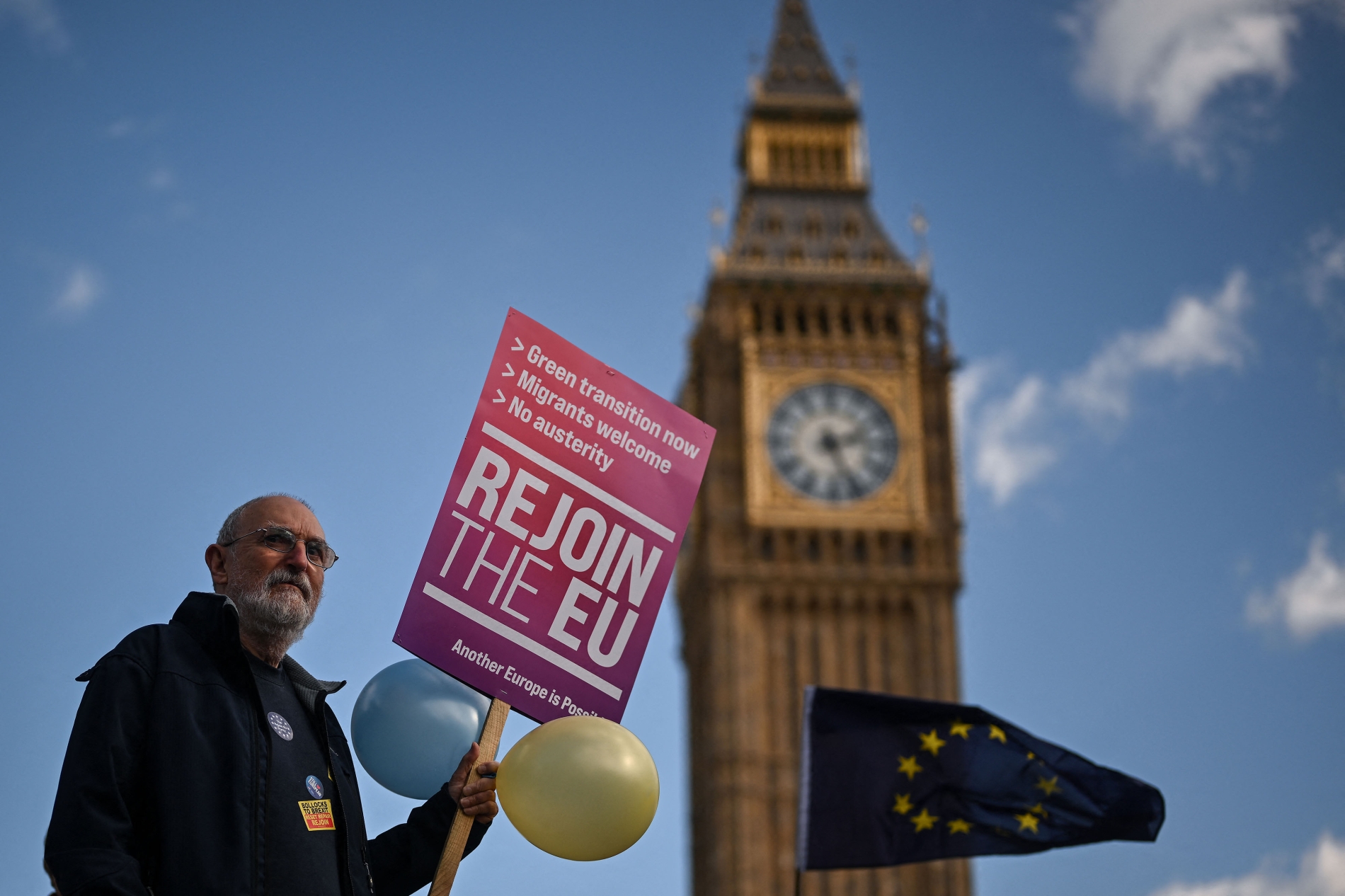
BENJAMIN CREMEL / AFP
The constituents of Makerfield voted for Brexit so may lend their vote to Nigel Farage and his Reform UK party in the upcoming byelection.

How do the constituents of Makerfield feel about the prospect of heaps of political stardust landing on their doorstep? Judging by the first vox pop interviews they gave, many of them may be inclined to punish Labour by voting for Reform, the party of Nigel Farage, who led the campaign to pull Britain out of Europe. Burnham's canvassers now need to sell the idea that he will be a great local MP, focused on their potholes.

The decision that Makerfield voters make will be pivotal in a way that byelections rarely (if ever) have been in British democracy. If they vote for Burnham, it will prove that he can beat Reform and 'save the country' from the dystopian scenario of Farage in Downing Street, dividing the country in ways not seen since the civil war. If Reform win, it could be three long years on death row.

font change