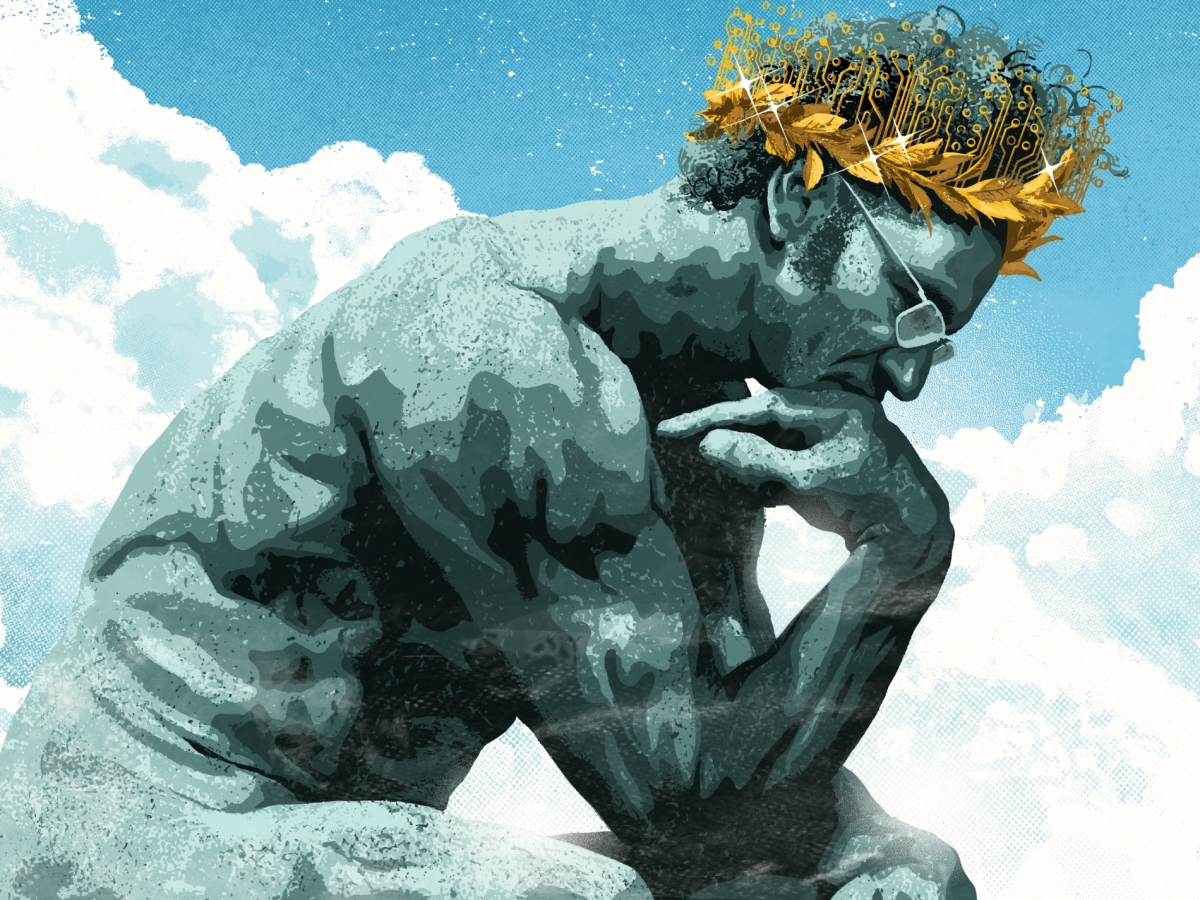

Some rude things are being said about the nostrums of Alex Karp. One British MP referred to his ‘manifesto’ as “the ramblings of a supervillain”. Another referred to it as “either a parody of a RoboCop film, or a disturbing narcissistic rant from an arrogant organisation.” The fact is, Alex Karp is no ordinary commentator. He is the billionaire CEO of Palantir Technologies Inc.
People are sceptical about technology these days. I witnessed this at the cinema the other day, in something as otherwise uncontroversial as the script for The Devil Wears Prada. There, the fate of Runway magazine and its journalists is apparently in the uncaring hands of tech companies that are both philistine and indifferent to press freedom.
Yet even before the film commenced, two adverts alluded to the benefits of coming offline. One was for holidays. A weariness—and wariness—about all things digital has now become a clever way to sell the idea of everybody’s dream destination. Needless to say, that destination is not a certain valley in California.
So, it seems like odd timing, to say the least, for Alex Karp to be floating his ideas for tech and for America’s domination of the planet. Just at the moment when sceptics are questioning whether Palantir should be given control of NHS data, for instance, or integrated into our defence system, he has gone on X to say the quiet part out loud: the future of the world depends on American hegemony.
It may seem rude to draw attention to Karp’s appearance, but it doesn’t help that he bears a certain similarity to a mad professor who might also pass for a supervillain. One would not say the same about his company’s co-founder. Preferring to cultivate a smart, clean-cut image when venting his opinions, Peter Thiel never looks eccentric. Yet in a recent podcast discussion with Ross Douthat, he ‘paused’ when asked if the human race should survive. It was the kind of question only a supervillain could hesitate over.
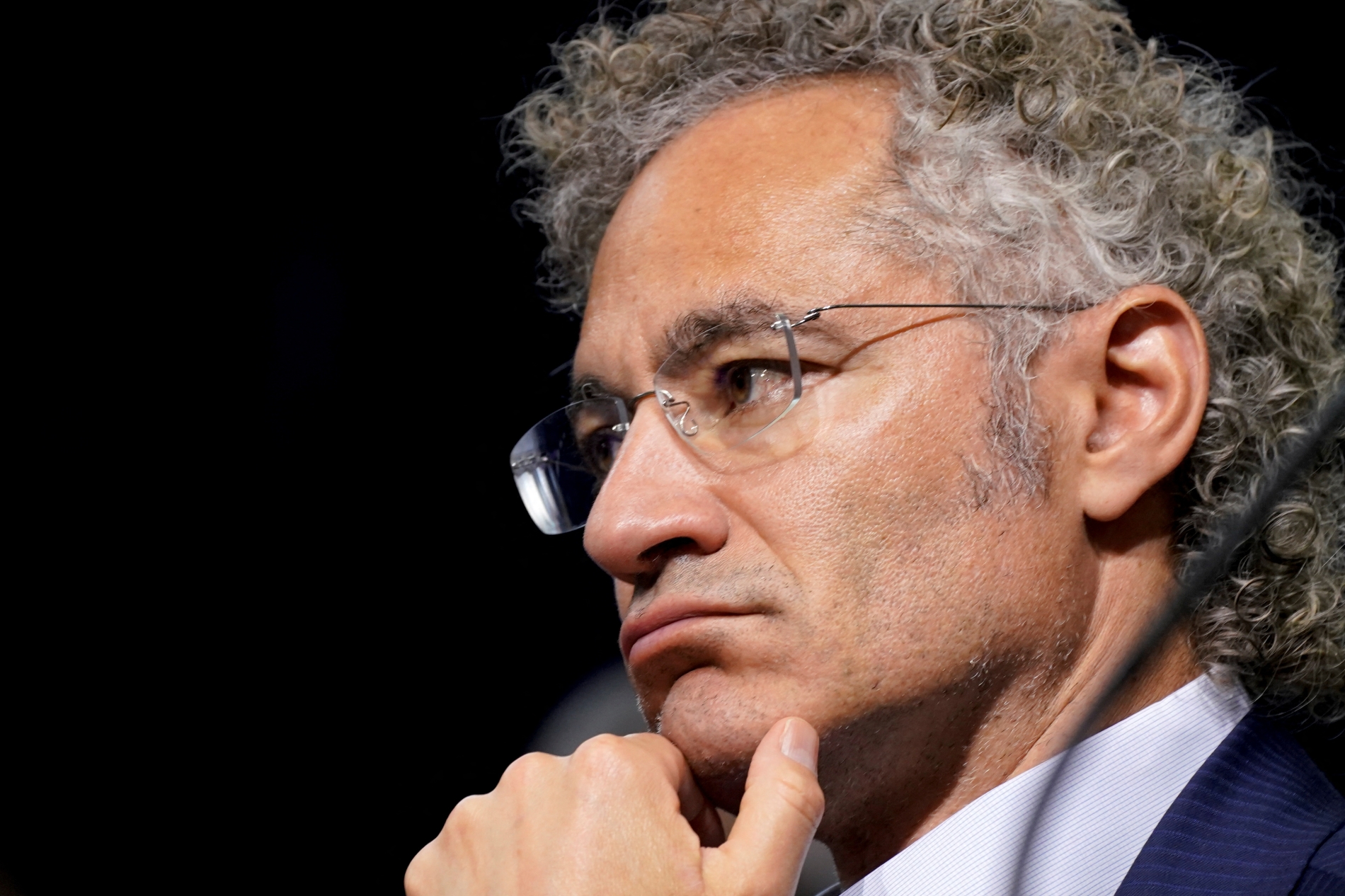
So, while Thiel is mad by stealth, Alex Karp seems to prepare listeners for the worst by his hair alone. Hence, I suspect, half the fuss over his latest pronouncements—all of which are a summary of what he published in a book called The Technological Republic. The general drift of his arguments was (as we are accustomed to hearing about Peter Mandelson’s choice of bosom pals) already in the public domain. They don’t even have the same loony tunes, ‘That’s all folks!’ apocalyptic tenor as Thiel’s pronouncements, and they certainly don’t have the naked glee of Elon Musk’s born-again white supremacism.
Nor is it Karp’s support for Elon’s outbursts that has alarmed the commentators. Apparently, we have no right to curb the freedom of Musk’s speech. Given the apparent licence the owner of X enjoys to air his expletive-laden views, most people would reply that a chance would be a fine thing. Nonetheless, Karp saw fit to leap to the defence of the world’s richest man: “The culture almost snickers at Musk’s interest in grand narrative, as if billionaires ought to simply stay in their lane of enriching themselves.” As one of the megaphonic megarich himself, Karp’s eagerness to defend the right of his fellow bros to rant is understandable.
But, unlike Musk, the CEO of Palantir does not aspire to be the world’s leading digital fascist. On the contrary, he has confessed to Democrat sympathies, though admittedly in the past. Well, even Musk has spoken enthusiastically of shaking Obama’s hand.
Karp can also claim to have legitimate academic qualifications to back up his statements. His original ambition—before stumbling into a life of fabulous plutocracy, as you do—was to be a lowly social theorist. In 1989, he earned a bachelor's degree in philosophy from Haverford University. He then enrolled at Stanford Law School, earning a JD in 1992.
Stanford is a small world, however. It was while he was there that a chance meeting with Peter Thiel lured him away from the placid groves of Academe. The two men bonded over their exasperation with the law school and a shared passion for political debate. Thiel recalls that Karp “was more the socialist, I was more the capitalist. He was always talking about Marxist theories of alienated labour and how this was true of all the people around us.”
Marxist theories are not exactly in abundance on the discussion threads of X. Karp is not even based in Silicon Valley, but in Florida. He has said that he felt different at “every institution I interacted with”. At each, he would think, “I can navigate this place, but I am not a part of it.” But for all his alienation, he has preserved from that time the air of a proper intellectual. Hence the wild hair.
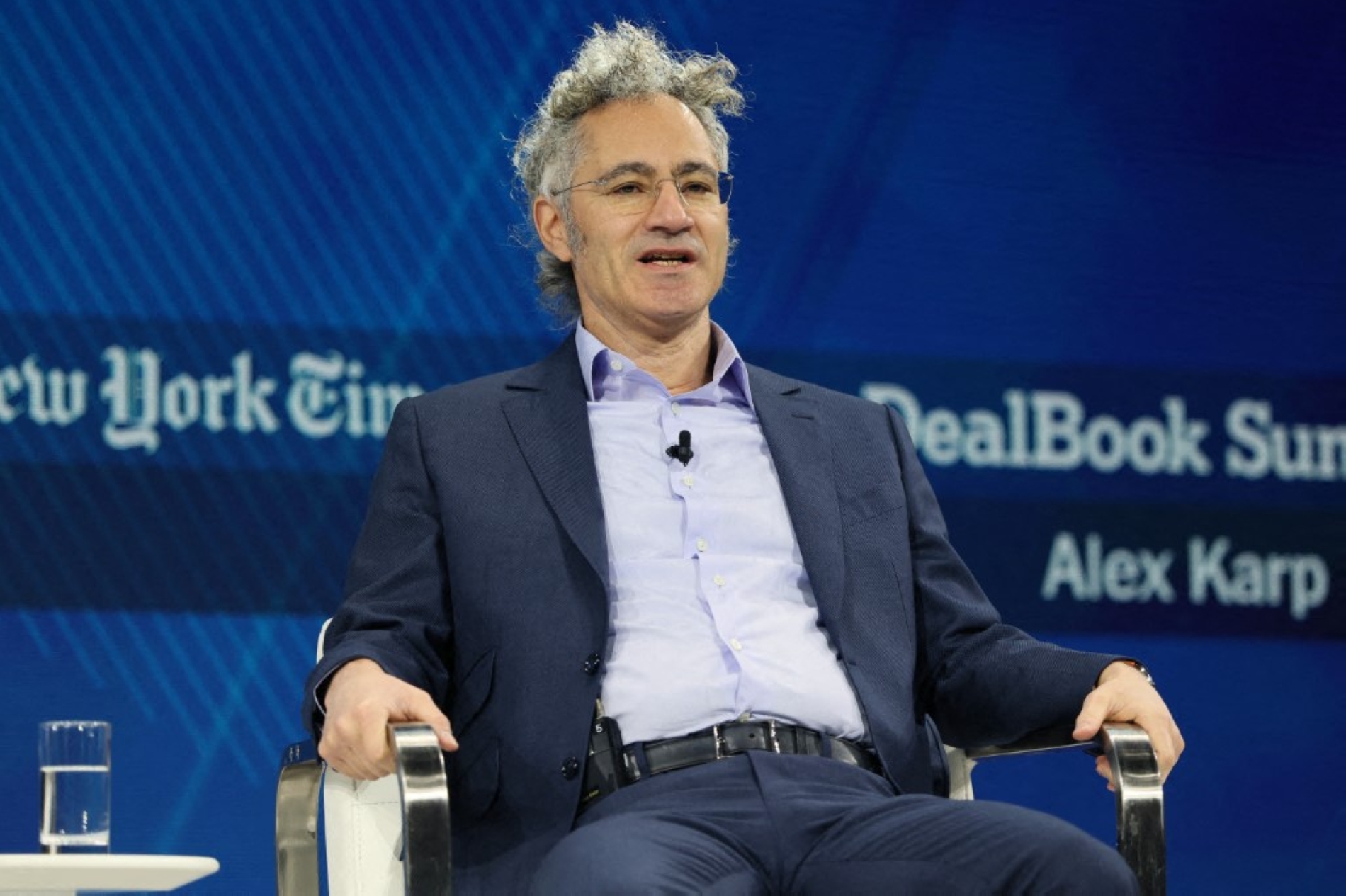
In short, Karp may be said to know his stuff. Why, then, has his ‘manifesto’ caused such a stir? First, it is necessary to summarise the points in Karp’s infamous summary. Taking the most controversial elements in no particular order, it calls for a reintroduction of the draft in America, and for the military in Germany and Japan to cease being ‘neutered’. It also asserts that Silicon Valley must step up and participate in the defence of the nation. It must recognise and oppose the tyranny of the app. Since hard power is required to defend the West, this will be achieved through software.
The question is not whether AI weapons will be built; it is who will build them and for what purpose. Our adversaries will not pause to indulge in ‘theatrical debates’ about the merits of developing technologies with critical military and national security applications. They will proceed.
The manifesto also attacks a lack of confidence regarding American culture. Some cultures have produced vital advances, it claims, while others remain dysfunctional and regressive. Yet all cultures are now treated as equal. Criticism and value judgments are forbidden. This new dogma glosses over the fact that certain cultures, and indeed subcultures, have produced wonders. Others have proven middling, and worse, regressive and harmful. Therefore, we must resist the shallow temptation of a hollow, vacant pluralism. We, in America and more broadly the West, have for the past half-century been afraid to evaluate national cultures in the name of inclusivity. This must stop.
There is a finger-wagging, accusatory tone throughout. Written in a style akin to that of Jeremiah, just reading such stuff can be exhausting. It’s designed, quite deliberately, to alienate the audience. It’s the voice of hard truth. Of harsh reality. It’s the all-knowing father telling the child to grow up and act its age.
When including this stern father figure in the Time 100 list, the magazine noted that Karp had once quoted Samuel P. Huntington’s The Clash of Civilizations in a letter he wrote to investors: “The rise of the West was not made possible by the superiority of its ideas or values or religion, but rather by its superiority in applying organised violence. Westerners often forget this fact; non-Westerners never do."
During a New York Times interview, Karp counselled that “you scare the crap out of your adversaries,” asking, “Are we tough enough to scare our adversaries so we don’t go to war? Do the Chinese, Russians, and Persians think we’re strong?” Language like this led Maureen Dowd, a journalist, to say the interview was ‘brimming with American chauvinism.’

If these 22 points have caused a far bigger sensation than the most cantankerous rants of X’s owner, it is because of this element of ‘American chauvinism’ more than anything else. Victoria Collins, a Liberal Democrat MP, is just one example. She accused Palantir of “naked ideological motivations and lack of respect for democratic rule of law.” She concluded, “It should be nowhere near our public services.”
And yet you would not draw this conclusion from the preface to ‘Technological Republic’. There, in measured tones, he talks of defending the West and its democratic values: ‘Indeed, the legitimacy of the American government and democratic regimes around the world will require an increase in economic and technical output that can be achieved only through the more efficient adoption of technology and software.’
Whether one is fond of the military industrial complex or not, it is hard to argue with the view that warfare has transformed in recent years. Karp’s preface continues:
‘...one of the most significant challenges that we face in this country is ensuring that the US Department of Defence turns the corner from an institution designed to fight and win kinetic wars to an organisation that can design, build, and acquire AI weaponry—the unmanned drone swarms and robots that will dominate the coming battlefield. The twenty-first century is the software century. And the fate of the United States, and its allies, depends on the ability of their defence and intelligence agencies to evolve, and briskly.’
It’s Jeremiah, but in a slightly cuddlier mood. Though none of this is calculated to ensure restful sleep, it reads more like corporate hype than thoroughgoing prophecy. It’s no great shock to hear this from a firm originally developed to provide military intelligence to the United States.

Palantir’s defenders claim that, far from being a danger to our personal data and that of the British or any other state, its function is simply to improve the plumbing of unwieldy bureaucracies. Rory Stewart, earnest commentator on The Rest Is Politics podcast, supports this plumbing analogy, claiming that the real risk is to national sovereignty. Recent strains in the ‘special relationship’ between the UK and the United States demonstrate the danger of employing American plumbers who could so readily pull the plug on us.
This is really the nub of the issue for Palantir’s critics in the UK. There is a new nervousness about America. For a while, as the possibility of a trade deal was being mooted, the British press was gripped by a horror of chlorinated chickens. Now, it is the explicit talk of an embattled West, its culture and values superior to those of less successful countries, with a moral duty to remain dominant over them. The sinking feeling comes when you realise that it includes us.
It also doesn’t help that Alex Karp begins to sound a bit more like the mad professor whose wig he borrowed when he denounces the antisemitism that has taken over the universities. Or when he dismisses pro-Palestinian demonstrators as the adherents of ‘pagan religion’ and ‘an infection inside of our society.’ Or when he complains about various types of ‘woke’ politics. What was that phrase Elon Musk used to be so fond of repeating? Ah, yes, the woke mind virus.