
Over recent years, Saudi Arabia’s position in the global economy has appeared more stable thanks to a broader range of income sources and an expanding sphere of economic influence. It has benefited from its weight in energy markets while simultaneously enacting an ambitious reform programme aimed at reshaping the production base over the long term. Growing non-oil sectors, increased investment, and the development of a fit-for-purpose legal and regulatory framework have all contributed to strengthening the Saudi economy’s ability to respond more flexibly to international shifts.
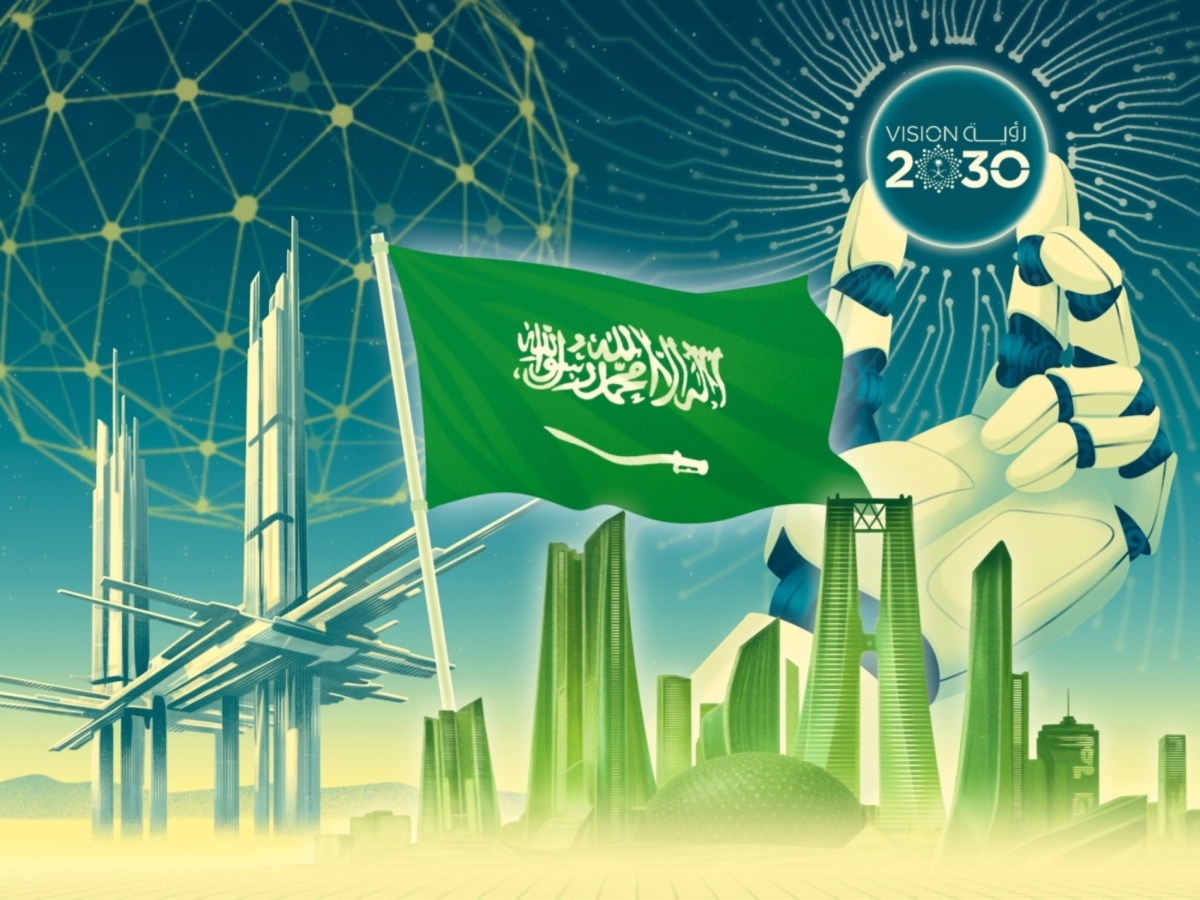
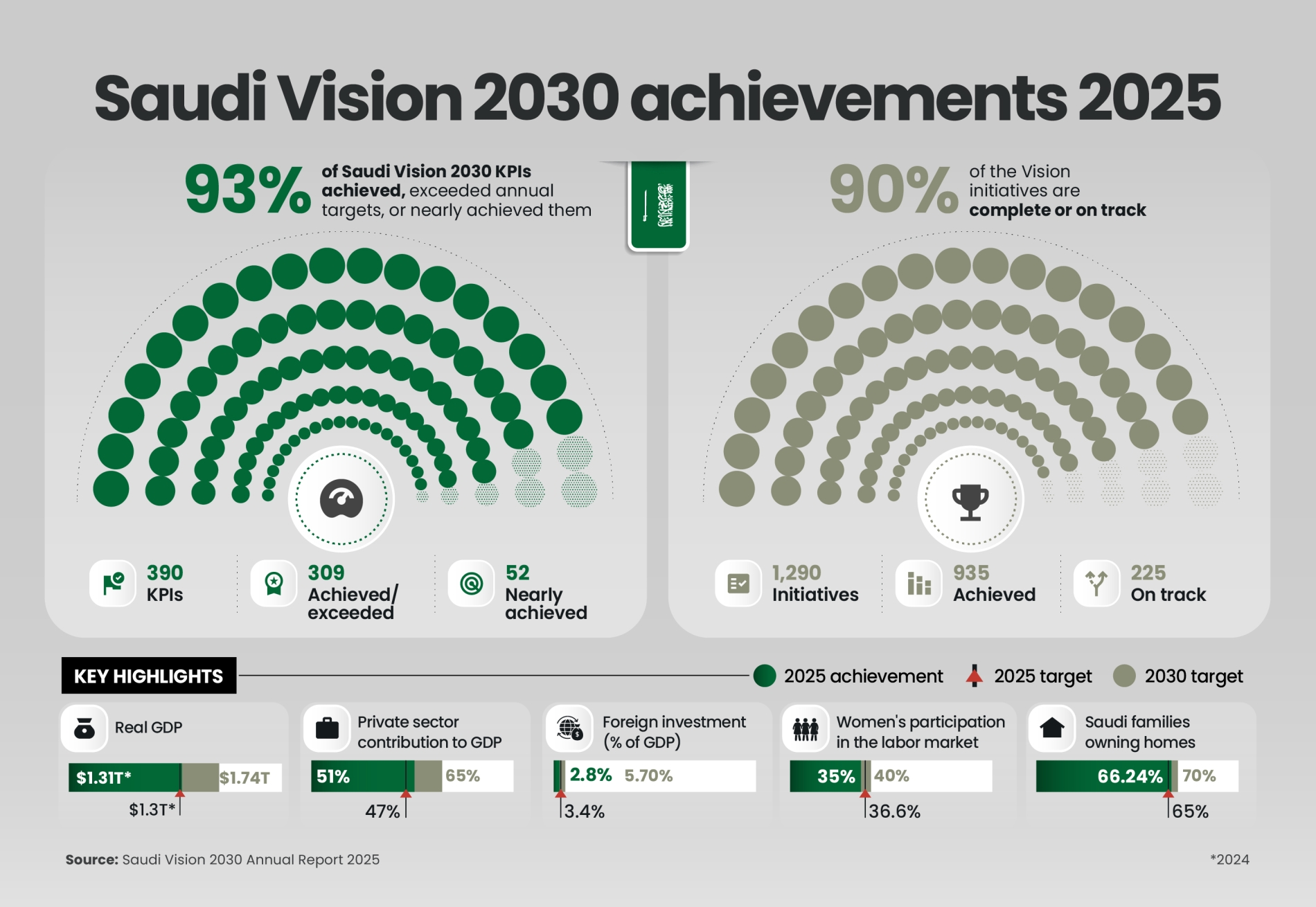
Nearly a decade after the launch of Saudi Vision 2030, the programme has delivered steady progress, with 1,290 initiatives activated. Of these, 935 have been completed, 225 remain on track, and 93% of performance indicators have met or nearly met their targets. A range of programmes has helped accelerate implementation, strengthen government coordination, and build institutional capabilities to meet the objectives. These programmes are updated continuously, and initiatives are closed once their goals are achieved, ensuring long-term sustainability.
Non-oil activity
Areas of focus have included mining, transport, investment, and industry, and Vision 2030 has been implemented in three phases (2016-20, 2021-25, and 2026-30). This has aimed to strengthen non-oil activity, increase the private sector's role, lower unemployment, and empower citizens as the Saudi economy moves from an oil boom model to one of diversification. Supported by the Public Investment Fund (PIF), the country’s sovereign wealth fund, the result has been economic expansion and rising employment.
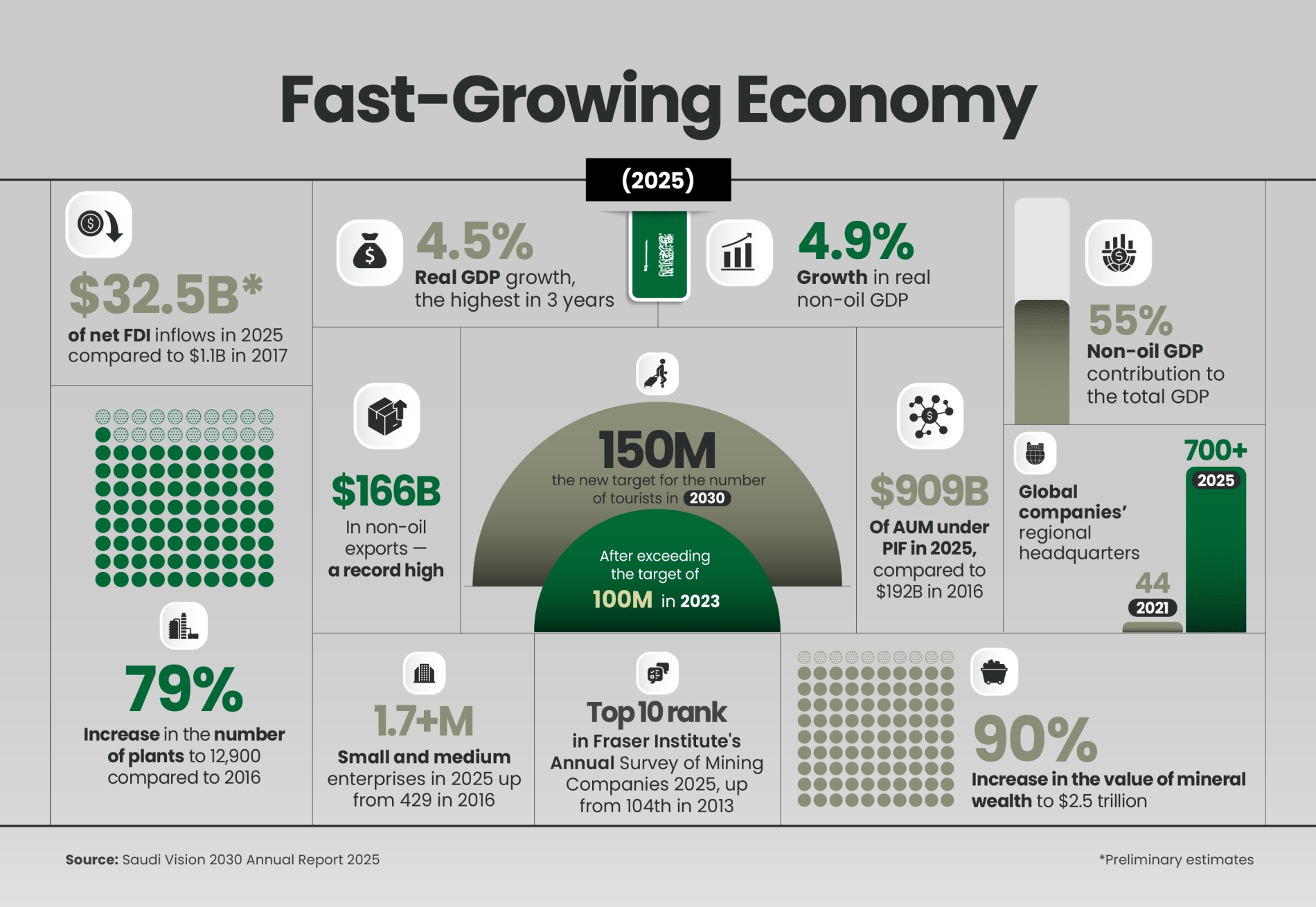
Gross domestic product (GDP) was $1.31tn in 2024, exceeding the target for that year, as non-oil activity slowly became the main engine of the economy. Non-oil GDP reached $893bn in 2025, close to its target of $904bn. Even as the oil sector continues to grow, there is a reducing reliance on it. Growth forecasts for 2026 range from 3.1% to 4.3%. Non-oil exports accounted for just over 22% of non-oil output in 2025. This was below the target due to slower export growth relative to overall output, despite reaching record levels. The target for 2030 is 50%.
The private sector’s contribution rose to 51% of output in 2025, exceeding the target, confirming its transformation into a principal driver of growth. Underlying this change have been reforms that improved the business environment and infrastructure, strengthened investment and entrepreneurship, and empowered small and medium-sized enterprises (SMEs).
PIF’s role in supporting development has expanded under Saudi Vision 2030 through investments and partnerships in non-oil sectors, helping create more than a million jobs. Its total assets under management were $909bn in 2025, driven by a more diverse portfolio and major projects. The 2030 target has been raised to $2.67tn, signalling rising ambition and expectations of stronger performance. The Future Investment Initiative (FII) platform has concluded agreements worth $250bn and reinforced Saudi Arabia’s standing as an international investment hub.
Firms doing more
The private sector’s role has developed markedly under Saudi Vision 2030. Constraints have been addressed through regulatory reform, boosting investor confidence. Private companies now contribute just over half (51%) of the economy, so its targeted share has been raised to 65%. Opportunities for the private sector are expected to expand in the next phase as projects and special economic zones (SEZs) mature and tourism and entertainment expand.
SMEs have recorded strong growth, contributing almost 23% to the economy, which exceeds the Vision 2030 target. This is due in part to more support for entrepreneurs, the development of incubators and accelerators, and growing momentum in venture capital investment. The 2030 goal for SMEs is 35%.
Financing has also expanded markedly, coinciding with a qualitative leap in the start-up ecosystem. In this, Saudi Arabia is now comfortably within the top 25 countries in the world, attracting hundreds of companies and investors. At the same time, partnerships between the public and private sectors have been strengthened, allowing the government to focus on regulation and oversight while giving the private sector a larger role in project delivery and improving efficiency. Investments now total $213bn across more than 200 projects, with opportunities for growth especially in education, health, and technology.