US-Iran war gives Syria's global economic pitch more urgency

Given the effective closure of the Hormuz Strait and Houthi threats to close off the Red Sea, Syria may emerge as a corridor and conduit to bypass these embattled maritime chokepoints

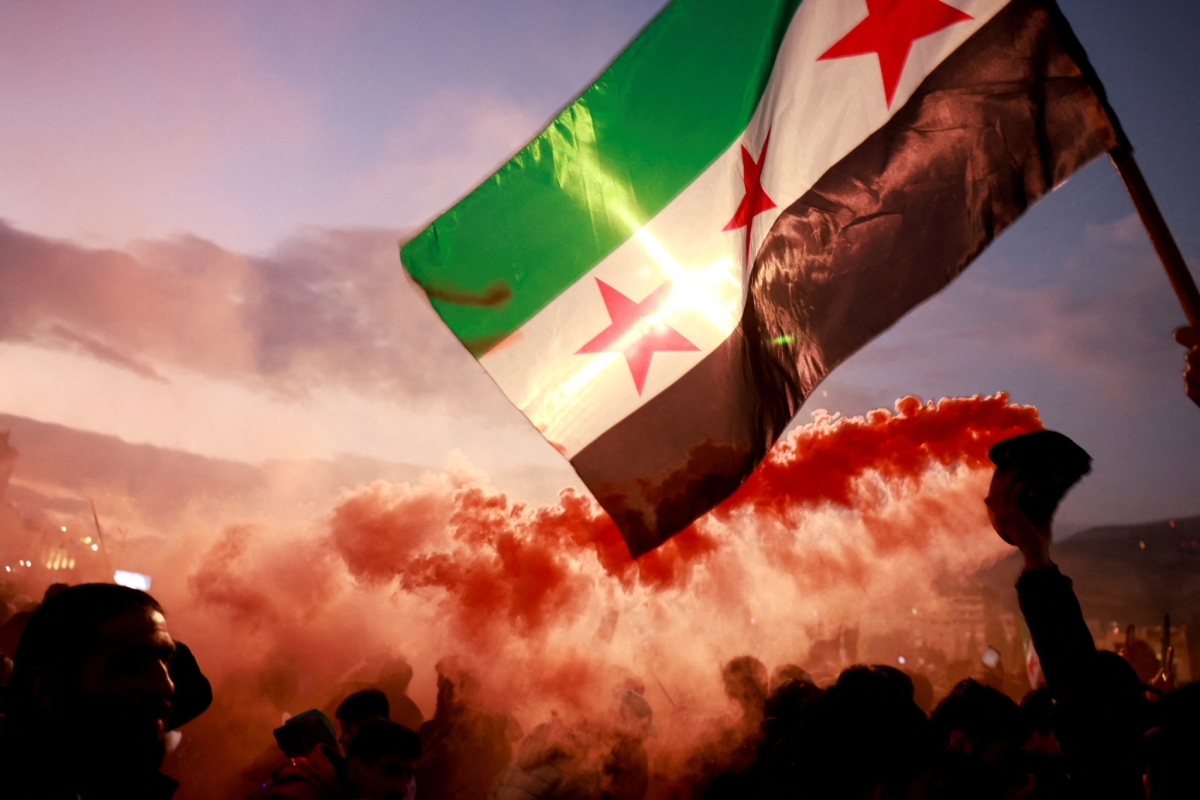
People gather during a celebration called by Hayat Tahrir al-Sham (HTS) at the Umayyad Square, after the ousting of Syria's Bashar al-Assad, in Damascus, Syria, 20 December, 2024.
Reuters / Ammar
People gather during a celebration called by Hayat Tahrir al-Sham (HTS) at the Umayyad Square, after the ousting of Syria's Bashar al-Assad, in Damascus, Syria, 20 December, 2024.

US-Iran war gives Syria's global economic pitch more urgency

When the United States and Israel launched military operations against Iran a month ago, the Middle East was plunged into debilitating conflict, with retaliatory Iranian missiles and drones striking at least 12 countries across the region. In addition to thousands killed through US-Israeli action in Iran, Lebanon and Iraq, at least 37 people have reportedly been killed in Iranian attacks on the UAE, Saudi Arabia, Kuwait, Bahrain, Qatar, Türkiye and Iraqi Kurdistan.

Iran’s strikes on Gulf energy infrastructure and its de facto closure of the Straits of Hormuz, furthermore, have triggered global economic shockwaves that leading experts warn could “send the world economy plummeting into a deep recession.”

It is in this context of escalating regional conflict that Syria has remarkably just completed its most stable month in 15 years. After nearly 14 years of civil war, Syria’s transition has been far from peaceful, and two brief but horrifically deadly chapters of violence on the Coast and the southern governorate of Sweida served as a reminder of the fragility of the country’s transition. Even so, the general trajectory has been one of stabilisation.

According to data collected by Syria Weekly, deadly violence in Syria declined by 30% between January and August 2025, and then plummeted by 73% in the final third of the year. Notwithstanding a brief period of fighting in Syria’s northeast in January 2026, the months of February and March 2026 have set consecutive record lows in violence, with March seeing a total of 23 people killed in direct acts of violence. That is 60% lower than the February 2026 record low of 58 deaths and 94% lower than the post-Assad average of 356 deaths per month.
 OMAR HAJ KADOUR / AFP
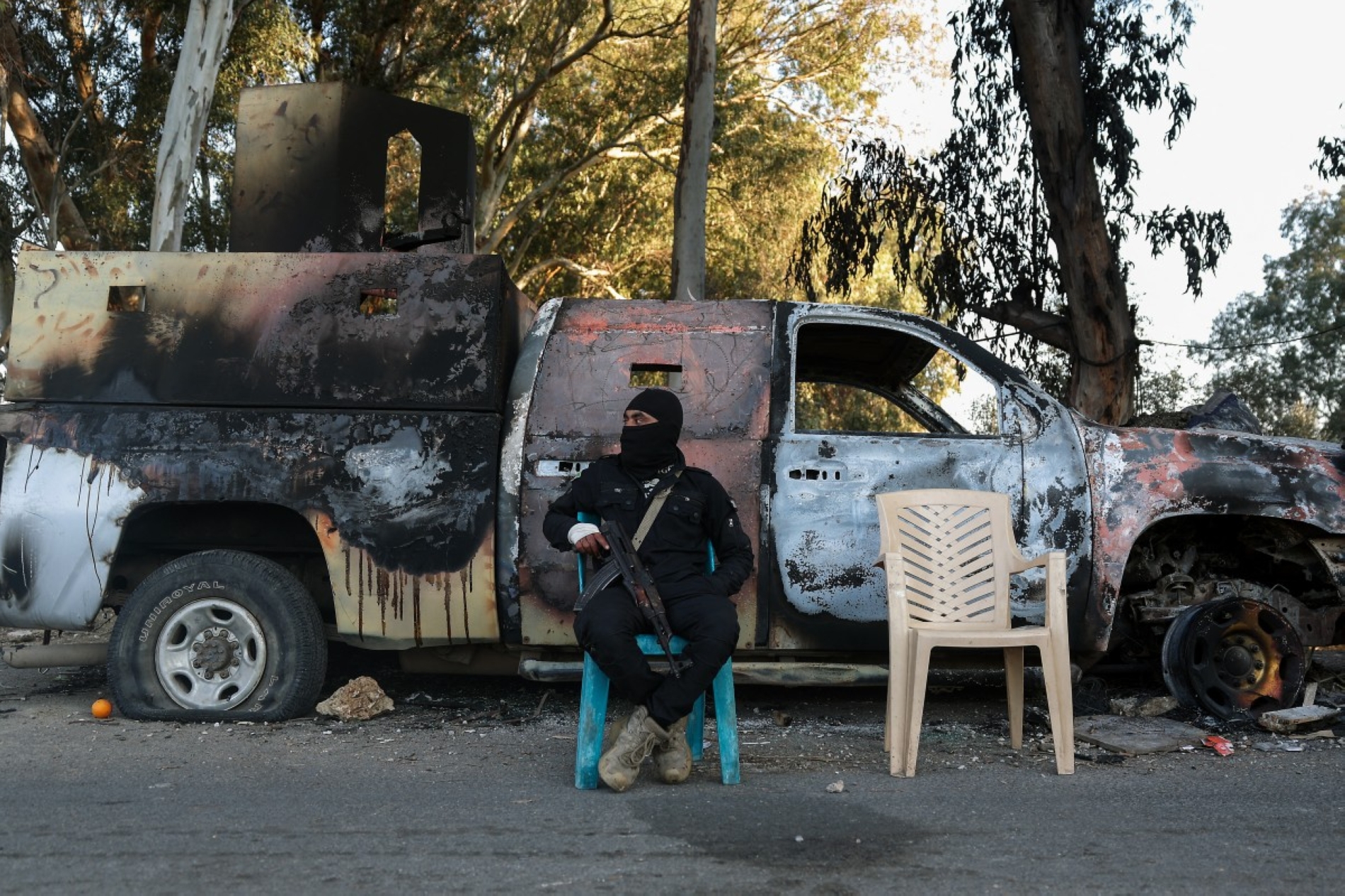
A security officer loyal to the interim Syrian government guards a checkpoint previously held by supporters of deposed president, Bashar al-Assad, in the town of Hmeimim, in the coastal province of Latakia, on 11 March 2025.

Fortunately, the horrific violence that struck the coastal regions and Sweida in the first half of 2025 hasn't been repeated. Furthermore, having been the most significant and consistent factor behind deadly violence in Syria in 2025—causing an average of 75 deaths per month—vigilante violence and targeted assassinations have declined by 87% so far in 2026, with an average of 10 deaths per month between January and March.

In fact, Syria’s coastal region transformed from the most unstable region in the first half of 2025 to the most consistently stable in the second half of the year. That positive trend has continued into 2026, with violence in Latakia and Tartus declining by a further 71% compared to July-December 2025.

While the Islamic State (IS) remains a persistent domestic challenge, the group has taken a big hit since the fall of Assad’s regime in December 2024. In fact, compared to 2024, IS attacks and resulting casualties in 2025 declined by 50% and 76%, respectively. In 2026, IS attacks have, so far, declined by a further 26% and casualties by a further 13%.

Encouraging news

Although it has a long way to go, and significant internal challenges remain, Syria’s increasing stabilisation is extremely encouraging news—not least for Syria and its people, but also for the Middle East and the world at large.

For far too long, Syria offered little to its neighbours beyond terrorism, threats, organised crime and corruption, fuelling the popular saying: ‘What happens in Syria never stays in Syria.’ The prospect of Syria’s transition stabilising and succeeding promises to flip the proverb on its head by making Syria an exporter of stability, prosperity and interconnectivity.

Despite the obvious challenges associated with Syria and its transition, it has won over many in America, Europe, Russia, the Middle East, and China. With the US-Iran war now entering its second month, Syria appears to be making an increasingly credible economic argument. Since the Spring of 2025, it has presented itself as the key to unlocking more reliable, efficient, and direct connectivity between Asia and Europe—whether for trade, energy, telecoms, or other sectors.
Reuters
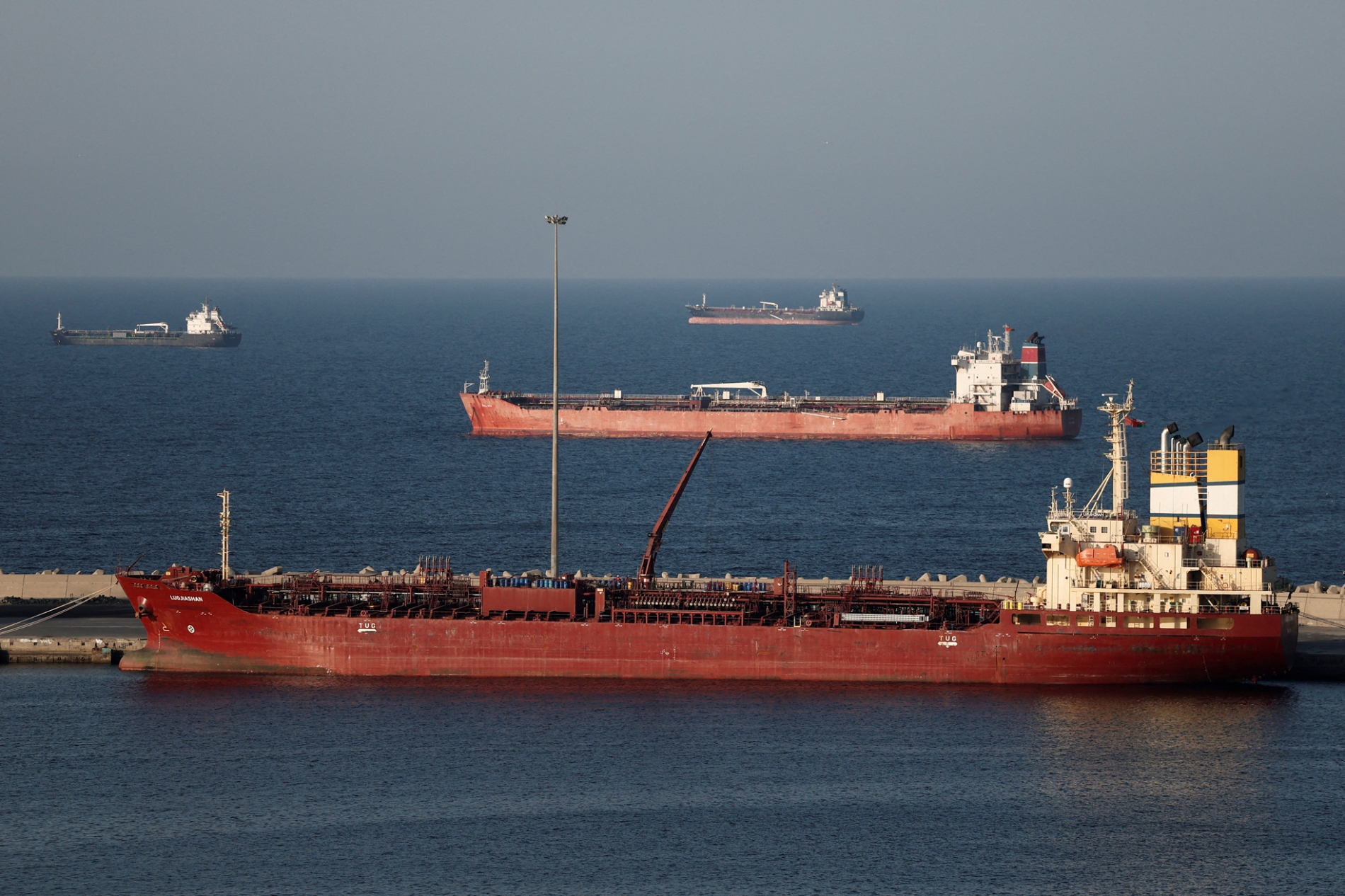
An oil tanker docked in Muscat port, Oman, amid Iranian threats to close the Strait of Hormuz, on 7 March 2026.

Alternative route

And given the effective closure of the Hormuz Strait and Houthi threats to close off the Red Sea, Syria could emerge as a corridor and conduit to bypass these embattled maritime chokepoints. Saudi Arabia is championing this alternative, having already inked several billion-dollar contracts to position Syria as the linchpin of a regional telecommunications revolution.

In backing what Syria’s government has called ‘Project Silk Link,’ fibre optic cables will run from Spain across the Mediterranean (through the ‘Medusa Cable, contracted in October 2025) and then throughout Syria and onto the Gulf and Asia. Once accomplished, Silk Link will reduce internet latency across the region by 30-40 milliseconds, creating opportunities in sectors like AI, financial trading, and remote robotic medicine that are otherwise impractical with the speeds currently provided by cables traversing the Red Sea and the Suez Canal.
The prospect of Syria becoming a regional hub for interconnectivity has rallied a diverse range of regional and international actors behind Damascus.

But beyond telecoms, the Trump administration has also invested significant effort in positioning Syria as the future 'hub' or transit 'corridor' for Middle East energy flows into Europe—again, bypassing less efficient, and often more costly and risk-laden, maritime routes. In 2025 alone, the US-backed revitalisation of Syria's energy sector secured $28bn of investment contracts, with the world's biggest companies involved in those talks, including Chevron, ConocoPhillips, Total, QatarEnergy, ENI, ADES Holding, TAQA and Dana Gas.

Since Assad's fall, a new Azerbaijan-Türkiye-Aleppo pipeline has already been established and activated, and talks are underway to revive or establish the Qatar-Türkiye Gas Pipeline, the Arab Gas Pipeline and the Kirkuk-Baniyas Pipeline—all of which would pass into and through Syria and then onwards to European markets. If realised, these would transform regional energy markets and help to resolve the globally crippling dilemmas associated with reliance on the Straits of Hormuz and Red Sea channels. The Iraqi government has also committed to exporting 650,000 metric tonnes of fuel oil via land routes through Syria each month through the Summer of 2026.

JUSTIN TALLIS / REUTERS
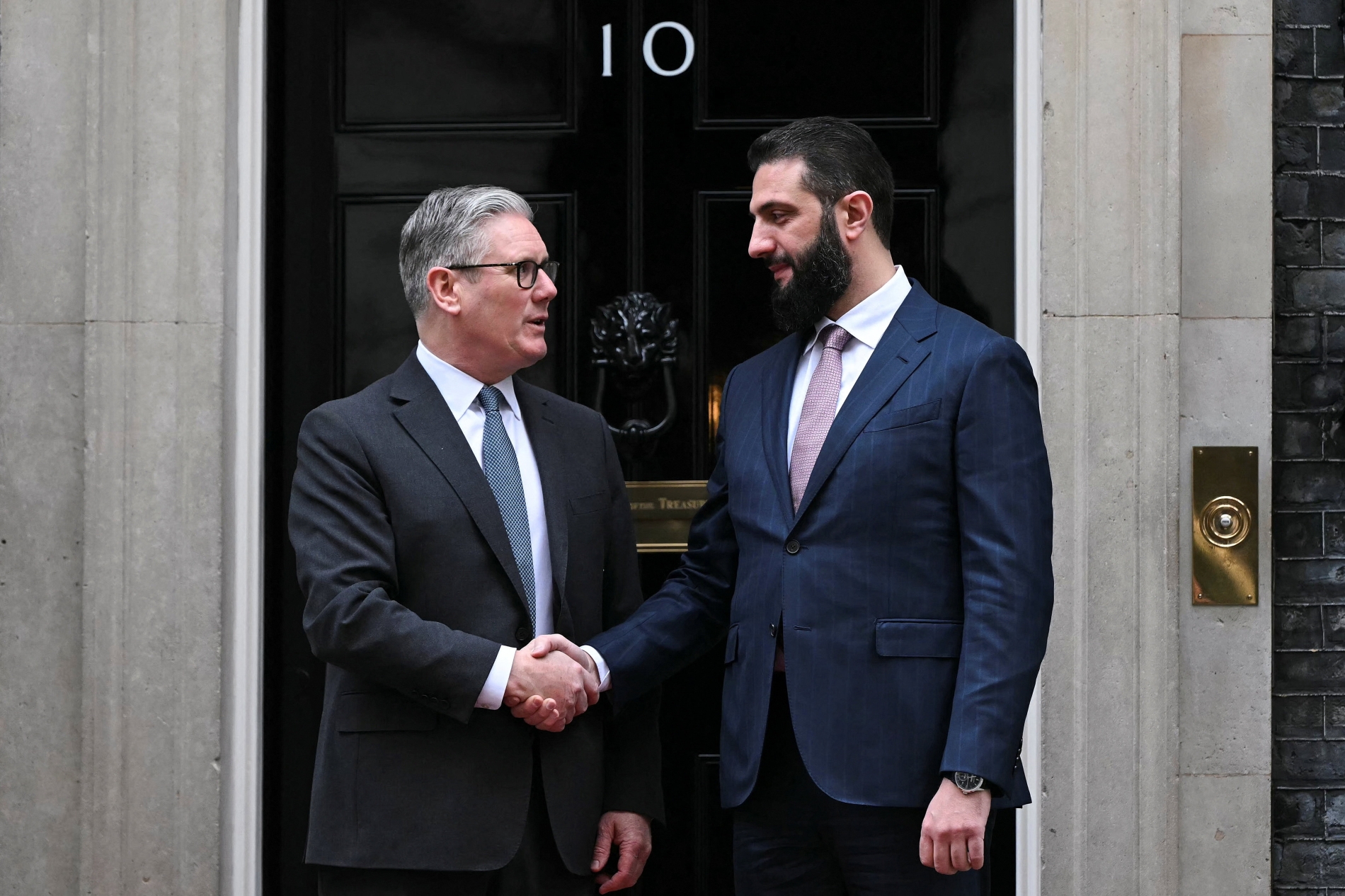
Syria's President Ahmed al-Sharaa is welcomed by Britain's Prime Minister Keir Starmer ahead of their meeting at 10 Downing Street in central London, Britain, on 31 March 2026.

Challenges remain

But while Syria is becoming increasingly stable, the country remains fragile, and its political transition faces numerous internal and external challenges. While 2025 saw the transitional government invest heavily and succeed in securing Syria's legitimacy on the world stage, 2026 will be the year in which domestic challenges associated with the economy as well as the unity of its diverse society will come to test. Looming questions around transitional justice and the need for a further broadening of governing representation, as well as the formation of a parliament and the successful integration of the northeast, will all determine whether stabilisation continues.

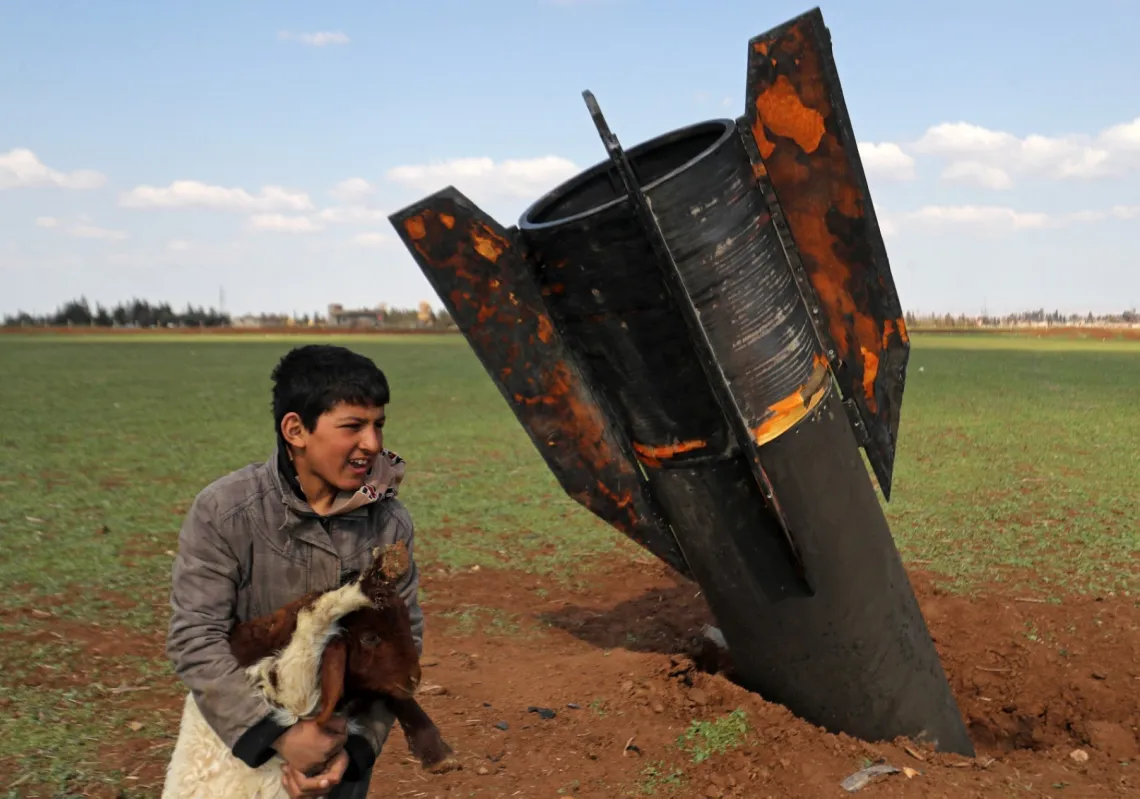
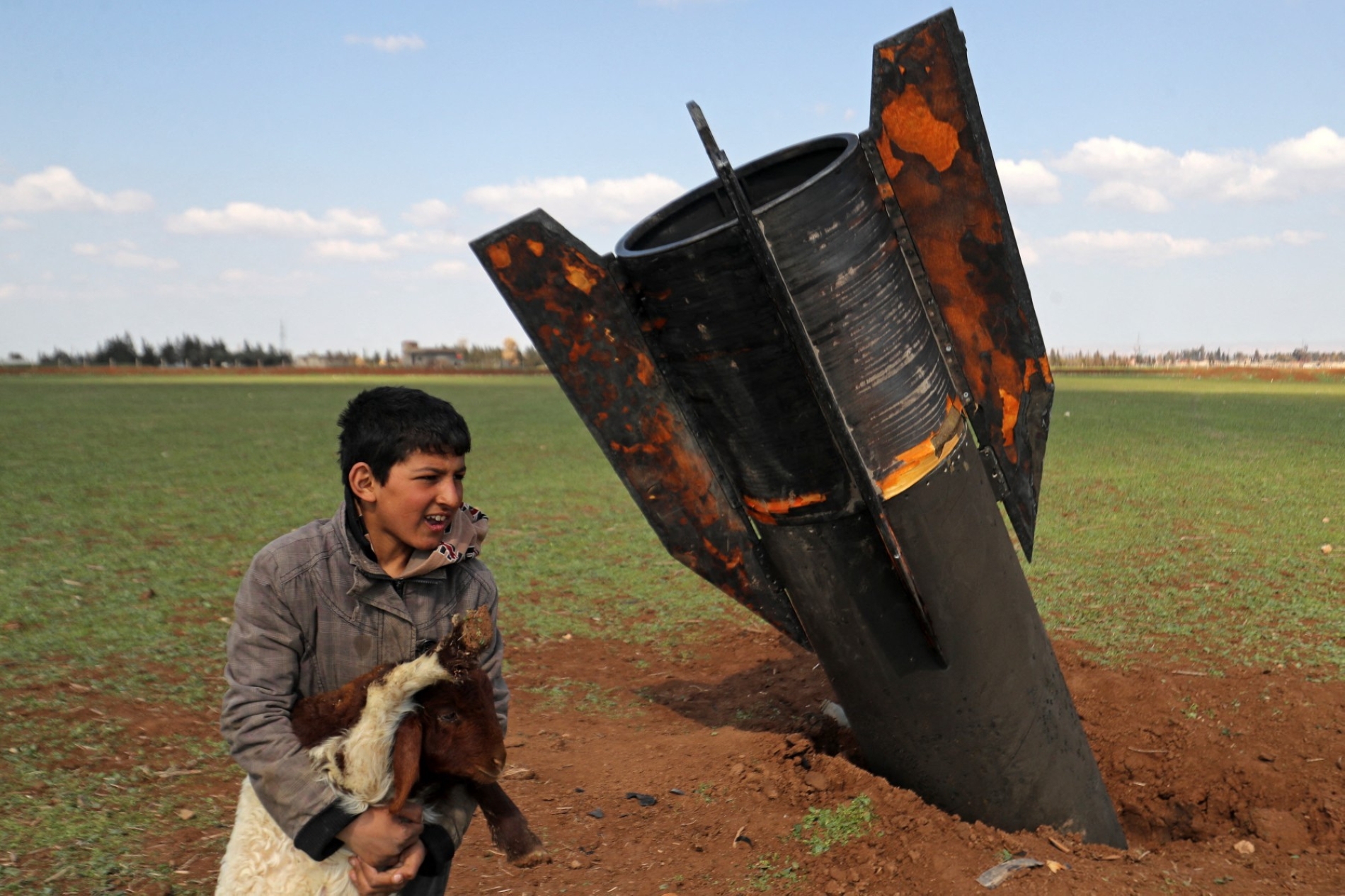
Syria also faces the world's largest unexploded ordnance (UXO) threat, the persistence of which not only threatens lives but also challenges economic recovery, particularly in rural areas. Since Assad's fall, more than 700 people have been killed in nearly 850 UXO incidents, primarily from landmines. The Syrian government has worked hard to deal with the UXO issue, including alongside NGOs. Through public awareness campaigns and localised demining efforts, the impact of UXO declined steadily in 2025, with 329 killed in Q1, 154 killed in Q2, 87 killed in Q3 and 56 killed in Q4. However, the first quarter of 2026 has seen UXO incidents rise, with a further 81 Syrians killed, underlining the need for international help.

DELIL SOULEIMAN / AFP
A boy plays with his sheep next to an unexploded missile that landed in an open field on the outskirts of Qamishli, eastern Syria, on 5 March 2026.

Syria's recovery and stabilisation also require regional and international stability. So far, Syria has stayed almost entirely out of ongoing regional hostilities, with the exception of four Iranian proxy drone attacks from neighbouring Iraq and one artillery strike by Hezbollah in Lebanon, none of which caused casualties. But the broader ripple effects of regional conflict are certain to constrain or slow the pace of investment and the ability of international investors to visit Damascus to explore new prospects. Syria's position at the heart of the Middle East offers a great many economic opportunities, but it also means that Damascus International Airport has been closed for a month.

While the nature of Syria's transitional authorities remains a source of concern for many, the prospect of Syria becoming a linchpin of regional economic interconnectivity and prosperity has unified a diverse range of regional and international actors behind Damascus.

To ensure that vision becomes a reality, Syria's transitional government must navigate a great many domestic hurdles and responsibilities, but decisions taken by the international community will also play a decisive role in determining how realistic the vision for Syria can become.

In this sense, the US-Iran war may have highlighted the potential advantages of Syria's economic pitch to the world, but if it continues for too long, it may also make the realisation of that pitch increasingly unlikely.

font change