Ramadan in Gaza: food scarcity compounds suffering
The iftar table, if it still exists, no longer represents joy, but anxiety and scarcity
Photo by EYAD BABA / AFP
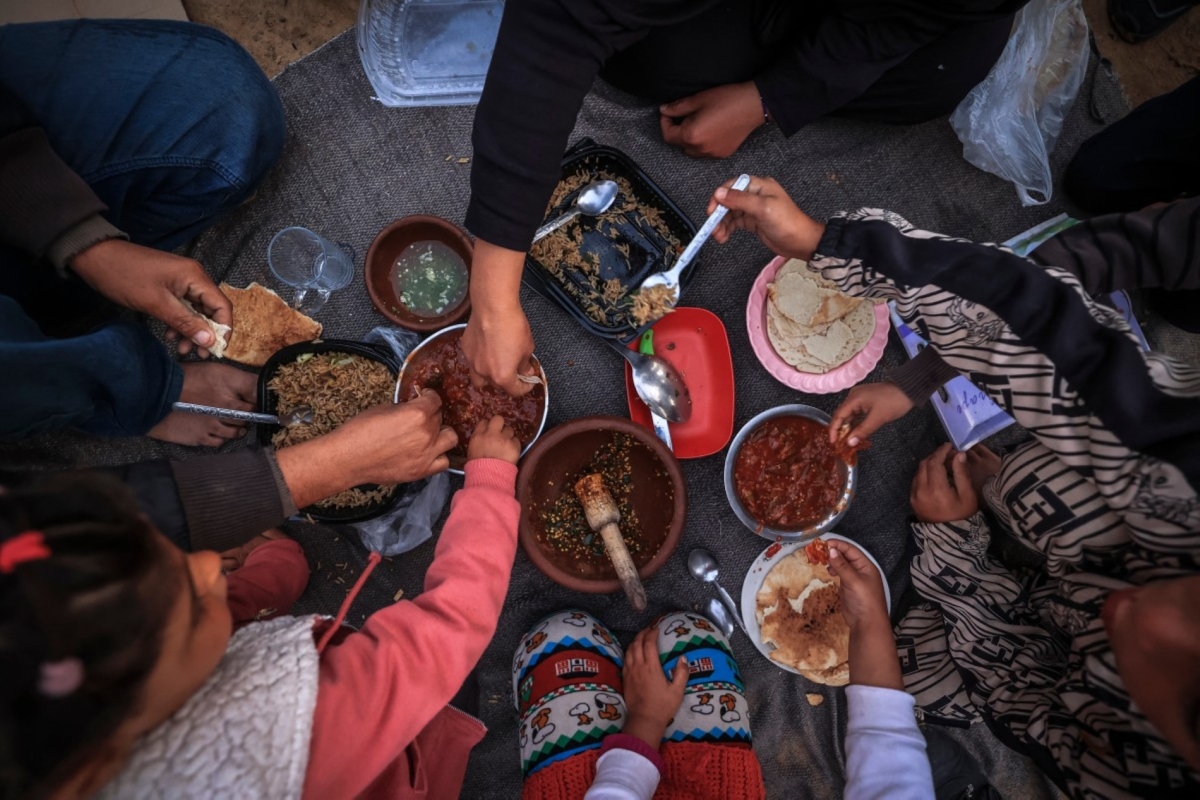
The displaced Palestinian Abu Mustafa family sits together as they break the dawn-to-dusk Ramadan fast during Iftar in the Nuseirat refugee camp in the central Gaza Strip on 26 February 2026.
Ramadan in Gaza: food scarcity compounds suffering
Ramadan arrives in Gaza this year to a people who remain weighed down by hunger, drained of resources for such a long period that their spirits are now also severely depleted, to such an extent that the relationship between mind and body has gone far beyond the bounds of normality.
For the world’s Muslims, fasting is meant to be a voluntary act, a spiritual ritual rooted in choice. In Gaza, where is the ability to abstain? Food is not available in the first place. Here, hunger is no longer a temporary practice endured during daylight hours and broken at sunset. It is a condition. It is a state imposed on those who have been purposefully starved during a two-year genocide.
Can fasting fulfil its spiritual function when it mirrors a coercive reality devoid of choice? Normally, the month of fasting presumes a particular relationship with the body: disciplining desire, regulating appetite, reordering priorities between the material and the spiritual. Normally, those who fast have minimal energy.
Lack of choice
What happens when the holy month reaches a person who is already exhausted, surrounded by death, and engaged in a daily fight for survival, so much so that their relationship with their body has now shifted, who has reached the limits of endurance, of patience, and of meaning itself? What is the meaning of fasting when the body has lost sovereignty over its most basic needs? When the ritual is less a spiritual exercise than a by-product of violence?
Ramadan this year is not a continuation of what once was. It is not a spiritual season detached from reality. Rather, it arrives carrying difficult moral and philosophical questions: about the body, about choice, about suffering, and about the fine line between patience as a spiritual virtue and patience as a burden imposed upon those who no longer have the luxury of endurance.
At Ramadan, fasting is seen as a purifying ritual; a temporary, intentional deprivation that leads to relief and a recalibration of one’s relationship with desire and materiality. It is a hunger that passes, is borne, and is then rewarded at the iftar, restoring the body’s balance and reaffirming that abstinence was a choice. This no longer holds when hunger carries a different memory, one saturated with fear, humiliation, and loss.
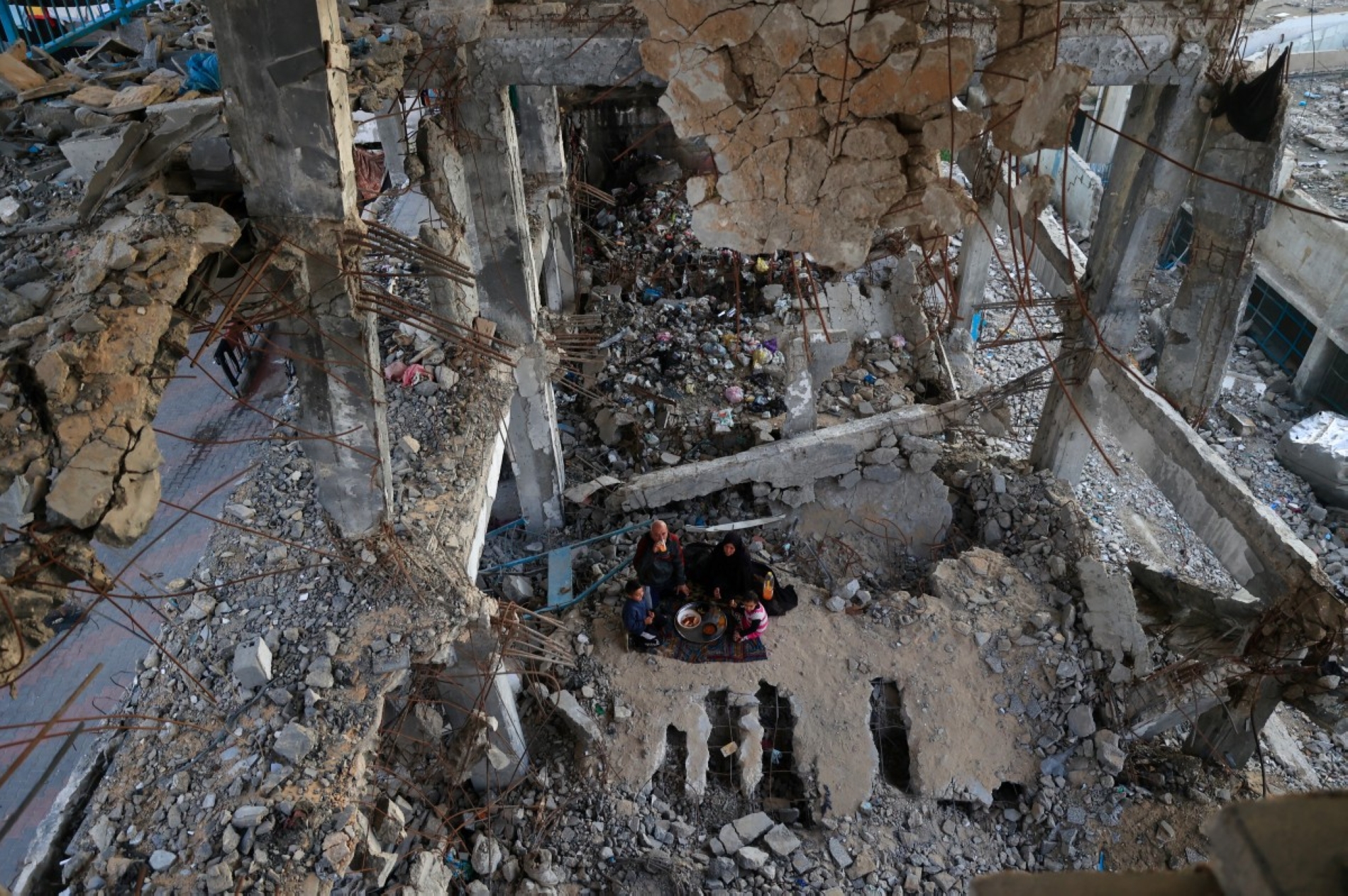
Displaced Palestinian families gather to sit for the "iftar" fast-breaking meal during the Muslim holy month of Ramadan, amidst the destruction in Bureij refugee camp in the central Gaza Strip on 25 February 2026.
Hunger steeped in terror
In Gaza, hunger arrives neither cleanly nor temporarily. It is hunger steeped in terror, bound to absent names, to children worn down without ever reaching the iftar, to homes in which cooking fires were extinguished before the lights went out. Hunger here is the accumulated residue of an unclosed trauma, an extension of nights that did not end at the call to prayer. It is an embodied memory, etched into the stomach, into the tremor of a hand, into the gaze of those who now anticipate the worst.
In Gaza, the approach of iftar does not necessarily mean that food will be available, or that it can be eaten together. Symbols unravel when they collide with violence, which reorders the relationship between the body and meaning.
Maintaining kinship ties is often no longer about meeting but about summoning absence. Families erased, homes lost, names no longer at the table.
The call to prayer is not merely an announcement of iftar; it is a promise of calm, a signal that the day's hardship has ended and tranquillity has begun. The iftar table symbolises gathering, restoration, and the affirmation of life's continuity despite fatigue. Yet in the face of sustained violence and systematic starvation, the symbolism dissolves. In Gaza, the symbol no longer symbolism not because it has lost its religious meaning, but because it is forced to carry more than it can bear.
The call to prayer should reassure, but in Gaza, it can bring tension: Will there be food? Can the iftar be completed, or will it be cut short by bombing? The iftar table, if it still exists, no longer represents joy, but anxiety and scarcity. Morsels are apportioned. Adults' disappointment and helplessness are concealed from children's eyes. The symbol no longer conveys reassurance. Rather, it stands as a witness to its fragility.
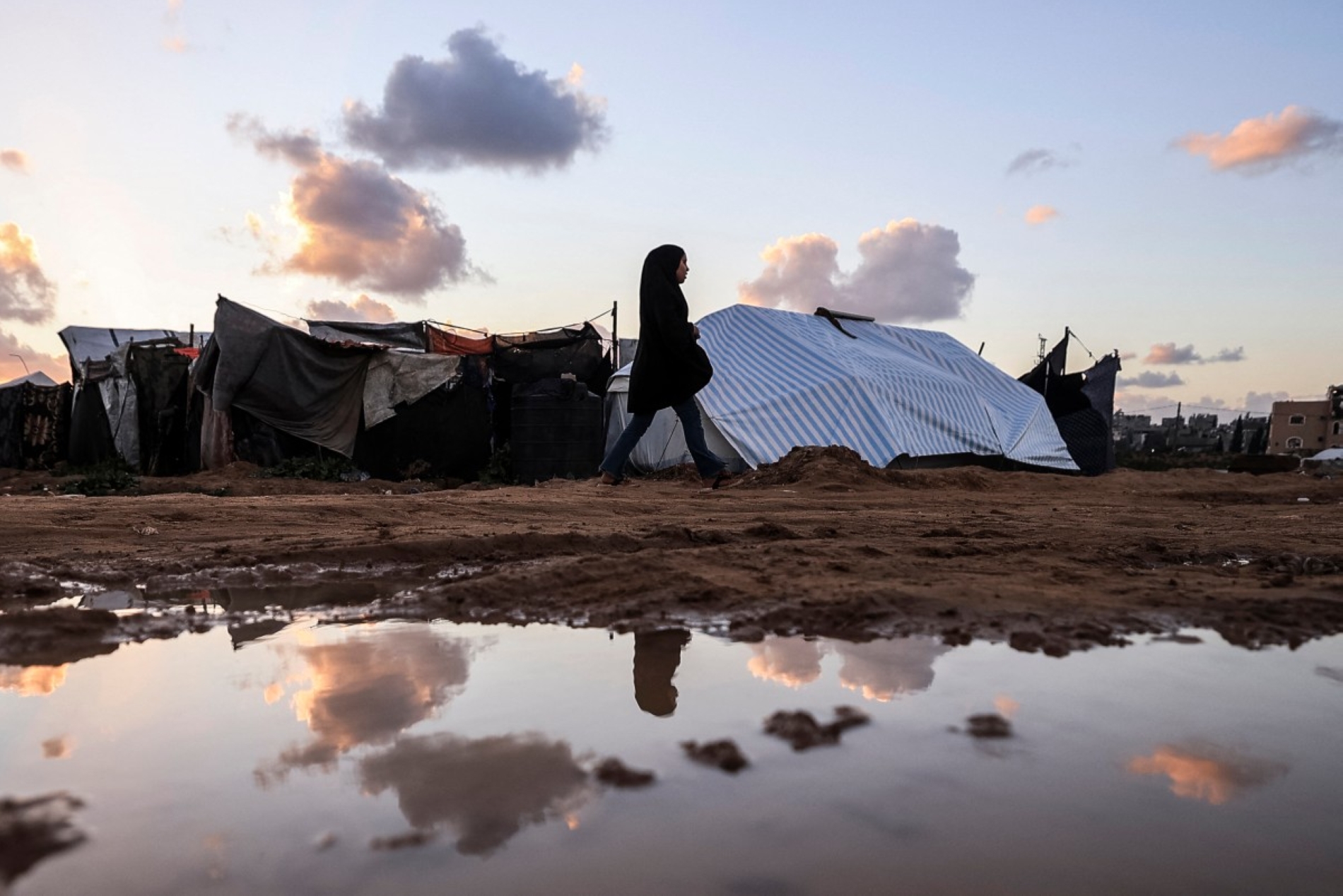
A woman walks through Nuseirat Refugee Camp, north of Deir al-Balah in the central Gaza Strip on 26 February 2026.
Time itself is unsettled. The daytime in Ramadan is meant to be a period of temporary abstinence, yet it stretches into a state of exhaustion with no clear end. The night is supposed to be a time of tranquillity, but it is a time of trepidation and fear. Worship and survival blur. Supplication becomes more defensive than contemplative, more plea than praise, not because faith has weakened, but because the body has to reorder its priorities under pressure.
Religion needs a minimum level of safety to perform its full symbolic function. If that is stripped away, the symbol can do little more than reflect tragedy rather than heal it. In Ramadan, symbols extend beyond religious and temporal rituals to the social fabric itself. Maintaining kinship ties ('silat al-rahm') has always been a defining pillar of this month: reciprocal visits, abundant tables, open homes, and gatherings that affirm continuity and belonging.
Violence and loss
Today, this social symbol collides with the realities of violence and displacement. In Gaza, many no longer have homes in which to welcome loved ones or host gatherings, no tables for communal meals. Entire families live in tents or atop the rubble, where receiving others is impossible.
Bodies are physically close but emotionally distant through loss. Attempts at gatherings collide with spatial limits and the weight of memory. Maintaining kinship ties is often no longer about meeting but about summoning absence. Families erased, homes lost, names no longer at the table. Presence itself becomes a reminder of what is missing, and gatherings become occasions to recall pain, rather than ease it.
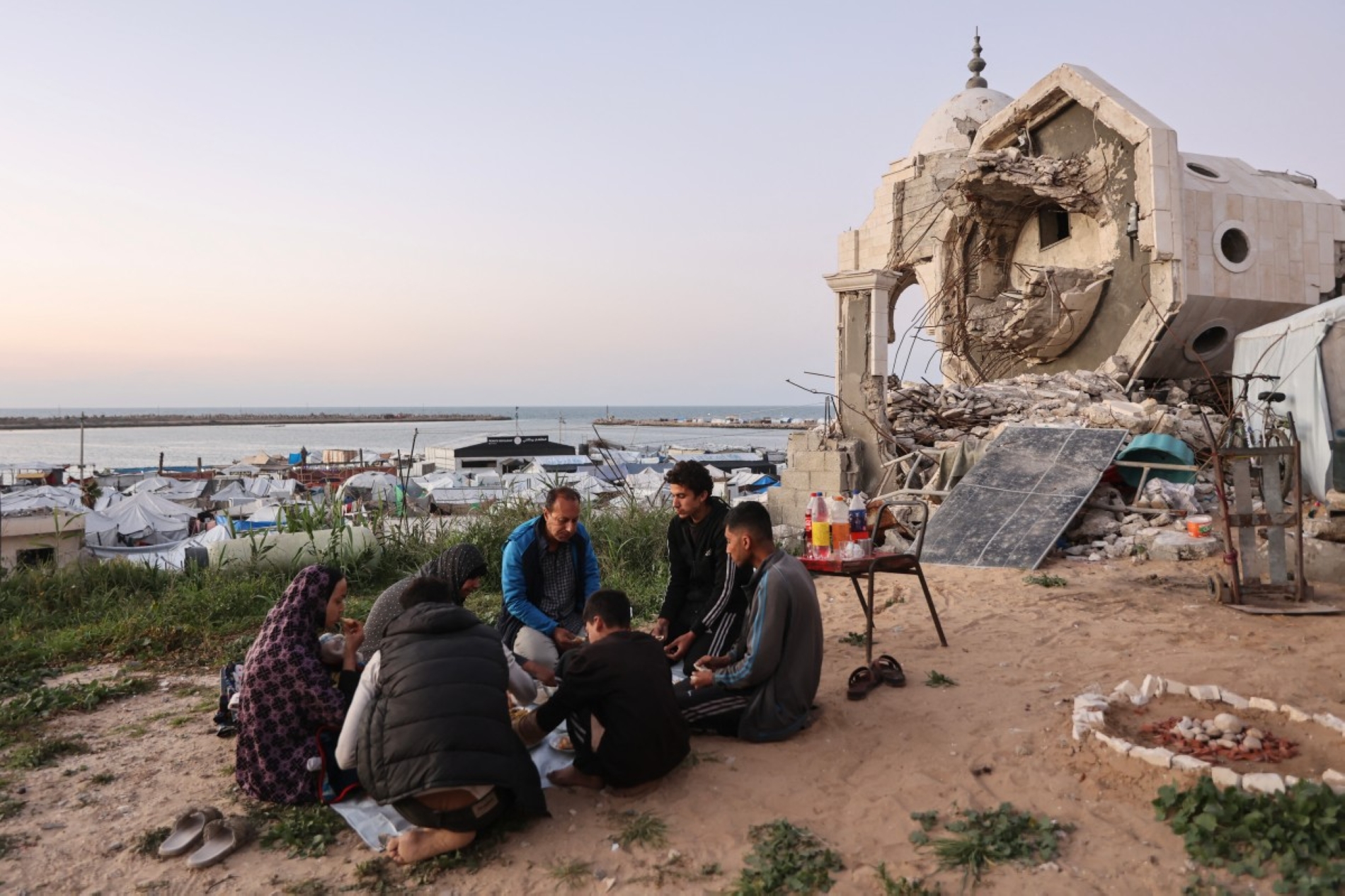
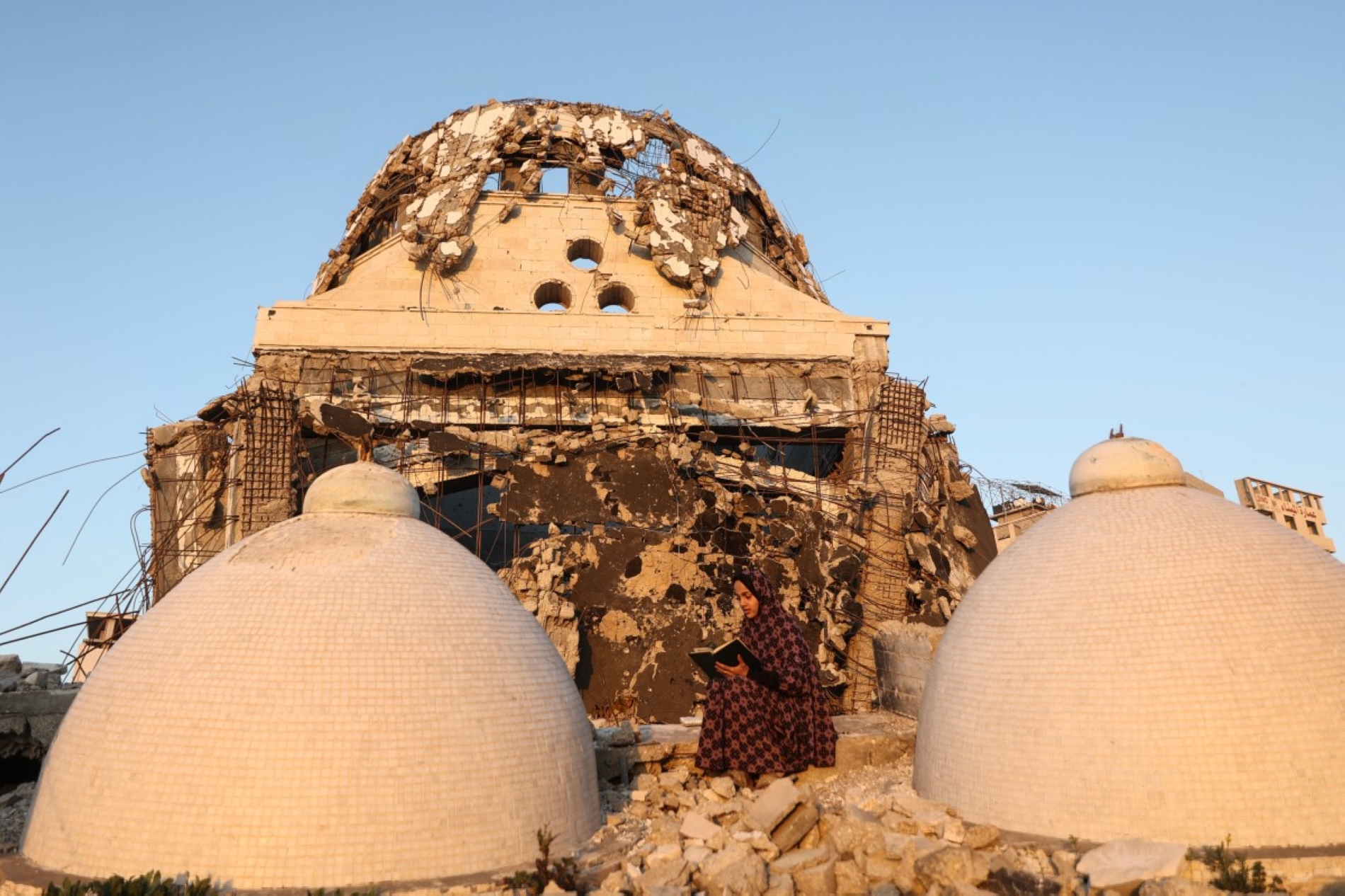
The displaced Palestinian al-Ghafir family, sits together to break the dawn-to-dusk Ramadan fast during Iftar next to their tent, which is erected amid the ruins of the al-Hasayna Mosque in western Gaza City on 21 February 2026.
How do Gaza's Palestinians celebrate connection when absence is the norm? Ramadan is no longer a month of reunion, but a month of confronting emptiness. People have not abandoned the values of compassion, but the context has changed. Compassion does not disappear but takes a different form: a silent glance, the sharing of a scarce morsel, or refraining from asking questions that might reopen a wound. The limits of values are exposed when they are asked to function where there is no space to breathe.
Ramadan is a moral test, but who is truly being tested? When fasting is emptied of its essential condition—choice—it shifts from an individual test of will to a collective trial of conscience. Ramadan this year does not test Palestinian patience or capacity for endurance (that capacity has long since been exhausted)—it tests the meaning of mercy, solidarity, and of the 'Holy Month'.
Instrument of coercion
What does it mean for a people to fast under compulsion, not by choice, while the world observes fasting rituals in safe and well-provisioned spaces? Hunger in Gaza is administered as policy and as an instrument of pressure. Here, a profound moral gap is laid bare: between fasting as worship and fasting imposed as fate and political destiny; between a body trained in abstinence and a body drained to the point of nothingness.
The Palestinian body is where global fasting meets political silence. It is an indictment of mercy's failure when separated from action. While prayers are said and solidarity stated, hunger is left to operate quietly, and bodies are left to collapse. Ramadan here exposes a world that can see, hear, and fast by choice, yet chooses not to act.
A female member of the al-Ghafir family, sits of the debris of the al-Hasayna Mosque as she recites from a copy of the Koran, during the holy month of Ramadan in western Gaza City on 21 February 2026.
In religious and Sufi discourse, patience is presented as a noble virtue, a state of deep contentment and inner strength that enables a person to endure hardship without losing their humanity. It is not submission but a conscious choice, a moral stance borne of the capacity to endure, rather than its absence. This concept is inverted when removed from its spiritual context and repurposed as a compulsory demand directed at those who no longer have any option but endurance.
In Gaza, patience is frequently invoked not as a personal path to salvation but as a moral condition imposed in the name of faith, reward, dignity, and resilience. Is it faith-based patience, or a politically convenient patience to preserve the status quo and soften the calls for action?
When patience is used to justify pain, postpone anger, or silence moral questions about responsibility, it loses its spiritual meaning and becomes just another burden on an already exhausted body facing coercion. Ramadan, here, is no longer a month for practising patience but a space for interrogating it. When is it a virtue, and when does it become an instrument of control to normalise suffering?
Palestinians in Gaza, like all Muslims, are asked to be stronger, yet this means being stronger than they can bear, more silent than they should be. Patience imposed by force to justify hunger and starvation is not a virtue—it is a new moral injustice.