
Amid the US-Israeli war with Iran, traders are pricing in the possibility of an oil shock, particularly if tensions threaten traffic through the Strait of Hormuz, the artery through which roughly a fifth of global oil supply flows. For its part, Iran said the waterway has been effectively closed.
Amid these tensions, OPEC+ agreed on Sunday to increase oil production by 206,000 barrels per day starting in April. The decision was aimed at bolstering supplies to counter rising prices, but the boost may have a limited impact if shipping routes remain under threat.
Oil has long proven itself not merely a commodity, but a potent political weapon, one capable of reshaping economies, alliances and global power balances.
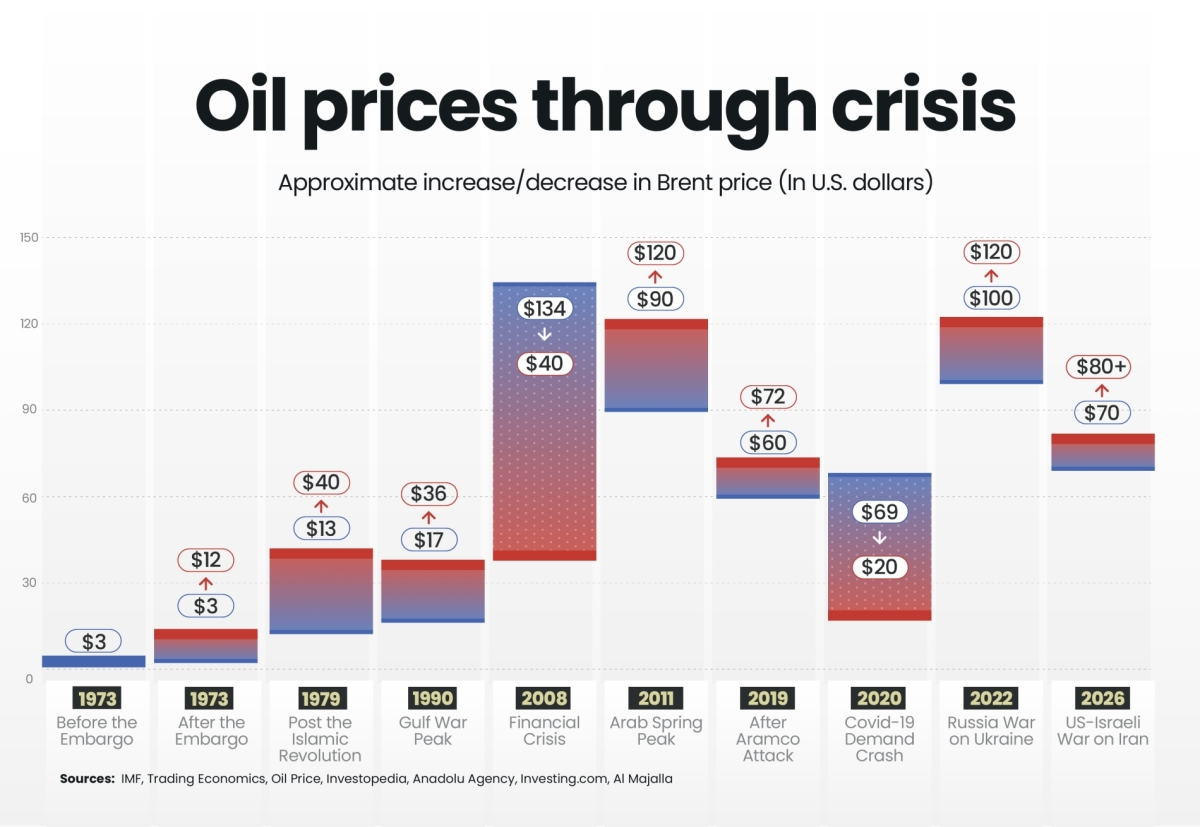
History offers ample precedent. The 1973 Arab oil embargo marked the modern era’s first great oil shock, quadrupling prices and demonstrating how supply restrictions could upend Western economies. The 1979 Iranian Revolution delivered another surge as production collapsed. In 1990, Iraq’s invasion of Kuwait sent prices sharply higher, though the spike proved temporary once output was restored.
Oil’s sensitivity is not limited to war. During the 2008 global financial crisis, collapsing demand sent prices plunging from record highs. COVID-19 in 2020 produced an unprecedented demand shock, even driving prices below $20. Russia’s 2022 invasion of Ukraine again lifted crude above $120.