Lightness, emptiness, hyperpower: the evolution of Gilles Lipovetsky

From 'The Age of Emptiness' to 'The Odyssey of Hyperpower', this French philosopher has charted the seductive traps of hypermodernity

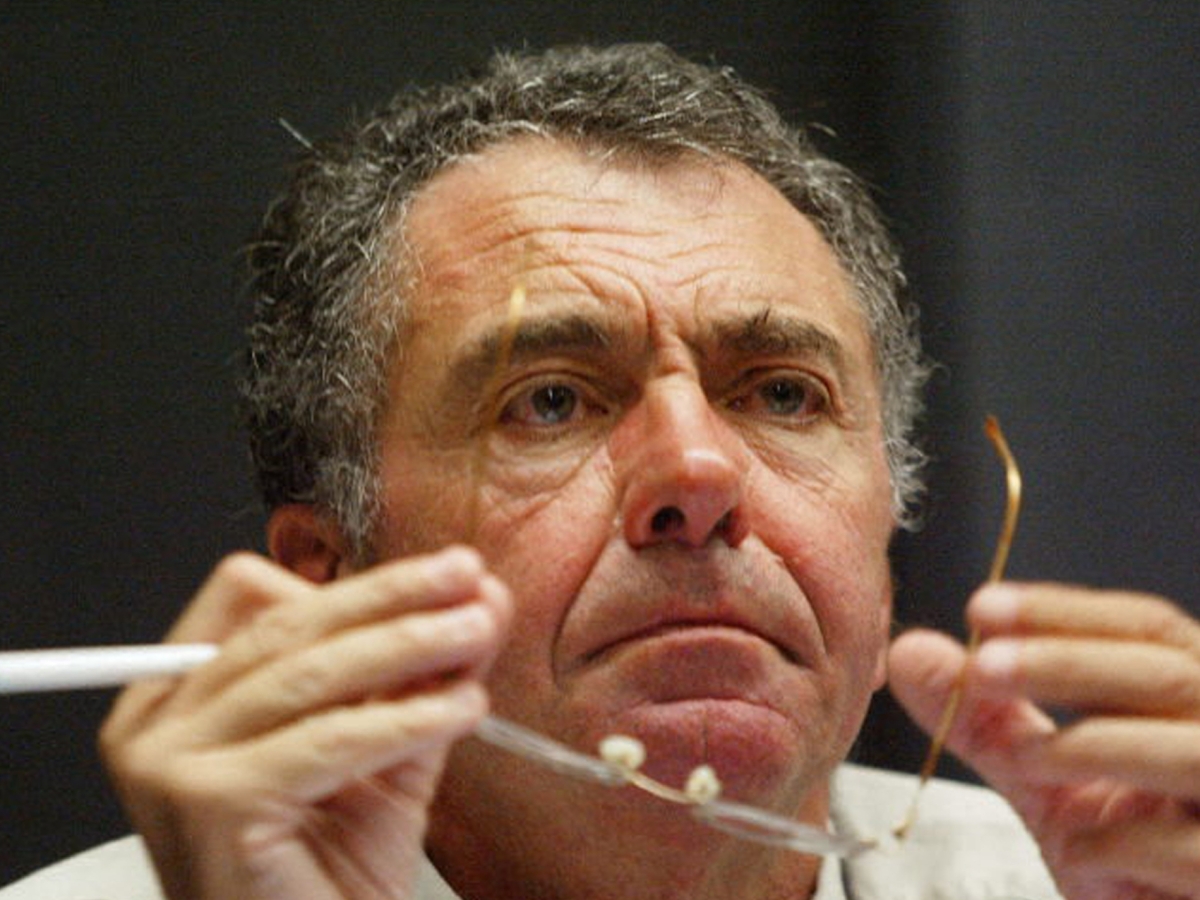
French philosopher Gilles Lipovetsky, during his participation in a workshop at HEC on 27 August 2003.
MARTIN BUREAU / AFP
French philosopher Gilles Lipovetsky, during his participation in a workshop at HEC on 27 August 2003.

Lightness, emptiness, hyperpower: the evolution of Gilles Lipovetsky

With the release of L’Odyssée de la surpuissance (The Odyssey of Hyperpower), the French philosopher Gilles Lipovetsky has brought his exploration of lightness to a close, venturing into a sharper, more precarious intellectual terrain.

Published in January, Lipovetsky’s new work moves beyond his signature examination of societal fluidity and ephemeral consumption, turning instead to the ‘hyperpower’ bestowed by technology and artificial intelligence. He portrays contemporary life as a sweeping technological odyssey, one that places the very essence of human existence at stake.

This new turn invites a return to the long path Lipovetsky has traced since his earliest work. Before addressing ‘hyperpower’ and artificial intelligence, he laid the groundwork for reading the contemporary world through concepts that felt revolutionary at the time, from The Age of Emptiness to The Empire of the Ephemeral.

Between those beginnings and this latest book lie pivotal stations that shaped our understanding of femininity, consumption, and authenticity—stations I have travelled not only as a reader but as a translator who has lived with his texts and felt the depth of their transformations.

A civilisation of hyperpower

What Lipovetsky proposes in this work goes beyond routine sociological analysis. He describes a moment akin to the ‘Big Bang’, redrawing the contours of human civilisation. We are living, in his words, through an existential shift that unsettles the pillars of science, technology, the environment, and even individual identity.

In The Odyssey of Hyperpower, Lipovetsky sketches the features of this new phase, which he calls the civilisation of hyperpower—a stage in which every human limit is pushed to its furthest extent, with the unknown defining fields such as artificial intelligence, space exploration, and the manipulation of life’s very essence.

Within this imposing panorama, Lipovetsky does not overlook the paradox that has long accompanied his thinking. As capitalism expands to encompass the entire planet, turning every human desire and dream into a commodity, new and unprecedented fragilities emerge. While human beings possess the instruments of hyperpower, they find themselves constrained by environmental crises, by geopolitical insecurity, and by a decline in democratic vitality in the face of advancing nationalism and populism.

In Lipovetsky’s view, we are not merely witnessing shifting patterns. We are living through the birth of an unprecedented civilisation, compelling us to seek new keys to the future at a perilous crossroads of history and anthropology.

De la légèreté, 2015

The unravelling of the age of lightness

For years, Lipovetsky has analysed modernity and dissected the challenges of the postmodern human. With the world’s pulse accelerating to the point of breathlessness, power is no longer measured by stability but by flexibility. From his foundational book, The Age of Emptiness, to Lightness, Lipovetsky has held a mirror to our collective shift towards weightlessness. Yet this lightness, which promised liberation from heavy ideologies and repressive duties, has hardened into a new form of despotism—a soft despotism that obliges us to be cheerful, to consume, and to remain light at all times.

We live under the dictatorship of the smile, where sadness is a fault and depth obstructs both production and consumption. In this age, the individual is discouraged from self-examination or from dwelling on the wounds of existence. Every event must be swift, buoyant, and instantly disposable. We have shifted from the harshness of duty to the harshness of pleasure, with the contemporary individual coerced into happiness. The result is a fragile human being who flees any reckoning with the shadow that lies behind the veneer of consumption.
The female body becomes aesthetic capital that must be continually renewed, just as fashion lines are renewed in their perpetual ephemerality

Lipovetsky is best read in reverse. While he described the processes of hypermodernity and their effects on the feminisation of the world and the democratisation of fashion, we find ourselves compelled to undertake a counterrevolutionary act. To be deep in an age of shallowness—to remain faithful to one's truth in an age of digital masks—is no longer a mere intellectual option. It has become an act of resistance. It is a revolution of depth against the processes of liquidity that Lipovetsky analysed, in which insistence on meaning, contemplation of pain, and a firm grasp of the essential become the only way to reclaim our humanity, which has almost dissolved in the acids of excessive lightness. 

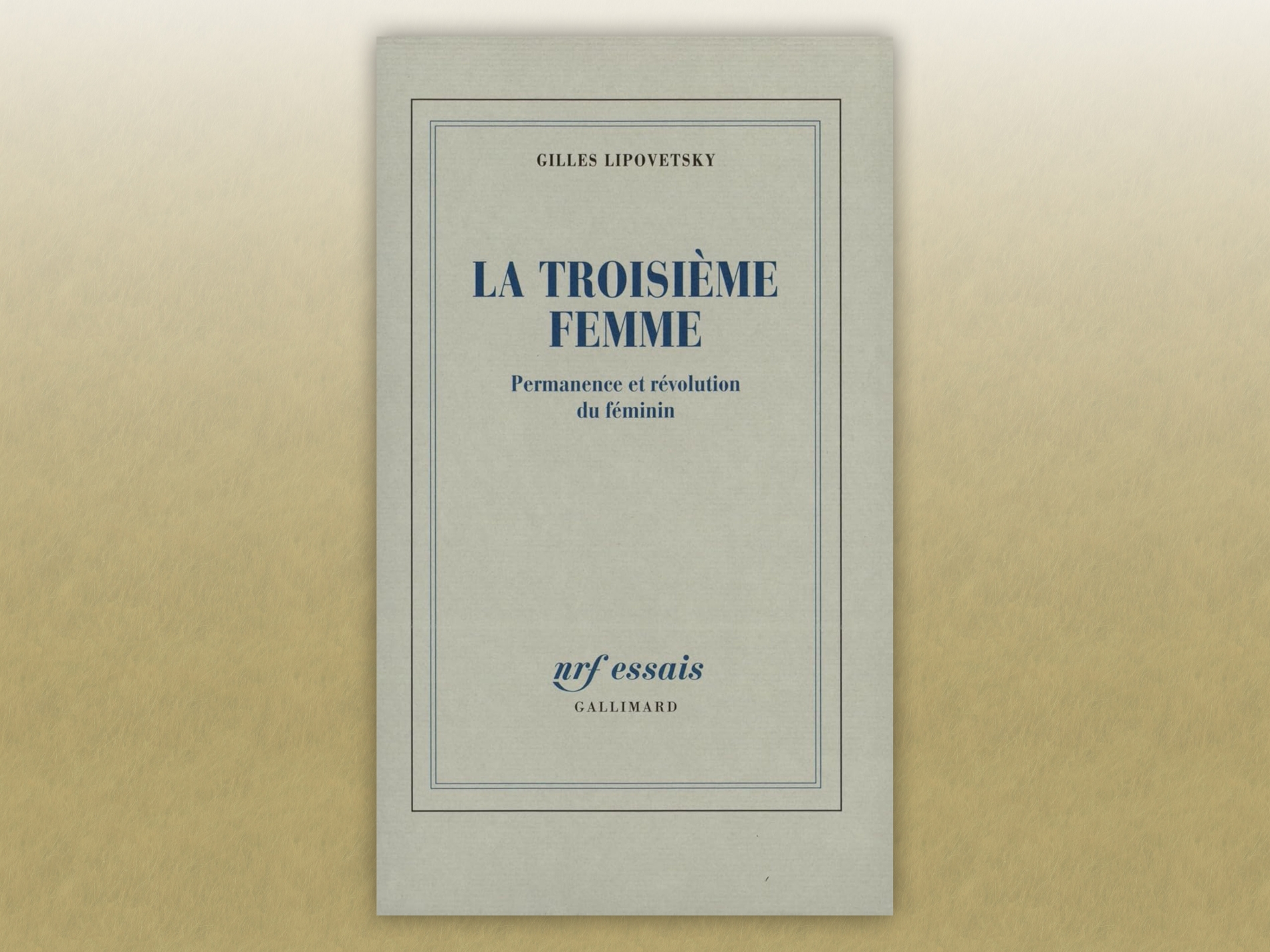
La Troisième femme, 1997

The third woman: analysing the ontological shift

The logic that governs contemporary societies is most clearly expressed in the transformation of the women's condition, a point Lipovetsky explains with finesse in his landmark book, The Third Woman, published in 1997. Here, he does not merely chronicle women's emancipation. He analyses an ontological transformation that has made femininity the largest laboratory for hypermodernity's values.

After centuries in which the first woman was governed by fate and inherited status, and the second woman was celebrated as an aesthetic Renaissance icon while remaining outside the realm of social action, the third woman emerges. It is she who embarked on a genuine struggle for independence and for political and personal rights, yet found herself at that very moment ensnared by an unforgiving consumer logic of seduction.

In this context, the commodification of women is, for Lipovetsky, a subtle and intricate process. It advances not through coercion but through allure. Care of the self, beauty, and elegance moved from class-bound social rituals to daily individual obligations. The third woman, who has gained her independence, is now required to be successful and effective, yet she must also remain light and beautiful. The female body becomes aesthetic capital that must be invested in and continually renewed, just as fashion lines are renewed in their perpetual ephemerality.

Lipovetsky exposes a paradox. Commodification wears the mask of liberation. Fashion and lively, vital beauty in the age of the third woman form part of her elective identity and personal project, yet they also amount to an oppressive dictatorship. There is no room for existential weight or for the marks of time. Otherwise, a woman finds herself pushed outside the frame of the world's screen with its fluid standards.

Between the empire of the ephemeral, which turned everything into a passing fashion, and the third woman who seeks a foothold in a changing world, Lipovetsky equips us with the philosophical tools to understand this journey towards lightness. We are not moving against Lipovetsky; we are building on his precise dissection of reality, searching for ways to regain our spiritual heft.

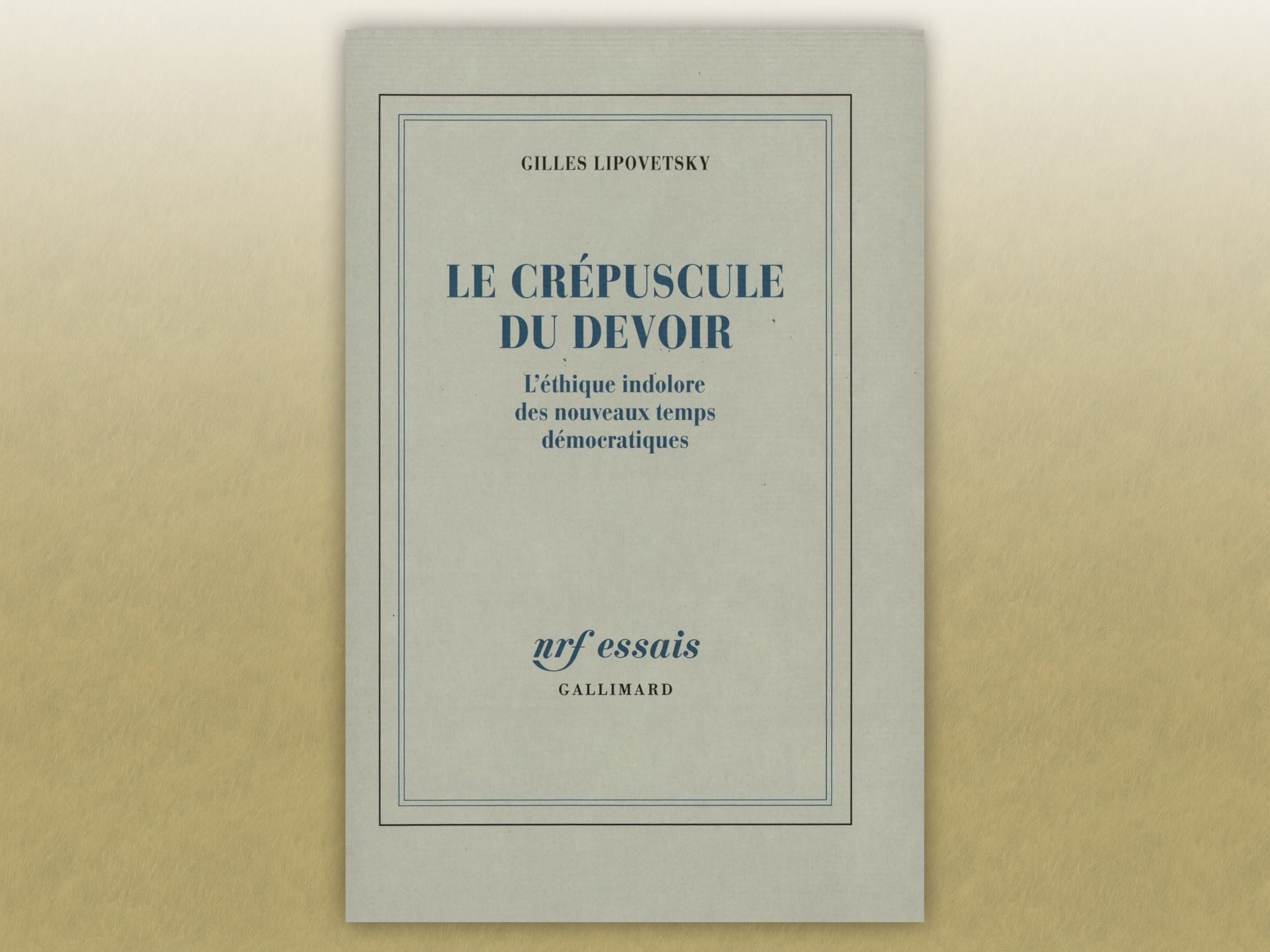
Le Crépuscule du devoir, 1992

The luxury trap

Lipovetsky's diagnosis of our age is incomplete without pausing at the grand paradoxes that shape today's consciousness. The first appears in The Twilight of Duty, published in 1992, where he traces a radical shift in the collective conscience. He argues that we have moved from a strict age of duty, which sanctified sacrifice and collective commitment, to a post-ethical age in which ethics submits to the logic of lightness. 

We do not live in an unbridled or value-free society. We live in a society that rejects painful ethics. We empathise with major humanitarian causes, and we care about the environment and the rights of others, yet we practise this empathy on the condition that it does not interrupt our pursuit of personal pleasure or demand major sacrifices that restrict our individual freedom.

Responsibility has also become entirely individual. The contemporary individual must invent personal meaning each day amid a rubble of goods and choices. Here, the second paradox comes to the fore, especially in Lipovetsky's analysis of the society of hyper-consumption. He contends that we have moved from the consumption of status, where we buy commodities to appear superior in the eyes of others, to the consumption of emotional experience, where we buy to feel ourselves. 

In this age, the purchasing of goods, services, and pleasures has increased at an unprecedented rate. Shopping has become a daily cure for boredom. Yet paradoxically, human beings have never experienced such existential unhappiness and psychological fragility. While the Lipovetsky subject possesses every instrument of comfort and convenience, we witness an intense turn towards therapy, a search for balance through Prozac, and recourse to self-development courses that have themselves become consumer commodities.

Crowded therapy clinics in an age of plenty

An increase in choice has not produced greater satisfaction. It has produced the anxiety of choice. In a world that constantly urges you to be happy, young, and successful, sadness or failure is an unforgivable personal fault. This is what Lipovetsky calls the dark face of hypermodernity, where the lightness we dreamed of becomes a psychological weight. The individual, liberated from the constraints of society and tradition, finds themself completely alone before the mirror, required to attain an impossible perfection imposed by glowing advertising screens.

In this way, the empire of the ephemeral shifts from a playground of freedom to a laboratory of chronic anxiety. The Lipovetsky subject is excessive in everything: consumption, individualism, and worry. This paradox is not a defect in the system. It is the system's structure itself. We consume to fill the emptiness left by lightness, and the more we consume, the lighter the meaning becomes. This drives us once again to search for a new chemical or consumer salvation. 

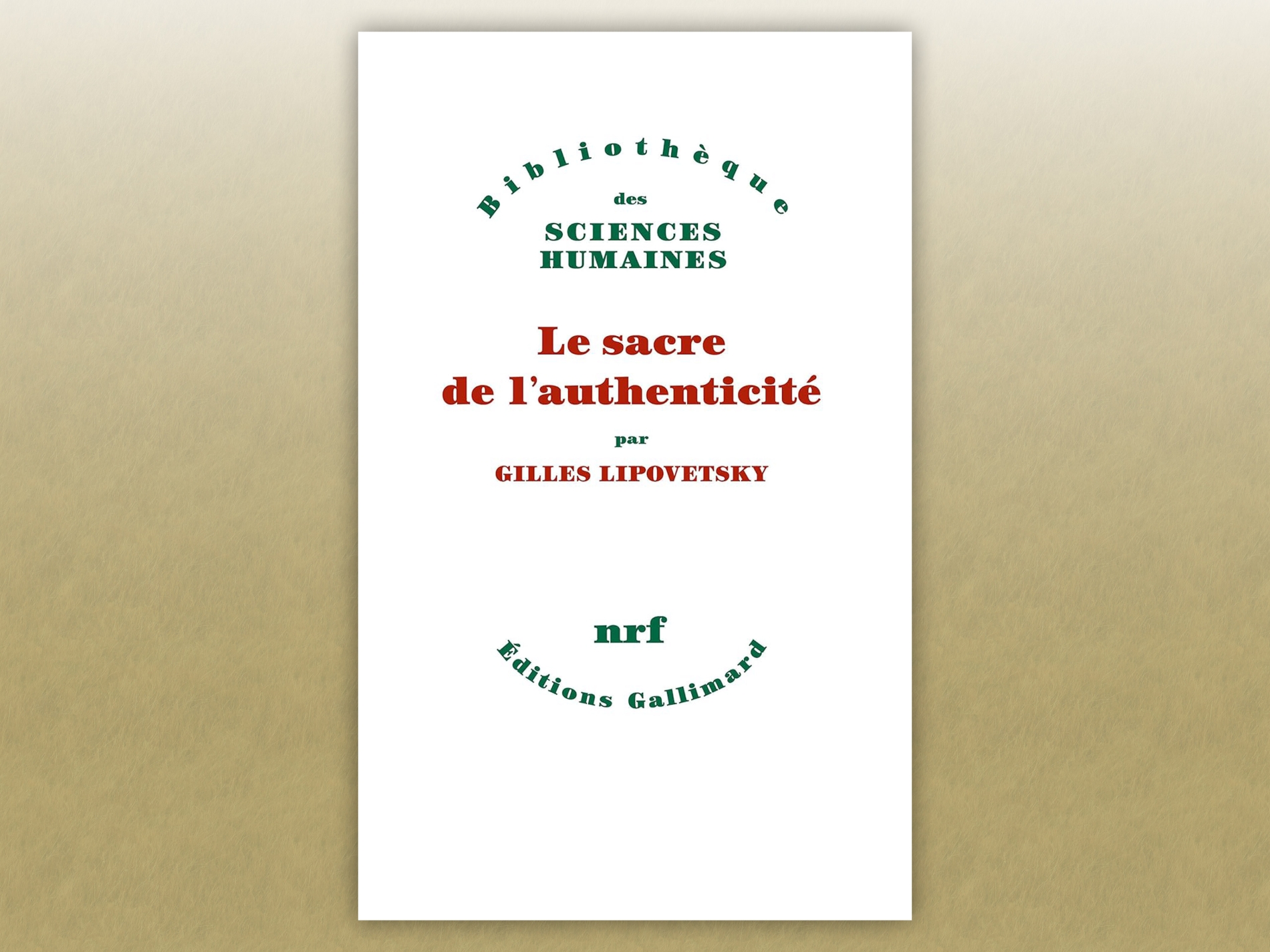
Le Sacre de l'authenticité, 2021

Behind the masks of modernity

After decades spent theorising the liquidity of fashion and the fragility of values, Lipovetsky surprised us in The Consecration of Authenticity, published in 2021, by charting a phenomenon that seems, at first glance, to contradict the lightness associated with his writing. It is the hypermodern human's obsession with authenticity.

After exhaustion from successive cycles of ephemerality, we began to witness a powerful return of all that is real, natural, and sincere. The individual no longer settles for a gleaming product without spirit. They seek artisanal items, organic food, and real experiences that offer a sense of connection to the essence of things, away from the clamour of counterfeit manufacture. 

Lipovetsky argues that this new sacralisation is not a relapse into the past or a nostalgia for ancestral traditions. It is the apex of contemporary individualism. The person who has recovered ownership of decision and identity now demands an additional right—the right to be themselves, free from prefabricated moulds. Authenticity has become an existential project, a desire to find an 'I' that does not dissolve in crowds of ready-made patterns, an 'I' that strives to root its being in unique personal experiences that restore reality to its rightful place.

We consume to fill the emptiness left by lightness, and the more we consume, the lighter the meaning becomes

With his customary finesse in exposing contradictions, Lipovetsky does not overlook the paradox here. Authenticity itself has been absorbed into consumer logic and recast as a new fashion. Companies sell sincerity in luxurious packages. Tourism offers pre-programmed authentic experiences. Yet he reads this transformation as an implicit recognition that human beings can no longer tolerate living in emptiness. They seek meaning that reaches beyond passing consumption, even when the search must use the very tools of consumption. It is a tireless attempt to restore existential balance in a world that never stops changing. 

Beyond the mirror... is there a way out?

In the end, Lipovetsky does not hand us ready-made solutions or a manifesto of salvation. He offers a cool yet faithful dissection of our complex reality. The importance of returning to his thought today, particularly through texts such as The Third Woman and The Empire of the Ephemeral, lies in exposing the fine thread that ties our personal freedom to our new servitude to the logic of the market. 

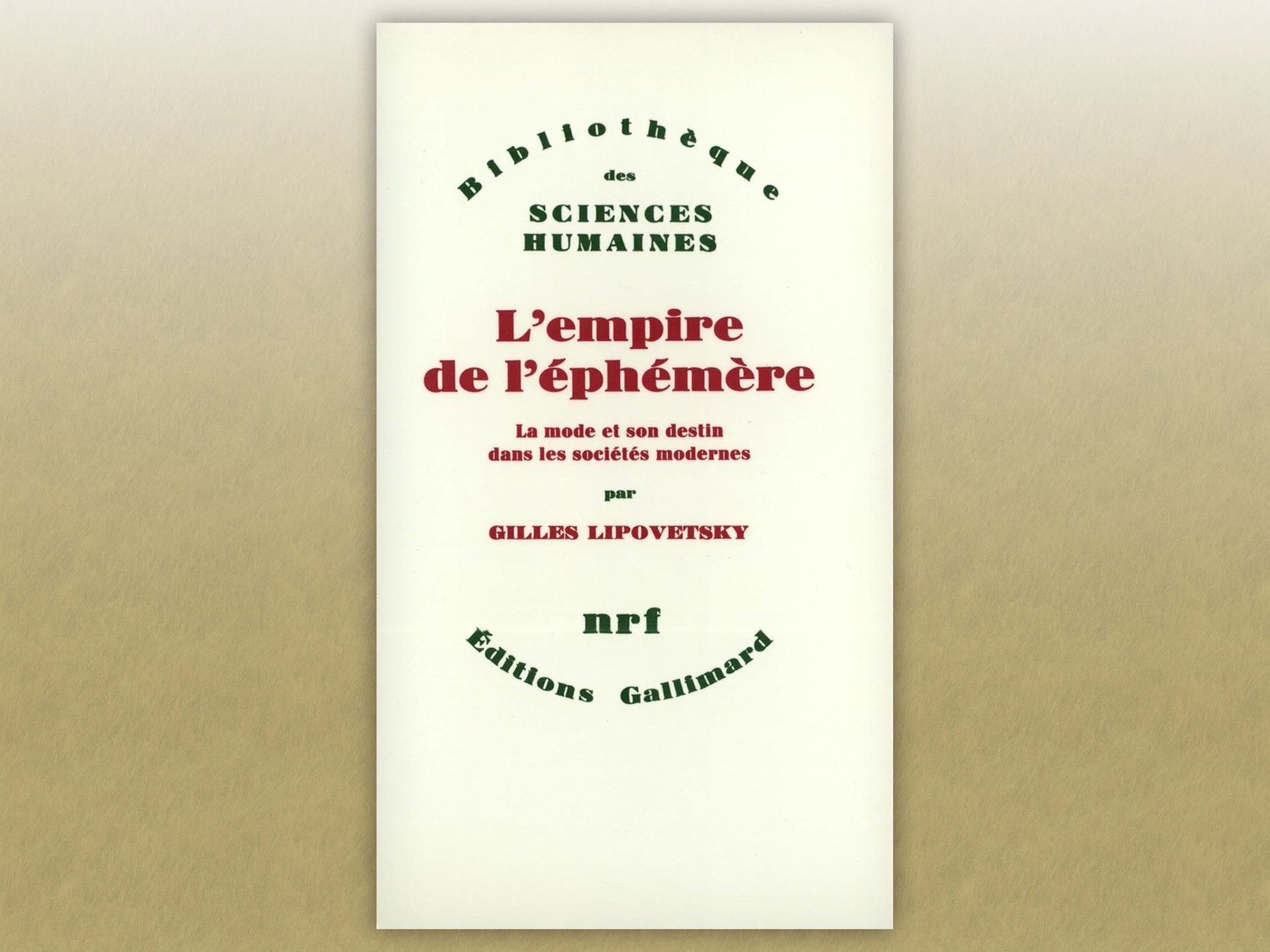
L'Empire de l'éphémère, 1987

Lipovetsky is not a herald of superficiality so much as a warning voice against spiritual depletion. The third woman, who has gained independence, and the post-duty human, who has shed constraints, now stand before an existential challenge: how can one build solid meaning in a liquid world? How can one practise freedom without falling into the trap of anxiety set by the therapy clinic and the society of hyper-consumption?

The French philosopher may have announced the twilight of traditional duty, yet he placed in our hands a new kind of responsibility. It is our responsibility to be conscious of the conditions of our age. Reading his thoughts is a call to recover a beautiful weight in our lives, not through a return to the past, but through a deep understanding of the present that blunts the sharpness of false mirrors.

font change