Cairo's evolution and the endurance of the Arab city
Long before Europe’s major capitals emerged, Arab cities formed vast, sophisticated urban systems. Cairo’s architectural evolution traces the rise, openness, and endurance of this civilisation.
Nesma Moharam
Cairo's evolution and the endurance of the Arab city
In a paper entitled From Baghdad to London: Unravelling Urban Development in Europe, the Middle East, and North Africa (800–1800), researchers compared the Arab city during its golden age with those in Europe. They found that the Arab city was, in many respects, entirely superior to its European counterpart, even though many Arab cities were located inland, without access to seas or rivers for trade.
At a time when European cities such as London were little more than small towns, Baghdad had rapidly become a global metropolis, home to hundreds of thousands of people. In this, it resembled major cities such as Cairo, Damascus, and Cordoba, which remained centres of economic and cultural power until 1200.
This superiority was evident in the rate of urbanisation, which at the time was three times that of Europe. The decisive factor behind the growth of these cities lay in their status as capitals, which attracted wealth and economic activity through the concentration of public spending and the centralisation of royal privileges within them.
This remarkable prosperity was not limited to the size of cities alone. It was embodied in the emergence of a highly integrated and interconnected urban system that endured until the 10th century. This interconnection arose from political unity under a single ruling authority, the unifying dominance of the Arabic language, and shared cultural and religious foundations. Together, these elements effectively established a vast free-trade zone that strengthened exchange and civilisational interaction across the Islamic world.
The research paper’s findings bring us back to Will Durant and Ariel Durant’s praise for Islamic cities in The Story of Civilisation, an 11-volume historical series covering both Eastern and Western civilisations. In various parts of the Islamic world, they wrote, "great cities arose in which Islamic civilisation reached the highest levels of beauty, knowledge, and happiness."
At a time when European cities such as London were little more than small towns, Baghdad had rapidly transformed into a global metropolis inhabited by hundreds of thousands of people
The urban fabric of the Islamic city thus holds a special place in architectural and social research, owing to its constant evolution and responsiveness to multiple influences. Through its study, we can construct an almost complete image of Arab societies in earlier eras and better understand the forces that drove the transformation of Arab cities—a transformation whose outcomes we live with today.
Unifying spirit
Researcher Riyad Hassan affirms in Islam and Urbanisation in the Medieval Middle East that settlement was a social objective in early Islamic thought. Islamic law encouraged Arabs to settle in cities as a prelude to building a stable civilisation.
Cairo
The mosque played a central and foundational role in the emergence of these cities. Since the performance of Friday prayers requires permanent settlement and a population of at least 40 men, these requirements served as catalysts for the establishment of urban spaces. The mosque, therefore, evolved into a comprehensive centre of political, social, intellectual and judicial life, reinforcing social cohesion. Islam succeeded in replacing traditional bonds of kinship with a religious bond rooted in shared belief, thus providing a solid foundation for a new form of social organisation.
Arab cities before Islam, despite their diversity, were deeply influenced by political and social factors, making the presence of foreign architectural influences and foundations only natural. With the advent of Islam, however, the city's shape changed. In the early Islamic period, the mosque became the city's central focus, gathering its inhabitants without distinction between ruler and ruled.
A radical transformation followed the end of the era of the Rightly Guided Caliphs and the Islamic conquests, which carried Arabs far beyond the Arabian Peninsula into lands with ancient civil and urban systems that predated Islam and differed from it. This transformation introduced another centre to the city alongside the mosque: the seat of government. In many cases, cities were planned primarily around the ruler's palace, with Cairo as the clearest example.
As the trajectory of the state shifted towards trade, markets and workshops became central pillars of urban development, driving the circulation of money and goods and fostering the simultaneous flourishing of crafts and industries. Within this economic dynamism, peaceful coexistence thrived, as religions, cultures, and sects lived side by side in harmony.
To serve this complex social fabric, a wide range of public facilities were created for the benefit of all, encompassing science, medicine, education, and governance. Despite the diversity of cities across successive periods, many shared a high level of institutional and infrastructural development. One of the clearest and most enduring examples of Arab urban planning—and its transformation across centuries—is Cairo.
Fatimid Cairo
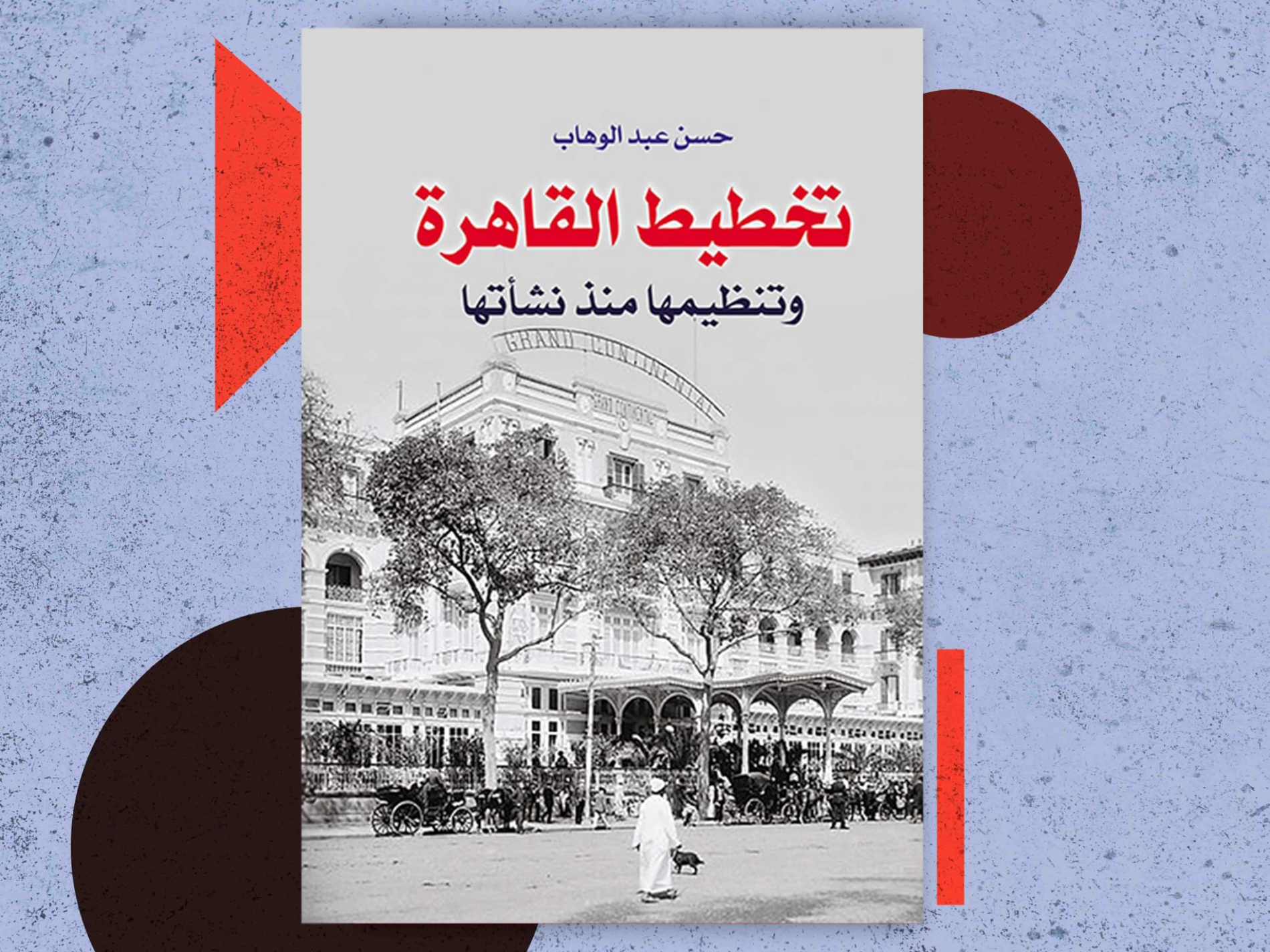
In his book Planning and Organisation of Cairo Since Its Foundation, the late archaeologist Hassan Abdel Wahab discusses the urban fabric of Cairo during the Fatimid era. The city stands as an enduring testament to a high degree of urban planning, even if it now bears traces of informal development resulting from population growth beyond its original footprint.
Cairo was initially established as a private seat for the Fatimid caliphate, the caliph's court, and his army. It was akin to a vast, luxurious residential complex built on the scale of an entire city. Over time, it evolved into a distinctive urban centre.
The city was founded by the Sicily-born general Jawhar al-Siqilli on the orders of Caliph al-Mu'izz li-Din Allah in 969. Cairo's initial planning was centred on the axis of power, with the construction of the Great Eastern Palace and its smaller Western counterpart. Between them stretched the expansive Bayn al-Qasrayn square, designed specifically as a stage for military parades.
The organisation of the city's population relied on the khitat system, which divided Cairo into well-defined quarters, each allocated to a specific population group, such as the Roman, Zuwayla, and al-Barqiyya quarters. All of this was enclosed by a fortified wall and a defensive moat on the northern side.
Architecturally, Fatimid Cairo was distinguished by a sense of grandeur and magnificence, its buildings surpassing those of other Egyptian cities in height and scale. In 1049, the Persian philosopher and traveller Nasir Khusraw described Cairo as resembling a towering mountain, owing to the dominance of buildings that often rose to five or six storeys. At the heart of this urban fabric stood Al-Azhar Mosque, a beacon of learning that emerged alongside the city's birth.
Attention was not confined to the city's interior. Cairo's outskirts and the banks of the Nile were used to create gardens and scenic landscapes in Shubra and al-Jazira. During the tenure of the vizier Badr al-Jamali, construction of new neighbourhoods was permitted outside the city walls in what became known as Zahir al-Qahira. Preventive environmental measures were also adopted to protect the city, such as the sixth Fatimid caliph al-Hakim bi-Amr Allah's order to relocate construction debris to designated areas, where it could serve as a barrier against flood risks.
Street and mosque lighting was introduced, with homeowners and shopkeepers required to hang lanterns that illuminated roads and alleys at night. Safety measures were also introduced, most notably al-Hakim's order to place water containers in front of shops to respond immediately to fire hazards.
The muhtasib (market inspector and public morals officer) played a vital and active role in maintaining order by overseeing construction, preventing hazards to passers-by, and monitoring behaviour in public spaces. Through this, Fatimid Cairo became firmly established as a royal city that combined towering architecture, open spaces designed for ceremonial display, and meticulously organised public services encompassing lighting, environmental protection, and security.
Radical transformation
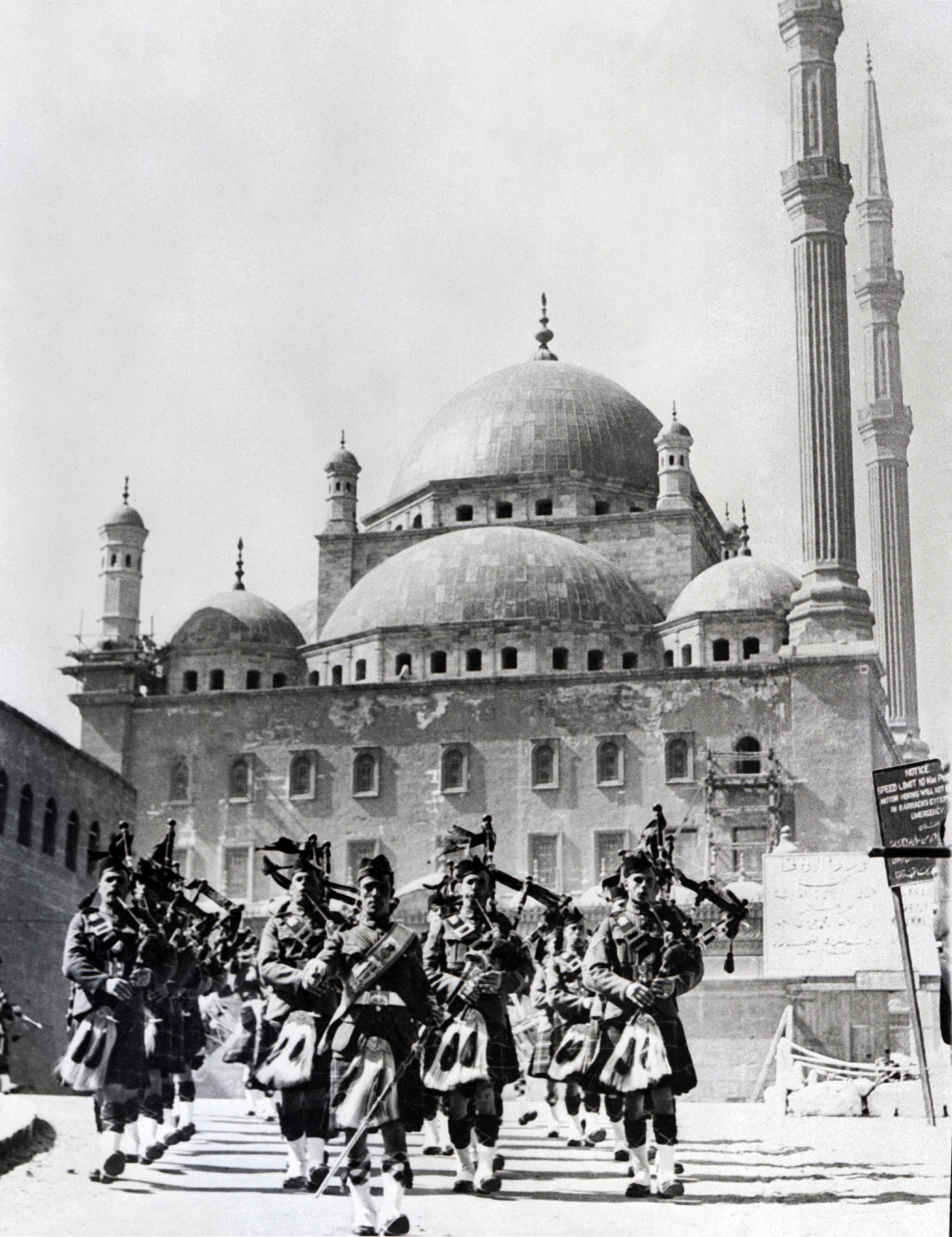
During the Ayyubid period (circa 1171 to 1260), Cairo underwent a radical architectural transformation. It shed its character as a walled royal city to become a vast, open metropolis, owing to the policies of the dynasty's founder, Salah al-Din al-Ayyubi, who embraced urban openness. He was the first to open the city and permit construction within it, initiating the construction of the Citadel of the Mountain, which would later become the residence of Ayyubid sultans, followed by the Mamluks.
An undated photograph of British Highlanders soldiers playing bagpipes in front of the Cairo Citadel in Egypt.
The city's footprint thus expanded markedly, driven by natural changes such as shifts in the course of the Nile that opened new lands for construction. However, the most significant event to reshape the urban landscape was the burning of Fustat in 1168, which destroyed the entire city except for the Mosque of 'Amr. This catastrophe triggered a wave of forced migration towards Cairo, increasing its building density and renewing its features through an influx of new residents.
As a result of this vast expansion, Cairo would eventually merge with Fustat to become a single, sprawling urban entity. Cairo would thus extend from al-'Abbasiyya in the north to Birkat al-Habash in the south, from the banks of the Nile in the west to the Muqattam Hills in the east, surpassing its old Fatimid walls and emerging as an inclusive capital encompassing the centres of both rulers and ruled.
Efforts to beautify the city continued with the removal of the debris mounds that had served as flood barriers for the walled Fatimid Cairo. As the city expanded, those mounds obstructed airflow and marred the urban landscape. They were, therefore, transformed into public squares and parks, adding openness and a more humane spatial quality to the capital.
Mamluk Cairo
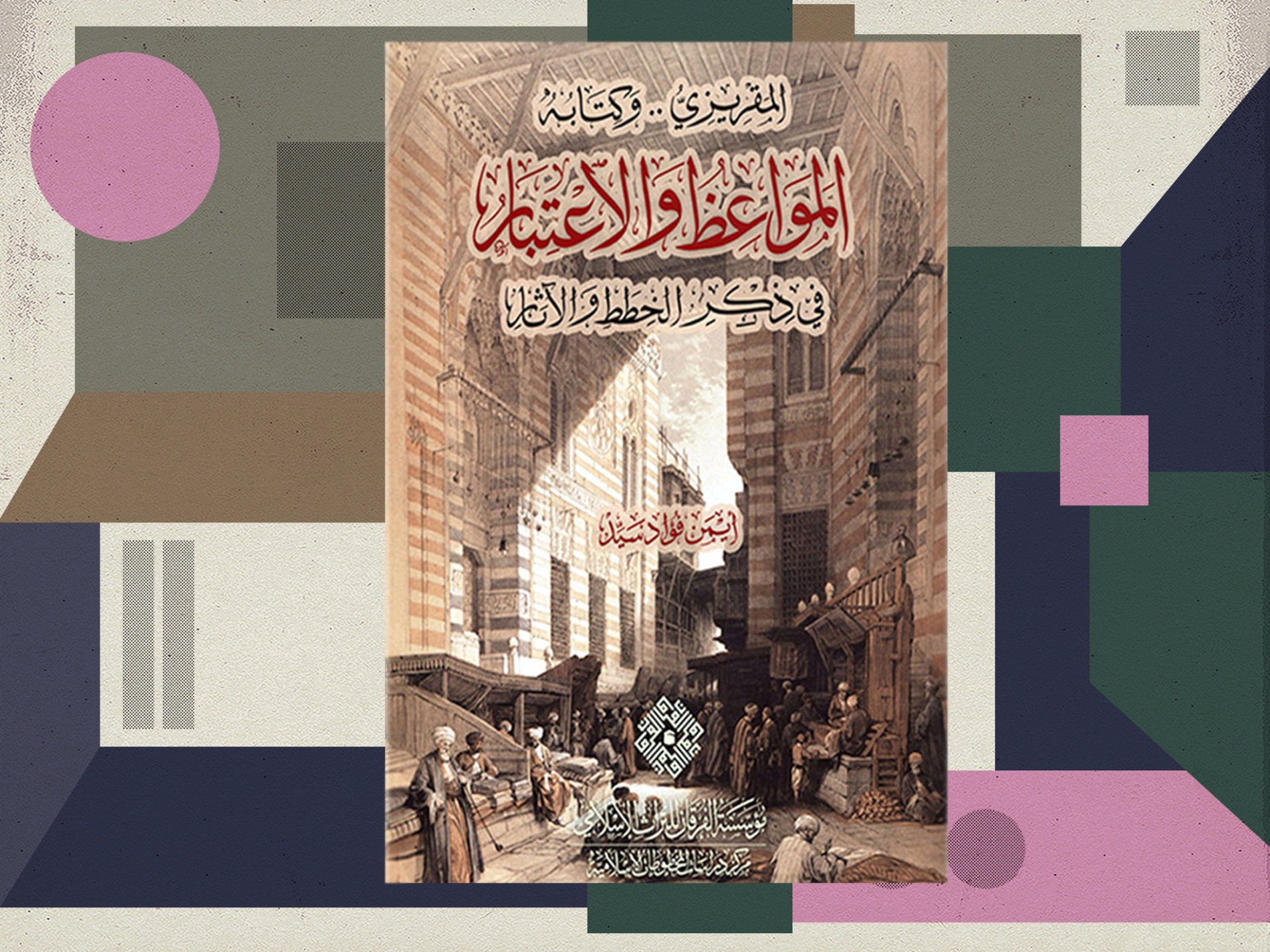
In his book Al-Mawa'iz wa al-I'tibar, the Egyptian historian and biographer Al-Maqrizi described Mamluk Cairo and its diverse buildings. The city encompassed gardens and scenic vistas, he wrote, as well as palaces and houses, residential blocks and caravanserais, markets, hotels, khans and bathhouses, streets, alleys and lanes, quarters and neighbourhoods, mosques, congregational mosques, zawiyas and ribats, shrines, schools, mausoleums and shops.
The Mamluk period represents a golden age in the history of Cairo's urban development. The capital transformed from a mere royal city into a vast metropolis characterised by architectural sophistication and immense expansion, particularly during the reign of Sultan al-Nasir Muhammad ibn Qalawun. It is estimated that Cairo's urban footprint expanded by approximately 50% during his reign.
The city's streets became a living, colourful canvas defined by the grand, towering architecture of its schools, mosques, palaces, houses, and other public structures; by the brightly coloured clothing of Cairo's residents; and by the immense commercial activity that brought people of diverse backgrounds, languages, and attire to Cairo.
Successive sultans, such as al-Ashraf Qaytbay and Qansuh al-Ghuri, placed great emphasis on strengthening the city's infrastructure. They expanded and paved major roads, while Sultan Baybars al-Jashankir ordered the construction of a bridge over the Nile, linking Cairo to the vital trade route leading to Damietta.
The muhtasib and the police played an effective supervisory role, obliging shop owners to pave the roads in front of their premises to ensure pedestrian safety and ease of access. As urban expansion continued, the need to reinforce security became pressing. New gates were installed in lanes and neighbourhoods to prevent theft, and Sultan al-Zahir Baybars took measures to remove unsightly scenes from the streets. The disabled and needy were relocated to designated areas such as al-Husayniyya to receive care.
The state also prioritised public safety by imposing strict oversight on structures at risk of collapse, demolishing, for example, the minaret of the Mosque of al-Mu'ayyad Shaykh when it posed a danger.
Khedival Cairo
Following its fall to the Ottomans in 1517, Cairo declined, becoming a provincial hub rather than one of the world's most beautiful capitals. The Ottomans focused on extracting resources from Arab provinces, disrupting the trajectory of urban integration that had distinguished the Arab city during its golden era.
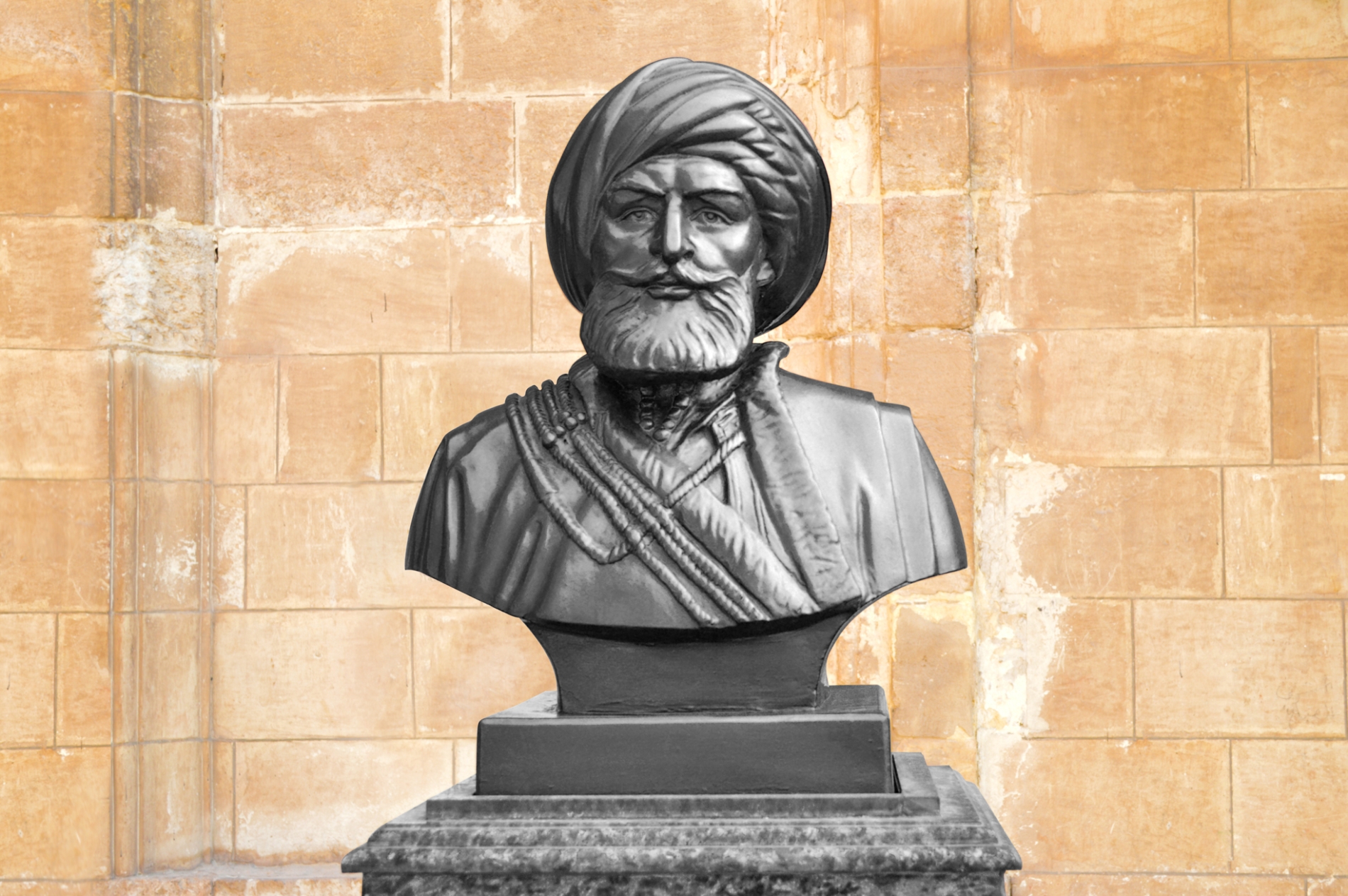
Statue of Muhammad Ali Pasha in the Citadel of Saladin
This neglect continued until the dawn of the era of Muhammad Ali Pasha, who reshaped Cairo's architecture with a spirit of autonomy. The city became adorned with palaces that blended Ottoman influences with European styles, forming the nucleus of a new 'Alawi Cairo that reached the peak of its transformation during the reign of Khedive Ismail, becoming a piece of Europe in the heart of North Africa.
In the 19th century, Cairo witnessed a major urban and organisational leap, enabling the city to keep pace with modern European systems. It moved from the chaos left by years of neglect under Ottoman rule to a structured institutional organisation under the supervision of specialised councils.
Islamic law encouraged Arabs to settle in cities as a prelude to building a stable civilisation
The first step in transforming Cairo into a capital comparable to European cities was the removal of unsightly debris and ruins. From 1829, a wide-scale campaign began to clear random mounds such as Kom al-'Aqarib, whose barren expanses were converted into agricultural land and elegant parks. Debris blocking vital roads leading to Shubra and Bab al-Hadid was also removed.
The campaign did not stop at public ruins but extended to dilapidated houses, which were surveyed and whose owners were required either to repair or demolish them, reinforcing the importance of harmony and beauty in the urban landscape.
In parallel with demolition, the opening, paving, and planting of streets gained momentum. Old alleys were widened, new major thoroughfares such as al-Muski Street were opened, and trees were planted along the Shubra Road, which became one of Egypt's most beautiful promenades. To ensure continuity in development, residents were obliged to level the roads in front of their homes, while the Diwan al-Jihadiyya was tasked with overseeing the levelling and paving of streets in key areas such as al-Azbakiyya and Bulaq.
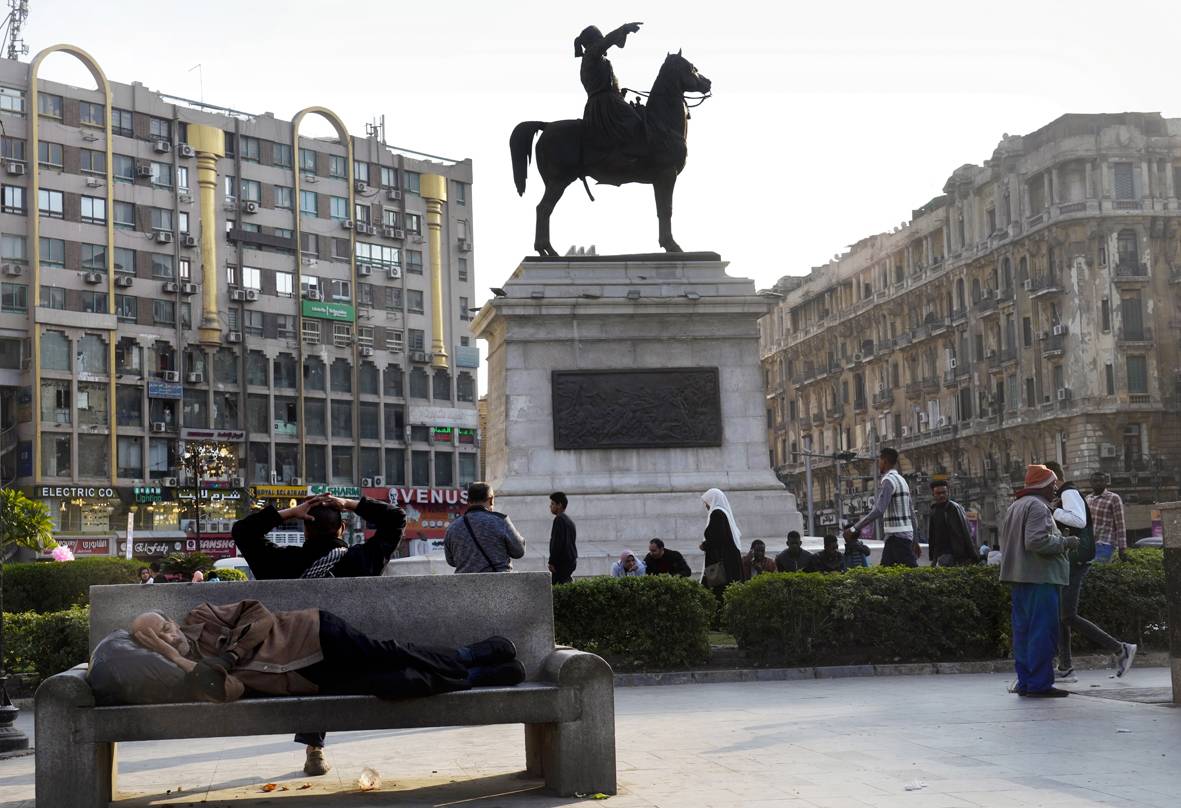
Perhaps the most significant transformation lay in converting ponds into public gardens, with al-Azbakiyya the most prominent example. Filled in during the mid-19th century, it was transformed into a park with gardens and modern institutions, including the Opera House, becoming the capital's cultural and social heart. The Majlis Tanzim al-Mahrousa was also established, with responsibility for naming streets, numbering houses using a colour-coded system, and overseeing beautification and urban organisation.
A man takes a nap under the statue of Ibrahim Basha (1789 –1848), an Ottoman Albanian general in the Egyptian army, at the Opera Square in Cairo, Egypt, on 23 January 2023.
Architectural ingenuity
Thus, in the 19th century, Cairo rose from a city of narrow streets dominated by decay into a major capital with expansive squares and advanced administrative systems.
The stages of Cairo's development trace a civilisational journey in the management of space. The city evolved from a closed royal enclave into an organised metropolitan capital, shaped by doctrinal, security, and institutional imperatives. Under the Fatimids, walls enclosed the city to safeguard prestige and privacy; under the Mamluks, it was animated by institutions serving society. In the modern era, its spaces were progressively opened through planning, organisation, and beautification.
In this way, Cairo's architectural ingenuity brought diverse communities into a coherent functional mosaic, with the mosque, the seat of governance, and the market forming the pillars of a distinctive urban civilisation—one that, over time, evolved from a fortified stronghold into a public space accessible to all.