Lebanon finds an anthem out of the reach of drones

The economy is a mess and the politics are askew but the Lebanese are once again learning how to celebrate, these days to the tune of Badna Nrou, meaning ‘We need to calm down’

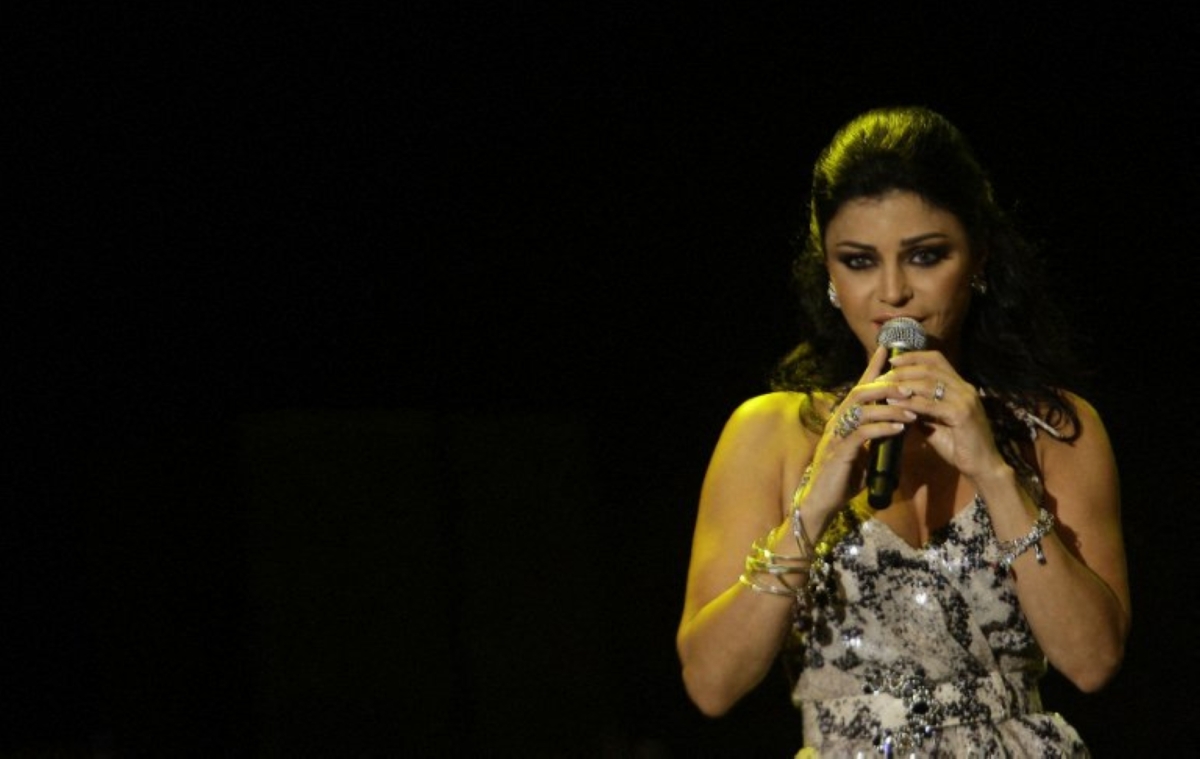
Lebanese pop star Haifa Wehbe performs during the Batroun International Festival in the coastal city of Batroun, north of Beirut.
ANWAR AMRO / AFP
Lebanese pop star Haifa Wehbe performs during the Batroun International Festival in the coastal city of Batroun, north of Beirut.

Lebanon finds an anthem out of the reach of drones

As I waited for the flight from Athens to Beirut’s Rafik Hariri International Airport, a buoyant British man sat nearby, absorbed in a book. His good mood, as I later learned, came from having secured a ticket to Beirut at a “fantastic” price. Does the fragile security situation worry him? “What security situation?” he replied. “Ah, you mean the war...” He laughed. “Things aren’t as dark as they sound. The war feels far away.”

It was a reassuring certainty from someone who had spent the past two years hearing about Israeli reconnaissance drones circling Lebanon’s skies without pause, alongside reports of relentless bombardment, threats, and recurring Israeli and American ultimatums. Yet despite his confidence and evident enthusiasm, he struck me as a rare kind of traveller: bound for a country widely described (especially by Lebanese) as teetering on the edge of explosion, all for the sake of a bargain fare.

We continued our conversation as we stepped out of Beirut’s airport. “This is not my first time here,” he said. “I have friends in the city, and I always enjoy my time with them, so I take any chance to visit.” Something in his words carried an echo of the civil war years in the 1980s, when frontlines were defined, and travel to Lebanon became almost routine for expatriates, journalists, writers, and the occasional foreign visitor who had friends on both sides of the divide.

Open horizons

I remembered his words on my way to Sidon, often described as the capital of the south and its gateway. Along the highway, a colloquial Lebanese message on a massive billboard caught my eye. Roughly translated, it read: “Knowing how to dismantle a car engine does not mean you can dismantle a landmine.” It was a state-sponsored warning. Israeli forces are reported to have planted mines across many southern Lebanese areas.

The sign spoke directly to the Lebanese instinct for resourcefulness, the same instinct which—when expressed in the language of politics and conflict—has so often left the country at the edge of collapse. Yet aside from that billboard, it is hard to overstate how absent the war seems in these parts of the country. Outside the south, Beirut’s southern suburbs and the Bekaa Valley, you barely feel the conflict. If you did not follow the news, you might not know about the daily Israeli airstrikes.

Life goes on. In Lebanon, this persistence has become a mode of survival, and to many, a quiet celebration of endurance. Driving through the villages east of Sidon toward the Church of St John the Baptist in Karkha, perched high above the coast, I felt exposed in the open landscape and uneasy at the sight of all-seeing aircraft.

One of the defining realities of the latest phase of conflict is a pervasive sense of surveillance. Israel targets certain regions, but the whole country feels watched. Across the region, predictions and conspiracies circulate. Fortune tellers spout wild claims about things like the Venezuelan president Nicolás Maduro’s kidnapping by American military forces.

Many are believed. In Lebanon, almost anything seems possible. At night, lying in the dark, many wonder: is a missile on its way? The uncertainty and concern stem from years of conflict and disruption. Since Israel's war on Gaza began, nothing feels stable, and no political arrangement feels secure. Plans are subject to sudden shifts, whims, and improvisation, depending on how major powers’ leaders feel on any given day.
REUTERS/Mohamed Azakir
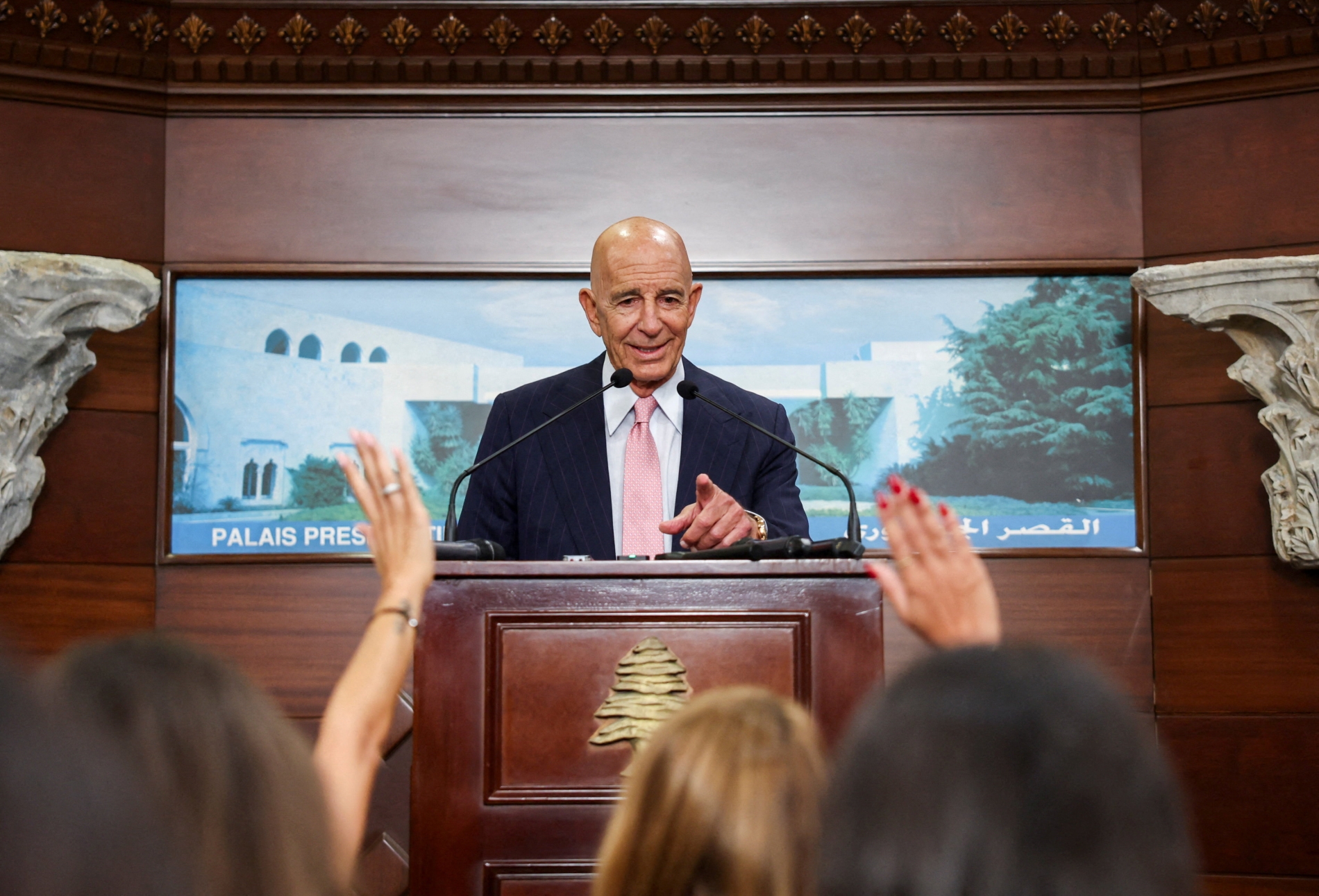
US Ambassador to Türkiye Tom Barrack, also special envoy to Syria, fields questions from journalists after meeting with Lebanese President Joseph Aoun at the presidential palace in Baabda, Lebanon, on 18 August 2025.

Catalogue of complaints

Since my last visit three years ago, some places have changed a little, but nothing has changed in a way that feels transformative. Converting between dollars and Lebanese pounds takes some getting used to, with L£100,000 to the dollar. In addition, paying by card is not as ubiquitous as it is elsewhere, since it adds an extra 4.5% to the cost. Prices differ little from those in many European countries and often exceed them.

How do people cope? Some earn their salaries in dollars through jobs with foreign companies or internationally funded institutions. Others rely on money sent by children living abroad. In either case, it is striking to hear the same complaints about living conditions that were voiced 10, 20, 30, 40 years ago, only now with a newer vocabulary and context.
In Lebanon, almost anything seems possible. At night, lying in the dark, many wonder: is a missile on its way?

Lebanon long ago learnt to adapt. In contrast to previous visits, when power cuts dominated daily life and entire streets were plunged into darkness for hours, this is one thing off the Lebanese list. The background hum of generators has grown much fainter, almost as if they have vanished.

More telling is the widespread reliance on solar energy. Social media videos showing rooftop solar panels torn off by sudden storms illustrate their prevalence. A friend told me that if it were not for the monthly bill he pays for the state's electricity subscription, he would forget that source entirely. Now, he depends almost entirely on Chinese-made solar panels, supplemented by the local generator.

JOSEPH EID / AFP
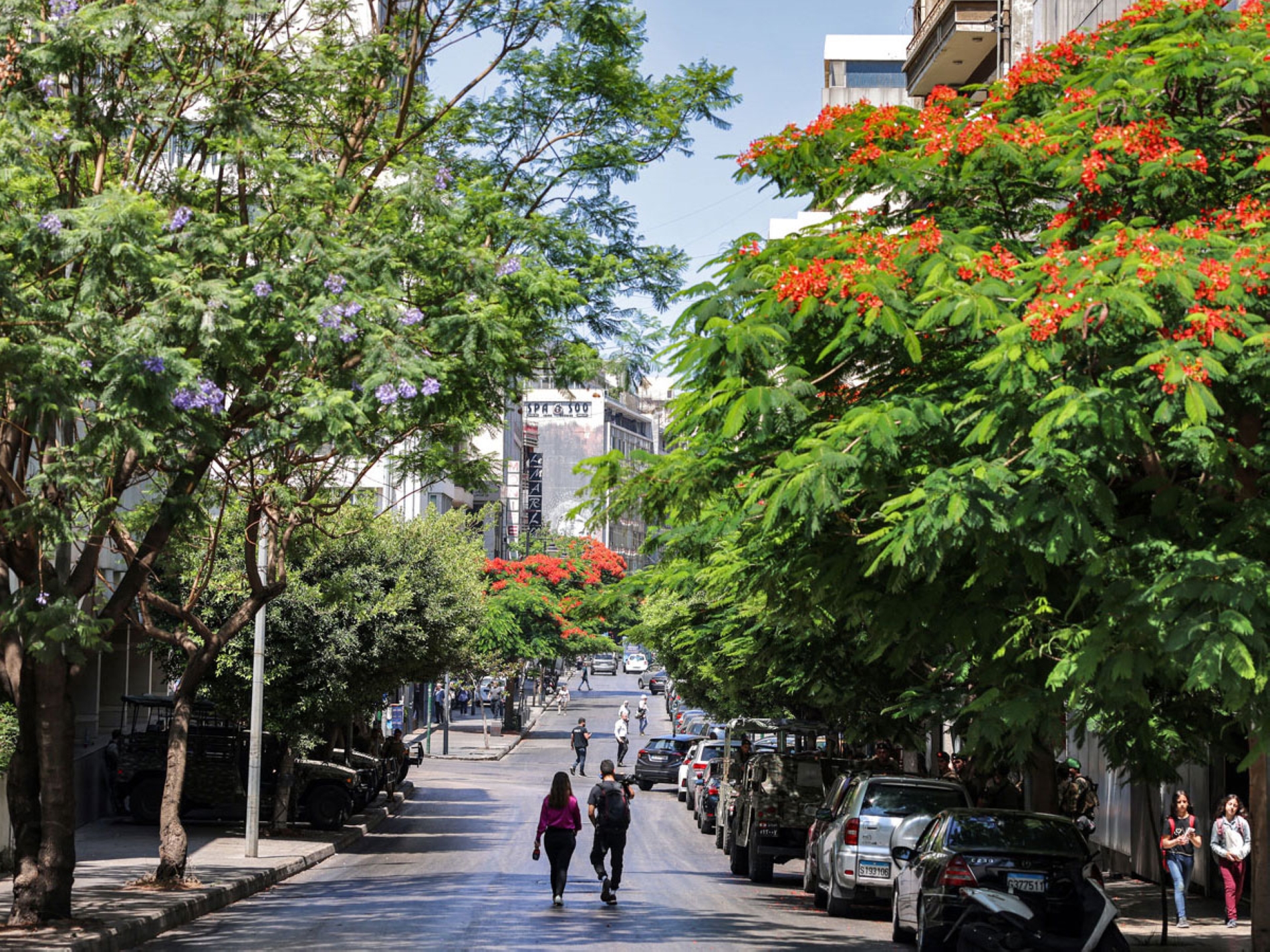
Hamra Street, Beirut, on 23 June 2023.

Space and pace

What surprised me most upon leaving Rafik Hariri International Airport and heading toward Hamra Street was the sense of space. Roads felt wider and the area brighter, illuminated by streetlights, with buildings glowing vividly. A friend laughed. She had never seen it look like this. The hurried upgrades must have been for the Pope's recent visit.

"The electricity really is better now," she added, meaning that the makeshift systems the Lebanese had crafted over decades had evolved into something stable enough that power cuts no longer provoked widespread complaint.

"Hamra isn't what it used to be" is an old and familiar refrain heard around these parts, but though it has echoed for at least 25 years—often referencing Beirut's golden past as the beating heart of economic, cultural and architectural modernity—those who visit unburdened by nostalgia find a place still brimming with life. New shops, restored buildings, cafés, and bars—some fresh, others weary but still standing.

Yet despite that, I still felt a quiet sense of loss as I walked along the streets, not for places but for people. One evening, walking along Hamra's main pavement, I looked across to the opposite side and glimpsed the shadows of those who once passed there—poets and writers now gone.

Hassan al‑Abdallah, Muhammad al‑Abdallah, Radwan Hamza, Muhammad Shamseddine, and Issam al‑Abdallah are a few among many. In their absence, in a cruel twist: the homes they spent a lifetime building in the south were later destroyed. And then, of course, the poet and playwright Fadi Abou Khalil, who withdrew into solitude in his final years, until a family obituary on social media announced his passing.

 JOSEPH EID / AFP
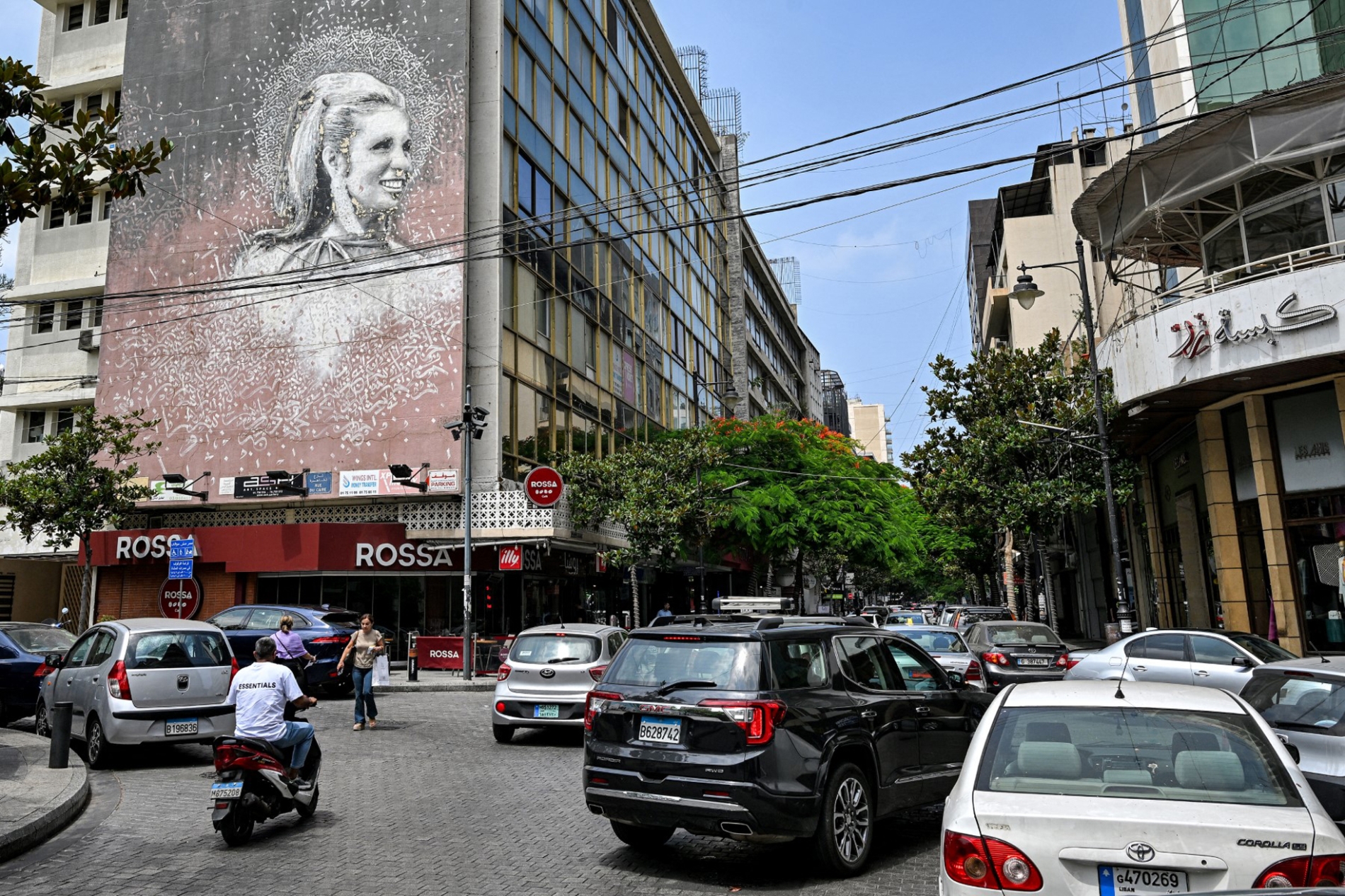
Vehicles drive past a huge mural of the late Lebanese actress and singer Sabah on Hamra Street in Beirut.

Extraordinary ordinary

Walking through Beirut is a pleasure shaped by its own curious rhythm. Pavements fade into irrelevance, and traffic lights lose their authority. People move as circumstance allows, crossing streets with a confidence drawn from a shared, unspoken choreography. Everyone seems to understand the system. Still, navigating the city requires a car. Whether by taxi or with friends, the journey is always accompanied by a steady stream of commentary, often rising to blistering curses.

Complaints range from the state of the roads (potholes) to the chaos of the traffic and the so-called "donkey-ness" of other drivers. Meant to imply foolishness, the insult misses the mark: a donkey's defining trait is patience. Alas, patience is in short supply here, among those living in Lebanon, who always seem to be in a hurry regardless of any urgency or not.

If roads are not open, drivers simply create openings, plunging into the knot of vehicles converging from every direction at junctions but somehow pushing through. This is typically done with ease, as if obeying an invisible rule understood by all. Even the words of anger and the blasting of horns feel like part of the script.

Most people know of a road rage incident that ended in violence and 'shocked' society, and such episodes offer glimpses of a deeper reality. Reactions tend to point towards disorder, misuse of power, entrenched influence, and the burdens of political and economic strain. Driving in Lebanon reflects its political, economic, social and sectarian tensions, yet that does not mean that everyone is in constant danger. But much has been overstated. Stories circulate of highway bandits ready to rob, abduct or kill.

Ibrahim AMRO / AFP
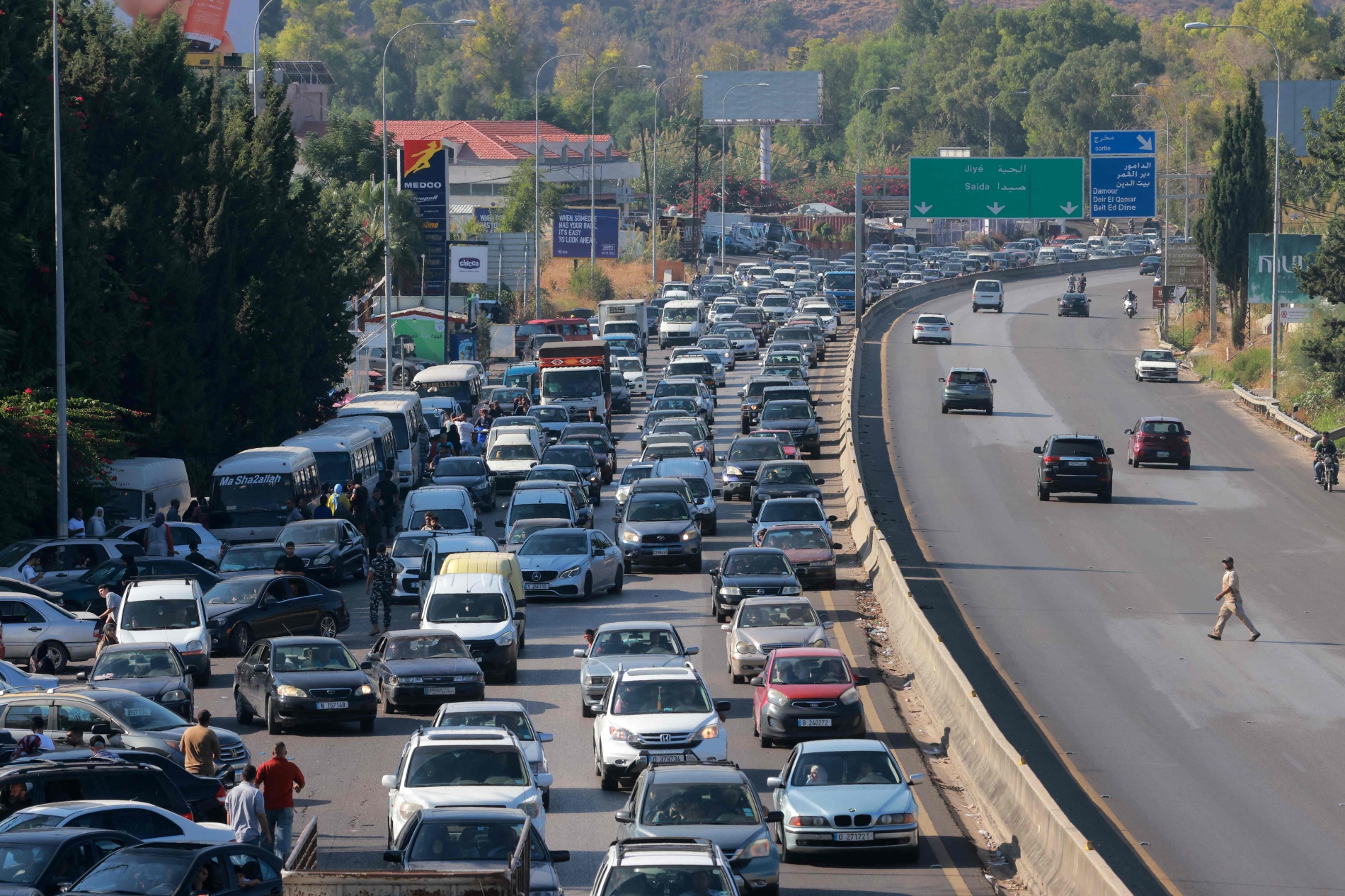
Vehicles wait in traffic in the town of Damour, south of the capital Beirut, on 24 September 2024, as people flee southern Lebanon.

Adjusting and adapting

Daily life continues with far more normalcy. Even traffic tensions feel more like a feature of public life than a real threat. The Lebanese are naturally expressive. They wear their feelings on the outside, openly and often. "I'll lose my whole life waiting for you to decide which way you want to go… curse whoever gave you that licence," a driver says, not to another motorist, but to me—and after just a few seconds of waiting. His irritation deepens when he realises that I am a man, not a woman. He then laments the "donkey‑ness".

In a society perpetually adjusting to new realities, the Lebanese are adept at living and confronting problems that demand immediate solutions. They are less likely to pursue ease or simply "live for living" (as the locals say). This is one of the few common threads running across social classes, regions, and sects.

The late Ziad Rahbani spent much of his life trying to decipher the "Lebanese personality," with mixed success. In so doing, and perhaps without intending to, he created a parallel language, an imitation of behaviour and speech that eventually came to mirror reality. Lebanese from all walks of life converge in this language.

Social media teems with satirical videos in which people with different ideological leanings wield the same sharp, quick-witted, regionally flavoured expressions. Each believes they are inventing a new idiom. In cafés and bars, the same verbal fluency rules: nimble social instinct, rapid-fire humour, and a full vocabulary suited to every occasion. The word habibi floats freely across these exchanges—'thank you, habibi'… 'at your service, habibi'—crossing distances and identities, dissolving any would-be divides.

The Lebanese are naturally expressive, wearing their feelings openly and often

Pundit saturation

Lebanon brims with news and politics, with bulletins in the morning, at noon, in the early evening, and again at night, says a 30-something engineer who occasionally trades digital currencies as he searches for work abroad. "There are political shows in between," he adds. A friend says the constant presence of political analysts on screens is not new, but that these days they form part of a broader entertainment landscape, alongside pop-culture guests and horoscope readers.

This saturation of political content across TV and social media rarely intrudes into Lebanese lives with suffocating force. In just over five years, there has been a failed uprising, a huge explosion that destroyed Beirut's port, a national financial collapse, war, and renewed occupation. Given all that, one might expect to find a broken Lebanese spirit, a society traumatised, but it has not settled into a fixed identity.

Lebanon's remarkable instinct for adaptation is intact, as is its steady will to keep going. The courtesy of the people remains evident, even in places not typically known for it, such as the General Security offices at the airport or the buildings where residency permits and passports are issued. A sense of kindness prevails. Something had shifted, though it is hard to pinpoint what exactly.

The hardships I knew from childhood remain, the famed 'cleverness' that Ziad Rahbani examined in depth is still there, the combination of warmth and volatility still marks the Lebanese personality, while the endless tussle for space still marks the roads. Yet this latest war—with all its destruction and disruption—has brought something new: a quietness that wraps around these traits and softens them. Perhaps it comes from exhaustion, or from noise saturation from screens and platforms, but a gentler mood now fills the space.

Political talk today feels subdued. In a rare debate involving political 'opposites' around the same café table, the discussion turned to the Shiite communities of the south and the Bekaa, and whether they had grown weary of causes, even of Palestine, for which they had given so much. The dialogue bounced in different directions before settling into a shared fatigue, then drifted into other topics.

IBRAHIM AMRO / AFP
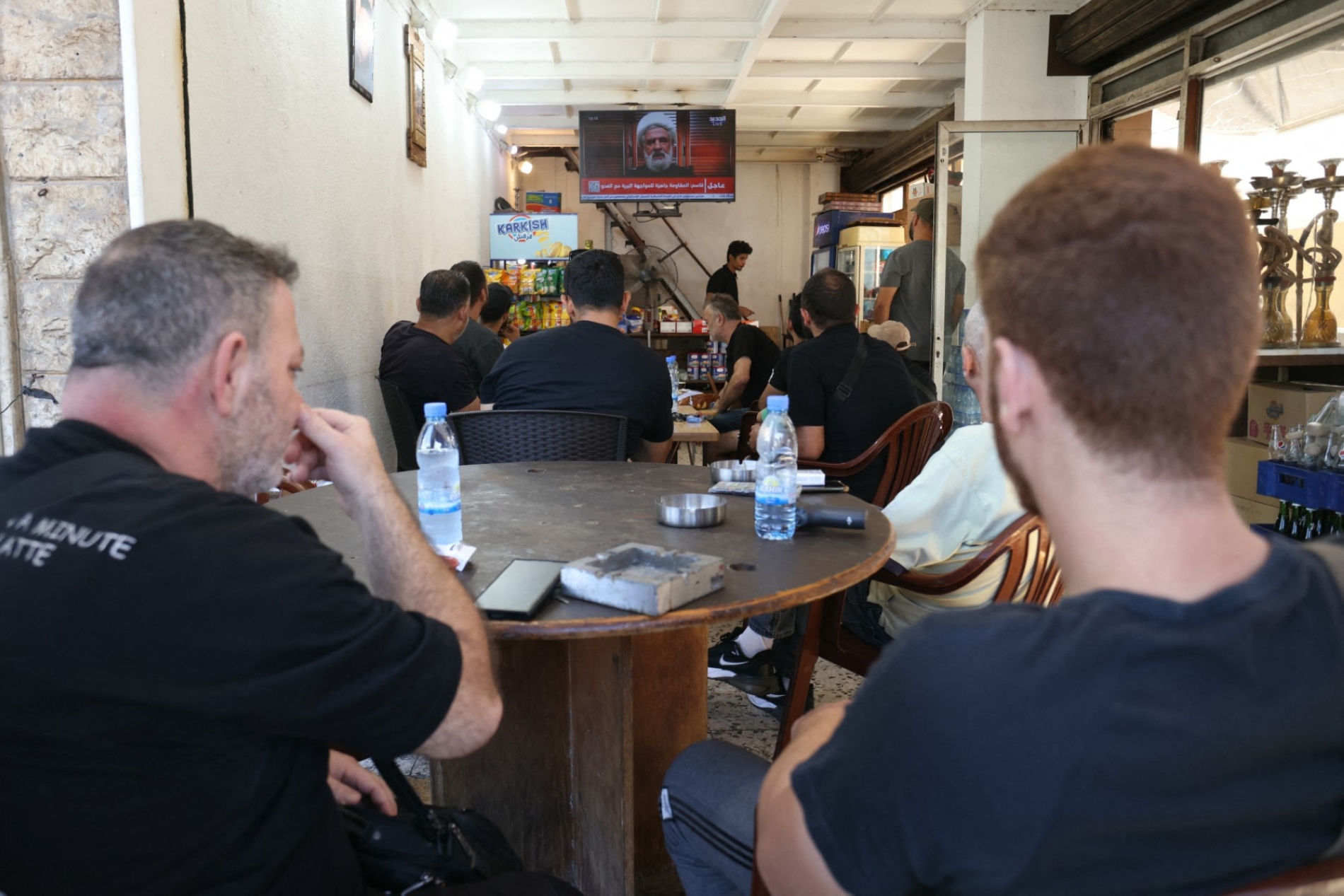
People watch a televised speech by Hezbollah's deputy chief Naim Qassem in a cafe in Beirut's southern suburbs on 30 September 2024.

Missing life's rhythm

After all, what remains to be said? Words feel surplus. Even the deepest disagreements no longer seem worth the disruption. The Lebanese generally align more than they diverge. Excluding the 'hawks' of every faction who prowl social media and TV studios, the average citizen passes through life with little appetite for debate.

Is it because they feel they have seen everything? Does it stem from watching worst-case scenarios unfold and then recede? Does it come down to a future that feels unreadable? Or does it simply reflect a daily preoccupation with surviving rather than theorising—a habit the Lebanese have honed?

Beneath the caricatures Rahbani helped embed—some drawn from life, others amplified by the media, portraying the Lebanese as cunning or frivolous—there is a tireless worker searching for stability and a better life. In Lebanon's restaurants, cafés, and shops, young Lebanese work like their peers in Europe. The public intellectual obsessed with politics rarely sees this. Consumed by the national story, its tragedy or absurdity, he misses the rhythms that shape daily life.

Among these so-called 'intellectuals'—a term that requires considered use in the Arab context—are journalists, many of whom are now professional political commentators offering erratic and charged opinions not dissimilar to the kind heard in Beirut's traffic. Installed in the struggle over Lebanon's image and future, these 'political analysts' are more likely to react, rather than analyse.

An oddity of the post-war landscape is that these opponents still frequent the same spaces, brought together by drink, food, music, and dancing, if not at the same table, then at the next. By day they spar and joust, confronting each other online and in studios; by night, they enjoy their evenings in close proximity. Politics, economic collapse, war, and anxiety have done little to interrupt Beirut's nightlife, as the pundits drift between venues before finally heading home.

Joseph EID / AFP
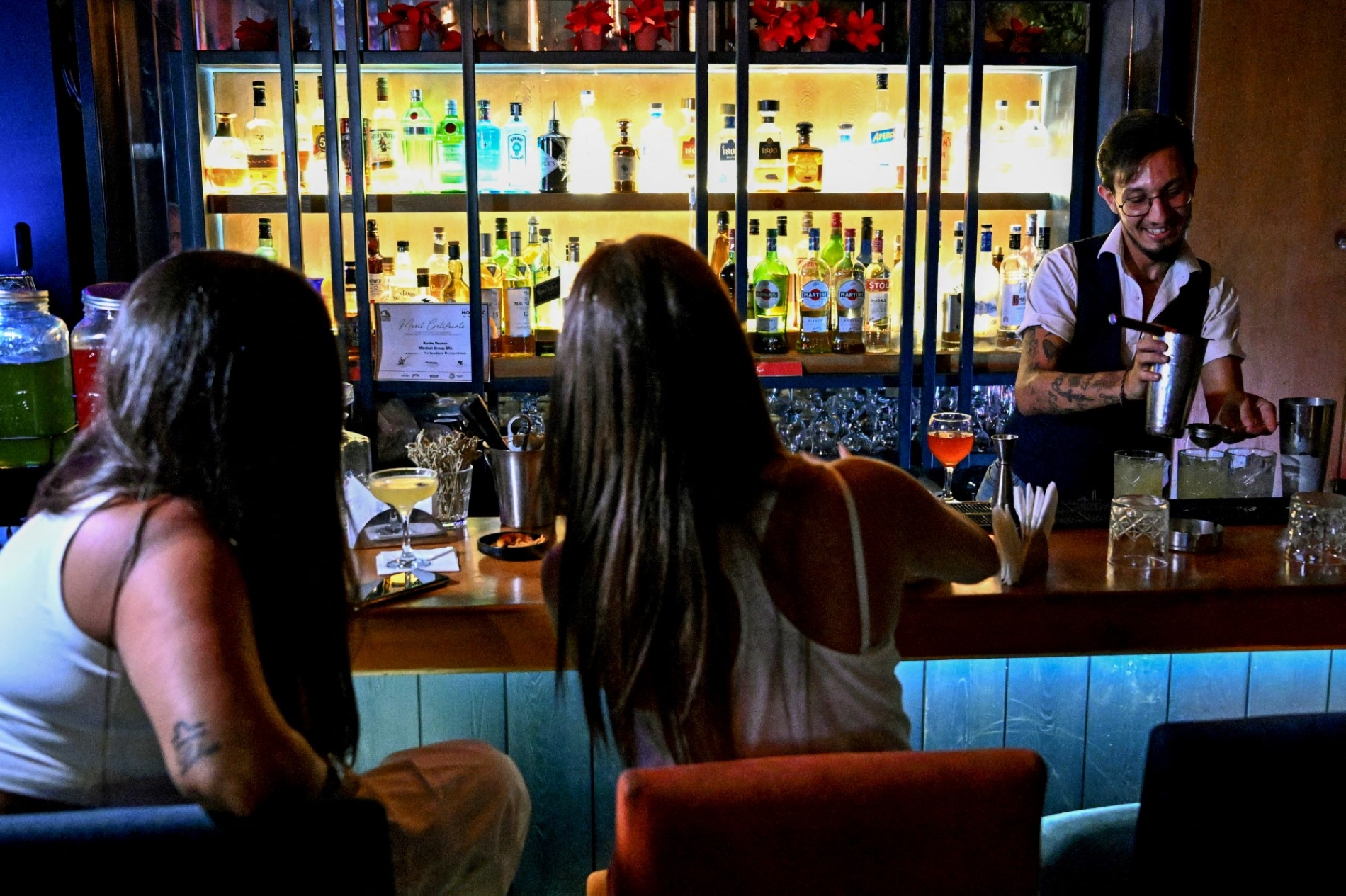
Revellers drink at a pub in Beirut's Mar Mikhail neighbourhood on 22 June 2024.

We need to calm down

In the bars that remain open late into the night, the older and heavier drinkers eventually blend with the younger crowd, mostly women swept into a dance by initial exuberance that peters out into monotony. Only in Beirut could dancers express both joy and the kind of weariness from which hope quietly emerges—of which Fairuz once sang (her son, Hali, died while I was in Lebanon, so she was in the news).

I cannot say whether her songs still fill the morning hours, but the rest of the day and night now belong to others. Fadl Shaker's familiar love song echoes everywhere, stirring emotional debates—sympathetic among women, indignant among men—as he pleads for his beloved to sleep upon his heart. But when it comes to dancing, the space is ruled entirely by Haifa Wehbe's Badna Nrou (We need to calm down).

Lebanese women in particular regard Wehbe as someone who shaped her own path and lives on her own terms. In Badna Nrou, she expresses indifference to opinion, defiance in the face of rumour, and a spirit of joy, freedom, and strength. Drained by endless public crises and fruitless arguments, Lebanon seems to welcome this kind of invitation to calm down and ignore the hot air.

Perhaps this is why the song has swept through the country and why, across all political lines, people dance to its rhythm. Badna Nrou is itself a form of Lebanese adaptation. Years of turmoil, violence, and uncertainty have cultivated resilience and a kind of defiant ease, a refusal to be consumed. The Lebanese have invented reasons for living and rediscovered the ability to celebrate. This may be the real strength they still possess, carrying them through this harshest of chapters. It is a strength that no reconnaissance drone can detect.

font change