Nobel winner Jon Fosse: my language is my homeland

The Norwegian novelist, playwright, and poet talks to Al Majalla about silence, literature, and everything in between

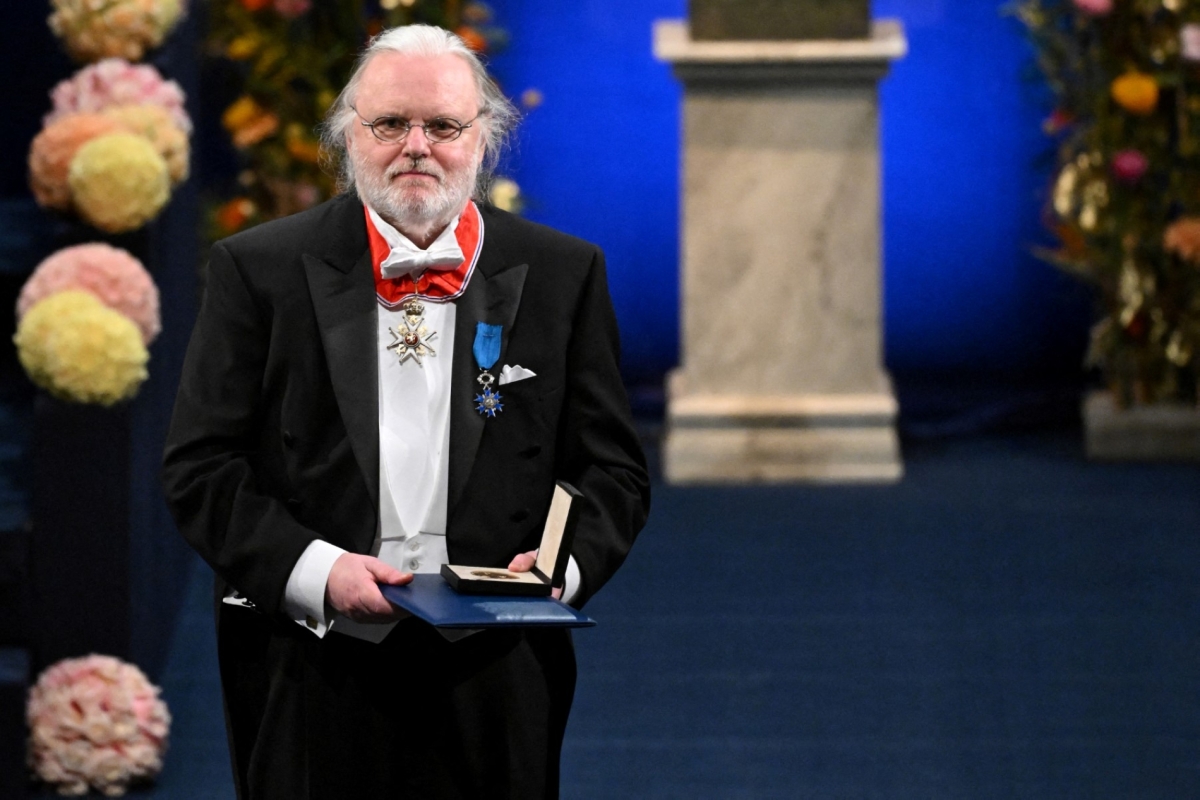
Norwegian author Jon Fosse receives the 2023 Nobel Prize in Literature during the award ceremony at the concert hall in Stockholm on 10 December 2023.
Jonathan NACKSTRAND / AF
Norwegian author Jon Fosse receives the 2023 Nobel Prize in Literature during the award ceremony at the concert hall in Stockholm on 10 December 2023.

Nobel winner Jon Fosse: my language is my homeland

The Norwegian novelist, playwright, and poet Jon Fosse was in Saudi Arabia recently to discuss the art of writing at the King Abdulaziz Centre for World Culture (Ithra). Winner of the 2023 Nobel Prize in Literature, Fosse has written more than 70 novels, plays, poems, essays, and children’s books, and has been translated into more than 60 languages.

Born in Haugesund, a Norwegian city known for its cultural and musical festivals, Fosse talks to Al Majalla about silence, the formative role of poetry, his complicated relationship with theatre, and the importance of writing in Nynorsk. Below is the conversation.


Your play I Am the Wind suggests that silence has been a companion for decades. What, if anything, has it given you in return?

I began writing short poems and stories very early, around age 12. Poetry, or what one might call poetry, is the foundation of everything I write. I wrote my first novel, Red, Black, at 23, and published novels and poetry collections during the 1980s.

Later, I was asked to write a play. I had no intention of doing so, nor did I want to. But I was trying to survive as a freelance writer, and it was difficult; I needed money. So I sat down and wrote my first play, Someone Is Going to Come. It was an extraordinary experience, because I could write a word and then add “a short silence,” “a long silence,” and so on. Suddenly, I was able to create silence directly on the page.

Even after I had matured as a writer, I was still trying to reach silence, to make it speak. There is written language, but there is another language that exists above and below it: a silent language. It is this silent language that tells the truth. In the theatre, it was easier to achieve this, even though I was not particularly interested in it. I believe I also succeeded in doing so in the novel. My German translator often tells me that repetition in my novels takes the place of pauses in my plays, and I think he is right. In prose, pauses are created through repetition and subtle variation.
Serge Pagano / AFP
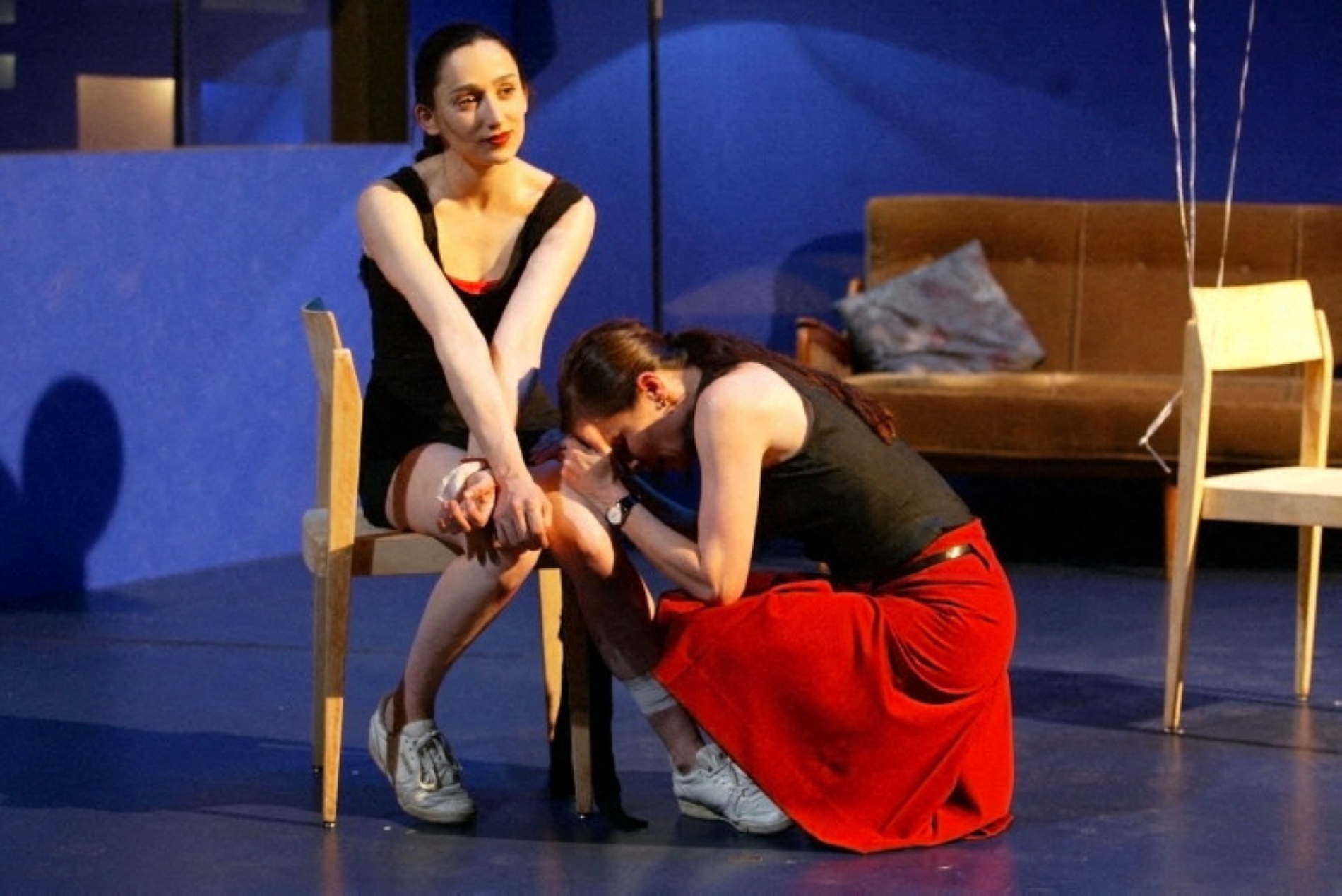
Actresses Audrey Bonnet (left) and Dominique Reymond during a rehearsal for a scene from the play Visites (Visits) by Jon Fosse, directed by Marie-Louise Bischoffberger, on 19 July 2002, in Avignon during the Avignon Festival.

You published your first short story in a student newspaper. Did that experience influence your later literary career?

Yes. I loved writing, but it never occurred to me that I could become a literary writer. I thought I would work as a journalist for a regional newspaper. Then, at 20, while studying literature at the University of Bergen, I won a competition that encouraged me to write a novel. That award was a major boost. I sent the novel to a publishing house, and to my great surprise, they agreed to publish it. That came as a shock to me.

How do you view theatre?

When I wrote my first play, I almost hated theatre. Yet it turned out I could write plays. That’s how I became a playwright, without ever really becoming a ‘theatre person’. Although my plays have been produced extensively, with more than 1,000 productions worldwide, I always kept a certain distance from life on the stage. Things changed when I entered the world of theatre and got to know actors and directors. I felt I belonged to it in a way. I came to understand the value of what I call the ‘theatrical moment’: an intense, silent moment in which everyone senses the same meaning without a word being spoken. In Hungary, they call this ‘the passage of an angel on the stage’—a magical moment. For me, this is the essence of theatre.
Jonathan NACKSTRAND / AFP
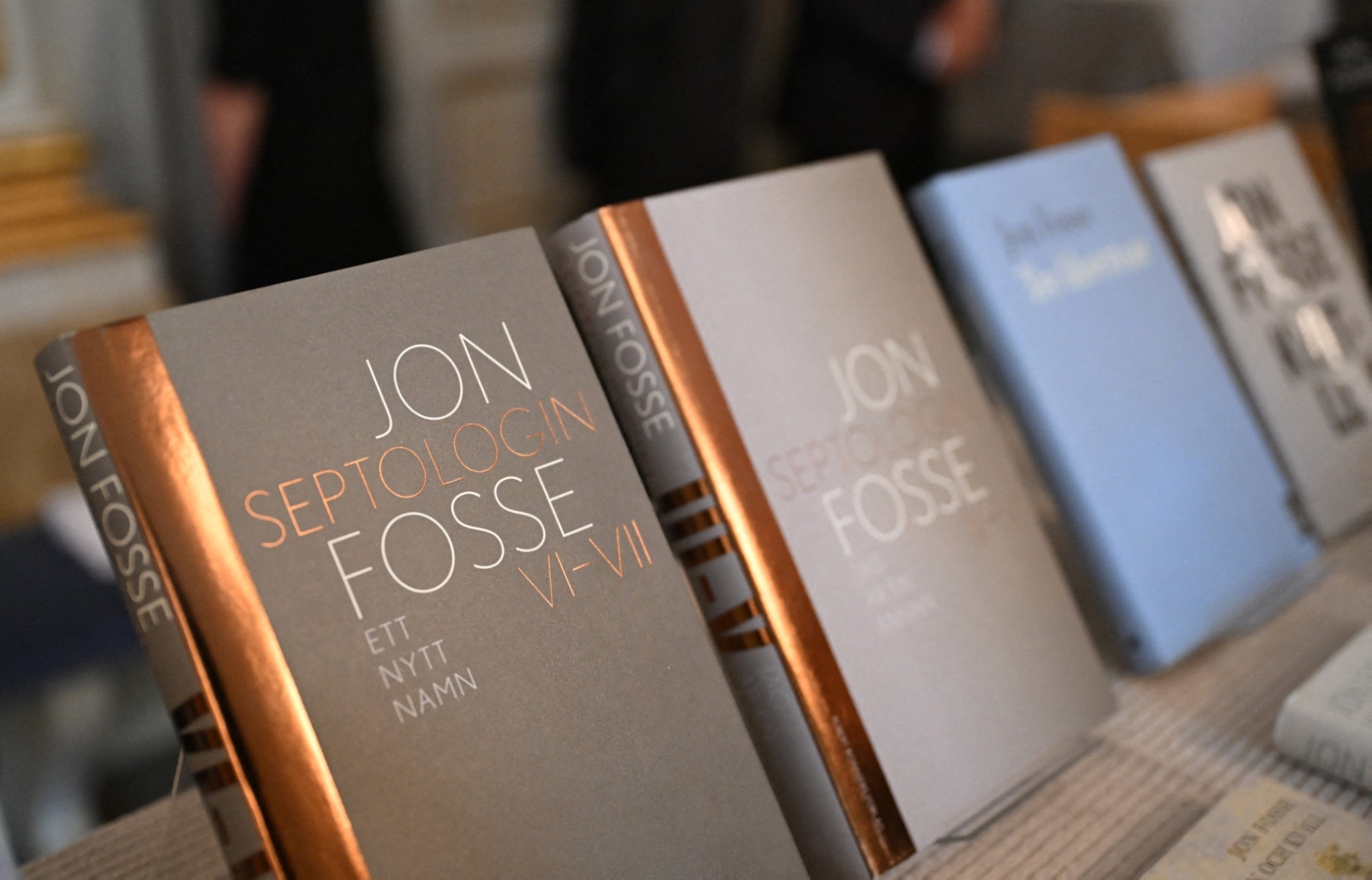
Works by Norwegian author Jon Fosse are on display at the Swedish Academy in Stockholm on 5 October 2023.

From Red, Black to Septology, which explores identity, life, art, and silence, did the novel answer the questions that age raised for you?

No. I feel that I am simply... myself. When I write, I try to escape from myself, to move away from who I am and enter another world—the world of the text. Every work of fiction has its own form of being. I listen to what I have written, and also to something that has not been written. At a certain point, I feel the text already exists—outside of me, not inside—and I hurry to write it down before it disappears. It is a strange experience. Writing is not an expression of me; it is something else entirely.

Sometimes I compare myself to a painter or a musician. A painting ‘says’ something silently, yet even the painter does not know what exactly. One of my favourite painters is Mark Rothko. His paintings are silent, but they speak to me endlessly. I hope that my literature reaches others in the same way.
I tell every writer to hold on to their vision and their language. Do not be afraid of your culture.

Norwegian novelist, Jon Fosse

You write in a language spoken by only half a million people. Was this a deliberate choice, and how might your work have differed had you written in another language?

My language, Nynorsk, is extremely important to me; perhaps the most important thing in my life. It is a minority language that is constantly fighting for survival. At the same time, it has a strong and rich literary tradition. It is closely related to Old Norse, the language of the sagas, and to Icelandic. In Scandinavia—Sweden, Norway, and Denmark—it is largely understandable, meaning that more than 20 million people can read Nynorsk. This also makes my work relatively easy to translate, as those who know Swedish or Danish can translate from Nynorsk quite naturally. For me, this language is home. I have lived in many countries, but language is my true home.

In Arab culture, the legend of Wadi Abqar holds that jinn teach poetry to those who sleep there. You once said, "The goblin of writing is still with me." Do you see a kinship between such myths across cultures?

In Norway, we have a similar legend, the Fossegrim: a mischievous water spirit who teaches a violinist its melody when he sits near a waterfall at night. When I write, I have to rid myself of me—to travel to an unknown place. This is necessary if I am to create something new. I do not know where the text comes from; I only know that it passes through my language and voice, but it does not come from me. It is a kind of 'white silence' that surrounds words.

This is your first visit to Saudi Arabia. How do you perceive the cultural movement here?

The people I have met here are highly educated and deeply engaged with literature. I do not claim they represent the majority, but I have had meaningful and enriching conversations with them and learned a great deal. Of course, you have a profound and ancient literary tradition, and I believe that the essence of poetry is the same everywhere. Great literature is something entirely unique yet entirely universal. It is like the human being: each individual is different and carries an inner light, while still sharing in a universal human essence.

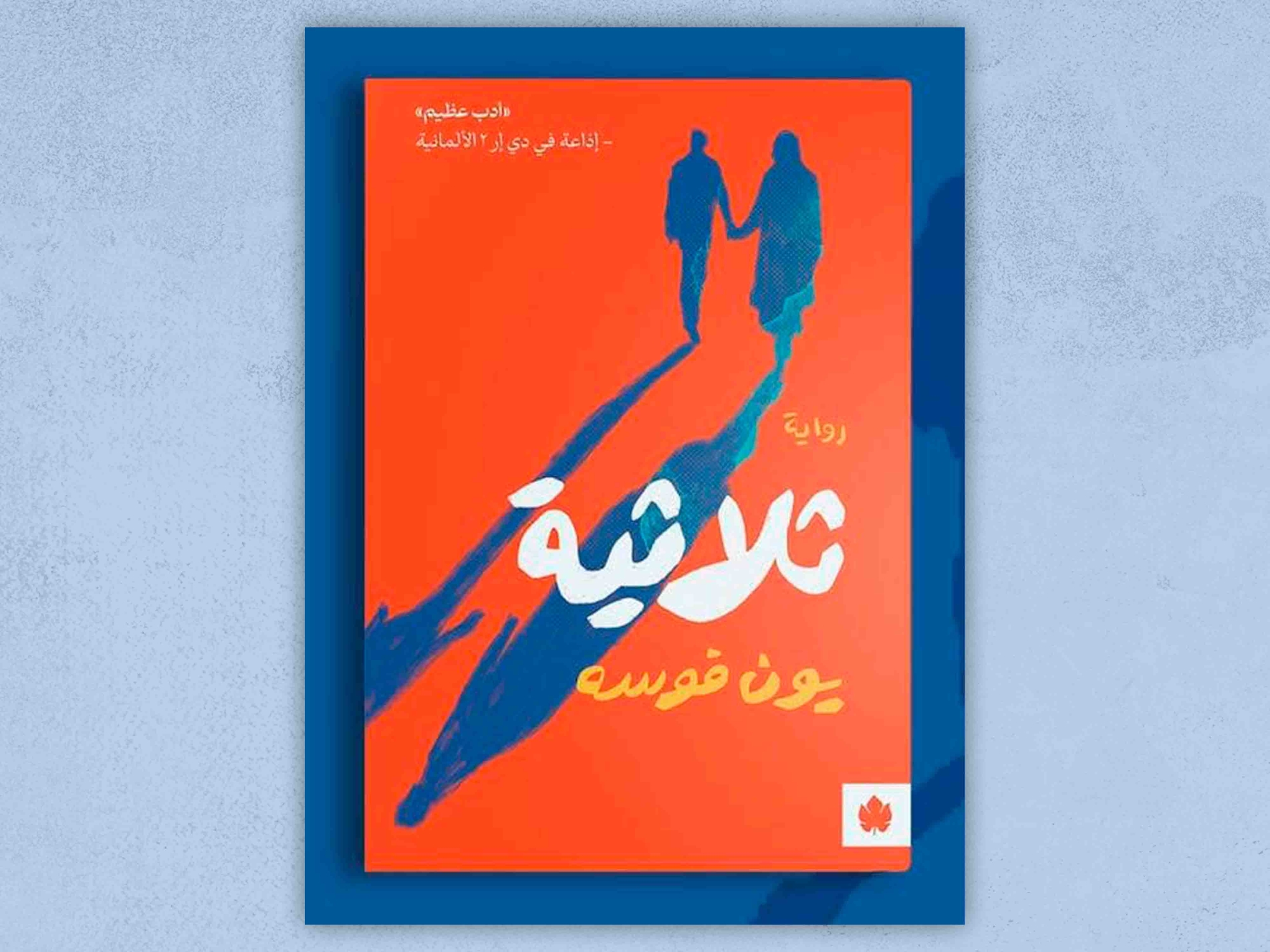
An Arabic translation of one of Jon Fosse's books.

What impact has the Nobel Prize in Literature had on you? 

The Nobel Prize is a dream no writer could have imagined. I couldn't believe anyone would want to publish my writing, let alone receive a Nobel Prize. Of course, I am happy and grateful, but it is also a burden, because the prize comes with a life full of requests and distractions. Writing requires isolation and silence. I have to say 'no' to many things, and it can be exhausting. This visit to Saudi Arabia was an exception, because I felt it was a real opportunity to engage with Arab culture, unlike my previous visit to Egypt, which was more touristic than cultural.

Do you have a message for writers around the world?

I tell every writer to hold on to themselves, their vision, and their language. Do not be afraid of your culture. I love and trust my language, Nynorsk. When I began writing, I received very harsh reviews. If I had listened to them, I might have stopped. But I chose to trust what felt true within me. When praise and awards came later, I also learned not to rely too heavily on them. The path is the same: hold on to yourself, work hard, read widely, and trust your inner light.

font change