
As Syrians were celebrating the full repeal of the Caesar Syria Civilian Protection Act, the United Kingdom announced a new round of sanctions—an unmistakable reminder that Syria’s reckoning with punitive measures is far from over. By targeting not only figures linked to the former regime but also commanders and armed factions now folded into the country’s transitional security forces, explicitly citing their role in the March coastal violence, London sent a blunt message: integration into the new state does not absolve responsibility for abuse.
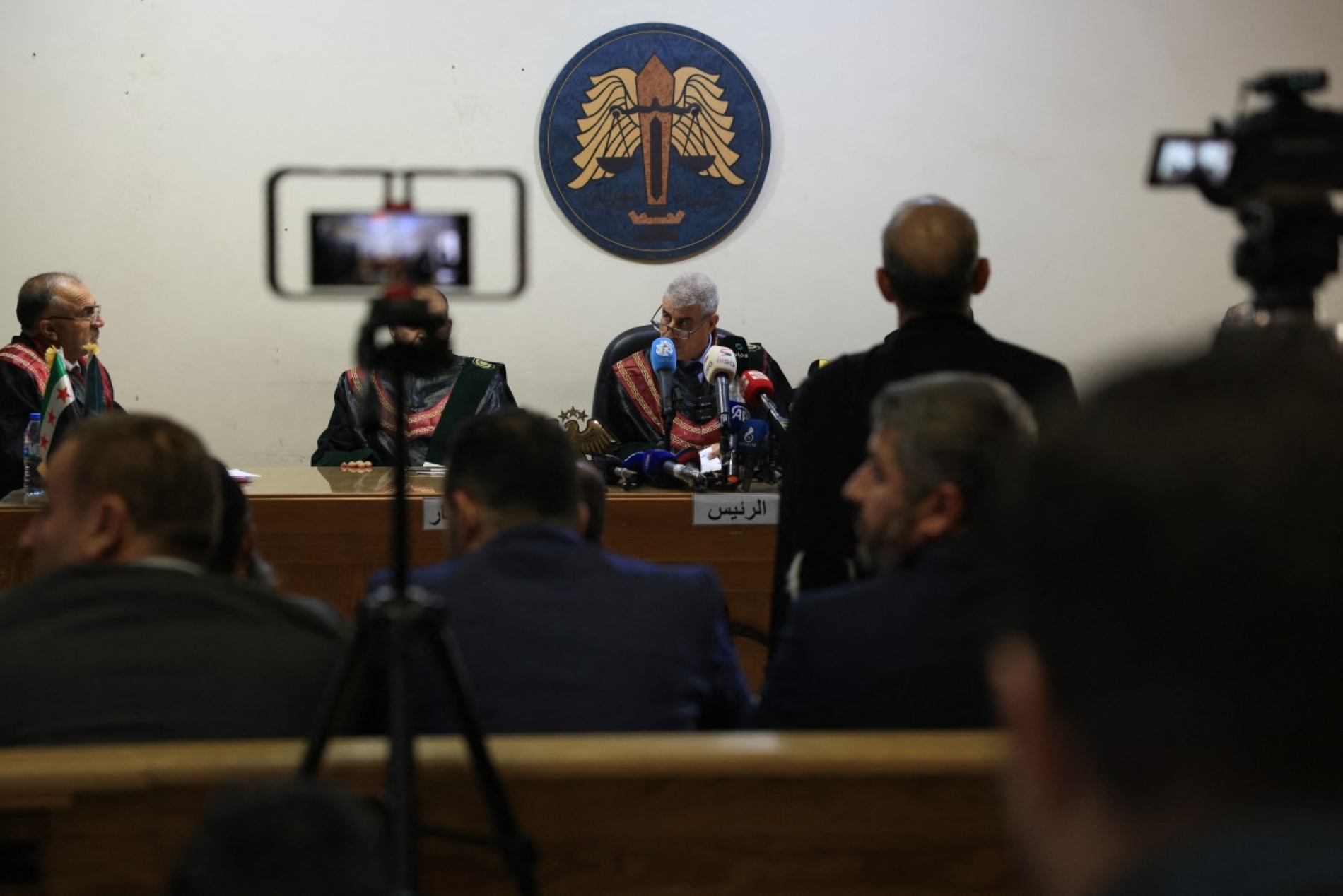
The timing was deliberate. The sanctions were unveiled just as Syria’s transitional authorities launched public trials against individuals accused of involvement in the coastal violence, a move intended to signal a break with the past. The UK decision, however, makes clear that symbolic gestures and selective prosecutions will not be enough. What Western capitals are watching is not whether Damascus can initiate accountability, but whether it can institutionalise it—applying the law consistently, including to commanders embedded within the new security apparatus.
By elevating the coastal violence from a localised security failure to a broader test of the transition, the sanctions refocus attention on how Damascus consolidates authority: through narrow, case-by-case accountability or by embedding clear and uniform standards of responsibility within emerging state institutions. Accountability, in this view, is not optional, nor can it be deferred until the transition stabilises. It must be integral to the transition itself.
The UK sanctions announced on 19 December targeted several individuals accused of violence against civilians during both the Assad era and the transitional period. Among them were Mohammad al-Jasim, commander of the Sultan Suleiman Shah faction, and Sayf Boulad, commander of the Hamza Division.
London also designated three armed groups—the Sultan Murad Division, the Sultan Suleiman Shah Division, and the Hamza Division—all accused of involvement in atrocities during the civil war and in the recent coastal clashes that reportedly left around 1,400 people dead.

Read more: Syria coastal violence: a critical test for Sharaa's government
These designations carry particular political weight because the sanctioned commanders hold positions within the new military structure. Although these groups no longer formally exist on paper, having been absorbed into the Ministry of Defence, their internal hierarchies appear largely intact. The Sultan Suleiman Shah Brigade, for example, was folded into the 25th Division, still led by Mohammad al-Jasim, also known as Abu Amsha. The Hamza Division became part of the 76th Division under Sayf Boulad, also known as Abu Bakr.
By targeting figures implicated not only in Assad-era abuses but also in more recent violations, the UK reinforced a principle increasingly shared by Western governments: integration into state institutions does not absolve responsibility. If anything, it heightens it.
The move also makes clear that lifting broad economic sanctions imposed because of the former regime does not mean justice has been sidelined. Accountability, in this view, is not an afterthought to stability; it is the condition that makes stability possible.